

Reviewed · OLD TOWN TOURS
Bike Tour of Krakow Old Town, Top Attractions and Nature
Krakow reveals itself quickly from a bicycle. In two hours, you can link the Main Market Square, Planty, Wawel Hill and the medieval city gates without spending the day on foot. The route also slips toward quieter corners, including the Vistula riverbank and Kosciuszko Mound on the longer versions.
I like the private guide and adjustable pace, especially if you want history explained as you ride rather than from a fixed bus seat. I also like the practical mix of famous sights and less obvious stops. The main concern is traffic and road design: one French guest noted that Krakow is not always easy for cyclists, so this suits confident riders better than absolute beginners.
In This Review
- Key points to know before booking
- Starting in Krakow’s Main Market Square
- Following Planty to the old city gates
- Wawel Hill and Krakow’s royal centre
- What fits into the 2-hour option
- The 4-hour route adds the Vistula, Podgorze and Kazimierz
- The 6-hour ride reaches Kosciuszko Mound
- Bikes, helmets and the practical side of riding
- Guide quality and language choices
- Is $120 per person good value?
- Who should book this Krakow bike tour?
- Final verdict: choose your length carefully
- FAQ
- Where does the bike tour meet?
- How long is the tour?
- What languages are available?
- Are entrance tickets included?
- Are bikes and helmets provided?
- Can I cancel the tour?
Key points to know before booking
- The 2-hour route packs in Old Town and Wawel, with St Mary’s Basilica, the Cloth Hall, Barbican and Jagiellonian University.
- The guide speaks your chosen language, with English, French, Russian, Italian, Spanish and Polish available.
- Longer options add real variety, including Kazimierz, the Jewish Ghetto memorial sites, the Vistula and Kosciuszko Mound.
- Adult city bikes are supplied, while children’s bikes, child seats, helmets and other equipment must be requested when booking.
- The tour is private and adjustable, but entry tickets, food and optional safety equipment are not included.
- The listed price is $120 per person, a stronger value for a small private group that wants personal attention than for someone seeking a cheap, basic bike rental.
Starting in Krakow’s Main Market Square
You meet your guide in front of Kino Pod Baranami, at Rynek Glowny 27. Arrive about 10 minutes early. That gives you time to meet the guide, collect an adult city bike and make any basic adjustments before the clock starts.
The setting is ideal. Krakow’s Main Market Square is one of the clearest places to understand the city’s shape, with streets radiating toward the old walls and Wawel Hill. You begin beside the Cloth Hall, the Renaissance market building in the centre of the square, and the old Town Hall Tower.
St Mary’s Basilica rises along one side of the square. Its two towers are unequal in height, and the taller Gothic tower is known for the hourly trumpet call. Your guide can explain the familiar legend behind the interrupted tune, giving the stop more character than a quick photograph would.
The square can be crowded and busy with pedestrians, so this is not a place for fast cycling. Expect to walk or push the bike for short stretches if needed. The benefit of having a private guide is that the pace can be adjusted rather than forcing your group to follow a large pack of riders.
More Old Town walks in Krakow:
- Old Town Krakow & Wawel Castle Walking Tour
★ 5.0 · 1,508 reviews - Krakow: Bike Tour of Old Town, Jewish Quarter and the Ghetto
★ 4.9 · 1,155 reviews - Krakow: The Old Town Walking Tour
★ 4.8 · 794 reviews
Following Planty to the old city gates
From the square, the route follows Planty, the green belt that circles much of Krakow’s old centre. This park occupies the area once covered by the medieval city walls, so it offers both a pleasant ride and a useful lesson in how Krakow changed over time.
You pass the Juliusz Slowacki Theatre, an ornate historic building near the railway station area, then continue toward the Barbican. The 15th-century defense structure is one of the city’s most striking surviving military buildings. Its round form, thick walls and moat once formed part of the entrance system protecting Krakow.
Nearby, St Florian Gate gives you a direct link to the medieval city. The gate tower is one of the best-known remnants of the old fortifications. The Grunwald Monument and the Statue of Jan Matejko add further context, connecting the route to Polish military memory and national art.
St Florian’s Basilica is another stop along the way. The tour does not include entrance tickets, so you should expect to admire these buildings from outside unless you arrange your own visit later. That is worth remembering: the tour is designed as a moving overview, not a series of interior visits.
Wawel Hill and Krakow’s royal centre

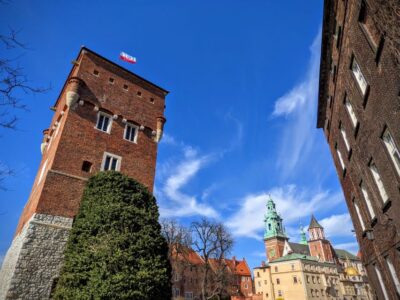
The route then turns toward Wawel Hill, the symbolic heart of Poland’s former capital. Here you see Wawel Cathedral and the Royal Castle, two of the city’s essential sights.
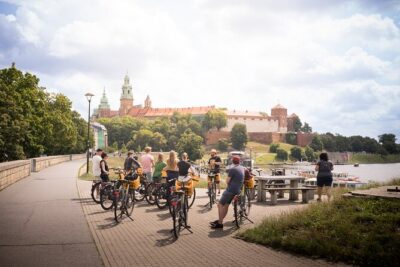
Wawel works particularly well on a bicycle because it sits apart from the tight streets of the central square. You can cover the approach efficiently, then stop for an explanation of the hill’s role in Polish royal and religious life. The guide also shares legends and historical details along the way, which helps you understand why Wawel carries such weight in the national story.
You will not tour the castle rooms or cathedral interiors as part of the bike experience. If those are priorities, make a separate visit. The advantage here is orientation. You learn where the main buildings are, how the hill relates to Old Town and which places deserve a longer return visit.
The route continues along Kanonicza and Grodzka streets. These are among Krakow’s most atmospheric streets, lined with churches, palaces, museums and old facades. Saints Peter and Paul Church is a highlight, with its ornate Baroque exterior and distinctive statues along the front.
The city centre is compact, but two wheels let you connect these stops without repeatedly retracing your steps. That efficiency is the main reason to choose this activity over a walking tour if your time in Krakow is short.
What fits into the 2-hour option

The 2-hour tour focuses on Krakow Old Town and Wawel. You should expect a brisk route with frequent stops for explanations, photographs and short looks at important buildings.
The likely sequence includes:
- Main Market Square and the Cloth Hall
- St Mary’s Basilica and the old Town Hall Tower
- Planty and the Juliusz Slowacki Theatre
- Barbican and St Florian Gate
- Grunwald Monument and Jan Matejko’s statue
- St Florian’s Basilica
- Jagiellonian University buildings
- Wawel Cathedral and Royal Castle
- Kanonicza and Grodzka streets
- Saints Peter and Paul Church
This is a good first-day activity. You get a clear map of central Krakow and a list of places to revisit on foot. I would choose it if you have only one full day, if you want a quick introduction before exploring independently, or if your group prefers movement to a long walking route.
The limitation is time. You will not have much opportunity to linger, enter attractions or browse museums. The guide can adjust the pace, but a 2-hour route covering this many sights will naturally be more of an outdoor overview than a slow cultural tour.
More bike days around Krakow:
- Complete Cracow Bike Tour (small group of maximum 15 people!)
★ 5.0 · 1,322 reviews - Highlights of Krakow Bike Tour – Small group
★ 5.0 · 662 reviews - Full Bike Tour – the Old Town, Jewish Qtr & the Ghetto NEW BIKES
★ 5.0 · 437 reviews - Krakow: Bike Tour of the Old Town, Kazimierz, and the Ghetto
★ 4.9 · 350 reviews
The 4-hour route adds the Vistula, Podgorze and Kazimierz

The 4-hour option gives the Old Town portion more breathing room and adds several districts that show a different side of Krakow. You cycle along the Vistula riverbank toward Park Bednarski, a leafy city park with the abandoned ruins of Fort Benedict.
Fort Benedict is a particularly useful contrast to the polished centre. Instead of another grand church or royal building, you see a military remnant in a park setting. The route here should appeal to you if you enjoy old structures with a rougher, less formal feel.
In Podgorze, the tour stops at Ghetto Heroes Square. This place recalls the Jewish Ghetto created during World War II and the painful history of Krakow’s Jewish population during the German occupation. The guide’s explanation matters here. A short stop can provide the basic framework, but you may want to return later for a slower visit to the district’s memorials and museums.
The route continues into Kazimierz, Krakow’s historic Jewish Quarter. You see the Old Synagogue, Remuh Synagogue and Tempel Synagogue, all important parts of the area’s Jewish heritage.
Again, these are exterior visits unless you buy your own entrance tickets. The value of the cycling route is the connection between places. You move from the royal centre to the river, then to Podgorze and Kazimierz, seeing how Krakow’s districts differ rather than treating Old Town as the whole city.
Choose four hours if you want a fuller historical picture but do not need the outer green areas included in the 6-hour version. It is also the better choice if you want time for questions. A private guide can respond to your interests instead of delivering one fixed speech to a large group.
The 6-hour ride reaches Kosciuszko Mound
The longest option covers Old Town and Kazimierz, then heads farther from the centre. You pass the National Museum and Cracovia’s Marshal Jozef Pilsudski Stadium before continuing through parkland toward Kosciuszko Mound.
Kosciuszko Mound is an artificial hill built in 1820 to commemorate Tadeusz Kosciuszko, one of Poland’s major military heroes. It is one of the more unusual sights on this tour because it combines national memory, open space and a view away from the dense centre.
The route is described as including quieter places surrounded by nature, so the 6-hour version changes the rhythm of the day. You are no longer simply linking monuments. You get a longer ride, more open surroundings and a break from Krakow’s central streets.
The additional time also allows a free stop for a pretzel or another local snack, at your own expense. That is a small but useful touch. Six hours on a bike is a long outing, and having time to eat makes the route more manageable.
I would select this option only if your group is comfortable cycling for much of a day. It offers the broadest view of Krakow, but it also requires more stamina. The route and number of attractions depend on the option you select, so check the exact starting time and route details before paying.
Bikes, helmets and the practical side of riding

The bikes are fully equipped commuting bicycles rented from a professional bike shop. Adult city bikes are prepared for the group. Children’s bikes, child seats, helmets and other equipment are available on request, but you need to provide the number and ages of children when booking.
Helmets and other safety equipment are optional rather than included by default. If you want a helmet, request one in advance instead of assuming it will be waiting for you.
Krakow is not perfectly designed for cycling everywhere. The route uses parks, river paths and city streets, but you still need to deal with pedestrians, uneven sections and ordinary urban traffic. One French booking specifically pointed out that the city is not always well adapted to bicycles, while also praising the guide. That is a fair warning, not a reason to reject the tour.
I would be comfortable recommending it to regular city cyclists and families who are used to riding together. If you rarely cycle, have balance concerns or dislike sharing roads, the walking alternative may be more relaxing. The guide can adjust the pace, but no private tour can remove every urban riding challenge.
The tour operates in all weather, so bring clothing suited to the forecast. You should also check your email 24 hours before departure for important updates and arrive early enough to set up the bike.
Guide quality and language choices

This is a private tour with an official Krakow-licensed guide. You can request English, French, Russian, Italian, Spanish or Polish, which is useful for families and mixed-language groups.
A recent booking specifically identifies Martin as the guide and credits him with giving a strong introduction to Krakow and useful ideas for places to explore later. Guide assignments can change, so Martin may not be your guide, but the comment points to the service’s most important strength: the guide helps you get your bearings quickly.
The guide is not only there to lead the route. You can expect explanations of local history, legends, culture and traditions, with time to ask questions. Since the tour is private, you have a better chance of shaping the experience around architecture, royal history, Jewish heritage or everyday city life.
The 4.7 rating from four recorded ratings is encouraging, but it is still a small sample. The clearest pattern is positive guide feedback, along with the practical criticism about cycling conditions. I would put more weight on those specific details than on the number alone.
Is $120 per person good value?
At $120 per person, this is not a bargain bike rental. You are paying for a private guide, a prepared route, bike hire and commentary in your selected language.
The price makes the most sense for a small group that wants a personal introduction to Krakow and values time saved between districts. A walking tour may cost less, but it will not cover as much ground. A self-guided rental may also be cheaper, but you would need to plan the route, find the sights and supply your own historical context.
The 2-hour option offers the weakest value if you simply want to pedal around and take photographs. It becomes more worthwhile if you are visiting for a short time, want a focused orientation or need explanations in a specific language.
The 4-hour and 6-hour routes give the price more weight because they cover Kazimierz, Podgorze, the Vistula and Kosciuszko Mound. Still, remember that food, entrance tickets, helmets and other optional equipment are extra. Confirm the cost for your selected duration when booking, since the advertised starting price may relate to one option.
Free cancellation is available up to 24 hours before the tour, and you can reserve now and pay later. Those terms are useful if your Krakow plans are still shifting.
Who should book this Krakow bike tour?
I would recommend the 2-hour route to first-time visitors who want a fast, well-organized introduction to the centre. It gives you enough context to decide where to spend the rest of your stay.
The 4-hour route is the best all-round choice for people who want more than the standard postcard sights. Kazimierz, Podgorze, Ghetto Heroes Square and Fort Benedict add serious historical depth and a change of scenery.
The 6-hour tour suits active groups with time to spare. Kosciuszko Mound and the quieter park routes give you a broader sense of Krakow, but you need to be prepared for a substantial ride.
I would skip this experience if your main goal is entering museums, touring Wawel Castle interiors or spending long periods at each site. I would also think twice if cycling in busy city conditions makes you uneasy.
Final verdict: choose your length carefully
Book this tour if you want to cover Krakow efficiently, learn the story behind its major sights and have a guide adapt the ride to your interests. The private format, choice of languages and wide route options are its strongest features.
For most visitors, I would choose four hours. Two hours can feel hurried, while six hours demands real energy. If you want only the centre, choose two. If you want Old Town plus Jewish Krakow and the Vistula, choose four. If you want the city’s outer parks and Kosciuszko Mound, make a full day of it with six.
FAQ
Where does the bike tour meet?
Meet your guide in front of Kino Pod Baranami, at Rynek Glowny 27, 31-010 Krakow.
How long is the tour?
The main option lasts 2 hours. Longer options last 4 hours or 6 hours and include additional districts, nature areas and attractions.
What languages are available?
The live guide can speak English, French, Russian, Italian, Spanish or Polish.
Are entrance tickets included?
No. Entrance tickets to attractions are not included in the tour price.
Are bikes and helmets provided?
Adult city bikes are rented for your group. Helmets and other safety equipment are optional. Children’s bikes, child seats, helmets and additional equipment can be requested when booking.
Can I cancel the tour?
Yes. You can cancel up to 24 hours in advance for a full refund. You can also reserve the tour and pay later.
Just added around Krakow
- Private Guided Tour: Oskar Schindler’s Factory★ 5.0 · 3 reviews
- E-Scooter Krakow sightseeing tour★ 5.0 · 3 reviews
- From Krakow: Zakopane and Thermal Pools Guided Trip★ 5.0 · 3 reviews
- Schindler’s Factory, Ghetto and Plaszow Camp Guided Tour★ 4.7 · 3 reviews
- Kraków: Private Hot Air Balloon Flight with Champagne★ 3.7 · 3 reviews
- Krakow: River Cruise & Guided Visit to Former Plaszow Camp★ 3.6 · 3 reviews
- From Krakow: Private Wieliczka Salt Mine Tour★ 4.0 · 3 reviews
- Krakow: Old Town short walk with St. Mary’s Basilica visit★ 5.0 · 3 reviews
Old Town Tours, compared.
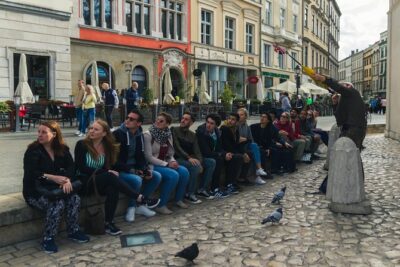
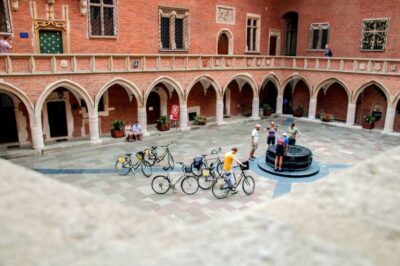
Bike Tour of Old Town, Jewish Quarter and the Ghetto
Read our review →
Old Town & Wawel Castle Walking Tour in English
Read our review →
Full Bike Tour – the Old Town, Jewish Qtr & the Ghetto NEW BIKES
Read our review →
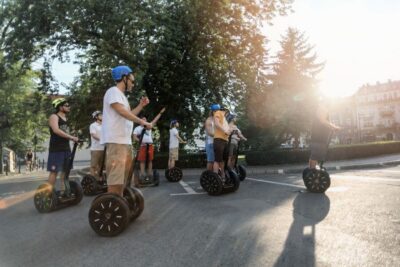
Krakow Old Town Segway Tour 2hr with Training, Safety Gear, Guide
Read our review →Browse the lists this tour appears in