
Reviewed · JEWISH GHETTO TOURS
Krakow: River Cruise & Guided Visit to Former Plaszow Camp
The most striking part of this Krakow outing is the contrast: a gentle cruise on the Vistula leads into the quiet grounds of the former Plaszow Camp, where almost nothing remains above ground. Your guide must reconstruct the camp from fragments, open space, and silence.
I like the boat ride for its calm views of Wawel, Skałka, Bielany, and Krakow’s bridges. I also like the careful focus on places such as Ghetto Heroes Square and the Monument of Torn-Out Hearts. The main drawback is the walking. This is not a simple museum visit, and rough paths, rubble, nettles, and a route of several miles can make it tiring.
In This Review
- Key points to know before booking
- A river cruise that changes the pace of Krakow sightseeing
- Ghetto Heroes Square and the meaning of the metal chairs
- Reaching the former Plaszow Camp on foot
- Reconstructing a camp that has largely disappeared
- The Grey House, roll-call area, and surviving traces
- Oskar Schindler’s connection to Plaszow
- The Monument of Torn-Out Hearts
- What $56 means for the value
- Who should book this Krakow experience
- Should you book the river cruise and Plaszow visit?
- FAQ
- Where does the tour begin?
- How early should I arrive?
- What language is the tour in?
- How long does the experience last?
- Is transportation included?
- How much walking is involved?
- Does the tour operate in bad weather?
- Can I cancel the booking?
Key points to know before booking
- The Vistula cruise comes first: You sail one way by catamaran with an English audio guide before continuing by tram and on foot.
- Plaszow has few surviving structures: The guide brings the former camp layout to life through the Grey House, roll-call area, remnants, graves, and memorials.
- Ghetto Heroes Square adds vital context: Its metal chairs represent forced departures and the absence left behind.
- The walking is serious: Plan for at least 2 kilometers to reach the camp, plus extended walking inside it. Rough ground is possible.
- Oskar Schindler’s connection is part of the story: The tour explains how work permits and factory transfers saved more than 1,000 people.
- This is a reflective history visit, not a light sightseeing trip: Wear sturdy shoes and allow time to process what you see.
A river cruise that changes the pace of Krakow sightseeing
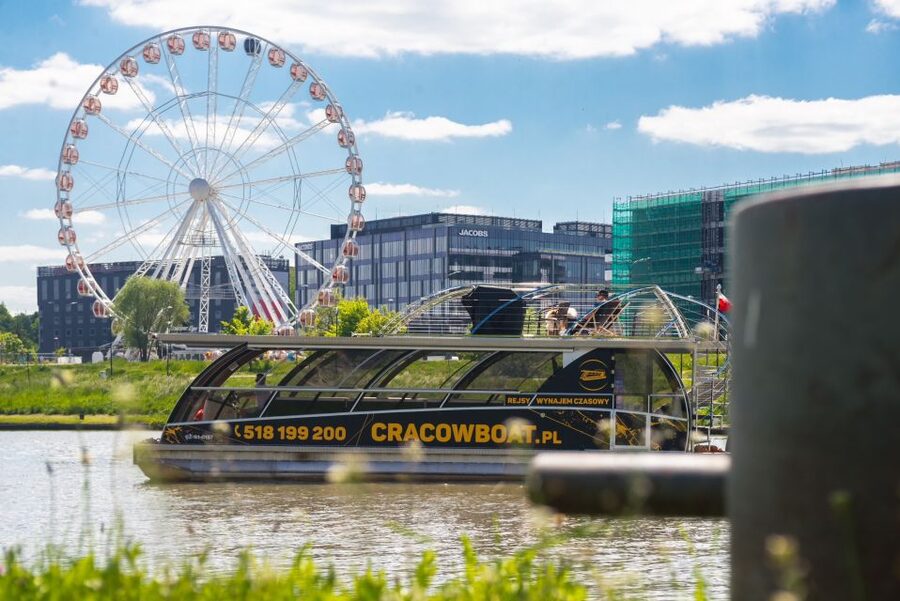
The tour begins at Inflancki Boulevard, beside the Paulinska water tram stop. Look for the person carrying a Cracow Boat sign, and arrive 10 minutes early. Once the boat leaves, late arrivals cannot join, and the ticket is not refundable.
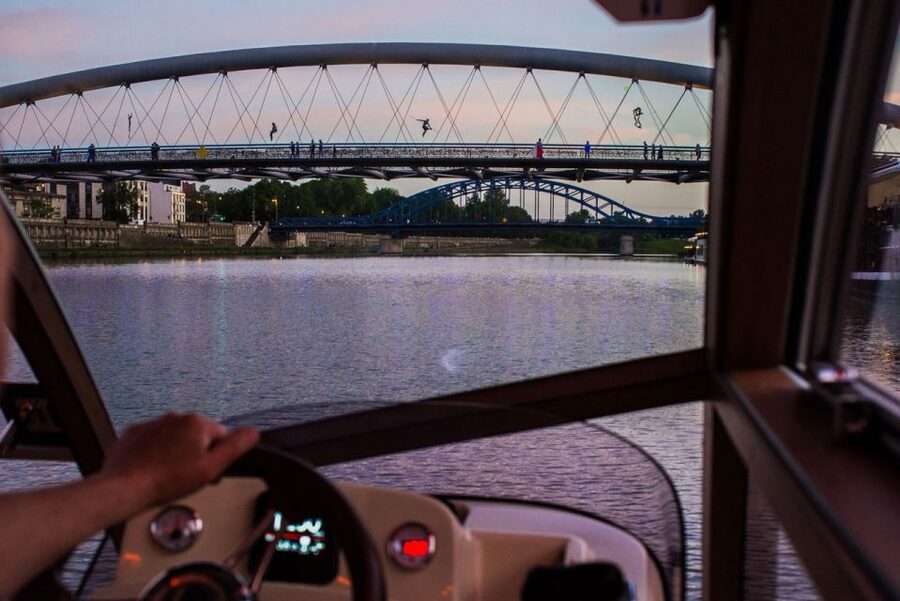
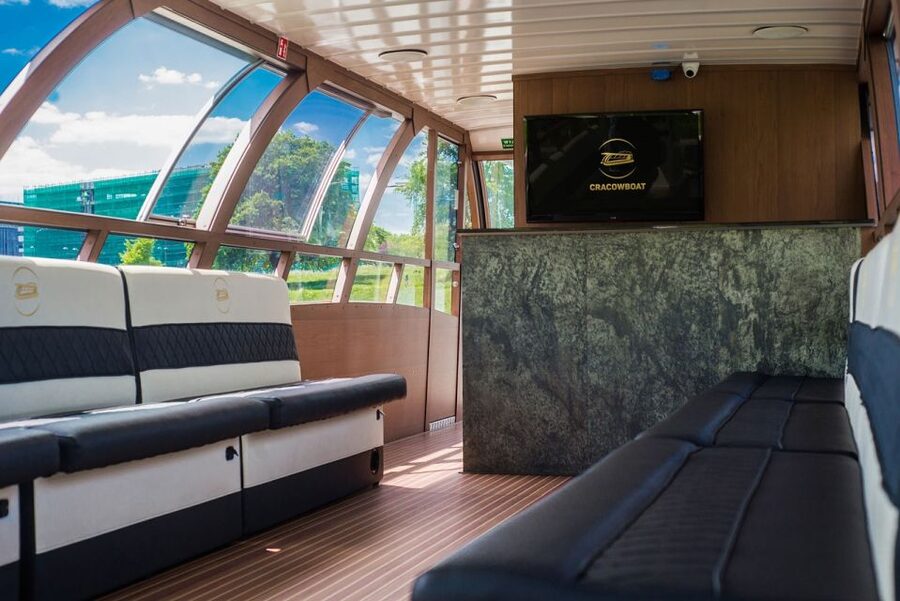
The first part is a short, one-way catamaran cruise on the Vistula. This gives you a different view of Krakow before the serious walking begins. From the water, you hear about Wawel’s royal past, the Skałka monastery, the monasteries of Bielany, and the bridges that link different periods of the city’s story.
I like this opening because it lets you sit down, look around, and get oriented. Krakow can feel like a dense collection of churches, towers, and old streets when you see it from ground level. On the river, the city’s shape becomes easier to read.
The boat uses an English audio guide rather than the live guide who leads the Plaszow visit. That distinction matters. You get a more relaxed introduction on the water, but you should not expect the same chance to ask questions until the walking portion.
The cruise is also weather-dependent in the practical sense that it operates in all conditions. Bring a rain layer, warm clothing, or sun protection according to the forecast. The Vistula section is comfortable, but the rest of the outing is outdoors.
More Jewish heritage walks in Krakow:
- Krakow: Schindler’s Factory & Ghetto Guided Tour
★ 4.7 · 1,694 reviews - Krakow: Jewish Quarter and Former Ghetto Tour
★ 4.9 · 1,441 reviews - Krakow: Bike Tour of Old Town, Jewish Quarter and the Ghetto
★ 4.9 · 1,155 reviews
Ghetto Heroes Square and the meaning of the metal chairs
After the cruise, the tour continues toward Krakow’s Podgórze district. You pass through Ghetto Heroes Square, a place closely tied to the Krakow Ghetto.
The square was once overlooked after the war. In 2005, it was reshaped as a memorial space with large metal chairs spread across the plaza. The chairs suggest forced departures, abandoned homes, and the people who were taken away. The design is simple, but it gives you a physical image of absence.
This short stop helps connect the city center to Plaszow. The former camp did not exist in isolation. The square, the ghetto, and the camp belong to the same chain of events, and the route makes that connection visible.
You should expect a quiet stop rather than a long lecture. The point is to look, listen, and understand the setting before continuing. If you want to study the square in detail, the three-hour schedule may feel tight, since the tour also includes transport and a long walk.
Reaching the former Plaszow Camp on foot
The biggest practical issue is the distance. The tour includes a single tram ticket, but you do not receive hotel pickup, hotel drop-off, or a ride back at the end. You should plan on walking at least 2 kilometers to reach the former camp, followed by more walking through the site.
The route inside Plaszow is not a polished museum path. You may encounter unfinished tracks, loose rubble, uneven ground, and nettles. One account of the tour described at least five miles of total walking, which is a useful warning even though the official duration is only three hours.
Comfortable walking shoes are essential. This is not the place for thin sandals, smooth dress shoes, or footwear you do not trust on rough ground. If you have mobility problems, ask yourself honestly if an open-air site with uneven paths is right for you. The same caution applies to young children, who may find the distance and serious subject matter difficult.
The walking is part of what makes the visit powerful. You are not simply looking at a display behind glass. You move through the ground where the camp operated. Still, the physical demands are a real cost, and the tour description does not give a precise walking distance. I would plan conservatively.
Reconstructing a camp that has largely disappeared
Plaszow was established in 1942 on the grounds of Jewish cemeteries. It began as a forced-labor camp and later became a concentration camp. More than 35,000 people were imprisoned there, and thousands died.
Today, much of the camp’s built structure is gone. That means the guide has to explain what stood where and how the site functioned. This is where the quality of the live guide matters most.
You will trace the former layout through surviving elements that include the Grey House, the roll-call area, remains of important buildings, mass graves, and the Monument of Torn-Out Hearts. These are not a long row of intact rooms with labels and displays. They are fragments that need context.
A good guide helps you picture the scale and purpose of the camp without pretending that the missing structures are still there. One guide named Ewa was praised for explaining the site clearly and inviting questions. Her approach is a useful example of what you want from this part of the tour: firm facts, room for questions, and respect for the subject.
The open setting can be harder to interpret than a preserved camp museum. You need to pay attention to directions, distances, and the guide’s explanation. If you prefer exhibits, maps, and indoor displays, this may feel sparse. If you want to stand in the actual place and think about what is absent, the lack of buildings becomes part of the lesson.
A few more Krakow trips worth comparing
- From Krakow: Auschwitz-Birkenau Guided Tour & Hotel Pickup
★ 4.5 · 33,358 reviews - From Krakow: Auschwitz-Birkenau Guided Tour & Hotel Pickup
★ 4.5 · 29,340 reviews - Krakow: Auschwitz Guided Tour with Optional Hotel Pickup
★ 4.5 · 15,280 reviews - Krakow: Auschwitz-Birkenau Guided Tour with Pickup & Lunch
★ 4.5 · 9,800 reviews
The Grey House, roll-call area, and surviving traces
The Grey House is one of the clearest surviving elements connected with the camp. The roll-call area helps show how prisoners were gathered and controlled. Other remnants and the locations of mass graves add further weight, even where there is little to see.
I would not approach these stops looking for dramatic ruins. Plaszow does not offer a complete reconstruction. The value comes from the guide’s explanation of how each remaining feature fits into the wider camp.
That demands concentration. The tour takes place in an open area, and the ground itself may be difficult. You may be listening while standing, walking, or trying to avoid rough patches. Bring water, especially in warm weather, though the provided information does not specify refreshment stops.
The guide-led format is important here. The boat’s audio commentary can tell you about Krakow’s sights, but the camp requires a person who can explain the vanished buildings and answer questions. The strongest praise attached to this experience has focused on the guide’s command of the subject, not on the number of physical sights.
Oskar Schindler’s connection to Plaszow
The story of Oskar Schindler is included in the visit, but the tour places it within the larger history of the camp. Prisoners registered in Plaszow could be assigned work permits connected with Schindler’s factory. Schindler later transferred more than 1,000 people to his factory, helping save their lives.
This is an important detail because popular memory can reduce Plaszow’s story to one man. The guided visit puts Schindler’s actions beside the broader system of forced labor, imprisonment, and murder.
You should listen for the practical details of how employment and transfers affected prisoners. That helps explain why factory work could sometimes offer protection, even within a brutal system. The subject is serious, and the tour does not treat Schindler as a substitute for learning about the camp itself.
The Monument of Torn-Out Hearts
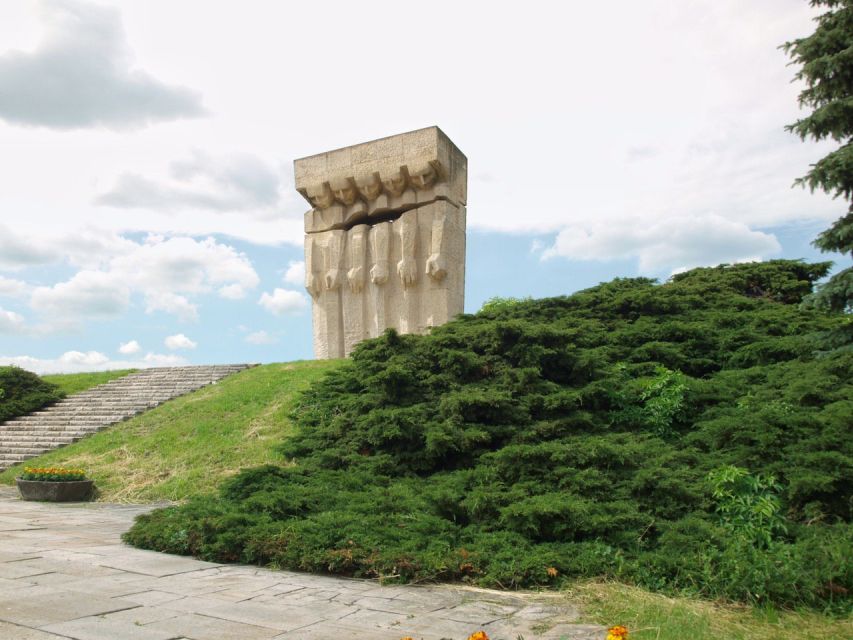
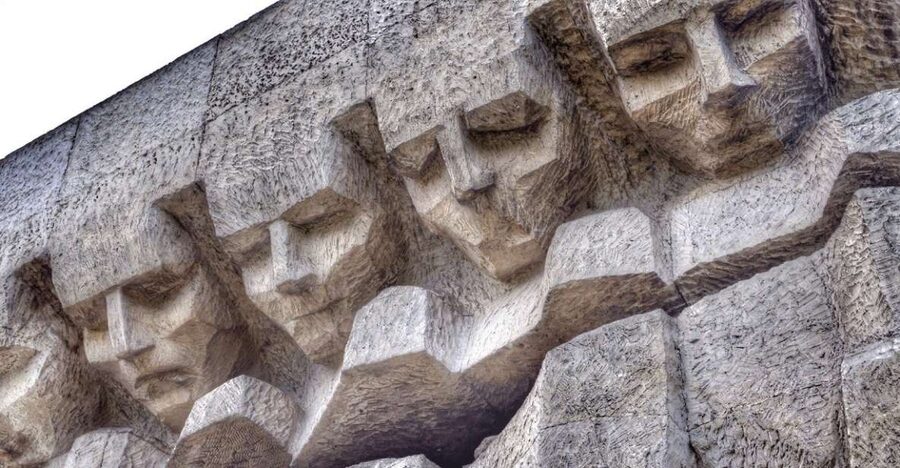
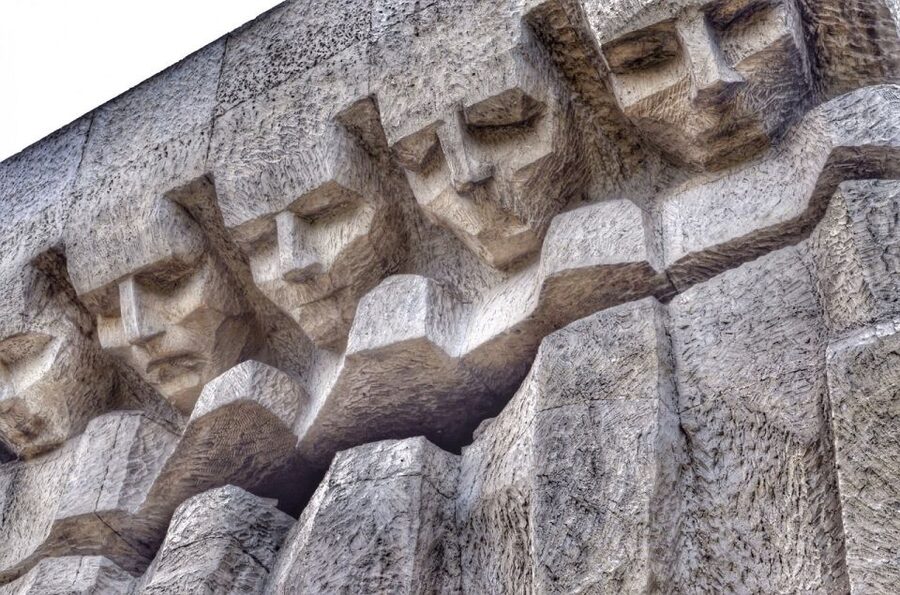
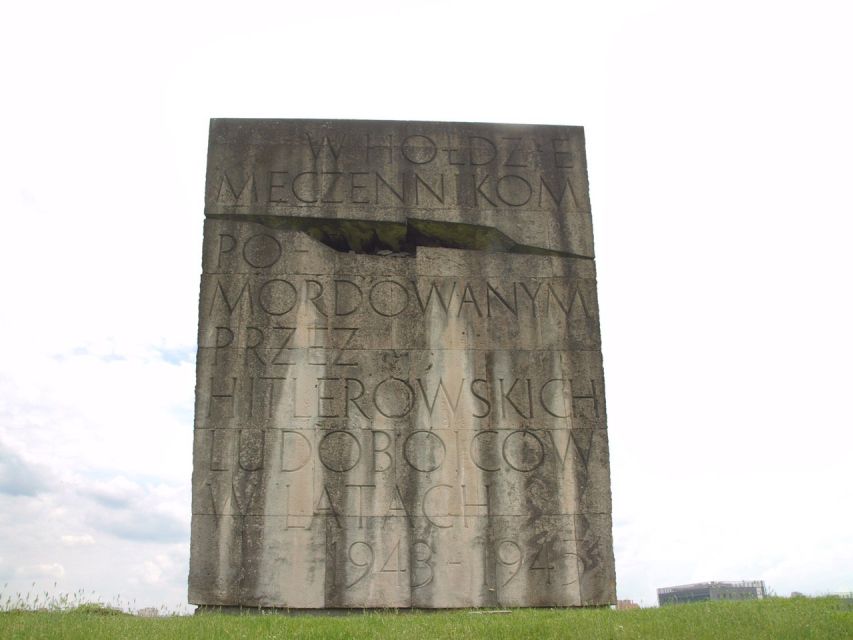
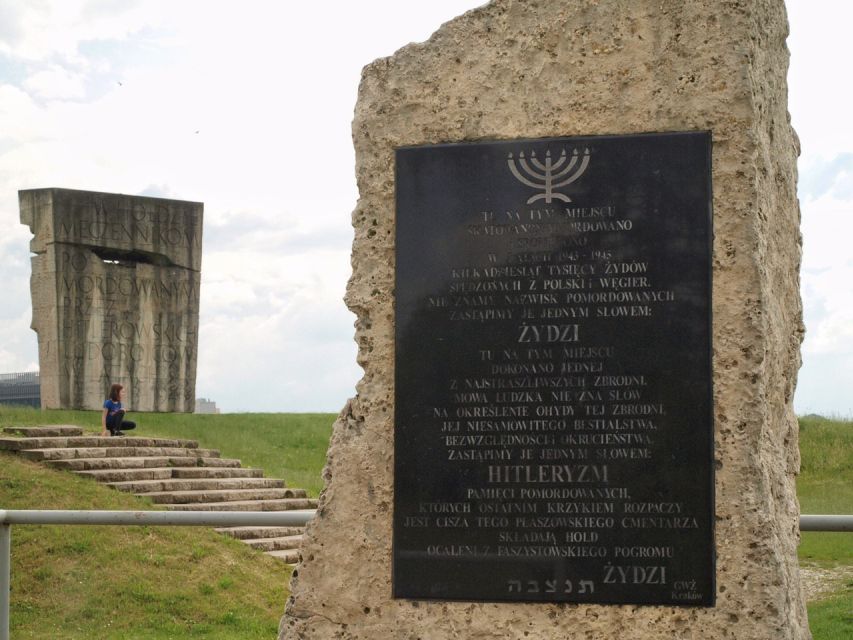
The Monument of Torn-Out Hearts is one of the main pauses during the visit. Its name captures the grief and violence tied to the site, while its position within the open grounds gives you space to stop and reflect.
This is likely to be one of the most memorable points of the tour, not because it is large or ornate, but because it gathers the visit’s themes in one place. The camp’s missing buildings, the buried dead, the forced departures, and the people who survived are all present in the guide’s account.
Expect a respectful atmosphere. This is not a place for quick photographs and a rushed exit. You can take pictures where appropriate, but the larger value comes from giving the memorial your attention.
What $56 means for the value
At $56 per person, this is priced above a basic sightseeing cruise and below a full private historical tour. You are paying for three connected parts: the one-way Vistula cruise, the English audio guide on the boat, and the live guide at Plaszow. A tram ticket is also included.
The value depends on how much you want help interpreting Plaszow. If you only want to see the river, a cruise alone would be a simpler and less demanding purchase. If you want to reach the former camp but do not know its layout, a guide adds real value because so little remains.
The three-hour duration is efficient, but it also leaves little room for delays, long personal stops, or a slow pace. You must arrive on time, follow the group, and be ready to keep moving. Return transportation is not included, so factor in the cost and time of getting back after the tour.
Free cancellation is available up to 24 hours before the start, and you can reserve now and pay later. Those terms help if your Krakow schedule is still shifting, but they do not change the physical demands of the outing.
Who should book this Krakow experience
I would recommend it to you if you want a serious historical visit with a live English guide and you are comfortable walking outdoors for several hours. It suits people who value explanation and context more than a large collection of preserved buildings.
It is also a good fit if you want to combine two very different sides of Krakow in one outing: the city viewed from the Vistula and the quieter, more difficult history of Podgórze and Plaszow.
I would think twice if you have trouble walking, dislike uneven ground, or are traveling with children who may struggle with both the distance and the subject matter. The tour operates in all weather, so a wet day could make the paths less pleasant.
The language setup is simple. Group tours operate in one language, and this departure is in English. The river section uses an English audio guide, while the Plaszow section is led in person.
Should you book the river cruise and Plaszow visit?
Book this tour if you want a compact but serious introduction to Plaszow and prefer having a guide explain a site that has largely vanished. The river cruise adds a pleasant change of pace, and the stops at Ghetto Heroes Square and the Monument of Torn-Out Hearts give the visit a clear structure.
Do not book it as a casual half-day outing. The walking can reach several miles, the paths may be rough, and the subject matter calls for attention. For a physically prepared visitor who wants Krakow’s history beyond the postcard sights, the $56 price can be fair value. For anyone needing easy access, frequent rest, or a gentle sightseeing route, choose a different activity.
FAQ
Where does the tour begin?
It begins at Inflancki Boulevard, next to the Paulinska water tram stop. Look for the person holding a Cracow Boat sign.
How early should I arrive?
Arrive 10 minutes before the scheduled start. Late arrivals cannot join after the group has departed, and the ticket cannot be refunded in that situation.
What language is the tour in?
The live tour guide and boat audio guide are in English. Group tours operate in only one language, which you select when booking.
How long does the experience last?
The scheduled duration is three hours. Check the available start times when booking.
Is transportation included?
A one-way short Vistula cruise by catamaran and one tram ticket are included. Hotel pickup, hotel drop-off, and return transportation after the tour are not included.
How much walking is involved?
The tour includes at least 2 kilometers of walking to reach the former camp, followed by more walking inside the site. A past route could total at least five miles, and some paths may contain rubble, nettles, and unfinished sections.
Does the tour operate in bad weather?
Yes. The tour operates in all weather conditions. Dress for the forecast and wear comfortable walking shoes.
Can I cancel the booking?
You can cancel up to 24 hours before the tour for a full refund. You can also reserve now and pay later.
Just added around Krakow
- Private Guided Tour: Oskar Schindler’s Factory★ 5.0 · 3 reviews
- E-Scooter Krakow sightseeing tour★ 5.0 · 3 reviews
- From Krakow: Zakopane and Thermal Pools Guided Trip★ 5.0 · 3 reviews
- Schindler’s Factory, Ghetto and Plaszow Camp Guided Tour★ 4.7 · 3 reviews
- From Krakow: Private Wieliczka Salt Mine Tour★ 4.0 · 3 reviews
- Kraków: Private Hot Air Balloon Flight with Champagne★ 3.7 · 3 reviews
- Krakow: Old Town short walk with St. Mary’s Basilica visit★ 5.0 · 3 reviews
- Wawel Castle Treasury & Armoury Skip the Line Private Tour★ 4.7 · 3 reviews
Jewish Ghetto Tours, compared.

Bike Tour of Old Town, Jewish Quarter and the Ghetto
Read our review →
Kazimierz, Schindler’s Factory & Ghetto Guided Tour
Read our review →
Full Bike Tour – the Old Town, Jewish Qtr & the Ghetto NEW BIKES
Read our review →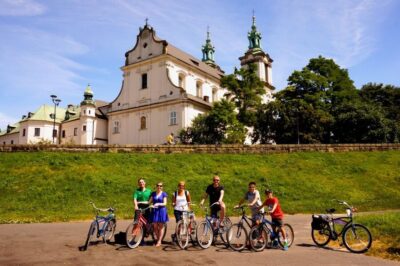
Bike Tour of the Old Town, Kazimierz, and the Ghetto
Read our review →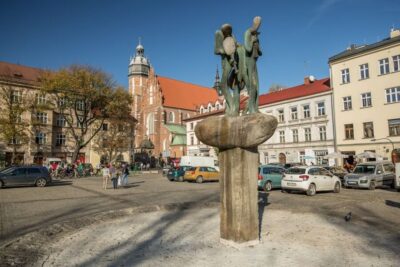
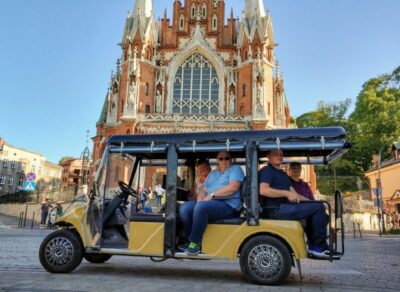
Jewish Quarter and Ghetto Electric Golf Cart Tour
Read our review →Browse the lists this tour appears in