
Reviewed · CYCLING TOURS
Hidden Krakow Bike Tour
Krakow’s most affecting wartime sites sit beyond the postcard center, and this three-hour bike ride links them in a practical way. You cycle from Kazimierz, the former Jewish district, into Podgorze, where the World War II Jewish Ghetto once stood. The route includes Ghetto Heroes Square, part of the old ghetto wall, and a former resistance headquarters.
I like the small group limit of 15, which should make it easier to hear the guide and ask questions. I also like the mix of famous places and quieter corners, especially the brief stop at Skałka Basilica and the introduction to Schindler’s List. The main consideration is the subject matter: much of the ride focuses on persecution, war, and occupation, so this is a history tour with bicycles, not a light sightseeing spin.
In This Review
- Key points at a glance
- Why this Krakow bike route matters
- Beginning in Kazimierz at Skałka Basilica
- Crossing into Podgorze and the former Jewish Ghetto
- What the bicycle adds to the experience
- The guide’s role in a difficult history
- Group size, timing, and comfort
- What the $39.32 price delivers
- Who should book this ride
- Should you book the Hidden Krakow Bike Tour?
- FAQ
- How long is the Hidden Krakow Bike Tour?
- Where does the tour start?
- Where does the tour finish?
- What time does the tour begin?
- Is the tour offered in English?
- How many people can join the tour?
- Can I cancel for a full refund?
Key points at a glance
- A direct route through two important districts: Start in Kazimierz, then cross into Podgorze for the main World War II sites.
- Ghetto Heroes Square is the central stop: This powerful public space helps explain the forced removal of Krakow’s Jewish population.
- Skałka Basilica adds a different side of Kazimierz: The stop brings religious and architectural context before the wartime section.
- A group of no more than 15 people: The size is modest enough for a more personal guiding style.
- Comfortable, easy-to-ride bicycles: The bikes were specifically praised for comfort, ease of use, and a strong sense of safety.
- A useful afternoon schedule: The tour begins at 2:00 pm and returns to Józefa Dietla 59 after about three hours.
Why this Krakow bike route matters
Krakow is easy to admire from its Main Market Square, but the city’s 20th-century story is found elsewhere. Kazimierz and Podgorze are close to the historic center, yet they tell a very different story from the grand churches and medieval streets.
This ride gives you a way to connect those districts without spending the afternoon working out tram routes or walking back and forth. You cover more ground than you would on foot, while moving slowly enough to notice streets, walls, squares, and buildings along the way.
The tour is also focused. It does not try to cover every major sight in Krakow. Instead, it concentrates on Jewish heritage, the German occupation, the Jewish Ghetto, and the resistance. That focus gives the experience a clear purpose, though you should not book it expecting a full introduction to the city.
The price is $39.32 per person. For about three hours, that includes the bicycle, guide, and route planning, with no separate admission charges listed for the stops. I consider that fair value if you want historical interpretation and an efficient way to reach Podgorze. It is less compelling if you already know these districts well or simply want a relaxed ride with little commentary.
More off-the-list corners of Krakow:
- Krakow: Vodka Tasting in Hidden Bar
★ 4.9 · 138 reviews - Krakow: Hidden Rooftop Bar Reservation with 1 Cocktail
★ 3.7 · 55 reviews - Highlights & Hidden Gems With Locals: Best of Krakow Private Tour
★ 5.0 · 20 reviews
Beginning in Kazimierz at Skałka Basilica
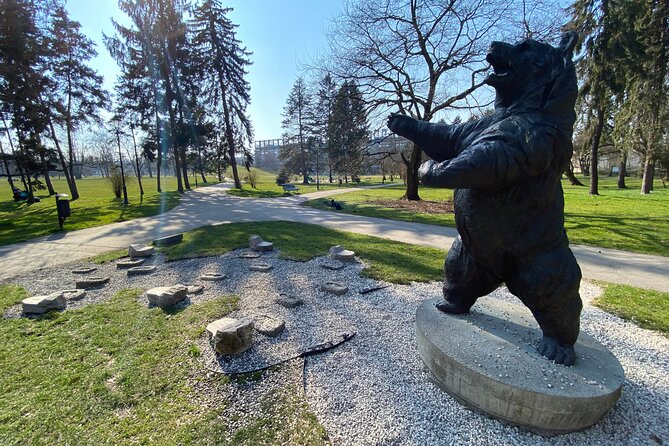
The ride begins at Józefa Dietla 59 at 2:00 pm. From there, the route takes you into Kazimierz, the former Jewish district and one of the most important areas for understanding Krakow’s Jewish past.
The listed stop is Skałka Basilica, also known as the Church on the Rock. You get about 15 minutes here, with no admission ticket required. That makes it a short orientation stop rather than a full church visit.
The value of this opening section is the change in tone. Kazimierz is not presented only as a film location or an attractive old quarter. The basilica gives you a chance to consider the district’s religious and cultural layers before the tour turns toward the destruction of World War II.
You also receive a short introduction to Schindler’s List. The film brought many of Krakow’s wartime locations to a worldwide audience, but a guide can help separate cinema from the actual places and events. This introduction is brief, so expect a useful starting point rather than a detailed film tour.
I would pay attention to how the guide frames Kazimierz. The strongest version of this tour should help you see the district as more than a backdrop for restaurants, cafés, and movie scenes. Its importance comes from the people and communities who lived here, as well as from what happened to them during the occupation.
The 15-minute stop also keeps the group moving. If your priority is spending a long time inside Skałka Basilica, this tour will feel too quick. If you want a wider route with a few carefully chosen pauses, the timing makes sense.
Crossing into Podgorze and the former Jewish Ghetto
The main part of the experience takes place in Podgorze. About two hours and 45 minutes are assigned to this section, so the tour gives far more attention to the former Jewish Ghetto than to the opening stop.
Podgorze is where the ride becomes most serious. During World War II, Jewish residents were forced into the ghetto here. The district’s streets and surviving traces help you understand the physical setting of that policy, not just the dates and names found in a textbook.
The tour visits several locations connected to the war. The most prominent is Ghetto Heroes Square, a place tied to the forced movement and imprisonment of Krakow’s Jewish population. A guide’s explanation matters here because a square can look ordinary until you understand its role in the city’s history.
You also stop at a remnant of the wall that surrounded the ghetto. This is the kind of small surviving fragment that can be easy to miss when exploring alone. It is not a grand monument, but its limited scale is part of its force. You are looking at a physical remainder of a system that controlled where people could live and move.
The route includes the former headquarters of the resistance as well. The provided details do not specify the building’s name or how long you stop there, so you should expect the guide to place it within the wider wartime story rather than plan on an interior visit.
This section should be the heart of the tour. You are not simply ticking off sights. You are following a connected route through the places where policy, confinement, resistance, and memory meet. The bicycle makes it possible to link several sites in one afternoon without turning the experience into a long, tiring walk.
At the same time, the large time allocation tells you something important: this is not a quick photo stop at Ghetto Heroes Square followed by a ride to the next attraction. You will spend most of the tour listening and thinking about the history of Podgorze. That suits people who want context. It may feel heavy or slow if you prefer casual sightseeing.
What the bicycle adds to the experience
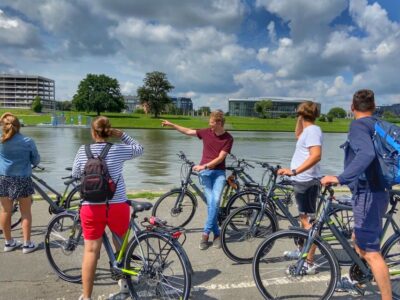
The bicycle is not just a way to get from one stop to another. It changes the pace of the afternoon. You can travel between districts efficiently, but you remain close to the streets and public spaces that give the story its setting.
The bikes used on the tour were described as comfortable, easy to ride, and safe-feeling. That is good news if you are not a regular cyclist. Still, the available information does not provide bicycle sizes, helmet details, route surfaces, or the amount of traffic on the route, so ask the operator if any of those points matter to you.
The ride lasts about three hours. That is long enough to cover substantial ground, but short enough to fit around other Krakow plans. Since the start time is 2:00 pm, you can use the morning for the Main Market Square, Wawel, or a museum, then make this your history-focused afternoon.
A small group helps here. With a maximum of 15 people, the guide has a better chance of keeping the group together and answering questions than on a large coach tour. You should still expect normal group-tour limits: the pace and stops need to work for everyone.
The experience is offered in English. A review of a related Krakow bike ride praised guide Bram Hoffman for being informative and fun, while Nikki was specifically associated with the hidden Krakow route and its World War II and communist-era commentary. Because guide assignments can vary, you should confirm who leads your particular departure if a named guide is important to you.
More bike days around Krakow:
- Complete Cracow Bike Tour (small group of maximum 15 people!)
★ 5.0 · 1,322 reviews - Krakow: Bike Tour of Old Town, Jewish Quarter and the Ghetto
★ 4.9 · 1,155 reviews - Highlights of Krakow Bike Tour – Small group
★ 5.0 · 662 reviews - Full Bike Tour – the Old Town, Jewish Qtr & the Ghetto NEW BIKES
★ 5.0 · 437 reviews
The guide’s role in a difficult history
The quality of a tour like this depends heavily on the guide. The sights are meaningful, but many are modest and require explanation. A fragment of wall or an ordinary square does not tell its own story.
Nikki’s approach on the hidden route included discussion of World War II and communism, according to the available tour information. That combination is useful because Krakow’s 20th-century experience did not end in 1945. If the guide connects the occupation with the later communist period, you get a broader view of how the city changed under different political systems.
The guide should also handle the subject with care. The former ghetto, resistance sites, and Ghetto Heroes Square call for clear facts and respectful language. This is not an experience built around jokes or fast entertainment, though a warm, lively guide can still make three hours easier to follow.
I would use the ride as a chance to ask focused questions. You might ask how the ghetto was organized, what remains of the wall, or how the film locations compare with the historical sites. The tour description confirms short explanations and several stops, but it does not promise a specialist lecture or access to interiors.
Group size, timing, and comfort
The maximum group size is 15 people. That is a useful middle ground. You get the social feel of a group outing without the scale of a bus tour, and the guide should remain visible and audible during stops.
The ride begins and ends at Józefa Dietla 59, 31-054 Krakow. Returning to the starting point makes planning easier, especially if you have dinner or another booked activity afterward. Allow a little breathing room after the scheduled three hours, since the duration is approximate.
The meeting point is near public transportation. That is helpful if you are staying outside Kazimierz or need to reach the area from another part of Krakow. The supplied information does not name a specific tram or bus stop, so check the exact route before setting out.
Most people can participate, though no detailed mobility guidance is provided. Since this is a bicycle tour, you should be comfortable riding for several hours and stopping with the group. If you have concerns about cycling ability, mobility, or equipment, contact Mijn Krakau Tours before booking.
A mobile ticket is accepted, which keeps the arrival process simple. Confirmation is received at booking. The tour is offered in English, and group discounts are available, making it worth checking the total price if you are booking for several people.
What the $39.32 price delivers
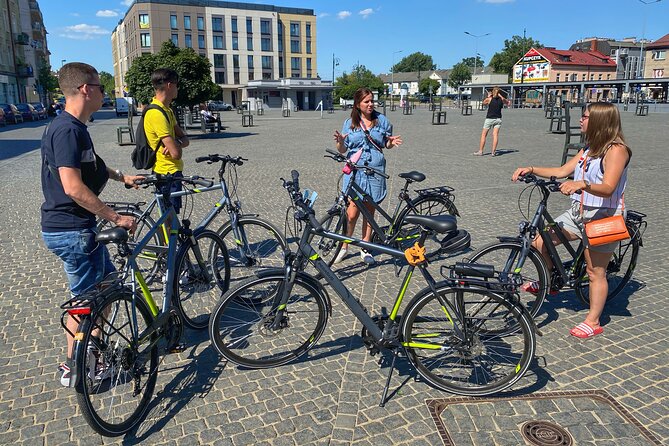
At $39.32 per person, the tour is priced below many full-day guided activities while offering a substantial afternoon route. You are paying for a bicycle, a guide, and access to a planned historical circuit rather than for admission to paid museums or monuments.
That distinction matters. The stops listed here have free admission, so the value comes from interpretation and connection. Without a guide, you could visit Ghetto Heroes Square and the remaining wall, but you would need to build the route and research the context yourself.
The price also makes sense for first-time visitors who want a broad introduction to Kazimierz and Podgorze. You see more than one district and come away with a clearer sense of how Krakow’s Jewish history and wartime history fit together.
The value is weaker for someone who wants a high-speed list of landmarks. Much of the cost pays for time spent listening at serious historical sites. That is worthwhile if context is your goal, but less so if you want a purely scenic bike outing.
The tour has a 5 out of 5 rating based on 275 reviews, with 100 percent recommending it. That is a strong signal of consistent satisfaction, especially alongside the specific praise for comfortable bicycles, safe riding, small groups, and clear guiding. I would still match the experience to your interests rather than treat the rating as a guarantee of the perfect afternoon.
Who should book this ride
I would recommend it to first-time visitors who want to understand Krakow beyond the medieval center. It is also a good fit if you prefer seeing a city in motion rather than spending the whole day inside museums.
History-minded people will get the most from the route. The emphasis on the former Jewish district, the Jewish Ghetto, resistance, Schindler’s List, and later political history gives the ride a clear educational purpose.
It also suits small groups and couples who want a guided activity without committing to a full day. The English language option, mobile ticket, and public transport access make it easy to fit into a Krakow itinerary.
I would hesitate if you dislike cycling, want a cheerful sightseeing tour, or need detailed accessibility information before booking. The tour is not advertised as a museum visit, and the available details do not include indoor access, rest stops, or exact cycling conditions.
Free cancellation is available if you cancel at least 24 hours before the 2:00 pm start time. Cancellations made later are not refunded, and late changes are not accepted. The tour also requires a minimum number of people, so if the operator cancels for that reason, you receive an alternative date or experience, or a full refund.
Should you book the Hidden Krakow Bike Tour?
Book this tour if you want a focused, thoughtful introduction to Kazimierz and Podgorze, especially the places connected with Krakow’s Jewish Ghetto and World War II. The combination of a small group, comfortable bicycles, an English-speaking guide, and a carefully linked route gives you good value for the price.
Before booking, be honest about your interests. This is a serious history ride with a short basilica stop, not a general city highlights tour. If that balance sounds right, the 2:00 pm departure is an efficient way to reach important sites that many people miss.
FAQ
How long is the Hidden Krakow Bike Tour?
The tour lasts approximately three hours.
Where does the tour start?
It starts at Józefa Dietla 59, 31-054 Kraków, Poland.
Where does the tour finish?
The activity ends back at the meeting point at Józefa Dietla 59.
What time does the tour begin?
The scheduled start time is 2:00 pm.
Is the tour offered in English?
Yes. The experience is offered in English.
How many people can join the tour?
The maximum group size is 15 people.
Can I cancel for a full refund?
Yes, if you cancel at least 24 hours before the experience start time. Cancellations made less than 24 hours in advance are not refunded.
Just added around Krakow
- Private Guided Tour: Oskar Schindler’s Factory★ 5.0 · 3 reviews
- E-Scooter Krakow sightseeing tour★ 5.0 · 3 reviews
- From Krakow: Zakopane and Thermal Pools Guided Trip★ 5.0 · 3 reviews
- Schindler’s Factory, Ghetto and Plaszow Camp Guided Tour★ 4.7 · 3 reviews
- Kraków: Private Hot Air Balloon Flight with Champagne★ 3.7 · 3 reviews
- Krakow: River Cruise & Guided Visit to Former Plaszow Camp★ 3.6 · 3 reviews
- From Krakow: Private Wieliczka Salt Mine Tour★ 4.0 · 3 reviews
- Krakow: Old Town short walk with St. Mary’s Basilica visit★ 5.0 · 3 reviews
Cycling Tours, compared.
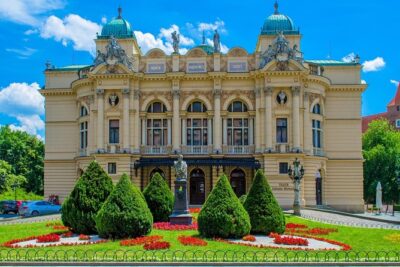
Complete Cracow Bike Tour (small group of maximum 15 people!)
Read our review →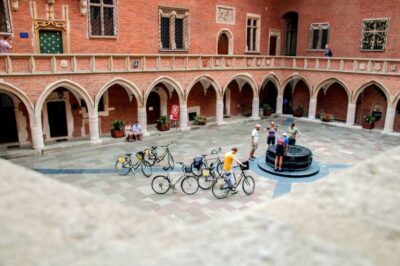
Bike Tour of Old Town, Jewish Quarter and the Ghetto
Read our review →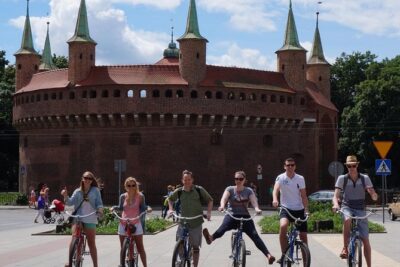
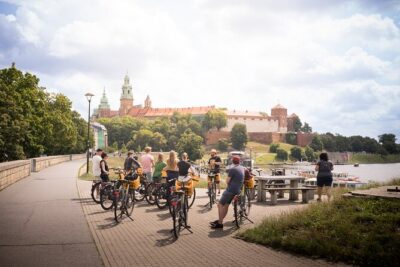
Full Bike Tour – the Old Town, Jewish Qtr & the Ghetto NEW BIKES
Read our review →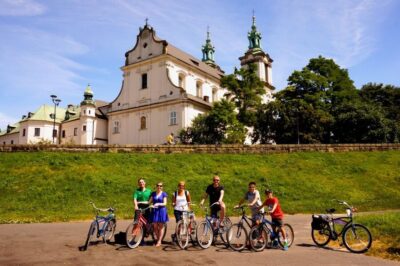
Bike Tour of the Old Town, Kazimierz, and the Ghetto
Read our review →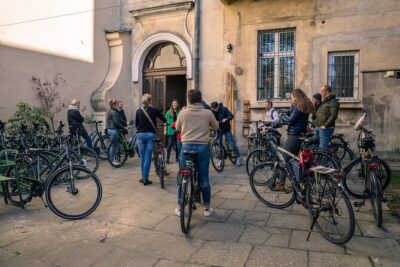
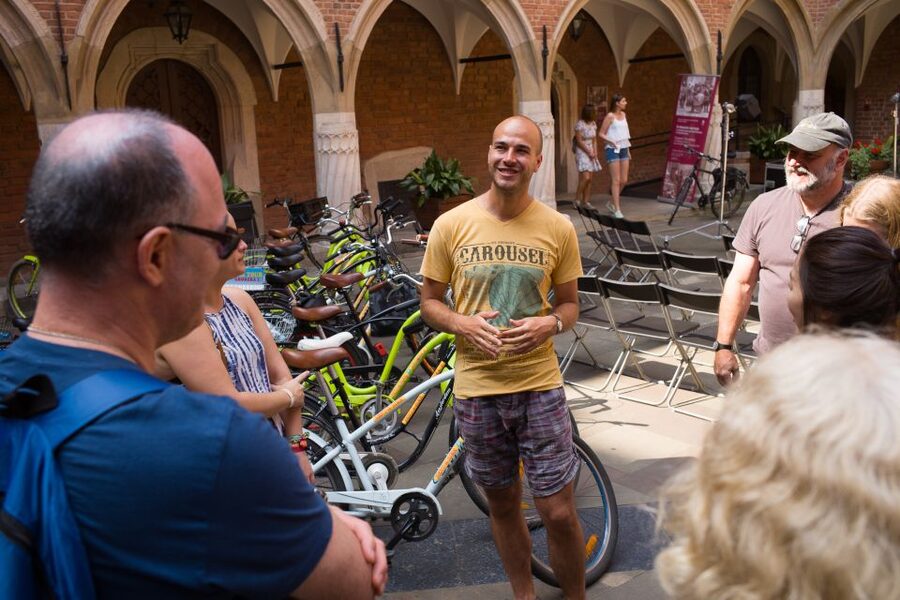
Browse the lists this tour appears in