
Reviewed · OLD TOWN TOURS
Krakauer old town tour
Krakow’s Old Town is the rare European center that still feels shaped by its medieval plan. This 150-minute walk follows the Royal Route from the Barbican and St. Florian’s Gate toward Wawel, linking market stalls, churches, university courtyards, royal buildings, and a dragon with one clear story.
I like the carefully arranged route and the mix of famous sights with smaller historical details, especially Collegium Maius and the papal window connected with John Paul II. I also like the strong German-language guiding, with Monika singled out for her excellent German, humor, and command of the city’s past. The main drawback is pace: one assessment found parts of the walk rushed, so visitors who want long stops for photos may need to work quickly.
In This Review
- Key points at a glance
- Why Krakow’s Old Town works so well on foot
- Meeting the guide beside the Barbican
- Following the Royal Route toward Main Market
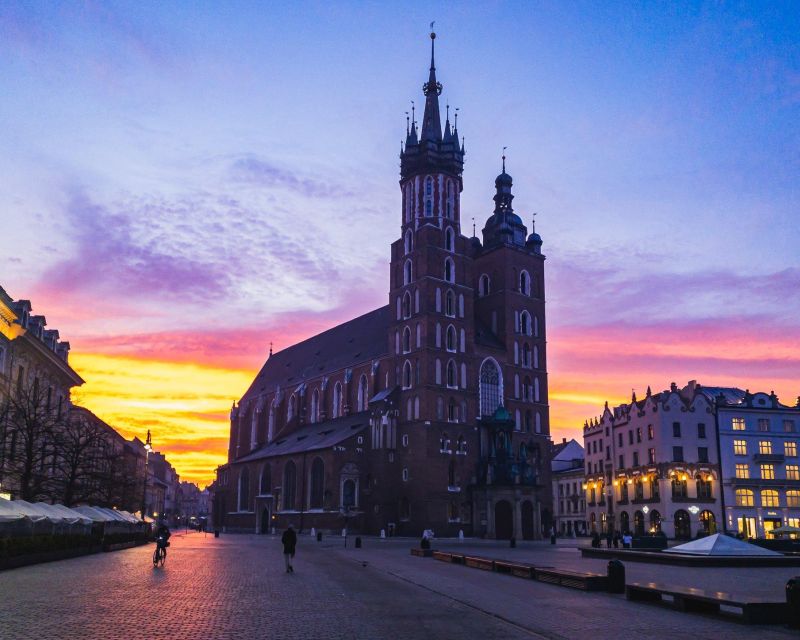
- St. Mary’s Basilica and the sound of the trumpeter
- Collegium Maius and Krakow’s scholarly past
- Archbishopric Palace and the papal window
- Wawel Hill, the cathedral, and the King’s Palace
- Meeting the Wawel Dragon
- What the German-language guiding is like
- Price, timing, and practical value
- Who should book this Krakow Old Town tour
- Should you book it?
- FAQ
- How long does the Krakow Old Town tour last?
- What language is the tour offered in?
- Where is the meeting point?
- What sights are included on the route?
- Are Collegium Maius and the Wawel King’s Palace included?
- Is the tour wheelchair accessible?
- Does the tour operate in bad weather?
- Can I cancel the booking?
Key points at a glance
- A 150-minute Royal Route walk: Start between the Barbican and St. Florian’s Gate, then cross the Old Town toward Wawel Hill.
- Krakow’s UNESCO center: See the preserved medieval layout, Main Market, Cloth Hall, Wawel Castle, and cathedral area.
- German-speaking guidance: The tour is offered in German, and Monika is specifically praised for clear, entertaining delivery.
- More than postcard views: Hear about Polish kings, Copernicus, John Paul II, the city’s artists and scholars, and the Wawel Dragon.
- Two important visits included: Collegium Maius and the Wawel King’s Palace are listed as part of the experience.
- Plan for changing weather: The walk operates in rain or cold, with shelter used when needed.
Why Krakow’s Old Town works so well on foot
Krakow’s center gives you a useful lesson in Polish history without sending you across the city by bus. The old streets, churches, university buildings, royal sites, and public squares sit close together, so a guide can show how political, religious, and academic life once shared the same compact space.
The city center survived the Second World War, and its medieval character remains unusually intact. That does not mean every building is medieval, but the overall street plan and major landmarks still help you picture Krakow when it served as the capital of a large European kingdom.
The tour is built around connections. Instead of seeing the Cloth Hall as just a pretty market building, you hear how the Main Market functioned as a center of trade and public life. Instead of treating Wawel as one isolated castle, you follow the route that links the royal hill with the city below.
That structure matters. If you are visiting Krakow for the first time, it gives you a mental map early in your stay. You can return later to the church, castle, or university with a better sense of where each place fits.
More Old Town walks in Krakow:
- Old Town Krakow & Wawel Castle Walking Tour
★ 5.0 · 1,508 reviews - Krakow: Bike Tour of Old Town, Jewish Quarter and the Ghetto
★ 4.9 · 1,155 reviews - Krakow: The Old Town Walking Tour
★ 4.8 · 794 reviews
Meeting the guide beside the Barbican
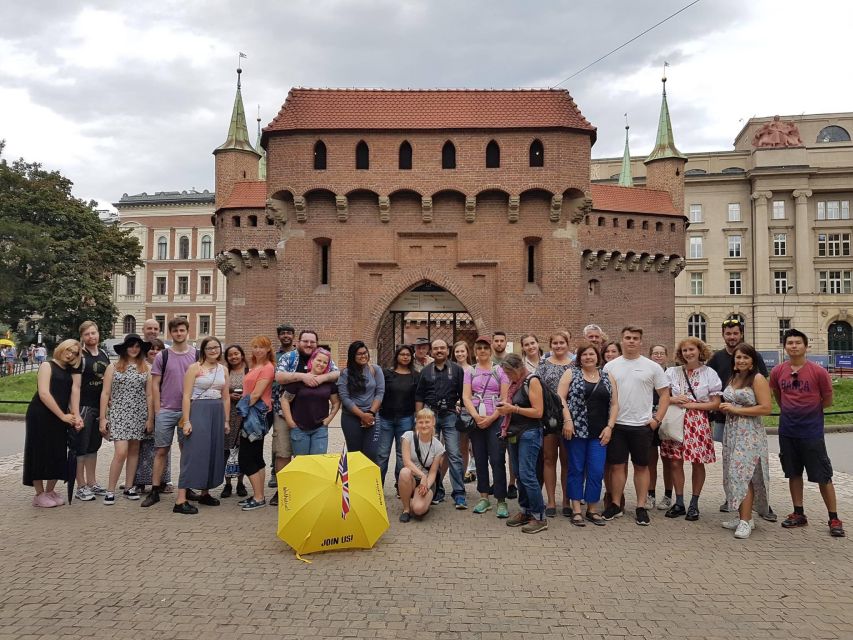
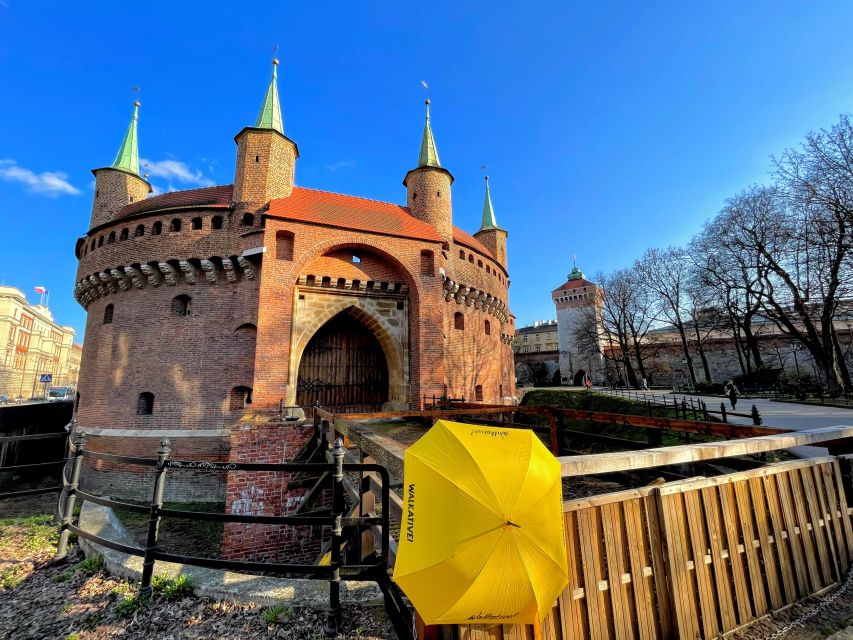
The meeting point is a small place between the Barbican and St. Florian’s Gate. This is a practical starting point because you are already at the northern edge of the historic center, beside two of Krakow’s most recognizable medieval defenses.
Look for the guide in the space between the round Barbican and the old city entrance. The area can be busy, so allow enough time to identify the exact gathering spot rather than arriving at the last minute.
The Barbican once formed part of Krakow’s defensive system, while St. Florian’s Gate served as a formal entrance into the city. Beginning here gives the walk a natural sense of arrival: you pass through the old threshold and follow the path used by royal processions.
There is no hotel pickup or return transport. You meet in the center and finish within the historic area, so this experience works best if you are already staying near central Krakow or can reach the meeting point easily.
Following the Royal Route toward Main Market
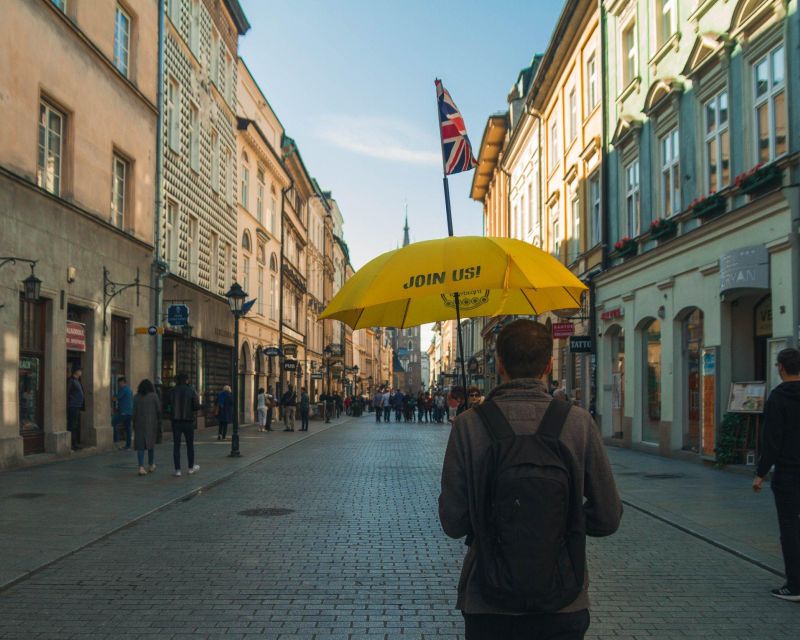
The Royal Route is the backbone of the walk. It connects the northern gate with Wawel Hill and passes many of the city’s key buildings along the way.
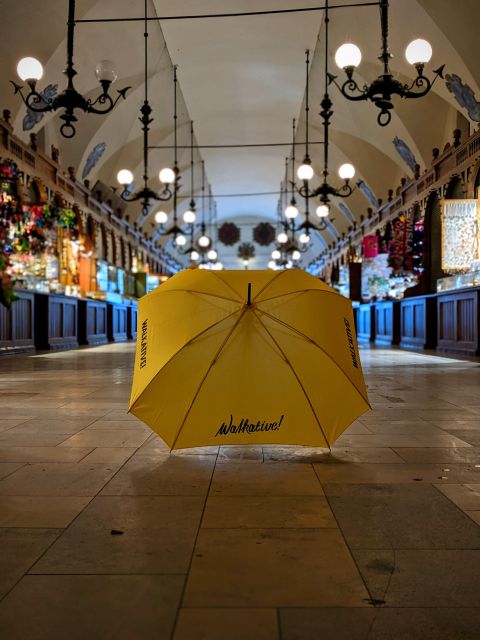
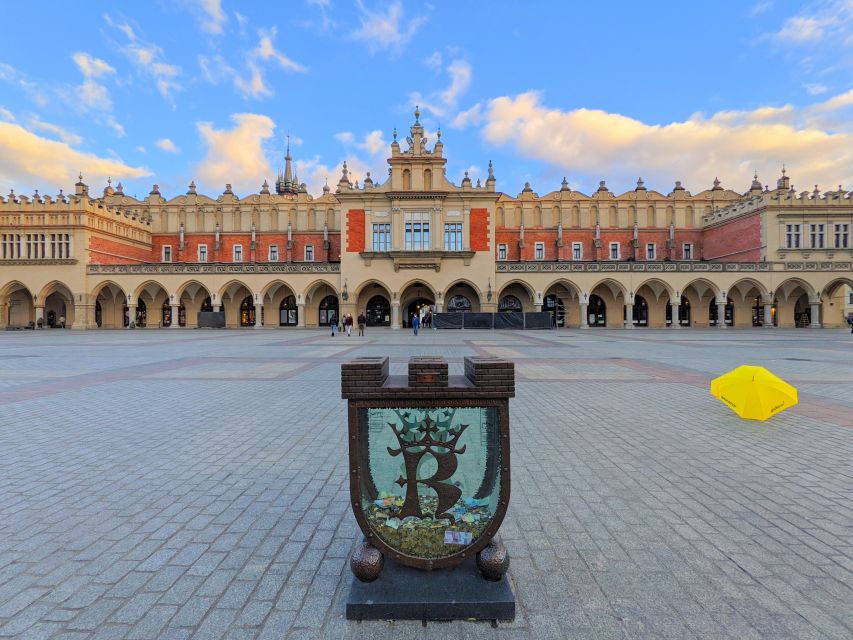
You will make your way toward the Main Market, one of the defining spaces in Krakow’s center. Here, the Cloth Hall occupies the middle of the square, surrounded by churches, historic facades, and streets leading into the rest of the Old Town.
The scale of the square helps explain Krakow’s former importance. It was not designed as a quiet pocket for photographs. It was a place for trade, ceremonies, movement, and public business. A good guide can make those uses easier to imagine while pointing out the buildings that frame the space.
You will also see St. Mary’s Basilica, famous for its trumpeter. The church is one of the tour’s main landmarks, but the short format means you should not expect an extended interior visit unless the guide specifically includes one. The basilica is best understood here as part of the city’s public and religious story.
The guide’s job is especially useful in this section. On your own, it is easy to walk through the square, take a few photographs, and move on. With the historical links explained, the Main Market becomes a place where Krakow’s commercial and civic life took shape.
St. Mary’s Basilica and the sound of the trumpeter
St. Mary’s Basilica is one of the most familiar sights in Krakow, with its distinctive towers rising over the Main Market. The church’s trumpeter is part of the city’s best-known traditions, and the tour includes the famous trumpeter as a central detail.
This is a good stop for a short explanation because it combines architecture, local custom, and the daily rhythm of the square. You get more from the landmark when you understand why the sound matters to Krakow rather than treating it as a random performance.
The tour is not designed as a church art course. Its strength is the broad view: kings, religious buildings, trade, education, and local legends all appear within the same walk. If you want detailed time inside every church, you will need a separate visit.
The route can feel quick here. One assessment specifically described parts of the walk as hurried, partly because another group may be waiting for the next departure. Keep your camera ready, listen while walking when possible, and ask the guide at the start how much time is planned for photographs.
A different sort of day out from Krakow:
- From Krakow: Auschwitz-Birkenau Guided Tour & Hotel Pickup
★ 4.5 · 33,358 reviews - From Krakow: Auschwitz-Birkenau Guided Tour & Hotel Pickup
★ 4.5 · 29,340 reviews - Krakow: Auschwitz Guided Tour with Optional Hotel Pickup
★ 4.5 · 15,280 reviews - Krakow–Zakopane: Cable Car, Chocholow Baths, Cheese & Vodka
★ 5.0 · 10,720 reviews
Collegium Maius and Krakow’s scholarly past
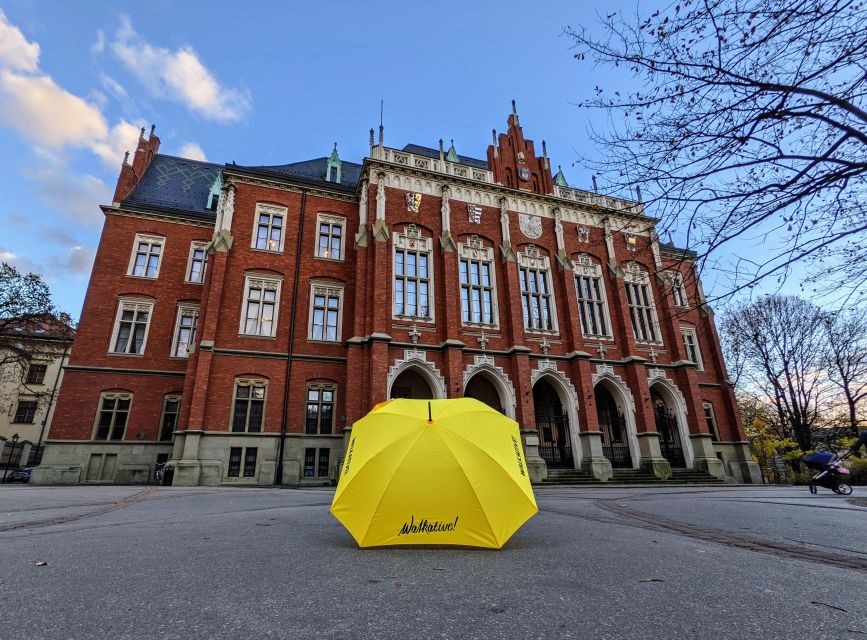
Collegium Maius is one of the most appealing stops for visitors who want more than royal stories. It is described as the oldest building at the oldest university in Central Eastern Europe, and the tour includes a visit to Collegium Maius.
The building brings the city’s academic past into focus. Krakow was not only a royal seat. It also drew scholars, artists, and important figures from across Europe. The 15th and 16th centuries were a key period for the city, and the tour places Nicolaus Copernicus within that world.
That detail gives the walk a welcome change of pace. After fortifications, market trade, and church towers, you turn to study and ideas. You can see how the city’s influence rested on more than its rulers and monuments.
The word visit can mean different things on guided walks, so if you care about specific rooms or interior access, ask the guide what is open on your date. The supplied tour information confirms Collegium Maius as an included visit, but it does not spell out every room or admission arrangement.
Archbishopric Palace and the papal window
The route also passes the Archbishopric Palace and the window associated with Pope John Paul II. This stop adds a more recent chapter to the walk and links Krakow’s old streets with one of Poland’s most important modern religious figures.
The papal window is valuable because it is a simple, human-scale place rather than a grand royal monument. It shows how a familiar building can become part of public memory through a person and a moment.
The palace also helps you see the continuing role of religious institutions in Krakow. The tour does not limit the city’s story to medieval kings. It moves through different eras, from royal power and university life to the 20th century.
This is another place where the guide’s storytelling makes a difference. The tour promises a carefully structured story, and this stop works best when it is tied to the wider route rather than treated as an isolated photo point.
Wawel Hill, the cathedral, and the King’s Palace
At the end of the Royal Route, Wawel Hill gives the walk its grandest setting. The hill contains the cathedral and castle complex and is one of the central symbols of Krakow’s royal past.
You will see the cathedral and the castle courtyard, and the experience includes a visit to the Wawel King’s Palace. The information provided does not specify how much interior access is included, so confirm the exact scope if palace rooms are a priority for you.
Even from the outside, the hill brings together the main themes of the walk. This is where royal authority, religious power, national memory, and architecture meet. The palace is not just a pretty building at the end of a pleasant stroll. It explains why the route began at the old city gate and moved through the market and university quarter.
The castle courtyard should be a strong moment for photographs, but do not expect the entire Wawel complex to fit into a short walking tour. Wawel Castle and the cathedral deserve separate visits if you want a close look at collections, chapels, tombs, or palace rooms.
The tour gives you orientation and meaning. A longer independent visit gives you more time with the buildings themselves. For many visitors, doing this walk early and returning to Wawel later is the most efficient plan.
Meeting the Wawel Dragon
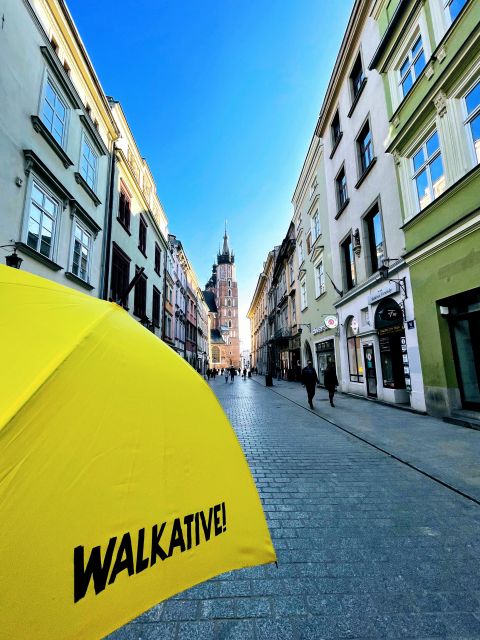
The Wawel Dragon brings a lighter note to a route filled with kings, churches, scholars, and national figures. The dragon is one of Krakow’s best-known legends and gives the guide room to explain how storytelling became part of the city’s identity.
This is more than a children’s extra. City legends help explain how places are remembered. At Wawel, the dragon connects the castle hill with the riverbank and gives you a story that is easy to recall after the tour.
The dragon stop also helps keep the walk from becoming too solemn. The best city tours allow room for humor, and the strongest praise for this experience points to a friendly guide with fine humor as well as serious knowledge.
What the German-language guiding is like
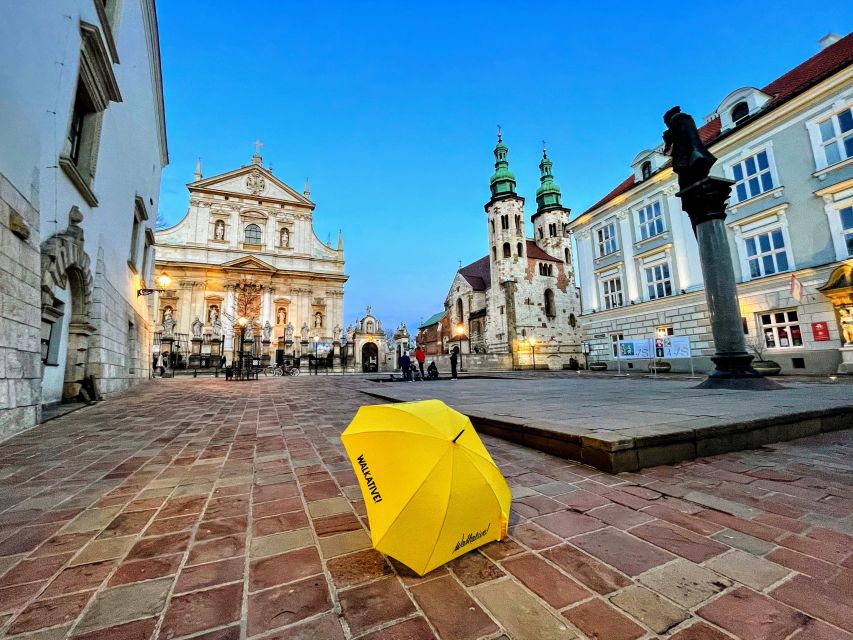
This experience is offered in German, with a live guide rather than an audio recording. That makes it a clear choice for German-speaking visitors who want explanations and questions handled in their own language.
Monika is specifically praised for excellent German, a competent presentation, charm, humor, and a large amount of information about Krakow. Those details suggest the tour’s strongest feature is not simply the number of stops, but how the guide joins them into one story.
The rating is 4.8 from 95 reviews, with repeated praise for informative and entertaining delivery. At the same time, one assessment found the pace too fast in places. I would treat that as a useful planning note rather than a reason to reject the tour.
A 150-minute walk covers a lot of ground. You should expect steady movement, short explanations at some stops, and limited time for lingering. If you prefer a slow, intimate tour with long pauses, this may feel brisk. If you want a strong overview before exploring alone, the pace is useful.
Price, timing, and practical value
The stated price is $26 per person. For two and a half hours with a local guide, a planned route, and listed visits to Collegium Maius and the Wawel King’s Palace, that can be good value if you want context rather than only directions.
The activity is also described as a Pay What You Wish Walkative! tour, while the supplied price is $26 per person. Because those two details do not fully match, check the current booking page carefully before paying. The cost may depend on the booking arrangement or product version.
There is no snack, hotel collection, or return transport. That keeps the focus on the walking experience, but you should eat beforehand or plan a stop afterward. Wear shoes suited to nearly two and a half hours on city streets and allow time for photographs without falling behind the group.
The walk runs in any weather. If rain or cold arrives, the guide finds a roof, but this is still an outdoor walking tour. Bring a waterproof layer and dress warmly in colder months. The December rating and positive comments show the tour can work in winter, but short daylight and cold conditions make sensible clothing important.
Free cancellation is available up to 24 hours before the start for a full refund, and you can reserve now and pay later. Wheelchair access is listed, which is useful, though the exact route conditions around historic streets and buildings are not described.
Who should book this Krakow Old Town tour
I would choose this tour for a first visit to Krakow, especially if you want the Old Town, Royal Route, and Wawel explained in one sitting. It also suits German-speaking visitors who prefer a live guide and want history presented with some humor.
It is a good fit for families and mixed-age groups because the route combines major buildings with memorable stories about dragons, kings, the trumpeter, and Copernicus. The variety helps prevent the walk from becoming a long lesson in dates.
You may want another option if you need extensive interior time, detailed art interpretation, or a very relaxed pace. The route covers many major places, so the experience is strongest as an orientation tour rather than a complete examination of every monument.
Should you book it?
Book this Krakow Old Town tour if you value a clear route, German-language explanations, and a broad introduction to Krakow’s royal, religious, academic, and legendary past. The 4.8 rating from 95 reviews and strong praise for guides such as Monika support its reputation for informative, entertaining delivery.
Before booking, check the price wording because the experience is described both as $26 per person and as Pay What You Wish. Also plan for a brisk pace and ask how the included visits to Collegium Maius and the Wawel King’s Palace are handled.
For a first look at Krakow, this is a sensible use of 150 minutes. Take the walk early in your stay, then return on your own to Wawel or St. Mary’s Basilica when you want more time inside.
FAQ
How long does the Krakow Old Town tour last?
The tour lasts 150 minutes, or two and a half hours.
What language is the tour offered in?
The live tour guide speaks German. German is the listed tour language.
Where is the meeting point?
The meeting point is a small place between the Barbican and St. Florian’s Gate, the medieval entrance to Krakow.
What sights are included on the route?
The route includes the medieval city walls and Barbican, St. Florian’s Gate, Main Market, Cloth Hall, St. Mary’s Basilica, Collegium Maius, Archbishopric Palace, the papal window connected with John Paul II, Wawel Hill, the cathedral, the castle courtyard, the Wawel Dragon, and other Old Town sights.
Are Collegium Maius and the Wawel King’s Palace included?
The tour information lists a visit to Collegium Maius and the Wawel King’s Palace as included. It does not specify the exact rooms or level of interior access.
Is the tour wheelchair accessible?
Yes. The activity is listed as wheelchair accessible.
Does the tour operate in bad weather?
Yes. The tour takes place in any weather. If it rains or becomes cold, the guide finds a covered place.
Can I cancel the booking?
You can cancel up to 24 hours in advance for a full refund. Reserve now and pay later is also available.
Just added around Krakow
- Private Guided Tour: Oskar Schindler’s Factory★ 5.0 · 3 reviews
- E-Scooter Krakow sightseeing tour★ 5.0 · 3 reviews
- From Krakow: Zakopane and Thermal Pools Guided Trip★ 5.0 · 3 reviews
- Schindler’s Factory, Ghetto and Plaszow Camp Guided Tour★ 4.7 · 3 reviews
- Kraków: Private Hot Air Balloon Flight with Champagne★ 3.7 · 3 reviews
- Krakow: River Cruise & Guided Visit to Former Plaszow Camp★ 3.6 · 3 reviews
- From Krakow: Private Wieliczka Salt Mine Tour★ 4.0 · 3 reviews
- Krakow: Old Town short walk with St. Mary’s Basilica visit★ 5.0 · 3 reviews
Old Town Tours, compared.
Bike Tour of Old Town, Jewish Quarter and the Ghetto
Read our review →

Old Town & Wawel Castle Walking Tour in English
Read our review →
Full Bike Tour – the Old Town, Jewish Qtr & the Ghetto NEW BIKES
Read our review →
Krakow Old Town Segway Tour 2hr with Training, Safety Gear, Guide
Read our review →Browse the lists this tour appears in