Reviewed · SHOW
Legends of Cracow ROBOTIC SHOW
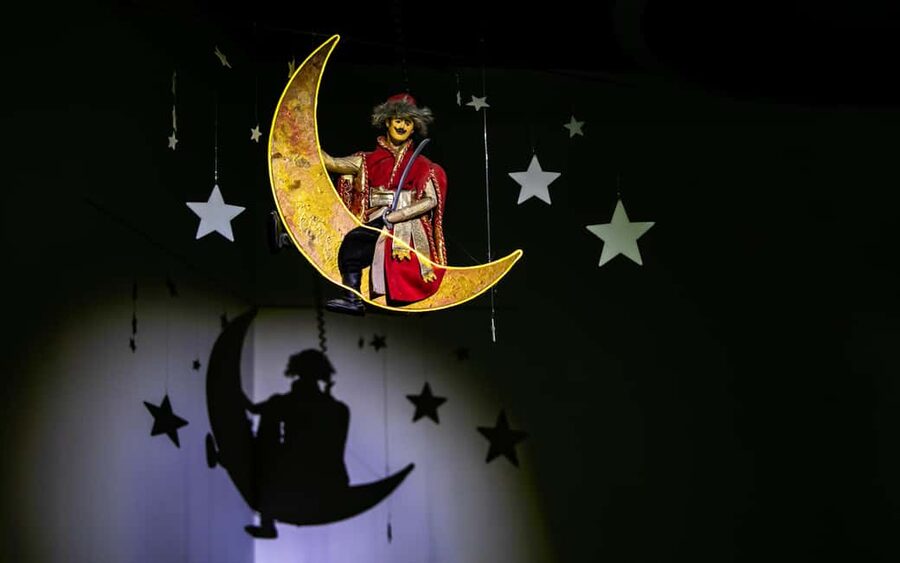
Krakow’s legends come alive here through robots and handmade moving toys, not actors in costumes. Film, shadow theater, sound, and special effects fill out the short production, giving you a playful look at the Wawel Dragon, Lajkonik, Mr. Twardowski, and other city tales.
I like the low $8 price and the easy 20-minute length. It makes a smart break between Krakow sights, especially if you want an introduction to local stories without committing to a long tour. The main drawback is just as clear: the show is very short, and its child-friendly style may feel too simple if you want serious historical detail.
In This Review
- Key points at a glance
- A Quick Mechanical Introduction to Krakow
- What the 20-Minute Program Covers
- The Wawel Dragon
- Kinga and the Wieliczka Salt Mine
- St. Mary’s Towers and the Hejnal Mariacki
- The Yellow Boot
- The Wawel Heads
- Stańczyk the Jester
- The Sigismund Bell
- Stanisław Wyspiański
- Mr. Twardowski
- Lajkonik
- How the Robot Theater Works
- Language Options and What to Expect
- Why the Short Length Can Be Useful
- Is $8 a Fair Price?
- Who Will Enjoy This Most
- Booking Details That Matter
- My Recommendation
- FAQ
- How long does the Legends of Cracow ROBOTIC SHOW last?
- How much does admission cost?
- Where does the activity start?
- Where does the activity finish?
- What languages are available?
- How is the story presented?
- Can I cancel the booking?
Key points at a glance
- Robots tell Krakow’s legends: Mechanical figures and artist-made moving toys take the main roles.
- A compact 20-minute program: You can fit it into a busy day near the city center.
- Several ways to follow the story: Narration comes through headphones or loudspeakers, with six listed audio options.
- Eleven Krakow subjects appear: The program includes the Wawel Dragon, St. Mary’s Towers, the Sigismund Bell, and more.
- Spanish is available through the host option: The listed host languages include Spanish, while the audio guide list does not.
- Good value at $8: The price is modest, but the short runtime limits how much detail the show can cover.
A Quick Mechanical Introduction to Krakow
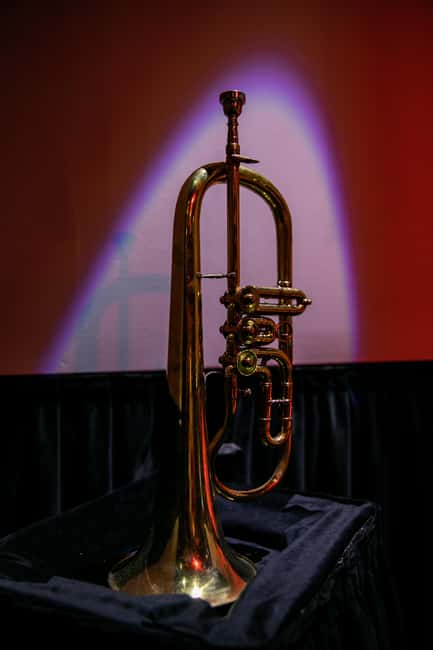
The Legends of Cracow ROBOTIC SHOW offers a different way to meet Krakow. Instead of walking from monument to monument, you sit down for a multimedia presentation that uses small-scale theater, projected images, recorded material, and moving figures.
The central idea is simple. Krakow’s most famous stories become a stage show, with robots and handmade toys serving as the main characters. The surrounding film and animation help set the scene, while shadow theater and special effects add motion and surprise.
I like this format because Krakow’s legends can feel scattered when you first arrive. The Wawel Dragon belongs to the castle hill, the Hejnal Mariacki belongs to St. Mary’s Basilica, and the Wieliczka Salt Mine lies outside the city. This show brings those stories together in one short sitting.
You should set your expectations correctly. This is not a detailed historical lecture or a guided walk through Krakow. It is a playful introduction to legends, told in a theatrical style that is likely to work best for families, younger visitors, and anyone who enjoys odd, inventive stage shows.
A few more Krakow trips worth comparing
- From Krakow: Polish Folk Show with All-You-Can-Eat Dinner
★ 4.5 · 1,593 reviews - Krakow: Folk Show & 3-Course Dinner at Jama Michalika Café
★ 4.3 · 698 reviews - Polish Folk Show with 3 course dinner in Krakow legendary restaurant
★ 4.0 · 112 reviews
What the 20-Minute Program Covers
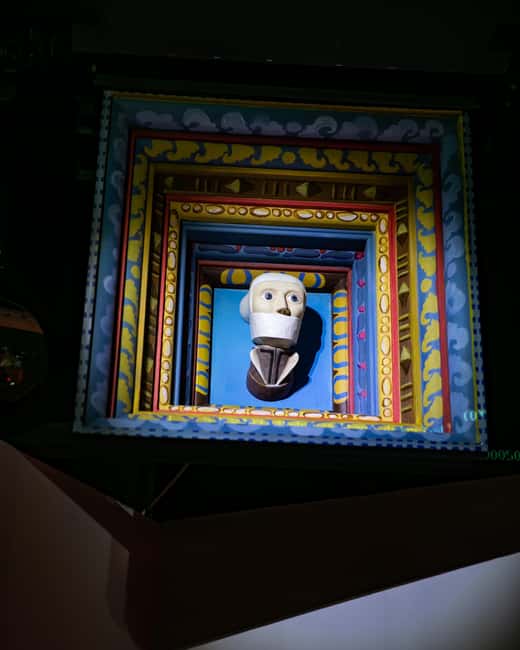
The program presents eleven subjects connected with Krakow’s legends, symbols, and famous figures. The supplied information does not give a precise running order, so think of the show as a fast-moving collection of connected stories rather than a stop-by-stop route.
Here is what each subject adds.
The Wawel Dragon
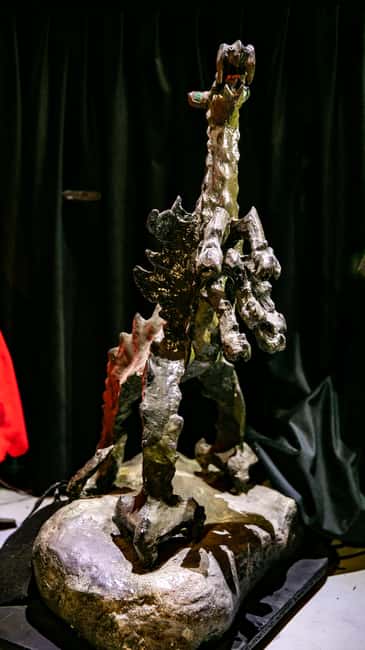
The Wawel Dragon is one of Krakow’s best-known legends, tied to Wawel Hill and the Vistula River. In the show, it gives the production a strong opening idea: a city shaped by monsters, heroes, and royal stories.
The robot format suits this tale well. A dragon is more fun as a moving figure than as a paragraph in a guidebook, and the use of sound and special effects can make this section more theatrical than a basic retelling.
Kinga and the Wieliczka Salt Mine
The story of Kinga connects Krakow with Wieliczka, the famous salt mine outside the city. Including it helps you place the mine within the region’s legends, not just its industrial past.
This is useful if you plan to visit Wieliczka separately. The show will not replace a full mine visit, but it can give the place a story before you see its underground chambers.
A different sort of day out from Krakow:
- From Krakow: Auschwitz-Birkenau Guided Tour & Hotel Pickup
★ 4.5 · 33,358 reviews - From Krakow: Auschwitz-Birkenau Guided Tour & Hotel Pickup
★ 4.5 · 29,340 reviews - Krakow: Auschwitz Guided Tour with Optional Hotel Pickup
★ 4.5 · 15,280 reviews - Krakow–Zakopane: Cable Car, Chocholow Baths, Cheese & Vodka
★ 5.0 · 10,720 reviews
St. Mary’s Towers and the Hejnal Mariacki
The two towers of St. Mary’s Basilica are among Krakow’s most recognizable sights. The Hejnal Mariacki, the trumpet call associated with the church, is one of the city’s familiar daily sounds and symbols.
By presenting the towers and the Hejnal Mariacki in the same program, the show connects a visible landmark with an audible tradition. You may notice these details differently when you later walk through the Main Market Square.
The Yellow Boot
The Yellow Boot is a less obvious subject for visitors who know only Krakow’s biggest sights. Its inclusion gives the program room for a smaller local tale, rather than relying only on the dragon and royal symbols.
This kind of story is part of the show’s appeal. You get a quick sample of Krakow’s folklore beyond the postcard landmarks, though the short runtime means each tale can only receive a brief treatment.
The Wawel Heads
The Wawel Heads refer to the carved heads associated with Wawel Castle. Their presence brings the castle’s artistic and royal setting into the performance.
A robot show cannot reproduce a full castle visit, but it can point you toward details you might otherwise walk past. If you visit Wawel afterward, this section may give you one more visual clue to look for.
Stańczyk the Jester
Stańczyk was the famous court jester of Poland’s royal era. His role adds humor and a human character to a program otherwise filled with dragons, bells, towers, and magical stories.
This is also a good match for the format. A jester can be presented with exaggerated movement and comic timing, which helps keep a very short show lively.
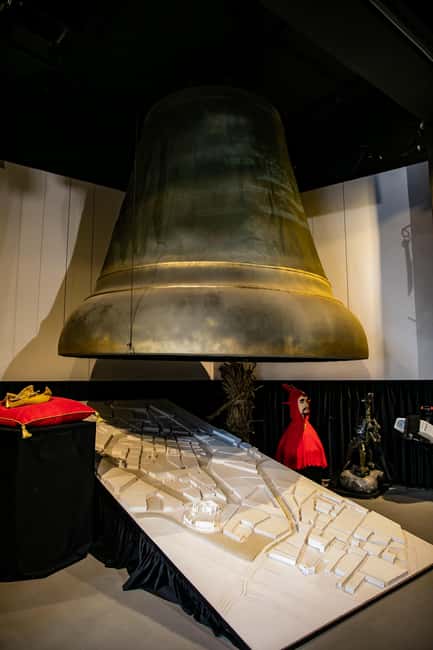
The Sigismund Bell
The Sigismund Bell is one of Krakow’s major royal symbols, located at Wawel Cathedral. It connects sound, ceremony, and Polish monarchy.
Like the Hejnal Mariacki, the bell gives the show an audio angle. You are not simply looking at a famous object. You are hearing how sound helps define Krakow’s public identity.
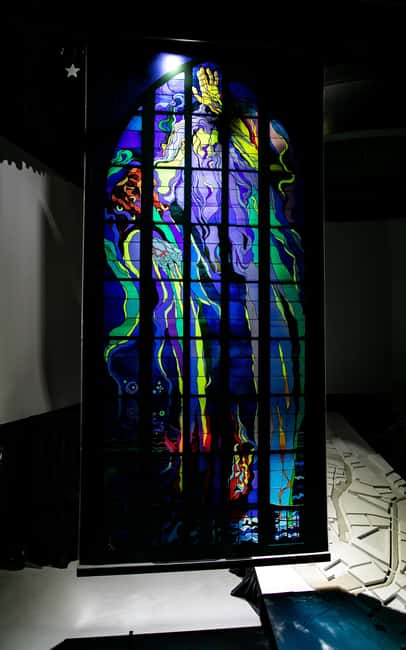
Stanisław Wyspiański
Stanisław Wyspiański brings art and Polish culture into the program. His inclusion broadens the subject beyond medieval legends and royal stories.
This section may appeal most to adults who want a little cultural context. Still, the production is designed as entertainment first, so you should expect a compact introduction rather than a full account of Wyspiański’s work.
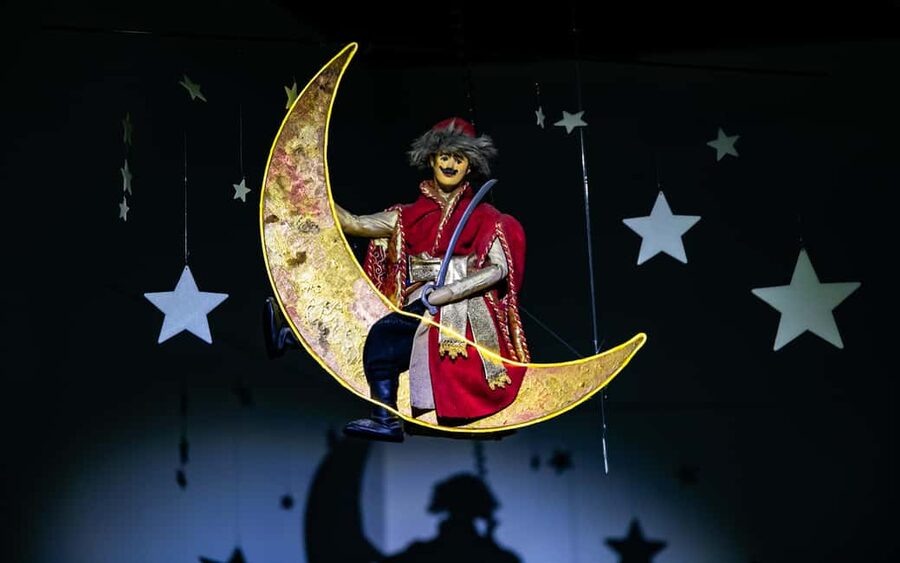
Mr. Twardowski
Mr. Twardowski is a classic Polish figure linked with magic and a bargain with the devil. His story gives the show a more fantastical turn and fits naturally with robots, shadows, and special effects.
If you like folklore with a strange edge, this should be one of the more memorable subjects. It also shows that the program is not limited to strictly local facts. Some stories are about the way Krakow imagines itself.
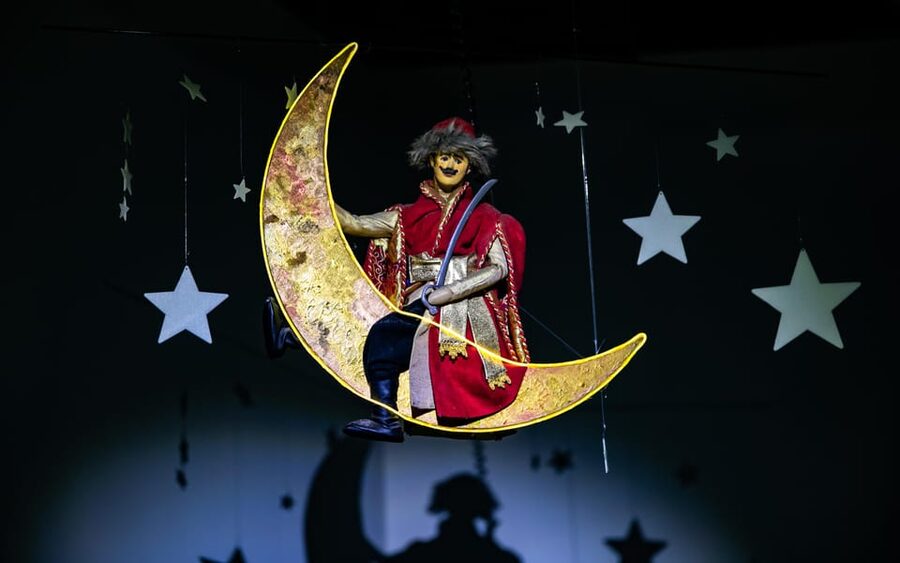
Lajkonik
Lajkonik is a colorful Krakow tradition featuring a costumed figure on horseback. Its inclusion adds a festive city custom to the program’s mix of legends and historical references.
You will not be joining the real celebration here. Instead, you get a short theatrical version of one of Krakow’s familiar symbols.
How the Robot Theater Works
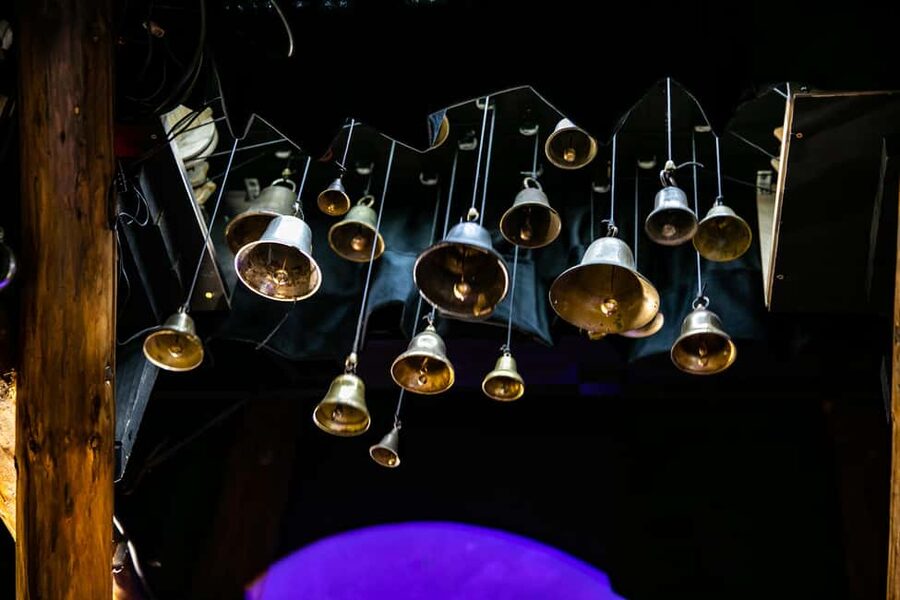
The robots are the main attraction, but they do not work alone. A narrator tells the story through headphones or loudspeakers, while cinema screens show film and animation behind the action.
Shadow theater adds another visual layer. Real recordings, moving toys, and special effects complete the production, creating a blend of miniature theater and screen presentation.
I like that the show does not depend on a single trick. If you are less interested in the robots, the films and narration still carry the story. If you prefer visual theater, the moving figures and shadows provide something to watch beyond a standard video.
The tradeoff is that the presentation may feel busy. With so many tools used in only 20 minutes, the show has little time to pause over any one legend. You are getting a brisk sampler, not a slow, atmospheric performance.
One published rating described the experience as very childish but funny. That is a useful way to frame the tone. The show is not pretending to be solemn theater. It uses a playful style, and that will be a strength for some people and a weakness for others.
Language Options and What to Expect
The host or greeter languages are listed as Polish, English, Spanish, French, Italian, German, and Ukrainian. The audio guide is listed in Polish, English, Italian, German, Ukrainian, and French.
That distinction matters if Spanish is important to you. Spanish appears among the host languages, but it is not included in the listed audio guide languages. Check the available language option when you book rather than assuming every part of the experience is offered in all seven languages.
Narration is available through headphones or loudspeakers. The headphone option may help you follow the story in your chosen language, while loudspeakers can make the presentation feel more like a shared theater event.
Since the program uses film, animation, shadow theater, and moving figures, you may understand much of the action visually even if you are not fully comfortable with the narration. Still, the legends depend on the spoken story, so language choice is worth checking in advance.
Why the Short Length Can Be Useful
Twenty minutes is not enough to tell eleven stories in depth. It is enough to give you a quick cultural orientation before you continue exploring Krakow.
I see the short runtime as the show’s biggest practical advantage. You can place it between visits to nearby sights, use it as a rainy-day pause, or bring children without asking them to sit through a long historical presentation.
One published comment called it a good interruption during Krakow sightseeing, while also wishing it lasted longer. That captures the balance well. The show works as a break, but you should not book it expecting a full afternoon activity.
The location is near Krakowska Galery, and the activity ends back at the meeting point. No transport is included or needed as part of the experience, since this is a stationary show rather than a driving or walking excursion.
Is $8 a Fair Price?
At $8 per person, the show is priced as a small add-on rather than a major paid attraction. For that amount, you are buying a short performance, multilingual narration, and a creative presentation of Krakow’s legends.
The value is strongest if you are already nearby. You do not need to set aside half a day, arrange transport, or plan a complicated route. The low cost also makes it easier to choose the show as a casual extra.
The value is weaker if you measure admission by minutes alone. At 20 minutes, the show costs more per minute than a large museum or castle visit. Its worth comes from the unusual format and the chance to hear many Krakow legends in one place.
I would compare it with a coffee break or a small indoor attraction. If your group enjoys robots, puppets, and visual effects, the price is easy to justify. If you want detailed history, spend your money on a longer museum visit or a guided walk instead.
Who Will Enjoy This Most
I would recommend the show first to families with children and to adults who enjoy quirky theater. The robots and moving toys give the presentation a clear visual hook, and the legends are easier to follow than a dense account of Krakow’s past.
It also suits you if you are visiting Krakow for a short time and want a quick introduction to local stories. The program gathers subjects from Wawel, St. Mary’s Basilica, Wieliczka, Polish court culture, and Krakow traditions.
You may want to skip it if you dislike child-oriented entertainment or if you expect polished, serious historical interpretation. The show’s comic and mechanical style is part of its identity, not a minor detail.
It can also work well for repeat visitors. You may already know the city’s major sights but still enjoy seeing its legends handled in a playful way. Just keep the brief runtime in mind.
Booking Details That Matter
The price is $8 per person, and the duration is 20 minutes. Starting times depend on availability, so check the schedule before building the show into a tightly timed day.
Free cancellation is available up to 24 hours in advance for a full refund. You can also reserve now and pay later, which helps if your Krakow plans are still shifting.
The activity includes admission to the Legends of Cracow show. It does not list transport, meals, or a separate walking tour, so plan to reach the meeting point near Krakowska Galery on your own.
The listed experience provider is Jordan Group. No individual guide names are provided, and the main narration is delivered through headphones or loudspeakers rather than as a live walking tour.
My Recommendation
I would book the Legends of Cracow ROBOTIC SHOW if you want a cheap, quick, and unusual way to meet Krakow’s folklore. The mix of robots, shadow theater, screen images, recordings, and special effects gives the city’s legends a playful form that a standard city tour cannot copy.
I would not make it a central part of your Krakow itinerary. Treat it as a 20-minute cultural pause near the city center, not a substitute for Wawel Castle, St. Mary’s Basilica, or Wieliczka Salt Mine.
Families, curious first-time visitors, and fans of miniature theater are the best match. Adults seeking serious history should keep expectations modest. At $8, the risk is low, and the short length makes it easy to fit in, but the simple style will decide the experience for you.
FAQ
How long does the Legends of Cracow ROBOTIC SHOW last?
The show lasts 20 minutes.
How much does admission cost?
Admission costs $8 per person.
Where does the activity start?
The show starts near Krakowska Galery.
Where does the activity finish?
The activity ends back at the meeting point.
What languages are available?
The listed host or greeter languages are Polish, English, Spanish, French, Italian, German, and Ukrainian. The listed audio guide languages are Polish, English, Italian, German, Ukrainian, and French.
How is the story presented?
A narrator tells the story through headphones or loudspeakers. Cinema screens show film and animation, while shadow theater, real recordings, robots, artist-made moving toys, and special effects support the presentation.
Can I cancel the booking?
You can cancel up to 24 hours in advance for a full refund. Reserve now and pay later is also available.
Just added around Krakow
- Private Guided Tour: Oskar Schindler’s Factory★ 5.0 · 3 reviews
- E-Scooter Krakow sightseeing tour★ 5.0 · 3 reviews
- From Krakow: Zakopane and Thermal Pools Guided Trip★ 5.0 · 3 reviews
- Schindler’s Factory, Ghetto and Plaszow Camp Guided Tour★ 4.7 · 3 reviews
- From Krakow: Private Wieliczka Salt Mine Tour★ 4.0 · 3 reviews
- Kraków: Private Hot Air Balloon Flight with Champagne★ 3.7 · 3 reviews
- Krakow: River Cruise & Guided Visit to Former Plaszow Camp★ 3.6 · 3 reviews
- Krakow: Old Town short walk with St. Mary’s Basilica visit★ 5.0 · 3 reviews
Show, compared.
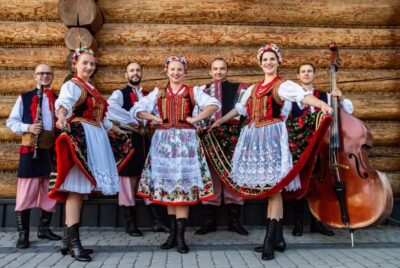
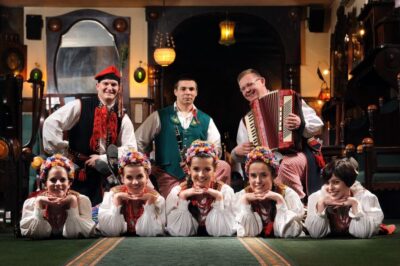
Folk Show & 3-Course Dinner at Jama Michalika Café
Read our review →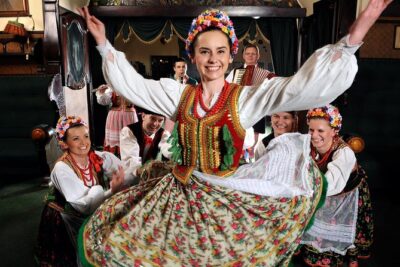
Polish Folk Show with 3 course dinner in Krakow legendary restaurant
Read our review →