
Reviewed · KRAKÓW
Jewish Krakow in German
Krakow’s Jewish story comes into focus as you walk from Kazimierz, the former Jewish quarter, toward Podgórze, the site of the World War II ghetto. Seven historic synagogues survived the war, while nearby streets still carry the weight of the Holocaust.
I like the clear arc from Jewish art and daily life to wartime destruction and modern renewal. I also like that the tour is conducted in German, with guides such as Max offering a strong grasp of local facts. The main drawback is time: 150 minutes covers a lot, and one stop may feel too brief if you want to linger.
In This Review
- Key points at a glance
- Why Jewish Krakow is best understood on foot
- Starting at the Old Synagogue in Kazimierz
- The seven synagogues and the life of old Kazimierz
- From Jewish cultural center to wartime destruction
- Seeing the present-day revival of Jewish culture
- What 150 minutes really gives you
- Is $26 a fair price?
- Who will get the most from this German tour?
- Booking and timing advice
- Should you book Jewish Krakow in German?
- FAQ
- What language is the tour conducted in?
- How long does the tour last?
- How much does the tour cost?
- Where does the tour meet?
- How early should I arrive?
- Which areas does the tour cover?
- Does the tour discuss the Holocaust?
- Is hotel pickup included?
- Can I cancel the booking?
Key points at a glance
- Seven surviving synagogues: See why Kazimierz remains central to Krakow’s Jewish heritage.
- Kazimierz to Podgórze: Connect the old Jewish quarter with the former wartime ghetto.
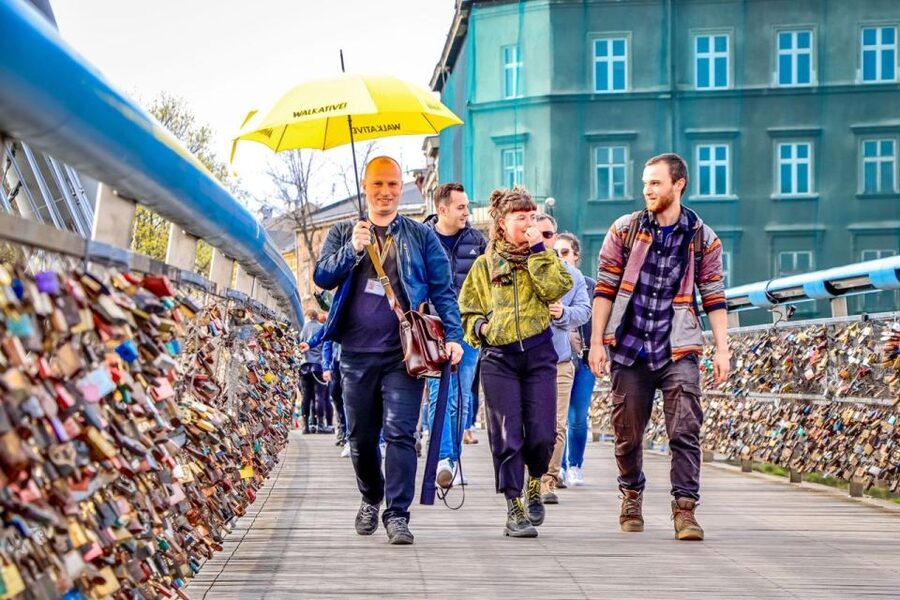
- German-speaking guidance: The tour is offered in German, with clear historical explanation and discussion.
- A serious but balanced story: Learn about Jewish life before the war, the Holocaust, and cultural renewal today.
- $26 for 150 minutes: The price covers the reservation fee and guide’s payment within a pay-as-you-wish format.
- Old Synagogue meeting point: Find the group on the stairs in front of the Old Synagogue, and arrive 10 minutes early.
Why Jewish Krakow is best understood on foot
Krakow’s Jewish past is not confined to one museum room. It is spread through streets, synagogues, former community spaces, and the route toward Podgórze. A walking tour gives you the useful connection between these places.
The story begins with Poland as home to one of the world’s largest Jewish communities, and Krakow as an important center of Jewish culture. Kazimierz was the heart of that local life. Its old synagogues and Jewish buildings offer a way to understand the community before the destruction of World War II.
This is not a light sightseeing walk. You will hear about death, displacement, and the Holocaust. The tour also makes room for the present day, when Kazimierz functions as a cultural center of modern Krakow and supports a small Jewish community.
I appreciate that balance. A tour focused only on the wartime tragedy would leave you with an incomplete picture. A tour focused only on restored buildings could make the past feel decorative. This route aims to show both the life that existed before 1939 and the damage that followed.
Other Krakow trips people book alongside this one:
- From Krakow: Auschwitz-Birkenau Guided Tour & Hotel Pickup
★ 4.5 · 33,358 reviews - From Krakow: Auschwitz-Birkenau Guided Tour & Hotel Pickup
★ 4.5 · 29,340 reviews - Krakow: Auschwitz Guided Tour with Optional Hotel Pickup
★ 4.5 · 15,280 reviews
Starting at the Old Synagogue in Kazimierz
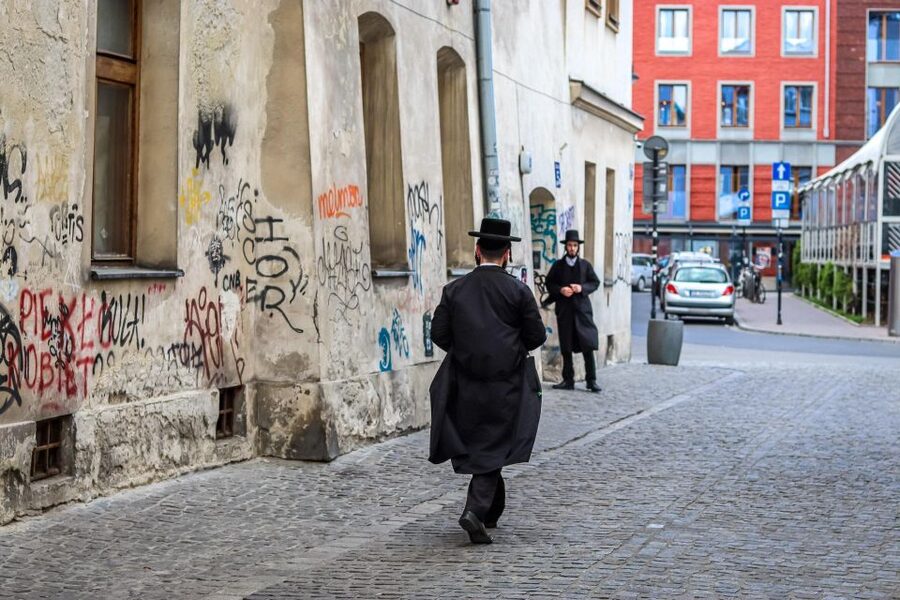
The meeting point is easy to identify: the stairs in front of the Old Synagogue on the main street of the Jewish district. You should arrive 10 minutes before the scheduled start. This matters because the walk begins in a busy historic area, and joining late could mean missing the opening context.
The Old Synagogue is a fitting place to begin. It puts you in the middle of Kazimierz rather than at a generic city-center meeting point. From here, the guide can explain the role of the quarter and introduce the local Jewish community before moving into the harder chapters of the story.
You should expect a carefully structured narrative rather than a loose stroll. The guide’s job is to connect buildings and streets with their meaning. That is particularly helpful in Kazimierz, where a handsome facade may not reveal what happened inside or what was lost around it.
The route includes places linked to Jewish art and architecture, including the group of seven old synagogues that survived the destruction of the war and Holocaust. The information provided does not promise entry into every synagogue, so think of this primarily as an outdoor historical walk unless your guide says otherwise.
The seven synagogues and the life of old Kazimierz
The synagogues are more than architectural sights. Together, they point to the scale and variety of Jewish life in Krakow. Their survival is striking, but the tour’s value lies in learning what they meant to the community before the war, not just admiring their walls.
A good guide can help you read the district at street level. You may notice how close religious buildings, homes, and other community spaces stood to one another. The route is designed to explain those connections and give you a clearer sense of Kazimierz as a lived Jewish quarter.
This is where the German language makes a practical difference. Complex historical subjects can be hard to follow when translated on the spot or explained through short labels. A German-speaking guide can give you a sustained account, answer questions, and explain why each place matters.
The strongest praise for this part of the experience is directed at the guides’ command of the material. Max is specifically named as a guide who led the group through several locations and supplied many facts. Another German-speaking guide is described as both informative and engaging, with good interaction throughout the walk.
You may want to keep your questions for this section. Ask about the synagogues, the prewar community, or how the district changed after the war. The route is short enough that a focused question can add a lot, but not so long that you can expect a full lecture at every building.
From Jewish cultural center to wartime destruction
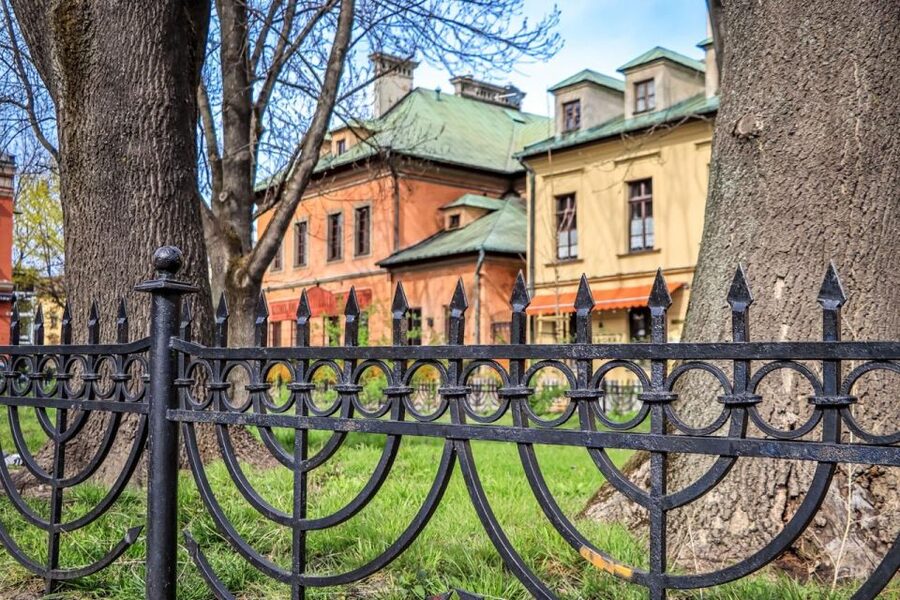
The tour then turns toward the destruction brought by World War II and the Holocaust. The supplied route description connects Kazimierz with Podgórze, the area of the former Jewish ghetto. That change in setting is important because it moves the story from community life to forced confinement and loss.
Podgórze still contains original buildings connected with the tragedy of 1941 to 1943. The point is not simply to identify a former ghetto area. You will be asked to consider what happened to the people who lived through those streets and how the surviving buildings carry that memory.
This portion may feel emotionally heavy, and it should. The tour deals openly with death and destruction. If you prefer a cheerful city walk with only passing historical notes, this is probably not the right choice. If you want to understand Krakow beyond its postcard center, the difficult material is essential.
The guide’s presentation matters a great deal here. One account describes the tour as informative and varied, while another praises the guide’s interaction with the group. That suggests a walk that is not just a list of dates. Still, the experience will depend partly on the individual guide and the group’s questions.
The route does not include hotel pickup or return transport. You need to plan your own way to the meeting point and your onward journey after the 150-minute walk. That is simple in practical terms, but it means you should leave room in your day rather than schedule a train, meal, or timed attraction immediately afterward.
A different sort of day out from Krakow:
- Krakow–Zakopane: Cable Car, Chocholow Baths, Cheese & Vodka
★ 5.0 · 10,720 reviews - Krakow: Auschwitz-Birkenau Guided Tour with Pickup & Lunch
★ 4.5 · 9,800 reviews - From Krakow: Wieliczka Salt Mine Tour
★ 4.6 · 9,393 reviews - Krakow: Auschwitz-Birkenau Guided Tour Pickup/Lunch Options
★ 4.5 · 9,057 reviews
Seeing the present-day revival of Jewish culture
The final part of the story looks at Jewish culture in modern Krakow. Kazimierz is described as a cultural heart of the city, with a small but lively Jewish community. This gives the tour a necessary present-day frame.
I like this element because it avoids treating Jewish Krakow as something that ended in 1945. The quarter has a past marked by loss, but it is also part of present-day city life. The guide can help you understand how memory, culture, and modern Krakow exist side by side.
Do not expect the tour to provide a complete survey of every current Jewish institution or event. The stated focus is broader: the historical community, wartime destruction, and cultural revival. That is enough to give you a solid foundation, but you may want to explore further on your own if current Jewish life is your main interest.
The route’s balance is one of its best features. You see places connected with faith and community, then sites connected with persecution, followed by a discussion of renewal. That structure gives emotional shape to the walk and helps prevent the past from being reduced to either architecture or tragedy alone.
What 150 minutes really gives you
Two and a half hours is a useful length for this subject. It allows the guide to build a story instead of rushing through a few plaques, while still fitting into a normal sightseeing day.
You will cover several places, and the pace should keep the experience moving between Kazimierz and Podgórze. At the same time, do not expect unlimited time at each stop. One person specifically wished for more time at some locations. That is the clearest practical warning in the feedback.
If you enjoy taking photographs, reading every sign, or sitting quietly at significant sites, you may feel pressed. You can make the most of the walk by listening closely during the explanations and saving detailed exploration for a return visit.
The 150-minute format works especially well as an introduction. It gives you enough context to decide which synagogue, museum, or memorial deserves more of your own time. It is less suitable if you want a slow architectural study or a long private conversation at every stop.
Wear comfortable shoes and expect a walking-based experience. No special transport is included, and no snack is provided. Those omissions are not serious at this price, but you should dress and plan for a continuous city walk.
Is $26 a fair price?
At $26 per person, the tour offers a useful amount of guided context for two and a half hours. The value comes less from the number of sights than from the explanation linking them. Without a guide, you can see the Old Synagogue, streets of Kazimierz, and former ghetto area, but you may miss how they fit into one historical story.
There is an unusual pricing detail. This is described as a general pay-as-you-wish tour, yet the amount paid at booking covers the reservation fee and the guide’s payment. In practical terms, you are paying $26 to reserve a place and fund the guide, rather than arriving with no fixed cost and deciding everything at the end.
That arrangement is worth understanding before booking. If you prefer a straightforward fixed-price tour, the description may seem confusing. If you value a reserved place, a German-language guide, and a planned route, the cost is reasonable.
The tour includes an expert local guide and a carefully structured story. It does not include hotel collection, return transport, or a snack. Those are small expenses you can handle yourself, but they show that the $26 price is for the walking tour rather than a packaged half-day outing.
Who will get the most from this German tour?
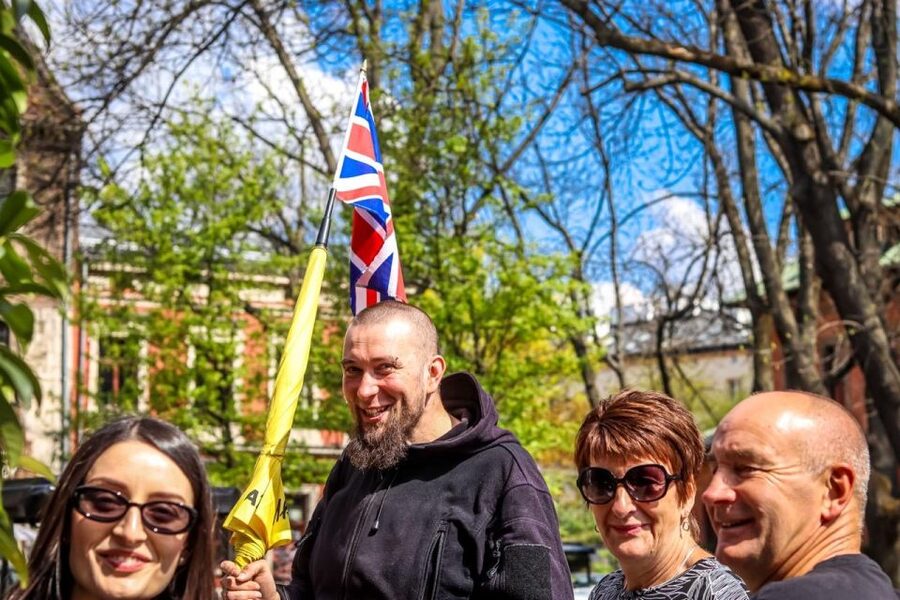
This is a strong choice if you want to learn about Krakow’s Jewish heritage in German and prefer a guide to connect the sites. It suits first-time visitors who want a serious introduction before exploring Kazimierz independently.
It also fits you if you want more than architectural sightseeing. The route explains the local community, the Holocaust, the former ghetto, and Jewish cultural life today. That makes it useful for anyone trying to understand why Kazimierz and Podgórze matter.
The tour may not suit you if you want a private experience, a relaxed pace, or a narrow focus on synagogue interiors. The group format and 150-minute schedule require some flexibility. You should also be ready for direct discussion of death and wartime destruction.
German speakers should find the language option especially helpful. The named guides include Max, and the tour’s German presentation is intended to carry the full story rather than provide a few translated comments.
Booking and timing advice
You can cancel up to 24 hours before the activity for a full refund, which gives you some room if your Krakow plans change. You can also reserve now and pay later, so you do not need to pay at the time of booking.
Check the available starting times before choosing a date. Arrive 10 minutes early at the Old Synagogue stairs, since the guide may begin with important background before the group walks on.
Plan the tour around your energy and mood. Because the subject becomes painful in the Podgórze section, it may be better earlier in the day if you want time afterward to think, eat, or visit another site at your own pace. The tour itself does not include a snack, so arrange food separately.
Should you book Jewish Krakow in German?
Book it if you want a well-organized German-language walk that links Kazimierz’s surviving synagogues with Podgórze’s wartime story. The strongest features are the guides’ clear delivery, the factual structure, and the decision to include Jewish life before the Holocaust and cultural renewal after it.
Go in knowing that some stops may receive only a short explanation. You are paying for a broad, connected introduction, not an extended visit inside every building. At $26 for 150 minutes, that is a fair trade for most people who want context and a meaningful first look at Jewish Krakow.
FAQ
What language is the tour conducted in?
The tour is conducted in German with a live German-speaking guide.
How long does the tour last?
The tour lasts 150 minutes, or two and a half hours.
How much does the tour cost?
The price is $26 per person.
Where does the tour meet?
The group meets on the stairs in front of the Old Synagogue on the main street of Krakow’s Jewish district.
How early should I arrive?
You should arrive at the meeting point 10 minutes before the activity begins.
Which areas does the tour cover?
The tour covers Kazimierz, Krakow’s historic Jewish quarter, and Podgórze, the area of the former Jewish ghetto from World War II.
Does the tour discuss the Holocaust?
Yes. The tour discusses the death and destruction of World War II and takes you to places connected with the Holocaust in Krakow.
Is hotel pickup included?
No. Hotel collection and return transport are not included.
Can I cancel the booking?
Yes. You can cancel up to 24 hours in advance for a full refund. You can also reserve now and pay later.
Just added around Krakow
- Private Guided Tour: Oskar Schindler’s Factory★ 5.0 · 3 reviews
- E-Scooter Krakow sightseeing tour★ 5.0 · 3 reviews
- From Krakow: Zakopane and Thermal Pools Guided Trip★ 5.0 · 3 reviews
- Schindler’s Factory, Ghetto and Plaszow Camp Guided Tour★ 4.7 · 3 reviews
- Kraków: Private Hot Air Balloon Flight with Champagne★ 3.7 · 3 reviews
- Krakow: River Cruise & Guided Visit to Former Plaszow Camp★ 3.6 · 3 reviews
- From Krakow: Private Wieliczka Salt Mine Tour★ 4.0 · 3 reviews
- Krakow: Old Town short walk with St. Mary’s Basilica visit★ 5.0 · 3 reviews