
Reviewed · WALKING TOURS
Jewish Krakow Walking Tour
Krakow’s Jewish quarter is easy to walk through and surprisingly easy to misunderstand. This tour connects the synagogues, streets, movie locations, and former ghetto into one clear story, ending at Plac Bohaterów Getta, where the mood shifts from neighborhood history to the crimes of the Nazi era.
I like the people-centered storytelling, which guides such as Big Tom, Natalia, Lucy, Matt, and Jakob use to explain events through individual lives rather than a blur of dates. I also like the route’s shape: it begins in Kazimierz, covers Jewish life before World War II, then moves toward the ghetto and its painful final chapter.
The main drawback is the group size, which can reach 35 people. You may spend long stretches standing still to listen, and the tour is conducted in English, so confirm the language carefully before booking.
In This Review
- Key points to know before you go
- A thoughtful route through Jewish Krakow
- Old Synagogue: starting with Krakow’s oldest Jewish house of worship
- Szeroka Street: the main road of the Jewish quarter
- Remuh Synagogue: religion, scholarship, and memory
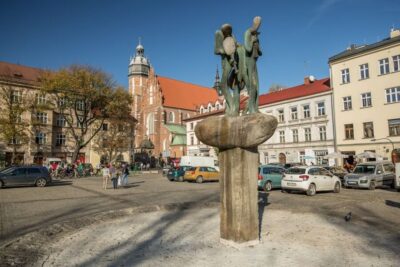
- Market Square: seeing the quarter after the war
- Mrs. Dresner’s courtyard and stairs from Schindler’s List
- Plac Bohaterow Getta: the former ghetto’s central square
- Eagle Pharmacy: the eyewitness at the end of the route
- What the guides do best
- Price, group size, and physical demands
- How to plan the rest of your day
- Who should book this Krakow walking tour?
- FAQ
- How long is the Jewish Krakow Walking Tour?
- Where does the tour begin?
- Where does the tour end?
- Is the tour conducted in English?
- Are museum and synagogue admission tickets included?
- What is included in the price?
- How many people can join the tour?
- Can I cancel for a full refund?
Key points to know before you go
- The route links Kazimierz and the former ghetto: You start at the Old Synagogue and finish at Plac Bohaterów Getta.
- The history comes before the tragedy: The tour explains Jewish life, religious sites, important residents, and the quarter’s later revival before turning to World War II.
- Schindler’s List locations are part of the walk: You visit Mrs. Dresner’s courtyard and stairs and hear the story behind the film site.
- Expect an outdoor experience: Most stops are outside, and the tour operates in rain, cold, and other weather conditions.
- It is a pay-as-you-wish format with a reservation fee: The $26.60 price covers the reservation and guide payment according to the tour details.
- The group can be large: Up to 35 people may join, so arrive ready to stand near the guide and listen closely.
A thoughtful route through Jewish Krakow
This is not simply a walk past old buildings. The route explains how Krakow’s Jewish quarter functioned as a community, how Nazi policy destroyed that community, and how the area later became one of the city’s best-known places for restaurants, bars, culture, and remembrance.
You begin at the Old Synagogue on Szeroka 24. From there, the walk moves through Kazimierz before crossing toward the former Jewish ghetto. That order matters. You first see Jewish Krakow as a place of worship, work, family, and public life. Only then do you confront the wartime destruction.
The advertised length is about two and a half hours. That gives the guide enough time to explain the setting instead of rushing from one photo stop to the next. It also means you should expect a listening-heavy walk, not a fast sightseeing circuit.
More walking tours in Krakow:
- Old Town Krakow & Wawel Castle Walking Tour
★ 5.0 · 1,508 reviews - Creepy Krakow: 2-Hour City Walking Tour
★ 4.7 · 1,131 reviews - Krakow: The Old Town Walking Tour
★ 4.8 · 794 reviews
Old Synagogue: starting with Krakow’s oldest Jewish house of worship
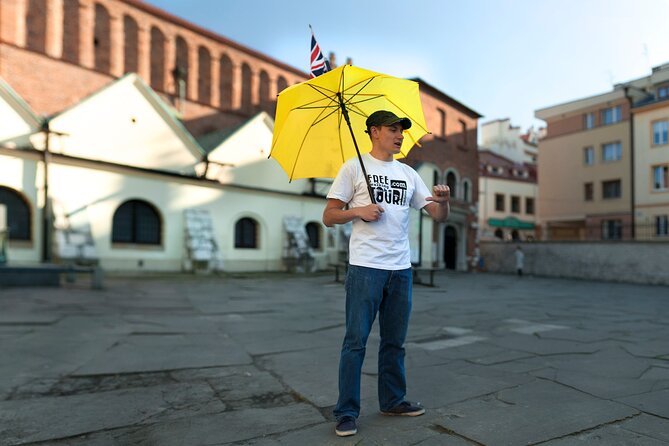
The first stop is the Old Synagogue, described as the oldest synagogue in Poland. The introduction takes about 15 minutes and focuses on its architecture, its importance to the community, and the role it played in Jewish Krakow.
The tour views the building from outside, so the admission ticket is free at this stop. If you want to see the interior, you would need to make a separate visit, since entrance is not part of this experience.
I like beginning here because it gives you a useful frame for the rest of the walk. Instead of treating Kazimierz as a collection of photogenic facades, the guide can explain why the synagogue mattered and how religious buildings helped organize community life.
Pay attention to the architectural details, but also to the way the building sits within the neighborhood. The value of this stop is less about a quick photograph and more about understanding the synagogue as a working center for worship and identity.
Szeroka Street: the main road of the Jewish quarter
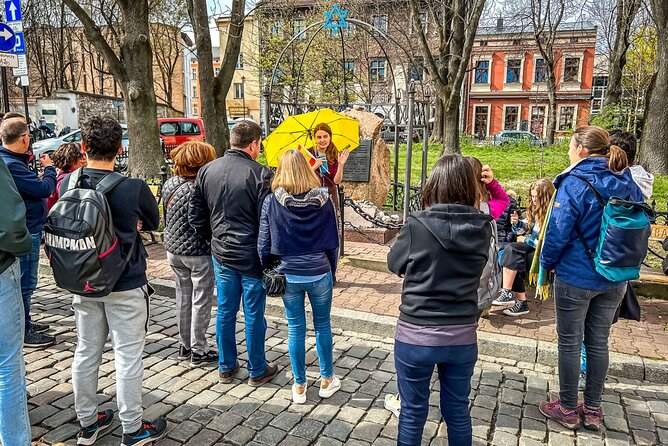
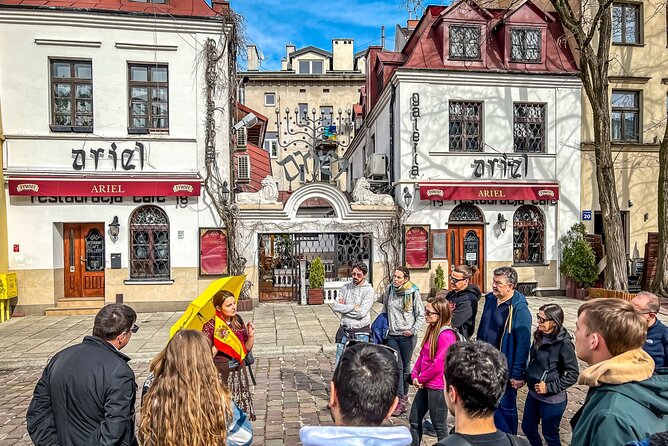
Szeroka Street is the main street of the Jewish quarter and receives about ten minutes of explanation. The guide introduces important people connected with the street and helps you read the area beyond its current cafes and restaurants.
This is one of the places where a guide adds real value. On your own, you may notice the attractive buildings and lively businesses but miss who lived here, worked here, or shaped the community. A good explanation turns a street into a record of ordinary life and public memory.
The stop is brief, so do not expect a full lecture on every building. Instead, use it to get your bearings and listen for the names and connections that the guide uses later in the walk.
Kazimierz today has nightlife and a strong restaurant scene, but this tour does not present that revival as the whole story. It places the current atmosphere beside the community that existed before the war and the damage that followed.
Remuh Synagogue: religion, scholarship, and memory
The Remuh Synagogue is the next major religious stop. The tour describes it as the private praying house built for one of Krakow’s most significant rabbis. Entrance is not included, and the planned explanation lasts about ten minutes.
This stop adds another layer to the Old Synagogue. You are not seeing two interchangeable religious buildings. The guide uses them to explain different parts of Jewish religious and communal life in Krakow.
Because the visit is not an interior museum tour, the quality of the explanation matters. Guides including Jakob and Natalia have been praised for presenting the subject with care and sensitivity, which is especially important when discussing a place connected to centuries of worship and later persecution.
If you want to spend more time inside either synagogue, plan that separately. The walking tour gives you context, but it is not designed as a detailed museum visit.
A different sort of day out from Krakow:
- From Krakow: Auschwitz-Birkenau Guided Tour & Hotel Pickup
★ 4.5 · 33,358 reviews - From Krakow: Auschwitz-Birkenau Guided Tour & Hotel Pickup
★ 4.5 · 29,340 reviews - Krakow: Auschwitz Guided Tour with Optional Hotel Pickup
★ 4.5 · 15,280 reviews - Krakow–Zakopane: Cable Car, Chocholow Baths, Cheese & Vodka
★ 5.0 · 10,720 reviews
Market Square: seeing the quarter after the war
The Market Square stop lasts about ten minutes and focuses on the revival and nightlife of the Jewish quarter. This is a useful pause in the route because it shows how Kazimierz functions today.
The modern scene can feel cheerful and social, yet the tour keeps it connected to the older story. That contrast is worth noticing. You are walking through a place where restaurants, bars, and evening activity exist alongside memorials, synagogues, and streets shaped by loss.
I appreciate this part of the route because it avoids freezing Kazimierz in the past. The neighborhood is not only a memorial. It is also a living part of Krakow, and understanding that present-day life helps explain why the area attracts so many people.
Still, this stop is short. If your main interest is food, nightlife, or contemporary culture, you will need to return later and explore on your own.
Mrs. Dresner’s courtyard and stairs from Schindler’s List
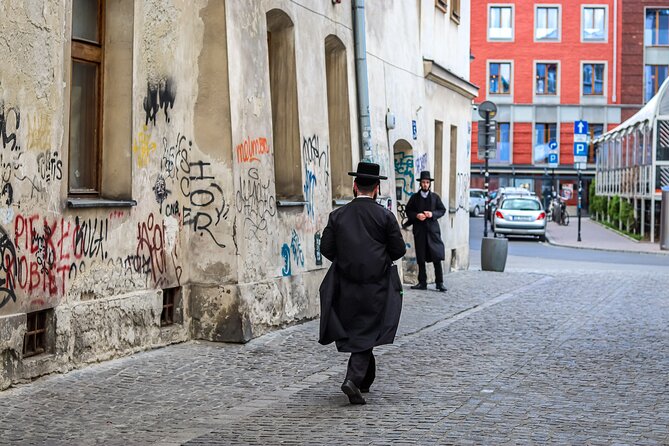
The route then reaches the courtyard and stairs associated with Schindler’s List. The guide explains the location and the real story behind the movie.
Film sites can be shallow sightseeing stops, but this one has more value when the guide separates cinema from documented history. You get a sense of how the movie used Krakow’s streets while also hearing about the people and events that inspired the scenes.
If you have seen Schindler’s List, this stop will likely be easier to place. One guide specifically encouraged visitors to watch the film before coming, especially if they do not know the story. That is sensible advice, though the tour still explains the background for people arriving without that preparation.
Keep your expectations practical. You are viewing an outdoor location, not visiting a film museum or entering a recreated set. The strength of the stop comes from the explanation and the connection to the wider wartime route.
Plac Bohaterow Getta: the former ghetto’s central square
The longest stop is Plac Bohaterow Getta, with about 50 minutes devoted to the main square of the World War II ghetto. This is where the tour becomes most direct and emotionally difficult.
The guide explains the district created by the Nazis and the role the square played during the occupation. The focus is not only on dates and official decisions, but also on the effect of those policies on people forced into the ghetto.
The square contains the famous chair memorials, though that specific feature is not listed as part of the supplied tour description, so you should not assume the guide will discuss every memorial detail. What you can expect is a substantial explanation of the ghetto and its place in Krakow’s wartime story.
Allow yourself time to listen here. The 50-minute stop is much longer than the earlier points because the subject needs room. One of the strongest qualities reported about guides such as Lucy is the use of personal narratives and clear explanations instead of packing the walk with names and dates.
The tone is necessarily serious, but it does not have to be hopeless. Big Tom was praised for drawing attention to stories of love, courage, and human decency alongside the terrible facts. That balance can make the history easier to understand without making it less painful.
Eagle Pharmacy: the eyewitness at the end of the route
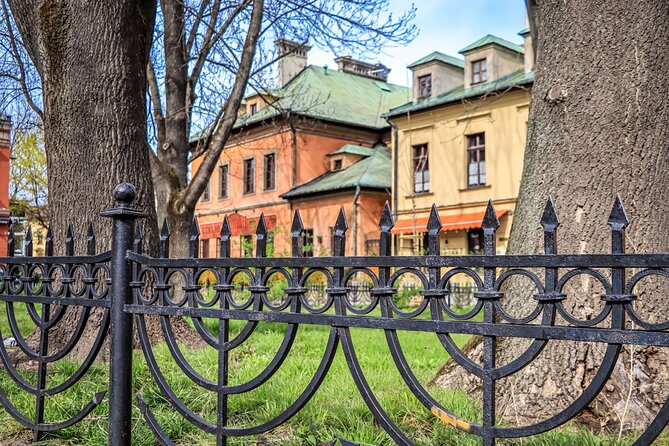
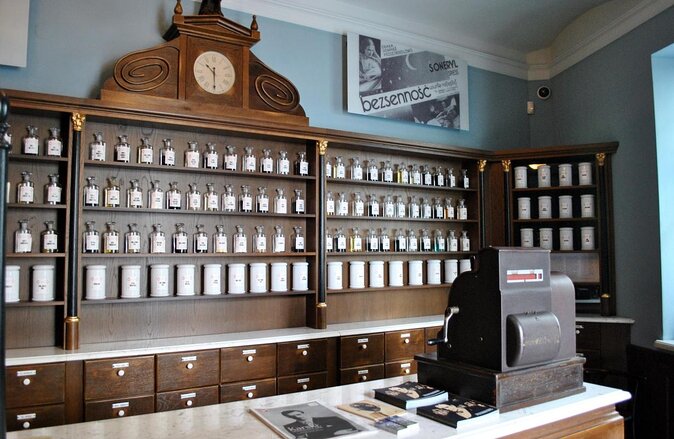
The final stop is Eagle Pharmacy, viewed from outside. The tour presents it as the home and workplace of the only non-Jewish resident of the ghetto, who became an eyewitness to Nazi crimes.
This is a strong place to end because it brings the story back to one person. After hearing about the ghetto as a system, you focus on an individual who saw what happened at close range.
The pharmacy is now connected with the Museum of Krakow, but admission is not included. If you want to go inside, make that a separate plan. The walk ends at Plac Bohaterow Getta, not at the pharmacy itself, according to the meeting information, so confirm the exact final position with your guide on the day.
The route’s end is also convenient if you plan to continue to Schindler’s Factory. One visitor noted that the finish is about ten minutes away from the museum and walked there afterward. That makes the tour a useful first step before a longer museum visit, although you should allow extra time and purchase that museum visit separately.
What the guides do best
The guides are central to this experience. Names that appear in the tour feedback include Big Tom, Jakob, Lucy, Natalia, and Matt. Individual styles will differ, but the strongest pattern is clear: the best guides make a difficult subject understandable through stories about people.
Lucy was praised for avoiding an overload of dates and names during the two and a half hour walk. Natalia was described as clear, attentive, and well informed about Jewish life in Krakow across several periods. Jakob was noted for a thoughtful and sensitive approach, while Matt was praised for explaining the quarter in a friendly way.
That does not mean every guide will suit every listener. One person found that too much time was spent standing in one place. If you prefer constant movement, this may feel slow. If you want time to absorb the subject and ask questions, the pauses will be useful.
The tour is sold as an English experience. There was also a serious language mix-up reported by a Spanish-speaking customer who expected a Spanish tour but arrived to find an English guide. If language is important to your booking, check the confirmation and contact the provider before the day of the tour.
Price, group size, and physical demands
At $26.60 per person, the cost is reasonable for a guided walk lasting about two and a half hours, especially because the route covers both Kazimierz and the former ghetto. You are paying for a local guide and a structured narrative, not for museum admissions, food, drinks, or transportation.
The payment arrangement needs a close look. This is a general pay-as-you-wish tour, with the reservation fee and guide payment covered by the amount shown here. The provider also offers smaller private tours if you ask, but that is a different arrangement.
The maximum group size is 35 people. That is large enough for the guide to become hard to hear, especially near traffic or in crowded areas. Stay close, arrive early, and do not assume this will feel like a private walk.
You need a moderate level of physical fitness. The tour operates in all weather, and much of the experience is outside. Wear shoes suited to city walking and dress for the forecast. In dangerous conditions, the guide can shorten or end the route.
Children must be accompanied by an adult. Service animals are allowed, and the starting point is near public transportation. Hotel pickup and drop-off are not included.
How to plan the rest of your day
Start at the Old Synagogue, Szeroka 24, in Krakow’s Kazimierz district. The route ends at Plac Bohaterow Getta, so do not plan on returning to your starting point with the group.
The final location works well for a longer visit to Schindler’s Factory, which is about ten minutes away according to the practical information provided by a participant. You could also return to Kazimierz later for food or evening activity, but leave time to process the subject before rushing into a busy restaurant.
Booking about 17 days in advance is the average pattern for this experience. That is not a guarantee of availability, but it suggests you should not leave a popular travel date until the last minute.
Free cancellation is available until 24 hours before the start time. Inside that 24-hour window, the payment is not refunded, and changes are not accepted. The tour also requires a minimum number of participants, so a cancellation by the provider would result in another date or experience, or a full refund.
Who should book this Krakow walking tour?
I would choose this tour if you want a clear introduction to Jewish Krakow and the former ghetto without spending a full day in museums. It suits first-time visitors who want the major places connected in one route, as well as anyone who has seen Schindler’s List and wants more context for the locations.
It is especially useful if you value explanation over sightseeing speed. The strongest guides make the history personal, careful, and easy to follow.
I would hesitate if you need a tour in a language other than English, dislike standing still, or want extensive interior visits to synagogues and museums. Those needs call for a different booking or extra visits before or after this walk.
For most people, the price is fair and the route is well chosen. Book it early, verify the language, dress for the weather, and treat the tour as a serious history experience with moments of hope, not as a casual neighborhood stroll.
FAQ
How long is the Jewish Krakow Walking Tour?
The tour lasts approximately 2 hours and 30 minutes.
Where does the tour begin?
It begins at the Old Synagogue, Szeroka 24, 31-053 Krakow, Poland.
Where does the tour end?
The tour ends at Plac Bohaterow Getta in Krakow.
Is the tour conducted in English?
The tour is offered in English. If you need another language, check your confirmation carefully and contact the provider before the tour.
Are museum and synagogue admission tickets included?
No. The tour views the Old Synagogue and Eagle Pharmacy from outside, and admission to the Remuh Synagogue, Market Square area, and other paid sites is not included.
What is included in the price?
The price includes a local expert guide and a structured narrative for the walking route. Hotel pickup, hotel drop-off, food, and drinks are not included.
How many people can join the tour?
The maximum group size is 35 participants.
Can I cancel for a full refund?
Yes. You can cancel at least 24 hours before the experience start time for a full refund. Cancellations or changes made within 24 hours are not refunded or accepted.
Just added around Krakow
- Private Guided Tour: Oskar Schindler’s Factory★ 5.0 · 3 reviews
- E-Scooter Krakow sightseeing tour★ 5.0 · 3 reviews
- Schindler’s Factory, Ghetto and Plaszow Camp Guided Tour★ 4.7 · 3 reviews
- From Krakow: Zakopane and Thermal Pools Guided Trip★ 5.0 · 3 reviews
- Kraków: Private Hot Air Balloon Flight with Champagne★ 3.7 · 3 reviews
- Krakow: River Cruise & Guided Visit to Former Plaszow Camp★ 3.6 · 3 reviews
- From Krakow: Private Wieliczka Salt Mine Tour★ 4.0 · 3 reviews
- Krakow: Old Town short walk with St. Mary’s Basilica visit★ 5.0 · 3 reviews
Walking Tours, compared.
Old Town & Wawel Castle Walking Tour in English
Read our review →
Browse the lists this tour appears in