
Reviewed · JEWISH GHETTO TOURS
Krakow: Jewish Ghetto Walking Tour
Kraków’s former Jewish Ghetto is not a preserved museum district. It is a living part of Podgórze, with ordinary streets, apartments, traffic, and modern life moving through places marked by terror. That contrast is what makes this one-hour walking tour so effective: a guide gives meaning to fragments you could easily pass without noticing.
I like two things right away. First, the route includes the remaining ghetto wall, one of the few physical pieces left from the enclosure that held more than 15,000 people. Second, the guide connects large events to daily life, individual choices, and acts of help at Under the Eagle Pharmacy. The main drawback is the short length. One hour keeps the tour easy to fit into a busy Kraków day, but an excellent guide may have more to say than the clock allows.
In This Review
- Key points at a glance
- Starting in Podgórze, where the city becomes the story
- The surviving wall and the boundaries of confinement
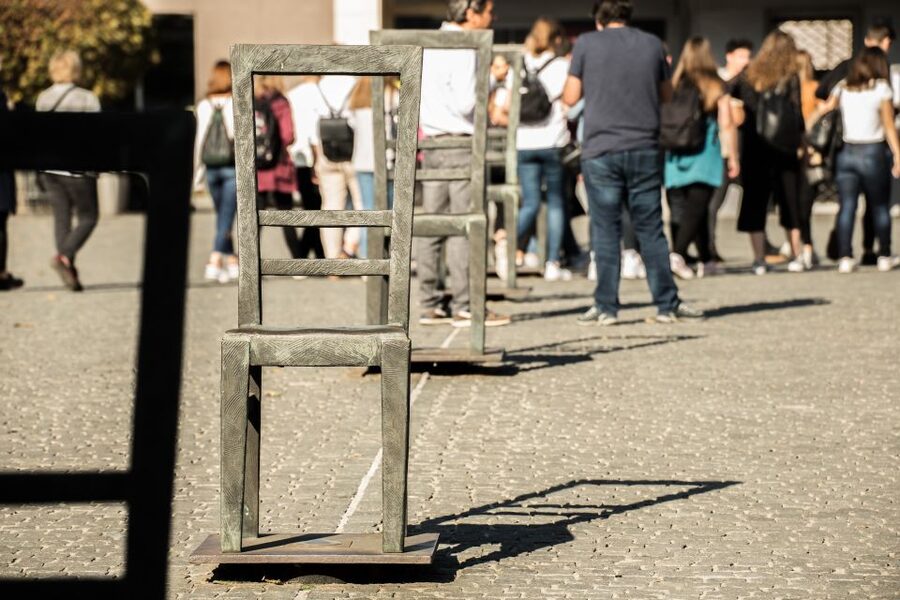
- Ghetto Heroes Square and the empty chairs
- Under the Eagle Pharmacy and stories of help
- Guides who bring the streets into focus
- Why one hour can be enough, and why it can also feel short
- The value of an $11 walking tour
- Who should book this Kraków Ghetto walk
- Practical tips for a more meaningful visit
- Should you book the Jewish Ghetto Walking Tour?
- FAQ
- Where does the Kraków Jewish Ghetto Walking Tour take place?
- How long is the walking tour?
- What does the tour include?
- Is Under the Eagle Pharmacy included as an admission visit?
- Will I see part of the original ghetto wall?
- What is at Ghetto Heroes Square?
- Which languages are available?
- Can I book a private group?
- Does the tour run in bad weather?
- How early should I arrive?
Key points at a glance
- The original ghetto wall: See a surviving section and learn what the wall meant for people forced into a few crowded city blocks.
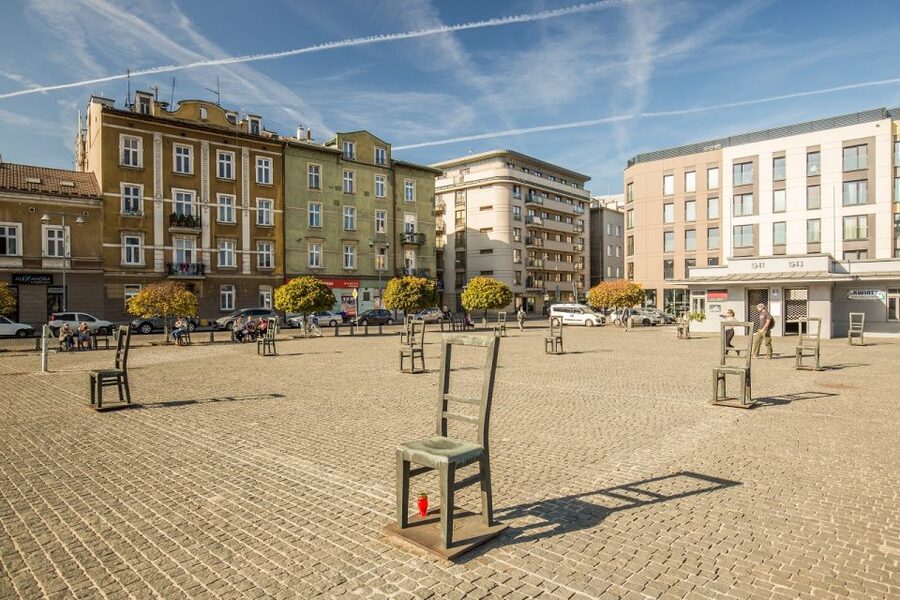
- Ghetto Heroes Square: Pause among the empty metal chairs, a memorial to those removed from the ghetto and killed during the Holocaust.
- Under the Eagle Pharmacy: Hear how pharmacist Tadeusz Pankiewicz and his staff helped residents with medicine, shelter, and support.
- Real streets, not a recreated set: Follow wartime street layouts and see buildings that still give shape to the story.
- A compact route: The walk lasts one hour, stays fairly flat, and works well before or after Schindler’s Factory.
- Many language choices: Group tours are offered in one selected language, with English, French, German, Italian, Spanish, Russian, Portuguese, Swedish, and Slovak available.
Starting in Podgórze, where the city becomes the story
The tour takes place in Podgórze, across the river from Kraków’s Old Town. This was the area chosen by the German occupation authorities for the Kraków Ghetto during World War II. You are not simply looking at a collection of memorials. You are walking through the streets where people were confined, watched, separated from relatives, and eventually deported.
That setting gives the tour its force. Much of Podgórze looks quiet today, and the surviving evidence is easy to miss without help. A guide points out the old boundary, wartime buildings, and the shape of the streets. With photographs or clear descriptions, the present-day neighborhood can be compared with how it looked during the occupation.
The meeting point depends on the option you book. Several visitors have found the area outside Schindler’s Factory easy to locate, and some tours appear to begin there. Do not assume every departure uses that exact spot. Check your booking details, then arrive 10 minutes early. Once the group leaves, latecomers cannot join and the ticket cannot be refunded.
This is a walking tour rather than a museum visit with a long indoor section. Wear shoes you can walk in and bring clothing suited to the forecast. The route goes ahead in rain or shine, and a cold day can make the hour feel much longer. One group still began in temperatures of minus 9 degrees, so a warm coat is not overkill in winter.
More Jewish heritage walks in Krakow:
- Krakow: Schindler’s Factory & Ghetto Guided Tour
★ 4.7 · 1,694 reviews - Krakow: Jewish Quarter and Former Ghetto Tour
★ 4.9 · 1,441 reviews - Krakow: Bike Tour of Old Town, Jewish Quarter and the Ghetto
★ 4.9 · 1,155 reviews
The surviving wall and the boundaries of confinement
The ghetto wall is the first major physical reminder of what happened here. Only fragments remain, but that is enough to change your sense of scale. The guide explains how more than 15,000 people were forced into a very small area behind barriers, with severe limits on movement and basic supplies.
I find this stop valuable because it turns an abstract number into a place. You can see the wall and the streets beside it, then consider how a few blocks became a prison for families who had already lost homes, work, and safety. The wall was not only a barrier. It was a message of control, marking who could enter, who could leave, and who had been pushed out of the wider city.
The tour also deals with daily life, not just the final deportations. You learn about fear, hunger, uncertainty, family separation, and the small acts of solidarity that helped people survive from one day to the next. That focus makes this different from a visit centered only on Auschwitz. Here, you get a closer look at how persecution affected ordinary routines before the killing process reached its later stages.
Do not expect a large intact section of wall or a fully preserved ghetto interior. One visitor fairly noted that little of the old building fabric remains. The guide’s explanation supplies much of the context, so this experience is far more useful with a strong guide than as a self-guided stroll.
Ghetto Heroes Square and the empty chairs
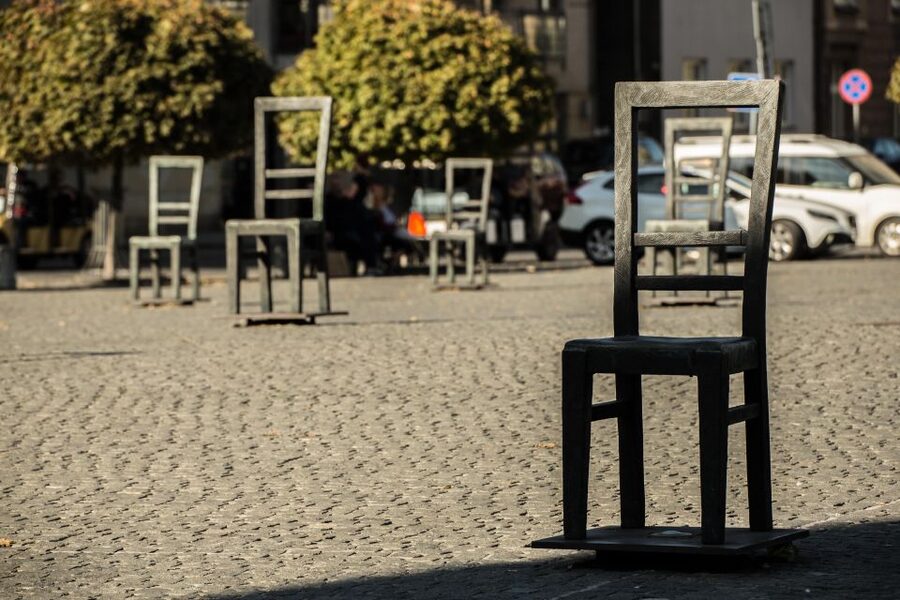
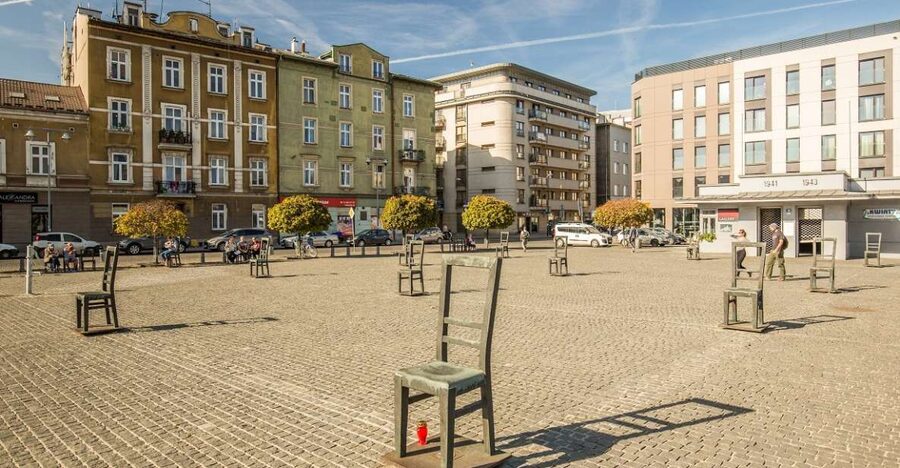
The route continues to Ghetto Heroes Square, the emotional center of the walk. During the occupation, the square was used for gatherings and deportations to concentration and death camps. Today, rows of empty metal chairs occupy the space.
The chairs are a simple but unsettling memorial. They suggest the furniture and belongings left behind when families were forced from their homes. They also make absence visible. You are not looking at statues of famous leaders. You are looking at empty places for people who were taken away.
Your guide will explain the square’s role and the meaning of the chairs, then give you time to take in the scene. The subject is painful, and this is not a stop for hurried sightseeing or casual photographs. I appreciate the way the best guides keep the tone respectful while still explaining what happened clearly.
This square can also help you place the rest of the tour. The wall shows physical confinement. The streets show daily life under that confinement. The chairs show the final removal of the people who had been forced to live there. The route moves through those stages without trying to turn tragedy into spectacle.
Under the Eagle Pharmacy and stories of help
Across from the square is Under the Eagle Pharmacy, associated with Tadeusz Pankiewicz and his staff. The pharmacy became a place where ghetto residents could obtain medicine and, according to the tour material, receive help and shelter despite the danger.
This is one of the most important stops because it adds human choice to a story often told through orders, uniforms, walls, and deportations. Pankiewicz was not simply watching events unfold. He and his staff took risks to help people trapped inside the ghetto. Your guide shares these stories as examples of compassion and courage under German occupation.
The route does not promise admission to the pharmacy. One visitor found the chemist closed on the day of the tour, while another described it as a highly informative museum. Treat the stop primarily as a guided explanation of the site, and check separately if you want to enter the museum. The guide can still explain why the building matters even if the doors are closed.
I especially value this part of the walk because it avoids presenting the ghetto only as a place of suffering. Suffering is central, but so are the choices people made to help one another. The stories at the pharmacy give the tour a difficult but necessary balance.
More walking tours in Krakow:
- Old Town Krakow & Wawel Castle Walking Tour
★ 5.0 · 1,508 reviews - Creepy Krakow: 2-Hour City Walking Tour
★ 4.7 · 1,131 reviews - Krakow: The Old Town Walking Tour
★ 4.8 · 794 reviews - Krakow: Kazimierz Jewish Quarter Walking Tour
★ 4.8 · 571 reviews
Guides who bring the streets into focus
The strongest feature of this experience is the guide. Names that appear in the available feedback include Olga, Joanna, Ewa, Aga, Helen, Phil, Kris, Krzysztof, and Bartholomew. You cannot choose a particular guide unless your booking option permits it, but the descriptions point to a consistent strength: clear explanations, compassion, and a serious command of the subject.
Olga is described as friendly and able to answer questions. Joanna is praised for setting a steady pace, which matters if you prefer not to hurry. Ewa’s storytelling focuses on individual lives and the moral weight of what happened. Phil used photographs to show how the area looked in the past, a useful aid when few original structures remain. Aga connected the occupation’s lessons with present-day events without losing sight of the historical facts.
That range matters. A guide who only lists dates can make a place feel remote. A guide who relies only on emotion can leave you without a clear timeline. The best version of this tour does both: it explains how the ghetto came into being, describes life inside it, and tells personal stories that help you understand the human cost.
There are a few practical differences between guides and group conditions. Some visitors received headsets or earphones, which made it easier to hear while walking. On another occasion, a guest found the guide’s voice difficult to catch and wished the guide had spoken more slowly. If you have hearing concerns, choose a private group if available or ask about audio equipment at the meeting point.
The group tour operates in one language only, selected when you book. The available choices include English, French, German, Italian, Spanish, Russian, Portuguese, Swedish, and Slovak. Confirm your chosen language carefully rather than assuming a multilingual group.
Why one hour can be enough, and why it can also feel short
An hour is a sensible length for a concentrated introduction. The walking distance is not especially demanding, the route is generally flat, and the tour can fit neatly after a museum visit or between other Kraków plans. One visitor called it short but worthwhile, and another found the pace comfortable even on a warm day.
The time limit also keeps the experience from becoming overwhelming. If you have already visited Auschwitz, you may want a shorter, local presentation rather than another full day focused on Nazi crimes. This walk gives you a different angle: the first-person scale of a neighborhood where people were forced to live before deportation.
Still, one hour is tight for such a serious subject. A particularly strong guide may need to compress important material. One visitor felt the guide could have spoken for several more hours, while another thought the length was ideal. Both reactions make sense. Book this as an introduction and a focused memorial walk, not as a complete study of Kraków’s Jewish history or the Holocaust.
If you want more time, you could pair it with a visit to Schindler’s Factory. Several people found the ghetto walk especially useful before or after that attraction. The two experiences complement each other, but do not presume the tour includes a factory visit. The walking tour covers the ghetto area and its landmarks only.
The value of an $11 walking tour
At about $11 per person, this is a strong-value activity if you want context rather than expensive transport or a long organized excursion. The price covers a live licensed guide and the walking route. Food and drink are not included, but there is no need to buy anything during the hour.
The value comes from what you would miss alone. You can find Ghetto Heroes Square and the wall yourself, but the empty chairs mean more when someone explains the square’s wartime use. The streets may look ordinary, yet a guide can point out the surviving layout and connect it to photographs, names, and events.
Private groups are available if you want a more personal pace or have a small party. A standard group is likely the better bargain for most people, especially at this price. If you want to ask many questions, need slower explanations, or prefer a quieter setting, the private option may justify its higher cost.
The activity has a rating of 4.6 from 349 reviews, with repeated praise for the guides’ preparation, warmth, and sensitivity. I would give those points real weight because a tour on this subject depends heavily on delivery. The price is low, but the experience is not lightweight when the guide uses the hour well.
Who should book this Kraków Ghetto walk
I would recommend it to anyone who wants to understand what daily life in a Nazi-controlled ghetto meant, not just memorize dates. It suits first-time visitors to Kraków, people who have already seen Schindler’s Factory, and anyone who wants a compact historical activity close to the city’s other sights.
It is also a good choice if you prefer local streets to a formal exhibition. You move through the real neighborhood, see the surviving wall, pause at the square, and finish with the pharmacy story. That physical connection can make the material easier to grasp.
Families with older children and teenagers may find the one-hour format manageable, though the subject is severe. The tour is not designed as light entertainment. It asks for attention and respect, and the empty-chair memorial can be particularly affecting.
You may want a different plan if you dislike guided walks, need extensive indoor shelter, or want a long, detailed academic presentation. The route goes on in all weather, and the short duration means the guide must move steadily. Also, if your main goal is to enter museums, confirm admission separately because the listed inclusions cover the guide and the walking tour, not food, drinks, or a guaranteed pharmacy visit.
Practical tips for a more meaningful visit
Book the language you want and read the exact meeting point for your option. Some departures have been outside Schindler’s Factory, but the meeting point can vary.
Arrive early. The group leaves on time, and late arrival means missing the tour without a refund.
Wear comfortable footwear. The walking distance is manageable and mostly flat, but you will be outside for the full route.
Bring a coat, rain protection, or sun protection according to the forecast. There is no weather cancellation promise in the details, so prepare for the walk to run in rain or shine.
If you have already visited Schindler’s Factory, keep the two experiences distinct. The factory helps explain the occupation through a museum setting, while this route puts you inside the former ghetto streets.
Allow yourself a quiet moment after the tour. The final stop carries emotional weight, and rushing straight into another attraction may not feel right.
Should you book the Jewish Ghetto Walking Tour?
Yes, if you want a short, low-cost, place-based history tour with a serious guide. The surviving wall, Ghetto Heroes Square, and Under the Eagle Pharmacy create a clear route through confinement, deportation, and courage. The guides are repeatedly praised for being friendly, clear, and sensitive, and the $11 price makes this one of Kraków’s easier activities to add.
Book it with realistic expectations. You will not see a fully preserved ghetto, the hour may feel brief, and the pharmacy may not be open. But with the right guide, Podgórze’s ordinary streets become readable, and that is the point. If you have time for only one compact look at Kraków’s wartime Jewish history, this is a worthwhile choice.
FAQ
Where does the Kraków Jewish Ghetto Walking Tour take place?
The tour takes place in Podgórze, the district that contained the Kraków Ghetto during World War II.
How long is the walking tour?
The tour lasts one hour.
What does the tour include?
It includes an expert live guide and a walking tour of the Kraków Ghetto area.
Is Under the Eagle Pharmacy included as an admission visit?
The route includes the historic Under the Eagle Pharmacy as a stop and explains its wartime role. Entry to the pharmacy is not listed as an included feature, and access may depend on whether it is open.
Will I see part of the original ghetto wall?
Yes. The tour visits a surviving section of the original Ghetto Wall.
What is at Ghetto Heroes Square?
Ghetto Heroes Square contains empty metal chairs that symbolize the people removed from the ghetto and the lives lost during the Holocaust.
Which languages are available?
The tour is available in French, German, Italian, English, Spanish, Russian, Portuguese, Swedish, and Slovak. Group tours operate in one selected language.
Can I book a private group?
Yes. A private group option is available.
Does the tour run in bad weather?
The tour goes ahead in all weather, including rain. You should check the forecast and bring suitable clothing and footwear.
How early should I arrive?
You should arrive 10 minutes before the scheduled start. Latecomers cannot join after the group has departed, and tickets cannot be refunded.
Just added around Krakow
- Private Guided Tour: Oskar Schindler’s Factory★ 5.0 · 3 reviews
- E-Scooter Krakow sightseeing tour★ 5.0 · 3 reviews
- From Krakow: Zakopane and Thermal Pools Guided Trip★ 5.0 · 3 reviews
- Schindler’s Factory, Ghetto and Plaszow Camp Guided Tour★ 4.7 · 3 reviews
- Kraków: Private Hot Air Balloon Flight with Champagne★ 3.7 · 3 reviews
- Krakow: River Cruise & Guided Visit to Former Plaszow Camp★ 3.6 · 3 reviews
- From Krakow: Private Wieliczka Salt Mine Tour★ 4.0 · 3 reviews
- Krakow: Old Town short walk with St. Mary’s Basilica visit★ 5.0 · 3 reviews
Jewish Ghetto Tours, compared.

Bike Tour of Old Town, Jewish Quarter and the Ghetto
Read our review →
Kazimierz, Schindler’s Factory & Ghetto Guided Tour
Read our review →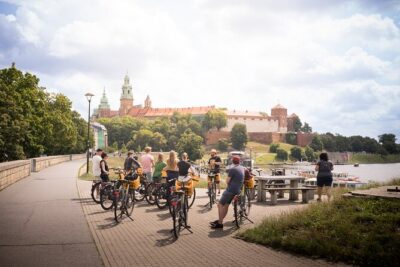
Full Bike Tour – the Old Town, Jewish Qtr & the Ghetto NEW BIKES
Read our review →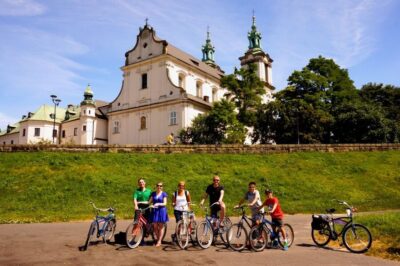
Bike Tour of the Old Town, Kazimierz, and the Ghetto
Read our review →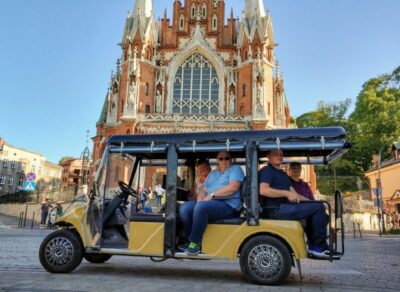
Jewish Quarter and Ghetto Electric Golf Cart Tour
Read our review →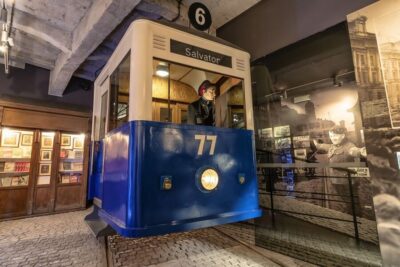
Schindler’s Factory and Jewish Ghetto Guided Tour
Read our review →Browse the lists this tour appears in