
Reviewed · OLD TOWN TOURS
Katowice Old Town Walking Tour
Katowice is not a postcard town built around one grand square. Its appeal comes from the way Silesian identity appears in old churches, communist-era landmarks, handsome tenements, music institutions, and modern public life. This private walk gives you a useful first look at that mix, from the Market Square to the giant Spodek arena.
I like the private format, which gives your group room to ask questions and adjust the conversation. I also like the range of subjects: architecture, religion, music, politics, wartime memory, shopping, and everyday city life all appear in three hours. The main drawback is the distance. You walk about 6.5 kilometers, and the $81.62 price per person is easier to justify for two or more people sharing the experience than for a solo visitor.
In This Review
- Key points at a glance
- Why Katowice makes a good walking subject
- Market Square, old buildings, and communist-era shopping
- Two churches, two views of Silesian faith
- The Academy of Music and Katowice’s cultural life
- The former Silesian Parliament
- Stawowa and the nineteenth-century streets
- The Silesian Insurgents’ Monument
- Spodek, Katowice’s unmistakable symbol
- What the private format is worth
- Who should book this walk
- My booking advice
- FAQ
- Where does the Katowice Old Town Walking Tour begin?
- Where does the tour end?
- How long is the walking tour?
- Is this a private tour?
- What language is the tour offered in?
- Can I cancel for a full refund?
Key points at a glance
- A 6.5-kilometer walk through central Katowice: Expect a proper city walk, not a short loop around the main square.
- Private English-language guiding: Only your group takes part, with more time for questions and personal interests.
- Silesia beyond the usual sights: The route explains regional identity through churches, government buildings, monuments, and streets.
- A sharp contrast between old and new: Nineteenth-century tenements lead toward communist-era architecture and the unmistakable Spodek.
- Guide Malwina may lead the walk: Her strong command of Silesian and Polish history made the route especially useful for one visitor.
- Free admissions throughout: The value comes from interpretation and route planning, not paid entry tickets.
Why Katowice makes a good walking subject
Katowice can be easy to misunderstand if you see only its newer roads and large buildings. This walk helps you read the city as a place shaped by changing borders, competing cultural influences, industrial growth, religious life, and twentieth-century politics.
The route does not treat Katowice as a museum frozen in one period. You move from the Market Square and its older buildings to music, theater, government, churches, nineteenth-century housing, national memory, and Spodek. That broad mix is the tour’s main strength.
You should also know that the activity begins and ends at the Silesian Theatre, at Rynek 10. The advertised location is Katowice, not Krakow, so check your transport plans carefully if you are staying elsewhere in southern Poland. The meeting point is near public transportation, but the actual sightseeing is on foot.
More Old Town walks in Krakow:
- Old Town Krakow & Wawel Castle Walking Tour
★ 5.0 · 1,508 reviews - Krakow: Bike Tour of Old Town, Jewish Quarter and the Ghetto
★ 4.9 · 1,155 reviews - Krakow: The Old Town Walking Tour
★ 4.8 · 794 reviews
Market Square, old buildings, and communist-era shopping
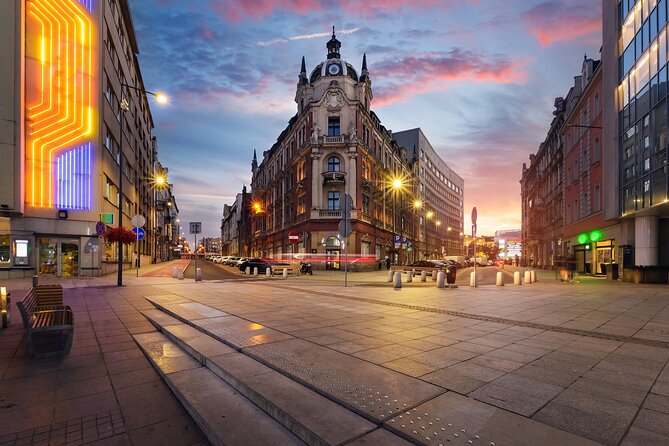
The Silesian Theatre is the starting point and gives the walk a cultural setting from the first minute. From there, you look at Market Square, the Silesian Theatre area, and the Skarbek and Zenit buildings.
Skarbek and Zenit are especially useful stops because they point to a different side of Polish urban life. They were once a major shopping destination during communist Poland, when buying ordinary goods could carry much more social weight than it does today. Rather than treating these buildings as simple commercial blocks, the guide uses them to explain how people shopped and socialized in that period.
You also see some of the oldest buildings in the city. Do not expect a perfectly preserved medieval center. Katowice’s older core is part of a layered city, and the interest comes from comparing what remains with the later buildings around it.
The Market Square also introduces Silesia’s social side. It is described as a local venue for eating, drinking, and going out, so this is not only a history stop. You get a quick sense of where city life happens now, even though the walk does not include a meal or a scheduled tasting.
The stop lasts about 15 minutes. That is enough for an introduction, but not a long architectural lecture. If old buildings are your main interest, use the private format to ask the guide to point out details that might otherwise pass quickly.
Two churches, two views of Silesian faith
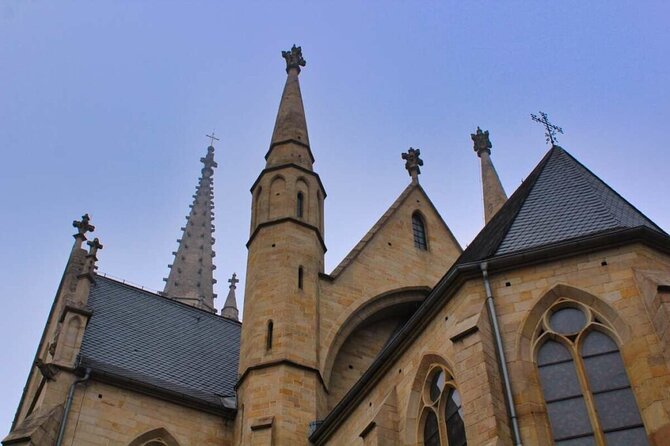
The Immaculate Conception Catholic Church, also called Kosciol Mariacki, comes next. You spend about 10 minutes here, with time to study the exterior architecture and learn about artworks by leading Polish artists inside.
The church matters because it keeps the route from becoming only a story about industry and communism. Religious buildings help explain how Silesian communities expressed belonging and belief through architecture. Since admission is free, the stop adds substance without adding a ticket cost.
The Cathedral of Christ the King later gives you a striking contrast. Its exterior looks Catholic-like, while the interior has a Protestant-like character. The route uses that contrast to explain the mixed origins and spiritual traditions of Silesia.
That is one of the most worthwhile ideas on the walk. Silesia has changed hands and cultural direction over time, and the religious buildings make that history easier to grasp than a string of dates. The guide can connect the architecture to the region’s Slavic and German influences, a subject that one visitor found especially interesting.
Each church stop is short, about 10 minutes. You will have time to see the key features, but not to linger for a long silent visit or detailed study of every artwork. If you want to go inside, dress and behave appropriately for an active place of worship.
The Academy of Music and Katowice’s cultural life
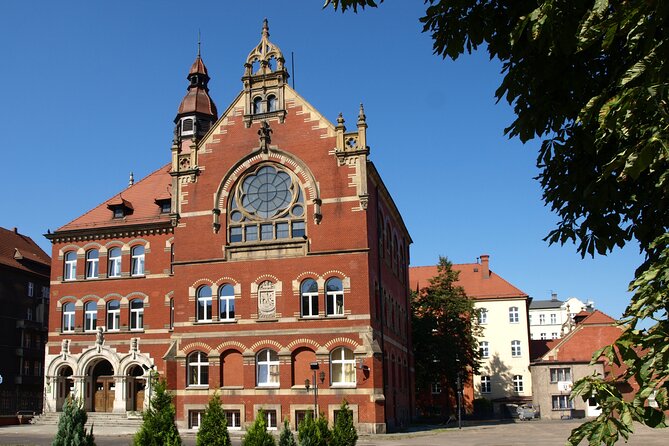
The Academy of Music in Katowice receives about seven minutes on the route. It is described as Poland’s most prestigious music academy, making it an important part of the city’s cultural profile.
This stop shows why Katowice cannot be reduced to old factories or postwar architecture. Music has a serious place here, and the academy connects the city with formal artistic training and national cultural life.
Seven minutes is a brief pause, so expect an outside look and an explanation rather than a full tour of the institution. That brevity is reasonable in a walking route covering many subjects, but music lovers may wish the schedule allowed more time.
The walk also passes a local favorite theater with an informal atmosphere. Its name is not specified in the tour details, so you should treat this as a passing cultural stop rather than a booked performance or guided theater visit.
Another unnamed venue on the route hosts art exhibitions, international meetups, and other events. These short glimpses are useful because they show how Katowice’s cultural life works beyond its formal academy and grand theater. You see spaces used for current activity, not only monuments from the past.
More Katowice trips:
- From Katowice: Auschwitz-Birkenau Skip-the-Line Guided Tour
★ 4.7 · 373 reviews - Private One-Way Transfer from Kraków to Katowice Airport
★ 5.0 · 157 reviews - Auschwitz – Birkenau from Katowice
★ 4.5 · 37 reviews - Pub Crawl 1hr Unlimited Beer + Vodka then Clubs in Katowice
★ 4.2 · 22 reviews
The former Silesian Parliament
The former Silesian Parliament takes about 10 minutes. This building was once the seat of parliament for the Autonomous Silesia Region, so it gives the guide a natural place to explain local political identity.
For you, the value is less about admiring a government building and more about understanding that Silesia has had a distinct regional character. The stop puts local autonomy into the walking route and helps explain why Silesian identity can feel more specific than a simple Polish regional label.
The tour’s wider story about Silesia changing hands between Slavic and German influences also fits here. The guide can tie political history to the streets and buildings around you, making the subject easier to follow than it would be in a museum display.
Again, the 10-minute timing keeps things moving. You get context and a view of the building, but this is not a formal parliamentary visit. The route is best for a broad first understanding, not for a specialist political history lesson.
Stawowa and the nineteenth-century streets
The longest portion of the route is the 30-minute walk toward Stawowa. You pass through Miarka Square, Dworcowa Street, and 3 Maja Street while looking at nineteenth-century tenements and the oldest high school in Katowice.
This section is where the tour becomes most obviously a neighborhood walk. Instead of stopping only at famous landmarks, you get time to compare streets, façades, and public spaces. I like that the route gives these buildings room to register. A quick city tour often rushes past ordinary-looking streets that reveal more about daily urban growth than a single monument can.
The tenements also help bridge the gap between the older city and its twentieth-century symbols. Their presence gives Katowice a human scale before the route moves toward larger public monuments and Spodek.
You should pace yourself here. Thirty minutes sounds modest, but the full walk covers 6.5 kilometers and includes several more stops. Comfortable shoes are important, and a moderate level of fitness is expected.
The route includes a monument to Silesian scouts who opposed the Nazis in 1939. The stop brings wartime memory into the city walk without turning the whole experience into a military-history tour. It is a reminder that Katowice’s public spaces also carry painful and heroic memories.
The Silesian Insurgents’ Monument
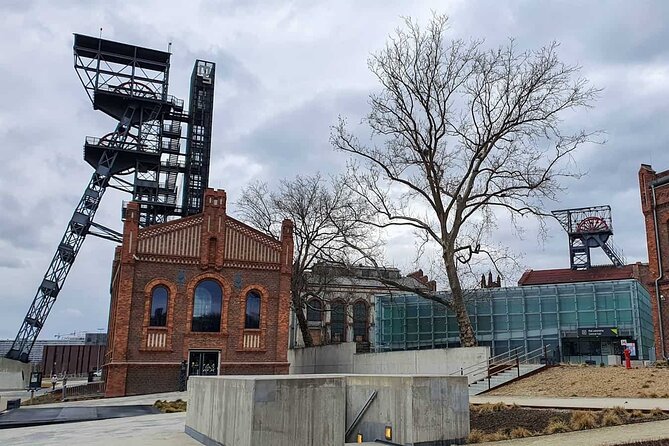
The Silesian Insurgents’ Monument receives about 10 minutes. Its three wing-like forms commemorate the three Silesian uprisings, making it one of the clearest symbols of regional struggle and identity.
This is an important stop because it gives physical form to the political story introduced at the former Parliament. The monument is not simply decorative. It points to conflict over Silesia and to the way local memory is kept in the center of the city.
You will get more from this stop if you ask the guide to place the uprisings within the wider story of changing borders and competing national identities. The tour is particularly well suited to that kind of question because the private format lets you pause for clarification rather than follow a fixed crowd.
The stop is short, and the walk continues toward Spodek. Think of the monument as a focused explanation, not an extended memorial visit.
Spodek, Katowice’s unmistakable symbol
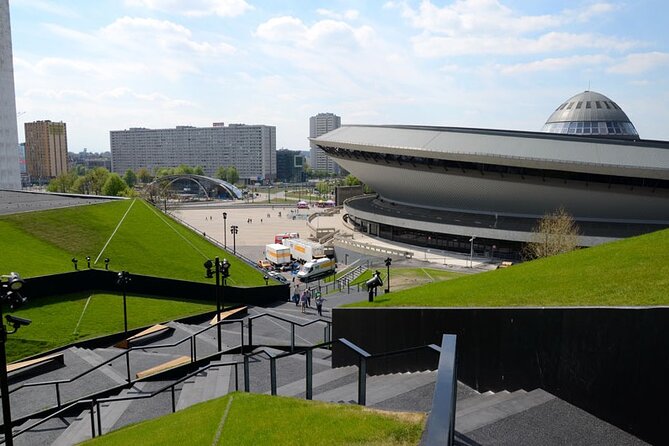
Spodek is the final major stop and receives about 10 minutes. Its saucer-like form is the symbol of Katowice, and its appearance creates a strong finish to the route.
The building shifts the mood from historic streets and political memory to bold modern architecture. It also reinforces one of the tour’s central ideas: Katowice is a city where different periods sit close together. Old churches, nineteenth-century tenements, communist-era commercial buildings, regional monuments, and a famous modern arena can all fit into one walk.
You should not expect entry into Spodek or an event ticket. The experience takes you to the landmark, explains its place in the city, and then returns to the starting point.
Ending where you began at the Silesian Theatre is practical. You are not left trying to find your way back after a long walk, and you can use the nearby transport connections for your next stop.
What the private format is worth
The price is $81.62 per person. Since the experience is private, only your group participates, and group discounts may be available. That changes how I would judge the cost.
For a solo visitor, the price is relatively high for a three-hour walk with no admission tickets included. Still, a private tour can make sense if you want direct attention, have limited time, or prefer asking many questions. One solo participant had the guide’s full attention and found the experience especially useful for learning.
For two or more people, the price may feel more reasonable because you are paying for a personal guide rather than a seat in a large group. You also avoid the slower pace and limited question time that can come with a crowded public walk.
The free admissions are a modest plus, but they are not the main value. You are paying for the guide’s route, explanations, local perspective, and ability to connect places that would otherwise seem unrelated.
Guide Malwina is specifically praised for her experience and command of the subject. If she is available for your booking, her background in Silesian culture, Polish history, and the region’s changing influences would suit this route very well.
Who should book this walk
I would choose this experience if you want a first orientation to Katowice that goes beyond the most obvious photo stops. It suits visitors interested in architecture, regional identity, twentieth-century Poland, churches, city planning, music, and public monuments.
It is also a good choice if you are unsure how to make sense of Katowice on your own. The city’s story is not always obvious from its streets, and the guide’s job is to connect the pieces.
You may want a different activity if you dislike long walks, need frequent sitting breaks, or mainly want to enter museums and historic interiors. Most stops are outside, admissions are free, and the route covers many subjects at a steady pace.
The experience is offered in English and is suitable for people with moderate physical fitness. Service animals are allowed, and the meeting point is near public transportation. Because the activity requires good weather and a minimum number of participants, plans can change if those conditions are not met.
Cancellation is free up to 24 hours before the start time for a full refund. If the weather is poor or the minimum number is not reached, you are offered another date or experience, or a full refund.
My booking advice
I would book this walk if Katowice is new to you and you want a guide to explain why the city looks and feels different from the standard Polish tourist route. The strongest parts are the connections between regional politics, church architecture, old streets, communist-era shopping, and Spodek.
I would think twice if you are paying alone and mainly want a cheap overview. In that case, the price may be hard to defend unless personal attention and detailed questions matter to you.
For a couple, family, or small group, the private setup is more attractive. Book it early enough to confirm availability, wear good shoes, and keep your schedule open for the full three hours. If you do, this walk should give you a useful, grounded introduction to Silesian culture rather than a quick parade of famous façades.
FAQ
Where does the Katowice Old Town Walking Tour begin?
The tour begins at the Silesian Theatre, Rynek 10, 40-003 Katowice, Poland.
Where does the tour end?
The activity ends back at the meeting point at the Silesian Theatre.
How long is the walking tour?
The tour lasts approximately three hours and covers about 6.5 kilometers on foot.
Is this a private tour?
Yes. Only your group participates in the activity.
What language is the tour offered in?
The tour is offered in English.
Can I cancel for a full refund?
Yes. You can cancel at least 24 hours before the experience start time for a full refund. Changes or cancellations made less than 24 hours before the start time are not accepted.
More Walking Tours in Krakow
- Creepy Krakow: 2-Hour City Walking Tour
★ 4.7 · 1,131 reviews - Krakow: Kazimierz Jewish Quarter Walking Tour
★ 4.8 · 571 reviews - Kraków: Old Town & Wawel Castle Walking Tour in English
★ 4.8 · 532 reviews - Krakow: Evening Walking Tour with Spooky Stories
★ 4.7 · 500 reviews
Just added around Krakow
- Private Guided Tour: Oskar Schindler’s Factory★ 5.0 · 3 reviews
- E-Scooter Krakow sightseeing tour★ 5.0 · 3 reviews
- From Krakow: Zakopane and Thermal Pools Guided Trip★ 5.0 · 3 reviews
- Schindler’s Factory, Ghetto and Plaszow Camp Guided Tour★ 4.7 · 3 reviews
- Kraków: Private Hot Air Balloon Flight with Champagne★ 3.7 · 3 reviews
- Krakow: River Cruise & Guided Visit to Former Plaszow Camp★ 3.6 · 3 reviews
- From Krakow: Private Wieliczka Salt Mine Tour★ 4.0 · 3 reviews
- Krakow: Old Town short walk with St. Mary’s Basilica visit★ 5.0 · 3 reviews
Old Town Tours, compared.
Bike Tour of Old Town, Jewish Quarter and the Ghetto
Read our review →

Old Town & Wawel Castle Walking Tour in English
Read our review →
Full Bike Tour – the Old Town, Jewish Qtr & the Ghetto NEW BIKES
Read our review →
Krakow Old Town Segway Tour 2hr with Training, Safety Gear, Guide
Read our review →Browse the lists this tour appears in