
Reviewed · AUSCHWITZ-BIRKENAU TOURS
From Katowice: Auschwitz-Birkenau Skip-the-Line Guided Tour
Auschwitz-Birkenau is not a sightseeing stop in the usual sense. It is the largest Nazi German concentration camp complex, a place where the scale of the Holocaust becomes brutally clear through original buildings, personal belongings, railway tracks, barracks, and the ruins of gas chambers. This six-hour tour from Katowice gives you a structured way to see the site without wrestling with transport and entrance arrangements.
I like the door-to-door transport option and the skip-the-line entry, especially because admission can be tightly controlled and tour times sometimes shift. I also like that the museum guide supplies headsets, so you can follow the explanation even when the group is spread through a building or outdoor area. The main drawback is timing: your start may be moved, sometimes by several hours, so do not plan another fixed activity immediately afterward.
In This Review
- Key points to know before booking
- Why the visit to Auschwitz matters
- Leaving Katowice by minivan or car
- Getting through the entrance
- Auschwitz I and its original buildings
- Birkenau, the camp built for mass murder
- What the guide adds
- Is the $114 price fair?
- Practical advice for a respectful day
- Who should book this Katowice tour?
- Should you book it?
- FAQ
- How long does the Auschwitz-Birkenau tour from Katowice last?
- Is hotel pickup included from Katowice?
- Where do I go if I am staying in a hostel or Airbnb?
- Does the tour include both Auschwitz I and Birkenau?
- What should I bring?
- Can the tour time change after booking?
Key points to know before booking
- See both parts of the memorial: The visit covers the original Auschwitz camp, including its permanent exhibition and buildings, as well as Auschwitz II-Birkenau.
- Expect a museum-appointed guide: The English guide at the site may be different from your Katowice driver. Guides named Wanda, Magda, Michal, Sabina, Oskar, and others have led different departures.
- Skip the long entrance process: Your ticket is arranged in advance, and the local host takes care of the entry procedure.
- Allow your whole day to move: A scheduled 9 a.m. departure can be changed to 10:30 a.m., 6:30 a.m., or another available time because of museum capacity.
- Pack light: Hand luggage is limited to 30 by 20 by 10 centimeters. Larger bags must remain on the vehicle.
- Bring an ID and sturdy shoes: You will need a passport or identity card, and the grounds require a fair amount of walking.
Why the visit to Auschwitz matters
Auschwitz was established near the Polish town of Oświęcim, about 25 kilometers from Katowice. Under German occupation, the complex grew into three main camps: Auschwitz I, the original administrative center; Auschwitz II, called Birkenau, which became the main extermination camp; and Auschwitz III, including the forced-labor camp at Monowitz.
At least 1.1 million people were killed across the Auschwitz complex. Around 90 percent were Jews deported from almost every part of Europe. The memorial is important not only because of the number, but because the evidence remains so concrete. You are not asked to picture an abstract event. You see the barracks, the fences, the railway unloading area, the surviving objects, and the remains of the killing machinery.
This is a difficult place to visit. The guides generally use a measured, serious tone, which is exactly right. You should not expect entertainment, dramatic presentation, or a cheerful day out. The value comes from learning carefully, paying attention, and taking time to think.
The tour is not recommended for children under 13. Parents or guardians make the final decision, but the subject matter includes mass murder, forced labor, starvation, and gas chambers. Adults and older teenagers should also prepare themselves emotionally.
More Auschwitz-Birkenau memorial visits:
- Auschwitz – Birkenau from Katowice
★ 4.5 · 37 reviews - Auschwitz-Birkenau Tour from Katowice with Private Transfers
★ 4.3 · 7 reviews - Private Tour to Auschwitz & Birkenau from Katowice
★ 4.5 · 6 reviews
Leaving Katowice by minivan or car
The tour lasts about six hours, including the journey to and from the memorial. Transport arrangements vary by booking, but the experience commonly uses a clean car or minivan shared with a small number of other people. Some departures have used two cars when several groups were booked.
If you select hotel pickup and drop-off, service is available only from hotels in Katowice. The driver may be named Kamil, Bartek, Bartok, or another member of the local team, since staffing changes by departure. Drivers have been praised for punctual pickups, clear English, and helpful explanations during the journey.
If you stay in a hostel, Airbnb, or private residence, you need to reach the city-center meeting point yourself. This detail matters. The meeting location has sometimes been hard to identify because it can be connected with a bar, an empty shop, or a cafe rather than an obvious tour office. Arrive early, check the exact instructions, and keep your phone available for contact from the local operator.
The safest routine is to arrive 15 minutes before pickup, or 10 minutes before the activity at the city-center office. Do not cut it close. Finding an unmarked meeting spot while a vehicle is waiting is an unnecessary way to begin a serious day.
The ride itself is practical rather than scenic. It gives you time to get ready for the visit, and some drivers offer basic information about Katowice or the area around Oświęcim. A few drivers have also made small adjustments for their passengers, such as helping with a different drop-off point or adding a brief stop when time allowed. That flexibility is useful, but it should not be treated as a guaranteed part of the itinerary.
Getting through the entrance
Your skip-the-line ticket is one of the strongest reasons to book this package. Auschwitz-Birkenau is a tightly managed memorial site, and the entrance process can involve security checks, ticket control, and large groups. The local host normally meets you, gives you the passes, and directs you through the next steps.
Skip-the-line does not mean you walk past every security measure. You still need to follow the memorial’s rules, show your ticket, and carry identification. It does mean the operator handles the advance ticket arrangement and helps you avoid standing in the general ticket queue.
One important caution: the time printed or first shown at booking may change. Museum capacity and ticket availability can force the operator to move a group from 9 a.m. to 10:30 a.m., or from a morning slot to a much earlier departure. Notices may arrive only the day before, and changes can occur close to the point when cancellation is no longer available.
Check your email carefully the day before and again on the morning of the tour. Keep the entire day open. This is the main planning weakness, but it is also tied to the memorial’s strict capacity limits rather than ordinary sightseeing delays.
Auschwitz I and its original buildings
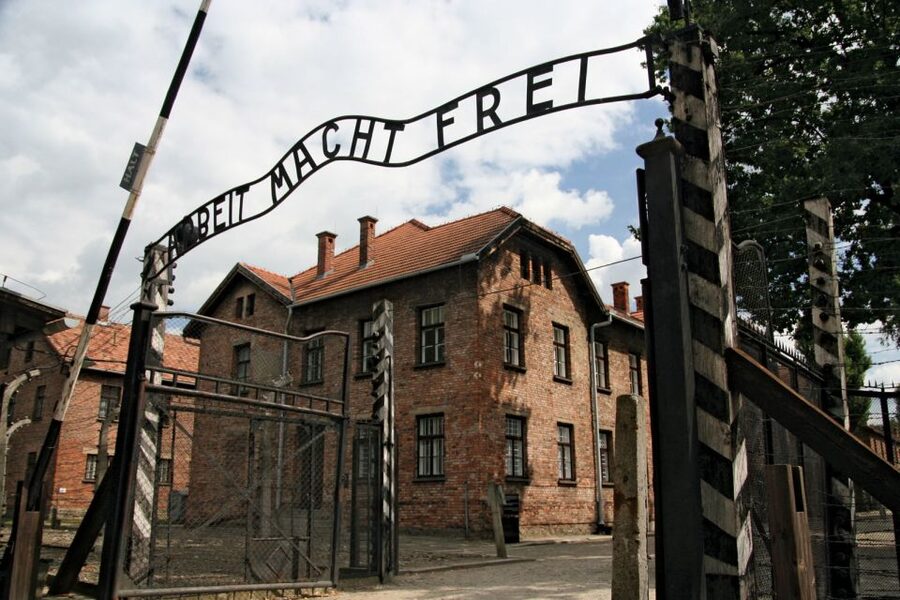
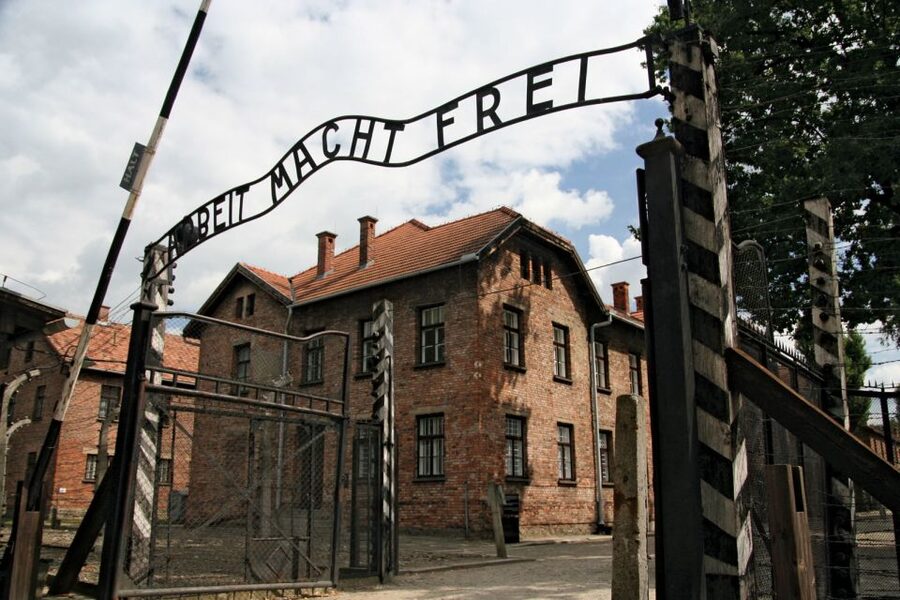
The first main section is Auschwitz I, the older camp and administrative center. Here you visit original buildings and the permanent exhibition. The brick blocks and camp layout give the site a confined, institutional feel, while the displays provide historical detail that the outdoor grounds alone cannot communicate.
The guide explains how the camp operated, how prisoners were registered and controlled, and how the Nazi system used forced labor, terror, and organized murder. You may see original objects and exhibition material connected with the people imprisoned and killed there. These displays are among the hardest parts of the visit, so take your time and follow the guide’s instructions about where photography is allowed.
Headsets are included for the sightseeing portion. They are especially helpful inside the buildings, where a group of up to roughly 29 people can spread out between rooms and corridors. One practical weakness is that a guide may move forward before every person has caught up. Stay alert, keep the group in sight, and do not be shy about asking for a pause if you have been separated.
Different museum guides bring different styles. Sabina has been noted for fluent English and clear explanations. Magda, Michal, Wanda, and Oskar have also led English groups on different dates. You cannot choose a particular guide when booking, but the guide assigned by the memorial is trained to present the material with care and factual control.
More Katowice trips:
- Private One-Way Transfer from Kraków to Katowice Airport
★ 5.0 · 157 reviews - Pub Crawl 1hr Unlimited Beer + Vodka then Clubs in Katowice
★ 4.2 · 22 reviews - Katowice Old Town Highlights Private Walking Tour
★ 4.9 · 14 reviews - Katowice Airport Krakow Private Transfer, Private Driver Service
★ 5.0 · 7 reviews
Birkenau, the camp built for mass murder
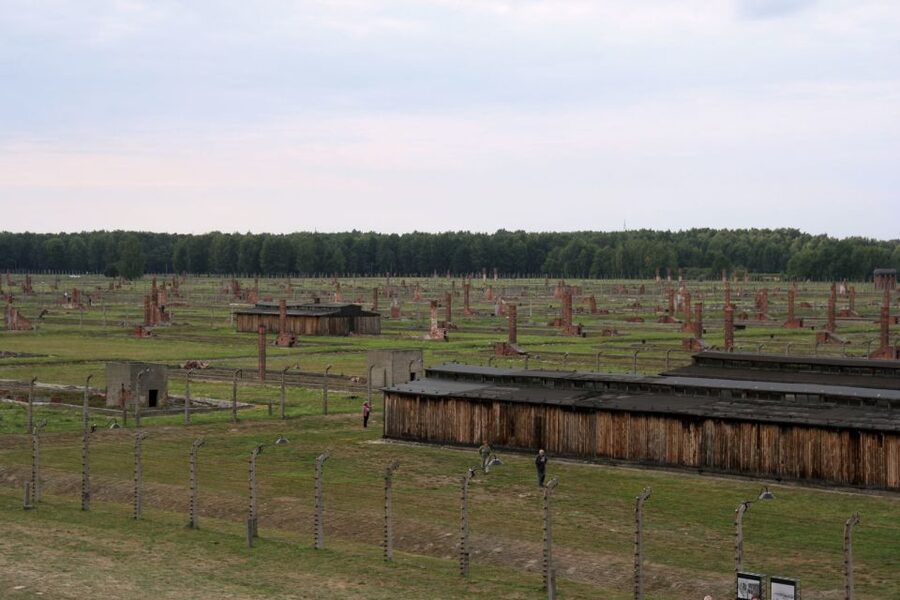
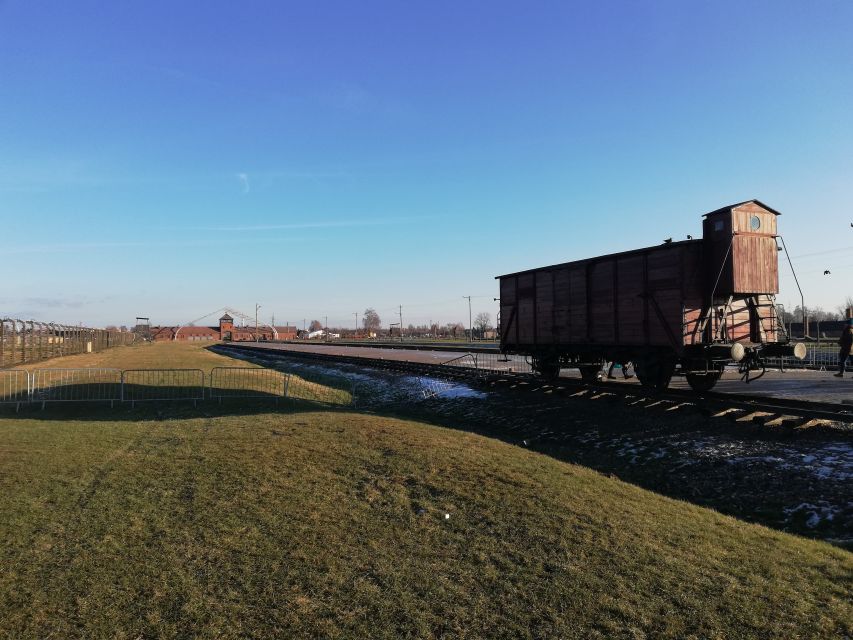
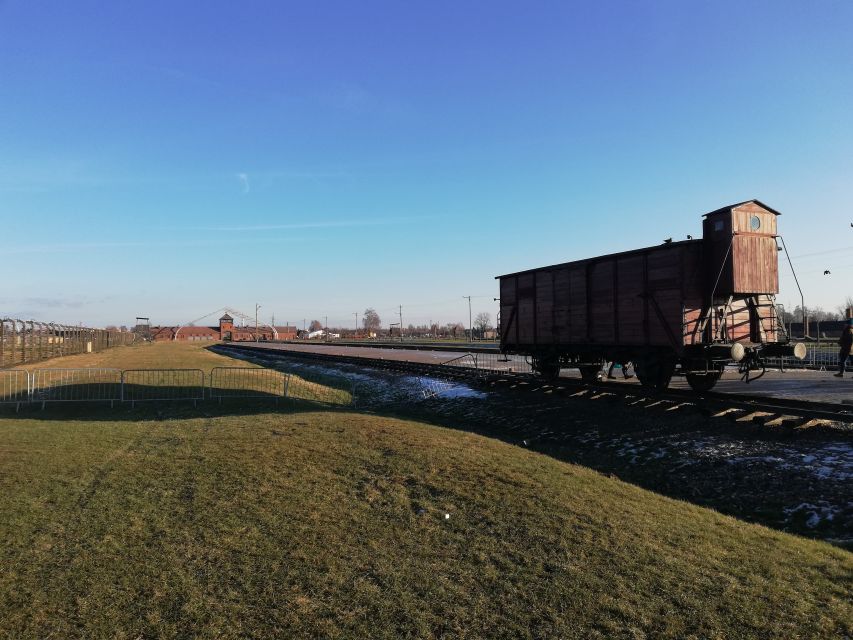
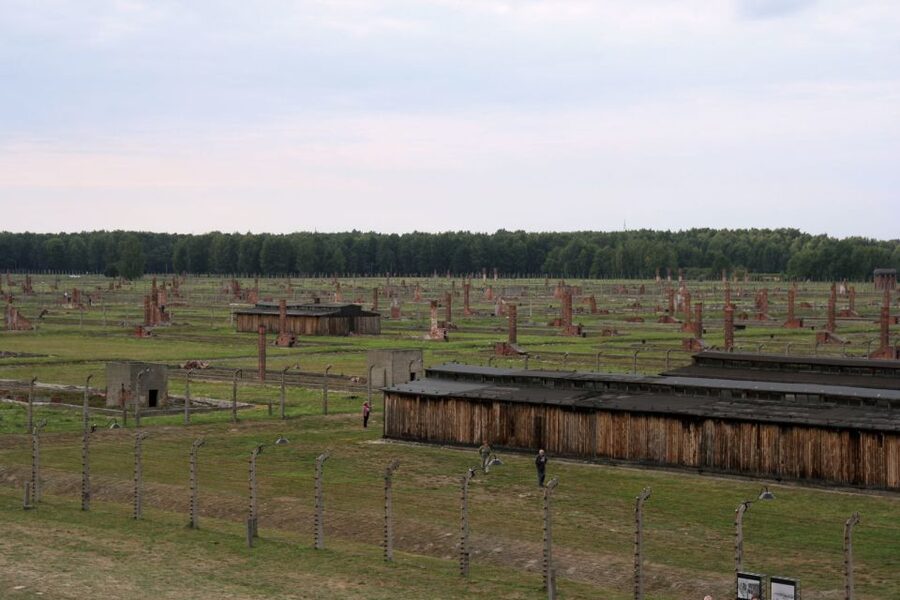
Auschwitz II-Birkenau is the larger and more open part of the memorial. The scale is immediately different. The railway approach, watchtowers, fences, barracks, and long lines of buildings show how the camp was designed to process huge numbers of deportees.
Here the guide explains the arrival process and the selection system that separated people considered fit for forced labor from those sent directly to their deaths. The vast majority of those murdered at Auschwitz were killed with Zyklon B in gas chambers. The guide also points out the remains of the gas chambers and crematoria destroyed by the Nazis near the end of the war.
Birkenau requires outdoor walking in exposed conditions. Rain can make the paths unpleasant, while summer sun can feel harsh across the open grounds. Comfortable shoes are essential, and carrying water is wise. Food and drinks are not included, so bring water with you within the bag limits or plan around the available break.
The Birkenau section can feel less like a conventional museum and more like a place for quiet observation. You will see original objects and structures, but the empty spaces are also part of the message. The size of the camp helps you understand that the crime was not a single isolated act. It was an organized system involving transport, records, guards, buildings, and repeated deportations.
Your guide may provide short breaks during the overall visit. One reported schedule ran from 8 a.m. to 1:30 p.m. with two brief pauses, though the precise order and timing can change. Use breaks to drink water, regroup, and prepare for the next section rather than expecting a full meal stop.
What the guide adds
You can read about Auschwitz before arriving, but the guide gives the buildings a sequence and meaning. Without guidance, it is easy to notice the fences and barracks yet miss how the camp was organized or why a particular building matters.
The best guides combine facts with restraint. They explain the Holocaust without turning suffering into spectacle. They also answer follow-up questions, which is valuable because many visitors arrive with a partial understanding of the camp system, deportations, or the difference between concentration camps, forced-labor camps, and extermination camps.
The English tour includes a live guide and an audio system. The museum guide is normally separate from the person who drives you from Katowice. Your driver handles the road, meeting points, tickets, and return journey, while the museum guide leads the historical visit.
That division generally works well. Drivers such as Kamil and Bartek have been praised for being friendly, organized, and helpful, while the site guides provide the specialist historical presentation. Do not expect your driver to lead the full memorial tour unless your confirmation specifically says so.
Is the $114 price fair?
At $114 per person, this is not the cheapest possible way to reach Oświęcim. You are paying for more than a ride. The price includes transport from a Katowice hotel when that option is selected, return transport, a prearranged entrance ticket, an English-speaking tour leader, the English museum tour, and the required sightseeing equipment.
The value is strongest when you have limited time, do not want to arrange separate transport, or find that regular tickets are sold out. One departure has even provided access when other ticket sources had no availability. The skip-the-line arrangement also removes much of the uncertainty around a place where admission is controlled.
The price is less attractive if you are already comfortable arranging your own transport and can secure a direct museum visit independently. You should also remember that food and drinks are not included, and private-address pickup is unavailable. A hostel or Airbnb booking may require an extra trip across Katowice before the tour begins.
For many people, the main purchase is peace of mind. You have a driver, a reserved entry, a contact person, and a guide waiting at the memorial. That can be worth the extra cost on a once-in-a-lifetime visit, particularly during busy periods.
Practical advice for a respectful day
Bring your passport or national identity card. Identification is required, and forgetting it could create a serious problem at entry.
Wear comfortable shoes with good support. The tour includes original buildings and extensive outdoor grounds, and Birkenau is not a place for delicate footwear.
Keep your bag small. The maximum hand-luggage size is 30 by 20 by 10 centimeters. Larger items must stay on the vehicle, so avoid arriving with a suitcase or large backpack.
Carry water, dress for the forecast, and prepare for rain or strong sun. The memorial grounds are exposed, and weather can change the feel of the visit considerably.
Leave space afterward. You may want quiet time after seeing the exhibitions and camp remains. Do not place a rushed dinner, business meeting, or another major attraction immediately after the return.
The tour is wheelchair accessible, but the site is large and includes historic buildings and outdoor areas. If you use a wheelchair, confirm the exact arrangements when booking so you know how the transport and museum sections will work for your needs.
Free cancellation is available up to 24 hours before the activity, and you can reserve now while paying later. Because start times may shift, read the updated confirmation closely and keep your schedule flexible.
Who should book this Katowice tour?
I would choose this tour if you are based in Katowice, want English instruction, and prefer a managed visit rather than piecing together transport and museum admission. It also suits people making a last-minute plan, since reserved tickets can be difficult to find elsewhere.
It is a good match for solo visitors and couples, as well as small groups who want a simple shared ride. Some departures have carried only a handful of people, while others have joined a larger museum group once inside. The transport group and the memorial tour group are not always the same size.
This is not the right choice for a light family outing or a tightly timed day trip with several other stops. Children under 13 are not considered suitable for the subject matter, and every age group should understand that the visit will be emotionally heavy.
Should you book it?
Book this Auschwitz-Birkenau tour if you want reliable transport, arranged admission, and a serious English-language presentation from Katowice. The highly praised parts are the punctual drivers, clean vehicles, helpful ticket handling, and respectful museum guides.
Think twice if a changed departure time would disrupt your plans, or if you want to explore alone at your own pace. For most first-time visitors, though, the $114 cost buys useful practical help at a place where tickets, transport, and timing can be troublesome. Keep the day open, pack light, and approach the memorial with patience and respect.
FAQ
How long does the Auschwitz-Birkenau tour from Katowice last?
The activity lasts about six hours, including transport between Katowice and the memorial site. The exact schedule can change because museum opening hours and entry capacity may vary.
Is hotel pickup included from Katowice?
Hotel pickup and return are included if you select that option. Pickup and drop-off are available only at hotels in Katowice, not at hostels, Airbnbs, or private residences.
Where do I go if I am staying in a hostel or Airbnb?
You must make your own way to the local partner’s city-center office and arrive before the stated meeting time. Check the latest meeting instructions carefully because the location may not have obvious tour-office signage.
Does the tour include both Auschwitz I and Birkenau?
Yes. The visit includes the permanent exhibition and original buildings at the main Auschwitz camp, along with Auschwitz II-Birkenau and its original objects, structures, and camp grounds.
What should I bring?
Bring a passport or identity card and comfortable shoes. Water is also a sensible choice. Hand luggage must not exceed 30 by 20 by 10 centimeters, and larger bags must remain on the bus or vehicle.
Can the tour time change after booking?
Yes. Museum capacity can lead to a changed pickup or meeting time, sometimes with notice sent the day before. Check your email carefully and avoid scheduling another fixed activity on the same day.
More Skip the Line in Katowice
- From Krakow: Wieliczka Salt Mine Tour & Skip the Line Ticket
★ 4.4 · 3,925 reviews - Auschwitz-Birkenau Skip-the-Line Guided Tour
★ 4.3 · 3,617 reviews - Krakow: Schindler’s Factory Skip-the-Line Ticket
★ 4.4 · 3,105 reviews - Auschwitz-Birkenau: Skip-the-Line Entry Ticket & Guided Tour
★ 4.4 · 3,052 reviews
Just added around Katowice
- Katowice Private Vodka Tasting Tour★ 5.0 · 3 reviews
- Auschwitz-Birkenau and Krakow Private Car Trip from Katowice★ 4.3 · 3 reviews
- Katowice Private Traditional Polish Food Tour★ 5.0 · 3 reviews
- Auschwitz & Birkenau English guided tour by private transport from Katowice★ 5.0 · 3 reviews
- Gun Shooting Experience with Hotel Transfers in Katowice★ 4.5 · 3 reviews
- Explore Katowice in 60 minutes with a Local★ 3.5 · 4 reviews
- Katowice: Private Traditional Polish Food Tour★ 5.0 · 4 reviews
- Katowice Old Town Walking Tour★ 5.0 · 5 reviews
Auschwitz-Birkenau Tours, compared.

Auschwitz-Birkenau Guided Tour & Hotel Pickup
Read our review →Auschwitz-Birkenau Guided Tour & Hotel Pickup
Read our review →
Auschwitz Guided Tour with Optional Hotel Pickup
Read our review →
Auschwitz-Birkenau Guided Tour with Pickup & Lunch
Read our review →
Auschwitz-Birkenau Guided Tour Pickup/Lunch Options
Read our review →

Krakow to Auschwitz Birkenau Guided Tour with Transfer and Ticket
Read our review →
Browse the lists this tour appears in