
Reviewed · AUSCHWITZ-BIRKENAU TOURS
Auschwitz and Birkenau Tour
A visit to Auschwitz and Birkenau is not a light day out. It is a serious, often painful encounter with the machinery of Nazi murder, made easier to manage by a guide, reserved admission, and transport from Krakow. This tour takes you to both camps in roughly four to seven hours, with the main guided visit lasting about four hours.
I like the time-saving minivan transport and the fact that admission to both sites is included. I also like the use of headsets during the Auschwitz I portion, since a clear guide can make the difference between following the story and missing half of it. The main caution is scheduling: the museum authorities can change the start time, sometimes at short notice, and that has caused real problems for people with fixed plans later in the day.
In This Review
- Key points to know before booking
- Why this visit matters
- Auschwitz I: the brick camp and Block 11
- Birkenau: scale, distance, and destruction
- The guide can make or break the day
- Minivan transport from Krakow
- Timing, schedule changes, and group size
- Price and value at $46.91
- How to prepare for a respectful visit
- Should you book this Auschwitz and Birkenau tour?
- FAQ
- How long does the Auschwitz and Birkenau tour take?
- Does the price include admission to both Auschwitz and Birkenau?
- Is transportation from Krakow included?
- Is the tour offered in English?
- Are headsets provided during the guided visit?
- Is this tour suitable for children?
Key points to know before booking
- Both camps are included: You visit Auschwitz I and the much larger Birkenau site on the same outing.
- Reserved admission saves stress: Tickets are arranged in advance, so you are not left trying to enter independently at the gate.
- Transport is practical, not luxurious: The air-conditioned minivan saves you from arranging the journey, but comfort can vary by vehicle and seat.
- Headsets help at Auschwitz I: You can follow the guide more easily in crowded rooms and outdoor areas.
- Expect substantial walking: Uneven ground, long distances, and outdoor time call for sensible shoes and moderate fitness.
- The schedule can move: Your confirmed time may be changed by the museum authorities, so do not place an important appointment immediately afterward.
Why this visit matters
Auschwitz I and Birkenau are not interchangeable stops. Auschwitz I is the smaller, more structured camp, with brick buildings now used for museum displays. Birkenau is much larger and more open, with long rows of barracks and ruins spread across a broad area.
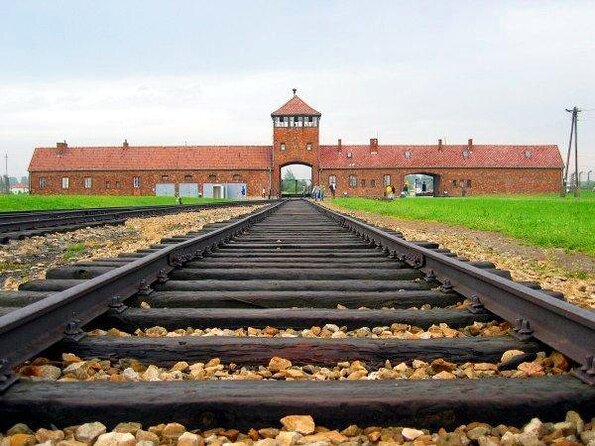
Seeing both gives you a clearer sense of scale. Auschwitz I shows the tightly controlled prison camp and the evidence kept inside its buildings. Birkenau shows the vast killing center that followed, where deported people arrived by train and were sent toward forced labor or immediate death.
The numbers connected with the site are difficult to grasp from a book or a classroom. Walking between the barracks, looking across the railway platform, and seeing the remains of the destroyed crematoria makes the scale less abstract. You should expect the visit to stay with you long after the minivan returns to Krakow.
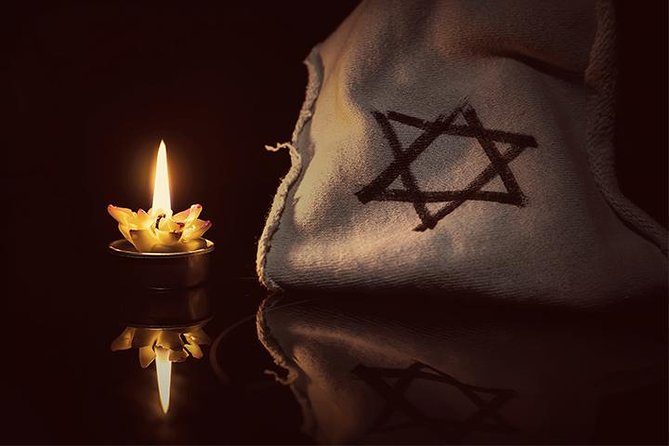
This is not a tour for entertainment. The guide’s tone matters. The strongest guides are clear, measured, and respectful, giving you facts without turning the suffering into a performance. One guide praised in the supplied feedback was noted for speaking clearly and handling the subject with feeling without becoming overly emotional. That balance is exactly what you want here.
More Auschwitz-Birkenau memorial visits:
- From Krakow: Auschwitz-Birkenau Guided Tour & Hotel Pickup
★ 4.5 · 33,358 reviews - From Krakow: Auschwitz-Birkenau Guided Tour & Hotel Pickup
★ 4.5 · 29,340 reviews - Krakow: Auschwitz Guided Tour with Optional Hotel Pickup
★ 4.5 · 15,280 reviews
Auschwitz I: the brick camp and Block 11
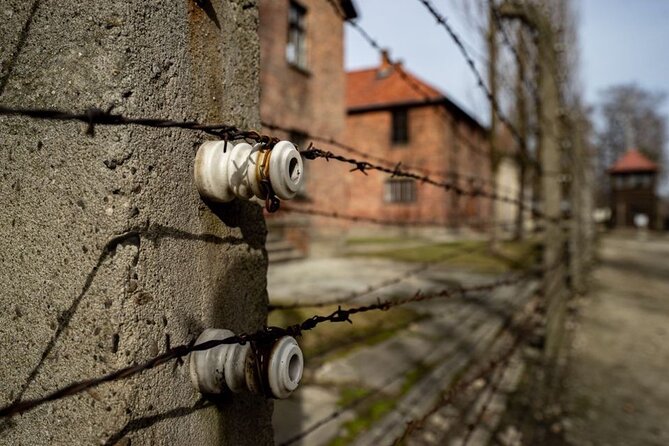
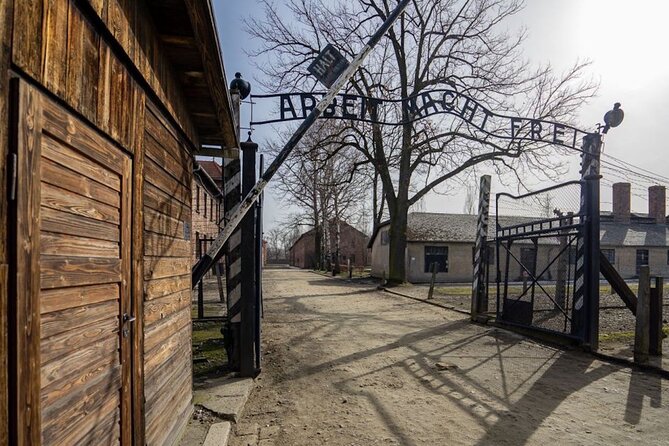
The first section usually takes place at Auschwitz I, entered through the famous iron gate bearing the German slogan Arbeit Macht Frei, meaning Work Sets You Free. The gate is a grim introduction, and the brick buildings beyond it give the site a harsh sense of order.
You walk among 22 former barracks, where museum displays explain the imprisonment and murder of hundreds of thousands of people. These buildings are not simply old structures to look at. They provide the setting for documents, photographs, personal belongings, and explanations of how the camp system operated.
Block 11 is one of the most troubling stops. It was known as the prison within the prison and held punishment rooms, including dark cells and standing cells. The first attempts to kill people with Zyklon B took place there.
The details are difficult, but the guide’s role is important. A good explanation gives you the context to understand why Block 11 mattered without rushing you through the experience or burying you in needless commentary. Headsets are especially useful here, since groups can spread out and the buildings can become crowded.
At the end of the Auschwitz I visit, you see the only preserved crematorium and gas chamber at the site. This is among the most direct and sobering parts of the tour. The building is stark, and the lack of spectacle makes it more powerful. You are not looking at a reconstruction designed for effect. You are seeing a surviving part of the camp’s murder system.
Allow yourself some quiet time where possible. The schedule is organized, and you may be moving with a group, but you do not need to fill every pause with conversation or photographs. This is one of those places where a little silence says more than a long explanation.
Birkenau: scale, distance, and destruction
After Auschwitz I, the group travels by minivan to Auschwitz II Birkenau. The short transfer between the two sites is included, which is one of the tour’s practical strengths. You do not have to find separate transport or work out how to connect the two visits.
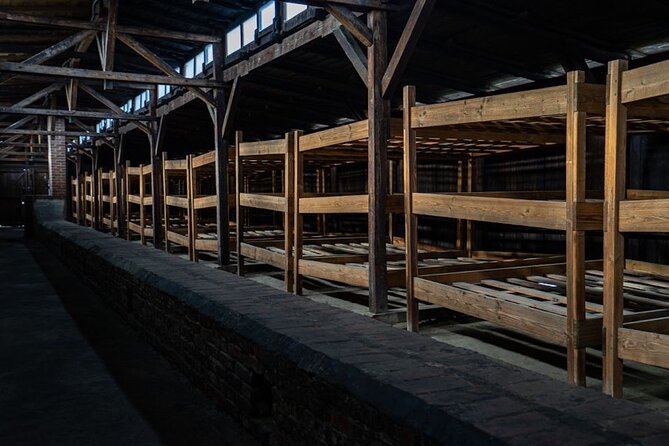
Birkenau is about 25 times larger than Auschwitz I. That difference becomes clear as soon as you enter the grounds. The rows of wooden barracks stretch across a wide, exposed area, and the distance between points is part of what makes the place so unsettling.
More than 1.1 million people were murdered at Birkenau. The camp contained rows of barracks, railway facilities, and crematoria and gas chambers. The Nazis destroyed four of those killing facilities in an attempt to hide their crimes, leaving ruins rather than intact buildings.
You spend much of this part outdoors. The wooden barracks and open ground offer little shelter, and the conditions can change quickly. Wear flat, sturdy shoes because the paths and ground can be uneven. Bring clothing suited to the day, since Birkenau can feel cold and exposed in poor weather, while a hot day can make the open walk tiring.
The Birkenau visit is generally shorter than the Auschwitz I portion, around an hour in the accounts supplied, though the full timing can vary. It is not less important. In some ways, the open size of the camp is the point. You can see how far the camp extends and how many buildings once filled the site.
The guide may not use the same headset setup here. At Auschwitz I, headsets help you hear the commentary clearly. At Birkenau, the group may be more spread out, and the open setting can make it easier to stay near the guide. Keep an eye on the group and do not wander far ahead.
The guide can make or break the day
The tour includes a driver-guide for the transfer and an English-speaking guide for the museum visit. In the strongest accounts, the guide was clear, sensitive, and willing to answer questions. One visitor also singled out the driver Michael for taking care of the practical details and keeping communication open.
You should not assume that every guide will have the same delivery. One serious complaint described a guide who spoke too quietly for the group to hear, despite requests to speak up. Another account found the guide well informed but too quick to move on before everyone had caught up. These are not small issues at a place where the explanation gives meaning to what you are seeing.
The supplied details say headsets are provided, and several accounts describe them as useful. Still, check that yours is working at the start. Stay close enough to the guide to see where the group is moving, and ask for clarification if you miss a section.
The best approach is to treat the guide as a source of structure, not the sole source of understanding. Read the information offered at the museum, listen carefully, and give yourself a moment to process the material. A guide who speaks with restraint can help you face the facts without making the visit feel theatrical.
A different sort of day out from Krakow:
- Krakow–Zakopane: Cable Car, Chocholow Baths, Cheese & Vodka
★ 5.0 · 10,720 reviews - Krakow: Auschwitz-Birkenau Guided Tour with Pickup & Lunch
★ 4.5 · 9,800 reviews - From Krakow: Wieliczka Salt Mine Tour
★ 4.6 · 9,393 reviews - Krakow: Auschwitz-Birkenau Guided Tour Pickup/Lunch Options
★ 4.5 · 9,057 reviews
Minivan transport from Krakow
Getting from Krakow to the museum complex takes time. A shared, air-conditioned minivan removes the need to plan the route, arrange parking, or coordinate separate transport between Auschwitz I and Birkenau. Hotel pickup and drop-off are offered, along with designated meeting points.
In practice, you may be asked to go to a common meeting point rather than receive a direct hotel pickup. One person was told to make their own way to the meeting point despite the pickup wording. Another had trouble after being dropped at the wrong point, but the operator sent the guide to help.
Confirm the exact pickup details the day before. Communication by WhatsApp has been used for updates, and that can be useful when the location or time changes. Bring your booking details and allow extra time to find the vehicle, since several buses and minivans may gather around the same pickup area.
The vehicle itself can be fine, but comfort is not guaranteed. One account described poor air-conditioning in the rear seats during a long return journey, with passengers becoming overheated and unwell. If you are sensitive to heat or motion, choose your seat carefully when possible and carry water. Food and drinks are not included, so bring what you need within the museum’s rules.
Timing, schedule changes, and group size
The actual activity is described as roughly four to seven hours, while the museum visit itself is listed at four hours. The difference reflects pickup arrangements, road conditions, museum scheduling, and the size of the group.
The most important planning warning is that the final start time depends on the museum authorities and may change. In one case, the start moved two hours later, forcing the person to leave before Birkenau. Other accounts describe a time change from late morning to an early start the day before.
Do not book this on a day when you have a train, flight, work call, or fixed dinner reservation soon afterward. Build a generous buffer. The tour may run smoothly, but you have no control over a museum-led change or traffic on the return to Krakow.
The maximum listed group size is 30 people. That is larger than a private tour but still workable if everyone stays together. A crowded group can make it harder to hear, use the toilets, or pause for reflection. The headsets help, but they do not remove the need to keep pace.
Breaks may be limited. One account described only about 15 minutes for food and little time for the toilet. Eat before pickup or carry a small snack, and use facilities when the guide offers the chance. You will spend several hours walking, often on uneven ground.
Price and value at $46.91
At $46.91 per person, this tour offers reasonable value if you want transport, admission to both sites, and a guided visit without arranging the day yourself. The ticket is included, as are the minivan, driver-guide, hotel pickup and drop-off where available, and headsets.
The value is strongest for a first visit from Krakow. You avoid the work of getting to Oświęcim, arranging the transfer between the two camps, and securing entry. The price also buys a fixed structure on a difficult day, which can be helpful when you do not want to make logistical decisions at every step.
The value weakens if the time changes badly, the vehicle is uncomfortable, or you cannot hear the guide. At this price, you should expect a shared service rather than a private vehicle or a custom pace. If you need flexibility, a private arrangement may suit you better, but this option is built for practical access.
Group discounts may be available. Children must be accompanied by an adult, and the activity is not recommended for children aged 14 and under. That guidance makes sense: the subject is severe, the walking is substantial, and the visit demands attention and emotional maturity.
How to prepare for a respectful visit
Wear flat shoes with good support. Birkenau has uneven ground, and the route covers a large area. You may be comfortable in ordinary walking shoes, but thin soles or open footwear are poor choices.
Dress for outdoor conditions. Auschwitz I includes time inside heated buildings, while Birkenau is mostly outside. The contrast can be sharp, so layers are useful.
Bring water and a small amount of food, since refreshments are not included and the break may be short. Keep the day simple. This is not the time to pack several other major activities around the tour.
You should also prepare yourself emotionally. The guide will explain the camp system, but no tour can make the subject easy. Many people find the visit hard to stop thinking about afterward. That is not a flaw in the experience. It is part of confronting a place created to erase human lives.
Should you book this Auschwitz and Birkenau tour?
I would book it if you want a practical, guided visit from Krakow and can keep the rest of your day flexible. The included admission, transport to both sites, and headset-supported commentary make it a useful choice for a first visit. The strongest part is the chance to see both the preserved buildings at Auschwitz I and the much larger, more exposed grounds of Birkenau.
I would hesitate if you have a tight schedule, need guaranteed hotel pickup, or require a very comfortable vehicle. Confirm the meeting point and start time, then leave several hours free after the planned return. If those conditions work for you, this tour gives you a respectful and efficient way to reach two places that deserve careful attention.
Free cancellation is available up to 24 hours before the start time. Changes or cancellations inside that period are not accepted, so check your plans early.
FAQ
How long does the Auschwitz and Birkenau tour take?
The activity lasts approximately four to seven hours, with the main visit to the two sites listed at about four hours.
Does the price include admission to both Auschwitz and Birkenau?
Yes. Admission tickets to Auschwitz I and Auschwitz II Birkenau are included.
Is transportation from Krakow included?
Yes. Transport by air-conditioned minivan is included, along with hotel pickup and drop-off where offered and pickup from designated meeting points.
Is the tour offered in English?
Yes. English is one of the listed languages for this activity.
Are headsets provided during the guided visit?
Yes. Headsets are included so you can hear the guide more clearly.
Is this tour suitable for children?
Children must be accompanied by an adult, and the activity is not recommended for children aged 14 and under. Moderate physical fitness is also advised.
Just added around Krakow
- Private Guided Tour: Oskar Schindler’s Factory★ 5.0 · 3 reviews
- E-Scooter Krakow sightseeing tour★ 5.0 · 3 reviews
- From Krakow: Zakopane and Thermal Pools Guided Trip★ 5.0 · 3 reviews
- Schindler’s Factory, Ghetto and Plaszow Camp Guided Tour★ 4.7 · 3 reviews
- Kraków: Private Hot Air Balloon Flight with Champagne★ 3.7 · 3 reviews
- Krakow: River Cruise & Guided Visit to Former Plaszow Camp★ 3.6 · 3 reviews
- From Krakow: Private Wieliczka Salt Mine Tour★ 4.0 · 3 reviews
- Krakow: Old Town short walk with St. Mary’s Basilica visit★ 5.0 · 3 reviews
Auschwitz-Birkenau Tours, compared.

Auschwitz-Birkenau Guided Tour & Hotel Pickup
Read our review →Auschwitz-Birkenau Guided Tour & Hotel Pickup
Read our review →
Auschwitz Guided Tour with Optional Hotel Pickup
Read our review →
Auschwitz-Birkenau Guided Tour with Pickup & Lunch
Read our review →
Auschwitz-Birkenau Guided Tour Pickup/Lunch Options
Read our review →

Krakow to Auschwitz Birkenau Guided Tour with Transfer and Ticket
Read our review →
Browse the lists this tour appears in