
Reviewed · AUSCHWITZ-BIRKENAU TOURS
Krakow to Auschwitz Birkenau Guided Tour with Transfer and Ticket
Auschwitz-Birkenau is not a sightseeing stop you simply tick off. It is a place of remembrance, evidence, and terrible human stories. This Krakow tour takes you to both camps with a licensed museum guide, covering the gas chambers, crematoria, prisoner conditions, medical experiments, and liberation in a careful two-part visit.
I like the door-to-door transport option and the fact that entry tickets, insurance, and taxes are handled for you. I also like the headsets at Auschwitz I, where the guide’s quiet commentary can be heard without turning the grounds into a noisy crowd. The main consideration is pace: this is a scheduled group tour, so you cannot stop as long as you wish at every display.
In This Review
- Key points to know before booking
- Why this Krakow to Auschwitz tour matters
- Leaving Krakow for Oswiecim
- Auschwitz I and the gate with its grim message
- Birkenau, the vast open camp
- A fixed pace, and why it matters
- Food, breaks, and the small details that help
- The return to Krakow
- What you get for about $36
- Who should choose this experience
- Should you book the Krakow to Auschwitz tour?
- FAQ
- How long does the Auschwitz-Birkenau tour from Krakow last?
- How long is the drive from Krakow to Auschwitz?
- Are both Auschwitz I and Birkenau included?
- Is hotel pickup available?
- Is the tour conducted in English?
- Are headsets provided?
- Is lunch included?
- Do I need to bring a passport or ID?
- Can I take photographs?
- Can I cancel for a full refund?
Key points to know before booking
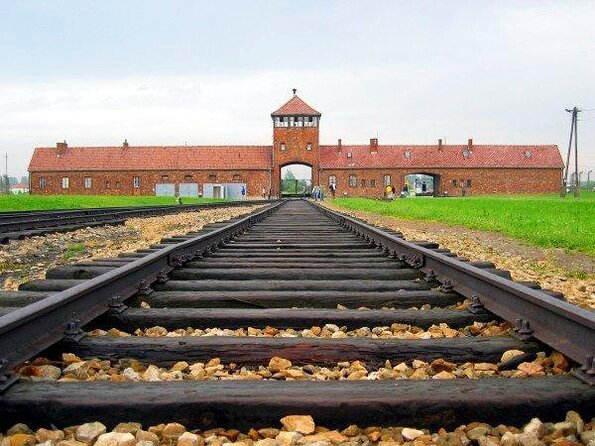
- Both camps are included: Visit Auschwitz I and the much larger Birkenau camp, only a few minutes apart by vehicle.
- A long outdoor day: Up to 70 percent of the visit is outside, often on uneven ground, so shoes and weatherproof clothing matter.
- English-speaking guidance: A licensed Auschwitz-Birkenau Museum guide leads the main visit, with headsets supplied at Auschwitz I.
- Transport saves planning time: The drive from central Krakow takes about 1 hour and 15 minutes each way.
- Group size affects comfort: The standard group can reach 30 people, while a limited option is available for groups of up to 15.
- Food is your responsibility: Lunch is not included, and there is no time for a full meal between the two camp visits.
Why this Krakow to Auschwitz tour matters
The practical value of this experience is simple: Auschwitz is outside Krakow, and arranging museum entry and transport on your own can add work to an already serious day. Here, you travel in an air-conditioned van or minibus, meet a guide approved by the museum, and visit both Auschwitz I and Auschwitz II-Birkenau.
The price, listed at about $36.28 per person, is low for a seven-hour excursion that includes round-trip transport and admission to both parts of the memorial. It is especially useful if you want a direct trip from Krakow without piecing together buses, museum tickets, and a separate guide.
Still, low cost does not mean a casual outing. You are joining a fixed schedule, not hiring a private historian. The museum controls entry times, visitor flow, and group size. That keeps the visit orderly, but it also means you should expect the guide to keep moving.
This is a place where quiet attention matters more than entertainment. The best guide does not need theatrical storytelling. You need clear facts, respectful language, and enough context to understand what you are seeing.
More Auschwitz-Birkenau memorial visits:
- From Krakow: Auschwitz-Birkenau Guided Tour & Hotel Pickup
★ 4.5 · 33,358 reviews - From Krakow: Auschwitz-Birkenau Guided Tour & Hotel Pickup
★ 4.5 · 29,340 reviews - Krakow: Auschwitz Guided Tour with Optional Hotel Pickup
★ 4.5 · 15,280 reviews
Leaving Krakow for Oswiecim
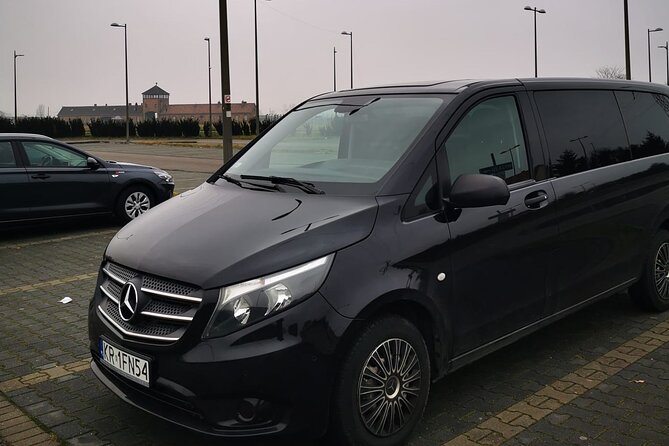
Pickup arrangements depend on the option you choose. Hotel pickup is available with the limited 15-person option. Lower-priced choices use a meeting point, followed by drop-off at the meeting point after the tour.
If you stay near Krakow’s Main Square, you will be assigned the nearest practical pickup location. If your accommodation lies outside the centre, you may need to reach a designated spot. Some hotels sit inside restricted traffic zones, so a vehicle may not be able to stop directly outside.
The departure time is not completely fixed when you book. It depends on the museum’s available entry slot and is confirmed the day before. Traffic can also affect the schedule. Read the final message carefully, since meeting locations and pickup details can change.
Communication is one of the stronger parts of this service. You receive a welcome message with your booking confirmation, followed by more precise information before departure. On the day, group leaders and drivers help keep people together. Drivers named in the feedback include Norbert and Daniel, while Eric is praised for contacting a passenger who was running late.
The ride to Oswiecim takes about 1 hour and 15 minutes over roughly 65 kilometres. That time is useful for resting, but remember that the whole day is longer than the museum visit alone. Allow around seven hours from pickup to return, and possibly more if traffic or museum scheduling shifts.
Auschwitz I and the gate with its grim message
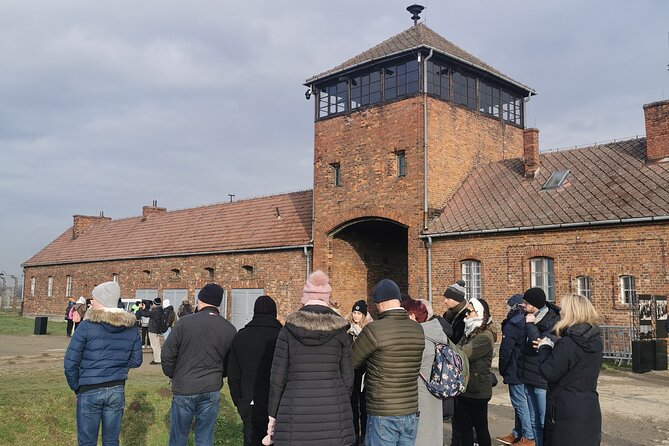
After arrival, you normally have a short break. You can get coffee or look at outdoor displays before meeting the licensed museum guide. Security is similar to an airport-style check, so leave extra patience for the entrance process.
The first camp, Auschwitz I, began as a concentration camp and detention centre for Polish citizens arrested after Germany annexed Poland in 1939. The famous gate carries the words Arbeit Macht Frei, a phrase that now reads as one of the most chilling pieces of Nazi propaganda.
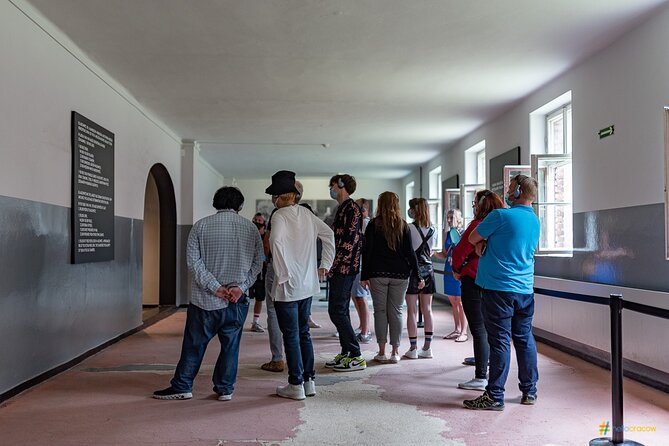
Inside, the visit usually lasts about two hours. You walk among original brick buildings, fortified walls, barbed wire, and preserved camp structures. Exhibitions use objects recovered after liberation, including shoes, glasses, suitcases, hair, and everyday items taken from people arriving at the camp.
Those displays can be harder to face than a broad historical explanation. A suitcase suggests a person expecting a journey. A child’s shoe suggests a family. These objects make the machinery of persecution painfully specific.
The guide explains how the camp operated, including imprisonment, forced labour, selections, mass murder, medical experiments, gas chambers, and crematoria. Medical crimes associated with Nazi doctors, including Josef Mengele, are part of the wider account presented during the visit.
Headsets are supplied at Auschwitz I. This is a real benefit. The group can remain quiet while you hear the guide’s explanation, and you do not need to stand shoulder to shoulder to catch every word. Some visitors find the pace brisk, especially when they want more time with photographs, captions, or personal belongings.
That limitation is built into the format. The group must meet its museum time slot and move through the buildings in an organised flow. If you want to linger over every exhibit, a standard guided visit may feel rushed.
Birkenau, the vast open camp
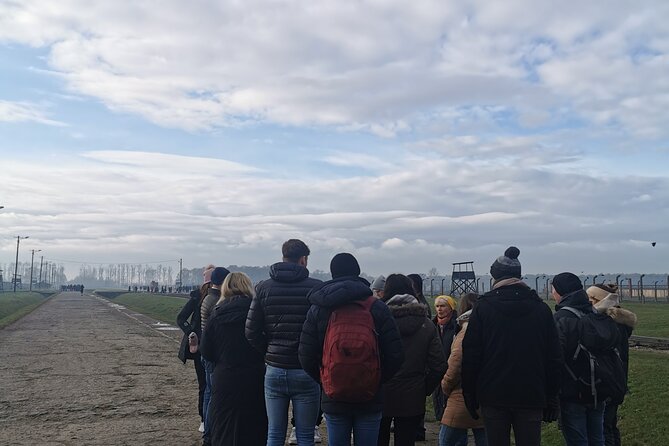
After Auschwitz I, you get a short break of up to 15 minutes before being driven about three minutes to Birkenau, also called Auschwitz II. This second site is physically larger and feels very different.
Birkenau was built in 1941 under Heinrich Himmler’s orders. It was designed on a huge scale and could hold around 90,000 prisoners. Its purpose was tied directly to the Nazi plan to murder Europe’s Jewish population, though the camp also held other persecuted groups and prisoners.
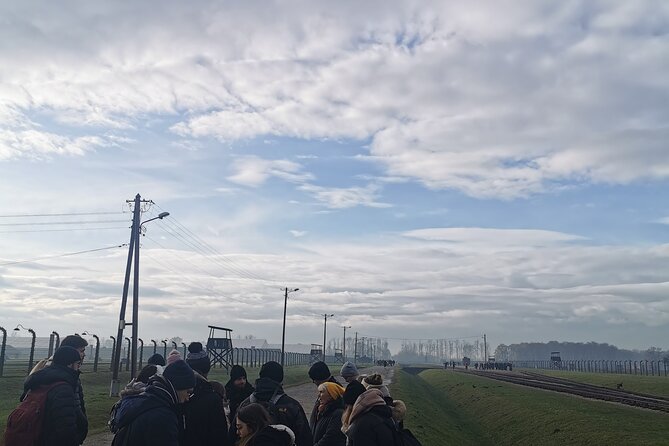
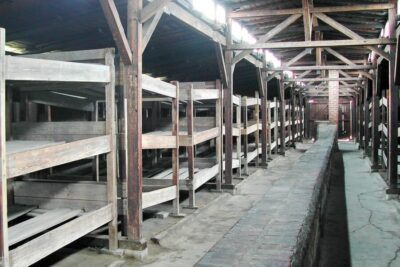
The entrance gate, railway lines, wooden barracks, barbed wire, guard structures, and open ground create a stark sense of scale. At Auschwitz I, you move from building to building. At Birkenau, you look across a broad exposed site and begin to grasp how large the operation was.
The guide continues the explanation here, covering living conditions, selections, forced labour, mass murder, and the destruction of evidence. The tour ends with the liberation of Auschwitz on January 27, 1945, when soldiers of the 60th Army of the First Ukrainian Front opened the camp gates.
Birkenau is mostly outdoors, and that affects the experience in practical ways. There may be cold wind, rain, mud, snow, or strong sun. Headsets are not available for this section according to the supplied tour details, so it may be harder to hear the guide when the group spreads out.
Wear layers and bring water in warm weather. In winter, you need proper outdoor clothing, not just a coat suitable for walking around Krakow. One account describes temperatures as low as minus 10 to minus 25 Celsius, though conditions vary. Comfortable shoes are essential, and choose footwear you do not mind getting dirty.
A few more Krakow trips worth comparing
- From Krakow: Auschwitz Birkenau Tour with Transfer
★ 4.0 · 6,134 reviews - Krakow: Auschwitz-Birkenau Guided Tour with Ticket and Transfer
★ 4.5 · 3,784 reviews - Krakow to Wieliczka: Salt Mine Guided Tour with Ticket & Transfer
★ 4.5 · 3,193 reviews - Krakow to Auschwitz Birkenau Guided Tour with Ticket and Transfer
★ 3.5 · 3,062 reviews
A fixed pace, and why it matters
The group limit is up to 30 people. That is manageable, but it is not intimate. A 15-person version costs more, yet it may be worth considering if you prefer easier communication and a less crowded feel.
The smaller group will not turn the memorial into a private visit. Museum rules and scheduled entry times still apply. It can, however, make it easier to hear instructions, stay near the guide, and ask for help with transport or timing.
I would choose the smaller option for older family members, anyone who finds busy group movement tiring, or anyone who values a calmer day. The standard option is better for keeping the price down, especially if you are comfortable following a set route.
Guides can vary in style and English fluency. Names associated with individual tours include Marta and Miso, with Marta described as empathetic and thorough, and Miso as passionate and informative. Another guide was praised for deep historical knowledge, while one English-language account noted that the guide sometimes had trouble expressing ideas clearly.
That is a fair point to keep in mind. The main visit is museum-led, and the guide’s approach shapes how much you gain from it. Most of the feedback highlights clear, respectful explanations, but you should not expect every guide to have the same speaking style.
Food, breaks, and the small details that help
Food and drinks are not included. There is no time for a full sit-down meal between Auschwitz I and Birkenau, and food facilities on-site are limited. Eat breakfast before an early departure and bring a snack.
Packed lunch boxes may be available as an option. Some people found them useful and fresh, but you can also buy or prepare your own food before leaving Krakow. Do not rely on finding a relaxed lunch stop during the tour.
Short breaks are built into the day. There is a brief pause before the museum guide begins, up to 15 minutes between the camps, and at least 20 minutes after the visit before the return journey. That final pause may be spent in a bookstore, grocery shop, or simply resting.
The walking is not described as technically difficult, but there is a lot of it. Expect stairs in some buildings and uneven ground around the camps. The route is generally flat, yet you should be ready to stand and walk for long stretches.
Smart casual clothing is required, along with respectful behaviour. Eating, smoking, and loud conduct are not allowed during the museum visit. Photography is permitted except in marked areas, and flash is not allowed inside buildings.
The return to Krakow
Once the Birkenau visit ends, you are not rushed straight onto the vehicle. The planned break gives you time to regroup and process what you have seen. After the drive back, you are taken to the predetermined Krakow address or meeting point.
Transport receives strong praise for punctuality and comfort. The air-conditioned vehicles are warm in winter, and the ride can be used to rest. Pickup points can feel chaotic when several vehicles and groups gather, but clear messages and an attentive coordinator reduce the risk of confusion.
The early option can work well if you want your afternoon back. One schedule began with a 5:40 pickup for a 6:00 departure and returned around 1:00 pm. Do not treat that as a guarantee, since museum times and traffic change, but an early start can make the day more efficient.
What you get for about $36
At roughly $36.28 per person, the package includes:
- Entry to Auschwitz I and Auschwitz II-Birkenau
- A licensed local museum guide
- Headsets at Auschwitz I
- Round-trip transport from Krakow
- Insurance and taxes
- Assistance from the group leader and customer service
That is a sound price for the amount of administration removed from your day. The admission fee alone is only one part of the cost. You are also paying for transport to Oswiecim, a driver, coordination with the museum, and a guide who knows how to move a group through a sensitive site.
The price becomes less attractive if you strongly dislike fixed schedules or want long periods of private reflection. You are paying for structure, not freedom. The 15-person version may offer better comfort, but the standard group keeps the day affordable.
Free cancellation is available if you cancel at least 24 hours before the start time. Changes made inside that window are not accepted, and a minimum number of participants is required for the tour to operate. Bring the exact ID or passport used during booking. Full names must be supplied, and every participant’s passport or ID is checked at entry. No ID means no entry.
Who should choose this experience
I would recommend this tour if you are staying in Krakow and want to visit both camps without handling transport and museum planning yourself. It suits first-time visitors who want a clear historical framework and practical support throughout a difficult day.
It is also a good fit if you value English-language guidance, an early return option, and a price that includes the major costs. Families with older children may find the guided structure useful, though the subject is extremely distressing and requires mature preparation.
Choose the smaller group if possible when personal attention matters to you. Choose the standard group if your priority is value. Either way, prepare for a solemn memorial visit, not a light excursion.
Should you book the Krakow to Auschwitz tour?
Yes, if you want an efficient, guided visit to both Auschwitz and Birkenau and you are prepared for the emotional weight of the site. The strongest reasons to book are the reasonable price, dependable transport, clear pre-tour communication, museum guide, and inclusion of both camps.
Book with realistic expectations. The day is long, much of it is outdoors, lunch is not included, and the fixed route may leave you wishing for more time at certain exhibitions. Bring your ID, breakfast, water, snacks, sturdy shoes, and clothing suited to the forecast.
For the most comfortable version, consider the 15-person option. For the best value, the standard group is perfectly practical. Either way, this is a serious and important visit, and the tour gives you the structure needed to make it possible from Krakow.
FAQ
How long does the Auschwitz-Birkenau tour from Krakow last?
The experience lasts about seven hours, including transport from Krakow, the visits to Auschwitz I and Birkenau, breaks, and the return journey.
How long is the drive from Krakow to Auschwitz?
The drive takes about 1 hour and 15 minutes each way. Auschwitz-Birkenau Museum is roughly 65 kilometres from Krakow.
Are both Auschwitz I and Birkenau included?
Yes. The tour includes admission to Auschwitz I and Auschwitz II-Birkenau, with a guide-led visit to both sites.
Is hotel pickup available?
Hotel pickup is available only with the tour option limited to 15 people. Other options use a designated meeting point and provide drop-off afterward.
Is the tour conducted in English?
Yes. The experience is offered in English, with an English-speaking group leader and a licensed museum guide.
Are headsets provided?
Headsets are provided for the Auschwitz I portion so you can hear the guide clearly. They are not available for the Birkenau section according to the tour information.
Is lunch included?
No. Food and drinks are not included, and there is no time for a full meal between the two camp visits. Bring breakfast, snacks, and water. A packed lunch may be available as an added option.
Do I need to bring a passport or ID?
Yes. Every participant must bring a passport or ID, and it will be checked before entry. Full names must match the identification documents used for booking.
Can I take photographs?
Photography is allowed except in marked areas. Flash photography is not permitted inside buildings.
Can I cancel for a full refund?
Yes, if you cancel at least 24 hours before the experience start time. Cancellations or changes made less than 24 hours before departure are not accepted for a refund.
Just added around Krakow
- E-Scooter Krakow sightseeing tour★ 5.0 · 3 reviews
- Private Guided Tour: Oskar Schindler’s Factory★ 5.0 · 3 reviews
- From Krakow: Zakopane and Thermal Pools Guided Trip★ 5.0 · 3 reviews
- Schindler’s Factory, Ghetto and Plaszow Camp Guided Tour★ 4.7 · 3 reviews
- Kraków: Private Hot Air Balloon Flight with Champagne★ 3.7 · 3 reviews
- Krakow: River Cruise & Guided Visit to Former Plaszow Camp★ 3.6 · 3 reviews
- From Krakow: Private Wieliczka Salt Mine Tour★ 4.0 · 3 reviews
- Krakow: Old Town short walk with St. Mary’s Basilica visit★ 5.0 · 3 reviews
Auschwitz-Birkenau Tours, compared.

Auschwitz-Birkenau Guided Tour & Hotel Pickup
Read our review →Auschwitz-Birkenau Guided Tour & Hotel Pickup
Read our review →
Auschwitz Guided Tour with Optional Hotel Pickup
Read our review →
Auschwitz-Birkenau Guided Tour with Pickup & Lunch
Read our review →
Auschwitz-Birkenau Guided Tour Pickup/Lunch Options
Read our review →

Browse the lists this tour appears in