
Reviewed · MUSEUMS
City Pass with almost 40 Museums and Attractions
Krakow’s City Pass turns the city into one large museum route, from Schindler’s Factory and the Galicia Jewish Museum to tiny historic houses, church cellars, art galleries, and the distant Polish Aviation Museum. At $27.21 per person, it can pay off quickly if you choose several major museums rather than trying to visit everything.
I like the freedom to build your own days, and I like having unlimited buses and trams included. The main catch is simple: nearly 40 choices can feel like too much, and a few museums are small enough that they may not justify a long cross-city ride.
In This Review
- Key points before you buy
- What this Krakow pass really offers
- Is $27.21 good value?
- The best first choices: Schindler’s Factory and Podgórze
- Kazimierz: Jewish heritage, churches, and compact museums
- The Main Square: underground, tower, walls, and Polish art
- National Museum choices for art lovers
- Contemporary art and photography
- Small museums with strong local character
- Nowa Huta and the Polish Aviation Museum
- Kosciuszko’s Mound and the outdoor option
- How to plan one, two, or three days
- Who should buy it?
- Final verdict: buy it for a planned museum weekend
- FAQ
- How much does the Krakow City Pass cost?
- How long is the pass valid?
- Does the pass include public transportation?
- When does the pass become active?
- Where do I collect the card?
- What are the collection hours?
- Do I need to reserve Rynek Underground?
- Are food and drinks included?
- Can I cancel for a full refund?
Key points before you buy
- Schindler’s Factory is one of the strongest uses of the pass, with a substantial two-hour visit.
- Public transport is included, making outlying stops such as Nowa Huta and the Polish Aviation Museum easier to reach.
- Rynek Underground requires an entrance booking, even though admission is covered.
- You choose when the pass begins, after exchanging and signing for the card.
- The collection point is central, at Krakville Tours, Sienna 17, open from 8:00 to 22:00 daily.
- The pass works best for museum-focused visitors, not for people who plan to spend most of their time outdoors.
What this Krakow pass really offers
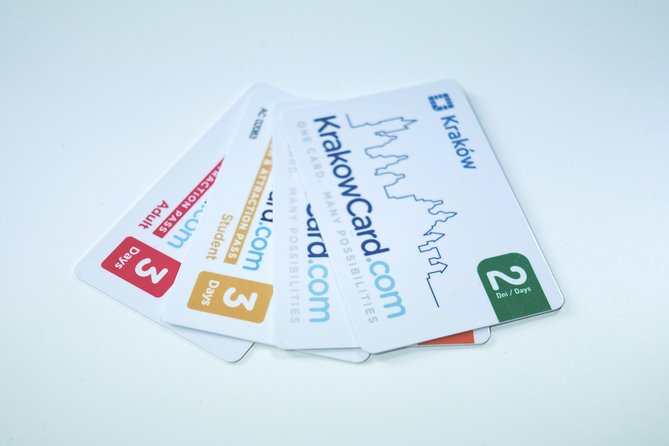
This is not a guided tour with a fixed route. You receive a card that covers admission to the listed museums and attractions, then plan your own visits. The pass is valid for one, two, or three days, depending on the option you choose.
The important detail is the activation system. The card is validated when you exchange it, but you can choose which days you actually use it. After you sign, it is active for the period selected. That gives you some control if you pick up the card before your main sightseeing days.
The card also includes public transport. That matters because the attractions are spread well beyond Krakow’s Old Town. Several are walkable from the Main Market Square, while others are in Kazimierz, Podgórze, Nowa Huta, or farther out.
The pass does not include food, drinks, hotel pickup, or hotel drop-off. Most people can use it, and the attractions are near public transport, but you still need to manage opening hours, travel time, and any timed-entry rules yourself.
A few more Krakow trips worth comparing
- Krakow: City Pass With Transport
★ 4.1 · 575 reviews - Krakow City Pass – Museums, Atractions & City Transport
★ 4.0 · 18 reviews - Krakow: “House of Attractions” 6 Attraction Pass
★ 3.4 · 14 reviews
Is $27.21 good value?
The price is easy to justify if you visit several substantial museums in one or two packed days. Schindler’s Factory, MOCAK, Rynek Underground, the National Museum, and the Galicia Jewish Museum alone could make the pass useful, especially with public transport included.
The value is less clear if your plan is a slow Krakow visit with only one or two museums. You may also find that some of the smaller stops take 30 minutes or less. They add variety, but they do not all add equal value.
I would judge the pass by your planned route rather than by the impressive number of attractions. Five carefully chosen museums can make a better day than eight scattered stops. If you are happy visiting smaller specialist museums, the card gives you a lot of choice for one fixed price.
A three-day pass gives you the most breathing room. You can place the Old Town museums on one day, Kazimierz and Podgórze on another, then use public transport for Nowa Huta or the Polish Aviation Museum. A one-day pass requires firm priorities and a good route.
The best first choices: Schindler’s Factory and Podgórze
Schindler’s Factory is the clearest anchor for the pass. Allow about two hours. The museum focuses on Krakow during the Second World War and offers a serious, structured experience rather than a quick collection of objects.
I would reserve this for the beginning of a museum-heavy day, not squeeze it in at the end. It is one of the attractions most likely to make the pass feel worthwhile, and transport between central Krakow and Podgórze makes the included transit useful here.
Nearby, the Eagle Pharmacy gives you a smaller but important look at wartime Krakow. Allow around 30 minutes. This is a focused stop, so pair it with Schindler’s Factory or other Podgórze sights rather than crossing town for it by itself.
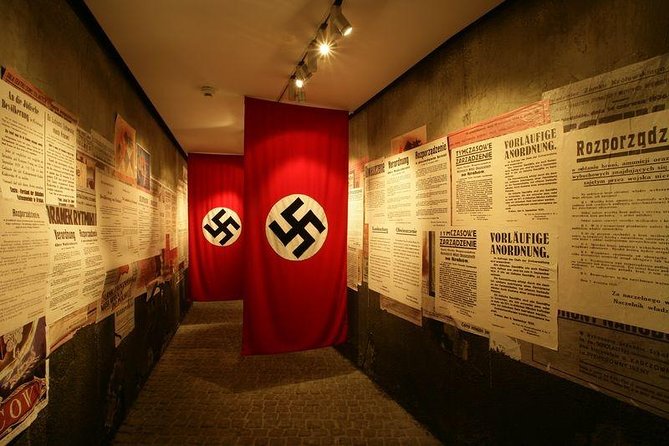
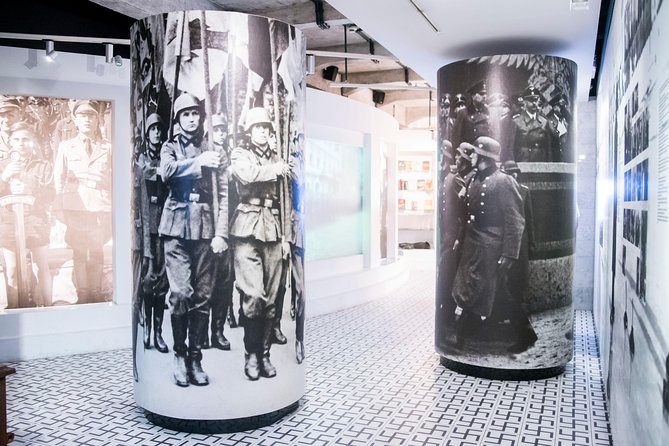
Pomorska Street adds another difficult wartime chapter. The former Nazi prison is presented as a museum, with about an hour suggested for the visit. It is not a light stop, but it gives useful context to the city’s occupation years.
Kazimierz: Jewish heritage, churches, and compact museums
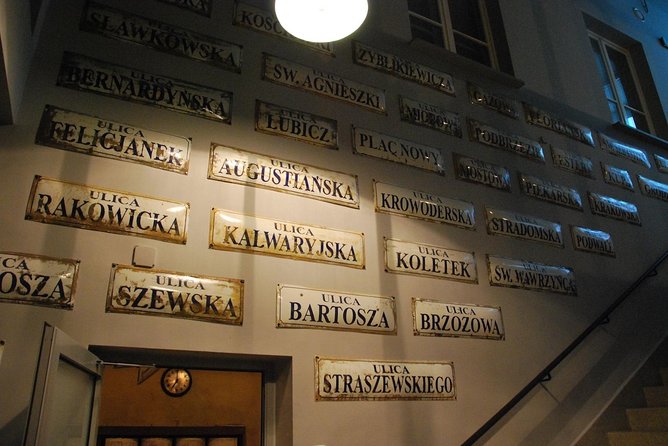
The Galicia Jewish Museum takes about an hour and is one of the strongest choices in the pass for visitors interested in Jewish life and memory in Krakow. It works well with the Old Synagogue, also covered by the card.
The Old Synagogue is part of the Krakow museum network and gives you a direct look at one of Kazimierz’s major historic religious sites. Plan about an hour. The two museums belong on the same half-day route, although you should leave time to walk between stops and pause in the neighborhood.
The Archdiocesan Museum offers another angle on Krakow’s religious and artistic past, also in roughly an hour. The Church of St. Adalbert is a shorter visit, but its basement exhibition is more substantial than the church exterior suggests. There you can see traces of earlier wooden and stone floors, Romanesque walls, and material linked to the Main Square and St. Adalbert.
The church appears twice in the attraction list because the church visit and the archaeological basement display are treated as separate entries. I would check the exact admission arrangement when you arrive so you know which part the card covers.
More museums in Krakow:
- Auschwitz-Birkenau Museum and Memorial Guided Tour from Krakow
★ 4.5 · 1,510 reviews - Krakow: Rynek Underground Museum Guided Tour
★ 4.6 · 1,122 reviews - Krakow Schindler’s Factory Museum Guided Tour in English
★ 4.5 · 650 reviews - Krakow: Auschwitz Birkenau Museum Guided Tour with Pickup
★ 3.6 · 544 reviews
The Main Square: underground, tower, walls, and Polish art
Krakow’s Main Market Square gives you several pass-covered stops within easy reach. The Gallery of the 19th Century Polish Art is housed in the Cloth Hall and takes about an hour. It presents Polish painting and art from the 19th century, including work by artists who shaped the country’s artistic identity.
The Rynek Underground museum takes about two hours and is one of the major attractions in the program. It presents the history beneath the Main Square, making it a useful counterpoint to the buildings and churches above ground.
Do not treat Rynek Underground as a spontaneous walk-in. You must book an entrance before visiting, even though the City Pass covers admission. This is the single clearest planning point in the whole experience.
The Town Hall Tower and the Barbican are shorter, more architectural stops. The Town Hall Tower is listed at about an hour, while the Barbican and the defensive walls each take about 30 minutes to an hour. They are useful if you want to understand how Krakow was protected, but they may be closed or have restricted access at certain times. The pass does not remove the need to check daily operating details.
Krzysztofory Palace takes about an hour and is another Krakow museum stop near the center. The Hipolit House, the Wyspiański Museum in the Szołayski House, and the Jan Matejko House are smaller specialist museums, usually 30 minutes to an hour. They suit visitors who like historic interiors, Polish artists, and city stories more than blockbuster displays.
National Museum choices for art lovers
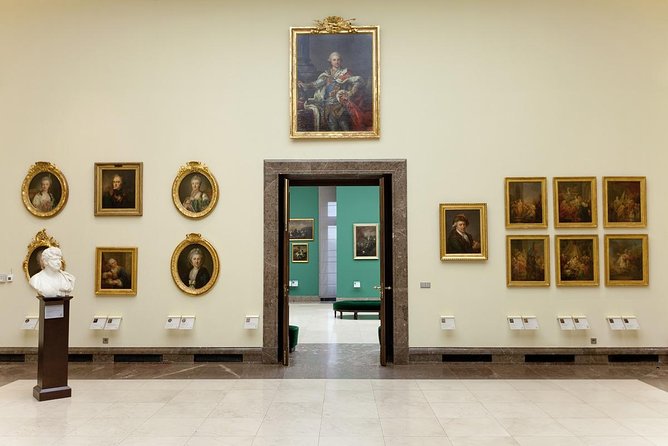
The pass covers several branches of the National Museum in Krakow, so you do not need to choose only one. The main National Museum takes about an hour in the suggested schedule, while the Bishop Erazm Ciołek Palace focuses on older Polish and European art in a historic setting.
Europeum, the European Culture Centre, is another art stop with a two-hour suggested visit. The Hutten-Czapski Museum is a shorter, more specialized choice, listed at about 30 minutes. The Józef Mehoffer House offers a look at the artist’s home and work, also in about 30 minutes.
These smaller branches are valuable if you enjoy art and period interiors, but they are not ideal for a first-time visitor who wants only Krakow’s biggest sights. I would choose one or two based on your interests rather than attempting every National Museum location.
The 19th-century gallery appears twice in the attraction information, so plan it as one visit rather than counting it as two separate museums.
Contemporary art and photography
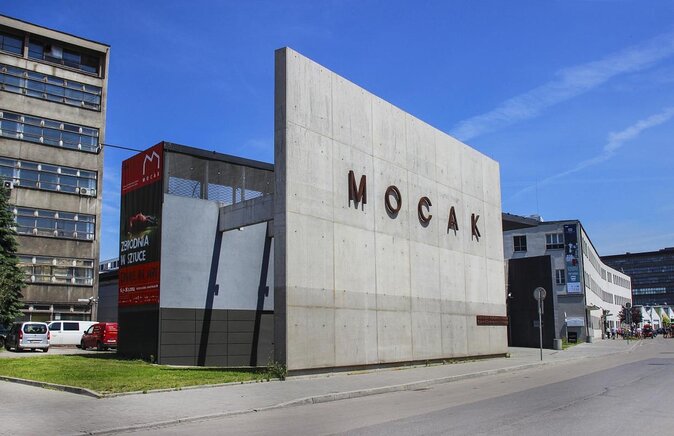
MOCAK, the Museum of Contemporary Art in Krakow, deserves about two hours. It gives the pass a modern edge and breaks up the concentration of churches, historic houses, and wartime museums.
You may love its current exhibitions, or you may find contemporary art less rewarding than the city’s historical collections. That is not a flaw in the pass, but it is a reason to check what interests you before spending half a day there.
The MuFo photography museum on Józefitów Street takes about an hour. It is a good choice if you want to see Krakow through photographs and photographic technique rather than paintings or architecture. Cricoteka, devoted to Tadeusz Kantor, is a compact 30-minute stop for visitors interested in theater, performance, and modern Polish art.
The Legends of Cracow attraction is very different. It uses a robotic theater to present stories such as the Wawel Dragon, the Mariacki towers, the yellow boot, the Sigismund Bell, and the Wieliczka salt mine. The show lasts about 20 minutes, so it is easy to add between larger museums. Families may find it particularly appealing, although the pass is not only designed for children.
Small museums with strong local character
The Ethnographic Museum takes about an hour and gives you a look at Polish folk culture and regional traditions. It is a useful choice when you want something beyond royal, religious, or wartime subjects.
The Home Army Museum takes about an hour and focuses on Poland’s underground resistance during the Second World War. It pairs naturally with Schindler’s Factory and Pomorska Street, but those three serious museums can make for an emotionally heavy day.
The Archaeological Museum also takes about an hour. Its exhibits provide a wider view of the region’s past, while the Church of St. Adalbert basement display brings archaeology down to a very specific Krakow site.
The Geological Museum of the Polish Academy of Sciences is shorter, about 30 minutes. The description also connects it with the history of the Academy of Mining and Metallurgy Museum. It is best for visitors with a particular interest in geology, science, or Krakow’s academic institutions.
Rydlówka, the regional museum connected with Polish modernism, takes about 30 minutes. Celestat, the Zwierzyniec House, and the ramparts are similarly compact. These places reward curiosity, but they may feel too specialized if you have only one day.
Nowa Huta and the Polish Aviation Museum
The pass becomes more useful when you use it to reach parts of Krakow that you might otherwise skip. The Polish Aviation Museum takes about an hour and is one of the more distinct choices in the program. It is not another Old Town interior, so it adds variety to your schedule.
Nowa Huta needs more planning. The Nowa Huta Museum takes about 90 minutes and explores the district, the Cold War, and life under socialism. Its location in the former Światowid cinema gives the visit a strong local setting.
The underground Nowa Huta exhibition takes about an hour and is listed in the Branice area. That means transport time matters. I would not combine every Nowa Huta attraction with central Krakow in a rushed one-day plan.
These outlying stops are where the unlimited buses and trams have real practical value. One visitor found the trams comfortable and easy to use, while another had trouble figuring out the bus system. My advice is to allow extra time for navigation and use the pass as a reason to travel slowly, not as permission to cram in every address.
Kosciuszko’s Mound and the outdoor option
Kosciuszko’s Mound is listed as a pass attraction and takes about 30 minutes in the suggested schedule. It offers a break from indoor museums and gives your itinerary an outdoor element.
It is worth remembering that the pass is primarily a museum and transport product. Kosciuszko’s Mound may be a quick stop within your day, but your total time will depend on transport and how long you spend at the site.
The included public transport helps here, but the pass will not tell you how to build the route. If you are unsure about Krakow’s bus system, ask for help when picking up the card or use a current transit map before setting out.
How to plan one, two, or three days
For one day, stay compact. Choose Rynek Underground, the Gallery of the 19th Century Polish Art, one Main Square site, then Schindler’s Factory and either the Eagle Pharmacy or the Old Synagogue. Reserve Rynek Underground first.
For two days, use one day for the Old Town and another for Kazimierz and Podgórze. Add the Galicia Jewish Museum, the Old Synagogue, MOCAK, or the Home Army Museum according to your interests.
For three days, you can reach farther. Add Nowa Huta, the Polish Aviation Museum, Kosciuszko’s Mound, or the National Museum branches. A longer pass also lets you include small museums without feeling that every 30-minute visit must be squeezed between major appointments.
Pick up the card at Krakville Tours, Sienna 17. The office is open daily from 8:00 to 22:00, which gives you a wide collection window. The card is validated when exchanged, but you decide when to activate it for use by signing after collection.
Who should buy it?
I would recommend the Krakow City Pass to museum fans, repeat visitors, families who want flexible indoor choices, and anyone planning to use buses and trams several times each day. It is also useful for a rainy spell, when having many covered attractions makes the city easier to enjoy.
I would hesitate if you mainly want to walk the Old Town, visit Wawel, sit in cafés, and see only one or two museums. The card does not cover every Krakow experience, and its nearly 40 choices can tempt you into a tiring checklist.
Children may not always need their own card. One family found that a three-year-old already received free admission at the museums, so check the child rules before buying an additional pass.
Free cancellation is available if you cancel at least 24 hours before the experience start time. Changes or cancellations inside that window are not accepted for a refund.
Final verdict: buy it for a planned museum weekend
At $27.21, this is a solid value when you use the major museums and public transport together. Schindler’s Factory, Rynek Underground, MOCAK, the Galicia Jewish Museum, and one or two National Museum branches can justify the cost without chasing every minor stop.
My best advice is to plan by neighborhood, reserve Rynek Underground early, and treat the small museums as optional bonuses. Buy the pass if you want Krakow’s museums to shape your trip. Skip it if your visit is mostly about outdoor sights and unplanned wandering.
FAQ
How much does the Krakow City Pass cost?
The listed price is $27.21 per person.
How long is the pass valid?
You can choose a pass valid for one, two, or three days.
Does the pass include public transportation?
Yes. The City Pass includes unlimited use of Krakow’s public bus and tram network.
When does the pass become active?
The card is validated when you exchange it, then you choose when to use it. It is activated after you sign for it.
Where do I collect the card?
You can collect it at Krakville Tours, Sienna 17, Krakow.
What are the collection hours?
The stated collection hours are 8:00 to 22:00 every day.
Do I need to reserve Rynek Underground?
Yes. You must book an entrance before visiting Rynek Underground, even with the pass.
Are food and drinks included?
No. Food and drinks are not included.
Can I cancel for a full refund?
Yes, if you cancel at least 24 hours before the experience start time. Cancellations made less than 24 hours in advance are not refunded.
Just added around Krakow
- Private Guided Tour: Oskar Schindler’s Factory★ 5.0 · 3 reviews
- E-Scooter Krakow sightseeing tour★ 5.0 · 3 reviews
- From Krakow: Zakopane and Thermal Pools Guided Trip★ 5.0 · 3 reviews
- Schindler’s Factory, Ghetto and Plaszow Camp Guided Tour★ 4.7 · 3 reviews
- Kraków: Private Hot Air Balloon Flight with Champagne★ 3.7 · 3 reviews
- Krakow: River Cruise & Guided Visit to Former Plaszow Camp★ 3.6 · 3 reviews
- From Krakow: Private Wieliczka Salt Mine Tour★ 4.0 · 3 reviews
- Krakow: Old Town short walk with St. Mary’s Basilica visit★ 5.0 · 3 reviews
Museums, compared.
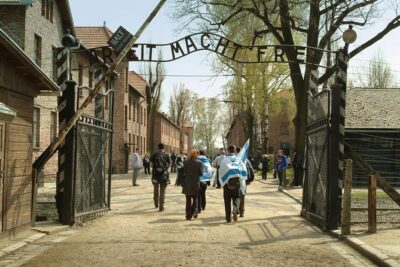
Auschwitz-Birkenau Museum and Memorial Guided Tour from Krakow
Read our review →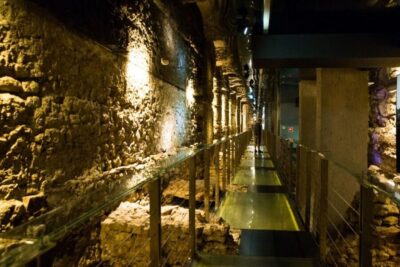

Krakow Schindler’s Factory Museum Guided Tour in English
Read our review →
Auschwitz Birkenau Museum Guided Tour with Pickup
Read our review →
Auschwitz Birkenau Museum and Salt Mine All Inclusive DAY TRIP with Local Guides
Read our review →
Chopin Piano Concert at Chopin Gallery with a Glass of Wine
Read our review →Browse the lists this tour appears in