
Reviewed · AUSCHWITZ-BIRKENAU TOURS
Krakow: Auschwitz-Birkenau Tour & Museum Expert Guide
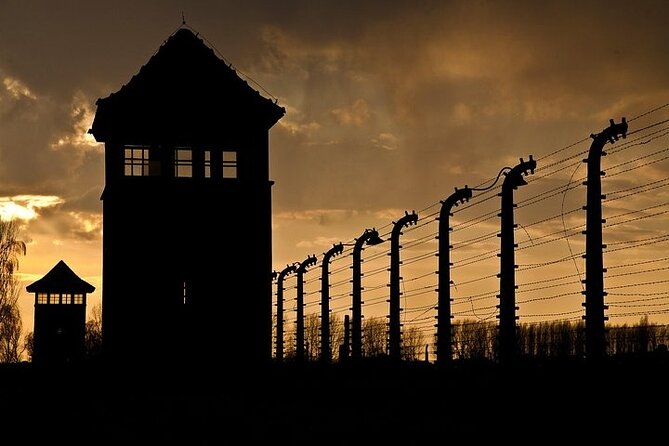
Auschwitz-Birkenau is not a casual sightseeing stop. It is a place of evidence, silence, and difficult questions, and this tour gives you a practical way to reach both Auschwitz I and the much larger Birkenau site from Krakow. The museum-approved guide leads the visits, while an English-speaking tour leader handles the road trip and group arrangements.
I like the two-camp itinerary, since Auschwitz I and Birkenau show different parts of the Nazi camp system. I also like the included air-conditioned transport, entry fees, headsets, and the chance to hear guides such as John, Norbert, or Paulina, who have been praised for clear and engaging presentations.
The main concern is serious: departure times can change sharply, sometimes from a planned morning pickup to the middle of the night. Some departures have also suffered from long waits, confused ticket arrangements, or transport problems, so you should confirm the exact time the day before and understand the operator’s cancellation terms before paying.
In This Review
- Key points to know before booking
- Why Auschwitz I deserves careful attention
- Birkenau gives the visit a different scale
- The road from Krakow is part of the day
- The departure-time warning is not a minor detail
- Entry arrangements need extra caution
- What the $30.23 price really buys you
- Walking, weather, and the emotional weight of the site
- Who will get the most from this tour
- How to prepare for a respectful, smoother day
- Should you book this Auschwitz-Birkenau tour?
- FAQ
- How long does the Auschwitz-Birkenau tour take?
- Where does the tour start?
- Does the tour visit both Auschwitz I and Birkenau?
- Is an English-speaking guide included?
- Are entrance fees included?
- Can the departure time change after booking?
- What should I bring?
- Is the tour suitable for people with mobility restrictions?
- Is food included?
- How many people can join the group?
Key points to know before booking
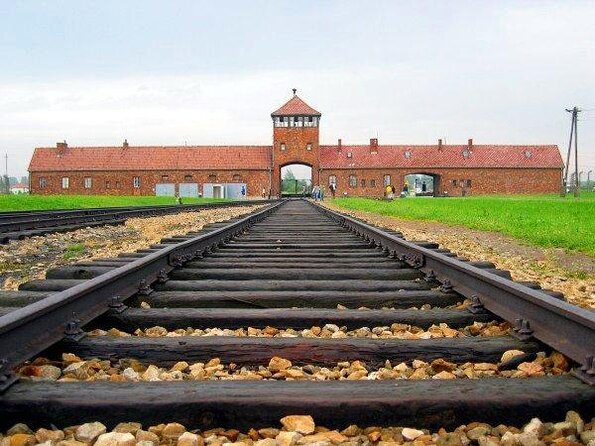
- Both Auschwitz I and Birkenau are included: You visit the brick barracks and museum exhibits at Auschwitz I, then continue to the vast Birkenau site nearby.
- The museum assigns the official guide: Your guide is approved by the Auschwitz-Birkenau Museum, and headsets help you follow the commentary in a group.
- The schedule may move by several hours: Contact the operator the day before, since museum policy can alter the departure time.
- Plan for walking and outdoor exposure: You need comfortable shoes, weather protection, and patience with short breaks.
- The price is low for a full-day outing: At $30.23 per person, transport and admission are included, but service reliability needs careful checking.
- The experience is emotionally demanding: This is a serious memorial visit, not a light excursion, and respectful conduct matters.
Why Auschwitz I deserves careful attention
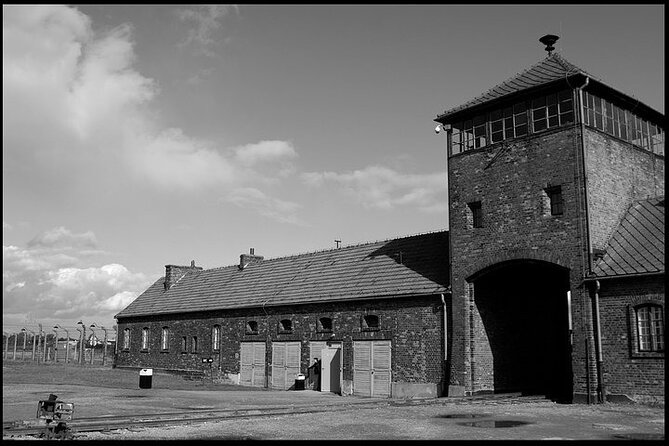
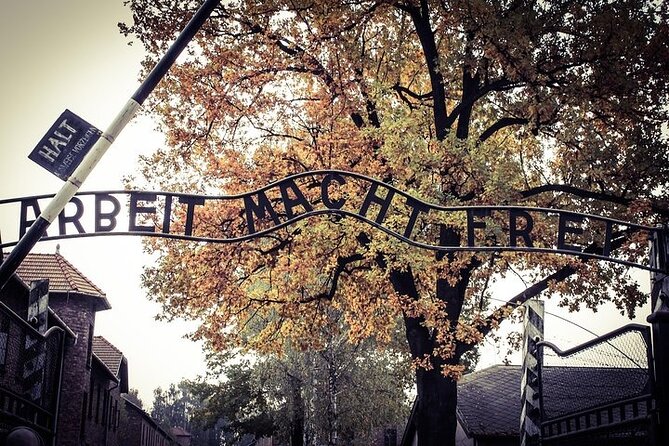
The first camp, Auschwitz I, is the more compact and museum-focused part of the visit. You enter through the well-known Arbeit Macht Frei gate and walk among brick barracks, watchtowers, and preserved camp structures.
The power of this section comes from its objects. Photographs, documents, and personal belongings turn an enormous historical crime into something human and specific. The exhibits show the machinery of persecution and the scale of loss without requiring you to imagine the past from an empty field.
The scheduled visit here lasts about two hours and 30 minutes, including admission. That is enough time for a guided route through major buildings, though it is not a private tour where you can linger wherever you wish.
Your guide explains the camp’s role in the system of imprisonment, forced labor, murder, and terror. The museum assigns the guide, so the quality and style of the commentary may vary. Strong guides have been praised for adding context beyond the display panels, while one account found the talk repetitive and too close to the information already printed in the exhibits.
I would treat the guide as an important part of the experience, but not the only source of meaning. Some rooms and displays are quiet and stark. You may find that you need time to process what you are seeing rather than listen constantly.
Photography and behavior require judgment. The site is a memorial, and respectful clothing, subdued conversation, and no posed or playful photos are appropriate. Your guide may remind the group of this, but personal restraint matters more than any rule briefing.
More Auschwitz-Birkenau memorial visits:
- From Krakow: Auschwitz-Birkenau Guided Tour & Hotel Pickup
★ 4.5 · 33,358 reviews - From Krakow: Auschwitz-Birkenau Guided Tour & Hotel Pickup
★ 4.5 · 29,340 reviews - Krakow: Auschwitz Guided Tour with Optional Hotel Pickup
★ 4.5 · 15,280 reviews
Birkenau gives the visit a different scale
After Auschwitz I, the group has a short break of up to 15 minutes before driving roughly three minutes to Brzezinka, the village containing Birkenau, also called Auschwitz II. This second site is much larger and more open.
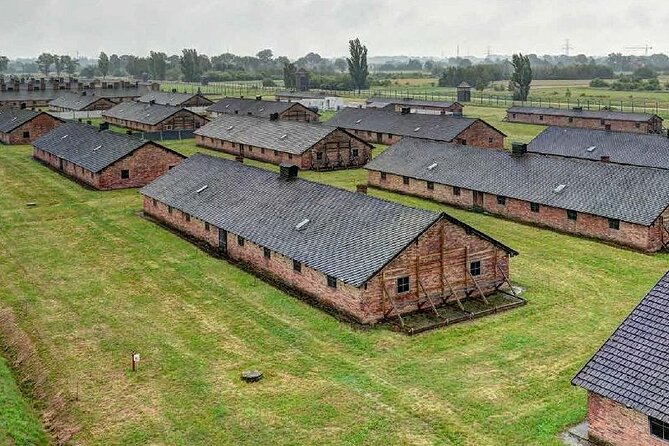
Birkenau’s scale is difficult to grasp from photographs. The grounds include the famous entrance gate, long lines of barracks, watchtowers, railway facilities, and memorial areas. Much of the visit takes place outside, so the weather can shape your experience as much as the history does.
The scheduled time at Birkenau is about one hour and 30 minutes. That allows the guide to explain the camp’s purpose, living conditions, prisoner selections, Nazi medical experiments, and liberation in January 1945. It may not allow you to see every part of the extensive site.
This is the portion where sensible planning matters most. Bring a raincoat or umbrella in wet weather. On hot days, a sunhat and water are sensible, and comfortable walking shoes are essential. The supplied information warns that breaks are generally no longer than 10 minutes, although a longer pause is planned near the end of the day.
Birkenau can feel more exposed than Auschwitz I. There are fewer conventional museum rooms and more open ground, ruined structures, and long walking routes. The physical setting helps explain the camp’s size and design, but it also means you should not expect a relaxed pace or many opportunities to sit.
The guide continues from the first camp, which helps keep the story connected. A good guide can show how the two locations worked together and why the second camp was built on such a large scale. Still, the time limit may feel tight, especially if the tour starts late or the group loses time at the entrance.
The road from Krakow is part of the day
The trip lasts about seven to eight hours overall, including travel, visits, breaks, and the return to Krakow. The drive back is described as about one hour and 15 minutes, and the outward journey can also take roughly that long.
You meet at Pawia 18B in Krakow, unless a pickup arrangement is confirmed. The vehicle should be an air-conditioned van or minibus, and the advertised maximum group size is 30 people. That is smaller than a large coach excursion, but it is still a group experience, not a quiet private outing.
An English-speaking tour leader travels with you and is meant to help with practical matters. This person is separate from the museum-appointed guide in at least some arrangements. That distinction is worth understanding: the leader manages transport and coordination, while the official guide conducts the museum visit.
Some guides and hosts have received especially warm praise. John has been described as clear, friendly, and strong on the history of both camps. Norbert has been praised for looking after the group, and Paulina for combining a friendly manner with a strong command of the subject. These names indicate the type of service you want, but you should not assume a particular guide will be assigned to your departure.
Near the end, a break of at least 20 minutes is planned. You may use it for a bookstore, groceries, or a rest before the final drive back. Food and drinks are not included, so carry snacks and water rather than relying on a short stop.
One practical weakness is the limited toilet and meal time. The whole outing can involve several hours of walking and travel, while breaks may be brief. Bring food with you, eat before departure, and use every available facility during the stops.
The departure-time warning is not a minor detail
The most important booking issue is the timetable. The listed departure may change because of Auschwitz-Birkenau Museum policy, and you are specifically asked to contact the operator the day before to confirm the exact time.
This warning deserves more attention than it usually gets. Reports describe morning bookings being moved to very early departures, including pickup times around 3:00 or 4:00 a.m. In one case, a planned 9:00 a.m. pickup was changed the day before. Another account describes a confirmed 7:55 departure being shifted to 5:30 a.m.
A very early start may be necessary for a particular museum entry arrangement, but it can disrupt breakfast, dinner plans, sleep, and prepaid hotel services. If you have only one free day in Krakow, the risk matters even more.
Do not rely only on the original booking time. Check messages, answer calls, and contact the operator directly the day before. If the new time would make the excursion impossible, the stated policy says the booking is non-refundable and cannot be changed for any reason. That makes the schedule issue central to the value calculation.
More museums in Krakow:
- Auschwitz-Birkenau Museum and Memorial Guided Tour from Krakow
★ 4.5 · 1,510 reviews - Krakow: Rynek Underground Museum Guided Tour
★ 4.6 · 1,122 reviews - Krakow Schindler’s Factory Museum Guided Tour in English
★ 4.5 · 650 reviews - Krakow: Auschwitz Birkenau Museum Guided Tour with Pickup
★ 3.6 · 544 reviews
Entry arrangements need extra caution
The tour includes admission fees and a museum-approved guide, which should make the day straightforward. Yet some reported departures have involved long waits at the entrance and unclear ticket handling.
One account describes a group arriving before the gates opened, waiting outside for hours, then waiting again for the ticket office. The group was eventually placed on an English tour, but the process was stressful. Another account describes a long queue while other organized groups entered more quickly.
These problems may not affect every departure, but they show why you should ask how your admission will be handled. You want clear answers about the museum entry time, the length of any expected wait, and whether the vehicle remains with the group during delays.
There have also been reports of a return vehicle not being available, with some people directed to a public FlixBus instead. That conflicts with the advertised round-trip transport and is a major concern if you have an evening reservation or need a dependable return to a hotel.
I would not assume these failures are routine, but I would not ignore them either. Keep the operator’s emergency contact details handy, arrive early at the meeting point, and ask the tour leader for a clear plan if the group is delayed.
What the $30.23 price really buys you
At $30.23 per person, the tour is inexpensive for a full-day trip from Krakow. The price includes transport, entry fees, an English-speaking museum guide, headsets, and assistance from the tour company.
If the vehicle arrives on time, the entry works as planned, and the return journey runs normally, this can be good value. You avoid arranging transport between Krakow, Oswiecim, Auschwitz I, and Birkenau, and you receive guided interpretation rather than walking through the memorial alone.
The low price also comes with limits. You share the day with as many as 29 other people, the schedule is controlled by museum availability, food is extra, and the tour is not designed for long independent exploration. You are buying convenience and structure, not flexibility.
The non-refundable policy makes the low price less reassuring. A cheap booking is not good value if a last-minute change means you cannot use it. If your plans are tight, compare the cost of arranging your own transport and purchasing museum admission directly. The tour may still be worthwhile, but the savings should be weighed against the schedule risk.
Walking, weather, and the emotional weight of the site
This is a physically active day. You walk through buildings, across open grounds, and between viewing areas, often with only short pauses. The experience is not recommended for people with serious health or mobility restrictions.
Weather can be uncomfortable. The tour information specifically recommends an umbrella or raincoat, and the open Birkenau grounds offer limited shelter during the outdoor portion. On a hot day, the walking and lack of long breaks can leave you tired or dehydrated.
The emotional demands are just as important. Exhibits of personal belongings, photographs, and documents can be distressing. At the memorials and monuments, you may want quiet time, but the group schedule continues.
I would avoid placing this tour next to another major activity. Give yourself a calm evening afterward. The day can be informative, but it can also leave you subdued and mentally tired.
Who will get the most from this tour
This experience suits you if you want an organized English-language visit from Krakow and prefer having transport and a museum guide arranged together. It is also useful if you want to see both camps in one day without managing the route yourself.
It works particularly well for people who value historical explanation. The best guides, including the praised John, Norbert, and Paulina, can add a human voice to the displays and help you understand how Auschwitz I and Birkenau fit together.
Families can use the service, and one positive account specifically praised the operator’s flexibility with children and a complicated schedule. Still, parents should think carefully about the age and sensitivity of each child. This is not an easy attraction for young children.
You should think twice if you need guaranteed timing, frequent breaks, a quiet private experience, or dependable door-to-door transport. It may also be a poor match if you cannot walk for long periods or if a prearranged breakfast and late dinner make a dawn departure impractical.
How to prepare for a respectful, smoother day
Before leaving Krakow, I would do the following:
- Confirm the exact pickup or meeting time the day before.
- Bring your passport or another required ID for entrance security.
- Pack water, snacks, and any food you will need.
- Wear sturdy, comfortable walking shoes.
- Carry rain protection and sun protection.
- Keep your phone charged for operator messages and emergency contact.
- Expect short breaks rather than a full lunch stop.
- Follow the guide’s instructions about photography and respectful conduct.
The meeting point is Pawia 18B, and the tour ends back at the meeting point according to the supplied details. Because some arrangements may offer pickup, confirm your own location rather than assuming hotel pickup is included.
Should you book this Auschwitz-Birkenau tour?
I would book it only after confirming the departure time and transport plan directly with Discover Poland. The itinerary itself is worthwhile: you see both Auschwitz I and Birkenau, hear from a museum-approved English guide, and avoid the work of arranging the route from Krakow.
The strongest part is the guided visit. Good guides such as John, Norbert, and Paulina have been praised for clear explanations, warmth, and care. The weakest part is operational reliability, especially the possibility of a dramatic time change, long entry waits, or an unexpected public bus return.
If you have a flexible Krakow schedule and want a low-cost organized option, $30.23 can represent fair value. If this is your only chance to visit, or you cannot tolerate a last-minute 3:00 a.m. departure, investigate direct museum arrangements and independent transport before committing to a non-refundable booking.
FAQ
How long does the Auschwitz-Birkenau tour take?
The experience lasts approximately seven to eight hours, including transportation from Krakow, the guided visits, breaks, and the return journey.
Where does the tour start?
The listed meeting point is Pawia 18B, 31-154 Krakow, Poland. Pickup may be offered, so confirm the exact arrangement before departure.
Does the tour visit both Auschwitz I and Birkenau?
Yes. The itinerary includes Auschwitz I Museum and the Birkenau site in Brzezinka, also known as Auschwitz II.
Is an English-speaking guide included?
Yes. The tour includes an English-speaking local museum guide and an English-speaking tour leader. The museum-appointed guide is officially approved by the Auschwitz-Birkenau Museum.
Are entrance fees included?
Yes. Entry fees for the included visits are part of the tour price. Headsets are also provided so you can hear the guide clearly.
Can the departure time change after booking?
Yes. The departure time may change because of Auschwitz-Birkenau Museum policy. You are advised to contact the operator the day before to confirm the exact time.
What should I bring?
Bring your passport or ID for entrance security, comfortable walking shoes, water, snacks, and an umbrella or raincoat. Sun protection can also help during the outdoor visit.
Is the tour suitable for people with mobility restrictions?
The tour is not recommended for people with serious health or mobility restrictions. It involves considerable walking, outdoor areas, and short breaks.
Is food included?
No. Food and drinks are not included, so bring snacks and water or purchase them during the short available breaks.
How many people can join the group?
The maximum group size is 30 people. The vehicle is described as an air-conditioned van or minibus.
Just added around Krakow
- Private Guided Tour: Oskar Schindler’s Factory★ 5.0 · 3 reviews
- E-Scooter Krakow sightseeing tour★ 5.0 · 3 reviews
- From Krakow: Zakopane and Thermal Pools Guided Trip★ 5.0 · 3 reviews
- Schindler’s Factory, Ghetto and Plaszow Camp Guided Tour★ 4.7 · 3 reviews
- Kraków: Private Hot Air Balloon Flight with Champagne★ 3.7 · 3 reviews
- Krakow: River Cruise & Guided Visit to Former Plaszow Camp★ 3.6 · 3 reviews
- From Krakow: Private Wieliczka Salt Mine Tour★ 4.0 · 3 reviews
- Krakow: Old Town short walk with St. Mary’s Basilica visit★ 5.0 · 3 reviews
Auschwitz-Birkenau Tours, compared.

Auschwitz-Birkenau Guided Tour & Hotel Pickup
Read our review →Auschwitz-Birkenau Guided Tour & Hotel Pickup
Read our review →
Auschwitz Guided Tour with Optional Hotel Pickup
Read our review →
Auschwitz-Birkenau Guided Tour with Pickup & Lunch
Read our review →
Auschwitz-Birkenau Guided Tour Pickup/Lunch Options
Read our review →

Krakow to Auschwitz Birkenau Guided Tour with Transfer and Ticket
Read our review →
Browse the lists this tour appears in