
Reviewed · KAZIMIERZ JEWISH QUARTER TOURS
Discover the Jewish Quarter with a Bike Tour
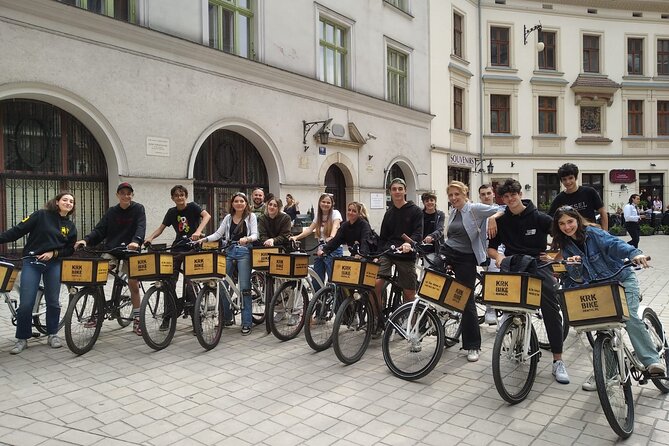
Krakow’s Jewish Quarter is best understood stop by stop, and this two-hour bike tour covers a lot of ground without turning the visit into a history lecture. You ride from Wiślna Street toward Kazimierz, then pause often for stories about synagogues, Jewish life before the war, local customs, film history, and the neighborhood’s changing character.
I like the efficient route and the frequent stops. I also like the human touch: guides such as Arthur explain both major sites and small details, including why the Singer bar has its name and where to try zapiekanki. The main consideration is pace. With up to 30 people and many stops, you get a strong introduction, not long visits inside every building.
In This Review
- Key points to know before you book
- Why a bike works well in Krakow’s Jewish Quarter
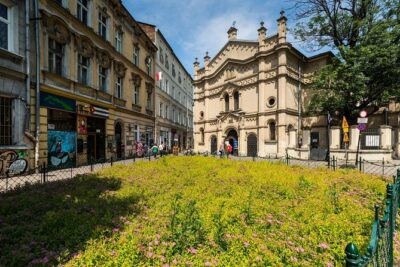
- Tempel Synagogue and the Jewish community before the war
- JCC Krakow and the neighborhood today
- New Square and the best stop for zapiekanki
- Schindler’s List Passage and film connections
- Singer, a small detail with a local feel
- Old Synagogue and the story of Wolf Popper
- Remuh Synagogue and the cemetery option
- Kupa Synagogue and the rhythm of short stops
- Corpus Christi Church and a different religious story
- Plac Wolnica, local legends, and the finish
- Is $30.23 a fair price for two hours?
- Practical details that affect your day
- Who should book this Krakow bike tour?
- Should you book it?
- FAQ
- How long does the Jewish Quarter bike tour last?
- Where does the tour start?
- Where does the tour end?
- Is the tour offered in English?
- Are synagogue admission fees included?
- How many people can join the tour?
- What happens if the weather is poor?
Key points to know before you book
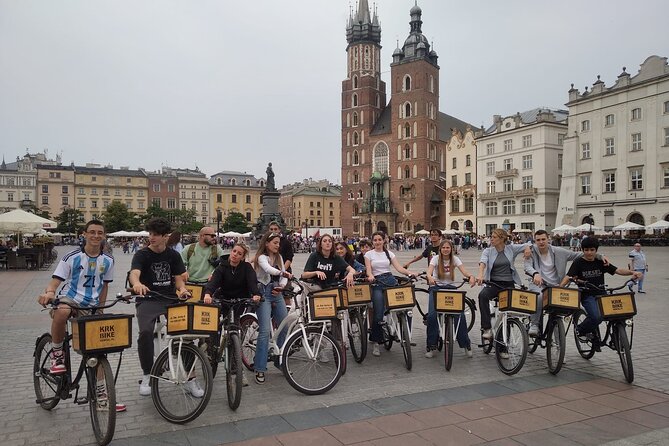
- A quick ride connects Krakow’s center with Kazimierz, with about 10 minutes of cycling before the main sightseeing begins.
- Four important synagogues feature on the route, but admission to some interiors is not included.
- New Square brings the neighborhood to life, with time to see the local scene and try Poland’s popular zapiekanki.
- Schindler’s List Passage adds film and wartime context to the history of Kazimierz.
- The tour ends at Plac Wolnica, back near the starting point, making it easy to continue exploring on your own.
- Free cancellation is available until 24 hours before departure, while poor weather can lead to a new date or a full refund.
Why a bike works well in Krakow’s Jewish Quarter
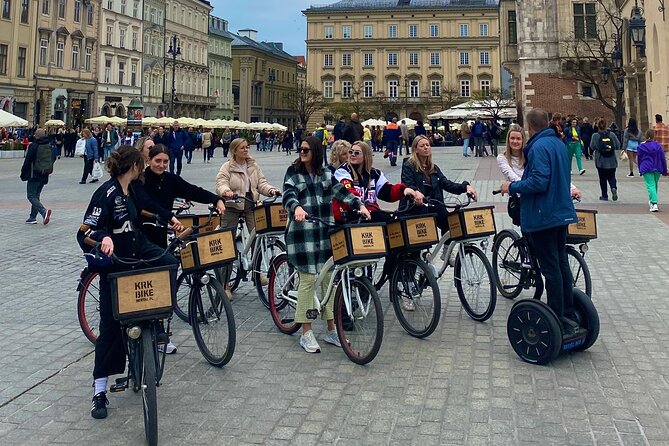
Kazimierz is close to Krakow’s Old Town, but it has a different feel and a different story to tell. A bike helps you cover the distance between the central meeting point and the Jewish Quarter quickly, leaving more of your two hours for actual stops.
The ride begins at Wiślna 4, in central Krakow. From there, you cycle for roughly 10 minutes toward the quarter. Once you arrive, the format changes from steady riding to short hops and frequent pauses. That matters because the tour is not designed as a long athletic ride. It is a moving history lesson with enough cycling to connect the places.
I would choose this format if you want an overview before deciding which sites deserve a longer visit. You will not spend a full hour inside one synagogue, but you will see how the buildings, squares, cafés, churches, and streets fit together.
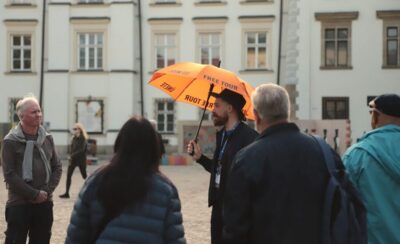
The group can include up to 30 people. That is a manageable size for an outdoor route, though a large group may take longer to gather at each stop. The guide’s ability to keep the group together matters, and the available feedback gives Arthur particular credit for being engaging and well informed.
More Kazimierz walks:
- Krakow: Jewish Quarter and Former Ghetto Tour
★ 4.9 · 1,441 reviews - Krakow: Bike Tour of Old Town, Jewish Quarter and the Ghetto
★ 4.9 · 1,155 reviews - Krakow: Kazimierz Jewish Quarter Walking Tour
★ 4.8 · 571 reviews
Tempel Synagogue and the Jewish community before the war
The first major stop is Tempel Synagogue, where the guide explains the Jewish community that flourished in Krakow before the war. This is an important opening because the quarter is not only a collection of old buildings. It was once a living community with its own religious, social, and cultural life.
You get about 10 minutes here. Admission is not included, so the focus is the guide’s explanation from outside unless you choose to arrange entry separately. If you want detailed architectural study or a quiet look inside, allow extra time on another visit.
This short introduction gives the rest of the ride a useful frame. As you visit other synagogues, you can think about their different roles and histories rather than treating them as identical photo stops.
JCC Krakow and the neighborhood today
At the Jewish Community Centre of Krakow, the guide introduces the JCC and its role in the modern Jewish community. The stop also includes the connection with Prince Charles, a detail that helps show the center’s public importance.
You spend about 10 minutes here. Admission is free, and the stop shifts the focus from the past to the present. That balance is one of the tour’s strengths. A visit centered only on wartime loss can leave you with a narrow picture of Kazimierz. The JCC helps show that Jewish life in Krakow is not only a subject from the past.
The guide also places the center in its neighborhood. That is useful because you begin to see Kazimierz as a lived-in district, not a museum set. The tour’s strongest moments come from this mix of memory, current community life, local food, and ordinary streets.
New Square and the best stop for zapiekanki
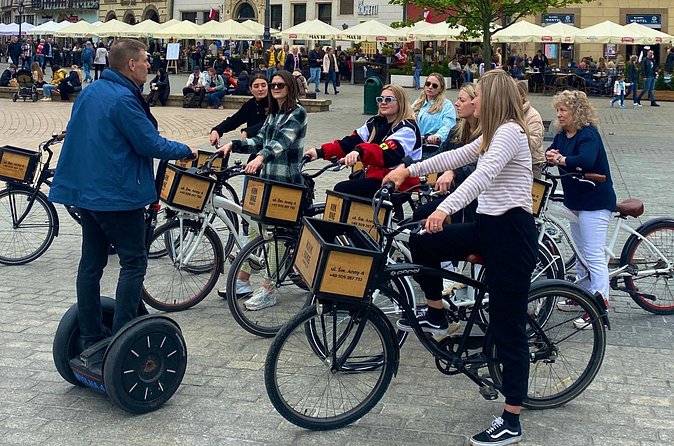
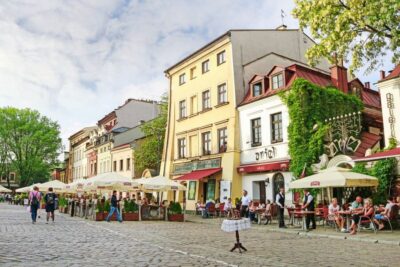
The itinerary calls this Market Square, but the explanation centers on New Square in Kazimierz. You get about 20 minutes here, the longest single stop on the route. This is where you can meet the local atmosphere and try zapiekanki, Poland’s famous open-faced fast food.
I like having food built into the route rather than being told to find lunch later. Zapiekanka is practical sightseeing food: quick, filling, and tied to the everyday character of the area. The tour price does not state that food is included, so plan to pay separately if you want one.
This stop also gives you a break from historical detail. After several explanations about synagogues and community life, New Square offers a chance to look around, eat, and get a sense of how the district functions now.
The tradeoff is time. Twenty minutes is enough for a quick snack and orientation, but not a relaxed meal. If the food interests you, keep your order simple and be ready to rejoin the group.
More bike days around Krakow:
- Complete Cracow Bike Tour (small group of maximum 15 people!)
★ 5.0 · 1,322 reviews - Highlights of Krakow Bike Tour – Small group
★ 5.0 · 662 reviews - Full Bike Tour – the Old Town, Jewish Qtr & the Ghetto NEW BIKES
★ 5.0 · 437 reviews - Krakow: Bike Tour of the Old Town, Kazimierz, and the Ghetto
★ 4.9 · 350 reviews
Schindler’s List Passage and film connections
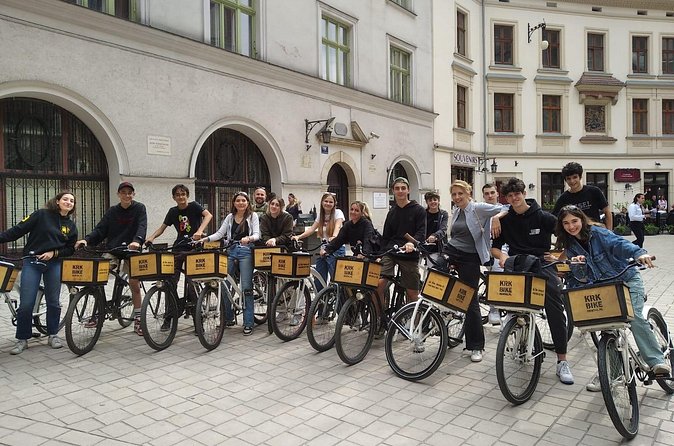
The next stop focuses on Schindler’s List Passage, with stories about the film, documentaries, and related facts. The tour gives this section about 15 minutes.
This stop works best for visitors who know the film or want to understand how popular culture has shaped the way people picture Krakow during the war. The guide can place the movie connection within the wider story of the city and the Jewish quarter.
I would treat this as a context stop, not as a substitute for a museum visit. The tour gives you an explanation and a location, but it does not include admission to a film museum or another major indoor collection. If wartime history is your main reason for coming to Krakow, pair this ride with a separate museum visit or another dedicated historical tour.
The experience also pairs well with a prior visit to Auschwitz, as one person specifically found. The two outings serve different purposes: Auschwitz deals with the machinery of mass murder, while this route keeps you closer to the city, its streets, buildings, and community story.
Singer, a small detail with a local feel
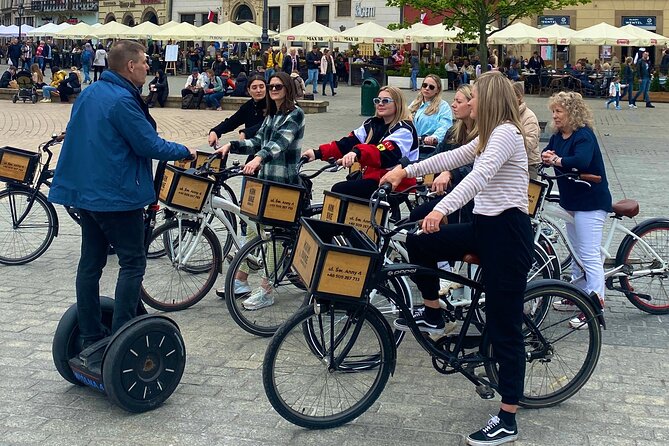
The five-minute stop at Singer is brief but memorable. The guide explains the bar, its meaning, and why it is called Singer.
This is exactly the sort of detail that can disappear on a standard sightseeing route. You may not need a long lecture about every café or bar, but learning the reason behind a name gives the street more character. It also breaks up the sequence of formal religious sites.
Because the stop is short, do not expect time for a drink. Think of it as a quick explanation before moving on. You can return later if the place catches your attention.
Old Synagogue and the story of Wolf Popper
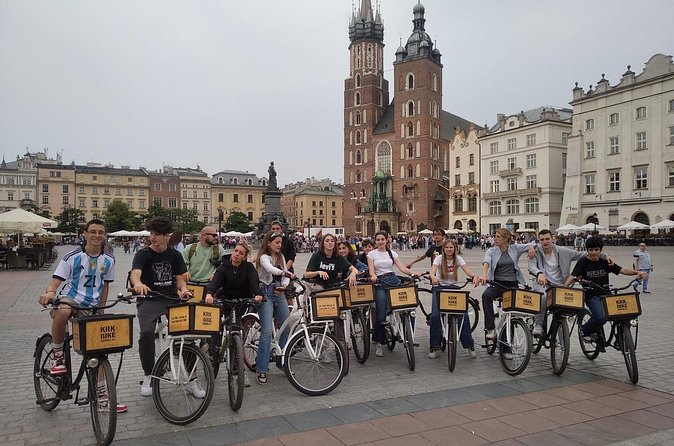
The route then turns to the Old Synagogue, with about 10 minutes devoted to its history. Admission is not included. As with Tempel Synagogue, you receive the guide’s explanation, while any interior visit may require extra time and payment.
The Old Synagogue is one of the central reference points for understanding Jewish Krakow. Its place on the route helps connect the broader story of the community with the buildings that remain.
Next comes Popper Synagogue, also for about 10 minutes. The guide introduces Wolf Popper and the bookshop beside the synagogue. Admission is free for this stop.
I appreciate the contrast between these two visits. The Old Synagogue gives you a major historical anchor, while Popper Synagogue brings in a specific person and a nearby bookshop. Those smaller facts can help the quarter feel less like a list of famous names.
The spelling of the synagogue’s name may appear as Popper or Popper Synagogue, and the route description has a few minor spelling variations. That does not affect the stop itself, but it is worth knowing if you are checking signs or mapping the route afterward.
Remuh Synagogue and the cemetery option
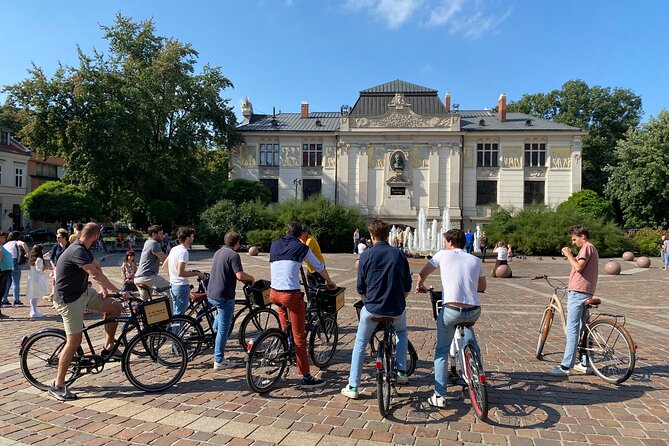
At Remuh Synagogue, the guide explains the synagogue and its history during another 10-minute stop. You can visit the synagogue and cemetery if you wish, but admission is not included.
This is one of the more useful points to clarify before booking. The route brings you to the site, but the two-hour schedule is not built around long indoor visits. If you want to enter, ask the guide how to fit it into the group’s timing, or return independently afterward.
The cemetery option adds weight to the stop. It lets you connect the synagogue with the people and community it served. At the same time, it asks for respectful behavior and a little more time than a quick exterior explanation.
For a first visit, I would listen carefully to the guide here and note the location. Then decide if you want to come back for a slower visit after the ride.
Kupa Synagogue and the rhythm of short stops
The route continues to Kupa Synagogue, where you hear about its history. The stop lasts around 10 minutes, and admission is free.
By this point, the tour’s method is clear: ride a short distance, stop, listen, look around, then move on. Some people love this rhythm because it keeps the visit active. Others may find the repeated starts and stops less satisfying than settling in at one site.
I think the format suits a first afternoon in Krakow. You get enough information to recognize the main sites later, and you avoid spending the whole visit inside one building. If you already know Kazimierz well, you may prefer a longer walking tour focused on one subject.
Corpus Christi Church and a different religious story
The stop at Corpus Christi Church adds an important change of viewpoint. The guide explains the origin of the church’s name and gives a detailed history of the place. You can also visit the church itself.
This is not a synagogue, so it widens the story beyond the Jewish quarter’s Jewish sites. The church shows how several religious traditions and institutions share the same part of Krakow. That makes the route more balanced and helps you understand the district as a complicated neighborhood rather than a single-theme attraction.
The itinerary allows about 10 minutes. That is enough for an introduction, but you may want to return if the interior interests you. The description confirms that you can visit, but it does not state an admission charge, so check locally if you plan to enter.
Plac Wolnica, local legends, and the finish
The final stop is Plac Wolnica, where the guide shares facts and local legends. After about five minutes, the activity ends back at the meeting point.
Ending at the starting point is useful. You do not have to arrange a pickup across town, and you can retrace the route easily. You may also be able to continue exploring by bike. One person chose to rent the same bikes after the tour ended and use them for further sightseeing.
The square is a good place to pause and decide what deserves more of your time. You might return to a synagogue, look for a snack, revisit Singer, or simply walk through Kazimierz without a schedule.
Is $30.23 a fair price for two hours?
At $30.23 per person, this is reasonably priced for a guided, English-language bike introduction to Kazimierz, provided the bike arrangement is clear when you book. The experience includes a structured route, a guide, and access to a large set of stops that would take more effort to connect on your own.
The value comes from the guide’s interpretation. You are not paying only to cycle from one address to another. You are paying for the links between Jewish life before the war, present-day community work, film memory, food, religious buildings, and local legends.
The price does not include admission to Tempel, the Old Synagogue, or Remuh Synagogue. It also does not state that zapiekanki is included. Add those costs if you plan to enter sites or eat during the New Square stop.
I would book it for a first visit, especially if you have only a short time in Krakow. If your priority is detailed synagogue interiors, private discussion, or a slow photographic tour, the short stops and possible group size may feel limiting.
Practical details that affect your day
You receive confirmation when booking, and the activity accepts a mobile ticket. The starting point is Wiślna 4 in Krakow, and the route returns there.
The tour is offered in English and is near public transportation. Most people can take part, according to the supplied booking information. Since this is an outdoor bike activity, choose clothing that works for changing weather and cycling, though the tour does require good weather.
Bad weather can lead to a different date or a full refund. You can cancel for a full refund up to 24 hours before the start time. Inside that 24-hour window, no refund is available, and changes are not accepted.
Guide quality matters on a tour with this many stops. Arthur is specifically associated with the route and is described as engaging and well informed. Another strong guide is referred to by first-person reviewers only as a woman, so her name is not available. The most useful sign is the style of the tour: clear explanations, regular stops, and a willingness to answer questions will make a larger difference than the number of buildings visited.
Who should book this Krakow bike tour?
I would recommend it to first-time visitors who want a fast but thoughtful introduction to Kazimierz. It suits you if you like learning through a mix of riding, short talks, food, and street-level details.
It is also a good fit after a visit to Auschwitz, when you may want to understand the Jewish quarter as a former and present community rather than only through the lens of the Holocaust. The JCC, New Square, Singer, and Plac Wolnica help create that broader view.
Families and active adults may appreciate the movement, though the tour’s maximum of 30 people means it is not a private experience. People who want a quiet religious visit should plan extra time outside the tour.
Should you book it?
Book this tour if you want a well-planned first look at Kazimierz, prefer cycling to a long walk, and value a guide who can connect famous sites with small local details. Arthur’s engaging style and the route’s many short stops are strong reasons to consider it.
Skip it if you want extended time inside each synagogue, a small private group, or a food tour centered on eating. For most visitors with two hours to spare, though, $30.23 buys a useful orientation and a clear list of places to revisit at your own pace.
FAQ
How long does the Jewish Quarter bike tour last?
The tour lasts approximately two hours.
Where does the tour start?
The meeting point is Wiślna 4, 33-332 Kraków, Poland.
Where does the tour end?
The activity ends back at the meeting point on Wiślna Street.
Is the tour offered in English?
Yes. The tour is offered in English.
Are synagogue admission fees included?
No. Admission is not included for Tempel Synagogue, the Old Synagogue, or Remuh Synagogue. You may visit Remuh Synagogue and its cemetery if you wish.
How many people can join the tour?
The maximum group size is 30 people.
What happens if the weather is poor?
The experience requires good weather. If it is canceled because of poor weather, you will be offered another date or a full refund. You can also cancel up to 24 hours before the start time for a full refund.
Just added around Krakow
- Private Guided Tour: Oskar Schindler’s Factory★ 5.0 · 3 reviews
- E-Scooter Krakow sightseeing tour★ 5.0 · 3 reviews
- From Krakow: Zakopane and Thermal Pools Guided Trip★ 5.0 · 3 reviews
- Schindler’s Factory, Ghetto and Plaszow Camp Guided Tour★ 4.7 · 3 reviews
- Kraków: Private Hot Air Balloon Flight with Champagne★ 3.7 · 3 reviews
- Krakow: River Cruise & Guided Visit to Former Plaszow Camp★ 3.6 · 3 reviews
- From Krakow: Private Wieliczka Salt Mine Tour★ 4.0 · 3 reviews
- Krakow: Old Town short walk with St. Mary’s Basilica visit★ 5.0 · 3 reviews
Kazimierz Jewish Quarter Tours, compared.
Bike Tour of Old Town, Jewish Quarter and the Ghetto
Read our review →
Kazimierz, Schindler’s Factory & Ghetto Guided Tour
Read our review →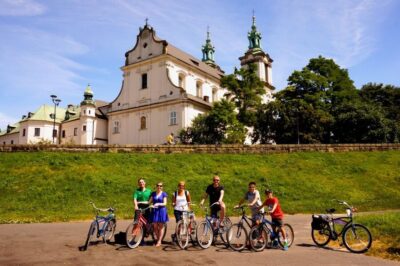
Bike Tour of the Old Town, Kazimierz, and the Ghetto
Read our review →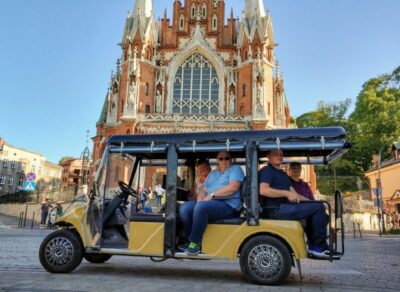
Jewish Quarter and Ghetto Electric Golf Cart Tour
Read our review →
Browse the lists this tour appears in