
Reviewed · KAZIMIERZ JEWISH QUARTER TOURS
Krakow: Jewish Quarter and Former Ghetto Tour
Krakow’s Jewish Quarter is easy to walk through and easy to misunderstand. This 150-minute tour connects Kazimierz’s synagogues and narrow streets with the former ghetto, its memorials, and the places linked to Schindler’s List. Guides such as Bart, Magda, Matt, Slavek, and Emily bring the area’s people and events into focus.
I like two things especially: the route shows Jewish life before World War II, not only the tragedy that followed, and it points out details you could miss alone. I also like the strong storytelling from guides who explain figures such as Helena Rubinstein, Roman Polanski, Ludwik Zamenhof, and Maximilian Faktorowicz.
The main drawback is the amount of information packed into two and a half hours. You keep walking and stopping, so some sections may feel rushed, especially if you need extra time to absorb difficult material or take photographs.
In This Review
- Key points to know before you book
- Kazimierz, from rival city to Jewish center
- The Old Synagogue and the religious heart of Kazimierz
- The Jewish cemetery and the community before 1939
- From Kazimierz to the former ghetto
- Heroes of Ghetto Square and the Holocaust memorial
- Schindler’s List filming locations, with fact kept separate from fiction
- Why the guide makes the difference
- Is $19 good value for 150 minutes?
- Who should take this walk?
- What to do after the tour
- Should you book this Krakow Jewish Quarter tour?
- FAQ
- How long is the Jewish Quarter and former ghetto tour?
- How much does the tour cost?
- Where does the tour meet?
- What language is the tour conducted in?
- What is included?
- Are food and drinks included?
- Is the tour wheelchair accessible?
- Can I cancel for a refund?
- Can I reserve now and pay later?
Key points to know before you book
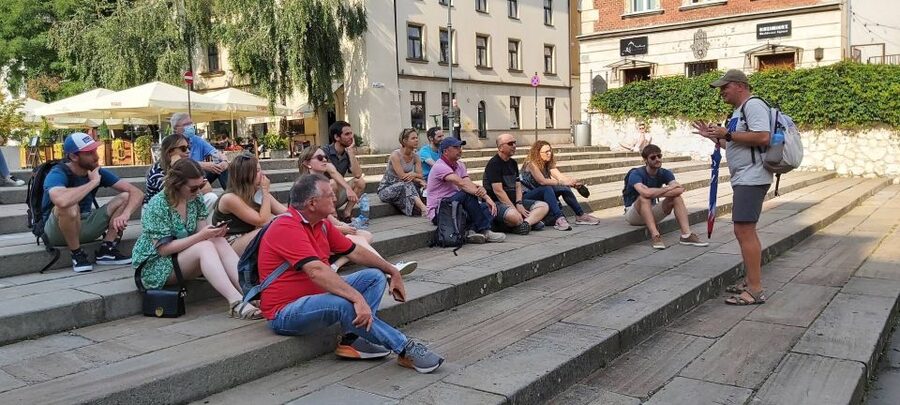
- The Old Synagogue begins the story: Meet outside the synagogue at ul. Szeroka 24, where the tour introduces Krakow’s Jewish heritage.
- Kazimierz comes before the catastrophe: You learn how Jewish communities developed here and how Ashkenazi and Sephardi traditions differ.
- The Jewish cemetery adds quiet context: This stop helps you understand the long life of the community before the war.
- Heroes of Ghetto Square is the emotional center: The memorial gives the Holocaust section a clear place and human scale.
- Schindler’s List locations link film with fact: You visit recognizable filming spots while keeping the real history in view.
- English, walking, and weather matter: The tour is wheelchair accessible, but you should wear comfortable shoes and dress warmly in cold months.
Kazimierz, from rival city to Jewish center
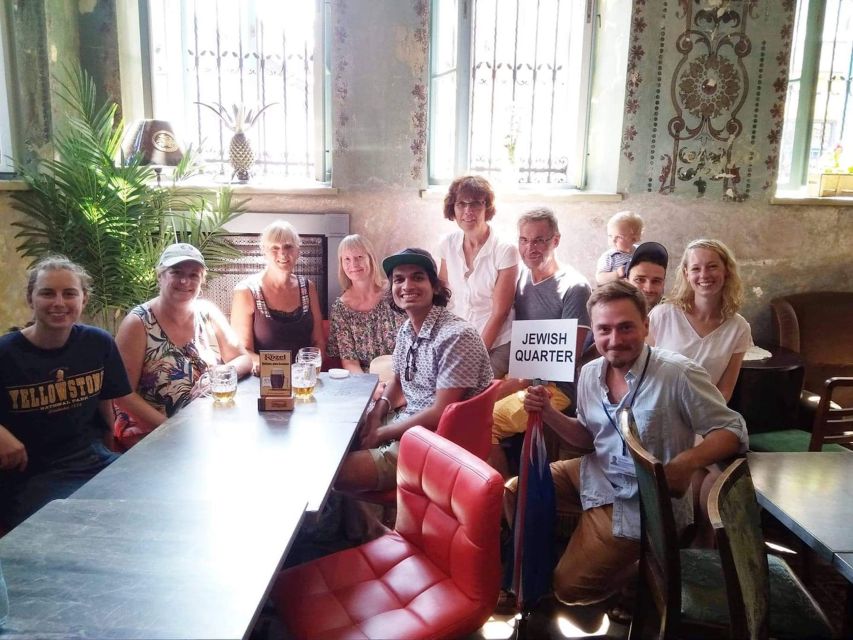
The tour starts in Kazimierz, a district first established as its own city on an island near Krakow. It was intended to rival its larger neighbor, but its lasting importance came from the Jewish community that settled here after persecution in parts of Western Europe.
That background matters. Kazimierz was not created only as a memorial site. It was a place where Jewish families lived, worked, worshipped, studied, and built a lasting community. As you walk its small streets, the guide helps you picture the area before World War II, when Jewish life shaped the district every day.
The route introduces traditions and community divisions, including the difference between Ashkenazim and Sephardim. These terms can sound abstract in a museum label, but they make more sense when a guide ties them to Jewish customs, migration, and life in Poland.
I like this opening because it prevents the whole tour from becoming a single story of destruction. You first see Kazimierz as a living center of Jewish prosperity, then understand what was lost.
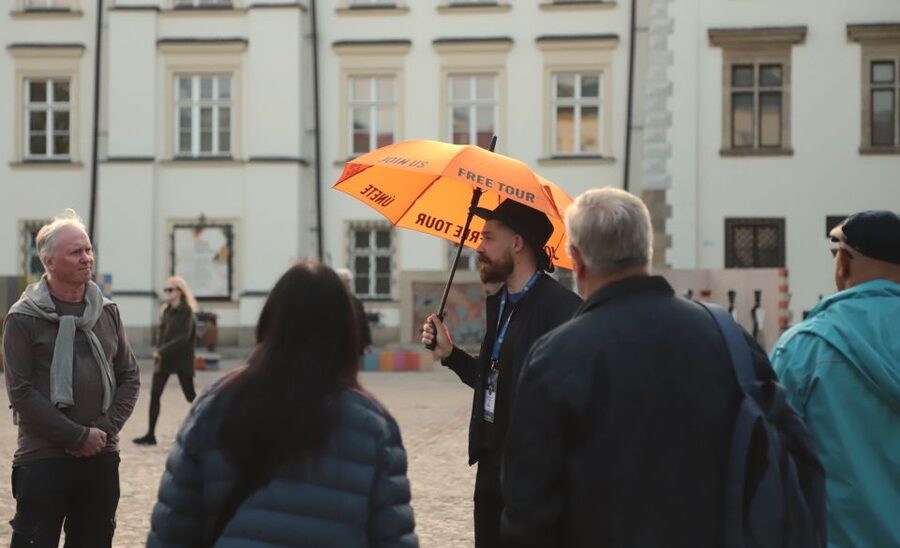
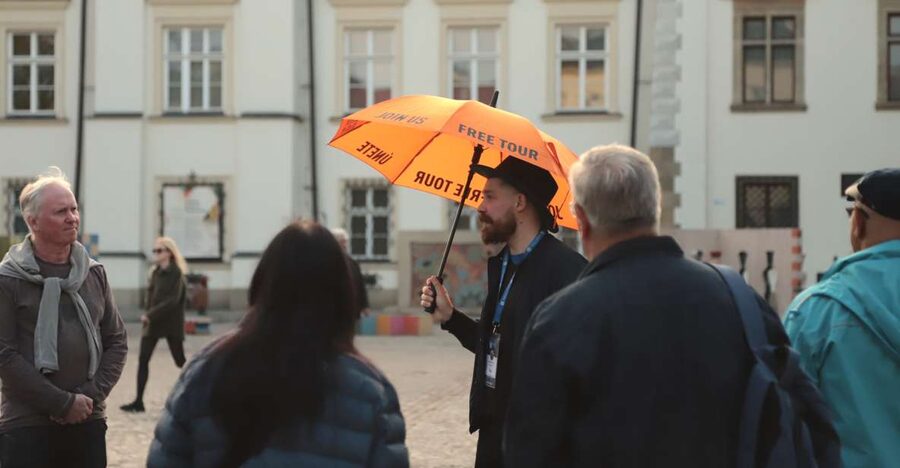
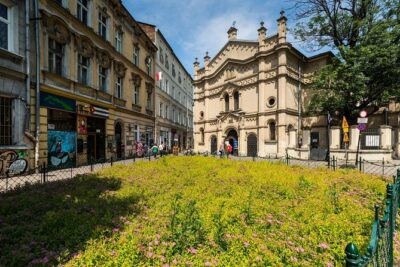
Meet in front of the Old Synagogue at ul. Szeroka 24. Look for a guide with an orange umbrella. This is a simple meeting point, but the street can be busy, so arrive with enough time to find the group.
More Kazimierz walks:
- Krakow: Bike Tour of Old Town, Jewish Quarter and the Ghetto
★ 4.9 · 1,155 reviews - Krakow: Kazimierz Jewish Quarter Walking Tour
★ 4.8 · 571 reviews - Krakow: Kazimierz, Schindler’s Factory & Ghetto Guided Tour
★ 4.8 · 460 reviews
The Old Synagogue and the religious heart of Kazimierz
The Old Synagogue is one of the headline sights. It is described for this experience as Poland’s oldest synagogue and the second oldest synagogue in Europe. Even before you consider its age, its importance comes from the role it played in the Jewish life of Kazimierz.
The tour uses the synagogue as a doorway into religious practice and community history. You learn how Jewish institutions shaped the district and why several synagogues are found so close together.
The available details do not promise a full indoor visit to every synagogue, so check the departure information if entering a particular building is essential to you. The value of this part is the guide’s explanation of what you are seeing, rather than simply collecting synagogue exteriors for photographs.
This is also where a local guide can add names and connections that a self-guided walk may skip. Helena Rubinstein, Roman Polanski, Ludwik Zamenhof, and Maximilian Faktorowicz are among the people linked to the broader story. Their lives show that Polish Jewish history includes artists, business owners, thinkers, and inventors, not just wartime events.
The Jewish cemetery and the community before 1939
The Jewish cemetery offers a change of pace. After the streets and buildings of Kazimierz, this quieter place gives you time to consider the people who belonged to the community across generations.
A cemetery is useful here because it anchors the story in individuals and families. The tour does not treat Jewish heritage as a collection of buildings. It connects worship, family life, memory, and burial traditions.
This stop can also help you understand the scale of what existed before the Holocaust. The cemetery is evidence of a community with deep roots, not a temporary population passing through Krakow.
You should expect the tour to keep moving. One guide may pause for questions and allow short rests, but the overall format is a walking tour rather than a long seated lecture. If you need frequent breaks, tell the guide early so you can manage the pace comfortably.
From Kazimierz to the former ghetto
The tour then shifts from Jewish life in Kazimierz to the former ghetto. That change is one of the most important parts of the route because it shows how the Nazi persecution transformed the city and separated people from their homes.
The guide explains what happened to Krakow’s Jews before and during World War II. You also hear about daily life and Jewish culture both before the war and in the present day, which helps keep the subject from feeling frozen in 1939.
Expect the tone to become more serious. The Holocaust section includes emotionally distressing material, and the best guides handle it with care rather than drama. The strongest departures have been led by guides who speak clearly, answer questions, and use personal, reflective storytelling without making light of the subject.
One practical point: this transition involves a fair amount of walking. The route is considered doable, but comfortable shoes are important. In winter, wrap up warmly. A February departure was described as lasting more than two hours outdoors, and Krakow’s cold can make the final part feel longer.
More Jewish heritage walks in Krakow:
- Krakow: Schindler’s Factory & Ghetto Guided Tour
★ 4.7 · 1,694 reviews - Full Bike Tour – the Old Town, Jewish Qtr & the Ghetto NEW BIKES
★ 5.0 · 437 reviews - Krakow: Bike Tour of the Old Town, Kazimierz, and the Ghetto
★ 4.9 · 350 reviews - Krakow: Jewish Ghetto Walking Tour
★ 4.6 · 349 reviews
Heroes of Ghetto Square and the Holocaust memorial
Heroes of Ghetto Square is a major stop and likely the point where the history feels most immediate. The memorial gives the former ghetto a physical center, allowing the guide to explain deportation, loss, and the destruction of the Jewish community in Krakow.
The square is not just another photo stop. Its meaning depends on the explanation around it, and this is where a guide’s delivery matters most. A clear account can help you understand how ordinary public space became connected with fear, forced movement, and mass murder.
The tour also includes a Holocaust memorial. Together, the square and memorial give you two ways to think about remembrance: one tied to the city’s streets and one designed specifically to preserve memory.
You may want a little quiet time here. The tour has a set duration, so it cannot pause indefinitely, but the route includes several stops where you can listen and rest. If you prefer to process difficult subjects slowly, plan a return visit after the group walk.
Schindler’s List filming locations, with fact kept separate from fiction
Film fans will recognize the Schindler’s List connection. The tour traces filming locations and points out places used in the movie, adding a visual layer to the walk through Kazimierz and the former ghetto.
This works best when you treat the film as a starting point, not the entire story. The real value is seeing how the movie used Krakow’s streets while learning what happened in those places and to the people who lived there.
Take care when photographs are allowed and the group is moving. One participant lost sight of the guide while taking pictures near Schindler-related locations and accidentally followed the wrong group. Stay close, note the guide’s appearance, and keep the orange umbrella in view when possible.
The filming spots also offer a useful bridge for visitors who know the movie better than they know Krakow’s Jewish history. You get a familiar reference point, then move beyond the film into the lives, traditions, and historical facts behind it.
Why the guide makes the difference
This tour’s strongest feature is the guide. You may be led by Bart, Magda, Matt, Slavek, Emily, Chris, or another member of the local team. The most praised qualities are clear speech, strong storytelling, patience with questions, and a serious but approachable tone.
Bart has been noted for his historical and archaeological background, loud voice, dry humor, and ability to keep a group together. Magda is described as warm, charismatic, and willing to pause for questions. Matt is praised for bringing events to life, while Slavek is known for a friendly and engaging manner.
Emily has been praised for balancing information with suitable moments of lighter conversation. Chris is described as personal and thought-provoking. These details matter because a walking tour succeeds or fails on communication, especially at outdoor sites where traffic and city noise can interfere.
The English-language format is clear from the booking information. If your guide has a strong voice and keeps the group close, you should be able to follow the commentary. Still, a larger group or a busy street can make it harder to hear, so move nearer the guide when you can.
Is $19 good value for 150 minutes?
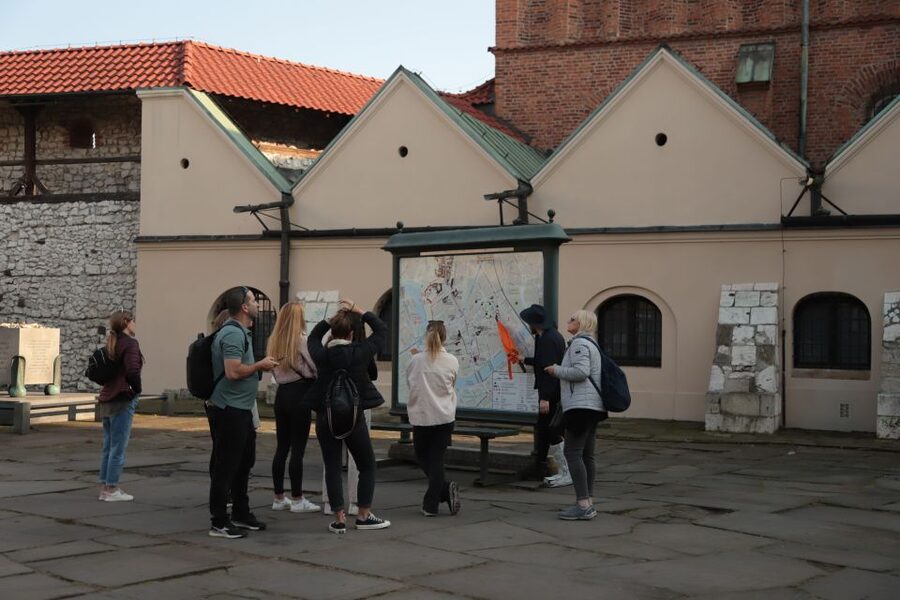
At $19 per person, the tour is reasonably priced for a two-and-a-half-hour guided walk. You are paying for a local guide, a planned route, and historical context that would take considerable reading to assemble on your own.
The value is highest if you want interpretation. Walking through Kazimierz alone can show you attractive streets and old buildings, but it will not automatically explain the difference between prewar Jewish life, Nazi persecution, the former ghetto, and modern memory.
Food and drinks are not included, which is normal for a walking tour. Plan to eat before or after rather than expecting a refreshment stop during the route.
You may also see a similar departure offered as a free walking tour, with visitors choosing what to donate afterward. Compare the terms before booking. The $19 option gives you a clear price in advance, which many people prefer for a subject that deserves careful preparation and professional guiding.
The tour also allows you to reserve now and pay later, and cancellation is available up to 24 hours before the start for a full refund. Those terms are useful if your Krakow schedule may change.
Who should take this walk?
I would choose this tour if you want more than attractive streets and film locations. It suits first-time visitors to Krakow, people interested in Jewish heritage, and anyone who wants to understand the city’s wartime past before visiting other historical sites.
It is also a good choice if you have limited time. In 150 minutes, you cover Kazimierz, the Jewish cemetery, the former ghetto, Heroes of Ghetto Square, a Holocaust memorial, and Schindler’s List filming spots.
You should think twice if you dislike walking, cold weather, or emotionally heavy subjects. The route is wheelchair accessible, but accessibility does not remove the need to cover outdoor streets and remain with a moving group.
I would not choose it as a party outing. Alcohol, drugs, and party groups are not allowed, and the subject calls for attention and respect.
What to do after the tour
Use the final minutes to ask your guide where to return. Guides such as Bart have pointed out places worth visiting afterward, which can help you turn a fast overview into a fuller day.
You may want to revisit a synagogue, cemetery, memorial, or filming location at your own pace. The group tour gives you the framework, while a second walk lets you stop for photographs, read signs, or sit quietly without worrying about falling behind.
I especially recommend leaving some mental space after the tour. The route covers a lot, and one participant found it useful to walk the area again alone because there was not enough time to absorb every detail on the first pass.
Should you book this Krakow Jewish Quarter tour?
Yes, if you want a serious, well-guided introduction to Kazimierz and the former ghetto at a modest price. The best reason to book is not simply the list of sights, but the way the route joins Jewish life, personal stories, wartime persecution, memorials, and film history.
Choose a departure with a guide who speaks clearly and invites questions. Arrive at the Old Synagogue with comfortable shoes, warm clothing in cold weather, and enough attention to stay with the group at Schindler-related stops.
Skip it only if you want a short photo walk or prefer to explore without discussion. For most visitors who want Krakow’s Jewish quarter to mean more than a set of picturesque streets, this is a worthwhile two and a half hours.
FAQ
How long is the Jewish Quarter and former ghetto tour?
The walking tour lasts 150 minutes, or two and a half hours.
How much does the tour cost?
The listed price is $19 per person.
Where does the tour meet?
Meet in front of the Old Synagogue at ul. Szeroka 24. Look for the guide with an orange umbrella.
What language is the tour conducted in?
The tour is conducted in English by a live English-speaking guide.
What is included?
An experienced local tour guide and the 2.5-hour walking tour are included.
Are food and drinks included?
No. Food and drinks are not included.
Is the tour wheelchair accessible?
Yes, the activity is listed as wheelchair accessible.
Can I cancel for a refund?
Yes. You can cancel up to 24 hours in advance for a full refund.
Can I reserve now and pay later?
Yes. You can reserve your place and pay later, which keeps your plans flexible.
Just added around Krakow
- Private Guided Tour: Oskar Schindler’s Factory★ 5.0 · 3 reviews
- E-Scooter Krakow sightseeing tour★ 5.0 · 3 reviews
- From Krakow: Zakopane and Thermal Pools Guided Trip★ 5.0 · 3 reviews
- Schindler’s Factory, Ghetto and Plaszow Camp Guided Tour★ 4.7 · 3 reviews
- Kraków: Private Hot Air Balloon Flight with Champagne★ 3.7 · 3 reviews
- Krakow: River Cruise & Guided Visit to Former Plaszow Camp★ 3.6 · 3 reviews
- From Krakow: Private Wieliczka Salt Mine Tour★ 4.0 · 3 reviews
- Krakow: Old Town short walk with St. Mary’s Basilica visit★ 5.0 · 3 reviews
Kazimierz Jewish Quarter Tours, compared.
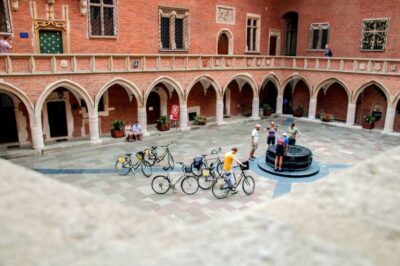
Bike Tour of Old Town, Jewish Quarter and the Ghetto
Read our review →
Kazimierz, Schindler’s Factory & Ghetto Guided Tour
Read our review →
Bike Tour of the Old Town, Kazimierz, and the Ghetto
Read our review →
Jewish Quarter and Ghetto Electric Golf Cart Tour
Read our review →

Half-Day Krakow Food Tour in Old Town and Kazimierz
Read our review →Browse the lists this tour appears in