
Reviewed · AUSCHWITZ-BIRKENAU TOURS
Exclusive Small Group Auschwitz-Birkenau Guided Tour from Krakow
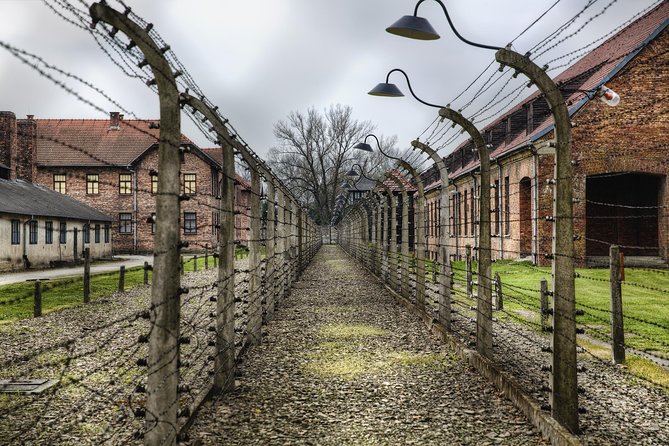
Auschwitz-Birkenau is not a sightseeing stop to rush through. This small-group day tour from Krakow gives you about 3.5 hours on site, enough time to see both Auschwitz I and Birkenau with a licensed educator. I like the prepaid entry, the direct transfer from Krakow, and the serious, compassionate guiding reported on many departures. I also like that the visit includes the original barracks, prisoner belongings, the Death Wall, crematorium, gas chamber, unloading ramp, and watchtowers rather than only the famous entrance.
The main caution is the advertised group size. The tour is described in places as limited to 10 people, yet the practical limit can be 20, and some departures have been much larger. That matters here: voices from nearby groups can make it hard to hear, even when your own guide is excellent.
In This Review
- Key points to know before you book
- Why this visit matters
- Leaving Krakow in a shared minibus
- Auschwitz I, about two hours of guided history
- Birkenau, the larger and more exposed camp
- What the guide adds
- Group size, sound, and the real meaning of skip-the-line entry
- What is included for $168.10
- Clothing, identification, and age guidance
- Who should choose this Auschwitz tour?
- Should you book it?
- FAQ
- How long does the Auschwitz-Birkenau tour from Krakow last?
- What is included in the price?
- Where does pickup take place in Krakow?
- Is skip-the-line entry included?
- How many people are in the group?
- Do I need identification?
- What should I wear?
- Is the tour suitable for children?
- Can I cancel or change the booking?
Key points to know before you book
- About 3.5 hours inside both camps: Plan roughly two hours at Auschwitz I and about one hour 20 minutes at Birkenau.
- A strong focus on the guide: The best part of the visit is the licensed educator, who explains the camps with context and compassion rather than simply reading dates from a script.
- Early starts can help: Some departures leave around 6:00 a.m. and aim to arrive near opening time, though pickup times can change.
- Group size needs checking: The stated maximum is 20, while some departures have been marketed as smaller and operated with larger groups.
- Auschwitz rules are strict: You need a valid passport or ID, personalized ticket details, and clothing that covers your shoulders and knees.
- The $168.10 price covers a lot: Entry, guided visits, shared air-conditioned transport, parking, and a packed lunch are included, but the non-refundable booking rule reduces flexibility.
Why this visit matters
Auschwitz and Birkenau are preserved places of mass murder, forced labor, imprisonment, and loss. The visit can feel emotionally heavy from the first approach to the entrance, so you should not treat this as a casual half-day outing.
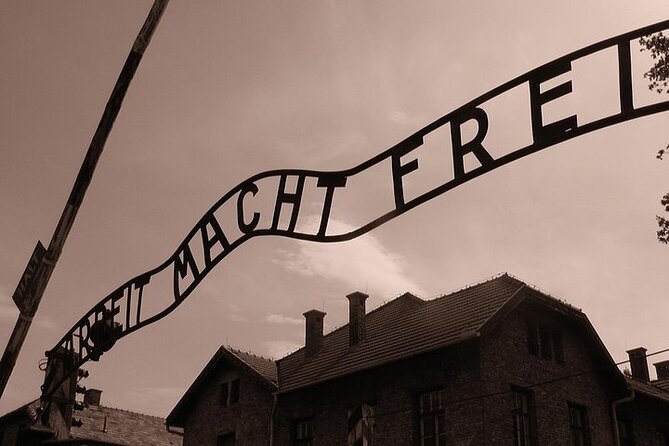
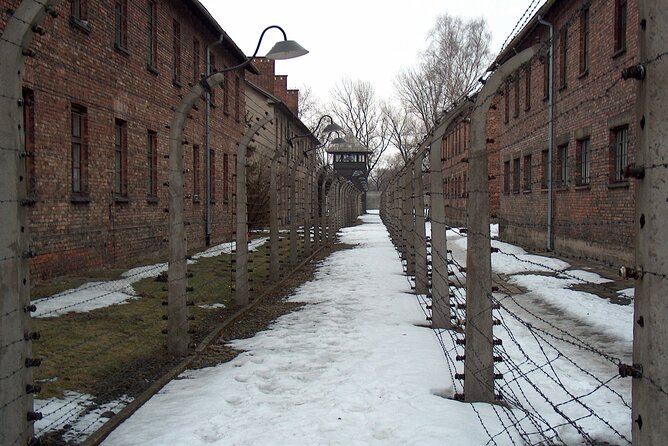
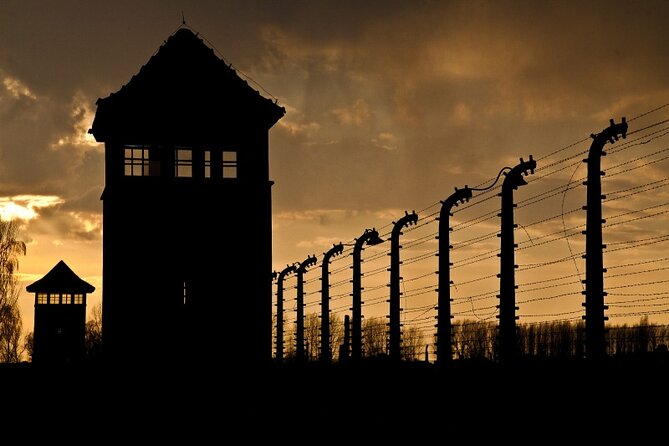
At Auschwitz I, you pass beneath the Arbeit macht frei sign. The entrance is familiar from photographs, but seeing it in person changes the scale of what follows. The brick buildings, wire, watchtowers, and paths are not museum scenery. They are the surviving setting of a system built to imprison and kill people.
The museum helps put individual lives back into the story. Photographs, documents, clothing, luggage, and other personal items show that the prisoners were not anonymous figures in a textbook. A good guide connects those objects with the Nazi system, wartime Poland, and the experiences of Jewish prisoners and others held at the camps.
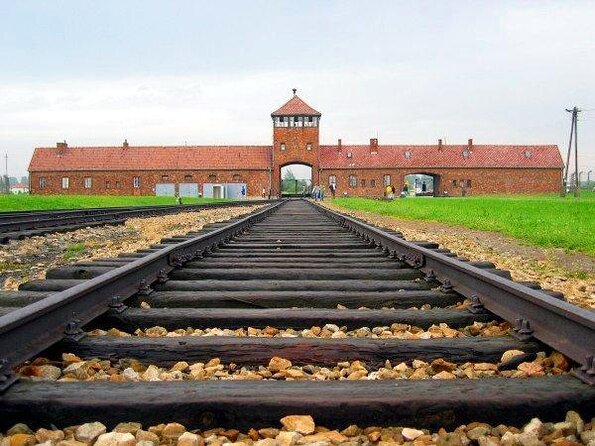
Birkenau then gives you the wider physical scale. The unloading ramp, rows of wooden barracks, watchtowers, and remains of extermination facilities make the site feel far larger and more exposed. I find the contrast between the two camps important: Auschwitz I is more compact and museum-based, while Birkenau shows the vast machinery and geography of the camp system.
You should allow yourself quiet time after the visit. This tour includes only short breaks, usually no longer than 10 minutes, so there is not much space to recover during the day. That schedule is useful for fitting both camps into one outing, but it can feel demanding.
More Auschwitz-Birkenau memorial visits:
- From Krakow: Auschwitz-Birkenau Guided Tour & Hotel Pickup
★ 4.5 · 33,358 reviews - From Krakow: Auschwitz-Birkenau Guided Tour & Hotel Pickup
★ 4.5 · 29,340 reviews - Krakow: Auschwitz Guided Tour with Optional Hotel Pickup
★ 4.5 · 15,280 reviews
Leaving Krakow in a shared minibus
The day begins at a meeting point in Krakow’s Old Town or, when possible, at your hotel. The exact pickup arrangement matters, so read the final instructions closely and do not assume a vehicle will stop directly outside your accommodation.
One practical complaint concerns timing. Some people were told to be ready for a strict 6:00 a.m. departure, then waited until about 6:15 for the vehicle. A delay is frustrating when you have risen before dawn and made your way through quiet streets, especially after being warned that the driver would not wait.
The drive is in an air-conditioned van or minibus, with shared transport and parking included. A short video or briefing may be shown on the way, giving you basic background before arrival. One useful improvement would be a clear spoken explanation for everyone, since people sitting at the back have sometimes struggled to hear the driver.
The mood on the road can depend on the driver. Several departures had cheerful, helpful drivers who checked that everyone was all right, handed out water, and provided a snack such as Polish cake. One departure had a driver described as curt and uncommunicative. That inconsistency is worth noting, though the licensed museum guide remains the key part of the day.
Auschwitz I, about two hours of guided history
Your first guided section is usually Auschwitz I, the older and more compact camp. You enter with a prepaid ticket, which helps avoid the long public line, then follow the educator through selected buildings and outdoor areas.
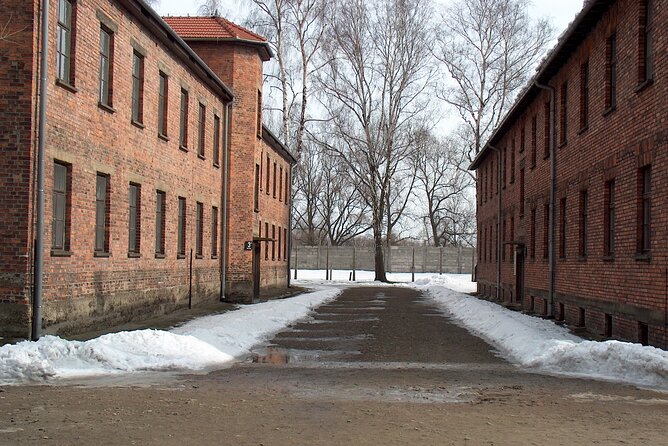
The original barracks now hold museum displays. You can expect photographs, documents, and personal possessions taken from prisoners. These exhibits are difficult, but they explain the human cost of the camp more clearly than statistics alone.
The guide’s role matters greatly here. The strongest guides on this tour have been praised for clear English, compassion, and the ability to answer questions. One guide reportedly shared survivor stories known through personal connections, adding a human layer without turning the visit into a performance.
You will also see the Death Wall, the crematorium, and a gas chamber. These are places to approach with care. The tour is educational, but it is not emotionally neutral, and you may find the pace too brisk for long private reflection.
The camp buildings can be crowded with several groups at once. You may need to stay close to your educator, especially inside rooms where many visitors are listening. Headsets are provided for groups of 10 or more, but they do not solve every problem if several guides are speaking nearby.
A small group helps when it truly is small. Ten people can move through a doorway, gather around a guide, and ask questions more easily than 20 or 30. Yet the operator’s practical maximum is listed as 20, and some departures have reportedly included roughly 25 to 30 people. Confirm the expected group size if that detail is central to your decision.
Birkenau, the larger and more exposed camp
After Auschwitz I, the vehicle takes you to Birkenau. The transfer is short compared with the Krakow journey, but it gives you a moment to process the first section before entering the much larger site.
Birkenau is where the scale becomes especially clear. You see the railway unloading ramp, watchtowers, and long rows of original wooden barracks. The guide explains how prisoners arrived, how the camp was organized, and the conditions in which people were forced to live.
The bathhouse and other surviving structures help you understand that Birkenau was not simply a prison behind fences. It was built as part of a system of selection, forced labor, and mass extermination. The remains of the crematoria and gas chambers are especially sobering.
The site is open and exposed, so weather can affect the visit. The tour runs in rain, cold, or heat, and you should dress for the forecast rather than for Krakow’s city center. Comfortable walking shoes are sensible, since you will spend much of the day on foot over a large area.
The Birkenau section lasts about one hour 20 minutes. That is enough for the main structures and explanations, but not enough for every corner of the grounds. If you want a slow, solitary visit with long pauses, a guided day trip with a fixed schedule may feel limited.
A few more Krakow trips worth comparing
- Krakow: Auschwitz-Birkenau Guided Tour with Pickup & Lunch
★ 4.5 · 9,800 reviews - Krakow: Auschwitz-Birkenau Guided Tour Pickup/Lunch Options
★ 4.5 · 9,057 reviews - Krakow: Auschwitz-Birkenau and Salt Mine Guided Tour
★ 4.7 · 9,020 reviews - Krakow to Auschwitz Birkenau Guided Tour with Transfer and Ticket
★ 5.0 · 8,197 reviews
What the guide adds
A licensed educator is included for both camps, with up to 3.5 hours of guided time. This is a worthwhile part of the price because the sites contain many details that are easy to miss without context.
I would choose this tour for the guide rather than for the promise of a tiny vehicle. The strongest reports describe educators who explain Nazi policy, wartime Poland, Jewish persecution, camp life, and survivor experiences in fluent English. They also answer questions and speak with care, which is vital at a place where a cold recital of facts would fail.
The quality is not guaranteed to be identical on every departure. One guide was praised as excellent but had a quiet voice outside the headset. Another was described as exceptionally clear and compassionate. Your experience may depend on the educator assigned that day, as well as how crowded the buildings are.
The guide also keeps the visit moving. With only short breaks, you are less likely to lose time in the bookstore or café, but you also have less freedom to set your own pace. That tradeoff suits you if you want structure and historical explanation. It is less suitable if you prefer an independent visit.
Group size, sound, and the real meaning of skip-the-line entry
Skip-the-line entry is useful, but it does not mean the museum will feel empty. It means your prepaid ticket allows you to proceed without joining the longest ticket queue. Once inside, you still share the grounds and buildings with other groups.
The group-size wording deserves special attention. The experience is presented as an exclusive small-group tour of up to 10 people, while other details state that groups are usually limited to 12, with a maximum of 20. Some actual departures have been closer to 20 or even 25 to 30.
That difference changes the feel of the day. A small group can make the guide easier to hear and the movement between buildings simpler. A larger group may still receive an excellent tour, but you will need to stay alert and close to the educator.
If the small-group promise is the main reason you are booking, ask Escape2poland to confirm the expected vehicle and group size before paying. Do not assume every departure operates with 10 or fewer people.
What is included for $168.10
At $168.10 per person, this is not the cheapest way to reach Auschwitz. The price includes round-trip shared transport, museum admission, a licensed guided tour of both camps, parking, and a packed lunch. Water and a snack have also been handed out on some departures.
The value is strongest if you want a single organized day from Krakow. You do not need to arrange transport to Oświęcim, secure museum entry yourself, or coordinate two separate camp visits. The driver handles the long road portion, and the educator handles the complex historical material.
The value is weaker if you are comfortable arranging transport and want a long independent visit. You are paying for convenience, reserved entry, and guidance, not for a leisurely schedule or a guaranteed group of 10.
The included lunch is practical rather than a major feature. You have little time for a full restaurant stop, and the packed meal keeps the day on schedule. Bring any extra water or food you need, since the planned breaks are short.
Clothing, identification, and age guidance
Auschwitz requires suitable clothing. Shorts and sleeveless tops are not permitted, and you risk being refused entry if you ignore the dress rules. Choose modest clothing that covers your shoulders and knees, and prepare for all weather.
Each person must carry a valid passport or ID at the museum. Personalized tickets require the full first and last name of every person in your party, so enter those details carefully when booking. A mistake can create trouble at the entrance.
The tour requires a moderate level of physical fitness. You will walk through both camps, remain on your feet for much of the 3.5-hour museum visit, and deal with outdoor conditions at Birkenau.
Children must be accompanied by an adult, and the experience is not recommended for children under 14. That guidance makes sense given the subject matter, the walking, and the emotionally difficult exhibits.
The booking is non-refundable and cannot be changed for any reason. If the operator cancels because the minimum number of participants is not reached, you will be offered another date or experience, or receive a full refund. For your own plans, treat the $168.10 as committed once booked.
Who should choose this Auschwitz tour?
I would choose it if you are staying in Krakow, want both camps in one day, and prefer an educator to explain what you are seeing. It is also a good fit if you value hotel or Old Town pickup, prepaid admission, and a packed lunch over arranging each piece yourself.
The tour suits adults and older teenagers who can handle a sobering subject and a long day. It is less suited to young children, visitors who need frequent long breaks, or anyone hoping for a relaxed sightseeing mood.
It can also work well for a first visit. Auschwitz is not a place where background reading alone gives you the full sense of scale, and the guide helps connect the buildings, objects, and dates. You should still arrive mentally prepared for difficult material.
Should you book it?
Book this tour if you want a well-organized Krakow day trip with strong historical guiding, included entry, and transport that removes the hard planning. The most praised parts are the educators, the thoughtful explanations, and the chance to see both Auschwitz I and Birkenau rather than only one site.
Think twice if a genuinely tiny group is essential. The group-size information is inconsistent, and several departures have been larger than the small-group label suggests. Confirm that point first.
At $168.10, the tour earns its price through convenience and guidance, not luxury. For many people, that is the right trade: a difficult, carefully explained day with the practical work handled for you.
FAQ
How long does the Auschwitz-Birkenau tour from Krakow last?
The full experience lasts about 7 hours and 30 minutes. Around 3.5 hours are spent inside the Auschwitz State Museum, with approximately two hours at Auschwitz I and one hour 20 minutes at Birkenau.
What is included in the price?
The price includes admission to Auschwitz and Birkenau, a licensed guided tour, round-trip shared transport in an air-conditioned van or minibus, parking fees, and a packed lunch.
Where does pickup take place in Krakow?
Pickup is arranged at designated meeting points near Krakow’s Old Town or at your hotel when possible. Some meeting points may require a walk from the main city center.
Is skip-the-line entry included?
Yes. Prepaid admission tickets are included, allowing you to avoid the long public ticket lines at the museum entrance.
How many people are in the group?
The stated maximum is 20 people. The experience is also described in some places as a small group of up to 10 or usually 12, so confirm the expected group size before booking if this is important to you.
Do I need identification?
Yes. Every person must bring a valid passport or ID to the Auschwitz Museum. The full name and surname of each person are also required for personalized tickets.
What should I wear?
You must follow the museum dress code. Shorts and sleeveless tops are not allowed, so wear clothing that covers your shoulders and knees. Dress appropriately for the weather because the tour operates in all conditions.
Is the tour suitable for children?
Children must be accompanied by an adult. The experience is not recommended for children under 14 because of the subject matter.
Can I cancel or change the booking?
No. The experience is non-refundable and cannot be changed for any reason. If the operator cancels because the minimum number of participants is not reached, you will be offered another date or experience, or a full refund.
Just added around Krakow
- Private Guided Tour: Oskar Schindler’s Factory★ 5.0 · 3 reviews
- E-Scooter Krakow sightseeing tour★ 5.0 · 3 reviews
- From Krakow: Zakopane and Thermal Pools Guided Trip★ 5.0 · 3 reviews
- Schindler’s Factory, Ghetto and Plaszow Camp Guided Tour★ 4.7 · 3 reviews
- Kraków: Private Hot Air Balloon Flight with Champagne★ 3.7 · 3 reviews
- Krakow: River Cruise & Guided Visit to Former Plaszow Camp★ 3.6 · 3 reviews
- From Krakow: Private Wieliczka Salt Mine Tour★ 4.0 · 3 reviews
- Krakow: Old Town short walk with St. Mary’s Basilica visit★ 5.0 · 3 reviews
Auschwitz-Birkenau Tours, compared.

Auschwitz-Birkenau Guided Tour & Hotel Pickup
Read our review →Auschwitz-Birkenau Guided Tour & Hotel Pickup
Read our review →
Auschwitz Guided Tour with Optional Hotel Pickup
Read our review →
Auschwitz-Birkenau Guided Tour with Pickup & Lunch
Read our review →
Auschwitz-Birkenau Guided Tour Pickup/Lunch Options
Read our review →

Krakow to Auschwitz Birkenau Guided Tour with Transfer and Ticket
Read our review →
Browse the lists this tour appears in