
Reviewed · AUSCHWITZ-BIRKENAU TOURS
from Kraków: Auschwitz excursion with guaranteed Dutch guide
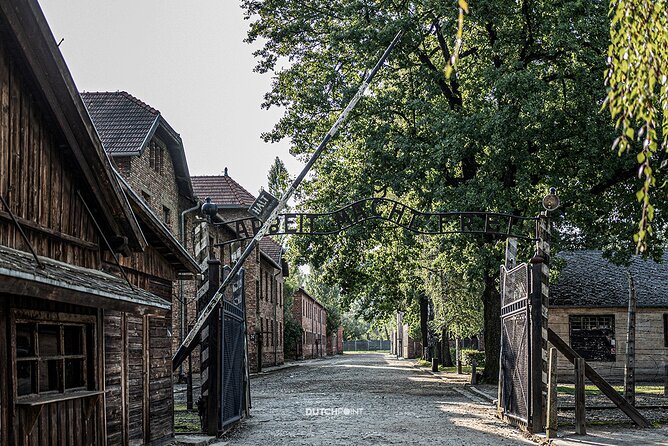
Auschwitz-Birkenau is not a casual day trip. It is a long, heavy visit to the former Nazi camp complex, where more than 1.2 million people were killed. This tour takes you beyond the best-known museum buildings, from Auschwitz I and its gas chamber to Birkenau’s barracks, the Judenrampe, and the Monowitz memorial.
I like the guaranteed Dutch-speaking guide, especially for a subject where precise language matters. Guides including Wesley, Jeroen, Marijke, and Roland are praised for clear explanations, personal stories, calm delivery, and thoughtful questions. I also like the route itself: Monowitz and the Judenrampe add important places that many shorter visits leave out.
The main drawback is the pace. You leave Kraków at 6:00 am and spend about eight to nine hours on the road and at the sites, with roughly six hours of guided study. The ground can be demanding, and the visit is not suitable for children under 14 or people with mobility impairments.
In This Review
- Key points to know before booking
- Why the Dutch guide makes a difference
- The 80-minute trip from Kraków
- Auschwitz I: the former camp and museum
- The transfer to Birkenau and the Judenrampe
- Birkenau: vast scale and harsh living conditions
- Monowitz: the part many day trips skip
- What the $102.14 price covers
- Who should book this experience
- Practical details that matter
- Should you book it?
- FAQ
- Where does the Auschwitz excursion start?
- What time does the tour begin?
- How long does the excursion last?
- Is a Dutch-speaking guide guaranteed?
- Which Auschwitz sites are included?
- Are museum tickets and transport included?
- Is the tour suitable for children and people with mobility impairments?
Key points to know before booking
- Dutch guide guaranteed: Guides such as Wesley, Jeroen, Marijke, and Roland explain the sites in Dutch and allow time for questions.
- Three distinct locations: The day includes Auschwitz I, Auschwitz II-Birkenau, and Auschwitz III-Monowitz.
- Judenrampe included: You visit the railway unloading and selection point between Auschwitz I and Birkenau.
- Early start, full day: Meet at DutchPoint Kraków at 6:00 am for a trip lasting about eight to nine hours.
- Official museum admission included: Transport, tickets, and a tour guide system are part of the $102.14 price.
- Small maximum group: The minibus or bus carries no more than 29 people.
Why the Dutch guide makes a difference
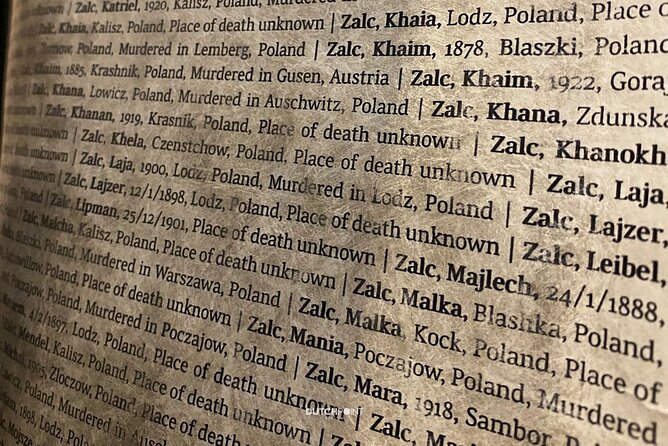
Auschwitz is full of dates, names, locations, and difficult terms. A Dutch-speaking guide gives you a clear path through that material, rather than leaving you to piece it together from signs or an audio recording.
The guides praised most often by name are Wesley, Jeroen, Marijke, and Roland. Their approach differs slightly, but the common thread is careful storytelling. Wesley is described as someone who uses questions to make you think more deeply about what you are seeing. Marijke is noted for telling the story with calm respect and many specific details. Roland is praised for keeping an eye on the group while explaining the camp clearly.
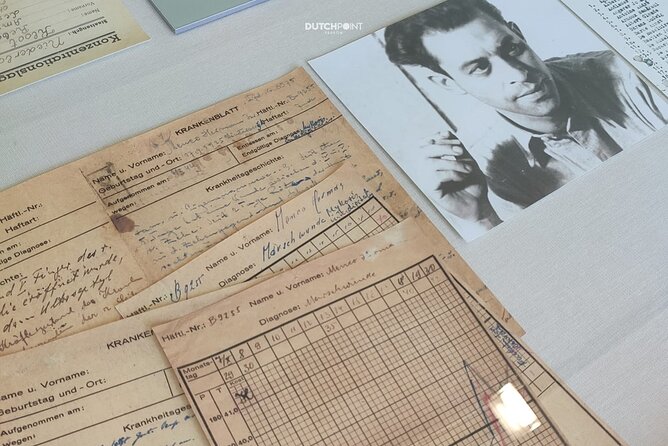
That personal style matters here. A photograph, suitcase, or barrack is not just an object. It connects to an individual life, and the guides make room for those smaller human stories alongside the larger account of Nazi persecution and mass murder.
You should not expect a light or entertaining tour. The best moments are often quiet ones, when the guide lets the place speak for itself. The tour guide system also helps you hear the explanation without needing to crowd around the guide.
More Auschwitz-Birkenau memorial visits:
- From Krakow: Auschwitz-Birkenau Guided Tour & Hotel Pickup
★ 4.5 · 33,358 reviews - From Krakow: Auschwitz-Birkenau Guided Tour & Hotel Pickup
★ 4.5 · 29,340 reviews - Krakow: Auschwitz Guided Tour with Optional Hotel Pickup
★ 4.5 · 15,280 reviews
The 80-minute trip from Kraków
The meeting point is DutchPoint Kraków at Karmelicka 3, in central Kraków. The stated start time is 6:00 am, so plan to arrive early rather than trying to cut it close. The first transfer to Oświęcim takes about 80 minutes.
This early departure is practical. Auschwitz is a major museum site with controlled entry, and the day includes several separate movements between locations. Starting early gives the group time to complete the full route without turning every stop into a rushed photo opportunity.
The transport is by bus or minibus, with a maximum group size of 29. That is not a private tour, but it is more manageable than a very large coach group. The same vehicle takes you between the sites and returns you to the original meeting point in Kraków.
Breakfast and lunch boxes are optional extras. Since the first departure is early and the day is long, you should decide in advance how you want to handle food. A short break is built into the schedule, but this is not a leisurely restaurant-based outing.
Auschwitz I: the former camp and museum
The first major visit lasts about 150 minutes. Auschwitz I is the more compact former camp, with brick barracks, original structures, photographs, documents, and personal belongings displayed in the museum.
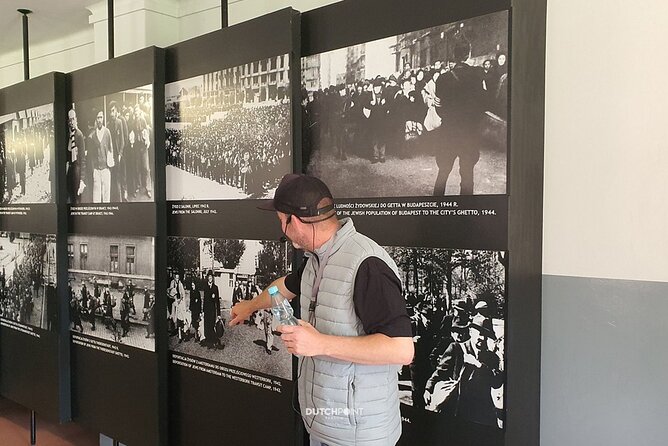
This is where the scale of the story begins to take shape through individual evidence. The guide explains the first deportations, the camp system, daily conditions, and the liberation on January 27, 1945. The original buildings make the history feel immediate, but the museum displays provide the detail needed to understand what happened.
The tour includes a visit to the poignant Dutch barrack. Belgian visitors instead visit the Belgian barrack. This detail gives the group a national point of connection, but the focus remains on the victims and the wider system of deportation and murder.
You will also pass through a gas chamber. This is one of the most difficult moments of the day, and it is worth preparing yourself emotionally before arrival. Auschwitz is not presented as a dramatic attraction. The force of the place comes from its plainness, its preserved buildings, and the evidence of lives destroyed.
There is a 15-minute restroom and entry break around this part of the day. Five restroom stops are planned during the excursion, which is useful because the route is long and facilities are not always close to the next point of interest.
The transfer to Birkenau and the Judenrampe
After Auschwitz I, the group takes a short transfer of about 30 minutes to Birkenau, with a break included. The route also goes to the Judenrampe, the railway unloading point between Auschwitz I and Birkenau.
The Judenrampe is particularly important because it helps you understand how people arrived and were selected. Trains brought deportees to this area, where decisions were made about who would be sent to forced labor and who would be killed. Walking this section links the transport system to the camp itself.
The itinerary says you walk the same route taken by people who were brought onward to Birkenau. That physical connection is powerful, but it also makes the walking more demanding. You are not simply viewing one memorial building. You are moving through a broad site, often on foot, with the guide explaining how the railway, unloading area, barracks, and killing facilities fitted together.
A few more Krakow trips worth comparing
- Krakow: Auschwitz-Birkenau Guided Tour with Pickup & Lunch
★ 4.5 · 9,800 reviews - Krakow: Auschwitz-Birkenau Guided Tour Pickup/Lunch Options
★ 4.5 · 9,057 reviews - Krakow: Auschwitz-Birkenau and Salt Mine Guided Tour
★ 4.7 · 9,020 reviews - Krakow to Auschwitz Birkenau Guided Tour with Transfer and Ticket
★ 5.0 · 8,197 reviews
Birkenau: vast scale and harsh living conditions
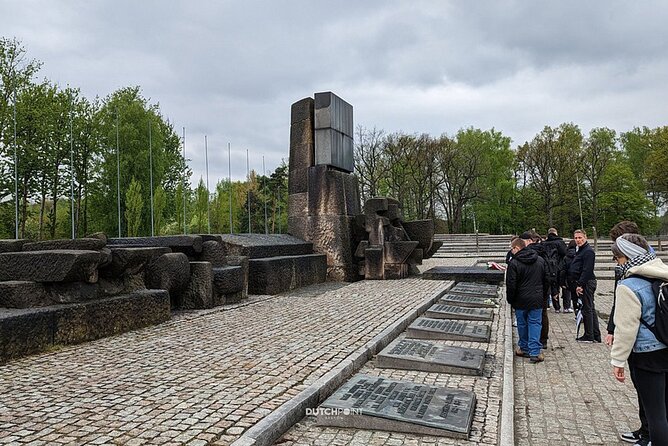
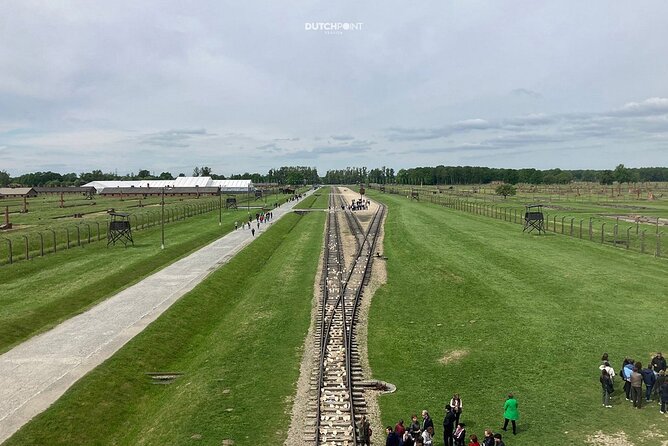
The guided visit to Auschwitz II-Birkenau lasts about 90 minutes, followed by about 30 minutes at the Judenrampe. Birkenau is much larger and more open than Auschwitz I. Its size is part of what makes it so difficult to take in.
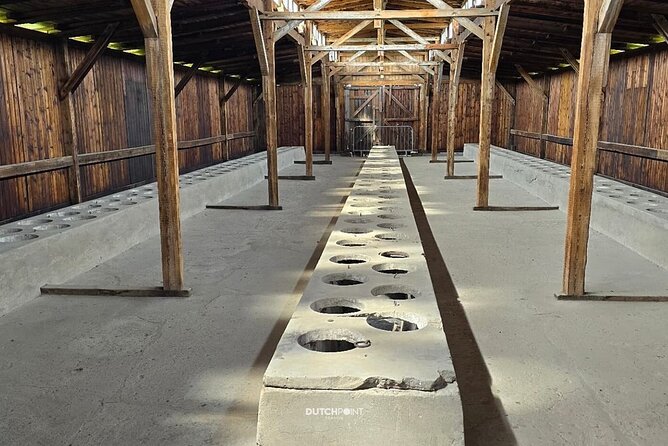
You visit wooden barracks that show the living conditions during the war years. The barracks are spare and stark. They help explain how prisoners were housed, how little privacy they had, and how the camp was designed to control and degrade people.
The route passes the railway station and continues toward the remains of gas chambers II and III. The buildings were destroyed, but the ruins remain important evidence of the camp’s killing operation. The guide’s role is especially useful here because the site is so large that the connections between different areas can otherwise be hard to follow.
The visit concludes at the Dutch monument before the group returns toward the gate. There is also a brief stop at the bookstore. Treat that as a practical pause, not a major shopping stop. You may find books that help you continue learning after the tour, but the day is centered on the memorial site.
Birkenau can be physically tiring. You need a moderate level of fitness, and the itinerary includes considerable walking between separated areas. People with mobility impairments are specifically advised not to book this experience.
Monowitz: the part many day trips skip
After another short break, the bus continues to Auschwitz III-Monowitz. The transfer and visit take about 45 minutes. Monowitz is about 10 kilometers from Auschwitz I and was connected to the Buna industrial works.
This final stop adds an important part of the camp system. Monowitz was a forced-labor camp built to serve the huge factory complex established by the Nazis. The barracks are no longer visible, but you can still see the factories and surviving bunker remnants.
The visit ends at the Monowitz monument. Compared with Auschwitz I and Birkenau, this stop has fewer preserved structures, so you need to listen closely to the guide’s explanation. The value is in seeing how the camp system was tied to industrial production and forced labor, not only to imprisonment and mass killing.
I consider Monowitz one of the strongest reasons to choose this particular route. Many basic Auschwitz excursions focus only on Auschwitz I and Birkenau. Adding Monowitz gives you a wider picture of how imprisonment, labor, factories, and genocide operated together.
After the memorial, the bus takes about 90 minutes to return to Kraków. The activity ends back at DutchPoint Kraków.
What the $102.14 price covers
At $102.14 per person, this is not the cheapest way to reach Auschwitz, but the price covers several useful parts of the day. You receive official Auschwitz-Birkenau State Museum tickets, transport from Kraków, a Dutch guide, use of a tour guide system, and about six hours of guided study.
You are paying mainly for structure and language access. Independent visits require you to organize transport, secure museum entry, and work out how to move between Auschwitz I, Birkenau, the Judenrampe, and Monowitz. Here, the schedule is arranged for you, and the guide provides the historical frame.
The value is strongest if Dutch is your preferred language. A general English-language tour may cost less or offer more departure times, but it will not provide the same direct Dutch explanation. If you want to ask questions and process difficult details in your own language, that difference can justify the price.
Lunch and breakfast boxes are not included. Tips are also not included. Keep those extra costs in mind when comparing this tour with other options.
Who should book this experience
I would choose this excursion if you want a serious, guided visit and do not want to manage several sites by yourself. It suits adults and teenagers aged 14 or older who are ready for a full day of walking, listening, and confronting painful history.
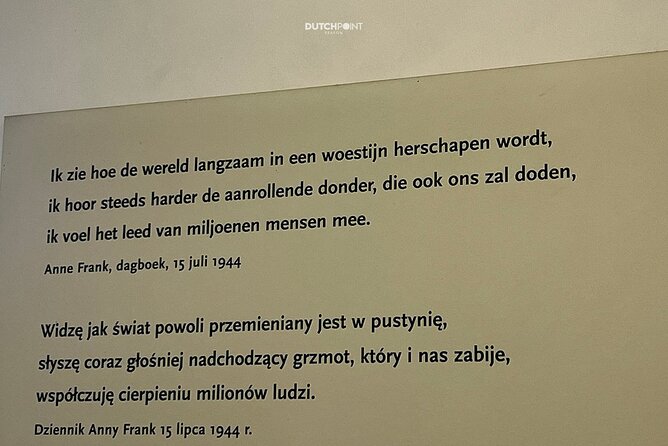
It is also a strong choice for Dutch-speaking visitors who want more than a basic overview. The focus on Dutch and Belgian victims, the Dutch barrack or Belgian barrack, and the Dutch monument gives the visit a clear connection to the Low Countries without losing the broader historical picture.
The tour is less suitable if you want a short visit, a flexible schedule, or a gentle introduction to Kraków’s surrounding area. The early start and fixed route leave little room for wandering on your own. This is a study tour, not a relaxed sightseeing outing.
You should also think carefully about the emotional side. The gas chamber, barracks, ruins, photographs, and stories of deportation can be upsetting. That is not a flaw in the tour, but it is a reason to plan a quieter evening afterward.
Practical details that matter
Meet at Karmelicka 3 at 6:00 am. The excursion lasts around eight to nine hours in total, including transfers. It includes five restroom stops, a break between the main sites, bookstore stops, and a tour guide system.
Wear practical clothing and shoes suitable for a long day on foot. The provided information requires a moderate fitness level, and the route covers large outdoor areas as well as museum interiors.
The group can include up to 29 people. That keeps the tour from being truly private, but it is still a limited-size group rather than an enormous crowd. You should expect to stay with the guide and follow a fixed schedule.
The booking is non-refundable and cannot be changed after purchase. Because the excursion is often booked well in advance, check your date carefully before paying. Confirmation is normally issued at booking, though reservations made within nine days of travel may take up to 48 hours and remain subject to availability.
Should you book it?
Book this tour if you want a Dutch-speaking guide, official admission, transport, and the fullest route offered here, including Monowitz and the Judenrampe. The strongest part is the guide-led explanation, with Wesley, Jeroen, Marijke, and Roland singled out for calm delivery, detailed stories, and respectful treatment of the subject.
Skip it if you need an easy or flexible day, have mobility limitations, are traveling with children under 14, or would rather visit only the main museum grounds. For the right person, the $102.14 fee buys useful organization and language support on a difficult but important day.
FAQ
Where does the Auschwitz excursion start?
The tour starts at DutchPoint Kraków, Karmelicka 3, 31-133 Kraków, Poland.
What time does the tour begin?
The stated start time is 6:00 am.
How long does the excursion last?
The full activity lasts approximately eight to nine hours, including travel. The guided study portion lasts about six hours.
Is a Dutch-speaking guide guaranteed?
Yes. A Dutch-speaking guide is included and guaranteed.
Which Auschwitz sites are included?
The route includes Auschwitz I, Auschwitz II-Birkenau, the Judenrampe, and the Auschwitz III-Monowitz memorial.
Are museum tickets and transport included?
Yes. Official Auschwitz-Birkenau State Museum tickets and transport by bus or minibus from Kraków are included.
Is the tour suitable for children and people with mobility impairments?
The tour is not suitable for children under 14 or people with mobility impairments. A moderate level of physical fitness is required.
Just added around Krakow
- Private Guided Tour: Oskar Schindler’s Factory★ 5.0 · 3 reviews
- E-Scooter Krakow sightseeing tour★ 5.0 · 3 reviews
- From Krakow: Zakopane and Thermal Pools Guided Trip★ 5.0 · 3 reviews
- Schindler’s Factory, Ghetto and Plaszow Camp Guided Tour★ 4.7 · 3 reviews
- Kraków: Private Hot Air Balloon Flight with Champagne★ 3.7 · 3 reviews
- Krakow: River Cruise & Guided Visit to Former Plaszow Camp★ 3.6 · 3 reviews
- From Krakow: Private Wieliczka Salt Mine Tour★ 4.0 · 3 reviews
- Krakow: Old Town short walk with St. Mary’s Basilica visit★ 5.0 · 3 reviews
Auschwitz-Birkenau Tours, compared.

Auschwitz-Birkenau Guided Tour & Hotel Pickup
Read our review →Auschwitz-Birkenau Guided Tour & Hotel Pickup
Read our review →
Auschwitz Guided Tour with Optional Hotel Pickup
Read our review →
Auschwitz-Birkenau Guided Tour with Pickup & Lunch
Read our review →
Auschwitz-Birkenau Guided Tour Pickup/Lunch Options
Read our review →

Krakow to Auschwitz Birkenau Guided Tour with Transfer and Ticket
Read our review →
Browse the lists this tour appears in