
Reviewed · AUSCHWITZ-BIRKENAU TOURS
Krakow: Auschwitz-Birkenau Guided Tour with Ticket and Transfer
Auschwitz-Birkenau is not a casual sightseeing stop. It is a place of remembrance, preserved buildings, railway tracks, barracks, fences, and personal belongings that make the scale of Nazi murder painfully clear. I like that this trip includes a licensed Auschwitz-Birkenau Museum guide and round-trip transport from Krakow, so you can focus on the site rather than train connections and local buses. I also like the headsets, which matter in a group of up to 30 people.
The main concern is organization. Departure times can change dramatically, sometimes from late morning to the middle of the night, and some departures have involved long waits for entry tickets. The museum visit itself can be powerful and well led, but you should confirm the exact departure time and ask how entry tickets are being handled before you commit.
In This Review
- Key points to know before booking
- Why Auschwitz-Birkenau requires a full day from Krakow
- Starting in Krakow at Pawia 18B
- The drive from Krakow to Oswiecim
- Auschwitz I and the gate with its grim inscription
- Birkenau, the railway ramp, and the scale of the crime
- What makes the guided format worthwhile
- Price, transport, and the real value
- Respect, clothing, and food for a difficult day
- The return trip to Krakow
- Who should book this Auschwitz tour?
- FAQ
- How long does the Auschwitz-Birkenau tour from Krakow take?
- Where does the tour start and end?
- Are Auschwitz and Birkenau admission tickets included?
- Is lunch included?
- What should I bring to the museum?
- Can children join the tour?
Key points to know before booking
- A licensed museum guide leads the visit: You tour Auschwitz I and Birkenau with a guide approved by the museum, not only a driver or city guide.
- The trip takes about eight hours: Allow roughly 90 minutes each way by road, plus the two-part museum visit and short breaks.
- Auschwitz I and Birkenau feel very different: The first camp has preserved brick buildings and indoor exhibitions, while Birkenau is much larger and more exposed.
- Departure time is not always fixed: The operator asks you to confirm the final pickup time the day before, and major changes have occurred.
- Bring identification and weather protection: Security may ask for your passport or ID, and much of the tour is outside.
- This is best for older teenagers and adults: The experience is not recommended for children aged 14 and under.
Why Auschwitz-Birkenau requires a full day from Krakow
The Auschwitz-Birkenau complex lies near Oswiecim, about an hour and a half from Krakow by road. The distance is manageable, but the visit is not a quick photo stop. You spend time at two separate camp sites, with a transfer between Auschwitz I and Birkenau, and the subject demands a slower pace.
The camp operated from 1940 until liberation in 1945. It began as a prison camp for Polish political prisoners and prisoners of war, then became the largest Nazi concentration and extermination camp complex. More than 1.5 million people were brought here, including Jewish prisoners and Polish, Italian, and French prisoners. About 1.1 million people were murdered as part of the Holocaust.
Those numbers can feel abstract in a book. The preserved site gives them physical weight. You see the roads, fences, watchtowers, railway ramp, barracks, and the Death Wall. Inside the buildings at Auschwitz I, exhibitions include documents and belongings taken from prisoners when they arrived. The visit is difficult, but that difficulty is part of its purpose.
More Auschwitz-Birkenau memorial visits:
- From Krakow: Auschwitz-Birkenau Guided Tour & Hotel Pickup
★ 4.5 · 33,358 reviews - From Krakow: Auschwitz-Birkenau Guided Tour & Hotel Pickup
★ 4.5 · 29,340 reviews - Krakow: Auschwitz Guided Tour with Optional Hotel Pickup
★ 4.5 · 15,280 reviews
Starting in Krakow at Pawia 18B
The standard meeting point is Pawia 18B, at the kiss and ride stop beside the Mercure hotel. This is useful if you are staying in central Krakow and prefer a clear transport hub instead of searching for a small tour office.
Hotel pickup may be offered if you select the right option when booking. Some Krakow hotels sit inside restricted traffic zones, so the vehicle may stop at the nearest practical point rather than directly outside your hotel. You should provide the full hotel address and check your messages the day before.
That last check is important. The advertised start time may change because the museum has a limited number of guides available. Some departures have shifted by several hours, including extremely early pickups around 2:00, 3:30, or 4:00 in the morning.
I consider a small time change understandable at a busy museum. A change from a late-morning start to the middle of the night is something else. If the new time no longer works for you, contact the supplier and booking platform immediately. Do not assume the original time is still valid.
The drive from Krakow to Oswiecim
The journey takes about 90 minutes in an air-conditioned vehicle. It is not glamorous transport, but it solves a real problem. You avoid arranging separate rail or bus tickets, finding the museum entrance, and working out the connection between the two camp sites.
The vehicle may carry up to 30 people, so this is a group excursion rather than a private tour. A friendly tour leader usually handles the road journey and practical details, while a licensed museum guide leads the actual museum visit.
On arrival in Oswiecim, the schedule allows a short break for coffee or a look around outside before meeting the museum guide. Do not count on a long café stop. Breaks during the day are generally no longer than 10 minutes.
Bring food and drinks with you. Lunch is not included, and the schedule does not normally provide a proper lunch break. A tour leader may offer sandwiches for purchase, or you can select an option with lunch included if available. I would still carry something simple, since the day can become longer if entry arrangements change.
Auschwitz I and the gate with its grim inscription
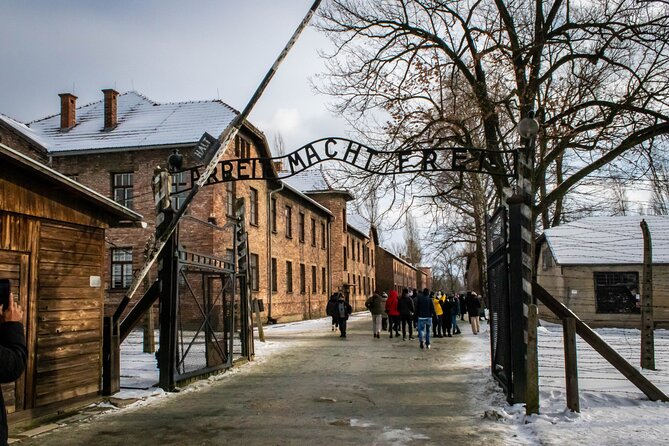
The first part of the museum visit takes place at Auschwitz I. You enter through the famous gate bearing the Nazi inscription Arbeit Macht Frei, translated as Work Sets You Free. The words were a cruel lie, and seeing them over the entrance is an unsettling beginning.
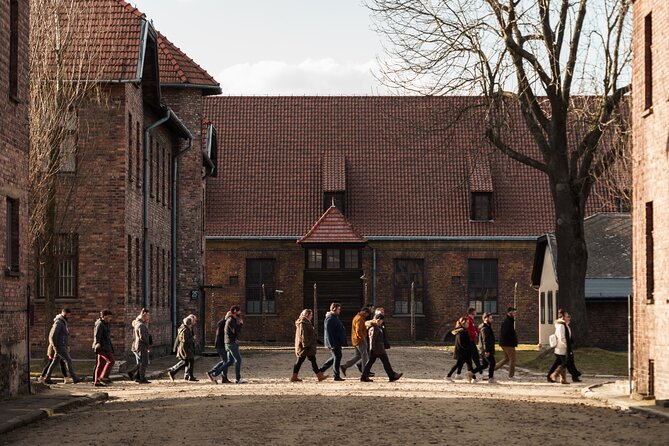
A licensed museum guide takes you through the original camp grounds and selected barracks. The buildings now house exhibitions with documents, photographs, and objects taken from prisoners. These displays are among the most confronting parts of the day because they bring individual lives into view.
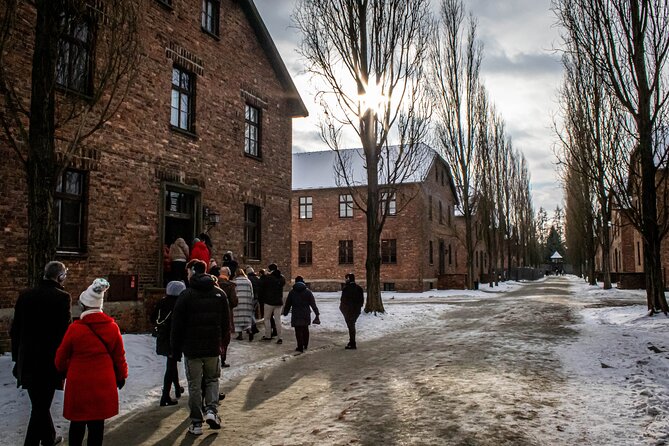
You may see the original camp roads, fences, watchtowers, and the Death Wall. The site is not presented as a reconstructed theme park. Much of its force comes from the plain, preserved structures and the knowledge of what happened within them.
This portion lasts about one hour and 50 minutes. Headsets are included, which is a practical advantage. Groups spread out as they move through rooms and narrow paths, and the audio equipment helps you follow the guide without crowding close.
The strongest part of the tour depends on the museum guide assigned that day. Guides such as Natalia have been praised for explaining the site clearly and answering questions, while other departures have had serious communication failures when a driver had to step in for a sick guide and could not translate the museum guide’s explanation. That is not a minor issue at Auschwitz. You are paying to understand the place, not simply to walk through it.
A few more Krakow trips worth comparing
- Krakow to Auschwitz Birkenau Guided Tour with Transfer and Ticket
★ 5.0 · 8,197 reviews - From Krakow: Auschwitz Birkenau Tour with Transfer
★ 4.0 · 6,134 reviews - Krakow to Wieliczka: Salt Mine Guided Tour with Ticket & Transfer
★ 4.5 · 3,193 reviews - Krakow to Auschwitz Birkenau Guided Tour with Ticket and Transfer
★ 3.5 · 3,062 reviews
Birkenau, the railway ramp, and the scale of the crime
The second site, Birkenau, lies about three kilometres from Auschwitz I. It was the largest camp in the Auschwitz complex, built from 1941 in the area of the demolished village of Brzezinka.
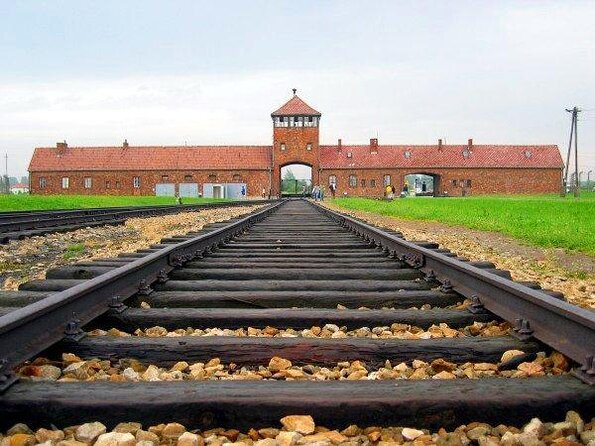
Birkenau is physically bigger and more open than Auschwitz I. You walk past the entrance gate, along the railway ramp, and toward preserved sections of the camp. The ramp was where new arrivals were selected, often in moments that determined who would be forced into labor and who would be sent to the gas chambers.
The gas chambers and crematoria were about 200 metres from the ramp. The site’s directness can be shocking. There is little need for dramatic presentation. The distance itself, the tracks, and the empty space explain a great deal.
The camp was planned to hold 125,000 prisoners. People were subjected to cold, hunger, disease, exhaustion, and forced labor. Preserved barracks show the harsh living conditions and the way prisoners were treated as replaceable labor.
The Birkenau section lasts about one hour and 10 minutes. That can feel short, especially if the group arrives late or the guide has to hurry. Several poor experiences have involved the second camp being rushed or reached after dark, when it is harder to see the railway ramp and open grounds.
This is why the timing of your departure matters as much as the guide’s skill. Ask the operator whether the planned schedule gives you daylight at Birkenau, particularly in winter. The tour is still meaningful in poor weather, but rain, cold, or darkness can make the second site much harder to absorb.
What makes the guided format worthwhile
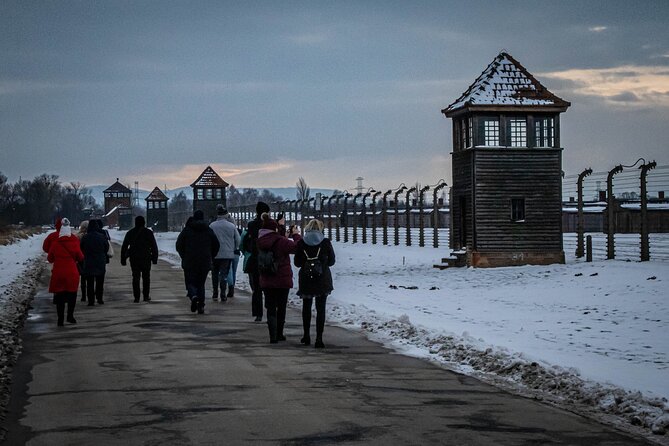
You can reach Auschwitz independently, but a guided visit gives structure to a place that can otherwise feel overwhelming. The museum guide explains the function of each area, connects the buildings to the camp system, and helps you understand what you are seeing without turning the visit into a list of dates.
I value the guide most at Auschwitz I, where the indoor exhibitions contain a great deal of information. A good guide helps you move through it without losing the human story. Guides praised by name, including Natalia and Bohdan, have been described as clear, considerate, and able to answer questions. Filip, one of the drivers, was also singled out for being attentive and helping passengers feel comfortable during the long day.
The guide is not always the person who drives you from Krakow. The transport host may handle the road journey, meeting arrangements, and museum entry, while the museum assigns the licensed guide. Make sure you understand this distinction. A pleasant driver cannot replace a proper museum guide if your main reason for booking is historical explanation.
Headsets are supplied. They are especially useful when the group reaches a crowded indoor exhibition or when you need to keep a respectful distance from others. Group size is capped at 30, but that is still large enough for the group to stretch out on the paths.
Price, transport, and the real value
At $93.57 per person, this is not the cheapest way to reach the camps. The price includes round-trip transport from Krakow, entry to Auschwitz I and Birkenau, the licensed guide, headsets, insurance, and taxes.
That package can be fair value if the transport and admission arrangements work as promised. You are buying convenience as much as sightseeing. The vehicle takes you directly from Krakow, and the guide gives the visit a clear framework.
The value drops quickly if you spend hours waiting outside for tickets or receive a late change that turns the day into a middle-of-the-night expedition. Several serious complaints center on the difference between having a confirmed museum entry and receiving help to obtain a ticket at the site. Some people were told to wait for available English-language places, while other groups with confirmed arrangements went straight through.
Before booking, ask this exact practical question: are my Auschwitz I and Birkenau admission tickets already secured for a specific tour time, or will the operator try to obtain them on arrival? The supplied information says entry tickets are included, but the reported operation has not always felt that straightforward.
The tour offers group discounts, which can improve the price for families or larger parties. Hotel drop-off is not included. The activity ends back at the Pawia 18B meeting point, so plan your evening from there rather than expecting to return to your hotel entrance.
Respect, clothing, and food for a difficult day
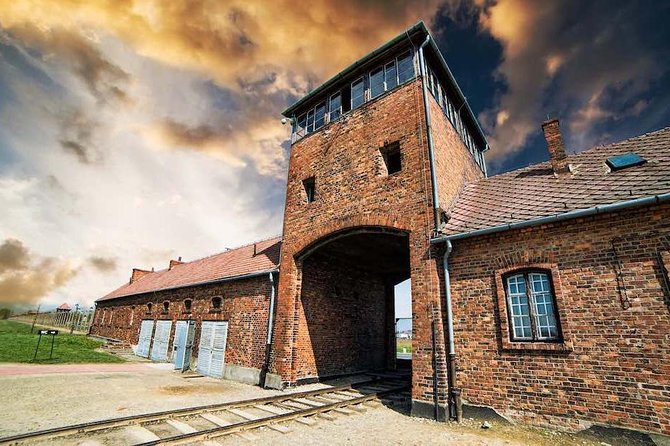
This is a memorial site, not an ordinary attraction. Smoking, eating, and loud behavior are prohibited inside the museum. Wear comfortable shoes because you walk a lot, and expect most of the day to involve outdoor paths and exposed camp grounds.
The tour operates in all weather. In warm weather, take a hat and sun protection. In rain, carry an umbrella or raincoat. In cold weather, dress for waiting outside as well as walking, since the schedule can include time near the entrance.
Bring your passport or another accepted form of identification. Security may ask for it before entry. Keep your belongings practical and easy to manage, since you will move between transport, security, exhibitions, and open grounds.
The experience is not recommended for children aged 14 and under. That is less about walking difficulty than emotional weight. Older teenagers may be ready, but parents should make that call with care.
The return trip to Krakow
After the museum visit, the schedule includes at least a 20-minute stop. You may use it for a bookstore, groceries, or a short rest before the drive back.
The return journey takes about 75 minutes in the stated schedule, though traffic can make the overall trip longer. The full outing is advertised at about eight hours, but an amended departure time, long ticket queues, or delays can stretch the day considerably.
The tour ends at the meeting point rather than at your hotel. If you have dinner reservations, a train to catch, or an evening event, leave plenty of spare time. I would not plan anything fixed immediately after this excursion.
The transport team can make a real difference. When the road and entry arrangements run well, drivers such as Bohdan and Filip have helped make a demanding day feel calmer. But good individual service cannot fully repair poor ticket planning or unclear communication.
Who should book this Auschwitz tour?
I would consider this tour if you want a guided visit and prefer a direct vehicle from Krakow. It suits adults and older teenagers who want context at both Auschwitz I and Birkenau, and it is useful for anyone who does not want to arrange separate transport.
I would be cautious if your schedule is tight or if you need a guaranteed morning departure. The possible time changes are the biggest weakness. You should also be comfortable with a group of up to 30 and with the possibility that the museum, rather than the transport company, determines the final guide schedule.
Book only after confirming three points:
- Your exact pickup time and location
- That entry tickets are secured, not merely requested
- That the visit includes both Auschwitz I and Birkenau with a licensed museum guide
The tour can deliver a serious, well-supported visit, and the best guides make the history much easier to understand. But the operational risk is too high to ignore. If the operator cannot give you clear answers about tickets and timing, choose a provider that confirms both in writing.
FAQ
How long does the Auschwitz-Birkenau tour from Krakow take?
The experience lasts about eight hours, including transport. The drive to Auschwitz takes roughly one hour and 30 minutes, and the return journey is listed at about one hour and 15 minutes. Delays or ticket queues can make the day longer.
Where does the tour start and end?
The standard meeting point is Pawia 18B in Krakow, at the kiss and ride stop next to the Mercure hotel. The activity ends back at that meeting point. Hotel pickup may be available if you select that option, but hotel drop-off is not included.
Are Auschwitz and Birkenau admission tickets included?
The tour includes entry tickets to Auschwitz I and Birkenau according to the supplied inclusions. Because some departures have involved waiting to secure English-language entry, confirm with the supplier before departure that your tickets and tour time are secured.
Is lunch included?
Lunch is not included in the standard tour. You are encouraged to bring food and drinks, and it may also be possible to buy lunch from the tour leader. An option with lunch included may be available.
What should I bring to the museum?
Bring your passport or ID, comfortable footwear, food and drinks, and clothing suitable for the weather. Much of the experience is outdoors, so an umbrella or raincoat is useful in wet conditions.
Can children join the tour?
The experience is not recommended for children aged 14 and under. The site deals with mass imprisonment, forced labor, and murder, so parents should consider the emotional impact before booking.
Just added around Krakow
- Private Guided Tour: Oskar Schindler’s Factory★ 5.0 · 3 reviews
- E-Scooter Krakow sightseeing tour★ 5.0 · 3 reviews
- From Krakow: Zakopane and Thermal Pools Guided Trip★ 5.0 · 3 reviews
- Schindler’s Factory, Ghetto and Plaszow Camp Guided Tour★ 4.7 · 3 reviews
- Kraków: Private Hot Air Balloon Flight with Champagne★ 3.7 · 3 reviews
- Krakow: River Cruise & Guided Visit to Former Plaszow Camp★ 3.6 · 3 reviews
- From Krakow: Private Wieliczka Salt Mine Tour★ 4.0 · 3 reviews
- Krakow: Old Town short walk with St. Mary’s Basilica visit★ 5.0 · 3 reviews
Auschwitz-Birkenau Tours, compared.

Auschwitz-Birkenau Guided Tour & Hotel Pickup
Read our review →Auschwitz-Birkenau Guided Tour & Hotel Pickup
Read our review →
Auschwitz Guided Tour with Optional Hotel Pickup
Read our review →
Auschwitz-Birkenau Guided Tour with Pickup & Lunch
Read our review →
Auschwitz-Birkenau Guided Tour Pickup/Lunch Options
Read our review →

Krakow to Auschwitz Birkenau Guided Tour with Transfer and Ticket
Read our review →
Browse the lists this tour appears in