
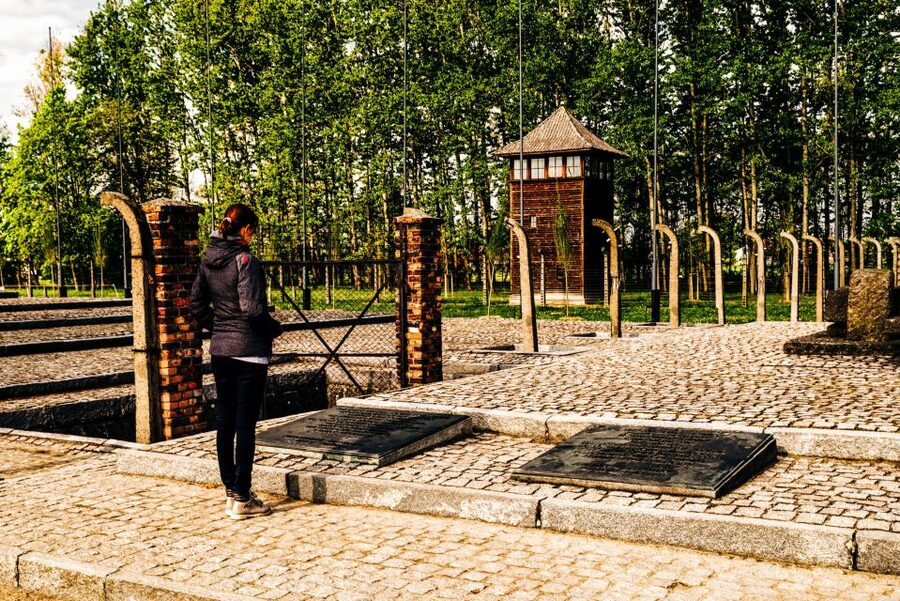
Reviewed · AUSCHWITZ-BIRKENAU TOURS
Krakow: Auschwitz-Birkenau Live Guided Tour & Hotel Pickup
Auschwitz-Birkenau is not a sightseeing stop you simply check off. The Arbeit macht frei gate, prisoner barracks, crematorium ruins, and piles of personal belongings demand quiet attention. This trip gives you a structured way to visit both camps, with a professional guide and transport from Kraków.
I like the short liberation film on the ride out, which gives you basic context before you arrive. I also like the practical setup: modern Mercedes vehicles, hotel or meeting-point pickup, and a guide who handles the museum procedures. The main drawback is the long, tightly timed day. The museum sets the pace, and there may be little time for lunch.
In This Review
- Key points
- Why this Auschwitz visit matters
- Leaving Kraków in a Mercedes vehicle
- The documentary sets the tone
- Entering Auschwitz I through the official route
- A short break before Birkenau
- Walking through Birkenau’s huge camp grounds
- How the group format affects your day
- Is $22 good value?
- Who should book this tour?
- Practical advice before you go
- Should you book the Auschwitz-Birkenau tour?
- FAQ
- How long does the Auschwitz-Birkenau tour take?
- Does the tour visit both Auschwitz I and Auschwitz II-Birkenau?
- Is hotel pickup in Kraków included?
- Where is the main meeting point?
- Can the pickup time change?
- Is museum entry included in the $22 price?
- Is skip-the-line entry included?
- What languages are available?
- What should I bring?
- Can I bring luggage or a large bag?
Key points
- Auschwitz I and Birkenau are both included, with roughly two hours at the first site and 90 minutes at the second.
- The short documentary on the way to the camp helps explain the liberation before you enter the memorial.
- Hotel or apartment pickup is available, though a meeting point may be used depending on your booking option.
- The guided route is official and regulated, so timings can change and the visit may feel brisk.
- The advertised price begins at $22, but some booking options require a separate 150 PLN, or €36, entry payment on site.
- Bring ID and wear comfortable shoes, and leave large bags and luggage behind.
Why this Auschwitz visit matters
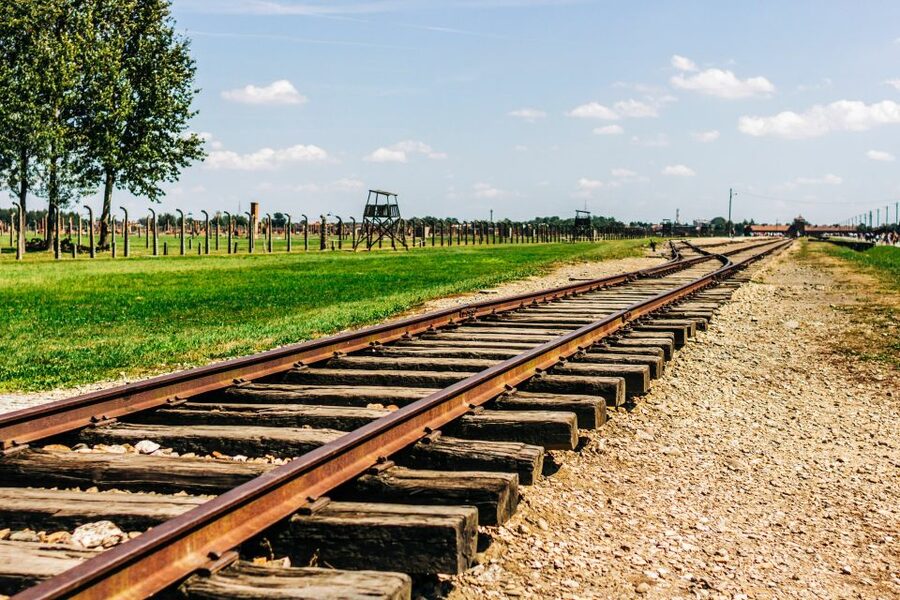
By June 1940, Auschwitz had already received Jewish prisoners and more than 700 Polish political prisoners. The camp complex later became the largest site of mass murder created by Nazi Germany, with Auschwitz II-Birkenau built to support mass extermination on an industrial scale.
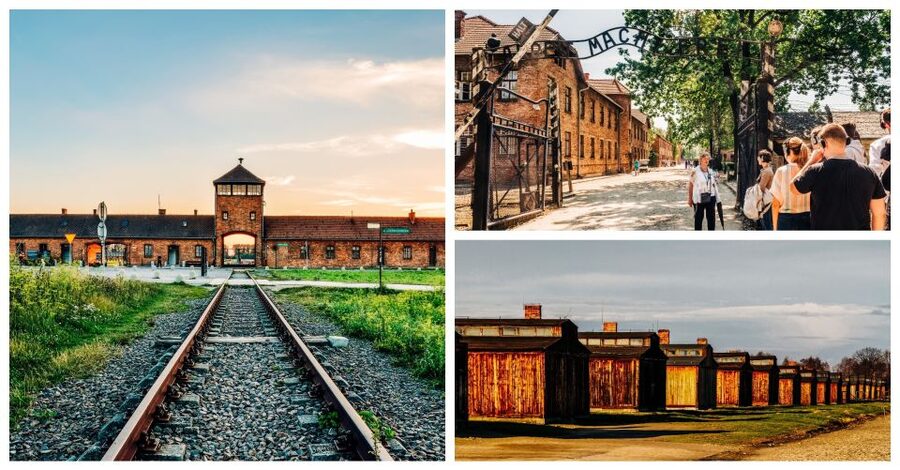
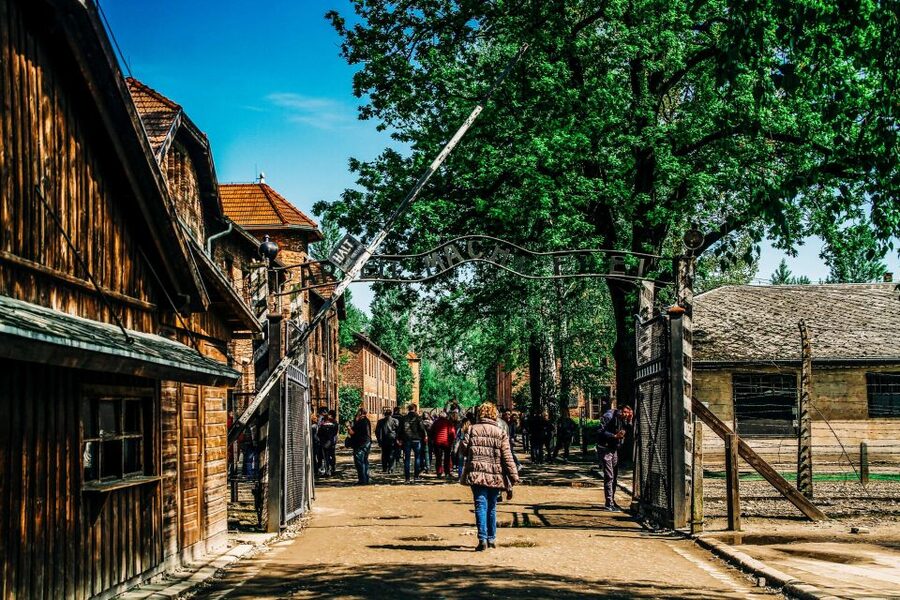
A guided visit helps you understand how the two parts fit together. Auschwitz I was the original camp, with brick buildings, administrative offices, the central prison in Block 11, and the gate marked Arbeit macht frei. Birkenau was much larger, stretching across almost 200 hectares with rows of barracks, fences, railway access, and the ruins of gas chambers.
The subject matter is painful. You will hear about deportation, forced labor, executions, starvation, medical experiments, and the murder of Jews, Poles, Roma, and other prisoners. The guide’s job is not to make the visit comfortable. It is to make the facts clear and place the buildings in their proper context.
The strongest part of this experience is its seriousness. Guides such as Anna and Bob have been praised for explaining difficult material in a clear way, while guides including Matias have been noted for helping the day run smoothly. Names and guides can change, but the format consistently gives you a person to follow rather than leaving you to read every sign alone.
More Auschwitz-Birkenau memorial visits:
- From Krakow: Auschwitz-Birkenau Guided Tour & Hotel Pickup
★ 4.5 · 33,358 reviews - From Krakow: Auschwitz-Birkenau Guided Tour & Hotel Pickup
★ 4.5 · 29,340 reviews - Krakow: Auschwitz Guided Tour with Optional Hotel Pickup
★ 4.5 · 15,280 reviews
Leaving Kraków in a Mercedes vehicle
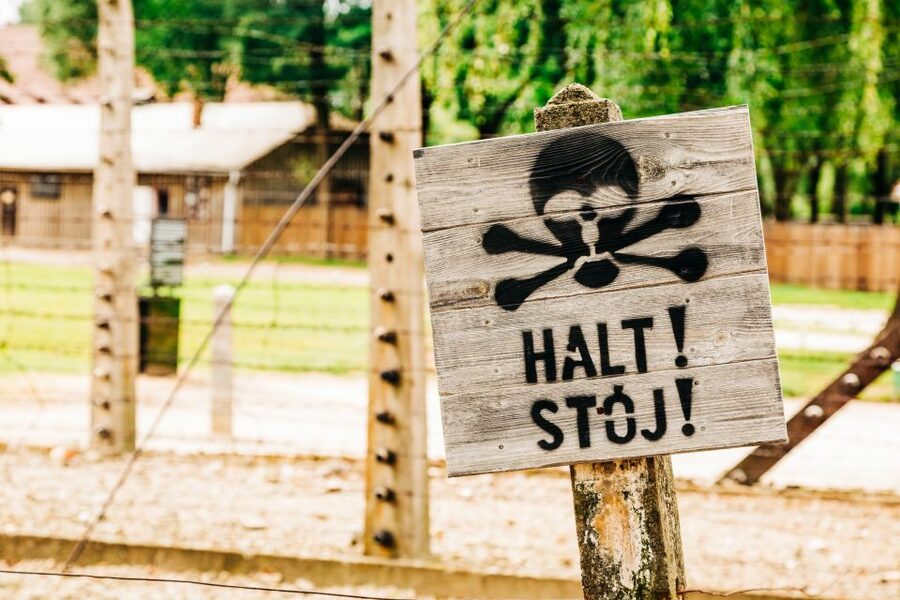
The journey from central Kraków to Auschwitz takes about 45 minutes in the basic description, though the full transport schedule allows considerably more time. The route includes pickup, transfers between the two museum sites, and the return to Kraków. Some itineraries describe about 75 minutes in the vehicle each way, so you should plan for a substantial portion of the day on the road.
Pickup may be from your hotel or apartment, or from one of several central meeting points. The stated meeting point is in front of the Radisson Blu Hotel at the tourist bus stop. Arrive 15 minutes early, and wait at the entrance rather than inside the hotel.
Pickup times can shift. The operating window is listed as 5:00 AM to noon, and a change of 30 to 60 minutes is common. A larger adjustment is possible, with notice sent by email or WhatsApp 12 to 24 hours before departure.
That uncertainty is worth accepting for the convenience of door-to-door service. One past itinerary involved a private taxi transfer to the main coach, while other pickup arrangements use the tour vehicle directly. The exact arrangement depends on the option you choose.
The vehicles are modern Mercedes models, and the transport has been praised for being clean and comfortable. Still, comfort does not remove the need for patience. One delayed pickup reportedly added about 20 minutes, and the day already involves long periods of sitting and walking.
The documentary sets the tone
On the ride to Auschwitz, most standard shared options include a short documentary about the liberation of Auschwitz-Birkenau. It is not a replacement for the museum, but it gives you a useful starting point.
You see the camp with more awareness of what happened at the end of the war and what the liberating forces found. That background makes the first view of the gate and barracks easier to place in time.
The film is not included with options offering private transportation service, so check the exact package before booking if this matters to you. A brochure in your chosen language may also be provided when you select a language other than English. It includes maps, the sightseeing route, and descriptions of the sites.
Entering Auschwitz I through the official route
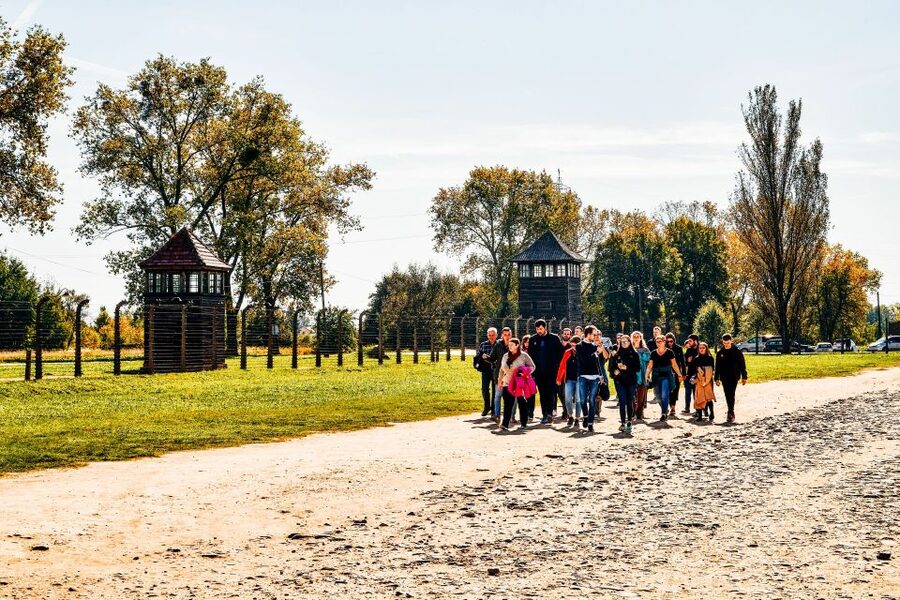
At Auschwitz I, the tour begins after the group receives instructions about museum rules and procedures. You then enter through a separate route if your selected package includes skip-the-line access. The entry process is controlled by the memorial, so even a prearranged tour cannot guarantee that every step will move at the same speed.
The famous Arbeit macht frei gate is here. Its appearance can feel starkly familiar from photographs, but seeing it in place is different. The gate marks the entrance to a functioning camp complex, not a movie set or an isolated monument.
Auschwitz I contains many of the original brick blocks. Inside, the exhibitions explain how the camp operated and how prisoners were processed, punished, used as forced labor, and killed. This was the first camp for men and women in the complex.
The guide also explains the first experiments with Zyklon B, the murder of the first mass transports of Jews, criminal medical experiments, and executions by shooting. Block 11 served as the camp prison for people brought from across the wider complex. The commandant’s office and much of the SS administration were also located here.
This part of the visit is dense. You move through buildings and exhibitions while listening to a steady explanation of the camp system. The material can be difficult to absorb in one pass, but the guide helps connect objects, rooms, and dates.
Allow about two hours for the Auschwitz I route. The pace is determined by the memorial’s visitor service and regulations, not only by the tour company. You may find that you want more time at certain displays, but the group must keep moving.
A few more Krakow trips worth comparing
- Krakow: Auschwitz-Birkenau Guided Tour with Pickup & Lunch
★ 4.5 · 9,800 reviews - Krakow: Auschwitz-Birkenau Guided Tour Pickup/Lunch Options
★ 4.5 · 9,057 reviews - Krakow: Auschwitz-Birkenau and Salt Mine Guided Tour
★ 4.7 · 9,020 reviews - Krakow to Auschwitz Birkenau Guided Tour with Transfer and Ticket
★ 5.0 · 8,197 reviews
A short break before Birkenau
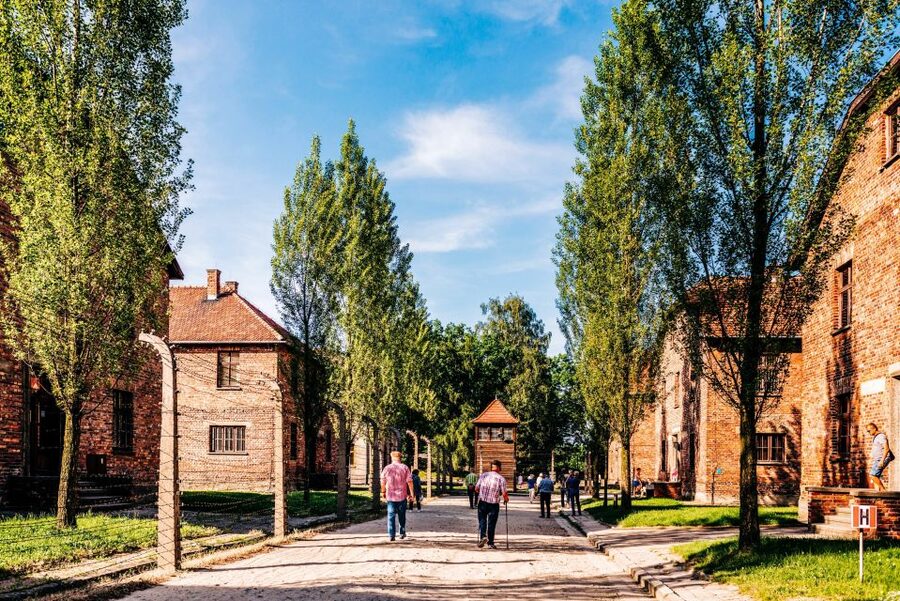
After Auschwitz I, you get a break of about 15 minutes. The driver then takes the group to Auschwitz II-Birkenau, the second part of the memorial.
Do not count on this as a full meal stop. The complete visit may not leave enough time for lunch, and the road sections can run for around an hour and a half without a stop. I recommend bringing a small meal or snack that you can eat on the coach, along with water.
Large bags and luggage are not allowed at the museum. Bring only what you need, and keep your passport or national ID with you. The museum requires each participant’s full name and contact details when booking, and your entry can be refused if the name on your booking does not match your identification.
Walking through Birkenau’s huge camp grounds
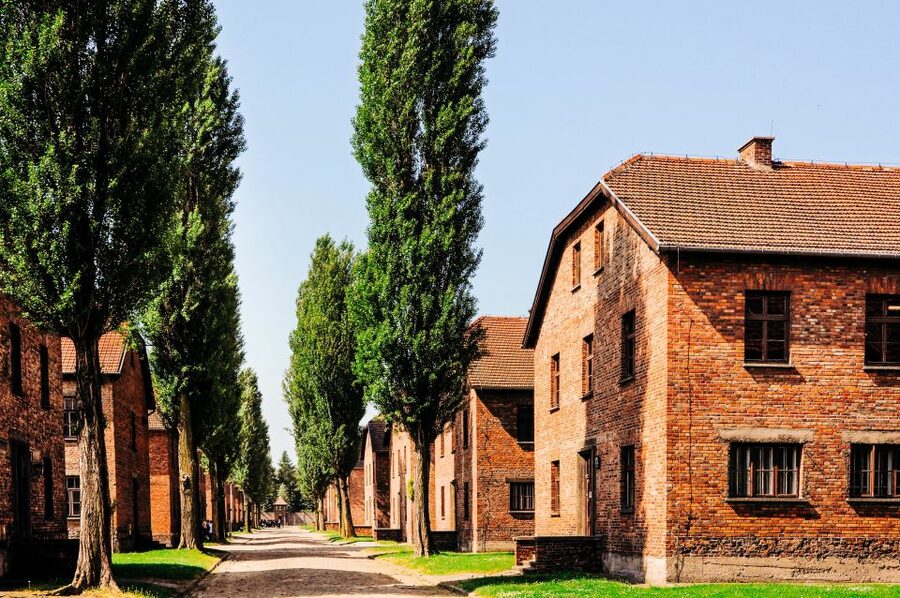
Birkenau is physically different from Auschwitz I. The site is open, broad, and exposed, with long lines of fencing, roads, brick and wooden barracks, and the remains of facilities used for mass murder.
The camp covered nearly 200 hectares. In 1944, it held more than 100,000 prisoners, including Jews, Poles, Roma, and others. Nearly 300 mostly wooden barracks were built here, making Birkenau the largest concentration camp in the complex.
The scale matters. At Auschwitz I, buildings and exhibitions make the system feel concentrated. At Birkenau, distance and repetition show how large the operation became. You walk past barracks, fences, roads, and ruins while the guide explains how people arrived, were selected, confined, worked, and killed.
The remains of gas chambers and crematoria are among the most serious parts of the route. Sites containing human ashes are also preserved. Nothing here is decorative. The broken structures and empty spaces are part of the evidence.
The Birkenau guided visit lasts about 90 minutes. Wear sturdy, comfortable shoes. The ground can make walking tiring, and the open setting can be uncomfortable in poor weather. You should also expect the emotional strain to increase as the guide connects the physical remains with the people who were held there.
How the group format affects your day
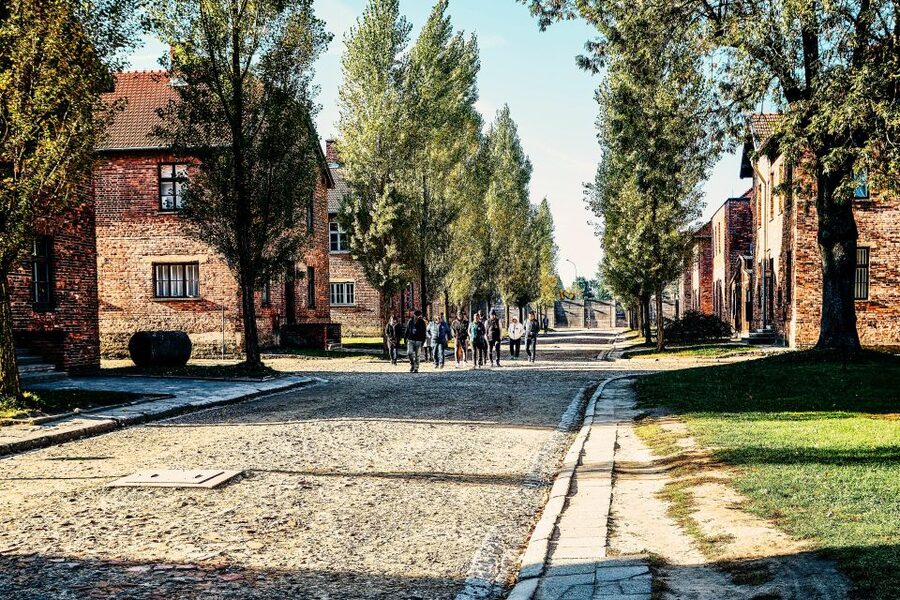
The maximum group size is 30 people per guide, with a small-group option available. A group of 30 is not intimate, but it is manageable if you stay close and listen carefully.
The guide leads the official museum route and explains what you are seeing. This is useful because independent visitors can easily miss the connection between a block, a transport system, a prison room, and the wider camp administration.
The trade-off is flexibility. You cannot linger as long as you like at every display, and the pace may feel rushed. That is partly caused by the memorial’s own visitor rules and scheduling. Several hours at the site still gives you a serious introduction, but this is not a private study visit.
English and Polish live guides are available. The tour host speaks English throughout the trip, while the professional museum guide leads the camp visit. If you book a language other than English, a written booklet with maps and explanations may support the visit.
Is $22 good value?
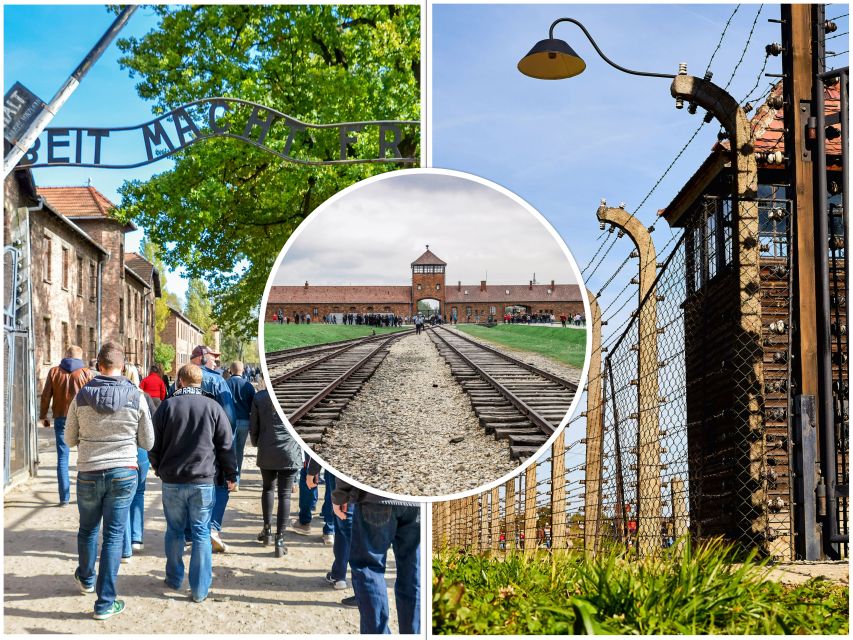
At $22 per person, the basic price is appealing for a full-day outing that combines transport, a tour host, a professional guide, and insurance. You avoid arranging a separate bus or train journey and do not need to work out how to move between Auschwitz I and Birkenau.
Check the exact booking option carefully. One transport and tour-host option does not include the museum entry ticket in the advertised price. That ticket costs 150 PLN, or about €36, and is paid on site. Skip-the-line entry is included only with the relevant skip-the-line choices.
Once that possible extra cost is included, the value rests mainly in the organization and guided access. You are paying for transport from Kraków, the official route, transfers between both camp sites, and help with the entry process. If you prefer to arrange every detail yourself, a cheaper independent route may be possible, but it will require more planning and may not include the same guided explanation.
The free cancellation deadline is 24 hours before the trip, and reserve-now, pay-later booking is available. Those terms are useful if your Kraków schedule is still shifting, but they do not remove the need to check the pickup time and ticket conditions.
Who should book this tour?
I would choose this trip if you want the simplest way to visit Auschwitz from Kraków and prefer to hear the history from a trained guide. It suits first-time visitors, people with limited time in Poland, and anyone who wants hotel pickup rather than a separate transport plan.
It is also a good choice if you want both camps in one day. Seeing only Auschwitz I would leave out the enormous Birkenau site, while visiting only Birkenau would miss the original camp buildings and exhibitions.
I would hesitate if you want a slow, reflective visit with lots of time for notes or photography. The route is fixed, the group may include up to 30 people, and the day can stretch beyond the stated seven hours. You also need to be comfortable with a serious subject and several hours of walking.
Practical advice before you go
Bring your passport or ID card, comfortable shoes, water, and food for the coach. Leave alcohol, drugs, luggage, and large bags behind.
Arrive 15 minutes before pickup. Keep your phone available for possible WhatsApp updates, since the start time may change. Read the final instructions carefully, especially if you are using a hotel pickup or meeting point.
Do not schedule an important Kraków dinner, train, or flight immediately after the planned return. The stated duration is approximate, and museum procedures, traffic, late pickups, and group movement can all add time.
Should you book the Auschwitz-Birkenau tour?
Book it if you want a well-organized, guided visit to both Auschwitz I and Auschwitz II-Birkenau without handling the transport yourself. The strongest features are the clear historical explanation, comfortable vehicles, Kraków pickup, and the chance to see both parts of the memorial in one day.
Before paying, confirm three things: your actual pickup time, whether the museum ticket is included, and whether your booking uses a skip-the-line option. Bring food, expect a long day, and accept that the museum controls the pace.
At $22 before any separate entry charge, it can be a practical value. The real benefit is not speed or entertainment. It is having a structured, respectful way to reach a difficult place and understand what you are seeing.
FAQ
How long does the Auschwitz-Birkenau tour take?
The advertised duration is about seven hours, but the full schedule is approximate. The transport, museum procedures, group movement, and traffic can make the day longer.
Does the tour visit both Auschwitz I and Auschwitz II-Birkenau?
Yes. The route includes a guided visit of about two hours at Auschwitz I and about 90 minutes at Auschwitz II-Birkenau.
Is hotel pickup in Kraków included?
Hotel or apartment pickup is available with the appropriate option. Depending on your booking, you may instead use a central meeting point, including the tourist bus stop in front of the Radisson Blu Hotel.
Where is the main meeting point?
The stated meeting point is in front of the entrance to the Radisson Blu Hotel at the tourist bus stop. You should arrive 15 minutes before the confirmed pickup time.
Can the pickup time change?
Yes. Pickup may be scheduled between 5:00 AM and noon, and the time can change by 30 to 60 minutes. You may receive an email or WhatsApp notice 12 to 24 hours before departure.
Is museum entry included in the $22 price?
It depends on the option you select. The Roundtrip Transport plus Tour Host Assistance to get Ticket option requires a separate 150 PLN, or €36, payment on site. Skip-the-line tickets are included only with selected skip-the-line options.
Is skip-the-line entry included?
It is included only when you choose an option that specifically lists skip-the-line tickets. The museum still controls entry procedures and visitor flow.
What languages are available?
Live guiding is available in English and Polish. A brochure with maps and descriptions is provided to customers who select a language other than English when booking.
What should I bring?
Bring your passport or ID card and comfortable shoes. You may also want water and food for the coach, since there may not be time for a proper lunch break.
Can I bring luggage or a large bag?
No. Luggage and large bags are not allowed. Alcohol and drugs are also prohibited.
Just added around Krakow
- Private Guided Tour: Oskar Schindler’s Factory★ 5.0 · 3 reviews
- E-Scooter Krakow sightseeing tour★ 5.0 · 3 reviews
- From Krakow: Zakopane and Thermal Pools Guided Trip★ 5.0 · 3 reviews
- Schindler’s Factory, Ghetto and Plaszow Camp Guided Tour★ 4.7 · 3 reviews
- Kraków: Private Hot Air Balloon Flight with Champagne★ 3.7 · 3 reviews
- Krakow: River Cruise & Guided Visit to Former Plaszow Camp★ 3.6 · 3 reviews
- From Krakow: Private Wieliczka Salt Mine Tour★ 4.0 · 3 reviews
- Wawel Castle Treasury & Armoury Skip the Line Private Tour★ 4.7 · 3 reviews
Auschwitz-Birkenau Tours, compared.

Auschwitz-Birkenau Guided Tour & Hotel Pickup
Read our review →Auschwitz-Birkenau Guided Tour & Hotel Pickup
Read our review →
Auschwitz Guided Tour with Optional Hotel Pickup
Read our review →
Auschwitz-Birkenau Guided Tour with Pickup & Lunch
Read our review →
Auschwitz-Birkenau Guided Tour Pickup/Lunch Options
Read our review →

Krakow to Auschwitz Birkenau Guided Tour with Transfer and Ticket
Read our review →
Browse the lists this tour appears in