
Reviewed · KAZIMIERZ JEWISH QUARTER TOURS
Krakow Jewish Quarter and Ghetto Tour by Electric Golf Cart
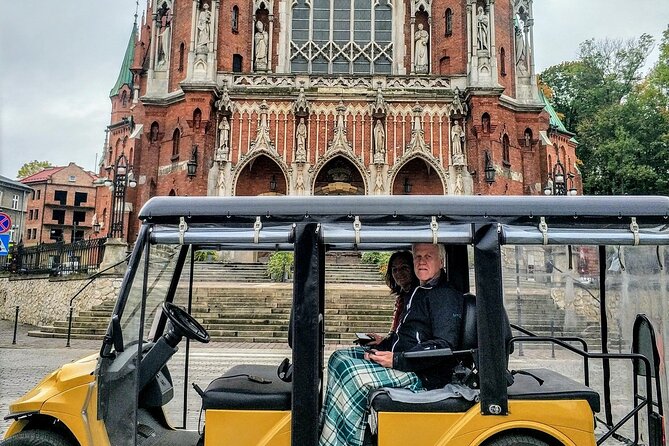
Krakow’s Jewish Quarter and former ghetto are spread across two districts, and this 90-minute electric golf-cart tour connects them without asking you to march across the city. You pass Szeroka Street, old synagogues, Podgórze Market Square, the ghetto wall, Ghetto Heroes Square, and the pharmacy that offered help during Nazi deportations.
I like two things here: the cart covers a lot in a short time, and the English commentary gives you a clear starting point for later walks. Guides such as Natalie, Martina, Olivia, Michael, Matt, and Phillips have been praised for bringing warmth and useful detail to a serious subject.
The tradeoff is depth. You may see more than you would on foot, but you have less time to linger. Some passengers also found the headset format less social, and several stops focused on Christian churches rather than entering Jewish buildings.
In This Review
- Key points to know before booking
- Why the golf cart works for Kazimierz and Podgórze
- Szeroka Street, the heart of Jewish Kazimierz
- An old synagogue and the limits of a quick visit
- Podgórze Market Square and St Joseph’s Church
- The surviving ghetto wall
- Ghetto Heroes Square and the former Umschlagplatz
- The pharmacy that became a place of rescue
- What the guides add to the ride
- Price, pace, and what you receive for $34.75
- Who should take this tour?
- Practical details for a smoother outing
- Should you book the Kazimierz and ghetto cart tour?
- FAQ
- How long does the Krakow Jewish Quarter and Ghetto Tour last?
- What language is the tour offered in?
- Which areas does the electric golf cart tour cover?
- Where does the tour start and finish?
- Is hotel pickup and drop-off included?
- What is the cancellation policy?
Key points to know before booking
- More than 20 sites in about 90 minutes: You get a broad look at Kazimierz and Podgórze without a long walk between them.
- Szeroka Street is the historical center: This former Jewish quarter once had four synagogues on one street, an unusual concentration in Europe.
- The ghetto section is the emotional core: The wall fragment, Ghetto Heroes Square, and the former pharmacy explain daily life and deportation under Nazi rule.
- The guide makes a real difference: English-speaking drivers including Natalie, Martina, Olivia, and Michael have been singled out for clear, respectful commentary.
- The cart is useful in hot or cold weather: You can sit back while someone else handles the route, though seating may not always be your choice.
- Best for a first look, not a full study: Use the tour to get your bearings, then return on foot to the places that catch your attention.
Why the golf cart works for Kazimierz and Podgórze
Kazimierz and Podgórze are not one compact sight. They sit on opposite sides of the Vistula, and the tour links the former Jewish district with the area that became the Krakow Ghetto in 1941. That makes the cart more than a novelty. It saves energy and gives you a quick map of a complicated part of Krakow.
You meet at Mikołaja Zyblikiewicza 2 and finish at Mikołaja Kopernika 3. Hotel pickup and drop-off are not included, so plan your route to and from those points. The activity is offered in English, with an English-speaking driver and an audio guide during the ride.
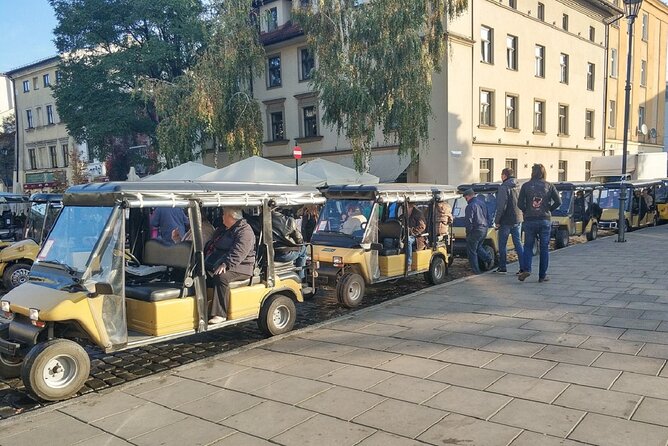
The vehicle can carry up to 50 people, although the feel of your particular group and cart may vary. A larger group means less chance to shape the pace around your interests. In return, you get a simple, organized way to see a wide area on a fixed schedule.
The cart is especially useful if you are tired, traveling in hot weather, or want an overview before choosing where to walk later. One winter booking found the cart comfortably warm, while another passenger valued being able to rest during a hot day. In rainy weather, the experience can be less smooth. Getting the right cart and fitting a stroller proved difficult for one family, so arrive ready to confirm your group with the operator.
More Kazimierz walks:
- Krakow: Jewish Quarter and Former Ghetto Tour
★ 4.9 · 1,441 reviews - Krakow: Bike Tour of Old Town, Jewish Quarter and the Ghetto
★ 4.9 · 1,155 reviews - Krakow: Kazimierz Jewish Quarter Walking Tour
★ 4.8 · 571 reviews
Szeroka Street, the heart of Jewish Kazimierz
Kazimierz was once an independent town south of Wawel and served as the center of Jewish life in Krakow for centuries. Today, it is one of Krakow’s best-known areas, with old streets, religious buildings, restaurants, and cultural venues layered over a painful past.
The tour gives special attention to Szeroka Street. This is the historic center of Jewish Kazimierz, and its importance becomes clear when you learn that four synagogues once stood along the street. That fact alone helps you understand how concentrated Jewish religious and community life was here.
Szeroka Street is also linked with the Jewish Culture Festival, including its final concert. The street therefore connects several periods at once: centuries of Jewish life, the destruction of the Second World War, and the area’s present role in Krakow’s cultural life.
You should treat this part as an introduction rather than a museum visit. The cart lets you see the setting and hear the story, but you may not have enough time to study every façade or enter every building. If a synagogue interests you, note its name and location so you can return later at your own pace.
An old synagogue and the limits of a quick visit
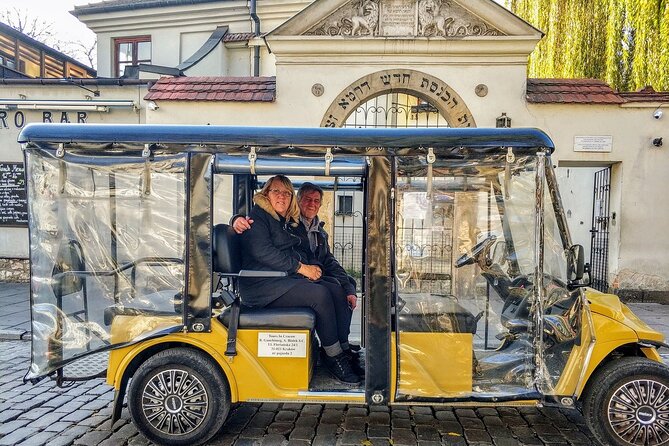
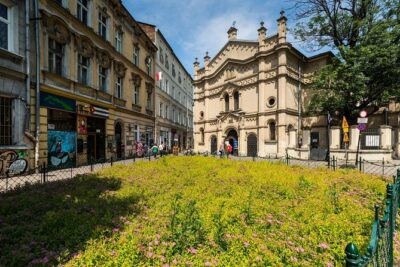
One of the stops is an old synagogue on Szeroka Street, preserved in unusually good condition. Its position in the historic center makes it one of the most meaningful buildings on the route, since you are not looking at an isolated monument. You are seeing a place within the former center of Jewish worship and community life.
The precise amount of time inside buildings depends on the running of the tour and the guide. Several guides have allowed short visits of five to ten minutes at selected locations, giving passengers a chance to look inside and take photographs. That is useful, but it is not the same as a dedicated synagogue tour.
This is one area where expectations matter. The experience includes an audio guide and live commentary, but it does not promise a long interior visit at every Jewish site. Some passengers found that the buildings they entered were Christian churches and wished for more time inside Jewish structures.
I would book this if you want context and orientation. I would not make it your only Jewish-history visit in Krakow if your main interest is synagogue architecture, ritual objects, or detailed local history.
Podgórze Market Square and St Joseph’s Church
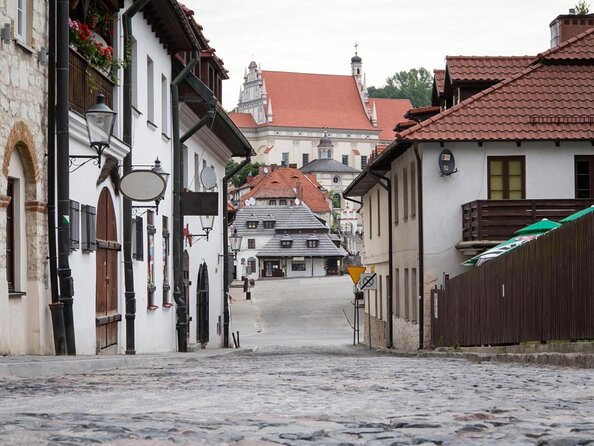
The cart then reaches Podgórze, a district that was only incorporated into Krakow in the 20th century. Its central square is dominated by the parish church of St Joseph, a highly recognizable place of worship and one of the district’s key visual markers.
This stop adds useful context because the former ghetto was not placed in Kazimierz. The Nazi authorities created it in Podgórze in 1941, changing the meaning of ordinary streets and public spaces. The church and market square help you see the district as a lived-in town, not just as a memorial zone.
You may be able to step into some buildings for a short look, depending on the guide and timing. Martina, in particular, has been praised for offering chances to enter churches and take photographs. That flexibility can make the ride feel less like a drive-by sightseeing circuit.
Still, remember that a cart tour has to keep moving. If you want quiet time in the church or a careful look at the square, mark it for a later walk. The value here is the connection between the district’s earlier civic life and its wartime role.
More Jewish heritage walks in Krakow:
- Krakow: Schindler’s Factory & Ghetto Guided Tour
★ 4.7 · 1,694 reviews - Krakow: Kazimierz, Schindler’s Factory & Ghetto Guided Tour
★ 4.8 · 460 reviews - Full Bike Tour – the Old Town, Jewish Qtr & the Ghetto NEW BIKES
★ 5.0 · 437 reviews - Krakow: Bike Tour of the Old Town, Kazimierz, and the Ghetto
★ 4.9 · 350 reviews
The surviving ghetto wall
A small piece of the original wall around the former ghetto remains. A plaque records the fate of the people who lived behind it. This is a modest physical remnant, but it can make the scale of the ghetto easier to grasp than a general explanation alone.
The stop is brief, yet important. You see how a boundary once turned streets into a confined zone, separating Jewish residents from the rest of the city under Nazi rule. The wall is not presented as a grand monument. Its power comes from its ordinary size and the human consequences attached to it.
The live guide and audio material work together here. Several passengers found the ghetto section especially moving, and guides such as Michael have been praised for explaining it with care and respect. This is not light sightseeing, so allow yourself time after the tour if you need a quiet pause.
The cart does provide a practical advantage. You can reach several related locations in one outing, rather than trying to piece them together from a map. The drawback is that the group may not stop long enough for extended reflection or photography.
Ghetto Heroes Square and the former Umschlagplatz
The former Plac Zgody, now known as Ghetto Heroes Square, is one of the most memorable stops. During the Nazi occupation, this was the Umschlagplatz, the place where Jewish residents were forced to gather before deportation.
The square is a difficult place, but the tour places it within the wider story of the ghetto. You learn how a public space became a staging area for deportations and how the daily life of local people was turned into a system of control.
The memorial character of the square can be easy to miss if you rush through it alone. A guide gives you the basic facts and points out why the place matters. The audio guide adds another layer, though the headset arrangement means you may have less natural conversation with the people sitting beside you.
That format divides opinion. I see the benefit: you can hear the recorded material clearly even when the vehicle is moving. But if you prefer a lively back-and-forth with your guide, a walking tour may suit you better.
The pharmacy that became a place of rescue
Near the square is the former Polish pharmacy that served as a rare place of help inside the ghetto. It offered shelter during deportations and helped carry messages and packages in and out. In a place defined by confinement and fear, this small business became a point of contact and assistance.
This stop gives the tour a human scale. The wall and square show the machinery of persecution. The pharmacy shows how individual actions could provide practical help within that system. It is one of the most useful parts of the route for understanding that wartime history involved choices, risks, and private acts of courage as well as official orders.
The experience may not provide a long museum visit here, so listen closely to the explanation and make a note if you want to return. You are getting the story as part of a wider circuit, not a complete examination of the pharmacy’s displays.
The final section of the route connects wartime events with ordinary streets and homes. That contrast is important. You are not only seeing memorials. You are also passing places where people once worked, worshipped, raised families, and tried to carry on with daily life.
What the guides add to the ride
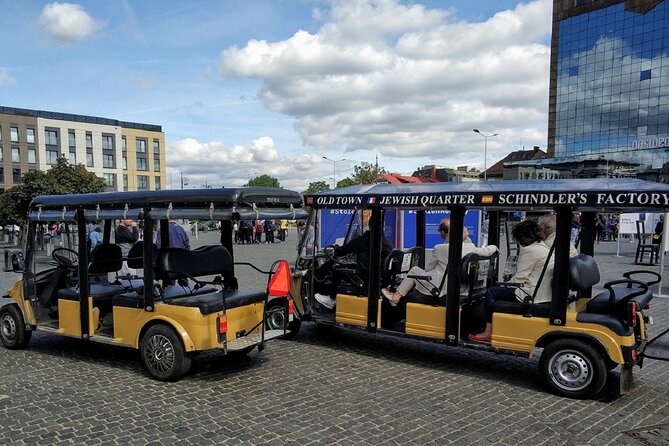
The guide is the strongest variable in this experience. Matt has been praised for being informative and helpful when a booking time needed correcting. Natalie has received repeated approval for her friendly, clear delivery, and Martina has been noted for adding building details and allowing short photo or interior stops.
Olivia and Michael have also been singled out for respectful, engaging explanations. Phillips has been praised for keeping the tour on time while adding useful information. Those details matter because the route covers a serious subject at speed, and a flat reading of facts would make the ride feel mechanical.
The setup combines the driver’s commentary with recorded audio. That gives you a steady stream of information, but the experience is not identical to a private guide walking beside you. You may not be able to ask a question at every stop, and the headset can reduce conversation within your own group.
A good strategy is to write down questions as you go. At the end, ask the guide about the places you want to revisit. The tour works best when you use the guide to identify your priorities, then explore selected sites later on foot.
Price, pace, and what you receive for $34.75
At $34.75 per person, this is not the cheapest way to see Kazimierz. Krakow offers plenty of opportunities to walk through the district independently. A walking route costs less, lets you stop whenever you wish, and gives you more time inside buildings.
The cart earns its price through convenience and coverage. In about an hour and a half, you move between Kazimierz and Podgórze, hear the basic story of Jewish Krakow, and see more than 20 cultural and historic sites. If you have only a short stay, that broad view can be worth paying for.
I would also compare the price with your energy and weather. In summer heat, winter cold, or after a long day of sightseeing, sitting in the cart can make the difference between seeing this area and skipping it. The tour also helps if you are unsure how the Jewish Quarter and former ghetto fit together geographically.
The value is weaker if you already plan a full walking tour, want long interior visits, or prefer to set your own pace. One passenger felt the cost was high for 90 minutes, even while finding the ride practical. That is a fair criticism. You are paying for transport, structure, and commentary, not for admission to a major museum or an extended guided visit.
Who should take this tour?
I would suggest this tour to first-time visitors who want a fast orientation. It also suits people with limited time, tired legs, or a preference for sitting rather than walking across several districts.
It can work well for families and mixed-age groups, but the seating and boarding arrangements may not be ideal for every stroller or mobility setup. The operator says most people can participate, and the tour is near public transportation, but hotel transfer is not provided.
History-minded visitors should know that the subject is often emotional. The former ghetto, deportations, and wartime treatment of Jewish residents are handled as central parts of the route. This is not simply a scenic city ride.
I would choose a walking tour instead if you want unhurried photography, frequent questions, or a close look at Jewish religious buildings. The cart gives you breadth. Walking gives you control.
Practical details for a smoother outing
Your mobile ticket is confirmed at booking, and the experience is offered in English. Check the meeting point carefully: you start at Mikołaja Zyblikiewicza 2 and finish at Mikołaja Kopernika 3, so the tour does not return you to the departure address.
Arrive early enough to identify the correct cart and guide. A booking problem at the meeting area caused unnecessary confusion for one family, particularly in heavy rain. If you are traveling with a stroller, confirm how it will be handled before boarding.
Seating may not be assigned according to your preference. One passenger was placed in the rear, including backward-facing seats, and found that less comfortable than the front. If you care about your view, ask politely at boarding, though there is no stated promise of a particular seat.
The tour can be canceled for a full refund up to 24 hours before the start time. Changes or cancellations inside that window are not accepted, and the amount paid is not refunded. That policy is worth noting if your Krakow schedule is still shifting.
Should you book the Kazimierz and ghetto cart tour?
Book it if you want a well-organized overview of two important Krakow districts in a short period. The cart saves walking time, the route covers more than 20 sites, and the strongest guides add warmth and detail to a difficult subject.
Do not book it expecting a slow, specialist tour of synagogues and Jewish interiors. The ride can feel rushed, the audio headset limits conversation, and some stops may focus on Christian churches rather than Jewish buildings.
For many people, the best plan is to take the cart early in your Krakow visit, note the places that matter most, and return on foot. At $34.75, it is a reasonable orientation tour for time-pressed visitors, especially in poor weather or after a full day on your feet. It is less compelling as your only visit if you want detailed study and quiet reflection.
FAQ
How long does the Krakow Jewish Quarter and Ghetto Tour last?
The tour lasts approximately 1 hour and 30 minutes.
What language is the tour offered in?
The tour is offered in English, with an English-speaking driver and an audio guide.
Which areas does the electric golf cart tour cover?
It covers Kazimierz, the historic Jewish Quarter, and Podgórze, including the area of the former Krakow Ghetto.
Where does the tour start and finish?
The tour starts at Mikołaja Zyblikiewicza 2, Krakow, and ends at Mikołaja Kopernika 3, Krakow.
Is hotel pickup and drop-off included?
No. Hotel pickup and drop-off are not included.
What is the cancellation policy?
You can cancel at least 24 hours before the start time for a full refund. Cancellations or changes made less than 24 hours before the start time are not accepted and are not refunded.
More Golf Cart Tours of Krakow
- Krakow: City Sightseeing Tour by Electric Golf Cart
★ 4.5 · 3,264 reviews - Krakow: City Sightseeing Tour Eco Electric Buggy Golf Cart
★ 4.7 · 3,143 reviews - Krakow: Extended City Sightseeing Tour – Eco Buggy Golf Cart
★ 4.7 · 794 reviews - Krakow: Electric Car Sightseeing Tour
★ 4.4 · 450 reviews
Just added around Krakow
- Private Guided Tour: Oskar Schindler’s Factory★ 5.0 · 3 reviews
- E-Scooter Krakow sightseeing tour★ 5.0 · 3 reviews
- From Krakow: Zakopane and Thermal Pools Guided Trip★ 5.0 · 3 reviews
- Schindler’s Factory, Ghetto and Plaszow Camp Guided Tour★ 4.7 · 3 reviews
- Kraków: Private Hot Air Balloon Flight with Champagne★ 3.7 · 3 reviews
- Krakow: River Cruise & Guided Visit to Former Plaszow Camp★ 3.6 · 3 reviews
- From Krakow: Private Wieliczka Salt Mine Tour★ 4.0 · 3 reviews
- Krakow: Old Town short walk with St. Mary’s Basilica visit★ 5.0 · 3 reviews
Kazimierz Jewish Quarter Tours, compared.
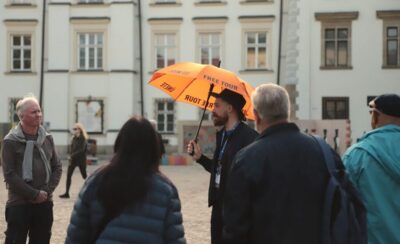
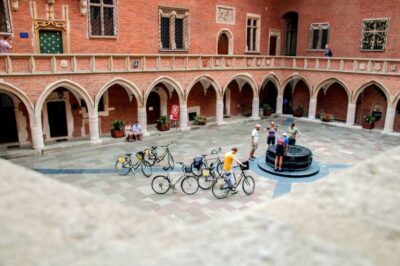
Bike Tour of Old Town, Jewish Quarter and the Ghetto
Read our review →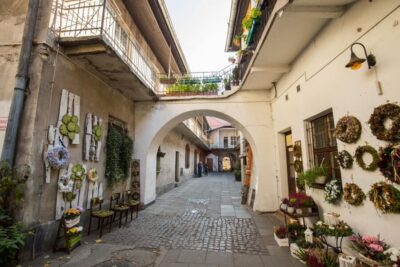
Kazimierz, Schindler’s Factory & Ghetto Guided Tour
Read our review →
Bike Tour of the Old Town, Kazimierz, and the Ghetto
Read our review →
Jewish Quarter and Ghetto Electric Golf Cart Tour
Read our review →
Browse the lists this tour appears in