

Reviewed · MUSEUMS
Krakow: Museum of Living Butterflies 2+1
The Krakow Museum of Living Butterflies gives you a close look at one of nature’s most delicate performers. You’ll see butterflies from Poland and far beyond, learn how their wings get their patterns, and follow the stages from early life to adult insect. It is a compact idea with plenty to notice.
I like the chance to take photographs, provided you leave the flash switched off. I also like the educational angle: this is not only a room of pretty wings, but a place to learn about anatomy, moths, ecosystems, and the need to protect insect diversity. The main consideration is that no guided tour is included, so you should be ready to read, look closely, and set your own pace.
In This Review
- Key points to know before you go
- Why a living butterfly museum feels different
- Meeting species from Poland and distant parts of the world
- Following the butterfly life cycle
- Taking photographs without disturbing the insects
- Learning why butterfly diversity matters
- What the $36 group price means
- Planning the visit for comfort
- Who will enjoy this unusual Krakow stop
- Should you book the Museum of Living Butterflies?
- FAQ
- How much does admission cost?
- How long is the ticket valid?
- Is a guided tour included?
- Can I take photographs inside?
- Are food and drinks included?
- Is the museum wheelchair accessible?
- Can I cancel for a refund?
Key points to know before you go

- Butterflies from around the world: Compare local species with exotic varieties and notice how differently they use color and pattern.
- More than a display of wings: Learn about the Lepidoptera order, butterfly anatomy, life cycles, and the part these insects play in ecosystems.
- Photography is welcome: Bring your camera or phone, but never use flash inside.
- Good for a small private group: The booking covers up to three people, which suits a couple, parent with a child, or a few friends.
- Plan for walking: Comfortable shoes are a sensible choice, and some areas may be harder to reach if you have limited mobility.
- Flexible one-day admission: Your ticket is valid for one day, with available starting times shown during booking.
Why a living butterfly museum feels different
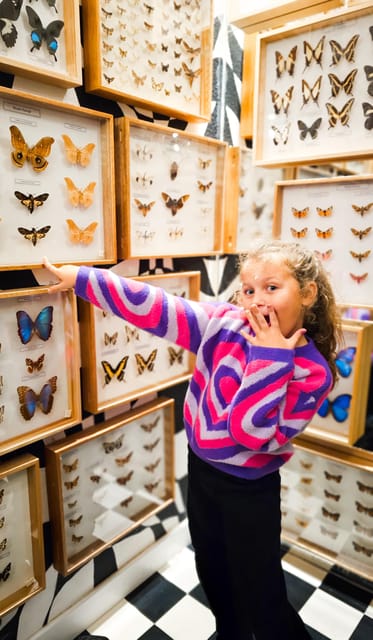
A standard natural-history display lets you inspect pinned specimens or photographs. Here, the subject is presented as a living insect, so the experience depends on patience and observation. A butterfly may rest quietly, open and close its wings, or move before you have framed the perfect photograph.
That change matters. You are not simply checking off a collection. You are watching color, movement, body shape, and wing markings in real time. The result can feel more personal than a glass case, especially for children who might not stay interested in a conventional insect exhibit.
The museum also gives you a useful way to think about butterflies beyond their appearance. The displays cover the Lepidoptera order, which includes butterflies and moths. You can learn that the tiny scales covering the wings help create the familiar colors and patterns, a detail that makes those close-up views far more interesting.
I would treat this as a focused educational stop rather than a full-day attraction. Your ticket remains valid for one day, but the supplied details do not promise a long guided program or scheduled activities. You control the pace, which is helpful if you want quick photographs or prefer to take your time with the displays.
More museums in Krakow:
- Auschwitz-Birkenau Museum and Memorial Guided Tour from Krakow
★ 4.5 · 1,510 reviews - Krakow: Rynek Underground Museum Guided Tour
★ 4.6 · 1,122 reviews - Krakow Schindler’s Factory Museum Guided Tour in English
★ 4.5 · 650 reviews
Meeting species from Poland and distant parts of the world
The collection includes butterflies from around the world, with both local and exotic species represented. That gives you a simple comparison to make as you move through the exhibition areas: Which patterns seem designed to attract attention, and which appear to help an insect blend into its surroundings?
You might find that the most interesting part is not always the largest or brightest butterfly. A modestly colored species can reveal a different way of surviving, while a highly patterned wing shows how much detail can fit into a very small space. The museum’s subject is visually appealing, but it also encourages you to ask why the insects look as they do.
The information covers butterflies active during the day as well as species associated with nighttime activity. That distinction adds useful context, since it reminds you that the butterfly world is not one uniform group. Moths and butterflies share the Lepidoptera order, yet their habits and appearance can differ.
If you are visiting with a child, I would turn the collection into a small hunt. Look for differences in wing shape, body size, color, and pattern. Ask which insects appear easy to spot and which might disappear against their surroundings. You will get more from the museum than simply walking past each display.
The collection also makes the subject accessible to adults who already know a little about insects. You can focus on the fine markings and anatomy, while a child can simply enjoy the movement and color. That mix makes the museum a practical choice for a small family group, a couple looking for an unusual stop, or anyone who wants a break from larger city attractions.
Following the butterfly life cycle

One of the strongest parts of the experience is the chance to learn about the butterfly life cycle. The supplied description does not provide a precise station-by-station route, so I would not expect a fixed presentation or a named lecture. Instead, plan to use the displays to connect the different stages and understand how a butterfly changes over time.
This context gives the living specimens more meaning. A butterfly is not just a finished creature with attractive wings. It is part of a cycle that includes major changes in form, feeding, growth, and movement. Even a short visit can leave you with a clearer sense of how unusual that process is.
The museum also introduces butterfly anatomy. Look beyond the wings and consider the body, legs, antennae, and the way the insect holds itself while resting. The wing scales are especially worth noticing. They create the colors and patterns that seem painted onto the wings, though the structure is much more delicate than paint.
You should allow yourself time to look from different angles. A butterfly can appear plain when its wings are closed and completely different when they open. Since flash is forbidden, the museum expects you to photograph under its existing conditions. That may require a steady hand and a little patience, but it also protects the insects from harsh bursts of light.
Taking photographs without disturbing the insects
Photography is included, and it is one of the clearest practical benefits of this admission. You can bring a phone or camera and try to capture the shapes and colors for yourself. The best approach is to move slowly, avoid sudden gestures, and wait for a butterfly to settle.
Do not use flash. This is both a museum rule and a basic courtesy to the living collection. You may need to accept a few imperfect pictures, especially if an insect moves just as you press the button. That is part of photographing living subjects rather than fixed objects.
I like that the photography policy lets you record the experience without turning the museum into a noisy photo session. Take a few close shots, then put the phone away and watch for a while. A picture can preserve a color pattern, but it cannot replace the pleasure of seeing the wings move.
There is no promise of professional photography help, special lighting, or a photo workshop. If you want technically perfect images, bring realistic expectations. This is a chance to capture unusual details during a museum visit, not a dedicated studio session.
A different sort of day out from Krakow:
- From Krakow: Auschwitz-Birkenau Guided Tour & Hotel Pickup
★ 4.5 · 33,358 reviews - From Krakow: Auschwitz-Birkenau Guided Tour & Hotel Pickup
★ 4.5 · 29,340 reviews - Krakow: Auschwitz Guided Tour with Optional Hotel Pickup
★ 4.5 · 15,280 reviews - Krakow–Zakopane: Cable Car, Chocholow Baths, Cheese & Vodka
★ 5.0 · 10,720 reviews
Learning why butterfly diversity matters
The museum connects its displays with the wider issue of biodiversity. You learn why preserving a variety of butterfly species matters and how these insects fit into ecosystems. The information is especially useful because butterflies are easy to appreciate visually, yet their role in nature can be overlooked.
That conservation message gives the visit some weight. You are not only looking at colorful insects from different parts of the globe. You are also being asked to consider what happens when habitats change and species disappear. The activity information does not list specific conservation projects or actions offered by the museum, so you should treat this as an educational introduction rather than a hands-on conservation program.
Still, the subject suits a short city visit. You can enjoy the beauty of the collection and leave with a better reason to care about protecting insect life. For families, this can be a useful way to turn a pleasant outing into a conversation about habitats and responsibility without making the experience feel like a classroom lesson.
The museum’s educational initiatives are part of its purpose, but the booking includes admission rather than a guided teaching session. If you want detailed explanations at every stop, you may find the lack of an included guide limiting. If you enjoy learning by reading and looking for yourself, the format should feel relaxed.
What the $36 group price means
The listed price is $36 for a group of up to three people. That is an important detail. You are not paying a separate amount for each person within that three-person group, so the value improves when two or three people share the booking.
For one person, the same group price is harder to justify unless butterflies are a major interest. For a couple, the cost works more naturally, and for three people it becomes a straightforward way to share a small outing. The ticket includes admission, access to all exhibition areas, and the chance to take photographs.
Food and drinks are not included. This is not a problem for a short museum stop, but you should plan to eat elsewhere rather than expect refreshments as part of the visit. Guided tours are also not included, so the price pays for access rather than personal instruction.
The ability to reserve now and pay later adds practical value if your Krakow schedule is still changing. Free cancellation is available up to 24 hours before the visit for a full refund. Check the available starting times when you book, since the activity is valid for one day rather than being described as an open-ended pass.
Planning the visit for comfort
Wear comfortable shoes. The information specifically warns that there will be a lot of walking, so this is not the place for footwear chosen only for appearance. You will have a better time if you can move slowly and stand for a while without discomfort.
The museum is wheelchair accessible in most areas, though some sections may be challenging for people with mobility impairments. If access is important for your group, contact the provider before booking and ask about the exact route for your chosen time. The available information does not identify which sections are difficult.
The booking is limited to three participants. That small-group format keeps the experience personal and avoids the feel of a large organized outing. It also means the activity suits people who want to set their own rhythm. You can spend longer with a favorite display instead of trying to keep up with a larger party.
Starting times depend on availability. I would check the schedule before building the rest of your day around the visit. The one-day validity gives you some flexibility, but it does not remove the need to arrive within the available entry arrangement.
Who will enjoy this unusual Krakow stop
I would recommend the museum most strongly to anyone who likes animals, photography, natural science, or small museums with a clear theme. It also makes sense for families, since butterflies offer an easy entry point into lessons about anatomy, life cycles, and ecosystems.
It can work well for a couple seeking something different from the usual Krakow sightseeing list. The experience is unusual, and the short review word Parfait fits the simple appeal of a well-focused visit. Another review described it as an unusual experience that improved the visitor’s understanding, which points to the best reason to go: you may arrive for the colors and leave with more knowledge than expected.
I would be more cautious if you want a fully guided activity with a host explaining every exhibit. No guided tour is included, and no guide names are provided. You should be comfortable learning from the displays and making your own route through the exhibition areas.
This is also not the right choice if you dislike walking, need every section to be fully accessible, or expect food and drinks on site. The attraction has a narrow subject, so its value depends on your interest. That narrow focus is a strength for butterfly fans, but a limitation for anyone looking for a large, all-purpose museum.
Should you book the Museum of Living Butterflies?
Book it if you want a small, unusual Krakow activity with living exhibits, photography, and a clear educational purpose. The $36 group price is most sensible for two or three people, and the ability to cancel up to 24 hours ahead gives you some protection if your plans change.
I would choose it for a family with a curious child, a couple wanting something beyond the standard sights, or anyone who enjoys close observation. Go with comfortable shoes, keep your flash off, and give yourself time to notice the insects rather than rushing through for a few colorful photographs.
Skip it if you need a guide, refreshments, or a very short visit with almost no walking. For the right audience, though, the museum offers a pleasant lesson in how much life and detail can fit inside a pair of fragile wings.
FAQ
How much does admission cost?
Admission costs $36 per group of up to three participants.
How long is the ticket valid?
The ticket is valid for one day. Available starting times are shown when you check the booking schedule.
Is a guided tour included?
No. Guided tours are not included in the activity.
Can I take photographs inside?
Yes. Photography is allowed, but flash photography is not permitted inside the museum.
Are food and drinks included?
No. Food and beverages are not included.
Is the museum wheelchair accessible?
The museum is wheelchair accessible in most areas, though some sections may be challenging for people with mobility impairments.
Can I cancel for a refund?
Yes. You can cancel up to 24 hours in advance for a full refund.
Just added around Krakow
- Private Guided Tour: Oskar Schindler’s Factory★ 5.0 · 3 reviews
- E-Scooter Krakow sightseeing tour★ 5.0 · 3 reviews
- From Krakow: Zakopane and Thermal Pools Guided Trip★ 5.0 · 3 reviews
- Schindler’s Factory, Ghetto and Plaszow Camp Guided Tour★ 4.7 · 3 reviews
- Kraków: Private Hot Air Balloon Flight with Champagne★ 3.7 · 3 reviews
- Krakow: River Cruise & Guided Visit to Former Plaszow Camp★ 3.6 · 3 reviews
- From Krakow: Private Wieliczka Salt Mine Tour★ 4.0 · 3 reviews
- Krakow: Old Town short walk with St. Mary’s Basilica visit★ 5.0 · 3 reviews
Museums, compared.

Auschwitz-Birkenau Museum and Memorial Guided Tour from Krakow
Read our review →

Krakow Schindler’s Factory Museum Guided Tour in English
Read our review →
Auschwitz Birkenau Museum Guided Tour with Pickup
Read our review →

Auschwitz Birkenau Museum and Salt Mine All Inclusive DAY TRIP with Local Guides
Read our review →
Chopin Piano Concert at Chopin Gallery with a Glass of Wine
Read our review →Browse the lists this tour appears in