
Reviewed · NOWA HUTA TOURS
Krakow: Nowa Huta Guided Tour in Vintage Car
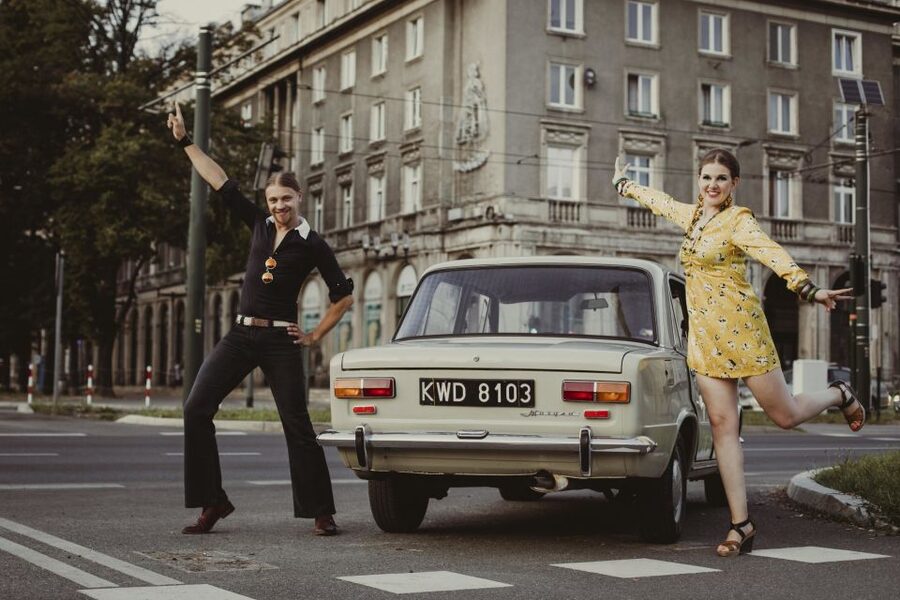
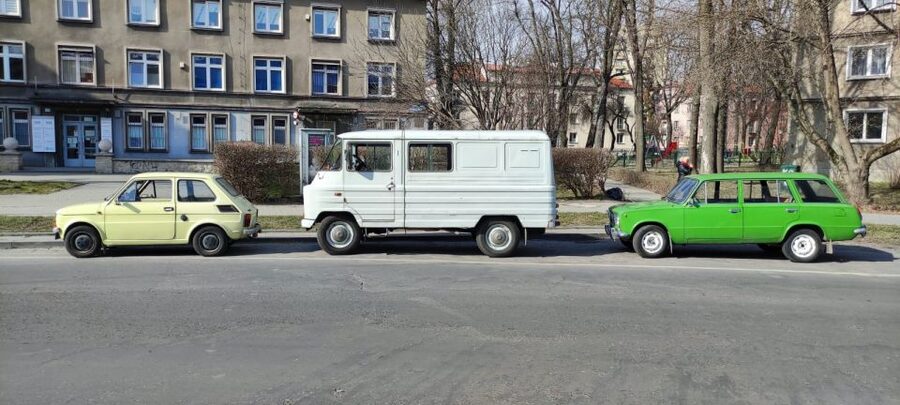
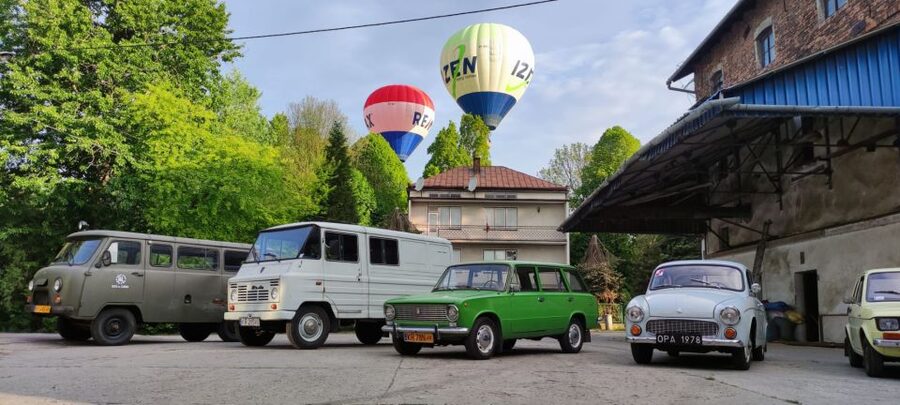
Nowa Huta is Krakow’s most revealing lesson in postwar Poland. Built around a huge steelworks, this planned city was meant to show communism at its best, with broad avenues, grand public spaces, workers’ housing, and strict Socialist Realist design. You explore it from a green Lada, tiny Polski Fiat 126, Nysa, Żuk, Syrena, or Soviet UAZ van.
I like the mix of local history and real places. You do not just hear about the Communist period in a museum. You walk through Central Square and Roses Avenue, see where Lenin’s giant statue once stood, enter an old church, and go below ground into a Cold War shelter. I also like the local connection. Guides such as Mateusz grew up around Nowa Huta or work with the Foundation of Positive Promotion of Nowa Huta, so the story reaches beyond textbook dates.
The main drawback is the car itself. These old vehicles are cramped, basic, and may not have working seatbelts, as one guest found in a 40-year-old Lada. The car adds charm and plenty of smiles, but if you need modern comfort, choose a private option and ask in advance about the vehicle.
In This Review
- Key points to know before you book
- Why Nowa Huta belongs on your Krakow schedule
- Riding in a Polski Fiat or old Lada
- Central Square and the planned city
- Roses Avenue and the vanished Lenin statue
- The steelworks and the reason the city exists
- Going underground into a Cold War shelter
- The first church in Nowa Huta
- The WWII tank and the military story
- How the 150 to 270 minutes unfold
- Price, group size, and what you receive
- Who should choose this Nowa Huta tour
- Should you book it?
- FAQ
- Where does the Nowa Huta tour take place?
- How long does the tour last?
- What kind of car will I ride in?
- Is hotel pickup available?
- Can I meet the guide in Nowa Huta?
- Is the tour offered in English?
- Is the tour private?
- Does the extended tour include the bomb shelter?
- Are entrance tickets included?
- Is food included?
Key points to know before you book
- Central Square and Roses Avenue: See the grand core of the planned city and the former site of Poland’s largest Lenin statue.
- A city built for steel: Learn why the steelworks came first, and why housing, roads, parks, and public buildings followed.
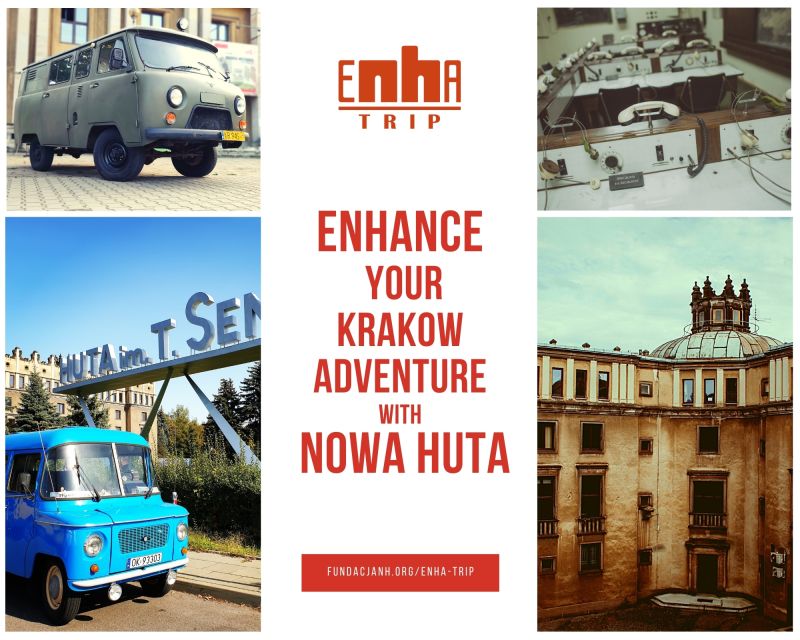
- A vintage Polish car: Ride in a Polski Fiat 126, Lada 2101, Syrena, Nysa, Żuk, UAZ 452, or another Communist-era vehicle.
- Cold War atmosphere: The longer option can take you into an underground bomb shelter built for a possible nuclear war.
- A rare look inside the steelworks offices: The extended tour may include the former director’s offices, complete with period rooms and a shelter below.
- A personal guide: English is standard, while Polish or Russian can be arranged in advance if available.
Why Nowa Huta belongs on your Krakow schedule
Krakow is often reduced to its medieval Old Town, Wawel Castle, and Jewish Kazimierz. Those places deserve your time, but they do not explain Poland’s postwar decades as clearly as Nowa Huta.
The district was founded after World War II as a new industrial city beside Krakow. Its purpose was the massive steelworks, built to support Poland’s Communist economy and create a large working-class population. The city was planned around that factory, not around an old market town or a medieval church.
That makes the layout unusually easy to read. Wide avenues radiate from Central Square. Large blocks and public buildings were arranged to look orderly and monumental. The architecture used Socialist Realist ideas, borrowing from classical forms while serving a political message.
Your guide helps you read those details. The tour is not simply a drive past old buildings. You learn how apartment sizes were once assigned according to household size, how officials and workers fitted into the social system, and how the area has changed since the fall of communism.
The experience carries a strong local flavor because the organizer is the Foundation of Positive Promotion of Nowa Huta, a local nonprofit group. That connection matters. You get more than a polished sightseeing route. You get stories about how the district worked, how people felt about its symbols, and what remains worth preserving.
More Nowa Huta trips:
- Legendary Private Nowa Huta Communism Tour with Crazy Guides
★ 5.0 · 262 reviews - Nowa Huta: Steelworks Administration Buildings/Shelters Tour
★ 4.9 · 160 reviews - Krakow: Private Nowa Huta Adventure Tour in Communist Cars
★ 4.9 · 114 reviews
Riding in a Polski Fiat or old Lada
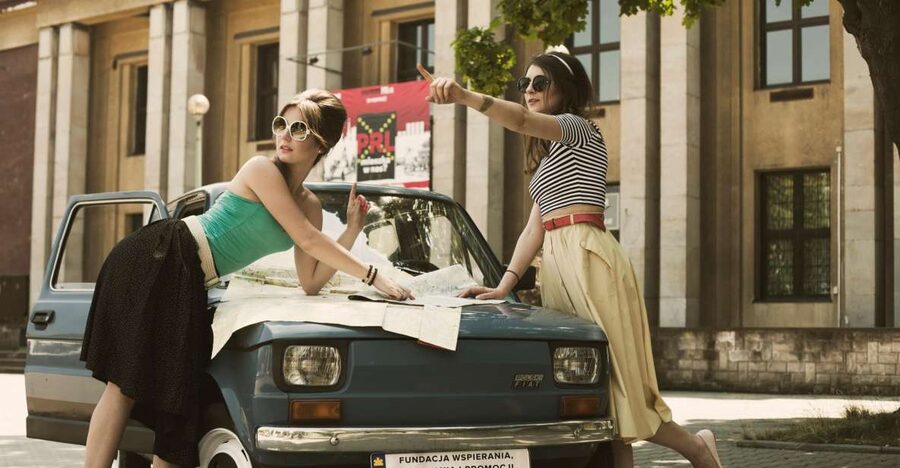
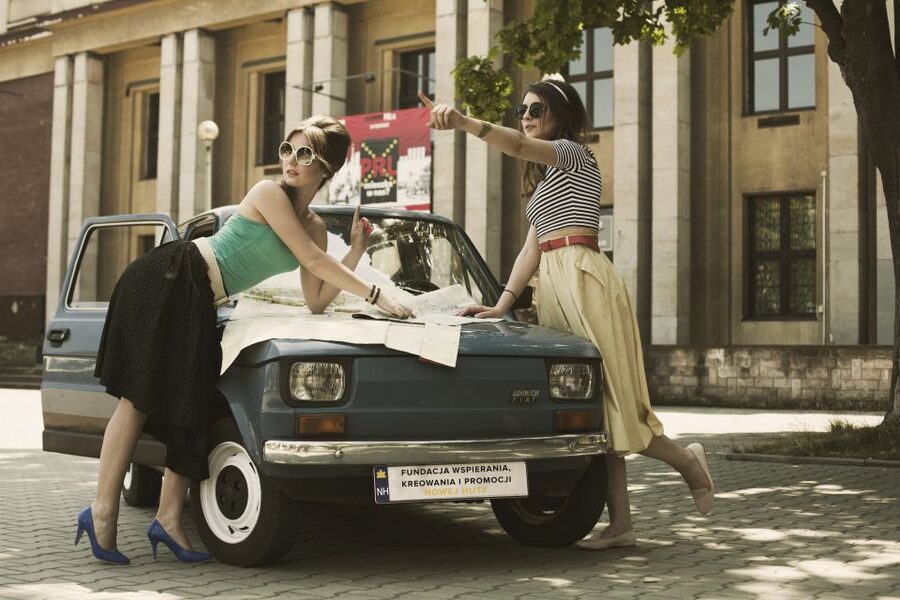
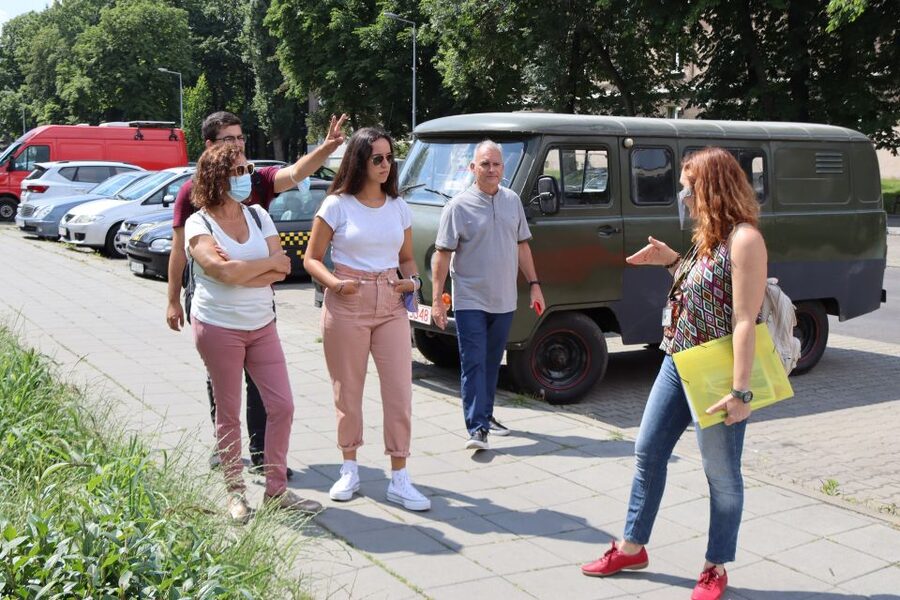
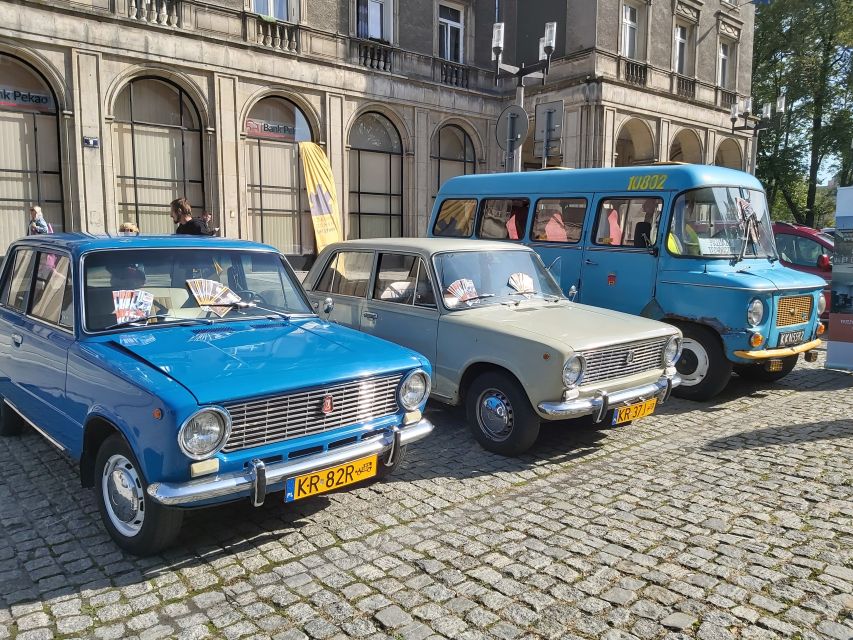
The vintage car is the first thing you notice. A small yellow Polski Fiat 126, often called a Maluch, feels almost toy-like beside modern traffic. A green Lada gives the ride a different mood, with its boxy shape and unmistakable Communist-era look.
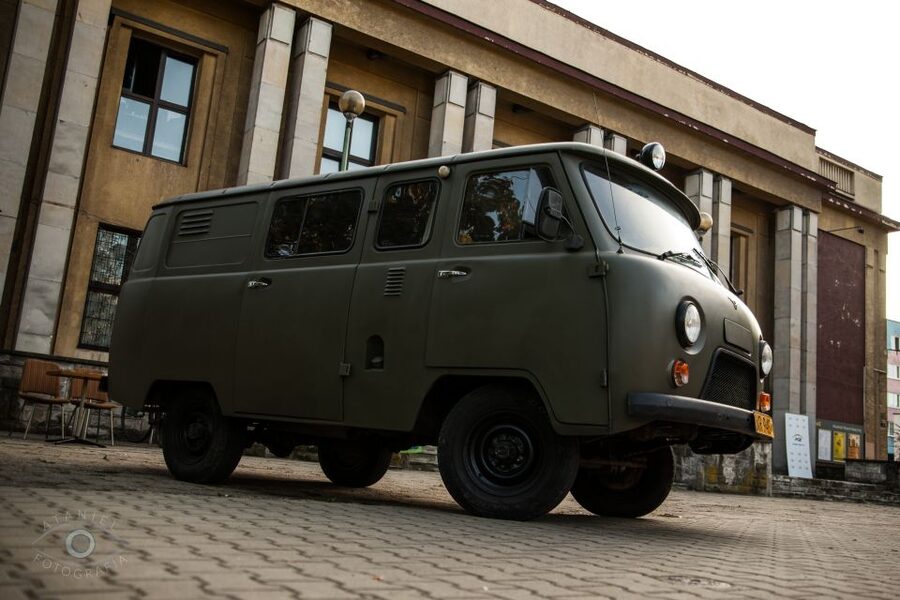
Other possible vehicles include a classic Nysa or Żuk van, a Syrena, and a Soviet army UAZ 452. The exact car depends on availability and the option you choose. You can contact the operator through WhatsApp after booking to learn which car you will receive and where the pickup will happen.
I like the way the vehicle sets the tone before the history begins. You are not merely being transported to Nowa Huta. You are placed inside a small piece of the period being discussed. The simple interior, old-fashioned sounds, and curious looks from people on the street all add to the sense of time travel.
Still, keep your expectations sensible. These cars were built for another era. The Polski Fiat is especially tight, and an old Lada may lack the comfort and safety equipment you expect from a modern tour vehicle. Ask about the car if you have mobility or comfort concerns.
The vehicle is also more than a novelty. It gives you a natural reason to ask questions. Why were these cars so common? Who could afford one? What did daily life look like for a factory worker? A good guide, especially Mateusz, uses those questions to connect the car with the larger political story.
Central Square and the planned city
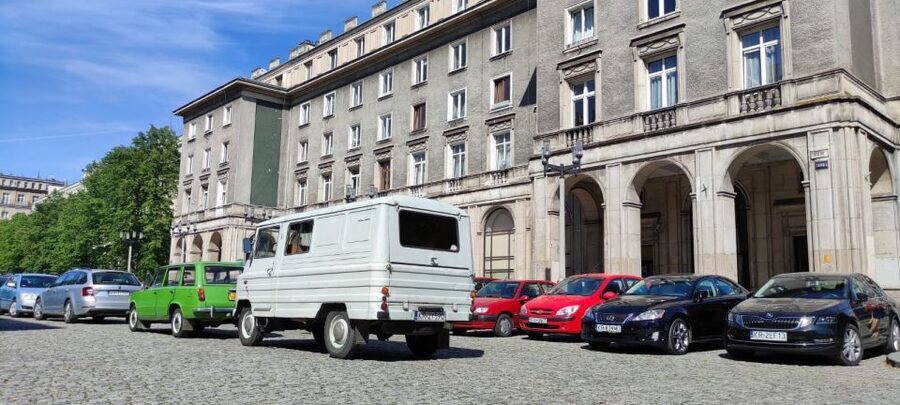
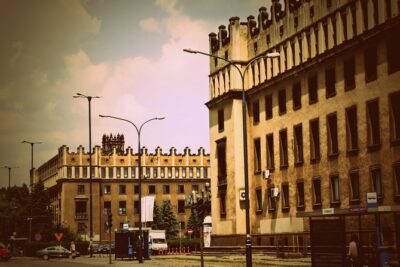
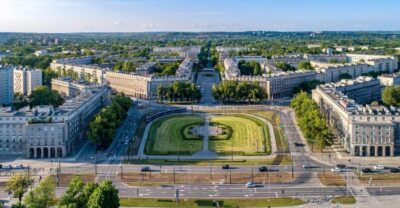
The tour usually reaches Plac Centralny, or Central Square, early in the route. This is the visual heart of Nowa Huta and one of the best places to understand the planners’ ambitions.
The scale is the first clue. The square and surrounding avenues were designed to make the new city feel important, disciplined, and complete. You see the Socialist Realist approach in the heavy symmetry, formal facades, and monumental proportions.
Your guide explains how the streets were arranged and why the city needed such broad public spaces. In Communist urban planning, architecture was never only about shelter. Buildings and avenues were meant to express confidence in the new political order.
You get time to walk here rather than viewing it only through the car window. That short walk is useful because the scale is difficult to grasp from a moving vehicle. Look around, compare the different building fronts, and notice how the district’s original design survives beside later changes.
Central Square is not a preserved stage set. It is still part of a living neighborhood. That gives the stop more value, but it also means you should not expect every building to look freshly restored or every historical feature to be labeled.
Roses Avenue and the vanished Lenin statue
Aleja Róż, or Roses Avenue, offers one of the tour’s clearest stories about official propaganda and public resistance.
Poland’s largest statue of Vladimir Lenin once stood here. The monument represented Soviet influence and the Communist state, but many local people disliked it. Your guide shows photographs and explains what happened to the statue. It was attacked, damaged, and eventually removed after the political system changed.
The empty site is part of the story. Instead of looking at a surviving monument, you stand in a place shaped by its absence. That helps you understand how public space carried political pressure during the Communist period.
The avenue’s name also gives you a glimpse of how Nowa Huta was supposed to feel. Roses and carefully planned civic spaces supported the image of a proud, ordered city. The reality was more complex, and the tour does a good job of showing that difference.
The guide’s old photographs are especially useful here. Nowa Huta has changed, and a picture of the Lenin monument helps you connect the present-day street with the official image once imposed on it.
A few more Krakow trips worth comparing
- From Krakow: Auschwitz-Birkenau Guided Tour & Hotel Pickup
★ 4.5 · 33,358 reviews - From Krakow: Auschwitz-Birkenau Guided Tour & Hotel Pickup
★ 4.5 · 29,340 reviews - Krakow: Auschwitz Guided Tour with Optional Hotel Pickup
★ 4.5 · 15,280 reviews - Krakow: Auschwitz-Birkenau Guided Tour with Pickup & Lunch
★ 4.5 · 9,800 reviews
The steelworks and the reason the city exists
The steelworks is the central fact behind Nowa Huta. Without it, the district would not have been built in this form.
The tour takes you toward the industrial zone and explains the scale of the Communist steel initiative. Housing and infrastructure were planned to support the factory. This was not a suburb that slowly grew around an existing town. It was a new urban project built with a specific economic and political purpose.
The longer tour can include the former steelworks director’s offices. This is one of the strongest parts of the extended option because you get inside rooms that once served the factory administration. Period furnishings, offices, and the building’s atmosphere make the political hierarchy easier to picture.
You may also see equipment and features that have not been polished into a standard museum display. That can make the visit feel more immediate. The area has an abandoned, atmospheric quality, and the guide may explain how things worked rather than simply pointing at labels.
I would choose this option if you have a serious interest in twentieth-century European history, industrial design, or everyday life under communism. The basic tour gives you the city’s main structure, but the offices add social detail. You begin to see not only how the factory operated, but also how authority was organized around it.
Access can depend on the option selected and current arrangements, so confirm that the director’s offices are included when you book. The ticket is included if you choose that version.
Going underground into a Cold War shelter
The underground shelter is the most atmospheric stop. Built in preparation for a possible World War III or nuclear conflict, it shows how fear shaped public planning during the Cold War.
You go below street level into tunnels and emergency rooms. The setting is stark and practical, with the sort of equipment and wiring that make the threat feel less abstract. One especially striking detail is that much of the electrical system may still be in working condition.
This stop changes the rhythm of the tour. Above ground, you study grand avenues and political symbols. Below ground, you see the private anxiety behind the public confidence. The city was presented as a model of progress, yet planners also prepared for mass destruction.
The shelter is not for everyone. It can feel cold, dim, and confined, and you should keep that in mind if enclosed spaces make you uncomfortable. For most history-minded visitors, though, it adds a layer that Central Square alone cannot provide.
The extended tour includes either the Cold War headquarters bomb shelter or the Communist director’s offices, depending on the selected package. If the underground shelter is your priority, check the exact option before paying.
The first church in Nowa Huta
The visit to Our Lady Queen of Poland Church adds an important contrast to the Communist city plan.
Nowa Huta was intended to be a model secular city. Religious buildings did not fit comfortably into the official vision. The church therefore tells a different story from the steelworks and formal avenues, showing how faith and local identity remained important despite state policy.
You have time for a visit and guided explanation, not just a quick photograph from the car. The building helps show how the people of Nowa Huta shaped the district rather than simply accepting the plan handed down by officials.
This is one of the more meaningful stops for anyone interested in Poland’s relationship with the Catholic Church during communism. It also breaks up the architectural focus with a place connected to community life and belief.
Please treat it as a functioning religious site. The tour information identifies it as a visit and photo stop, but the length and conditions of access can vary.
The WWII tank and the military story
The route also brings you close to a Soviet tank from World War II at the Museum of the Armed Act. The stop is brief, around ten minutes, so think of it as a focused photo opportunity rather than a full museum visit.
The tank links Nowa Huta’s postwar political story to the war that made the new order possible. Soviet military power shaped Poland’s future, and the vehicle gives you a large, physical reminder of that connection.
Entrance tickets to other museums are not included. If you want a full museum visit rather than the scheduled stop, ask the operator whether extra time and admission can be arranged.
How the 150 to 270 minutes unfold
The shorter tour lasts about two and a half hours. It combines car travel, a guided walk around Central Square, the main Nowa Huta sights, and stops at the church and tank.
The longer version runs up to four and a half hours. It adds the steelworks director’s offices or the Cold War shelter, depending on your booking. Some tours also offer a lunch option, and a local milk bar or traditional restaurant may be included when selected.
The route is broken into several short drives and walking sections. You are not trapped in the car for the entire experience, but you should expect a vintage vehicle to be your main transport.
Pickup and drop-off are available with the private option and may be arranged from your Krakow accommodation. Vehicles cannot enter parts of the historic center, so pickup may be moved to Plac Matejki, Mikołaja Zyblikiewicza near Kopernika Street, or Dajwór Street if you stay in Kazimierz.
You can also meet the guide directly in Nowa Huta. The final drop-off points include Krakow, Kiss&Ride Zyblikiewicza, and Pawia 3.
Price, group size, and what you receive
At about $75 per person, this is not the cheapest way to see an outer Krakow district. I think the price is reasonable if you choose the longer route, especially when the steelworks offices or shelter ticket is included.
You are paying for private or small-group transport, a specialist local guide, and access to places you would find hard to interpret alone. The vintage car is fun, but the real value is the explanation. Nowa Huta can look like a collection of large blocks and wide roads if you arrive without context.
A private group is available, which is useful if you want to ask many questions or arrange pickup around your hotel. The tour is offered in English, Polish, and Russian. English is standard, while Polish or Russian should be requested at least 48 hours ahead and depends on availability.
Food and drinks are not included unless you select the lunch option. If lunch matters to you, include it when booking rather than assuming it is part of the basic price.
Free cancellation is available up to 24 hours before the start, and you can reserve now and pay later. Those terms are helpful when your Krakow schedule is still changing.
Who should choose this Nowa Huta tour
I would choose this experience if you want modern Polish history, industrial architecture, Cold War stories, or a different side of Krakow. It is also a smart choice if you have already seen the Old Town and want an outing with a stronger local and political focus.
Families with older children and teenagers may enjoy the car and the shelter. The guide’s stories make the subject easier to follow than a formal history lecture, although very young children may find the long explanation and underground stop less engaging.
The tour suits curious first-time visitors, but it is especially useful for anyone who has visited Krakow before. The city center shows Poland’s older past. Nowa Huta helps explain the decades that shaped modern Poland.
I would think twice if you want a polished sightseeing vehicle, a short photo tour, or a tightly scheduled museum experience. The cars are old, the route is historical rather than glamorous, and the condition of industrial sites can feel rough.
Should you book it?
Book this tour if you want to understand why Nowa Huta exists, not simply take a colorful ride in an old car. The strongest version is the extended tour with the steelworks offices or underground shelter, particularly if you care about Communist Poland and Cold War Europe.
The classic car is the hook, but the guide is the reason to go. Ask for the longer option, confirm which extra site is included, and check the pickup point if you are staying in the historic center. If those details suit your plans, this is one of Krakow’s most useful history outings.
FAQ
Where does the Nowa Huta tour take place?
The tour explores Nowa Huta, a district of Krakow in Lesser Poland, including Central Square, Roses Avenue, the steelworks area, a church, and a military display stop.
How long does the tour last?
The available options run from 150 to 270 minutes, or about two and a half to four and a half hours.
What kind of car will I ride in?
The vehicle may be a Polski Fiat 126 Maluch, Lada 2101, Syrena, Nysa, Żuk, Soviet UAZ 452, or another classic car from the Communist era.
Is hotel pickup available?
Pickup and drop-off are included if you choose the private option. Parts of Krakow’s historic center are inaccessible to the vehicle, so you may be directed to a nearby meeting point.
Can I meet the guide in Nowa Huta?
Yes. The tour has a pickup option, but you can arrange to meet the guide directly in Nowa Huta.
Is the tour offered in English?
Yes. English is the standard language. Polish and Russian can also be arranged if requested at least 48 hours ahead, subject to availability.
Is the tour private?
A private group option is available. Other options may have different group arrangements, so check the selected booking type.
Does the extended tour include the bomb shelter?
The extended option includes a visit to either a Cold War headquarters bomb shelter or the Communist steelworks director’s offices, depending on the option chosen.
Are entrance tickets included?
The ticket for the steelworks director’s offices or Cold War bomb shelter is included when that option is selected. Tickets to other museums are not included.
Is food included?
Food and drinks are not included in the standard tour. A lunch option is available when selected during booking.
Just added around Krakow
- Private Guided Tour: Oskar Schindler’s Factory★ 5.0 · 3 reviews
- E-Scooter Krakow sightseeing tour★ 5.0 · 3 reviews
- From Krakow: Zakopane and Thermal Pools Guided Trip★ 5.0 · 3 reviews
- Schindler’s Factory, Ghetto and Plaszow Camp Guided Tour★ 4.7 · 3 reviews
- Kraków: Private Hot Air Balloon Flight with Champagne★ 3.7 · 3 reviews
- Krakow: River Cruise & Guided Visit to Former Plaszow Camp★ 3.6 · 3 reviews
- From Krakow: Private Wieliczka Salt Mine Tour★ 4.0 · 3 reviews
- Krakow: Old Town short walk with St. Mary’s Basilica visit★ 5.0 · 3 reviews
Nowa Huta Tours, compared.
Legendary Private Nowa Huta Communism Tour with Crazy Guides
Read our review →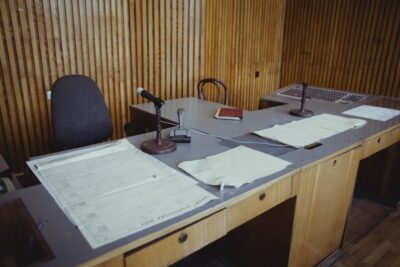
Nowa Huta: Steelworks Administration Buildings/Shelters Tour
Read our review →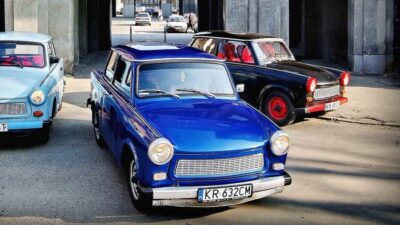
Private Nowa Huta Adventure Tour in Communist Cars
Read our review →
Communist Krakow – Nowa Huta Walking Tour in English
Read our review →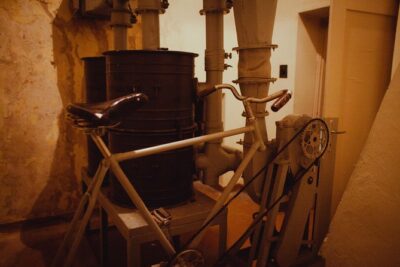
Nowa Huta Steel Mill Administration Buildings and Shelters with local NGO
Read our review →
1.5h Crazy Guides’ Communism Tour of Nowa Huta in Classic Car
Read our review →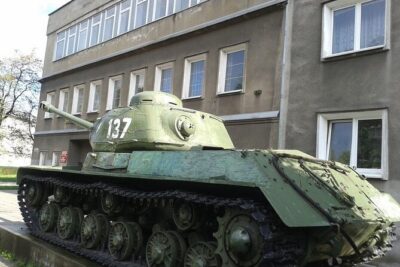
Nowa Huta Tour from Krakow: Communist City, Vodka & Zapiekanka
Read our review →Browse the lists this tour appears in