
Reviewed · KAZIMIERZ JEWISH QUARTER TOURS
Kraków old town and jewish quarter®
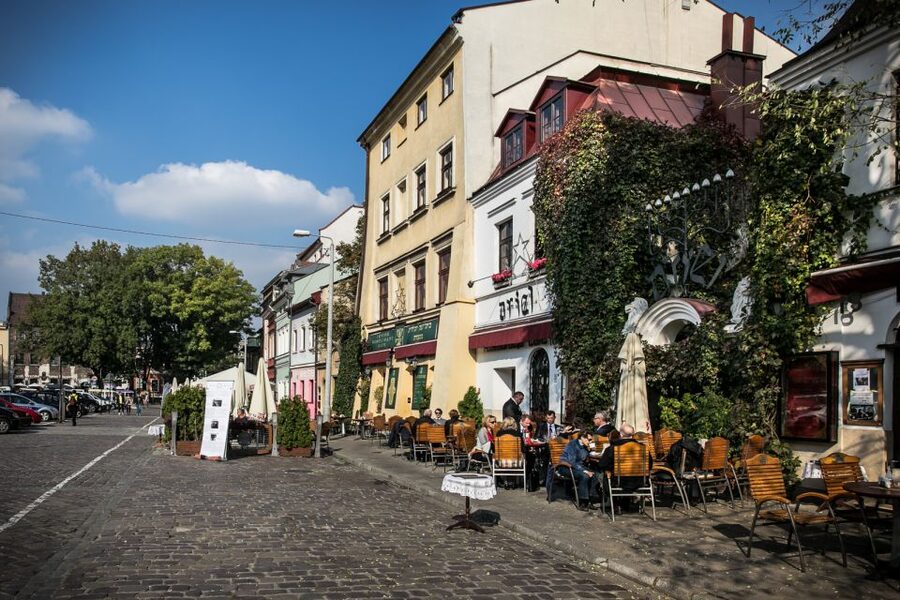
Kraków makes the most sense when you connect its monuments to the people and events behind them. This three-hour walk links the Old Town, Wawel Hill, and Kazimierz with a Spanish-speaking historian, so you get more than a parade of pretty buildings.
I especially like the way the route joins Polish royal history with the story of Kraków’s Jewish community. I also like the guide’s use of photos and drawings to explain difficult subjects. The main drawback is time: three hours covers a lot, and one past participant wished the walk had continued longer.
- A historian-led route connects Kraków’s buildings with the wider story of Poland.
- Wawel Cathedral and the royal complex provide the tour’s grandest setting.
- Kazimierz brings Jewish and Catholic history into the same neighborhood.
- Luis may lead the walk, explaining the past with a lively pace and visual aids.
- The $16 price offers strong value for a guided introduction to three major Kraków districts.
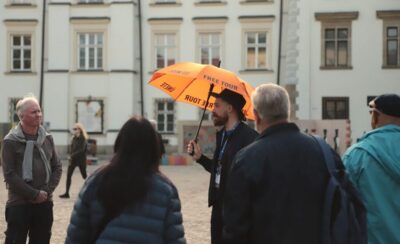
- A gray umbrella identifies the guide at the meeting point.
In This Review
- A Three-Hour Walk Through Kraków’s Big Story
- Starting Among Kraków’s Medieval Defenses
- The Market Square’s Monumental Center
- University Streets and Kraków’s Academic Life
- Archbishop’s Palace and Franciscan Kraków
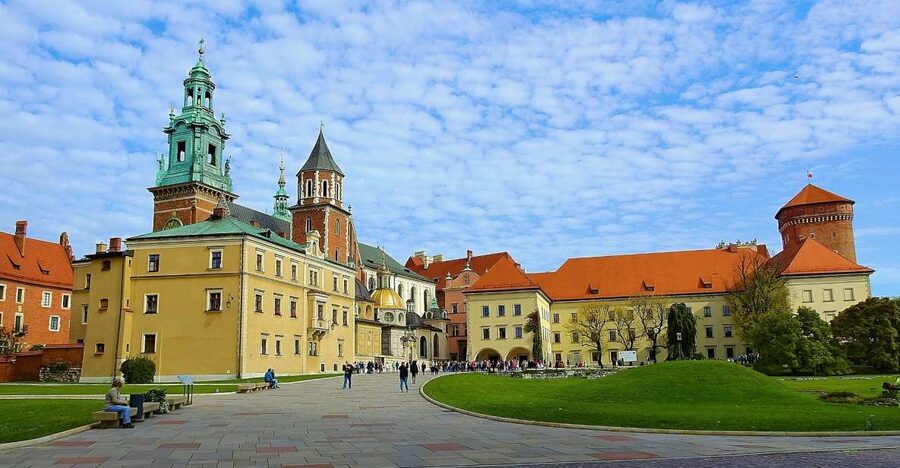
- Wawel Hill and the Cathedral Complex
- Crossing Into Jewish Kazimierz
- What the Guide Adds to the Walk
- Is $16 Good Value?
- Who Should Choose This Kraków Tour?
- Booking, Weather, and Practical Details
- Should You Book It?
- FAQ
- How long does the Kraków Old Town and Jewish Quarter tour last?
- What language is the tour offered in?
- How much does the tour cost?
- What is included in the tour?
- Are food and drinks included?
- Where do I meet the guide?
- Can I cancel the tour for a full refund?
A Three-Hour Walk Through Kraków’s Big Story
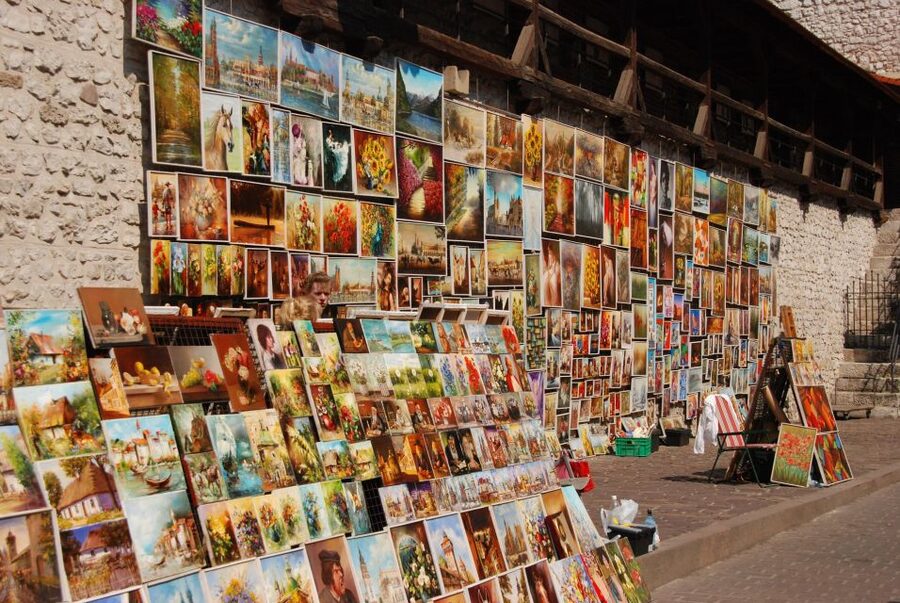
This tour is built around Kraków’s two essential historic areas: the Old Town and Kazimierz. Wawel sits between them in the route, adding Poland’s royal and religious center to the day.
You are not simply shown a church, a wall, or a square and told its name. The guide explains how these places fit together, why Kraków received World Heritage status, and how political, religious, academic, and Jewish history shaped the city.
At $16 per person, this is an unusually accessible way to get your bearings. You do not pay extra for food, drinks, or entry to attractions, since those are not included, but the price works well if you want context before exploring museums and interiors on your own.
The advertised duration is three hours. That is enough for a strong overview, not enough for a slow inspection of every building. Keep your expectations practical: this is a walking introduction with many stops, not a private deep study of each monument.
Starting Among Kraków’s Medieval Defenses
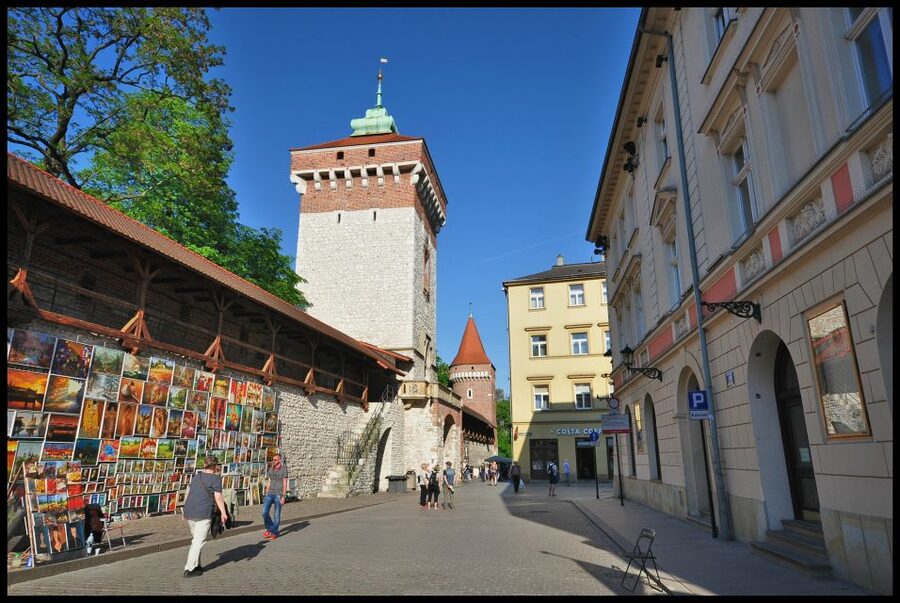
The route begins in the downtown area, near some of the city’s most recognizable defensive and civic structures. You can expect to see the Juliusz Słowacki Theater, sections of the medieval walls, the Barbican, and St. Florian’s Gate.
These sights help you picture old Kraków as a walled city rather than just a collection of attractive streets. The Barbican and gate also give the guide a natural way to explain how people entered the city and how its defenses related to trade and daily life.
The theater adds a different note. It shows that the Old Town is not frozen in the Middle Ages. Kraków’s identity includes performance, public life, and later architectural styles alongside its older stonework.
This opening section is useful for orientation. You begin by seeing how the city was protected, then move toward the spaces where commerce, worship, education, and government took place.
Look for the guide with a gray umbrella at the meeting point. That detail matters in a busy city center, especially if several walking groups gather nearby. The exact meeting address should be checked when booking, since the information provided identifies the umbrella rather than a named landmark.
More Kazimierz walks:
- Krakow: Jewish Quarter and Former Ghetto Tour
★ 4.9 · 1,441 reviews - Krakow: Bike Tour of Old Town, Jewish Quarter and the Ghetto
★ 4.9 · 1,155 reviews - Krakow: Kazimierz Jewish Quarter Walking Tour
★ 4.8 · 571 reviews
The Market Square’s Monumental Center
The walk then reaches Kraków’s Market Square, one of the city’s main visual and historical anchors. Here the route includes St. Mary’s Basilica, Sukiennice, the old town hall tower, the Eros Bendatto sculpture, St. Adalbert’s Church, the Adam Mickiewicz Monument, and the wider marketplace.
This is a lot to take in, but that is also the point. The square lets you compare different layers of Kraków in one place: religious buildings, commercial architecture, civic power, public sculpture, and national memory.
Sukiennice, the Cloth Hall, represents the square’s long commercial role. St. Mary’s Basilica brings religious life into view, while the old town hall tower points to municipal government. The monuments and sculpture give the guide a chance to discuss how Kraków has chosen to remember important people and ideas in public space.
I would pay close attention to the transitions between these stops. A good guide can turn a large square into a readable map. The Spanish-speaking guide is expected to explain the connections in an easy, engaging way, rather than leave you with a list of names.
The market area is also where the tour may feel most crowded or visually busy. You will be moving through a central public space, so staying close to the guide is sensible. The route is wheelchair accessible, but a busy square and a three-hour walk may still require your own judgment about comfort.
University Streets and Kraków’s Academic Life
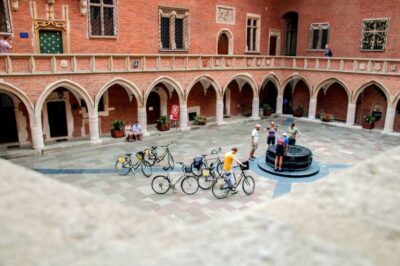
From the market, the route continues into the university neighborhood. The key stop is Collegium Maius, associated with the Jagiellonian University, where figures such as Nicolaus Copernicus and John Paul II received academic training.
This part of the walk changes the tone. After royal power and market trade, you see Kraków as a center of learning. The university quarter helps explain why the city’s importance was not limited to kings and churches.
Copernicus connects Kraków to the history of science. John Paul II connects it to modern Polish religious and national life. Their presence in the same academic story gives the guide a useful way to show how one institution can matter across very different periods.
You should not assume the tour includes a full interior visit to Collegium Maius. The provided details describe the route and its sights, but do not promise museum admission or extended indoor visits. Think of this as an exterior-focused walking tour unless the guide says otherwise.
Archbishop’s Palace and Franciscan Kraków
The Archbishop’s Palace and the Basilica of the Franciscans add two more important religious stops. Together, they help you see how the church shaped Kraków’s public life, architecture, and historical memory.
The archbishop’s palace has a particular link to John Paul II, whose academic and religious story is part of the city’s wider identity. The Franciscan basilica offers a different architectural and devotional setting, giving the route variety after the grand scale of the market square.
I like this section because it keeps the tour from becoming only a royal sightseeing circuit. Kraków’s story also belongs to religious institutions, students, clergy, artists, and ordinary residents who lived around these buildings.
The guide’s historical training should be most useful here. Church architecture can look impressive without being easy to interpret. A clear explanation of dates, people, and changing roles helps you understand why these places matter instead of simply taking a photograph and moving on.
More Old Town walks in Krakow:
- Old Town Krakow & Wawel Castle Walking Tour
★ 5.0 · 1,508 reviews - Krakow: The Old Town Walking Tour
★ 4.8 · 794 reviews - Krakow: Old Town Guided Segway Tour
★ 4.7 · 756 reviews - Kraków: Old Town & Wawel Castle Walking Tour in English
★ 4.8 · 532 reviews
Wawel Hill and the Cathedral Complex
The route next heads to the Wawel complex, ascending the hill to examine the cathedral and the surrounding buildings. This is the grandest section of the walk and one of the main reasons to choose it over a basic Old Town stroll.
Wawel brings together royal authority, national identity, and religious power. The guide uses the cathedral and the rest of the hilltop complex to explain Kraków’s role in Polish history.
The route promises an analysis of the buildings that form the complex, not just a quick look at the cathedral entrance. That broader view matters because Wawel works as a group of structures and stories. You can see how architecture reinforced the importance of the hill.
A three-hour schedule means your time here will be selective. If you want detailed information about royal tombs, art collections, or cathedral interiors, you may need a separate visit. This walk is better for understanding the site as part of Kraków’s story and deciding what deserves a longer return visit.
The dragon sculpture is another stop on the Wawel route. It adds a lighter, more popular element to a section otherwise filled with kings, bishops, and national memory. The contrast is useful. Kraków is not only solemn history, and the dragon gives the tour a touch of local legend and family appeal.
Crossing Into Jewish Kazimierz
Kazimierz is where the tour takes on its most serious and layered subject. The neighborhood was home to early Jewish communities in Kraków, and the route examines why Jewish residents settled there and how Jewish and Catholic communities lived alongside one another.
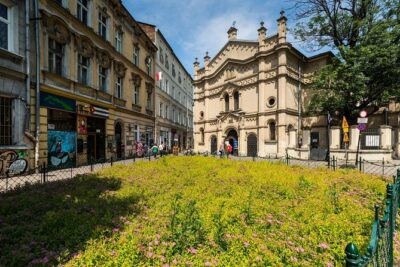
You will visit Tempel Synagogue, the Old Synagogue, the old Jewish cemetery, the medieval square of the Jewish quarter, New Square, and the former walls of the Jewish quarter. The stops create a physical route through community life, worship, commerce, burial, and separation.
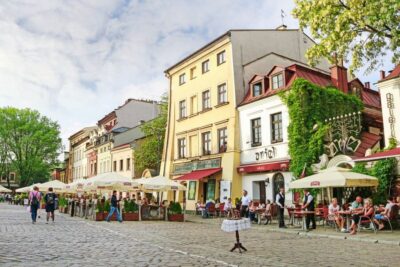
This section is valuable because it treats Kazimierz as more than a fashionable neighborhood. Cafés and restored streets are only the surface. The buildings and squares point to a long Jewish presence and to the complicated relationship between Jewish and Catholic residents.
The guide also addresses the persecution and destruction that affected the Jewish community, including the Holocaust. Stops include a monument to Holocaust victims and a monument to the Righteous Among the Nations. These sites require a respectful pace and careful explanation, especially in a short tour.
You will also see a monument to Polish victims during the occupation. Including both Jewish and Polish remembrance helps place wartime suffering within the wider experience of occupied Kraków, while still recognizing that different communities faced different forms of persecution.
The route does not present Jewish history as a brief side note. It gives Kazimierz a substantial part of the itinerary, which is one of its strongest features. If you want only royal Kraków and colorful market squares, this portion may feel heavy. If you want to understand the city honestly, it is essential.
What the Guide Adds to the Walk
The guide is a graduate in Geography and History, and the tour is conducted in Spanish. Luis is the guide named in the available experience information, and his approach is described through clear explanations, a good rhythm, and strong enthusiasm for Polish history.
That matters on a route with this many names and periods. You move from medieval defenses to the university, from church buildings to Wawel, then into Jewish Kazimierz and wartime memorials. Without a strong narrative, the route could feel like a checklist.
The guide has also used maps, photos, and drawings during explanations. I find those tools especially useful when discussing buildings that have changed, communities that were displaced, or historical events that cannot be understood from the present street alone.
The pace appears to be one of the tour’s strengths. The walk changes location regularly, and explanations are designed to keep moving between sites. That makes the three-hour length manageable, though anyone wanting long quiet periods at each monument may find it fast.
Is $16 Good Value?
For $16, you receive a guided three-hour introduction to Kraków’s Old Town, university quarter, Wawel, and Kazimierz. The guide is included, and food and drinks are not.
The value is strongest if you are visiting Kraków for the first time, prefer Spanish, or want historical links that are difficult to build alone. You see many of the city’s key exterior sights in one route and finish with a clearer idea of where to return.
The price does not mean every attraction is included. No food, drinks, museum tickets, or interior admissions are listed. Budget separately if you want to enter sites after the walk.
I would also treat the low price as a reason to book for orientation, not as a promise of a private or slow-paced tour. The route covers a wide area, so comfortable shoes, weather protection, and sensible expectations will improve the day.
Who Should Choose This Kraków Tour?
I would recommend this walk to first-time visitors who want the city explained in Spanish. It also suits anyone interested in the links between Polish political history, Catholic institutions, university life, Jewish Kraków, and wartime remembrance.
The tour should work well for couples, families with older children, and independent visitors who want a useful first framework before exploring alone. The dragon sculpture and changing scenery add variety, while the serious Kazimierz material gives the route weight.
You may want another option if you need a very slow pace, extensive interior visits, or a tour focused only on one subject. Three hours and a long list of sights demand movement.
The activity is wheelchair accessible, but the route includes the ascent of Wawel Hill and several historic areas. Accessibility is listed, yet you may still wish to confirm the exact route conditions and meeting point before booking if you have specific mobility needs.
Booking, Weather, and Practical Details
Free cancellation is available up to 24 hours before the activity for a full refund. You can also reserve now and pay later, which helps if your Kraków plans are still changing.
The tour runs at scheduled starting times, so check availability for the date you want. It is offered in Spanish with a live guide.
Winter conditions have not stopped the walk in the past, with explanations continuing through cold and snow. Still, I would dress for the weather and remember that the route spends substantial time outdoors.
At the meeting point, look for the gray umbrella. Since the guide may be Luis, knowing that name can also help you identify the group if several tours gather in the same area.
Should You Book It?
Book this tour if you want a low-cost Spanish-language introduction that treats Kraków as a connected historical city rather than a collection of postcard stops. Its strongest feature is the balance between the royal Old Town and the difficult, important story of Kazimierz.
The main caution is the packed three-hour route. You will see a great deal, but you will not study every monument at length. For most first visits, that is a fair trade for $16, especially when the guide uses maps, photographs, and drawings to make the past easier to follow.
FAQ
How long does the Kraków Old Town and Jewish Quarter tour last?
The tour lasts three hours.
What language is the tour offered in?
The live tour is offered in Spanish.
How much does the tour cost?
The price is $16 per person.
What is included in the tour?
A graduate guide in Geography and History is included.
Are food and drinks included?
No. Food and drinks are not included.
Where do I meet the guide?
The guide will carry a gray umbrella at the meeting point. Check the booking details for the exact meeting location.
Can I cancel the tour for a full refund?
Yes. You can cancel up to 24 hours in advance for a full refund.
Just added around Krakow
- Private Guided Tour: Oskar Schindler’s Factory★ 5.0 · 3 reviews
- E-Scooter Krakow sightseeing tour★ 5.0 · 3 reviews
- From Krakow: Zakopane and Thermal Pools Guided Trip★ 5.0 · 3 reviews
- Schindler’s Factory, Ghetto and Plaszow Camp Guided Tour★ 4.7 · 3 reviews
- Kraków: Private Hot Air Balloon Flight with Champagne★ 3.7 · 3 reviews
- Krakow: River Cruise & Guided Visit to Former Plaszow Camp★ 3.6 · 3 reviews
- From Krakow: Private Wieliczka Salt Mine Tour★ 4.0 · 3 reviews
- Krakow: Old Town short walk with St. Mary’s Basilica visit★ 5.0 · 3 reviews
Kazimierz Jewish Quarter Tours, compared.
Bike Tour of Old Town, Jewish Quarter and the Ghetto
Read our review →
Kazimierz, Schindler’s Factory & Ghetto Guided Tour
Read our review →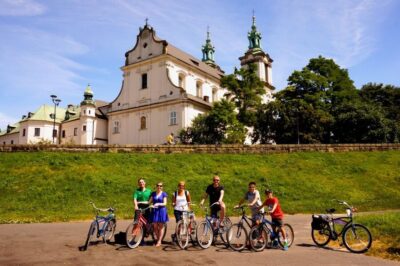
Bike Tour of the Old Town, Kazimierz, and the Ghetto
Read our review →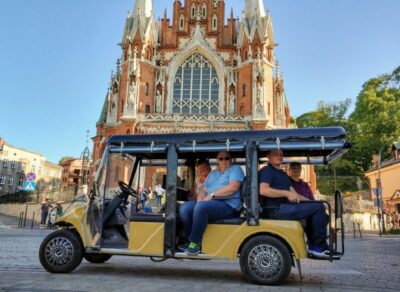
Jewish Quarter and Ghetto Electric Golf Cart Tour
Read our review →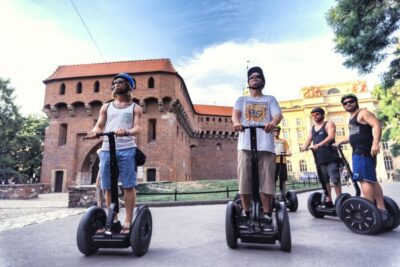
Browse the lists this tour appears in