
Reviewed · SCHINDLER'S FACTORY TOURS
Krakow: Oskar Schindler’s Factory Entry and Guided Tour
The most striking part of this Krakow tour is the way the former enamel factory turns wartime history into something you can walk through. You move from recreated city streets to a Jewish apartment, a tram documentary, Schindler’s preserved office, and displays linked to the Plaszow camp. The museum makes the occupation feel personal, not like a string of dates in a textbook.
I like the professional guide and skip-the-line entry, especially when your Krakow schedule is tight. I also like the range of material: photographs, films, eyewitness accounts, artifacts, and the unusual Survivor’s Ark made from enamel pots. The main concern is crowding. Narrow passageways and a large group can make it hard to stand close enough to hear every explanation.
In This Review
- Key points to know before you book
- What Oskar Schindler’s Factory tells you about Krakow
- Starting at Lipowa 4
- Walking through the permanent exhibition
- Schindler’s office and the Survivor’s Ark
- Krakow as a recreated city
- A typical Jewish apartment and the Plaszow camp displays
- The Hall of Choices and the moral questions of war
- Why a guided visit helps
- Is $45 good value for 1.5 hours?
- Who should book this Krakow museum tour?
- Should you book Oskar Schindler’s Factory Entry and Guided Tour?
- FAQ
- Where does the tour begin?
- Where does the tour end?
- How long does the guided tour last?
- What is included in the price?
- Which languages are available?
- Does the tour include skip-the-line entry?
- Can I cancel or pay later?
Key points to know before you book
- The museum covers Krakow from 1939 to 1945, including the lives of Polish citizens, Jewish residents, and Nazi occupiers.
- Schindler’s preserved office gives the visit a direct connection to the factory made famous by Steven Spielberg’s film.
- The Survivor’s Ark uses thousands of enamel pots, echoing the factory’s original production.
- A guide leads the 1.5-hour visit, so you get a clear path through a large and emotional museum.
- The tour is offered in six languages: English, French, German, Italian, Spanish, and Polish.
- The group may feel crowded in narrow rooms, so stay near the guide whenever possible.
What Oskar Schindler’s Factory tells you about Krakow
Oskar Schindler’s Factory is not simply a film-related stop. The museum uses the former administrative building and factory setting to explain what happened to Krakow during the Nazi occupation from 1939 to 1945.
That distinction matters. You are not visiting a shrine to one famous industrialist. You are entering a museum about a city whose long Polish-Jewish connections were violently disrupted by war and occupation. Schindler is part of that story, but the exhibition also gives space to ordinary people, Jewish families, Polish residents, and the Nazi authorities who controlled the city.
I find this broader focus useful because it prevents the visit from becoming too narrow. If you know the film, you will recognize the setting and some of the themes. If you do not, the museum still gives you a structured account of Krakow during one of the darkest periods in its past.
The guided format helps you keep the story in order. Museums covering wartime events can easily become a blur of names, dates, and grim objects. Here, the guide moves you through a planned route and explains how each display relates to life in Krakow.
More Schindler's Factory visits:
- Krakow: Oskar Schindler’s Factory Entry Ticket & Guided Tour
★ 4.2 · 3,793 reviews - Krakow: Schindler’s Factory Tour with Entrance Ticket
★ 4.5 · 3,182 reviews - Krakow: Schindler’s Factory Skip-the-Line Ticket
★ 4.4 · 3,105 reviews
Starting at Lipowa 4
The tour begins at Lipowa 4, at the main entrance of the museum. You should wait outside for the guide holding an excursions.city sign.
This is a simple meeting arrangement, but it is worth taking seriously. The entrance is the one fixed point for the whole activity, and the tour returns there after the museum visit. Arriving a little early gives you time to identify the meeting place without rushing into an emotional museum experience already flustered.
Your entrance fee and professional guide are included in the $45 price. You do not need to arrange a separate museum ticket as part of this activity. The practical benefit is that the guide handles the entry and takes you directly into the visit, rather than leaving you to work out where the tour begins after arriving.
Walking through the permanent exhibition
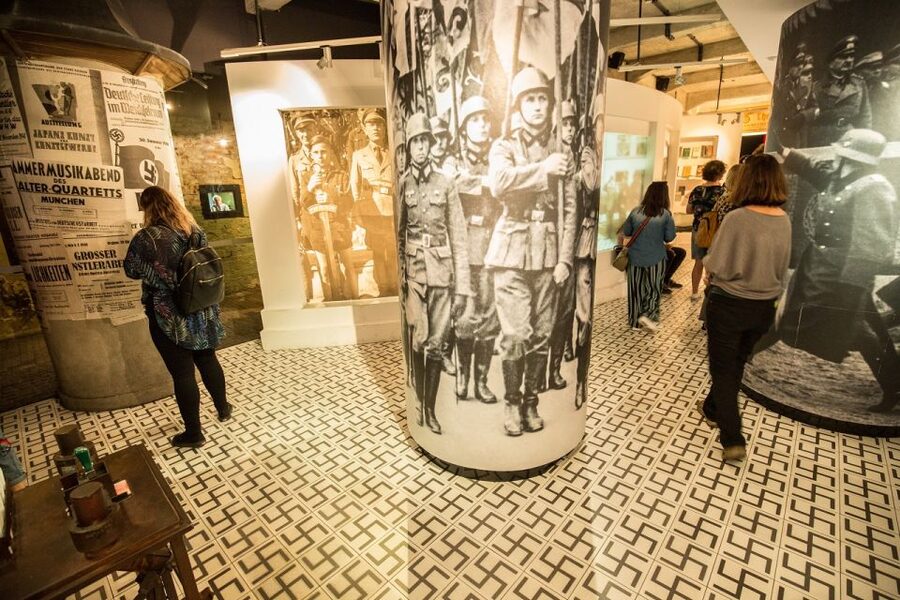
The permanent exhibition is arranged as a series of rooms and scenes rather than a single collection of objects behind glass. You may see documentary photographs, film footage, personal accounts, and multimedia displays working together.
That mix is one of the museum’s strongest features. A photograph can show what a street looked like, while an eyewitness account gives a human voice to the same period. Film footage adds movement and context. Used together, these materials help you understand daily life under occupation instead of seeing the war only through military events.
The exhibition focuses on both Polish and Jewish experiences. That is important in Krakow, where the war altered a city with centuries of shared Polish-Jewish life. The museum also presents the Nazi occupiers and the structures of control that changed how people lived, worked, moved, and made decisions.
Your guide can point out the meaning behind the rooms and installations. Without guidance, you might understand the basic subject but miss how the separate parts connect. With only 1.5 hours, the guide also helps keep the visit moving.
Schindler’s office and the Survivor’s Ark
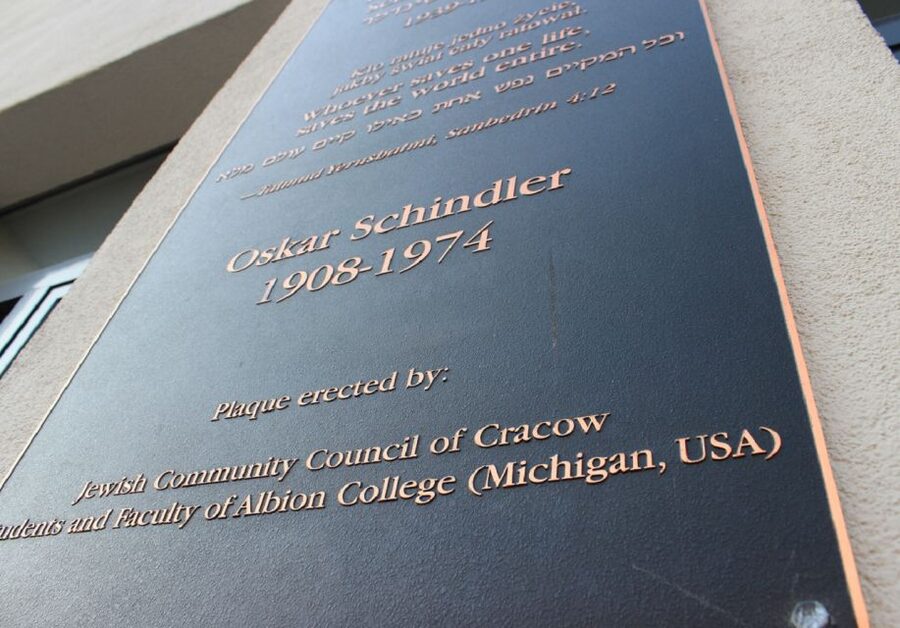
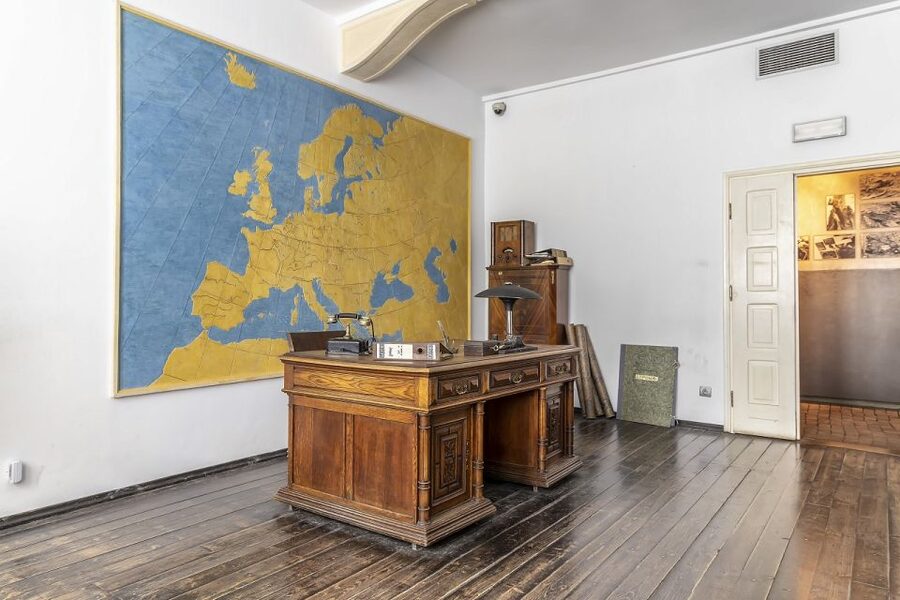
One of the clearest links to Oskar Schindler is his preserved office inside the factory’s administrative building. It gives you a physical point of reference amid an exhibition that covers a much wider story.
The office is not the whole reason to visit, but it adds weight to the museum’s connection with the factory. You are seeing a preserved part of the place where Schindler worked, rather than visiting only a modern exhibition about a historical figure.
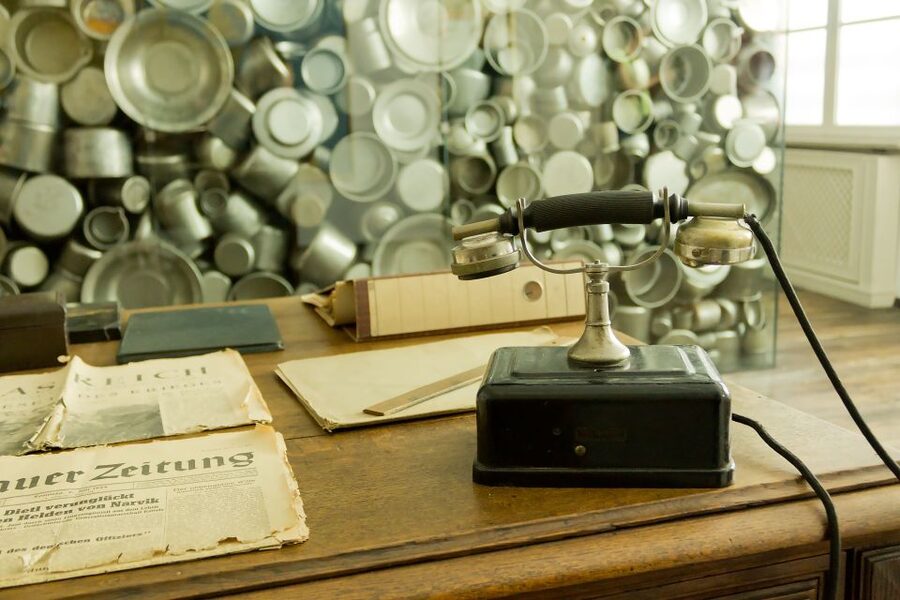
The Survivor’s Ark is another unusual feature. It is made from thousands of enamel pots, similar to those produced at the factory. The installation is both a reference to the factory’s industrial purpose and a symbol tied to survival.
I like this sort of object because it connects ordinary work with extraordinary human consequences. Enamel pots sound like a small detail until you see them assembled into a large sculptural display. The object helps explain that the factory was a workplace inside a much larger and more painful story.
A few more Krakow trips worth comparing
- From Krakow: Auschwitz-Birkenau Guided Tour & Hotel Pickup
★ 4.5 · 33,358 reviews - From Krakow: Auschwitz-Birkenau Guided Tour & Hotel Pickup
★ 4.5 · 29,340 reviews - Krakow: Auschwitz Guided Tour with Optional Hotel Pickup
★ 4.5 · 15,280 reviews - Krakow: Auschwitz-Birkenau Guided Tour with Pickup & Lunch
★ 4.5 · 9,800 reviews
Krakow as a recreated city
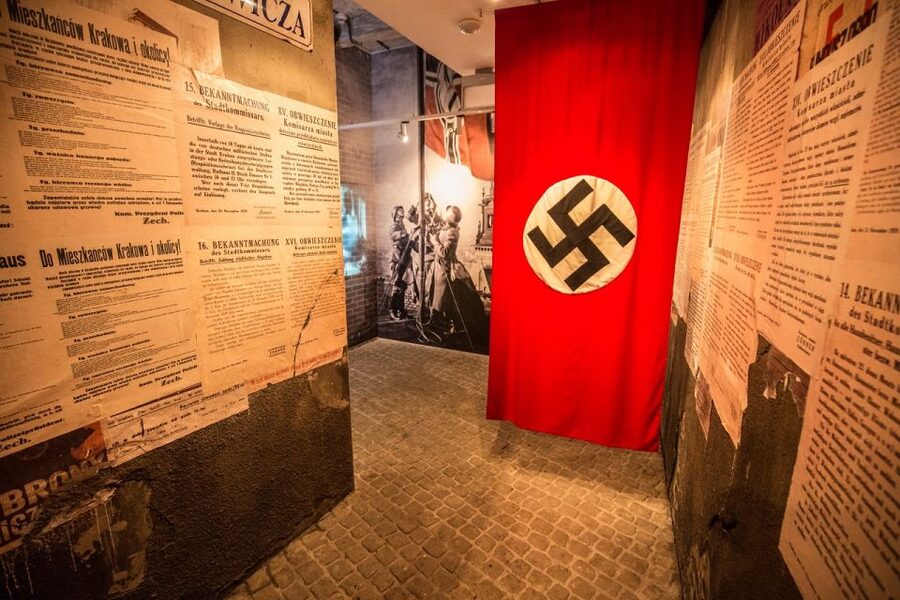
The museum includes a theatrical recreation of Krakow’s historical city space. Instead of viewing the occupation from a distance, you move through an environment designed to suggest the city as people experienced it.
You will also board a tram and watch a documentary about everyday life in Krakow. This is a clever choice. Public transportation is part of normal city life, so the tram setting gives the film a grounded, ordinary feel. It reminds you that wartime history happened in streets, apartments, workplaces, and vehicles used by regular people.
The city recreation is especially useful for readers who have not studied Krakow’s wartime past. You can better understand the occupation when it is tied to a recognizable urban setting. The museum is asking you to picture the city as a place where people still had routines, even as those routines were controlled and threatened.
These staged areas will not appeal to everyone. If you prefer a quiet museum made up only of original artifacts, some theatrical elements may feel designed rather than historical. I see them as a teaching tool, though, particularly during a short guided visit.
A typical Jewish apartment and the Plaszow camp displays
The tour includes a typical Jewish apartment. This is one of the most valuable parts of the route because it shifts attention from public events to private life.
An apartment can show you how history enters a home. The scale is smaller and more intimate than a city street or documentary film. You are encouraged to think about families, possessions, fear, and the loss of ordinary security.
The museum also displays artifacts from the Plaszow camp. These objects bring the visit into more severe territory. The camp material is not a decorative add-on, and the guide’s role is important in helping you understand where it fits into Krakow’s wartime story.
You should expect the museum to be emotionally heavy. The material deals with persecution, occupation, displacement, and survival. The 1.5-hour length keeps the tour focused, but it does not make the subject easy. Leave room in your day afterward if you prefer time to process what you have seen.
The Hall of Choices and the moral questions of war
The Hall of Choices is a sculptural installation about the ethical dilemmas people faced during the war. It does not reduce the period to simple heroes and villains. Instead, it asks you to consider the choices available to people living under violent control.
That is an important part of the museum’s approach. Historical displays can sometimes make decisions look obvious because we already know the outcome. The Hall of Choices pushes you to think about uncertainty, fear, pressure, and the consequences of helping or refusing to help.
This section may be brief during a group tour, depending on the guide’s pace and the number of people in the room. Stay close and listen carefully. The meaning is less about one object and more about how the installation frames the human decisions behind the larger events.
Why a guided visit helps
A self-guided museum visit gives you freedom, but this particular exhibition has many layers. You could spend time looking at the images and objects without knowing which details are central to the museum’s argument.
The professional guide provides a narrative thread. You learn how the factory, the city, the Polish population, Jewish residents, and Nazi occupation fit together. You also avoid spending your limited Krakow time searching for the next room or deciding which displays deserve attention.
The strongest benefit is context. A photograph of a street, an artifact from Plaszow, or a recreated apartment means more when you know what happened before and after it. The guide can also explain the purpose of the multimedia sections and installations as you encounter them.
There is a tradeoff. A guided group moves at a set pace. One person who wants to linger over every photograph may feel hurried, while someone interested mainly in Schindler may find the wider Krakow story longer than expected. The tour is best for you if you want a clear introduction rather than unlimited independent museum time.
One useful tip is to remain near the guide in narrow rooms. A larger group can spread out, and you may end up too far away to hear the explanation. The French-language tour in particular can be difficult to follow if you are separated from the guide. This is not a problem with the museum’s subject matter, but it can affect how much you take from the visit.
Is $45 good value for 1.5 hours?
At $45 per person, this is not the cheapest way to enter a museum. The value depends on what you want from the visit.
You are paying for the entrance fee, a professional live guide, and a skip-the-line arrangement. If you have only a short time in Krakow, those features can matter. You get a planned 1.5-hour route through a substantial exhibition without spending part of your day sorting out admission or deciding how to organize the rooms.
The price is less attractive if you prefer to explore at your own speed. One French-language participant found the group too large for the narrow passageways and had trouble hearing from the back. That is the main value concern here: the guide may be excellent, but the experience becomes less useful if you cannot stay close enough to follow.
I would see the tour as a reasonable purchase for first-time visitors, history-minded visitors, and anyone who wants an organized introduction to the museum. If you already know the exhibition well or want to examine every display in detail, use the guided hour as an overview and then ask about time to look around afterward. One visitor specifically wished for more time with the displays once the guide’s explanation ended.
The booking terms also reduce some risk. You can cancel up to 24 hours in advance for a full refund, and you can reserve now while paying later. That flexibility is useful when your Krakow schedule is still changing.
Who should book this Krakow museum tour?
I would recommend it to you if you want to understand Krakow during the Nazi occupation through several viewpoints. The tour does not focus only on Schindler. It presents Polish and Jewish life, Nazi rule, the city itself, and the moral choices people faced.
It suits visitors who prefer a guide to connect the material. It also works well for people who want to see the museum’s main rooms in a limited amount of time. The six language options make it practical for English, French, German, Italian, Spanish, and Polish speakers.
You should think twice if you strongly dislike group tours, staged museum spaces, or fixed pacing. The narrow exhibition areas can feel crowded, and a large group may make it harder to hear. If you book, stay near the guide and resist the temptation to drift toward the back.
Should you book Oskar Schindler’s Factory Entry and Guided Tour?
Book this tour if you want a focused, guided introduction to Krakow’s wartime history and value the convenience of skip-the-line entry. The preserved office, Survivor’s Ark, tram documentary, Jewish apartment, Plaszow artifacts, and Hall of Choices give the 1.5-hour visit plenty of substance.
The main warning is group size. A good guide cannot fully solve the problem of narrow rooms and poor positioning, so stay close from the beginning. At $45, the tour is worth it for structure, context, and efficient entry, but less so if your priority is slow, independent viewing.
FAQ
Where does the tour begin?
The tour begins at Lipowa 4, at the main entrance of the museum. Wait for the guide holding an excursions.city sign.
Where does the tour end?
The activity ends back at the meeting point at Lipowa 4.
How long does the guided tour last?
The guided tour lasts 1.5 hours.
What is included in the price?
The price includes entrance fees and a professional guide.
Which languages are available?
The live tour is available in English, French, German, Italian, Spanish, and Polish.
Does the tour include skip-the-line entry?
Yes. The activity includes skip-the-ticket-line access.
Can I cancel or pay later?
You can cancel up to 24 hours in advance for a full refund. You can also reserve now and pay later.
Just added around Krakow
- Private Guided Tour: Oskar Schindler’s Factory★ 5.0 · 3 reviews
- E-Scooter Krakow sightseeing tour★ 5.0 · 3 reviews
- From Krakow: Zakopane and Thermal Pools Guided Trip★ 5.0 · 3 reviews
- Schindler’s Factory, Ghetto and Plaszow Camp Guided Tour★ 4.7 · 3 reviews
- Kraków: Private Hot Air Balloon Flight with Champagne★ 3.7 · 3 reviews
- Krakow: River Cruise & Guided Visit to Former Plaszow Camp★ 3.6 · 3 reviews
- From Krakow: Private Wieliczka Salt Mine Tour★ 4.0 · 3 reviews
- Krakow: Old Town short walk with St. Mary’s Basilica visit★ 5.0 · 3 reviews
Schindler's Factory Tours, compared.

Oskar Schindler’s Factory Entry Ticket & Guided Tour
Read our review →
Schindler’s Factory Tour with Entrance Ticket
Read our review →
Schindler’s Factory Tour with Entrance Ticket
Read our review →
Schindler’s Factory in Krakow: Guided Tour & Skip the Line Ticket
Read our review →

Schindler’s Factory Ticket with Guided Tour Option
Read our review →
Krakow Schindler’s Factory Guided Tour with Admission Ticket
Read our review →Browse the lists this tour appears in