
Reviewed · SCHINDLER'S FACTORY TOURS
Krakow: Schindler’s Factory Tour with Entrance Ticket
Schindler’s Factory is not mainly a museum about Oskar Schindler. That is the first thing to understand. The 90-minute visit is a powerful account of Krakow under Nazi occupation, with Schindler’s story placed inside the larger story of the city, its Jewish population, and the people caught under German rule.
I like two things right away: the skip-the-line entry can save serious time, and a good guide gives the displays meaning that is hard to grasp on your own. Guides such as Helena, Kinga, Joanna, and Anna have been praised for clear English, personal stories, and vivid explanations.
The main drawback is the group size. Tours can reach 25 people, while some rooms and corridors are tight. You may also find that the guide moves you along before you have fully read every photograph or panel.
In This Review
- Key points to know before booking
- What Schindler’s Factory really tells you
- Starting with Krakow before the war
- The occupation through objects and photographs
- Schindler’s office and the factory connection
- The Jewish ghetto and daily survival
- Why the guide makes such a difference
- Is $49 a fair price?
- Timing, meeting point, and group practicalities
- Who will get the most from this tour?
- How to prepare for a serious visit
- Should you book Schindler’s Factory?
- FAQ
- How long does the Schindler’s Factory tour last?
- What does the exhibition focus on?
- Is the museum only about Oskar Schindler?
- Is the original factory machinery still inside?
- Which languages are available?
- How large can the tour group be?
- What happens if I arrive late?
- Do I need identification?
Key points to know before booking
- The museum is about wartime Krakow first, Schindler second: Expect the occupation, the ghetto, persecution, and daily life to take up most of the visit.
- Skip-the-line entry matters: Queues can be long, with one visitor estimating a wait of about 90 minutes without a timed booking.
- The former factory has no original machinery: You are visiting a museum in Schindler’s old building, not a preserved working factory.
- The narrow rooms shape the experience: Dim spaces, tight passages, and symbolic design make the visit emotionally heavy.
- Guide quality is central: Guides including Anna, Helena, Kinga, Joanna, and Agnieszka have been singled out for strong storytelling and personal detail.
- Arrive 10 minutes early with matching identification: Late arrivals cannot join, and museum staff may check that your ID matches the personalized ticket.
What Schindler’s Factory really tells you
The name naturally brings to mind the film Schindler’s List and the German businessman who protected more than a thousand Jewish workers. You will hear that story here, including details about his office and his role in giving workers a measure of safety.
But the museum’s main subject is the city itself. The exhibition, Krakow under Nazi Occupation 1939 to 1945, shows how the war altered work, family life, religion, movement, and survival. It places Schindler among a much larger cast of people, including Jewish residents, non-Jewish residents, German officials, local helpers, and victims of persecution.
That wider focus is a strength. You leave with a clearer idea of what Schindler’s actions meant because you first see the danger around him. The tour does not present one heroic figure as the whole answer to a vast crime.
If you book expecting a long, detailed biography of Schindler, you may feel short-changed. Several parts of the museum concern the occupation and the Krakow ghetto rather than the factory owner himself. If you want a serious account of wartime Krakow, that is exactly why this visit works.
More Schindler's Factory visits:
- Krakow: Oskar Schindler’s Factory Entry Ticket & Guided Tour
★ 4.2 · 3,793 reviews - Krakow: Schindler’s Factory Skip-the-Line Ticket
★ 4.4 · 3,105 reviews - Krakow: Schindler’s Factory Tour with Entrance Ticket
★ 4.6 · 1,737 reviews
Starting with Krakow before the war
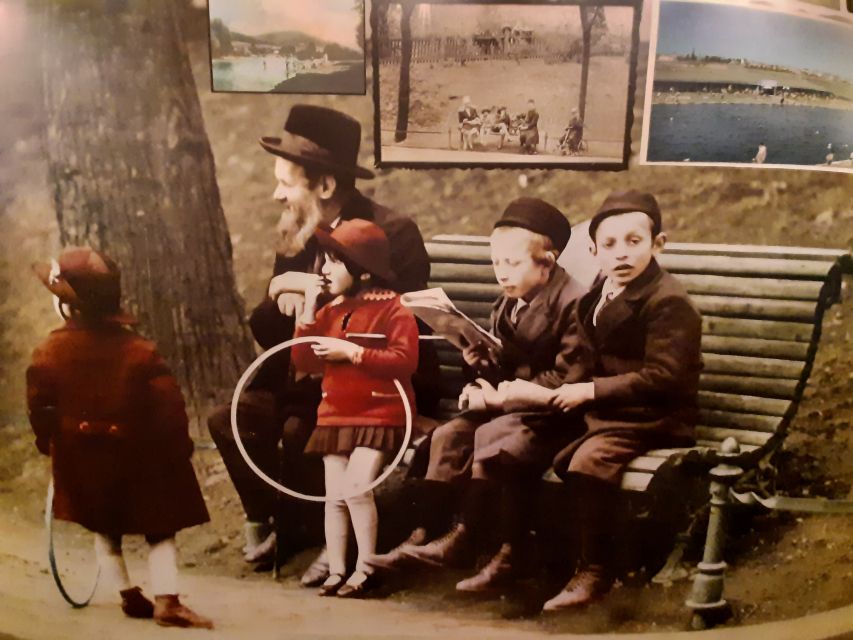
The exhibition does not simply drop you into 1939. It helps establish what Krakow was like before the German occupation, giving you a sense of the city and its communities before daily life was broken apart.
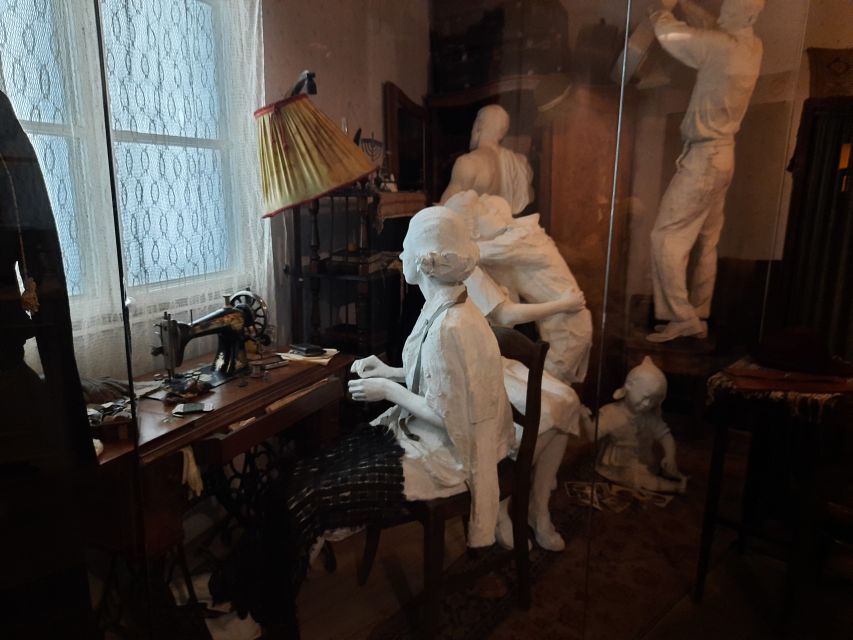
This opening matters because it keeps the story human. You are not only looking at dates, uniforms, and military orders. You are seeing a city where people had homes, jobs, neighborhoods, customs, and ordinary routines before those routines were stripped away.
Your guide will connect the displays to the wider political events that brought German rule to Poland. This is where the guide adds real value. The museum contains photographs, objects, written material, and reconstructed spaces, but a spoken explanation helps you understand why each change mattered.
A strong guide will also keep the pace moving. That is useful because the exhibition contains plenty to read, and 90 minutes is not enough for a slow inspection of every panel. You get the main story, the key objects, and the major turning points rather than a full independent museum study.
The occupation through objects and photographs
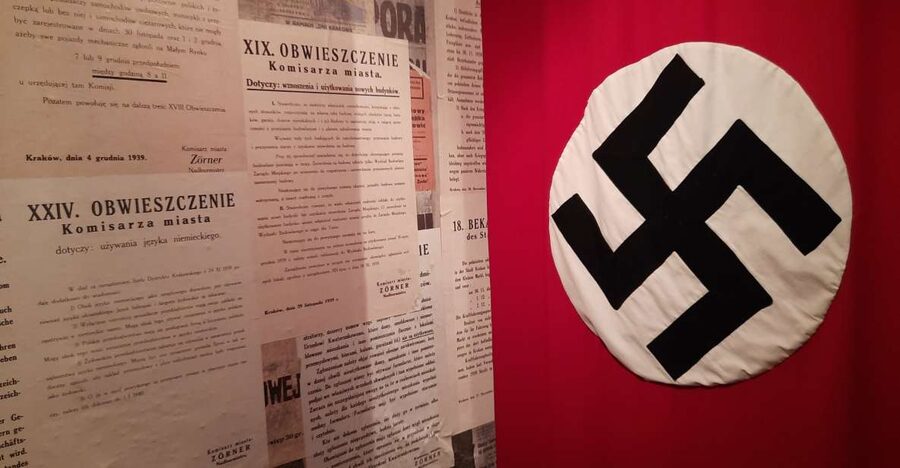
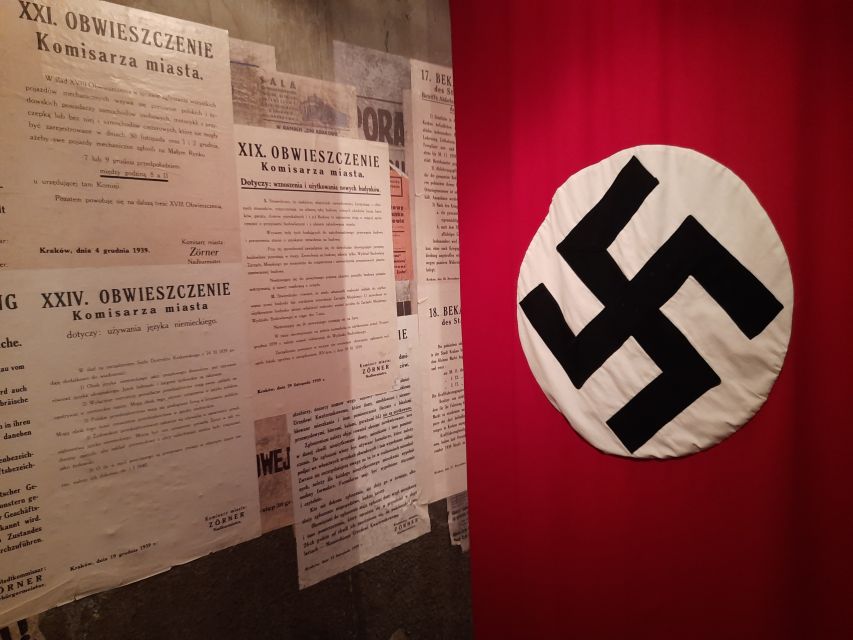
As you continue, the museum uses original artifacts and photographs to show the pressure of occupation. Some images are disturbing. The material is not softened into a tidy wartime tale, and you should expect scenes that stay with you after the tour.
The exhibition design is part of the message. Narrow corridors and dimly lit rooms can make you feel boxed in. The floor and other elements of the layout carry symbolic meaning, and guides may point out details you would otherwise pass without noticing.
This design will not suit everyone. I found it useful as a way to express fear and uncertainty, but it can also make the space feel crowded, especially when a full group is trying to stop at the same display. People may need to move aside while another group passes.
The result is more physical than a normal museum visit. You are not only reading about restrictions and danger. You are moving through a setting designed to make those pressures easier to sense. That does not recreate wartime suffering, of course, but it gives the subject a stronger emotional force.
Schindler’s office and the factory connection
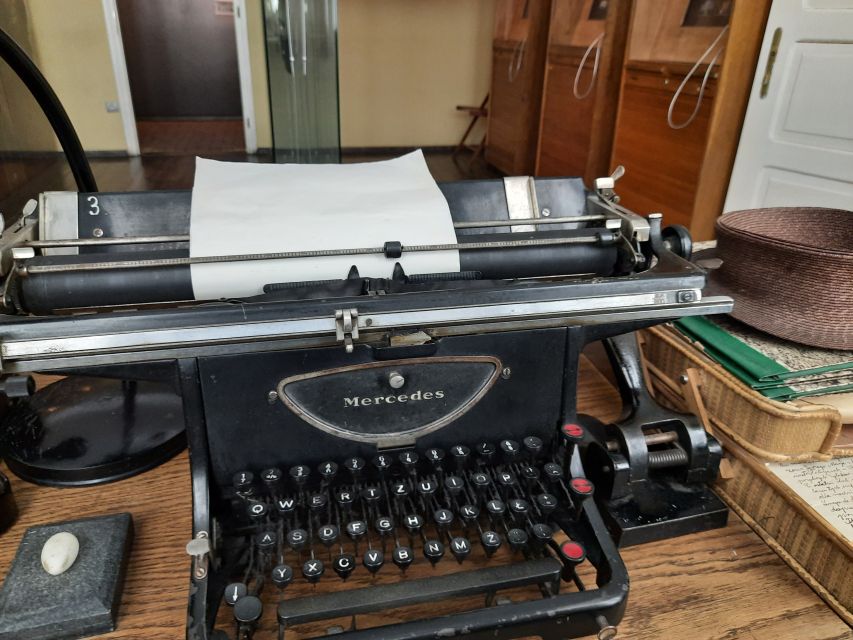
At some point, the tour turns to Oskar Schindler and his enamel factory. You will see his office, one of the clearest links between the present museum and the building’s wartime use.
This is the part many people expect to dominate the visit, but it is relatively limited. The building once housed Schindler’s factory, yet the museum does not contain the original machinery. You should think of it as a museum in a historic location, not as an industrial museum with a preserved production floor.
The factory connection still matters. It gives the story a real setting and helps explain how employment could sometimes provide protection. Schindler’s workers were not simply names in a rescue story. Their jobs could mean a better chance of avoiding deportation or worse treatment.
Guides often make this section more personal. One guide, Matt, was praised for sharing stories from meetings with people saved by Schindler. Other guides have connected the subject to family experiences, including a guide who spoke about her grandfather and others who described relatives’ wartime experiences.
Those details should be treated as additions to the museum’s evidence, not replacements for it. The best guiding combines personal feeling with clear facts. It helps you understand the human stakes without turning the visit into a performance.
A few more Krakow trips worth comparing
- Krakow to Auschwitz Birkenau Guided Tour with Transfer and Ticket
★ 5.0 · 8,197 reviews - Krakow: Wieliczka Salt Mine Fast-Track Ticket & Guided Tour
★ 4.5 · 5,872 reviews - Auschwitz Birkenau Guided Tour with Ticket Hotel Pickup Small Van
★ 5.0 · 4,769 reviews - From Krakow: Wieliczka Salt Mine Tour & Skip the Line Ticket
★ 4.4 · 3,925 reviews
The Jewish ghetto and daily survival
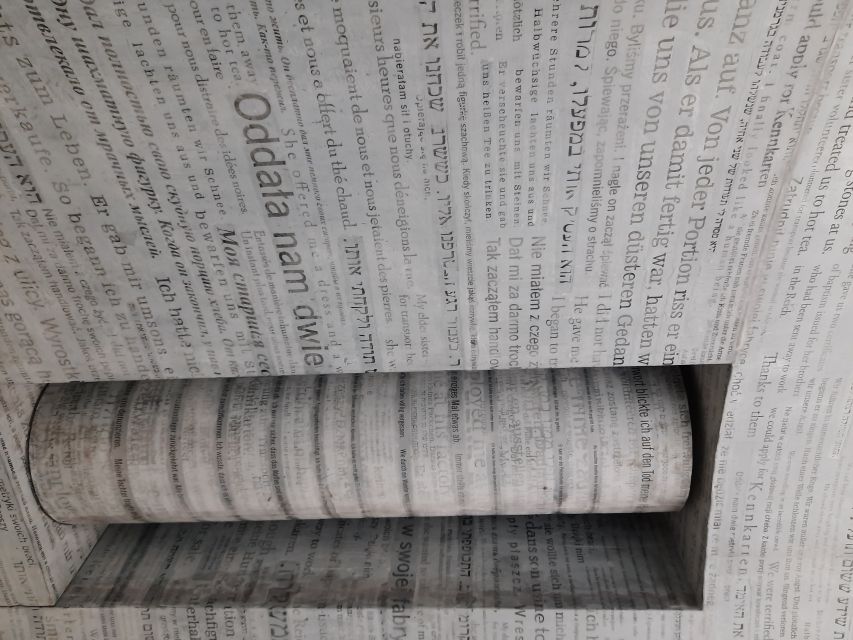
The most important part of the visit is the account of Jewish life under occupation. You see how persecution moved from official orders to practical restrictions, forced movement, loss of property, separation from family, and the destruction of a community.
The museum also gives attention to non-Jewish residents of Krakow. That broader view helps explain how the city changed as a whole, while keeping the persecution of Jewish people at the center of the story.
Your guide will likely spend more time explaining the lived experience of residents than reciting military history. That is one reason I recommend taking the guided option. A teenager, in particular, may get more from the displays when someone explains the setting, vocabulary, and personal consequences rather than leaving the family to read every caption alone.
The material can be emotionally difficult. Some photographs are plainly disturbing, and the combination of real images with confined rooms may feel intense. Plan something lighter afterward rather than scheduling this immediately before a rushed meal, train, or evening event.
Why the guide makes such a difference
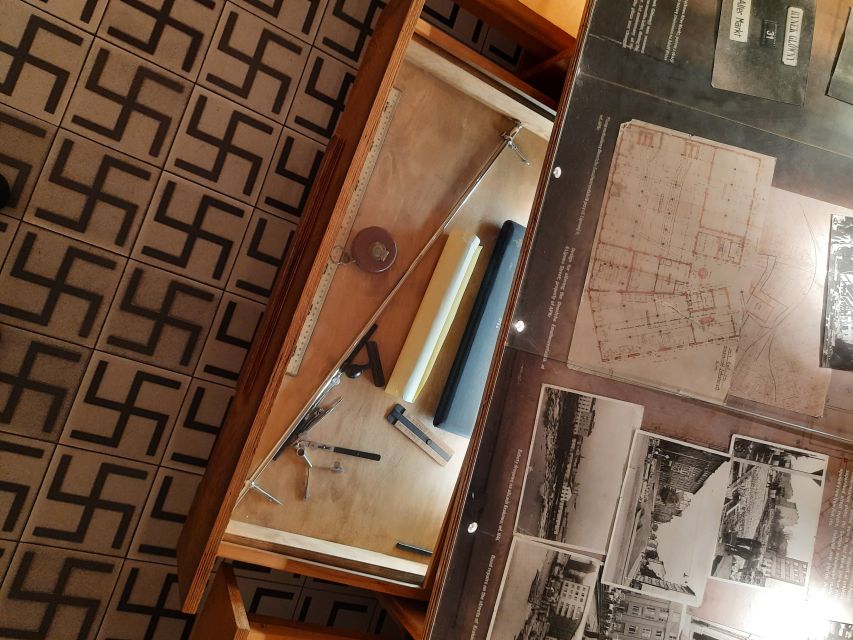
The exhibition is strong enough to visit independently, but this tour is built around interpretation. The guide explains what you are seeing, points out the meaning of the museum’s layout, and connects individual objects to the wider occupation.
The praise for guides is strikingly consistent in the supplied feedback. Anna was described as clear and professional even when she unexpectedly led a one-person tour. Helena was noted for her passion, and Kinga for her friendly manner and clear English. Joanna was praised for a flawless English presentation, while Agnieszka was remembered as a warm and capable guide.
Names and assignments are not guaranteed, so choose the language you want rather than booking for one particular person. Tours are offered in English, Italian, Spanish, French, and German, and each group uses only one language.
For groups of 15 or more, headsets are provided. They help in crowded rooms, though they cannot solve every problem caused by a large group. A group of 25 is allowed, and that is a reasonable museum limit on paper, but some visitors found the rooms too tight for that number.
The guide also controls the rhythm. You may not have long stretches to stand alone with a photograph or read every written display. If you prefer a slow museum visit, book this tour for the introduction, then ask whether you can remain afterward if museum rules and timing allow. The supplied details do not promise extra independent time, so treat it as a possibility, not part of the package.
Is $49 a fair price?
At $49 per person, this is not Krakow’s cheapest museum visit. The value depends on what you want from the experience.
If you only want entry, the price may feel high. The ticket includes a 90-minute guided visit, skip-the-line admission, and a licensed guide, but it does not include transport or a separate walking tour. The meeting point can vary with the option booked, so check your confirmation carefully.
The price looks better during busy periods. One visitor reported seeing a queue of roughly an hour and a half and walking straight in at the reserved time. At a popular museum with timed admissions and personalized tickets, saving that wait has real value, especially if your Krakow schedule is short.
The guide is the bigger reason to pay. Without context, you may recognize Schindler’s name and see moving photographs, but miss the meaning of the rooms, the sequence of events, and the difference between the factory story and the story of the city. Several visitors felt the museum would be hard to appreciate fully without a guide.
I would consider $49 fair for a first visit if you value clear explanations and have limited time. It is less attractive if you are a careful museum reader who wants to study every caption at your own speed.
Timing, meeting point, and group practicalities
The stated duration is 90 minutes. Start times depend on availability, and museum scheduling can cause the exact time to change. You may select a preferred time, but it is not guaranteed until confirmed.
The meeting point varies by booking option. Read the voucher rather than assuming you should go directly to the museum entrance. Guides may hold laminated cards with the operator’s name, which can make them easier to spot outside.
Arrive at least 10 minutes early. This is not a casual suggestion. Once the group leaves, latecomers cannot join and the ticket cannot be refunded.
Tickets are personalized. You must provide the names of everyone in your party when booking, then bring an identity document. The name and surname on the ticket must match your ID, or museum staff may refuse entry.
These rules are slightly fussy, but they matter because the museum controls admission. Check names, language, time, and meeting point before leaving your hotel.
Who will get the most from this tour?
I would recommend it to anyone visiting Krakow for the first time who wants a guided introduction to the city’s wartime past. It suits adults, older children, and teenagers who can handle upsetting material and pay attention for 90 minutes.
It is especially useful for you if:
- You have seen Schindler’s List and want the real Krakow story beyond the film.
- You are interested in Jewish history and the Nazi occupation of Poland.
- You have limited time and want a structured visit.
- You prefer listening to a guide rather than reading every museum panel.
- You want to avoid a long ticket queue.
I would hesitate to recommend it to very young children because of the photographs and subject matter. I would also warn independent museum fans that the tour may feel fast. A full group can make it harder to pause, and the narrow rooms are not ideal for lingering.
You might also prefer a different experience if your main goal is to see original factory machinery. There is none on display. This is a museum about memory, occupation, and human experience in a former factory building.
How to prepare for a serious visit
Give yourself enough time before the tour to arrive calmly. You do not want to spend the opening minutes checking your phone for the meeting point or worrying about an ID mismatch.
Read the basic booking details closely:
- Confirm the tour language.
- Enter every participant’s name exactly as shown on their identification.
- Bring the required ID.
- Check the meeting point for your selected option.
- Arrive 10 minutes early.
- Expect a group of up to 25 people.
- Prepare for narrow, dim rooms and disturbing images.
Keep your schedule afterward flexible. The tour lasts 90 minutes, but the subject may leave you wanting quiet time rather than another packed attraction.
The experience has a reported rating of 4.5 from more than 3,000 reviews, and the strongest praise centers on the guides. That matches my own booking advice: choose this for the explanation and structure, not simply for the building name.
Should you book Schindler’s Factory?
Book this tour if you want the full wartime setting around Schindler, not a narrow biography. You will learn about Krakow before and during the occupation, the persecution of Jewish residents, life in the ghetto, and the limited but important part Schindler played in saving workers.
The skip-the-line entry is a useful bonus, particularly when queues are long. The price is reasonable for a short stay in Krakow, though a slow reader may prefer more unstructured museum time.
My advice is simple: book it if you want a guided, emotional, fact-filled visit and can accept a crowded route through tight rooms. Skip it if you want original machinery, a Schindler-only exhibition, or plenty of time to read every display at your own pace.
FAQ
How long does the Schindler’s Factory tour last?
The guided tour lasts 90 minutes.
What does the exhibition focus on?
It focuses on Krakow under Nazi occupation from 1939 to 1945, including the experiences of Jewish and non-Jewish residents, persecution, deportations, and the destruction of Krakow’s Jewish community.
Is the museum only about Oskar Schindler?
No. Schindler’s story is included, along with his factory and the protection it gave to more than a thousand Jewish workers. Most of the visit concerns wartime Krakow and the occupation more broadly.
Is the original factory machinery still inside?
No. The building once housed Schindler’s factory, but it is now a museum without the original machinery.
Which languages are available?
Guided tours are available in English, Italian, Spanish, French, and German. Each group tour is conducted in one language.
How large can the tour group be?
Museum regulations limit each tour group to a maximum of 25 participants. Headsets are provided for groups of 15 or more.
What happens if I arrive late?
You must arrive 10 minutes before the start. Once the group has departed, latecomers cannot join and their tickets cannot be refunded.
Do I need identification?
Yes. Tickets are personalized, so bring an ID card or another identification document. The name on your ticket must match your identification, or entry may be denied.
Just added around Krakow
- Private Guided Tour: Oskar Schindler’s Factory★ 5.0 · 3 reviews
- E-Scooter Krakow sightseeing tour★ 5.0 · 3 reviews
- From Krakow: Zakopane and Thermal Pools Guided Trip★ 5.0 · 3 reviews
- Schindler’s Factory, Ghetto and Plaszow Camp Guided Tour★ 4.7 · 3 reviews
- Kraków: Private Hot Air Balloon Flight with Champagne★ 3.7 · 3 reviews
- Krakow: River Cruise & Guided Visit to Former Plaszow Camp★ 3.6 · 3 reviews
- From Krakow: Private Wieliczka Salt Mine Tour★ 4.0 · 3 reviews
- Krakow: Old Town short walk with St. Mary’s Basilica visit★ 5.0 · 3 reviews
Schindler's Factory Tours, compared.

Oskar Schindler’s Factory Entry Ticket & Guided Tour
Read our review →

Schindler’s Factory Tour with Entrance Ticket
Read our review →
Schindler’s Factory in Krakow: Guided Tour & Skip the Line Ticket
Read our review →

Schindler’s Factory Ticket with Guided Tour Option
Read our review →
Krakow Schindler’s Factory Guided Tour with Admission Ticket
Read our review →
Schindler’s Factory Guided Tour with Entry Ticket
Read our review →Browse the lists this tour appears in