
Reviewed · SCHINDLER'S FACTORY TOURS
Schindler’s Factory in Krakow: Guided Tour & Skip the Line Ticket
Oskar Schindler’s Factory Museum is less a shrine to one industrialist than a powerful account of Krakow under Nazi occupation. You’ll see Schindler’s office and the enamelware made by his Jewish employees, but most of the visit follows the city’s path through war, terror, resistance, and postwar Soviet control.
I like the timed entry, which removes much of the stress from visiting a popular museum, and I like having a guide to explain how each room fits into Krakow’s wartime story. Guides including Marta, Natalia, Elizabeth, and Barbara have been praised for clear, engaging explanations. The main caution is simple: the tour may feel rushed, and groups of up to 25 can make it hard to hear every word.
In This Review
- Key points to know before booking
- What the Schindler Factory Museum is really about
- Meeting at Lipowa 4 in Krakow
- The introduction to Oskar Schindler
- Photographs, recordings, and the wartime city
- Inside the factory and Schindler’s office
- Why a guide can make a big difference
- Timing, group size, and the real pace of the visit
- Is the $35.70 price good value?
- Who should book this experience?
- How to get the most from your visit
- Should you book Schindler’s Factory tour?
- FAQ
- Where does the tour begin?
- Where does the tour end?
- How long does the visit last?
- Is the tour offered in English?
- Does the ticket guarantee entry?
- Is the experience guided or self-guided?
- Is the museum mainly about Oskar Schindler?
- Do I need identification?
Key points to know before booking
- The museum is mainly about wartime Krakow, not only Oskar Schindler and the factory.
- Timed admission helps you get inside without relying on hard-to-find standard tickets.
- A guide adds useful context, especially in rooms filled with photographs, recordings, and documents.
- Schindler’s office and factory products are included, along with stories of some of his Jewish workforce.
- The advertised visit lasts about 1 hour 30 minutes, though some people need several hours to read everything.
- Arrive early and identify your guide carefully, since the meeting point can be crowded and confusing.
What the Schindler Factory Museum is really about
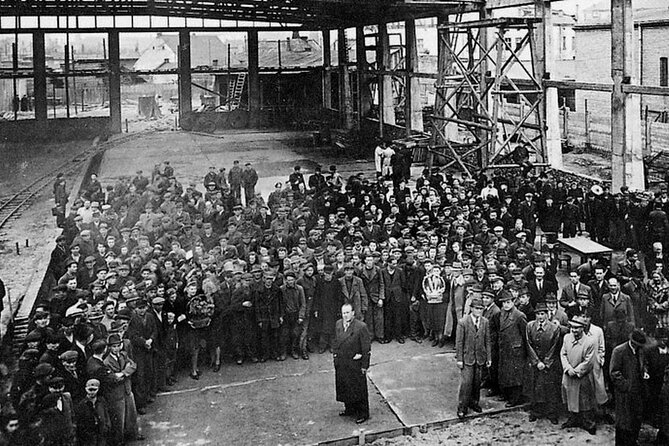
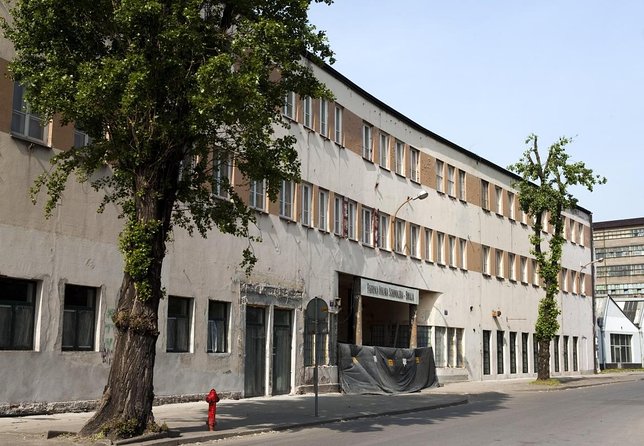
The museum occupies Oskar Schindler’s former enamel factory at Lipowa 4 in Krakow. The location matters. You are not simply looking at a collection about the war in a modern gallery. You are walking through the place where Jewish workers produced pots, pans, tins, and other enamel goods for the German army.
That factory work helped protect about 1,200 Jewish employees from deportation to concentration camps. Schindler’s role was complicated, and the museum presents it within the wider crisis facing Krakow’s Jewish population and Polish citizens under occupation.
If you arrive expecting a museum devoted almost entirely to Schindler, adjust your plans before you enter. The building carries his name, and you will see his office and learn about his employees, but the larger subject is the experience of Krakow during World War II.
That broader focus is one of the museum’s strengths. It gives Schindler’s actions a setting instead of treating the story like a film plot. It also means the visit can feel different from what you expect if your main interest is the movie Schindler’s List.
More Schindler's Factory visits:
- Krakow: Oskar Schindler’s Factory Entry Ticket & Guided Tour
★ 4.2 · 3,793 reviews - Krakow: Schindler’s Factory Tour with Entrance Ticket
★ 4.5 · 3,182 reviews - Krakow: Schindler’s Factory Skip-the-Line Ticket
★ 4.4 · 3,105 reviews
Meeting at Lipowa 4 in Krakow
You make your own way to Oskar Schindler’s Enamel Factory at Lipowa 4, 30-702 Krakow. The site is near public transportation, and the activity begins and ends at the museum meeting point.
The tour uses timed entry, so your arrival time matters. The meeting area can be busy, with several guides and groups gathering near the entrance. Look for the correct guide and confirm that you are with the English-language group before moving inside.
This is the part of the visit where a few practical habits help:
- Arrive with enough time to find the entrance and meeting point.
- Keep your booking details easy to access.
- Bring the full names used when booking.
- Carry a valid passport or identity card, since museum staff may request identification.
- Make sure every member of your party knows the meeting instructions.
Some groups have found the start well organized, while others have had trouble locating a guide or understanding where to wait. The operator is Discover Cracow, but guides may not always be easy to identify in a crowded area. If you are offered a ticket without the promised guided introduction, clarify the situation before entering.
The introduction to Oskar Schindler
If you select the guided option, the visit begins with a short explanation of Schindler and the way Steven Spielberg’s 1993 film brought his story to a worldwide audience.
This introduction is useful, but it is only a starting point. The museum is not built around movie trivia. It uses the film as a bridge to the real people and events connected with the factory.
You will learn how Schindler employed Jewish workers and how production for the German army helped keep those workers from being sent away. The story is morally difficult, and the museum benefits from a guide who can explain the difference between the popular image of Schindler and the larger wartime record.
A strong guide will also prevent the tour from turning into a simple hero story. That is where guides such as Natalia, Elizabeth, Barbara, and Marta have made a good impression. They have been praised for answering questions, speaking clear English, and giving enough background to make the displays easier to follow.
Photographs, recordings, and the wartime city

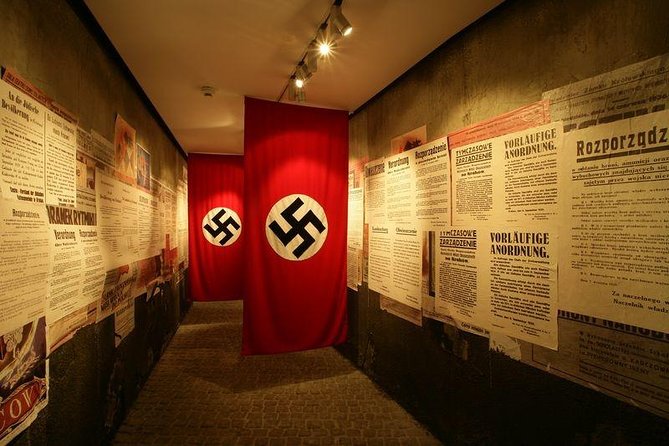
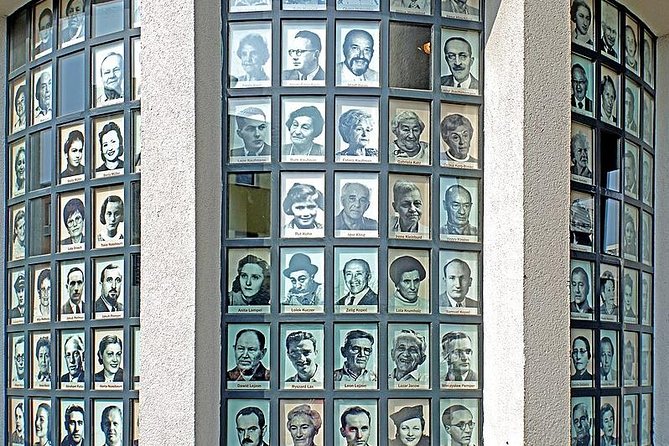
After the introduction, the route moves through displays about Krakow before, during, and after the war. Photographs show streets under occupation, while documents and artifacts point to the restrictions and fear imposed on the city.
The museum uses original film and radio recordings to bring another layer to the visit. These materials help explain the atmosphere of a city controlled first by the Nazis and later affected by Soviet rule. You may see references to resistance activity, prisons, hideaways, and daily life under occupation.
I find this section valuable because it shifts attention away from one factory and toward the people living around it. You get a sense of how war changed ordinary streets, workplaces, families, and public life.
The drawback is pace. A 1 hour 30 minute tour is enough for an overview, but not enough for every photograph and written panel. A guide may pause at major displays and explain the main ideas, yet you will not have time to read every piece of text while staying with the group.
If you are interested in wartime Krakow beyond Schindler, plan to return on your own if the ticket arrangement allows it. Some people feel they need three or four hours to take in the full exhibition. The guided route gives you structure, but it is not the same as a slow museum visit.
A few more Krakow trips worth comparing
- From Krakow: Wieliczka Salt Mine Tour & Skip the Line Ticket
★ 4.4 · 3,925 reviews - Auschwitz-Birkenau Skip-the-Line Guided Tour
★ 4.3 · 3,617 reviews - Auschwitz-Birkenau: Skip-the-Line Entry Ticket & Guided Tour
★ 4.4 · 3,052 reviews - Auschwitz-Birkenau Skip-the-Line Ticket and Guided Tour
★ 4.4 · 1,241 reviews
Inside the factory and Schindler’s office
The factory section connects the museum’s wartime story to the workers who made enamelware for the German military. You can see examples of products made there and visit Schindler’s office.
These objects are modest, which is part of their power. Pots and tins do not look dramatic, but they show how industrial production became tied to survival. The factory was both a place of work and, for Schindler’s Jewish employees, a possible shield against deportation.
You will also hear about the fates of some of the people known as Schindlerjuden, or Schindler’s Jews. The museum does not treat them as a single anonymous group. Their individual stories help you understand that the factory’s importance rested in the lives it helped protect.
The office is one of the stops most closely connected to Schindler himself. Still, do not expect a large collection of personal objects or a room-by-room account of his entire life. The museum keeps returning to the city and its population, which is why the visit is best understood as a Krakow occupation museum housed in Schindler’s former workplace.
Why a guide can make a big difference
A guide is most helpful in this museum because the displays are dense and the route moves through several connected subjects. You need context to understand why a photograph matters, how a room relates to the occupation, or why factory production affected the fate of Jewish workers.
A good guide gives you a clear path through the material. Marta has been praised for explaining the exhibition without rushing, while Natalia has been noted for concise commentary and confident answers. Elizabeth has been described as friendly and engaging, and Barbara for adding context that made the rooms easier to understand.
The quality can vary, though. Some guides have spoken too quickly, moved ahead of the group, or failed to wait for people who were still looking at a display. Headphones are not guaranteed. Without them, you need to stay close to the guide, especially in narrow rooms or when several groups are nearby.
Ask questions when you have the chance. If your guide does not pause, you may miss important details. A group of 14 or fewer is easier to manage, while the stated maximum of 25 can feel large inside tight exhibition spaces.
The self-guided option may suit you if you read quickly, prefer your own pace, or already know a fair amount about Krakow during the war. The guided choice is better if you want someone to connect the displays and explain the difficult parts without stopping at every panel.
Timing, group size, and the real pace of the visit
The listed duration is approximately 1 hour 30 minutes. That makes the experience easy to fit into a day of sightseeing, especially if you combine it with other parts of Krakow.
The short format also creates its main weakness. You may move from room to room before you have finished reading. The museum contains enough material for a much longer visit, and one hour and a half is best treated as an introduction rather than a complete study.
Groups can contain up to 25 people. That is not enormous for a walking tour, but it is significant inside a museum with narrow passages and many audio displays. If the guide does not use a microphone or headsets, stand near the front and keep the group in sight.
Some guides manage the route at a steady pace and still allow time for questions. Others move quickly because another timed group is due. Your experience will depend heavily on the guide and the crowd level that day.
Is the $35.70 price good value?
At $35.70 per person, this is not the cheapest way to enter a Krakow museum. The value comes from combining admission with a scheduled time and, when selected, an English-language guide.
That matters because standard museum tickets can be difficult to secure at a convenient time. Paying more may be reasonable if you have limited time in Krakow and want to avoid uncertainty at the door.
The guided option is worth the extra cost when your guide is clear, patient, and able to connect the displays. It is less appealing if the guide simply hands over tickets or rushes through the rooms. The museum itself remains worthwhile, but the service you are paying for includes more than entry.
For a visitor who wants a quick, organized overview, the price can make sense. For someone who wants to read every display, a guided visit may feel too fast for the money. The best value comes from treating the tour as a structured first visit, not as the final word on the museum.
Who should book this experience?
I would suggest it to first-time visitors who want to understand Krakow’s wartime story and prefer help with a difficult subject. It also suits film fans, provided they understand that the museum goes well beyond Schindler’s List.
It is a good choice for people with a fixed schedule. The timed admission gives you a firm place in the day, and the museum is close enough to combine with independent sightseeing around Krakow.
You may want the self-guided choice if you dislike group pacing or want to spend several minutes with each photograph. Families and mixed-interest groups should know that the subject is serious, with material about persecution, imprisonment, and fear.
People with mobility concerns can take part, and lifts are available, but the route through the museum may still require staying with a group in busy, narrow areas. Anyone who needs frequent breaks should consider the pace before booking.
The experience is offered in English. Food and drinks are not included, though the visit itself is short enough to fit around a meal elsewhere in the city.
How to get the most from your visit
Read a little about Schindler and Krakow before arriving. You do not need a long briefing, but knowing that the factory story is part of a much larger occupation narrative will make the museum easier to follow.
Arrive early, keep your identification ready, and stay close to the guide. If you cannot hear, say so at once rather than waiting until the group has moved into another room.
Do not judge the museum only by how much time it gives Schindler. Its broader account of Krakow is the point. The factory, office, enamelware, and employee stories are important anchors, but the museum asks you to see them within the city’s wider wartime experience.
If your tour finishes quickly and you still want more, ask whether you may continue exploring independently. The supplied information says the tour ends outside the museum, so confirm the exact arrangements with the guide before leaving the exhibition route.
Should you book Schindler’s Factory tour?
Book it if you want guaranteed timed entry and an English guide to explain Krakow’s wartime experience. The museum is moving and informative, and a strong guide can turn a crowded set of displays into a clear story.
Choose carefully if your only goal is learning about Schindler himself. The museum gives him an important place, but its main focus is the occupation of Krakow. Also, do not expect a leisurely visit. At up to 25 people, variable guide quality, and a planned duration of about 90 minutes, the experience rewards preparation and staying near the front.
For most first-time visitors, I think the guided option is worthwhile, especially with a guide such as Marta, Natalia, Elizabeth, or Barbara. Just arrive early, confirm the meeting point, and enter with the right expectation: this is a serious museum about Krakow at war, housed in Schindler’s former factory.
FAQ
Where does the tour begin?
The tour begins at Oskar Schindler’s Enamel Factory, Lipowa 4, 30-702 Krakow, Poland. You make your own way to the museum.
Where does the tour end?
The activity ends back at the meeting point outside the museum.
How long does the visit last?
The advertised duration is approximately 1 hour 30 minutes. The museum contains enough material that a slower independent visit may take longer.
Is the tour offered in English?
Yes. The experience is offered in English.
Does the ticket guarantee entry?
Yes. The experience includes an entrance ticket and timed admission to Oskar Schindler’s Factory Museum.
Is the experience guided or self-guided?
You can choose a self-guided or guided visit when booking. The guided option includes a professional guide.
Is the museum mainly about Oskar Schindler?
No. The museum focuses more on the course of World War II in Krakow than on Schindler alone. It includes his office, factory products, and stories of his Jewish employees.
Do I need identification?
Yes. Bring a valid passport or identity document because museum staff may request it. All participants must be booked under their full names.
Just added around Krakow
- Private Guided Tour: Oskar Schindler’s Factory★ 5.0 · 3 reviews
- E-Scooter Krakow sightseeing tour★ 5.0 · 3 reviews
- From Krakow: Zakopane and Thermal Pools Guided Trip★ 5.0 · 3 reviews
- Schindler’s Factory, Ghetto and Plaszow Camp Guided Tour★ 4.7 · 3 reviews
- Kraków: Private Hot Air Balloon Flight with Champagne★ 3.7 · 3 reviews
- Krakow: River Cruise & Guided Visit to Former Plaszow Camp★ 3.6 · 3 reviews
- From Krakow: Private Wieliczka Salt Mine Tour★ 4.0 · 3 reviews
- Krakow: Old Town short walk with St. Mary’s Basilica visit★ 5.0 · 3 reviews
Schindler's Factory Tours, compared.

Oskar Schindler’s Factory Entry Ticket & Guided Tour
Read our review →
Schindler’s Factory Tour with Entrance Ticket
Read our review →
Schindler’s Factory Tour with Entrance Ticket
Read our review →

Schindler’s Factory Ticket with Guided Tour Option
Read our review →
Krakow Schindler’s Factory Guided Tour with Admission Ticket
Read our review →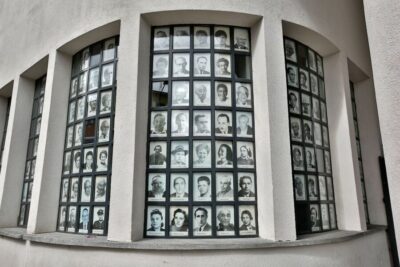
Schindler’s Factory Guided Tour with Entry Ticket
Read our review →Browse the lists this tour appears in