
Reviewed · RYNEK UNDERGROUND MUSEUM
Krakow: Rynek Underground Museum Skip-the-line Guided Tour
Beneath Krakow’s handsome Main Square lies a whole second city: buried streets, old market levels, merchant stalls, graves, and objects left behind by people who lived here centuries ago. The Rynek Underground Museum turns those remains into a clear, modern story, using touchscreens, films, holograms, and sound to bring medieval Krakow close.
I like two things right away: admission is included, so you skip the ticket-buying line, and the guide adds meaning to displays that could otherwise feel like a jumble of stones and pottery. The easy central meeting point beneath Rynek Główny makes this a simple addition to a day in the Old Town.
The main caution is pace. A 90-minute visit can pack in a lot of information, and some guides are stronger than others. If you prefer to stop quietly at every exhibit, a self-guided visit may suit you better.
In This Review
- Key points to know before you book
- A medieval Krakow beneath your feet
- What you see during the 75 to 90 minutes underground
- Why the guide can make or break the visit
- The museum’s technology, sound, and atmosphere
- How the group size affects the experience
- Is $35 a fair price?
- Who will enjoy this most
- Practical planning for a day in Krakow
- Should you book the Rynek Underground tour?
- FAQ
- Where does the Rynek Underground Museum tour start?
- Where does the tour finish?
- How long does the experience last?
- Is admission included?
- What language is the tour offered in?
- How large can the group be?
- What happens if I arrive late or need to cancel?
Key points to know before you book
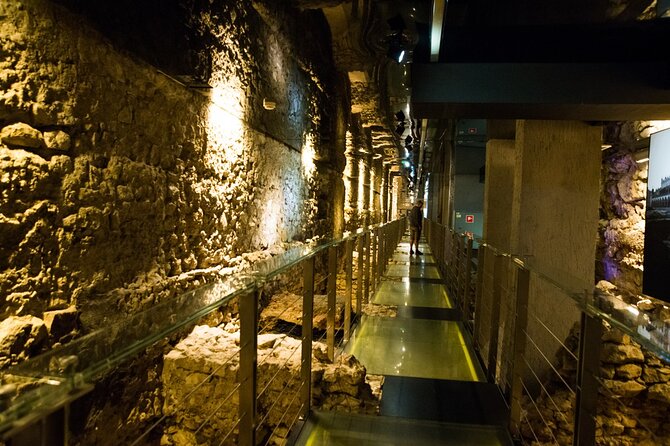
- Nearly 4,000 square meters underground: Follow old streets, market areas, archaeological remains, and medieval burial sites beneath Krakow’s main square.
- A guide makes the artifacts readable: The best guides, including Olga, Magda, Pauline, Joanna, Alicia, and others praised by name, connect objects to trade, religion, and daily life.
- Modern displays keep the past moving: Holograms, touchscreens, films, and recreated sounds show how the market may have worked.
- The group can reach 29 people: Headsets are supplied for groups of 15 or more, but crowded spaces can still make listening difficult.
- Plan for about 90 minutes: The guided portion may finish closer to 75 minutes, followed by the return to the Main Square.
- Arrive 10 minutes early: Late arrivals cannot join once the group has entered, and their tickets are not refunded.
A medieval Krakow beneath your feet
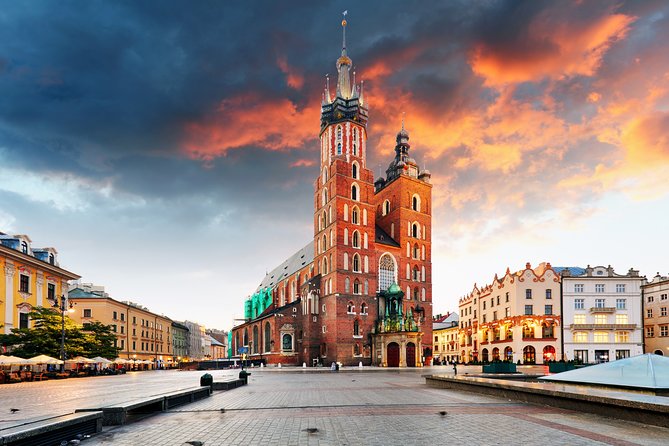
Krakow’s Main Square is easy to admire from above. St. Mary’s Basilica rises at one end, the Cloth Hall fills the center, and horse carts and pedestrians cross the broad open space. The museum asks you to look down instead.
Excavations beneath the square revealed layers of Krakow that had been covered by later streets and construction. Here, you follow the remains of older routes and market areas, seeing how the square changed over time. The museum does not simply place old objects in glass cases. It sets them into a story about people working, trading, worshipping, traveling, and being buried in the city they called home.
That setting gives the museum its special pull. You are not looking at archaeology in an isolated building. You are below the very place where Krakow’s public and commercial life developed. When you return upstairs, the basilica and Cloth Hall seem connected to the layers beneath them rather than floating in a timeless postcard.
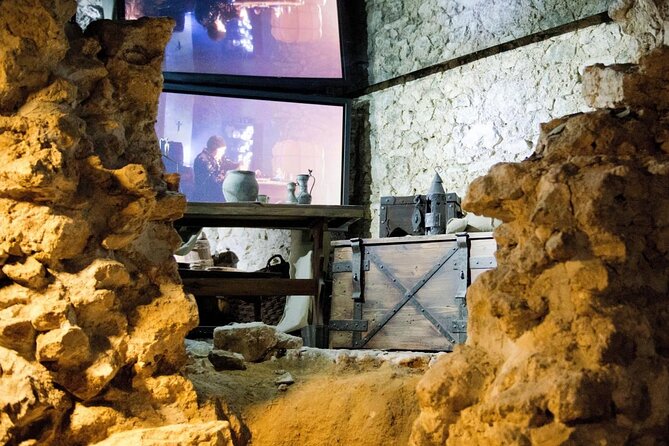
The displays are especially useful for anyone who finds bare archaeological remains hard to picture. Holograms and films suggest the movement and sound of an old market, while touchscreens give extra context. The creak of carts and calls from merchants help turn an old street plan into a place where people actually worked.
More Rynek Underground visits:
- Krakow: Rynek Underground Museum Guided Tour
★ 4.6 · 1,122 reviews - Krakow: Guided Tour of Rynek Underground
★ 4.6 · 113 reviews - Krakow: Rynek Underground Guided Tour with Skip-the-Line
★ 4.4 · 55 reviews
What you see during the 75 to 90 minutes underground
The visit begins at the Rynek Underground Museum, at Rynek Główny 1. The meeting point is directly below the Main Square, but allow time to locate the entrance and tour desk. The square is busy, and one visitor had trouble finding the correct spot before staff eventually helped.
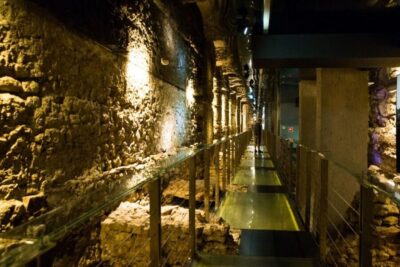
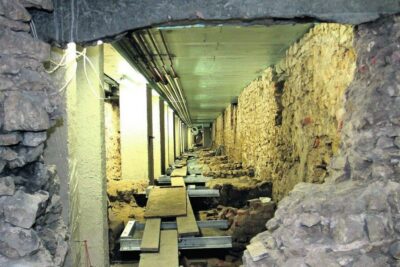
Once inside, your guide leads the group through the underground paths and archaeological remains. The tour is not a quick look at one display. It covers almost 4,000 square meters, so you move through several connected areas with different themes and types of evidence.
You will see traces of old streets and market spaces, along with artifacts linked to craftsmen and merchants. These remains show Krakow as a trade center in Central Europe, where goods and people passed through the square. Your guide explains how commerce shaped the city and how daily work took place around the market.
The museum also presents 11th-century burials. These are among the more striking parts of the visit, though they may not suit very young children or anyone uncomfortable with human remains. The burials help place Krakow’s religious and social life into a longer story, rather than treating the market as only a place for buying and selling.
Expect explanations about religion, trade, travel, and the damage caused by fire and other upheavals. One especially interesting detail is that the archaeological remains were only uncovered in the modern period, with the museum built around discoveries made during excavations. You are seeing a part of the city that was not available to the public for most of Krakow’s recent past.
The advertised experience lasts about an hour and a half. The detailed schedule gives roughly 1 hour 15 minutes for the main museum visit and another 15 minutes for the return to the surface. In practice, some visitors have found the guided portion shorter than expected, around 75 minutes, so do not book this expecting a two-hour museum session.
Why the guide can make or break the visit
The museum’s objects are interesting on their own, but a guide helps answer the questions the labels cannot always handle. Why was the street buried? How did merchants use the square? What can a small household object tell you about ordinary life? A good guide turns those questions into a connected account.
Several guides received especially strong praise for clear, lively explanations. Olga was singled out for bringing the artifacts to life, while Magda was appreciated for pointing out the most important parts of the collection. Pauline was described as friendly and well informed, and Joanna was praised for keeping the information clear. Alicia also received credit for an informative tour once the crowd thinned.
The best guides keep the group moving without rushing. They choose the objects that matter most and explain them in plain language. That is useful here because the museum contains more material than you can absorb in one short visit.
Still, the guide quality is not perfectly consistent. Some tours have included too much joking, repeated points, or questions that felt unhelpful. A few visitors felt the guide skipped sections or did not speak English clearly enough to explain the exhibits well. That matters more in this museum than at a simple scenic stop, since the value of the tour rests heavily on the commentary.
If you are interested in archaeology and medieval life, the guide-led format is likely worth the extra cost. If you prefer to read labels, linger, and choose your own route, the guided pace may feel restrictive. The museum itself remains the main attraction, so your enjoyment will depend partly on how well the guide matches your learning style.
The museum’s technology, sound, and atmosphere
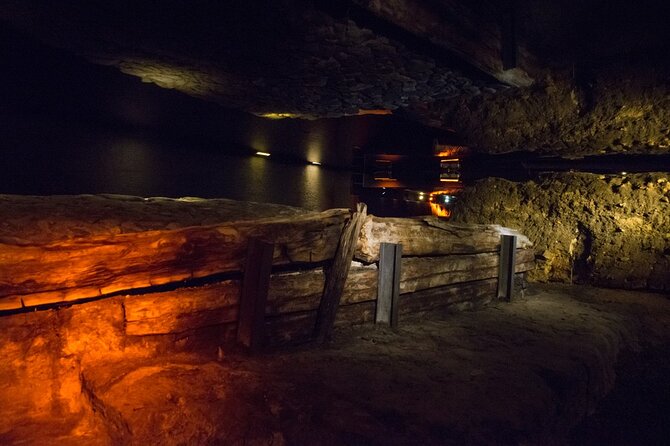
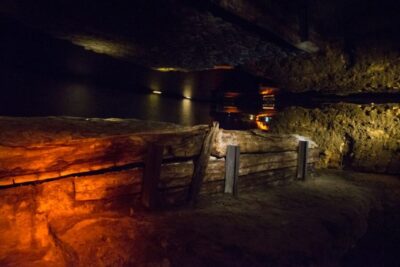
The underground setting is low-lit and modern, with exhibits spread through spacious passages and rooms. The lighting creates an atmospheric mood without turning the visit into a theatrical show. It also helps separate the museum from the bright, open square overhead.
The technology is one of the museum’s strongest features. Touchscreens provide another way to explore the material, while films and holographic displays help reconstruct parts of medieval Krakow. These tools are not just decoration. They show the difference between a surviving wall and the active market that once surrounded it.
You might hear recreated merchant calls and the creak of carts, details that give the old market a human scale. The displays also help you understand the changing levels of the square, a point several visitors valued because the museum shows the area through different periods.
The museum can feel warmer than expected, especially compared with Krakow’s streets. That makes it a useful stop on a cold day, though the lighting and enclosed setting may not appeal to everyone. A coffee shop connected with the museum was closed during one afternoon visit, but cafés and other places are nearby in the Main Square.
One practical tip is easy to miss: look for the place where you can see St. Mary’s Basilica and the square above through the glass ceiling. It is one of the museum’s best visual links between the archaeological remains and modern Krakow. Do not rely entirely on the guide to point it out, since it may be worth seeking out yourself.
More museums in Krakow:
- Auschwitz-Birkenau Museum and Memorial Guided Tour from Krakow
★ 4.5 · 1,510 reviews - Krakow Schindler’s Factory Museum Guided Tour in English
★ 4.5 · 650 reviews - Krakow: Auschwitz Birkenau Museum Guided Tour with Pickup
★ 3.6 · 544 reviews - Museum of illusions Entry Ticket
★ 4.5 · 521 reviews
How the group size affects the experience
The official maximum is 29 people. That is not enormous for a city tour, but underground rooms can make a group of more than 20 feel crowded. At busy moments, you may need to stand close to the guide or listen carefully around other groups.
For groups of 15 or more, headsets are provided. This is a useful safeguard, especially when the museum fills up or the guide is speaking in a low-lit room with hard surfaces. Even so, headsets cannot solve every problem. If your group bunches around one display, you may still have trouble seeing the object or finding a good place to stand.
Smaller groups are clearly preferable here. They make it easier to hear, ask questions, and move between exhibits. The tour is offered in one language only, English for this experience, so the guide does not need to divide attention between language groups.
Arrive 10 minutes before departure. This is not a casual recommendation. Once the group has left the meeting point, late arrivals cannot enter, and the ticket cannot be refunded. The central location makes the museum easy to combine with other Old Town sights, but the busy square is exactly why you should not cut the timing close.
Is $35 a fair price?
At $35 per person, this is not the cheapest way to spend an hour and a half in Krakow. The value depends on what you want from the museum.
The price includes admission and a guided visit, so you are paying for more than entry. You are also paying to avoid the ticket queue and to have someone select the key exhibits and explain their importance. For a first visit to the museum, that can be worthwhile. The archaeological remains are not always self-explanatory, and the story connects several subjects, from medieval trade to burial customs and urban disasters.
The price feels less attractive if you plan to move quickly through the displays or if you already know Krakow’s medieval history. Some people can walk through the museum independently in much less time, while others want to pause at every touchscreen and artifact. A self-guided option, if available at your chosen time, may offer better value for independent visitors.
I would think of the tour as a way to improve a museum visit rather than as a sightseeing attraction on its own. If your schedule has room and you want context, $35 is reasonable. If you have only a brief opening between other attractions, buy entry and explore at your own speed if that option is offered.
The strong overall rating of 4.5 from 101 ratings points to a generally satisfying experience, but the spread of opinions is useful. Excellent guides can make the museum memorable. A less effective guide can make the same route feel hurried or overloaded with facts.
Who will enjoy this most
This tour suits adults and older children who like archaeology, old city plans, and the details of daily life. You do not need specialist knowledge. You only need enough curiosity to care how a market worked, how people traveled, and what survives after centuries of rebuilding.
History fans should get the most from the commentary. The guide links ordinary objects to larger changes in Krakow, and the exhibits provide physical evidence rather than only dates and famous names.
It is less suitable for very young children. The burial displays and long explanations may test their patience, and the low-lit museum is designed more for careful looking than energetic play. Families with older children can use the holograms and films as an entry point, then decide how much of the historical detail to follow.
You should also consider your preferred pace. This is a group experience, not a private museum appointment. The guide decides where to stop and when to move on. If you want to examine every artifact, take your own photographs, or reread each panel, independent entry may be more comfortable.
Practical planning for a day in Krakow
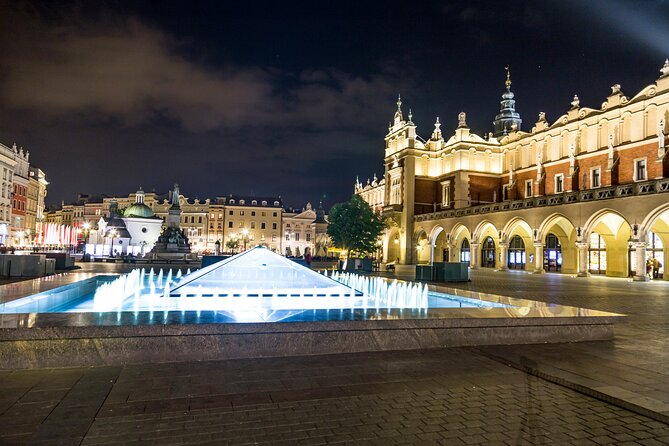
The museum is right under the Old Town’s main square, near St. Mary’s Basilica and the Cloth Hall. It is close to public transportation, and the end point is the same as the start, so you can continue walking through the Old Town afterward.
A morning visit can work well before the square becomes crowded, but the experience is also a sensible rainy-day or cold-weather plan. The museum’s indoor temperature may be warmer than expected, and the underground rooms offer a break from the weather above.
Give yourself a few minutes to find the entrance. The address is Rynek Główny 1, but the square has several prominent buildings and busy pedestrian flows. Arriving early lets you locate the desk without turning the first part of the experience into a scramble.
After the visit, take a moment in the square before moving on. The museum works best when you compare the layers below with the buildings above. St. Mary’s Basilica, the Cloth Hall, and the open market space gain another dimension once you have seen the older streets and working areas beneath them.
Free cancellation is available up to 24 hours before the start time for a full refund. Changes or cancellations made later are not refunded, and the provider may cancel if the minimum number of participants is not met, offering another date or a full refund.
Should you book the Rynek Underground tour?
Book it if you want the archaeological remains explained, appreciate multimedia displays, and prefer a fixed route through a large museum. The strongest guides make the visit focused and engaging, and the included admission plus skip-the-line access removes two small hassles.
Think twice if you dislike group pacing, prefer silence, or already have a good grasp of Krakow’s medieval past. A self-guided visit may let you see more at your own rhythm and could cost less.
My practical choice would be to book the guided tour for a first visit, especially if you have limited time and can accept a group of up to 29 people. Arrive early, listen for the guide’s key explanations, and make a point of finding the glass-ceiling view to the square above. That combination gives you the museum’s strongest experience without pretending every guide-led visit will be equally sharp.
FAQ
Where does the Rynek Underground Museum tour start?
It starts at the Rynek Underground Museum at Rynek Główny 1, 31-042 Kraków, Poland, beneath Krakow’s Main Square.
Where does the tour finish?
The tour ends back at the meeting point after you return to the surface.
How long does the experience last?
The experience is listed as approximately 1 hour 30 minutes. The main guided museum portion is described as about 1 hour 15 minutes, followed by around 15 minutes returning to the surface.
Is admission included?
Yes. The ticket includes museum admission and skip-the-line access for the guided experience.
What language is the tour offered in?
This experience is offered in English. Group tours operate in one language only, so select English when booking.
How large can the group be?
The museum limits each tour to a maximum of 29 participants. Headsets are provided when a group has 15 or more people.
What happens if I arrive late or need to cancel?
You should arrive 10 minutes before the start. Latecomers cannot join after the group departs, and their tickets cannot be refunded. You can cancel for a full refund up to 24 hours before the start time.
More Skip the Line in Krakow
- From Krakow: Wieliczka Salt Mine Tour & Skip the Line Ticket
★ 4.4 · 3,925 reviews - Auschwitz-Birkenau Skip-the-Line Guided Tour
★ 4.3 · 3,617 reviews - Krakow: Schindler’s Factory Skip-the-Line Ticket
★ 4.4 · 3,105 reviews - Auschwitz-Birkenau: Skip-the-Line Entry Ticket & Guided Tour
★ 4.4 · 3,052 reviews
Just added around Krakow
- Private Guided Tour: Oskar Schindler’s Factory★ 5.0 · 3 reviews
- E-Scooter Krakow sightseeing tour★ 5.0 · 3 reviews
- From Krakow: Zakopane and Thermal Pools Guided Trip★ 5.0 · 3 reviews
- Schindler’s Factory, Ghetto and Plaszow Camp Guided Tour★ 4.7 · 3 reviews
- Kraków: Private Hot Air Balloon Flight with Champagne★ 3.7 · 3 reviews
- Krakow: River Cruise & Guided Visit to Former Plaszow Camp★ 3.6 · 3 reviews
- From Krakow: Private Wieliczka Salt Mine Tour★ 4.0 · 3 reviews
- Krakow: Old Town short walk with St. Mary’s Basilica visit★ 5.0 · 3 reviews
Rynek Underground Museum, compared.
Rynek Underground Guided Tour with Skip-the-Line
Read our review →
Old Town Rynek Underground Entry and Guided Tour
Read our review →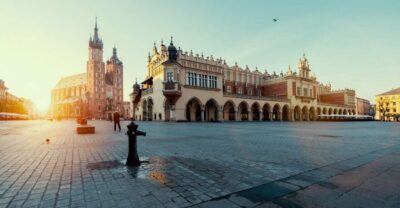
Skip-the-Line Rynek Underground Museum Guided Tour
Read our review →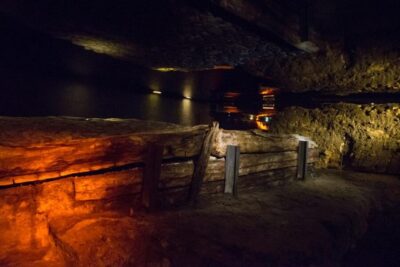
Krakow’s Rynek Underground Museum Tour with Ticket and Guide
Read our review →Browse the lists this tour appears in