
Reviewed · AUSCHWITZ-BIRKENAU TOURS
Auschwitz-Birkenau: Skip-the-Line Entry Ticket & Guided Tour
Auschwitz-Birkenau is not a sightseeing stop you simply check off. From the main gate at Auschwitz I to the open grounds and ruined gas chambers of Birkenau, the visit brings the scale of Nazi crimes into sharp focus. A licensed museum guide gives the setting its historical context and helps you understand what you are seeing.
I like the clear two-part structure and the use of headsets, which let you hear the guide even when several groups are moving through the same buildings. I also like the low price of $21, which includes admission, the official guide, and booking fees. The main drawback is planning: your preferred start time is not guaranteed, and the final time may arrive only the day before.
In This Review
- Key points to know before booking
- Why this Auschwitz visit matters
- Entering Auschwitz I through the main gate
- Auschwitz I: barracks, exhibits, and evidence
- The break and transfer to Birkenau
- Birkenau: scale, railway, and ruins
- The guides and audio system
- Timing problems and how to plan around them
- What to bring, and what to leave behind
- Is $21 good value?
- Who should book this tour?
- My verdict: book it if you can accept the fixed route
- FAQ
- How long does the Auschwitz-Birkenau tour last?
- Does the tour visit both Auschwitz I and Auschwitz II Birkenau?
- Is a guide included?
- Which languages are available?
- Is transportation from my hotel included?
- Is transportation between Auschwitz I and Birkenau included?
- Can I choose my start time?
- What identification should I bring?
- Can I bring a backpack or large bag?
Key points to know before booking
- The tour covers both Auschwitz I and Birkenau: You see the original barracks and museum displays first, then continue to the larger Birkenau site.
- The guide is supplied by the museum: Expect a licensed guide speaking English, German, French, Italian, or Spanish.
- Headsets make the commentary easier to follow: This matters in crowded rooms and while walking between buildings.
- The full visit lasts about 225 minutes: The first section takes roughly 80 to 110 minutes, followed by a 10 to 15 minute break and about an hour at Birkenau.
- Your exact time may change: The available operating window is about 7:00 AM to 3:30 PM, but the confirmed start time is sent the day before.
- You must plan the short transfer yourself: Transport between Auschwitz I and Birkenau is not included in the price, and you may need to reach the Brzezinka parking area by your own transport.
Why this Auschwitz visit matters
Auschwitz-Birkenau was created by the Nazi regime in 1940 and became the largest concentration and extermination camp complex of the Second World War. The memorial preserves buildings, personal belongings, railway facilities, barracks, and ruins rather than presenting the subject as a distant textbook chapter.
That physical evidence is what makes the visit so difficult and so important. You are not only looking at photographs or reading dates. You are walking through a place where people were imprisoned, stripped of their belongings, separated from their families, and murdered.
I would not describe this as enjoyable. The right words are serious, painful, and necessary. You should allow time afterward to be quiet and process what you have seen.
The guides make a major difference. Names assigned on different tours have included Anna, Teresa, Mario, Suzanna, and others. The strongest guiding style here is calm and precise, with historical facts joined to survivor accounts and personal stories. Several guides have been praised for clear English, a measured pace, and the care they take with questions.
More Auschwitz-Birkenau memorial visits:
- From Krakow: Auschwitz-Birkenau Guided Tour & Hotel Pickup
★ 4.5 · 33,358 reviews - From Krakow: Auschwitz-Birkenau Guided Tour & Hotel Pickup
★ 4.5 · 29,340 reviews - Krakow: Auschwitz Guided Tour with Optional Hotel Pickup
★ 4.5 · 15,280 reviews
Entering Auschwitz I through the main gate
Your meeting point depends on the option you book. You meet the host near the museum entrance, pass through security, and enter with the pre-booked ticket. Bring your passport or identity card, since full name and contact details are required when reserving.
The entrance area can feel confusing on busy days. Many groups gather near the gate, and finding the right guide may take patience. Arriving early is sensible, but do not be surprised if the guide is not immediately obvious or if the meeting process takes longer than expected.
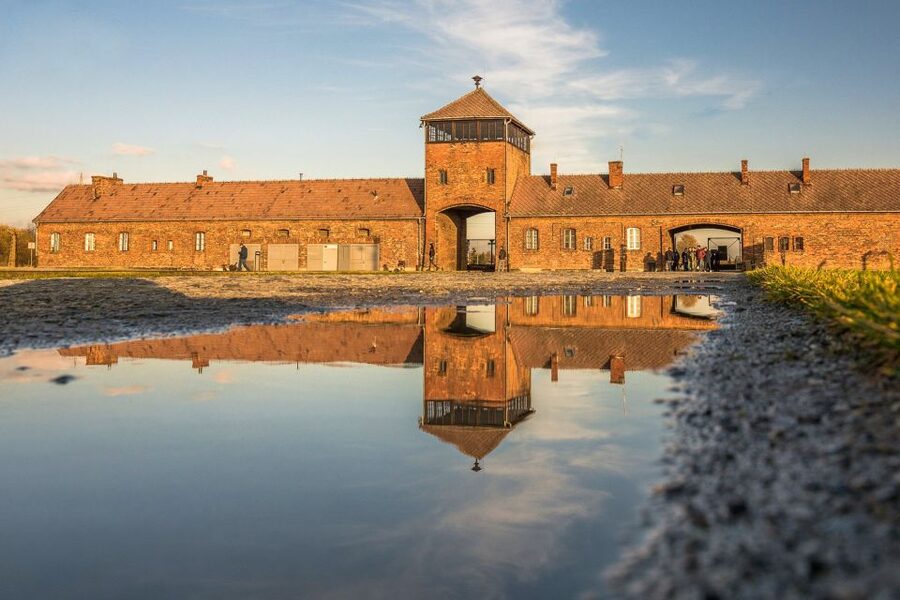
The famous gate at Auschwitz I is one of the most recognizable images connected with the camp. Seeing it in person changes the scale of the place. The gate is not an isolated monument. It leads into a preserved camp complex of brick barracks, paths, fences, and administrative buildings.
After security, the mood shifts quickly. The setting is orderly and maintained, but the order itself can feel stark. Your guide provides the necessary explanation without turning the visit into a theatrical performance.
Auschwitz I: barracks, exhibits, and evidence
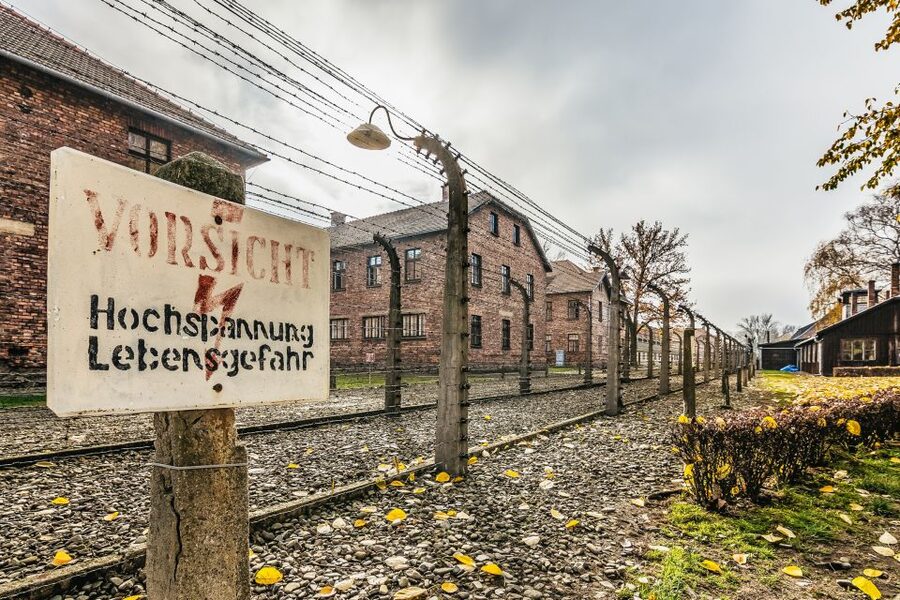
The first part lasts approximately 80 to 110 minutes. The route takes you through original barracks and museum displays that explain how the camp operated and how prisoners were treated.
This section gives you the framework for understanding Birkenau later. You learn about the Nazi system of imprisonment, forced labor, deportation, and mass murder. The guide also explains the difference between the camp buildings and the later extermination facilities.
The exhibits include objects left behind by prisoners. Personal belongings are especially hard to face because they show the people behind the statistics. Shoes, luggage, and other possessions point to families who were told they were being relocated, only to be robbed and killed.
One display of human hair is among the most distressing parts of the visit. The Red Army found about seven tonnes of hair in a warehouse after liberation. The hair had been cut from prisoners and intended for industrial use, including socks, carpet, rope, and mattress stuffing.
You may also enter one of the preserved gas chamber spaces at Auschwitz I. The room is plain, which makes the historical explanation even harder to absorb. Your guide will explain its purpose and the process of mass murder carried out there.
Do not expect unlimited time in every room. Groups move along a set route, and the museum can be crowded. You may have only a short time to read every panel or examine every display. The headsets help because you can keep listening while moving.
This is one reason I recommend reading a basic account of Auschwitz before you arrive. You do not need to become an expert. A little preparation lets you spend more time looking and thinking, rather than trying to grasp every basic fact on the spot.
The break and transfer to Birkenau
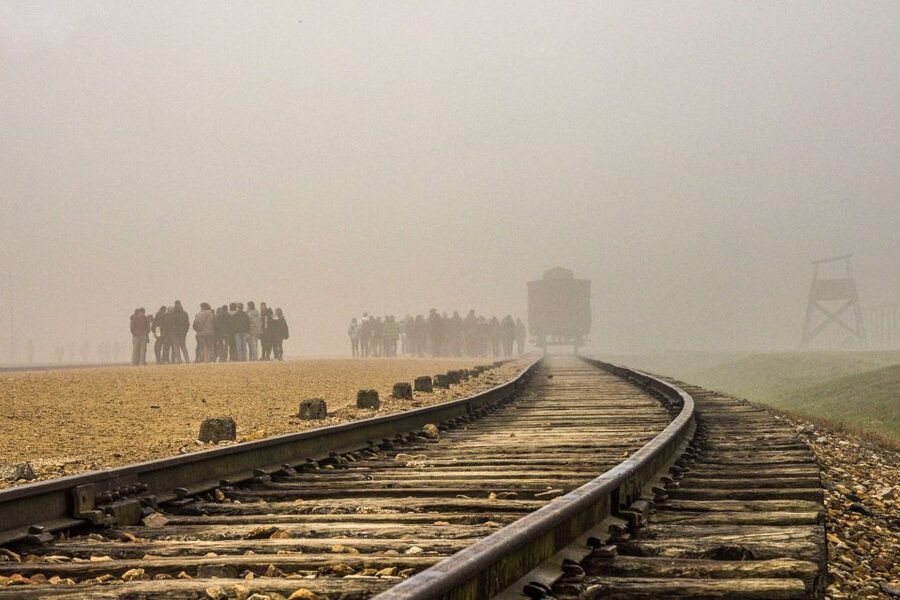
After Auschwitz I, there is normally a 10 to 15 minute break. You can eat a packed lunch and have a drink, but this is not a leisurely meal stop.
The transfer arrangements deserve close attention. The second camp is about 2 kilometers away in Brzezinka, and transport between Auschwitz and Birkenau is not included in the basic activity. The information also states that you will board a bus for the second section, so the exact arrangement depends on the option and meeting instructions you receive.
If you arrive by car, you are expected to make your way to the car parking area in Brzezinka during the break. If you use public transport, tell the tour leader before the tour begins. That allows the leader to help you reach Birkenau.
This short gap is easy to underestimate. Do not wander far, sit down for a long lunch, or assume that someone will automatically drive you to the second site. Keep your belongings together and follow the guide’s instructions carefully.
A few more Krakow trips worth comparing
- From Krakow: Wieliczka Salt Mine Tour & Skip the Line Ticket
★ 4.4 · 3,925 reviews - Auschwitz-Birkenau Skip-the-Line Guided Tour
★ 4.3 · 3,617 reviews - Krakow: Schindler’s Factory Skip-the-Line Ticket
★ 4.4 · 3,105 reviews - Schindler’s Factory in Krakow: Guided Tour & Skip the Line Ticket
★ 4.5 · 1,714 reviews
Birkenau: scale, railway, and ruins
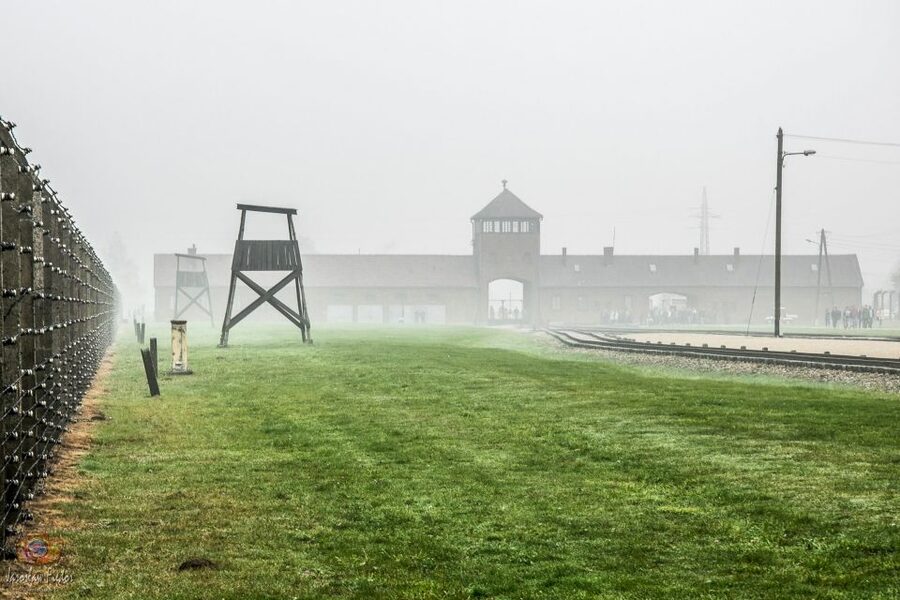
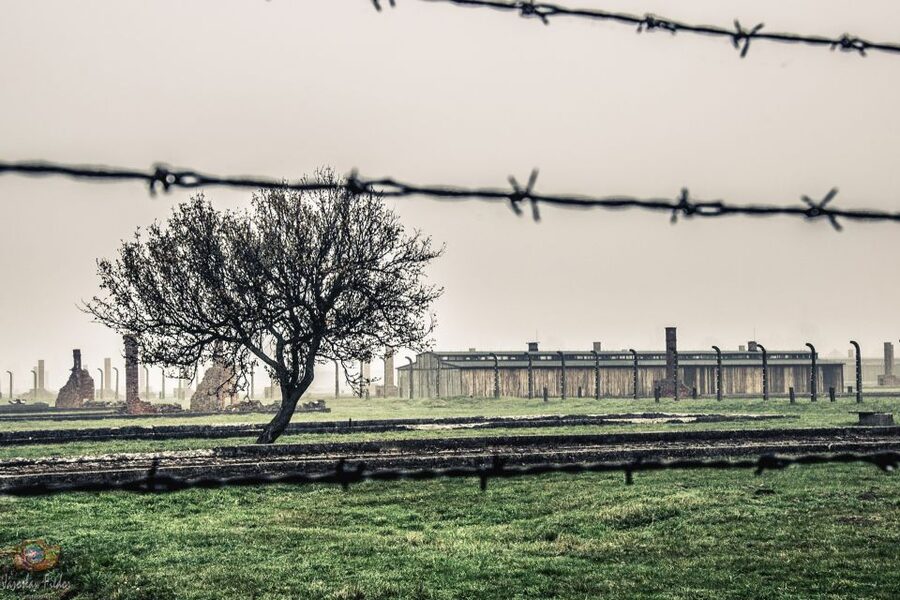
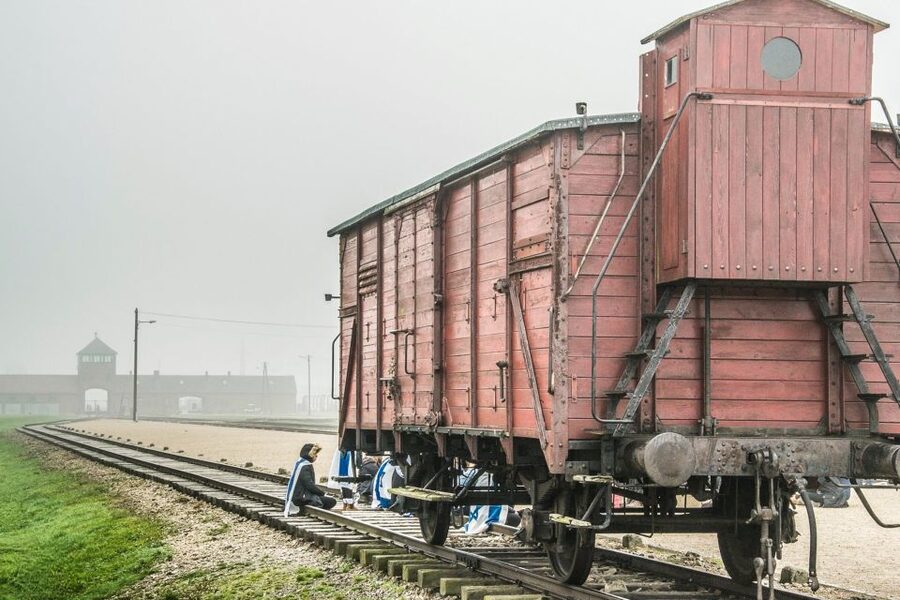
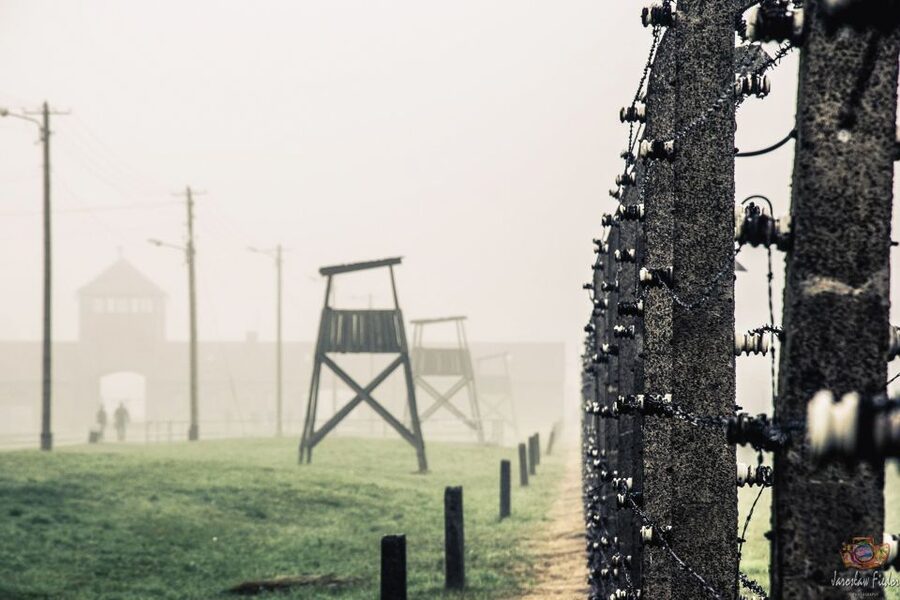
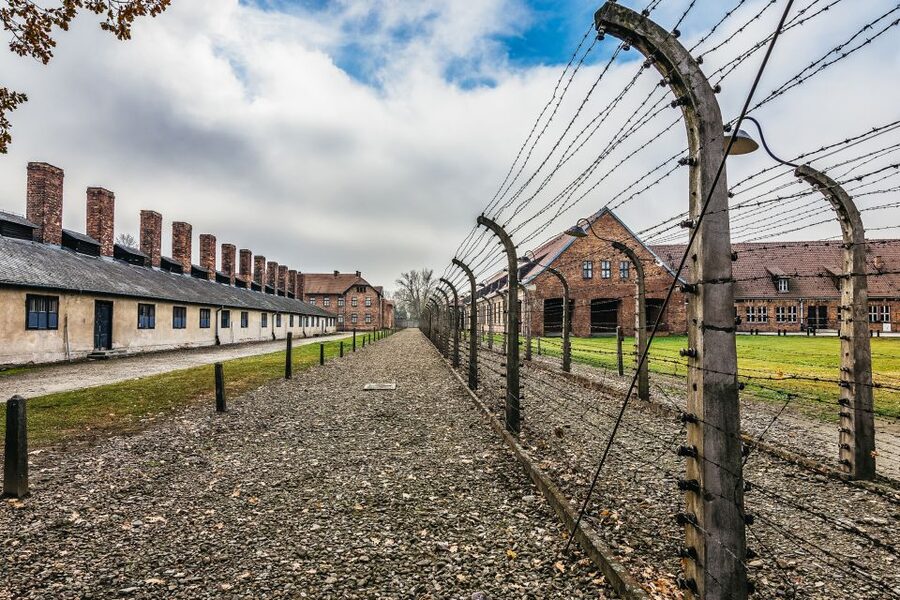
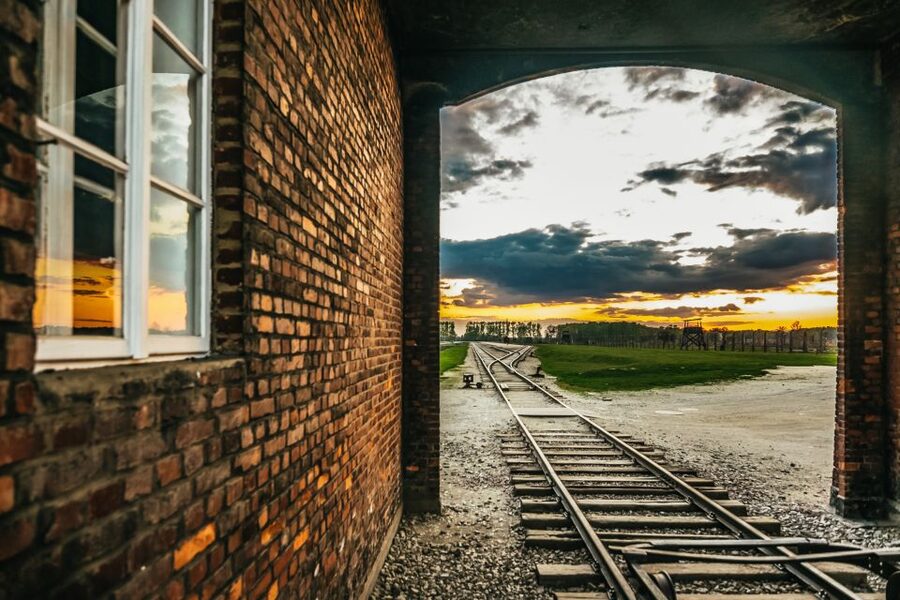
Auschwitz II Birkenau takes about an hour with the same guide. This is the larger site, with wide open ground, rows of barracks, watchtowers, fences, and the railway entrance associated with mass deportations.
The size of Birkenau is difficult to understand from photographs. At Auschwitz I, the preserved buildings create a contained route. Birkenau spreads outward, and the open space shows how industrial the Nazi system became.
The original barracks and their remains help explain the living conditions forced on prisoners. The setting is exposed, with little shelter from weather. In winter, snow and freezing temperatures can make the visit feel even more severe. In summer, the sun and heat can be tiring, especially since the tour is mostly on foot and has few stopping points.
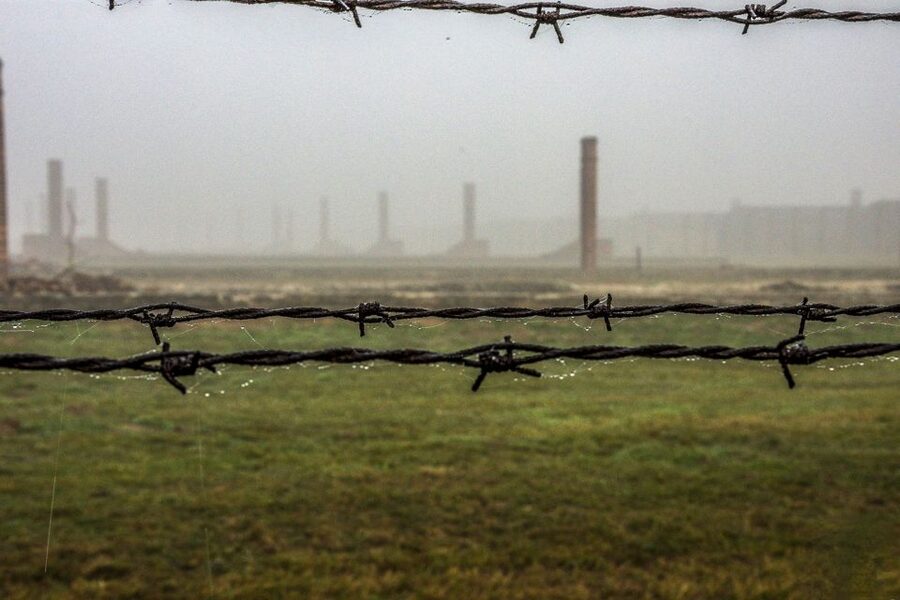
At the far end of the site are the ruins of gas chambers destroyed by the Nazis as they tried to erase evidence of their crimes. These ruins are quieter and less visually complete than the buildings at Auschwitz I, but their meaning is no less powerful.
The guide connects the physical remains with the stories of the people who arrived here. This is where the visit often feels largest in scale. You can see why reading about the number of victims cannot fully prepare you for the size of the grounds.
The Birkenau section is also where the weather matters most. Bring water, suitable clothing, and comfortable shoes. You may find the ground uneven, and there is limited opportunity to rest during the route.
The guides and audio system
The official museum guide is included, not an optional extra. That is important at a memorial site where context, wording, and tone matter.
The best guides described for this experience have been calm, respectful, and clear rather than dramatic. Anna has been praised for adding context and stories beyond basic facts. Teresa has been described as sensitive and engaging. Mario has been noted for keeping a good pace while covering a great deal of material.
You should still remember that the individual guide affects the feel of the tour. The guide assigned to your group may be different, and the tour pace is controlled by the memorial’s visitor service. The booking company cannot decide how long the museum allows at each point.
Headsets are provided to the group. I consider them one of the most useful practical features. You can hear the commentary while walking, and people who speak English as a second language have found the clear delivery helpful.
The headsets do not turn the visit into a private tour. You remain part of a group, and you must stay with the guide. They simply prevent the common problem of losing the commentary in a crowded room.
Timing problems and how to plan around them
The listed duration is 225 minutes, but the day may not run to the exact minute. The first section can last from about 80 to 110 minutes, the break can vary, and the Birkenau visit lasts roughly an hour.
The bigger issue is the starting time. You can choose a preferred time during booking, but the exact entrance time is sent the day before. It may be moved earlier or later because of the memorial’s visitor schedule.
That flexibility helps explain the low price. You are paying for a guided museum visit at a reduced rate, but you give up some control over the clock. If you have a train, flight, restaurant booking, or another timed tour afterward, leave a generous margin.
Early starts can be useful in summer because the site may be cooler and less crowded. A morning time can also leave room for other plans, but only if the final confirmation arrives early enough for you to organize the day.
Do not schedule something immediately after the tour. The visit itself lasts about three hours and 45 minutes, and meeting, security, transfer, or crowd delays can add uncertainty.
What to bring, and what to leave behind
Bring your passport or identity card. This is a museum requirement and not merely a suggestion.
Pack lunch and drinks because the break is short and food is not included. A small bottle of water is particularly useful in warm weather, though you should follow museum rules about where food and drinks may be consumed.
The museum does not permit large bags or backpacks. The maximum permitted bag size is 20 by 30 centimeters. Pets, smoking, alcohol, drugs, short skirts, and sleeveless shirts are also not allowed.
Dress for the weather and for a long walk. The supplied information does not require a special uniform, but modest clothing is appropriate at a memorial site. Comfortable shoes matter more than appearance.
The experience is not suitable for wheelchair users according to the activity information. If you have mobility concerns, confirm current access arrangements with the museum before booking.
Is $21 good value?
At $21 per person, this is an inexpensive way to visit both camps with a licensed guide. Admission, the museum guide, and booking fees are included, so you are not paying the headline price and then discovering several required extras.
The catch is that transport to and from your accommodation is not included. Parking fees, food, and drinks are also your responsibility. Most important, transport between Auschwitz I and Birkenau is not included in the basic package, so you need to read the option details and meeting instructions carefully.
I think the price is strong if you can get yourself to the museum and accept a flexible start time. It is less convenient if you want hotel pickup, a guaranteed hour, or one person to handle every transfer.
The tour also gives you an official guide rather than asking you to navigate the memorial alone. That matters because the camps contain more information than you can absorb unaided, and the guide helps connect the buildings, displays, and ruins.
Who should book this tour?
Book it if you want both Auschwitz I and Auschwitz II Birkenau, prefer a structured visit, and value historical explanation over wandering independently.
It suits first-time visitors, families with older children, and anyone who wants the main route explained in a respectful way. One family reported that their two young children stayed interested, but the subject is extremely upsetting. Parents should decide carefully how much detail their children can handle.
It also suits visitors who speak English, German, French, Italian, or Spanish and want live commentary in one of those languages.
This is not the right choice if you need complete control over your schedule. It is also a poor fit if carrying a large daypack is essential, if you cannot manage several hours on foot, or if you want a relaxed, self-paced museum visit.
My verdict: book it if you can accept the fixed route
I recommend this Auschwitz-Birkenau tour for its low price, official guide, two-camp coverage, and clear audio system. The strongest part is the guiding: a good guide can explain the evidence with care and help you understand the human scale without resorting to spectacle.
Book only after checking the transport details and leaving your day open. Your exact entrance time may change the day before, the break is short, and you may need to reach Birkenau under your own arrangements.
If you are prepared for those limits, this gives you a serious and well-supported visit to one of Europe’s most important memorial sites. Go with modest clothing, a small bag, water, and enough emotional space afterward.
FAQ
How long does the Auschwitz-Birkenau tour last?
The stated duration is 225 minutes. Auschwitz I takes about 80 to 110 minutes, followed by a 10 to 15 minute break, and Auschwitz II Birkenau takes about an hour.
Does the tour visit both Auschwitz I and Auschwitz II Birkenau?
Yes. The route begins at Auschwitz I and continues to Auschwitz II Birkenau after the break.
Is a guide included?
Yes. A licensed guide provided by the Auschwitz-Birkenau Museum is included.
Which languages are available?
The live tour guide may speak English, German, French, Italian, or Spanish.
Is transportation from my hotel included?
No. Transportation to and from your accommodation is not included.
Is transportation between Auschwitz I and Birkenau included?
The basic activity information says transportation between the camps is not included. During the break, you may need to reach the Brzezinka parking area by your own transport. If you use public transport, tell the tour leader before the visit.
Can I choose my start time?
You can choose a preferred start time, but the exact time is sent the day before. Tours may take place between about 7:00 AM and 3:30 PM.
What identification should I bring?
Bring your passport or identity card. Your full name and contact details are also required during booking.
Can I bring a backpack or large bag?
No. Large bags and backpacks are not permitted. The maximum bag size allowed is 20 by 30 centimeters.
Just added around Krakow
- Private Guided Tour: Oskar Schindler’s Factory★ 5.0 · 3 reviews
- E-Scooter Krakow sightseeing tour★ 5.0 · 3 reviews
- From Krakow: Zakopane and Thermal Pools Guided Trip★ 5.0 · 3 reviews
- Schindler’s Factory, Ghetto and Plaszow Camp Guided Tour★ 4.7 · 3 reviews
- Kraków: Private Hot Air Balloon Flight with Champagne★ 3.7 · 3 reviews
- Krakow: River Cruise & Guided Visit to Former Plaszow Camp★ 3.6 · 3 reviews
- From Krakow: Private Wieliczka Salt Mine Tour★ 4.0 · 3 reviews
- Krakow: Old Town short walk with St. Mary’s Basilica visit★ 5.0 · 3 reviews
Auschwitz-Birkenau Tours, compared.

Auschwitz-Birkenau Guided Tour & Hotel Pickup
Read our review →Auschwitz-Birkenau Guided Tour & Hotel Pickup
Read our review →
Auschwitz Guided Tour with Optional Hotel Pickup
Read our review →
Auschwitz-Birkenau Guided Tour with Pickup & Lunch
Read our review →
Auschwitz-Birkenau Guided Tour Pickup/Lunch Options
Read our review →

Krakow to Auschwitz Birkenau Guided Tour with Transfer and Ticket
Read our review →
Browse the lists this tour appears in