
Reviewed · AUSCHWITZ-BIRKENAU TOURS
Krakow to Auschwitz-Birkenau Live Guided Tour & Hotel Pick-up
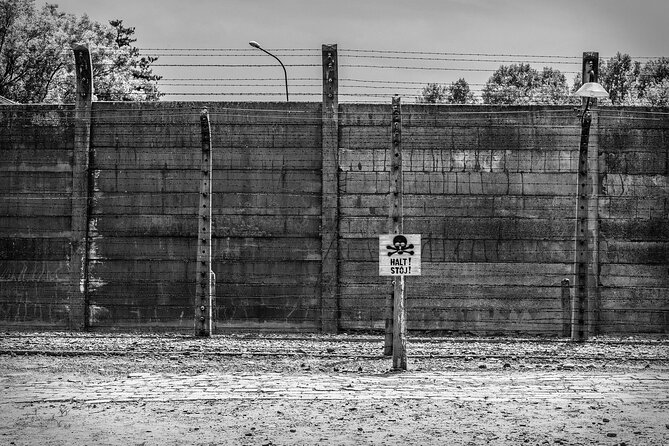
Auschwitz-Birkenau is not a sightseeing stop in the usual sense. It is a place of evidence, memory, and grief, where original barracks, fences, gas chambers, crematoria, and personal belongings make the scale of Nazi crimes impossible to keep at a distance. This tour gives you a full day for both Auschwitz I and Birkenau, with a licensed museum guide leading the main visit.
I like the included admission and the choice between hotel pickup and a central Krakow meeting point. I also like the helpful drivers, including people such as Michael, Jay, Bogdan, Peter, Patryk, and Łukasz, who have been praised for clear instructions and calm care during a difficult day.
The main caution is pace. The museum controls much of the timing, and some groups move quickly between buildings. With uneven paths, stairs, and a lot of walking, this is not an easy outing for anyone with limited mobility. A few visitors also had trouble hearing guides through the headset or felt there was too little time to pause.
In This Review
- Key points to know before booking
- Why this Krakow day trip matters
- From Krakow to Oswiecim by road
- Auschwitz I and the gate marked Arbeit Macht Frei
- The short transfer to Birkenau
- Birkenau and the scale of the killing system
- Transport, breaks, and the return to Krakow
- Is $30.17 good value?
- Practical advice for a more meaningful visit
- Who should book this Auschwitz-Birkenau tour?
- Should you book it?
- FAQ
- How long does the Krakow to Auschwitz-Birkenau tour take?
- Is admission to Auschwitz-Birkenau included?
- Do I need to bring a passport or ID?
- Is hotel pickup available from Krakow?
- Is lunch included?
- Is the tour suitable for children or anyone with limited mobility?
Key points to know before booking
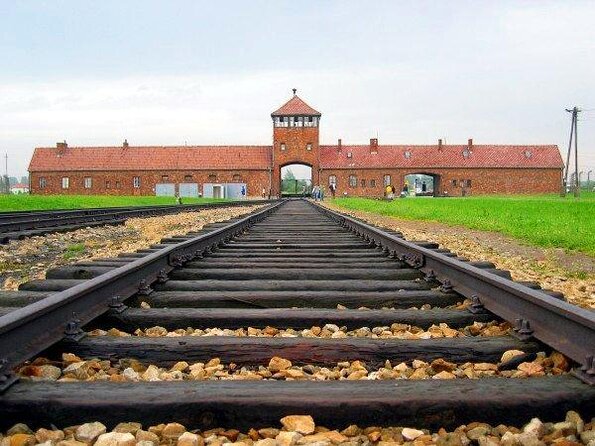
- Two camps in one visit: Spend about two hours at Auschwitz I, then around 90 minutes at Birkenau, with a short transfer between them.
- Licensed museum guide: The walking tours are led by a professional guide authorized by the Auschwitz-Birkenau Museum.
- Group limit of 30: The museum sets the maximum, though that can still feel large in narrow rooms and busy corridors.
- Bring photo ID: Your passport or national ID is required to confirm your personal details at entry.
- Pack food and dress for the weather: There is no time for a normal meal between the camps, and the grounds can be cold, exposed, and tiring.
- Pickup time can change: Your final departure time is confirmed the day before and may shift because of museum scheduling or traffic.
Why this Krakow day trip matters
I would not choose this tour simply because Auschwitz is a famous place to tick off. You should go because the site gives physical form to a history that can otherwise remain abstract. The gate at Auschwitz I, the barracks, the narrow rooms, and the railway ramp at Birkenau all force you to confront individual lives rather than just numbers.
The first camp began as a concentration camp for Polish people arrested after Germany annexed Poland in 1939. It later became part of the Nazi system of mass murder aimed largely at Europe’s Jewish population, along with Polish prisoners, Roma and Sinti people, Soviet prisoners of war, and others persecuted by the regime.
A guide matters here. Without context, you may see rows of buildings and barbed wire. With a good guide, you learn how the camp operated, how prisoners were selected, and how the machinery of persecution developed. Guides such as Michael and Anna have been singled out for their detailed explanations and respectful manner, but the exact guide is not guaranteed.
This is an emotionally heavy visit. The tour information recommends it for people aged 13 and older because the subject matter can be traumatic. That advice deserves attention. You do not need to be a history specialist, but you should be ready for a serious day.
More Auschwitz-Birkenau memorial visits:
- From Krakow: Auschwitz-Birkenau Guided Tour & Hotel Pickup
★ 4.5 · 33,358 reviews - From Krakow: Auschwitz-Birkenau Guided Tour & Hotel Pickup
★ 4.5 · 29,340 reviews - Krakow: Auschwitz Guided Tour with Optional Hotel Pickup
★ 4.5 · 15,280 reviews
From Krakow to Oswiecim by road
The journey begins in Krakow, either at the central meeting point at Floriana Straszewskiego 17 or at your selected hotel pickup option. The hotel transfer costs more, so check the product choice carefully before paying. A central pickup is the better value if you can reach it easily.
The drive to Oswiecim takes about one hour and 15 minutes over roughly 65 kilometers. The vehicle and driver are part of the practical appeal of this outing. Drivers hold the required European Union certifications for passenger transport, and an English-speaking group leader can help with questions and directions.
The quality of the transfer can shape the whole day. Several drivers have been praised for being polite, punctual, and informative. Some departures include a documentary on the vehicle’s screen, which can give you useful background before reaching the museum. That is a good use of the drive, though it is not stated as a guaranteed feature for every departure.
Build flexibility into your morning. The pickup hour shown when you book is tentative. The final time is normally confirmed by email or WhatsApp 12 to 24 hours before departure, and the departure can fall anywhere between 5:00 AM and 2:00 PM. A shift of 30 to 60 minutes is common, though larger changes may occasionally be needed.
Do not plan another tightly timed attraction immediately afterward. The advertised length is about seven hours, but the museum determines the visit pace and schedule. Traffic can also affect the return to Krakow.
Auschwitz I and the gate marked Arbeit Macht Frei
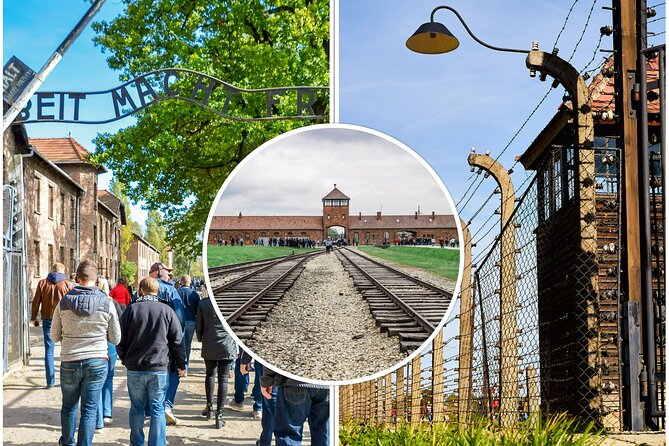
After arrival, you normally have a brief break to get coffee, use the facilities, or look around the outdoor exhibits before meeting your museum guide. You then enter Auschwitz I through the familiar gate marked Arbeit Macht Frei, a phrase that promised work would bring freedom while serving as part of the camp’s cruel deception.
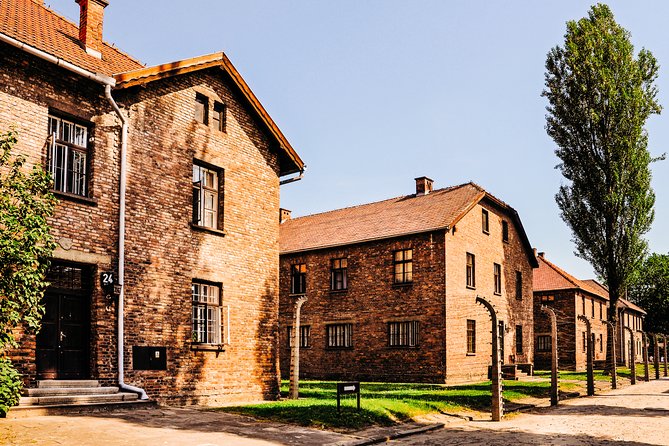
This section usually lasts about two hours. You walk through original brick and wooden buildings, fortified walls, barbed-wire fences, prison blocks, gas chambers, and crematoria. Exhibits inside the barracks explain the camp system and show how people were stripped of their names, belongings, families, and identities.
You will use a headset so the guide can speak while the group moves through the grounds. This is essential in a crowded setting, but headset quality and positioning matter. One complaint involved a guide’s clothing interfering with the microphone transmitter, making some explanations hard to hear. If sound drops out, tell the guide promptly and ask the group leader for help.
The group limit is 30 people, set by museum rules. That is smaller than some large coach excursions, but it can still feel crowded inside rooms or around narrow displays. You may need to stay close to the guide to hear every word.
The most difficult displays are often the quietest. Rooms filled with victims’ possessions and spaces showing the remains of the camp system require time to process. The official route may not allow you to stop as long as you wish, so prepare yourself for a guided visit rather than a private, open-ended walk.
Photography is generally allowed, with a few clearly marked exceptions. Follow the instructions carefully. This is a memorial, not a place for casual posing or loud conversation. Respectful behavior is required throughout.
The short transfer to Birkenau
After Auschwitz I, you get a break of up to 15 minutes. Then the vehicle takes you to Birkenau, also called Auschwitz II, about three minutes away in the village of Brzezinka.
This pause is useful, but brief. You can use it to drink water, have a small snack, or collect yourself. There is no proper lunch break between the two camps, so bring food with you. The provided information says there is no on-site grocery shop, snack bar, or restaurant, though one past participant reported finding toilets and cafes at both sites. Conditions and availability can vary, so I would not rely on buying lunch there.
A few more Krakow trips worth comparing
- Krakow: Auschwitz-Birkenau Guided Tour with Pickup & Lunch
★ 4.5 · 9,800 reviews - Krakow: Auschwitz-Birkenau Guided Tour Pickup/Lunch Options
★ 4.5 · 9,057 reviews - Krakow: Auschwitz-Birkenau and Salt Mine Guided Tour
★ 4.7 · 9,020 reviews - Krakow to Auschwitz Birkenau Guided Tour with Transfer and Ticket
★ 5.0 · 8,197 reviews
Birkenau and the scale of the killing system
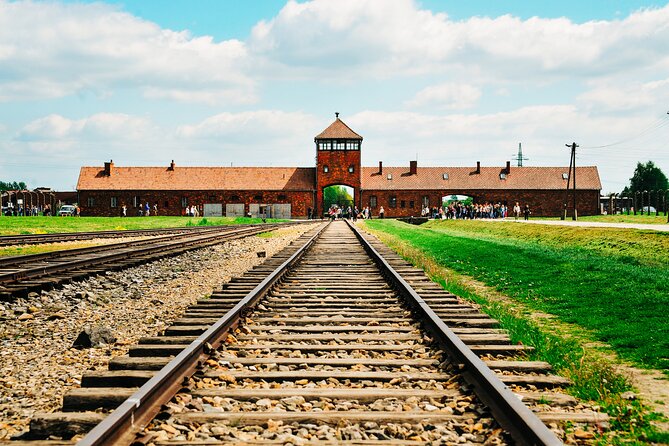
Birkenau is much larger and more exposed than Auschwitz I. The entrance tower, railway tracks, long lines of barracks, fences, watchtowers, and ruined structures make the site feel vast. Its size helps you understand how industrial and organized the Nazi system became.
The camp was constructed in 1941 under orders from Heinrich Himmler and could hold around 90,000 prisoners. It was built as part of the Nazi project to make Europe free of Jews, a genocidal policy carried out through deportation, selection, forced labor, starvation, disease, executions, and mass murder.
Your guide explains the selection process, the brutal living conditions, and the medical experiments carried out by Nazi doctors, including Josef Mengele. The information is hard to hear, but it gives meaning to the structures around you. The railway was not simply a transport route. For many deportees, it was the final stage of a journey into a system designed to kill them.
Birkenau involves considerable walking on uneven ground. You may also encounter stairs, rough paths, and long stretches without shelter. Wear shoes you can walk in for several hours, and bring warm layers even when the Krakow forecast looks mild. Cold, wind, rain, or intense sun can make the visit much harder.
Pace is the biggest issue here. Some guides keep the group moving quickly to meet the museum schedule. That helps the tour finish on time, but it can leave you with little space to read signs, gather your thoughts, or stay with a slower companion. One person using a wheelchair or walking aids found the pace especially difficult, while another group appreciated a guide who provided more breaks.
If you walk slowly, have a heart or breathing condition, use mobility aids, or are visiting with an older relative, ask about the practical demands before booking. The museum may have its own rules and timing, and the guide cannot always change the route. This tour is best for people who can manage a sustained walk over uneven surfaces.
Transport, breaks, and the return to Krakow
When the Birkenau visit ends, you have a short chance to rest before the return drive. There is no formal meal included, so keep a sandwich, fruit, or another compact snack in your small bag. Drinks are also sensible, especially in warm weather.
The return journey takes about one hour and 15 minutes, although traffic can change that. Drop-off arrangements deserve close attention. Depending on the option you choose and the vehicle’s route, you may return to a central Krakow address rather than be taken directly back to your hotel. One past passenger had to walk more than 20 minutes after being dropped at the original meeting area.
If direct hotel drop-off matters to you, confirm exactly what your selected option includes. Paying extra for hotel pickup does not necessarily guarantee a private door-to-door return. Group vehicles may need to use central locations for safety and efficiency.
Is $30.17 good value?
At about $30.17 per person, this is a low-cost way to arrange transport and museum entry from Krakow. Admission is included, so you do not face an extra ticket charge when you arrive. You also receive transport to both camps, an English-speaking group leader, and a licensed local museum guide.
The value is strongest if you want the day organized for you. Driving to Oswiecim independently means handling transport, entry procedures, museum scheduling, and the transfer between Auschwitz I and Birkenau. Here, those pieces are bundled together.
The low price also comes with limits. This is a group experience of up to 30 people, not a private tour. Your departure time may change, your route is controlled by the museum, and the walking pace may not suit everyone. Hotel pickup is offered at a different price, and the exact return point may be less convenient than expected.
For a first visit, I think the included guide is more important than saving a little money on transport. The best parts of the day come from understanding what you are seeing, not simply reaching the site. The tour earns its value when the guide is clear, respectful, and easy to hear.
Practical advice for a more meaningful visit
- Bring your passport or national ID. You may not be admitted without it.
- Keep your bag small. Carry-on luggage cannot exceed 30 by 20 by 10 centimeters. Larger bags can be left in the vehicle.
- Wear sturdy, comfortable shoes. Expect a lot of walking, uneven ground, and some stairs.
- Dress in layers and take a waterproof outer layer. Birkenau is open and exposed.
- Carry a snack because there is no dependable time or place for a full meal between visits.
- Stay close to the guide. A group of 30 can stretch out quickly.
- Check the pickup message the day before. The original time on your voucher may change.
- Tell the guide at once if you cannot hear the headset.
- Keep your behavior quiet and respectful. Follow the signs about photography.
- Give yourself emotional space afterward. This is not a visit you should rush straight through before an evening appointment.
Who should book this Auschwitz-Birkenau tour?
I would choose this tour if you are staying in Krakow, want a straightforward full-day outing, and prefer having transport and entry organized in advance. It suits adults and older teenagers who can walk for several hours and are prepared for difficult subject matter.
It is also a sensible choice for history-minded visitors who want a licensed museum guide rather than a driver giving a short introduction. The strongest experiences here came from guides who combined precise information with a calm, dignified manner. Anna and Michael are two names associated with that kind of approach, though guide assignments can change.
I would think twice if you need a slow pace, frequent seating, or long periods to read every display. The grounds are uneven, the schedule is not fully in the operator’s hands, and a 30-person group can make it harder to stay together. A private or specially arranged accessible visit may be more suitable, but this tour’s provided details do not promise one.
The 24-hour cancellation rule gives you some flexibility. You can cancel for a full refund up to 24 hours before the start time, but changes or cancellations inside that window are not accepted.
Should you book it?
Book this tour if you want a reasonably priced, organized route from Krakow to both Auschwitz I and Birkenau, with admission included and an English-language museum guide. The drivers are often a real help, and clear communication from people such as Łukasz or Michael can make the morning calmer.
Book with realistic expectations. The day may feel early, long, cold, crowded, and emotionally draining. It is not designed for lingering over every information panel. Still, for a first visit, it offers the essential sites, important context, and enough time to understand the scale of what happened.
Go for the meaning, not comfort. Pack lightly, bring food, check the final pickup time, and stay close to your group. If you can handle the walking and the subject matter, this is a worthwhile way to visit one of Europe’s most important memorial sites.
FAQ
How long does the Krakow to Auschwitz-Birkenau tour take?
The experience lasts about seven hours. The drive from Krakow to Oswiecim takes around one hour and 15 minutes each way, while the museum visit includes about two hours at Auschwitz I and 90 minutes at Birkenau. The schedule can change because of museum timing and traffic.
Is admission to Auschwitz-Birkenau included?
Yes. Admission to both Auschwitz I and Birkenau is included in the tour price.
Do I need to bring a passport or ID?
Yes. You must bring a passport or national ID because the museum requires confirmation of your personal details at entry. Without it, you may not be allowed to enter.
Is hotel pickup available from Krakow?
Yes. Hotel pickup is offered with the appropriate booking option. A central meeting point is also available at Floriana Straszewskiego 17 in Krakow. The prices differ, so select the correct option when booking.
Is lunch included?
No. There is no regular meal break between Auschwitz I and Birkenau, and the provided information says there is no grocery shop, snack bar, or restaurant on-site. Bring a snack and something to drink.
Is the tour suitable for children or anyone with limited mobility?
The visit is recommended for people aged 13 and older because it can be traumatic. It also involves extensive walking, uneven ground, and stairs. Some people with mobility difficulties may find the pace and terrain challenging.
Just added around Krakow
- Private Guided Tour: Oskar Schindler’s Factory★ 5.0 · 3 reviews
- E-Scooter Krakow sightseeing tour★ 5.0 · 3 reviews
- From Krakow: Zakopane and Thermal Pools Guided Trip★ 5.0 · 3 reviews
- Schindler’s Factory, Ghetto and Plaszow Camp Guided Tour★ 4.7 · 3 reviews
- Kraków: Private Hot Air Balloon Flight with Champagne★ 3.7 · 3 reviews
- Krakow: River Cruise & Guided Visit to Former Plaszow Camp★ 3.6 · 3 reviews
- From Krakow: Private Wieliczka Salt Mine Tour★ 4.0 · 3 reviews
- Wawel Castle Treasury & Armoury Skip the Line Private Tour★ 4.7 · 3 reviews
Auschwitz-Birkenau Tours, compared.

Auschwitz-Birkenau Guided Tour & Hotel Pickup
Read our review →Auschwitz-Birkenau Guided Tour & Hotel Pickup
Read our review →
Auschwitz Guided Tour with Optional Hotel Pickup
Read our review →
Auschwitz-Birkenau Guided Tour with Pickup & Lunch
Read our review →
Auschwitz-Birkenau Guided Tour Pickup/Lunch Options
Read our review →

Krakow to Auschwitz Birkenau Guided Tour with Transfer and Ticket
Read our review →
Browse the lists this tour appears in