
Reviewed · AUSCHWITZ-BIRKENAU TOURS
Private Guided Tour to Auschwitz & Birkenau from Krakow
A visit to Auschwitz and Birkenau is not a light sightseeing outing. It is a serious, often painful day at the site of the largest mass murder carried out by Nazi Germany. This private tour makes the trip from Krakow easier by taking care of the long drive, pickup, tickets, and connections between the two camp sites.
I like the personal service from drivers such as Oskar, who provides a clean car, drinks, useful conversation about Poland, and help with the practical details. I also like that the tour includes both Auschwitz I and Birkenau, since seeing only one gives you an incomplete picture. The main caution is that the official museum guide leads the camp visit, not your private driver, and one person found the pace rushed and the guide difficult to hear.
In This Review
- Key points before you book
- Why a private Auschwitz trip from Krakow helps
- The drive from Krakow with Oskar or another private driver
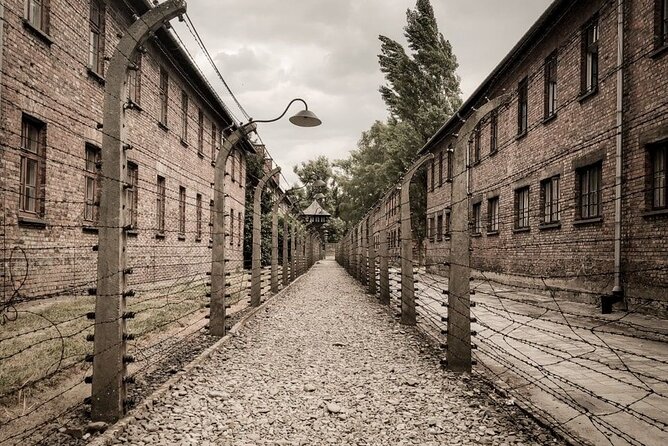
- Auschwitz I: the original camp and museum exhibits
- The Judenrampe and the process of selection
- The commandant’s house and Rudolf Höss
- Birkenau: the larger camp and killing site
- What the 6 to 7 hour schedule feels like
- What makes this tour good value for three people
- Who should book this Auschwitz tour
- Should you book it?
- FAQ
- Is hotel pickup included?
- How long does the tour take?
- Are both Auschwitz I and Birkenau included?
- Who leads the guided visit inside the camps?
- Is the tour offered in English?
- How many people can join the private tour?
Key points before you book
- Private pickup from your Krakow hotel: Your driver collects you directly from your hotel or another agreed location.
- Both Auschwitz sites are included: You visit Auschwitz I and the much larger Auschwitz II-Birkenau.
- Official museum guide at the camps: The guided visit is led by a state museum guide, while your private driver handles transportation and support.
- The Judenrampe adds vital context: This railway platform was where selections took place from 1942 to 1944.
- Oskar provides more than a simple transfer: He has offered local conversation, drinks, route help, and food stops when time allowed.
- Plan for a heavy day: The tour lasts about 6 to 7 hours and includes substantial walking in an emotionally difficult setting.
Why a private Auschwitz trip from Krakow helps
Auschwitz is about 70 kilometers west of Krakow, and getting there is not as simple as walking out of the Old Town and finding the next attraction. A private pickup removes the most tiring parts of the day. You do not need to locate a bus station, manage a transfer, or worry about finding the right entrance once you arrive.
The price is $461.96 per group of up to three people. That is a serious charge for a half-day outing, but the calculation changes when you share it. For three people, the cost is roughly $154 per person. You are paying for private transportation, hotel pickup, ticket arrangements, and a driver who remains responsible for getting you between Krakow and the museum.
This is especially useful if your time in Krakow is limited or if you prefer a door-to-door plan. You can also ask the driver questions about Poland during the journey. Oskar, one of the named drivers, has been praised for sharing information about the places along the road and for making occasional stops when appropriate.
The trip is private, so only your group participates in the vehicle and transfer portion. That gives you more control than a large coach excursion. It does not mean the museum tour itself is fully private. The camp visit is conducted by an official Auschwitz-Birkenau State Museum guide, assigned by the museum.
That distinction matters. Your driver is your local contact and transport host, but the formal interpretation inside the camp comes from the museum. If you have hearing concerns, stay close to the guide and tell the guide promptly if you cannot hear. One person found the group pace quick and had trouble following the spoken explanation, so this is worth taking seriously.
More Auschwitz-Birkenau memorial visits:
- From Krakow: Auschwitz-Birkenau Guided Tour & Hotel Pickup
★ 4.5 · 33,358 reviews - From Krakow: Auschwitz-Birkenau Guided Tour & Hotel Pickup
★ 4.5 · 29,340 reviews - Krakow: Auschwitz Guided Tour with Optional Hotel Pickup
★ 4.5 · 15,280 reviews
The drive from Krakow with Oskar or another private driver
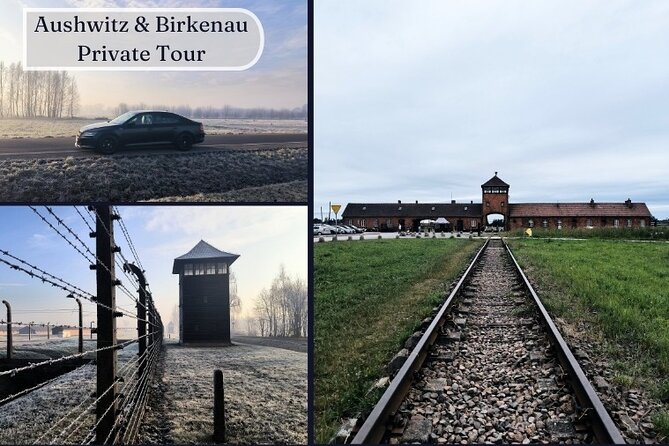
The day begins with pickup at your hotel or another place in Krakow. You contact the provider through your booking details or WhatsApp, which makes it easier to confirm the meeting point and coordinate the start.
The drive gives the tour a useful human element. Oskar has been described as friendly, flexible, and willing to talk about daily life in Poland rather than simply pointing out roads and exits. That kind of conversation can help you understand the country beyond Krakow’s historic center.
The vehicle is reported to be clean, with beverages provided. The driver also knows how to manage the arrival process and ticket lines. That may sound minor, but at a place with timed admissions and many visitors, practical help can save both time and stress.
Do not expect the driver to lead the Auschwitz interpretation. His role is transportation, ticket support, timing, and general care during the day. The formal tour at Auschwitz and Birkenau belongs to the museum guide.
The route may include an optional food stop on the return if the schedule allows. Oskar has stopped for Polish sausage with a group returning toward Krakow, and another group received an offer to stop for food after missing breakfast. Treat this as a kind extra, not a promised part of the itinerary. The day is tightly timed, and the memorial visit comes first.
Auschwitz I: the original camp and museum exhibits
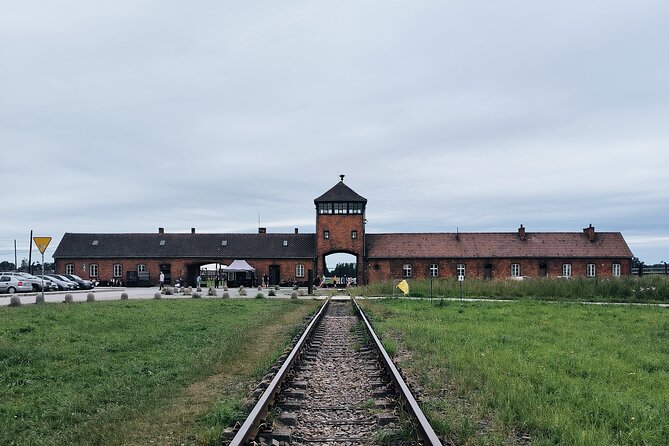
The first major stop is Auschwitz I, the original camp complex. Germany established it in occupied Poland first as a concentration camp for Poles, then used it for prisoners from many other nationalities. It later became a central part of the Nazi plan to murder European Jews.
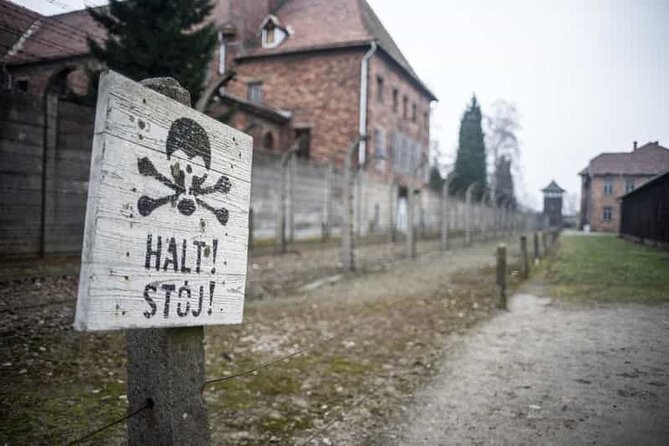
Auschwitz I is more compact and built in a way that resembles a permanent military compound. The brick buildings hold museum displays and preserved evidence of the crimes committed there. Walking through this section can feel especially direct because the buildings, gates, rooms, and corridors bring the system of imprisonment into close view.
You should expect about two hours at Auschwitz I, although the supplied timing also describes the museum portion as roughly 1 hour and 30 minutes. The exact pace can depend on the museum schedule, guide, and crowd movement. Plan on a substantial visit, not a quick photo stop.
The visit is valuable because it shows how the camp operated as a place of registration, forced labor, punishment, and murder. It also provides the background needed to understand Birkenau. Without Auschwitz I, the enormous scale of Birkenau can be difficult to interpret.
The subject matter is severe. You will encounter material about persecution, deportation, starvation, forced labor, executions, gas chambers, and crematoria. This is not a place for casual sightseeing. I recommend leaving enough emotional space afterward rather than scheduling a lively dinner, concert, or demanding activity immediately after the tour.
The official guide’s explanation gives structure to what you see. You are not left to wander without context, and that is important here. At the same time, the quality of your experience depends partly on hearing the guide clearly and keeping pace with the group. Comfortable shoes are practical because the visit involves walking, and the day can feel longer than its clock time.
The Judenrampe and the process of selection
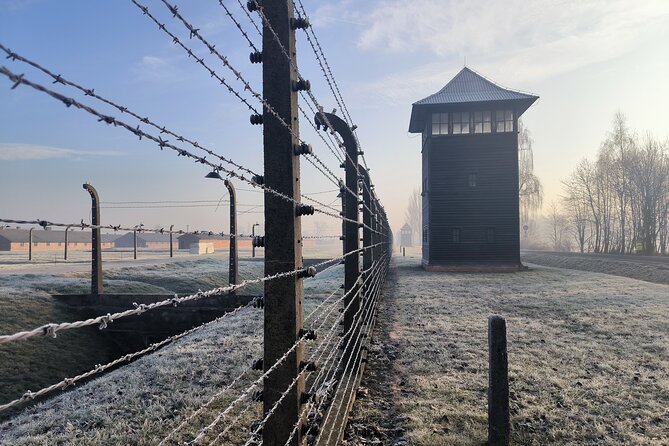
The Judenrampe was the arrival point used from 1942 until May 1944. It sat between Auschwitz I and Birkenau, and SS officers carried out selections there when trains arrived.
At this point, people were divided according to Nazi judgments about their supposed ability to work. Some were sent to forced labor. Others were sent directly to the gas chambers. The site is brief in the schedule, listed at about three minutes, but its meaning is enormous.
You may find this stop particularly helpful because it connects the wider machinery of deportation to a precise physical place. The railway was not an abstract route on a map. It brought families into the camp system, often with no understanding of what awaited them.
The short time allocation also tells you not to expect a long independent visit here. The Judenrampe is a focused stop within the broader day. Listen carefully to the explanation, and take a moment to look around before the group continues.
A few more Krakow trips worth comparing
- Krakow Airport Private Transfer
★ 5.0 · 2,227 reviews - Private Departure Transfer: Krakow City To Krakow Airport Balice
★ 4.5 · 367 reviews - Skip-the-Line Wawel Castle Chambers Private Tour
★ 4.7 · 262 reviews - Legendary Private Nowa Huta Communism Tour with Crazy Guides
★ 5.0 · 262 reviews
The commandant’s house and Rudolf Höss
The tour also identifies the house where Rudolf Höss lived with his family from 1940 to 1944. Höss was the Auschwitz commandant and one of the central figures in developing the camp’s system of mass murder.
The house is a disturbing reminder of how ordinary domestic life existed beside organized killing. Höss and his family lived near the camp while prisoners were tortured and murdered nearby. That physical closeness makes the site difficult to process.
Höss helped introduce the use of Zyklon B gas in killing operations and oversaw the growth of gas chambers and crematoria. After the war, he was captured, tried in Poland, sentenced to death, and executed at Auschwitz in 1947.
This stop does not offer the same scale as Birkenau, but it adds a different kind of context. Auschwitz was not run by an anonymous machine. It was organized and directed by identifiable people who made decisions, carried out orders, and built their private lives around the camp.
The listing includes this location as part of the experience, but the precise amount of time devoted to it is not specified. Your official museum guide will determine how it fits into the day’s route.
Birkenau: the larger camp and killing site
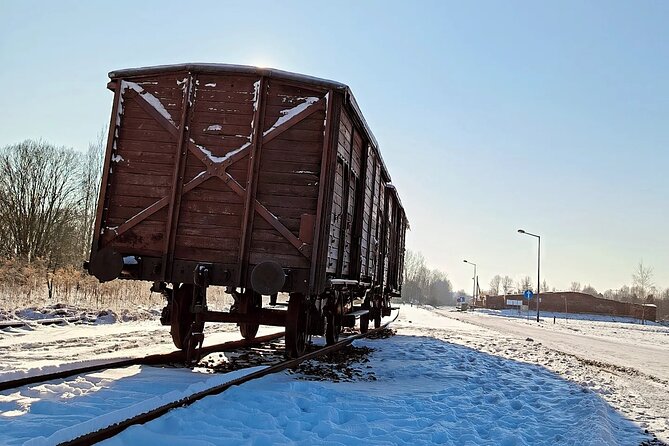
Auschwitz II-Birkenau is about three kilometers west of Auschwitz I and much larger in scale. Its broad open grounds, long railway approach, rows of barracks, and remains of gas chambers and crematoria show the industrial reach of the Nazi killing program.
The schedule allows about one hour and 30 minutes at Birkenau, while the overall description also refers to approximately one hour there. Either way, you should expect a focused visit rather than unlimited time. Birkenau is enormous, and no short tour can cover every part of it.
Birkenau was primarily a death camp. About one million people were murdered there, mainly Jews, along with Roma, Poles, prisoners of war, and other people persecuted by the Nazi regime. The camp received deportees from across Europe.
The physical scale changes the way you understand the crime. At Auschwitz I, you move through buildings and exhibits. At Birkenau, the open space shows how many barracks, railway tracks, fences, and facilities were built to imprison and kill people on a vast scale.
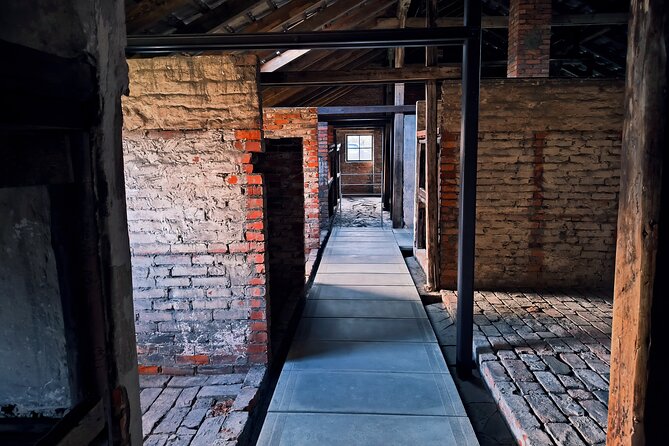
The remains of the barracks and crematoria are stark. Some structures were destroyed by the Nazis as the war ended, but enough remains to show the plan and operation of the camp. The railway entrance and selection area make the arrival process easier to picture, while the barracks show the conditions imposed on prisoners who were not immediately killed.
Birkenau can be especially hard in poor weather because much of the visit takes place outdoors. Even with good weather, you will walk across open ground and uneven surfaces. Wear practical shoes and bring clothing suitable for the forecast. The supplied information does not promise a particular weather plan, so you should prepare to spend much of the visit outside.
What the 6 to 7 hour schedule feels like
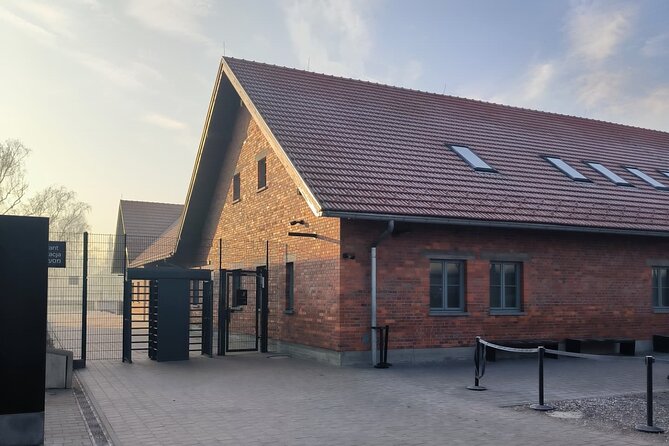
The total duration is about 6 to 7 hours, including the journey from Krakow, the two museum sites, and the return drive. That makes this a half-day commitment, though the emotional weight can make it feel like a full day.
The timetable works because Auschwitz I and Birkenau are close enough to visit in one outing, but the schedule is not loose. Your driver needs to coordinate pickup, arrival, tickets, the museum guide, the transfer between sites, and the return to Krakow.
A private vehicle helps with this flow. Oskar has been praised for getting groups through ticket lines efficiently and knowing useful shortcuts. Still, a private transfer cannot control the museum’s official schedule or the pace of the assigned guide.
I would not book this tour if you want a slow, solitary visit with long periods of reflection at every location. I would book it if you want the main sites covered in one organized day and value not having to manage transportation yourself.
The tour is offered in English. Most people can participate, and service animals are allowed. It is also near public transportation, though the central feature is direct pickup rather than making you reach a meeting point on your own.
What makes this tour good value for three people
At $461.96 for up to three people, the price is easiest to justify when shared. You get a private ride rather than a seat on a large bus, direct pickup, and support from a driver who handles the practical side of the day.
The private format also gives you one consistent contact outside the museum. If you need help finding an entrance, understanding the next step, or arranging a brief stop, you can speak directly with the driver. Drinks in the car and a possible food stop are small touches, but they matter on a long morning with limited time for breakfast.
The museum admission is included. That saves you from arranging separate camp tickets, which can be important because entrance is controlled and visits follow assigned times.
The main limit is that the private price does not buy you a private museum historian. The official museum guide leads the on-site visit, and you will need to follow the museum’s structure. For some people, that is a strength because the information comes through the institution responsible for the memorial. For others, it may feel less personal than having the same private guide explain everything from Krakow onward.
Who should book this Auschwitz tour
I would recommend this experience to a couple, family, or small group of up to three people who want a direct and well-managed trip from Krakow. It is also a good fit if you are uneasy about navigating public transport, timed tickets, and two separate camp locations.
It suits you if you value local conversation during the drive. Oskar’s role can add warmth and practical help without changing the serious nature of the memorial visit.
You should think carefully before booking if you are looking for a relaxed day or dislike fixed schedules. The visit involves walking, outdoor sections, a formal museum guide, and difficult historical material. It is educational, but sadness is unavoidable.
The tour is not a pleasant excursion in the usual sense. Its value comes from helping you reach an important place, understand what happened there, and avoid reducing the visit to a quick stop on a sightseeing checklist.
Should you book it?
Book this tour if you want door-to-door transportation from Krakow, included museum admission, and a private driver who can make the day easier to manage. The combination of Auschwitz I, the Judenrampe, the commandant’s house, and Birkenau gives you a fuller visit than seeing only one section.
The strongest reason to choose it is convenience with a human touch. Oskar and his fellow drivers handle the road and practical details, while an official museum guide leads the memorial visit. The main caution is the fixed pace and the fact that the museum guide is not chosen by the private provider.
For three people, the price is easier to defend. For one person, it is a much larger expense, though the pickup and private service may still be worth it if simplicity matters most. Go prepared for a long, solemn, emotionally demanding day, and leave room afterward to reflect.
FAQ
Is hotel pickup included?
Yes. The driver picks you up directly from your hotel or another agreed location in Krakow.
How long does the tour take?
The full experience lasts approximately 6 to 7 hours.
Are both Auschwitz I and Birkenau included?
Yes. The visit includes Auschwitz I and Auschwitz II-Birkenau, along with the Judenrampe.
Who leads the guided visit inside the camps?
Official guides employed by the Auschwitz-Birkenau State Museum lead the on-site visit. The private driver handles transportation and tour support.
Is the tour offered in English?
Yes. The experience is offered in English.
How many people can join the private tour?
The price covers a private group of up to three people. Only your group participates in the private activity and transportation.
Just added around Krakow
- Private Guided Tour: Oskar Schindler’s Factory★ 5.0 · 3 reviews
- E-Scooter Krakow sightseeing tour★ 5.0 · 3 reviews
- From Krakow: Zakopane and Thermal Pools Guided Trip★ 5.0 · 3 reviews
- Schindler’s Factory, Ghetto and Plaszow Camp Guided Tour★ 4.7 · 3 reviews
- Kraków: Private Hot Air Balloon Flight with Champagne★ 3.7 · 3 reviews
- Krakow: River Cruise & Guided Visit to Former Plaszow Camp★ 3.6 · 3 reviews
- From Krakow: Private Wieliczka Salt Mine Tour★ 4.0 · 3 reviews
- Krakow: Old Town short walk with St. Mary’s Basilica visit★ 5.0 · 3 reviews
Auschwitz-Birkenau Tours, compared.

Auschwitz-Birkenau Guided Tour & Hotel Pickup
Read our review →Auschwitz-Birkenau Guided Tour & Hotel Pickup
Read our review →
Auschwitz Guided Tour with Optional Hotel Pickup
Read our review →
Auschwitz-Birkenau Guided Tour with Pickup & Lunch
Read our review →
Auschwitz-Birkenau Guided Tour Pickup/Lunch Options
Read our review →

Krakow to Auschwitz Birkenau Guided Tour with Transfer and Ticket
Read our review →
Browse the lists this tour appears in