
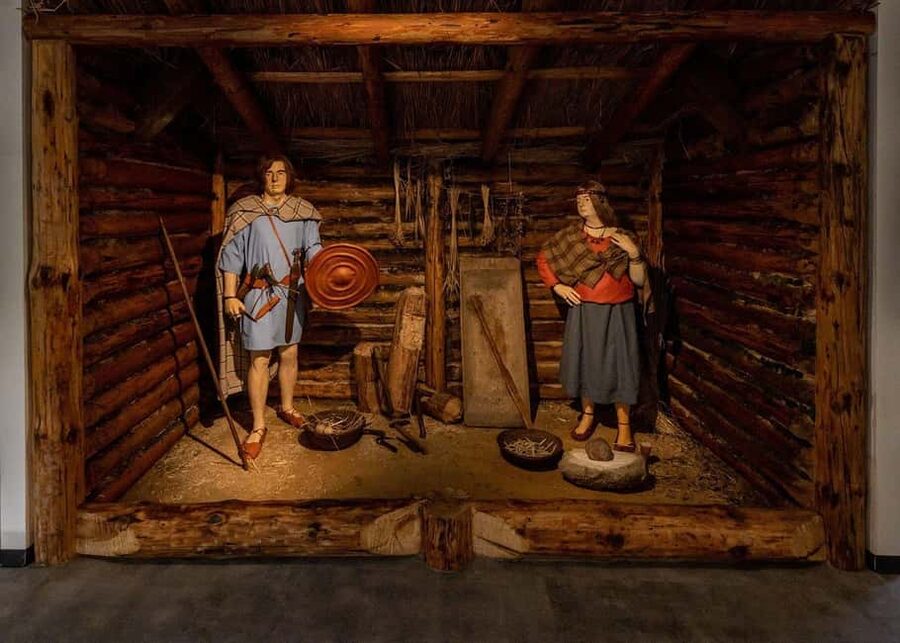
Reviewed · MUSEUMS
Archaeological Museum of Krakow Entrance Ticket
Krakow’s Archaeological Museum offers one especially memorable sight: the Światowid statue, a mysterious four-faced pagan idol carved around the 9th or 10th century. Found in 1848 near the Zbrucz River, it gives you a direct look at beliefs that existed before Poland became a Christian country.
I like two things here. First, the museum occupies the former St. Michael’s Monastery and later St. Michael’s Prison, so the building itself carries a surprising story. Second, the collections connect Krakow with the wider Lesser Poland region, rather than limiting the visit to the city center. The main caution is practical: one buyer reported not receiving a QR code and being refused at the ticket desk, so check your ticket delivery carefully before you arrive.
In This Review
- Key points to know before you go
- A museum built inside St. Michael’s former monastery
- The Światowid statue is the main reason to come
- What the Lesser Poland collections add
- St. Wojciech’s Church and the Main Square connection
- Nowa Huta-Branice and archaeology outside old Krakow
- How much value do you get for $2.13?
- A self-guided visit, not a guided tour
- Timing, entry, and the QR code problem
- Who should book this Krakow museum ticket?
- My practical verdict
- FAQ
- Where is the Archaeological Museum located?
- What is the most famous object in the museum?
- Is a guide included with the ticket?
- How long is the ticket valid?
- Can Krakow City Card holders enter for free?
- What is the cancellation policy?
Key points to know before you go
- See the four-faced Światowid idol: This 9th or 10th-century pagan statue is the museum’s signature object.
- Enter a former monastery and prison: The building changed from a Carmelite religious site to an Austrian prison before becoming a museum after World War II.
- Explore Lesser Poland’s archaeology: The displays cover discoveries from across the region, not only Krakow.
- Plan for self-guided viewing: The ticket includes museum entrance, but no guide.
- Check the branch and ticket option: The Archaeological Museum has sites at St. Wojciech’s Church and Nowa Huta-Branice as well as its main building.
- Arrive well before closing: Last admission is 90 minutes before the museum closes, and opening hours can change.
A museum built inside St. Michael’s former monastery
The setting gives this visit more character than a standard exhibition hall. The building once belonged to the Barefoot Carmelites, who operated the Monastery of St. Michael for decades.
In the 19th century, the Austrians stationed in Krakow changed the building into a prison. It kept the old religious name and became known as St. Michael’s Prison. That contrast is worth keeping in mind as you walk through the museum: the same walls have held monks, prisoners, and now archaeological objects.
The prison closed after World War II. The Archaeological Museum was then established here, giving the building a new public role. I like this kind of setting because it adds a second story to the objects on display. You are not only looking at ancient finds. You are also walking through a place shaped by religious life, imperial rule, confinement, and postwar cultural work.
The supplied information does not give a detailed room-by-room route, so you should expect a museum visit rather than a guided tour with a fixed sequence. Your ticket covers admission, and you explore at your own pace.
More museums in Krakow:
- Auschwitz-Birkenau Museum and Memorial Guided Tour from Krakow
★ 4.5 · 1,510 reviews - Krakow: Rynek Underground Museum Guided Tour
★ 4.6 · 1,122 reviews - Krakow Schindler’s Factory Museum Guided Tour in English
★ 4.5 · 650 reviews
The Światowid statue is the main reason to come
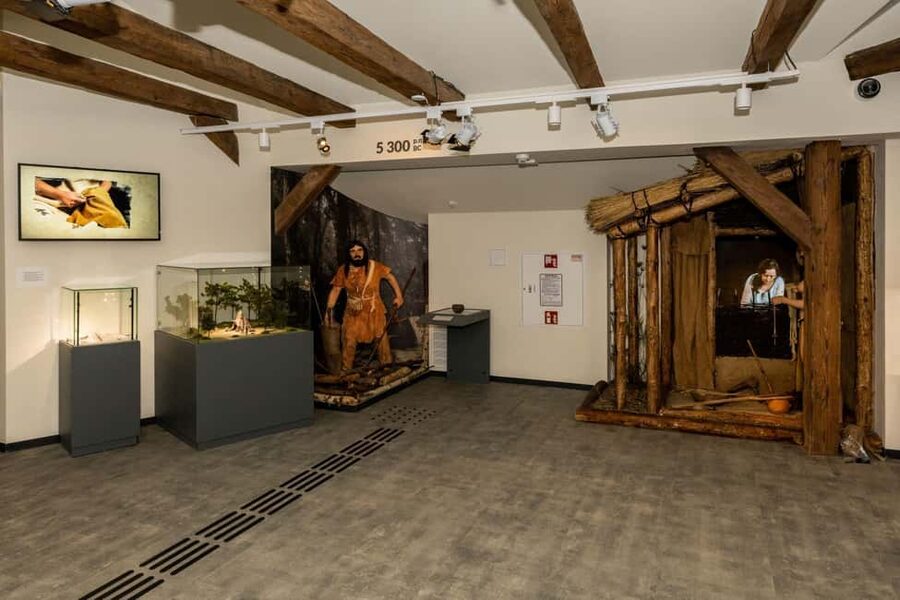
If you have time for only one object, make it the Światowid statue. This stone figure has four faces and represents a pagan god. It dates from the 9th or 10th century and was discovered in 1848 in Zbrucz.
The statue matters because it gives physical form to a period often known through written accounts rather than surviving objects. Its four faces suggest a god looking in several directions, though the information provided here does not assign detailed meanings to each face. That leaves room for you to study the carving without being pushed toward a single interpretation.
The statue is also a useful reminder that Krakow’s story did not begin with medieval churches and royal ceremonies. Pagan beliefs shaped the region before Christianity took hold. The museum’s focus lets you place later Polish history against an older cultural background.
I would not treat Światowid as a quick photo stop. Spend a few minutes looking at the shape, the faces, and the way the figure has survived. The museum’s low ticket price makes that easy. You do not need to rush through the entire building simply to justify a costly admission.
What the Lesser Poland collections add
The Archaeological Museum covers finds from the Lesser Poland region. That wider focus is useful if you have already seen Krakow’s major medieval sights and want a clearer sense of the area around the city.
The displays include archaeological treasures found in Lesser Poland, although the supplied details do not list every object or collection by gallery. You should therefore think of the museum as a regional archaeology stop, not as a narrow exhibition devoted only to Światowid.
This regional approach can help you understand how settlements, beliefs, and material culture extended beyond Krakow’s walls. It also gives the city a longer timeline. Instead of moving straight from the medieval Main Square to modern Krakow, you can look further back at the people and customs that came before.
The museum should suit you if you enjoy objects with an archaeological story, especially if you like connecting a place to its wider region. If you prefer polished art collections, famous paintings, or a tightly scripted historical route, this may feel more specialized.
St. Wojciech’s Church and the Main Square connection
One branch is located at St. Wojciech’s Church on Krakow’s Main Square. Its underground exhibition presents the history of the square, the church, and its patron, Saint Wojciech.
This branch gives you a useful change of scale. The main museum looks at archaeology across Lesser Poland, while the underground display links archaeological evidence to one of Krakow’s most important public spaces.
You can see remnants of wooden and stone floors, along with Romanesque walls. These remains help explain that the Main Square is not simply an open shopping and meeting place. Earlier layers survive below the modern surface, and the church has its own long story within that setting.
If you are already visiting the Main Square, St. Wojciech’s Church is particularly convenient to pair with other central sights. Be careful when booking, though. The information identifies the church as one of the museum’s branches, but it does not spell out which branch or branches are covered by every ticket option. Read the selected option closely before paying.
A few more Krakow trips worth comparing
- Krakow to Auschwitz Birkenau Guided Tour with Transfer and Ticket
★ 5.0 · 8,197 reviews - Krakow: Wieliczka Salt Mine Fast-Track Ticket & Guided Tour
★ 4.5 · 5,872 reviews - Auschwitz Birkenau Guided Tour with Ticket Hotel Pickup Small Van
★ 5.0 · 4,769 reviews - From Krakow: Wieliczka Salt Mine Tour & Skip the Line Ticket
★ 4.4 · 3,925 reviews
Nowa Huta-Branice and archaeology outside old Krakow
The second named branch is Nowa Huta-Branice. It is closely connected with the Nowa Huta district and its metallurgical plant.
Archaeological discoveries there began in 1949 during early construction work. That date gives the branch a modern historical frame: large postwar industrial building projects led to discoveries beneath or around a rapidly changing district.
This site may appeal to you if you want to see how archaeology intersects with modern urban development. It also broadens the museum’s story beyond the old city and its churches. The information provided does not describe the individual objects or the exact visit format at Nowa Huta-Branice, so confirm the details for your chosen ticket.
The branch list is one reason I would not assume that the main building tells the entire story. If you have more than a short stop available, check which locations are open and included. A ticket valid for one or two days may give you useful flexibility, but the exact access depends on the option you select.
How much value do you get for $2.13?
At a listed price of $2.13 per person, this is an inexpensive cultural stop. The value is strongest if you care about archaeology, early religious beliefs, or Krakow’s lesser-known institutional history.
The low price also changes how you can plan the visit. You do not need to spend half a day here to feel that the ticket paid off. You can give the Światowid statue your attention, look through the regional displays, and leave with time for the Main Square, Wawel, or another museum.
The stated validity is one to two days, with starting times shown according to availability. That wording suggests you should check the selected option carefully rather than assume unlimited access or a specific timed entry. The information does not state how long a typical visit takes.
Krakow City Card holders enter free of charge. If you already have that card, paying separately for this ticket makes little sense. The city card includes access to many museums and landmarks, including the Archaeological Museum’s main building, Nowa Huta-Branice, and the underground site at St. Adalbert’s Church as listed in the card information.
The wider Krakow City Pass also lists 36 museums and landmarks. Those include major sites such as Schindler’s Factory, the Rynek Underground Museum, the Polish Aviation Museum, and the Princes Czartoryski Museum, home to Leonardo da Vinci’s Lady with an Ermine. If you plan several paid visits, compare the separate $2.13 ticket with the pass before booking.
A self-guided visit, not a guided tour
No guide is included. That is both a limitation and a benefit.
You get freedom to set your own pace. You can linger by Światowid, move quickly through displays that do not interest you, and fit the museum between other Krakow plans. You also avoid being tied to a group schedule.
The tradeoff is that you should not expect a person to explain the statue, translate every historical connection, or lead you from one branch to another. If you want a guided archaeological lesson, this ticket alone will not provide it.
I suggest reading the basic facts about Światowid and the building before entering. Even a little preparation will help you notice the contrast between pagan belief, Carmelite religious life, Austrian imprisonment, and postwar museum work.
The experience is best for independent visitors, history students, families with older children, and anyone who wants a short, focused museum stop. It may be less satisfying if you want entertainment, an interactive program, or a clearly narrated route.
Timing, entry, and the QR code problem
Opening hours can differ from those shown when you book. Check the local operator’s official website on the day you plan to visit, especially if your schedule is tight.
Last entrance is 90 minutes before closing. That is an important rule. Do not arrive near the posted closing time and assume you can still enter. For a small museum visit, I would go earlier and leave room for delays.
The biggest practical warning concerns the ticket itself. One person reported not receiving a ticket and being refused entry at the ticket office because there was no QR code. I cannot tell from the available information whether this was a one-off delivery problem or tied to a particular booking option, but you should still protect yourself.
After booking, check your email and confirmation page for the actual admission document and QR code. If it is missing, contact the provider before walking to the museum. The experience provider is Discover Cracow, and the booking information allows free cancellation up to 24 hours in advance for a full refund.
Smoking, alcohol, and drugs are not allowed. These are straightforward museum rules, but keep them in mind if you are building a longer day around Krakow’s historic center.
Who should book this Krakow museum ticket?
I would book it if you want a low-cost look at early Polish beliefs and regional archaeology. The four-faced Światowid statue gives the museum a clear centerpiece, while the former monastery and prison add an unusual setting.
I would also recommend it to repeat visitors who have already covered Krakow’s headline attractions. The museum gives you a different angle on the city, one based on excavated objects and older cultural layers rather than royal interiors or fine art.
Families can consider it if their children enjoy ancient objects, mysterious statues, or stories about buildings changing purpose. Since no guide is included and the available information does not describe interactive features, younger children may need help staying engaged.
I would think twice if you have only a few hours in Krakow and have not yet visited the city’s most important sites. The museum is inexpensive, but time is often the bigger cost. It is also worth checking your Krakow City Card benefits first, since cardholders enter free.
My practical verdict
Book this ticket if the Światowid statue, pagan-era Poland, and archaeological finds from Lesser Poland sound more appealing than another major art museum. The price is modest, the subject is distinctive, and the building gives the visit a memorable setting.
Before you go, confirm the exact branch, opening hours, ticket validity, and QR code. If you hold the Krakow City Card, use that for free entry instead. With those details settled, the Archaeological Museum makes a smart short stop for curious visitors who want to see an older, less familiar side of Krakow.
FAQ
Where is the Archaeological Museum located?
The main Archaeological Museum is in the former St. Michael’s Monastery, a building that later became St. Michael’s Prison. The museum also has branches at St. Wojciech’s Church on the Main Square and Nowa Huta-Branice.
What is the most famous object in the museum?
The best-known object is the Światowid statue, a four-faced pagan god dating from the 9th or 10th century. It was discovered in 1848 in Zbrucz.
Is a guide included with the ticket?
No. The ticket includes museum entrance only. A guide is not included.
How long is the ticket valid?
The activity information lists validity of one to two days. Check the availability and selected option for the exact terms.
Can Krakow City Card holders enter for free?
Yes. Entrance is free for Krakow City Card holders.
What is the cancellation policy?
You can cancel up to 24 hours in advance for a full refund.
Just added around Krakow
- Private Guided Tour: Oskar Schindler’s Factory★ 5.0 · 3 reviews
- E-Scooter Krakow sightseeing tour★ 5.0 · 3 reviews
- From Krakow: Zakopane and Thermal Pools Guided Trip★ 5.0 · 3 reviews
- Schindler’s Factory, Ghetto and Plaszow Camp Guided Tour★ 4.7 · 3 reviews
- Kraków: Private Hot Air Balloon Flight with Champagne★ 3.7 · 3 reviews
- Krakow: River Cruise & Guided Visit to Former Plaszow Camp★ 3.6 · 3 reviews
- From Krakow: Private Wieliczka Salt Mine Tour★ 4.0 · 3 reviews
- Krakow: Old Town short walk with St. Mary’s Basilica visit★ 5.0 · 3 reviews
Museums, compared.

Auschwitz-Birkenau Museum and Memorial Guided Tour from Krakow
Read our review →

Krakow Schindler’s Factory Museum Guided Tour in English
Read our review →
Auschwitz Birkenau Museum Guided Tour with Pickup
Read our review →

Auschwitz Birkenau Museum and Salt Mine All Inclusive DAY TRIP with Local Guides
Read our review →
Chopin Piano Concert at Chopin Gallery with a Glass of Wine
Read our review →Browse the lists this tour appears in