
Reviewed · JEWISH GHETTO TOURS
Cracow – Guided Tour of the Jewish Ghetto
Krakow’s former Jewish Ghetto is best understood on foot, where ordinary streets lead to places tied to forced displacement, deportation, and survival. This one-hour walk takes you through Podgórze, past the buildings where thousands of Jews were confined, then to Ghetto Heroes’ Square, a surviving piece of the ghetto wall, and Under the Eagle pharmacy.
I like the compact route, which gives you a clear introduction without taking half a day. I also like the focus on real places rather than a string of dates, especially the wall fragment and the pharmacy, where the story becomes easier to grasp.
The drawback is simple: one hour is short for a subject this weighty. One Italian-language review praised the guide’s fluency and teaching, while another found the commentary far too brief, so the quality of the live explanation may matter greatly on the day.
In This Review
- Key points to know before booking
- Why Podgórze is the right place to learn this story
- Ghetto Heroes’ Square and the story of deportation
- The remaining ghetto wall
- Buildings where thousands were forced to live
- Under the Eagle pharmacy and a human story
- What one hour gives you, and what it cannot
- Meeting at the Schindler Factory Museum
- Guide languages and the importance of good commentary
- Who should book this Krakow Jewish Ghetto walk
- Price, cancellation, and practical value
- Should you book it?
- FAQ
- Where does the Jewish Ghetto tour meet?
- How long does the tour last?
- What places are included on the route?
- What languages are available?
- Is a professional guide included?
- Is food or drink included?
- How much does the tour cost?
- Can I cancel for a full refund?
Key points to know before booking
- Ghetto Heroes’ Square is the emotional center of the walk, linked to the identification and deportation of Krakow’s Jewish residents.
- A remaining fragment of the ghetto wall gives you a physical connection to the boundaries that once enclosed the district.
- Under the Eagle pharmacy brings the story down to a human scale, with its account of resilience during the war.
- Podgórze’s surviving buildings help you picture the cramped conditions forced upon thousands of displaced people.
- The one-hour length works well as an introduction, but leaves little room for long questions or extended discussion.
- Five guide languages are available: English, German, French, Spanish, and Italian.
Why Podgórze is the right place to learn this story
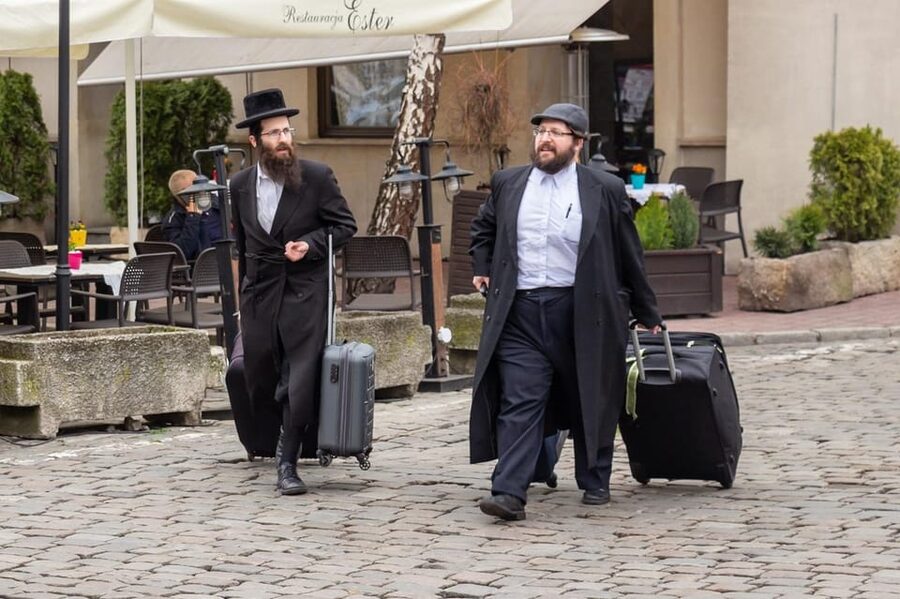
This tour takes place in Podgórze, the district used as Krakow’s Jewish Ghetto during World War II. That setting matters. You are not simply hearing about a distant event inside a museum. You are walking among the streets and buildings connected to it.
The route helps you see how a neighborhood became a place of confinement. Jewish residents of Krakow were forced into the ghetto, where thousands lived in cramped conditions before many were deported to concentration camps. The buildings you pass are part of that setting, and their ordinary appearance can make the history feel especially difficult to absorb.
I find this kind of walking tour useful because the physical surroundings give the guide something concrete to explain. A street, a square, or a wall fragment can help you place the events in space. You begin to understand that the ghetto was not an abstract zone on a map. It occupied a real district, surrounded by homes and daily city life.
The mood is serious, as it should be. This is not a light sightseeing walk, and you should allow yourself time afterward if you need to process what you have heard.
More Jewish heritage walks in Krakow:
- Krakow: Schindler’s Factory & Ghetto Guided Tour
★ 4.7 · 1,694 reviews - Krakow: Jewish Quarter and Former Ghetto Tour
★ 4.9 · 1,441 reviews - Krakow: Bike Tour of Old Town, Jewish Quarter and the Ghetto
★ 4.9 · 1,155 reviews
Ghetto Heroes’ Square and the story of deportation
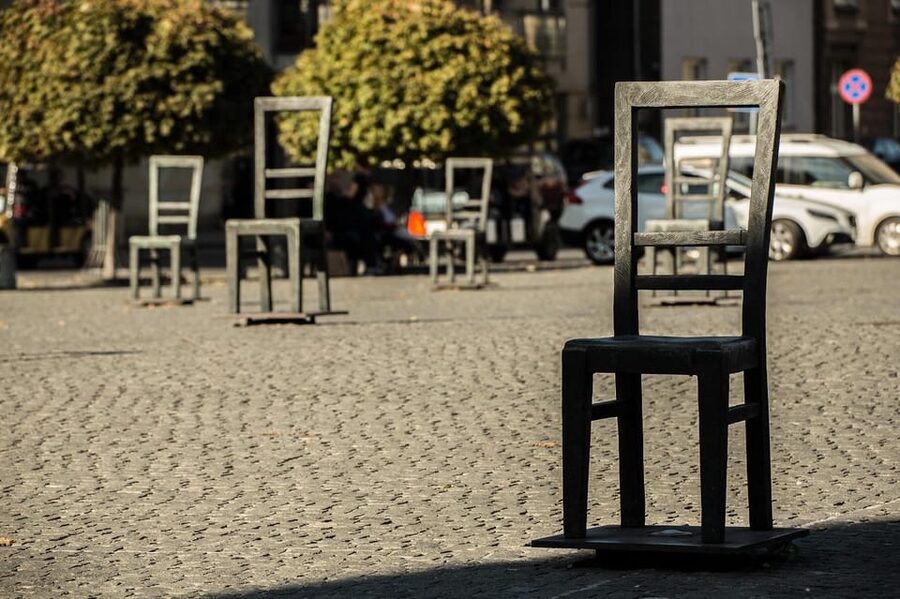
One of the main stops is Plac Bohaterów Getta, known in English as Ghetto Heroes’ Square. During the war, Jewish residents of Krakow were identified and deported from this area to concentration camps.
The square gives the tour a strong central point. Your guide can connect the wider history of the ghetto to the people who were gathered, sorted, and sent away. Even if you know the broad outline of Krakow’s wartime history, hearing what happened in this particular place adds weight and precision.
This is also a useful stop for questions. If your guide is giving a detailed explanation, you can ask about the ghetto’s role in Krakow, the forced movement of residents, and the meaning of the square today. With only an hour, listen closely and ask early rather than waiting until the final minutes.
The square is not presented as a cheerful photo stop. Treat it with respect, keep your attention on the guide, and remember that its importance comes from the people connected to it, not simply from its appearance.
The remaining ghetto wall
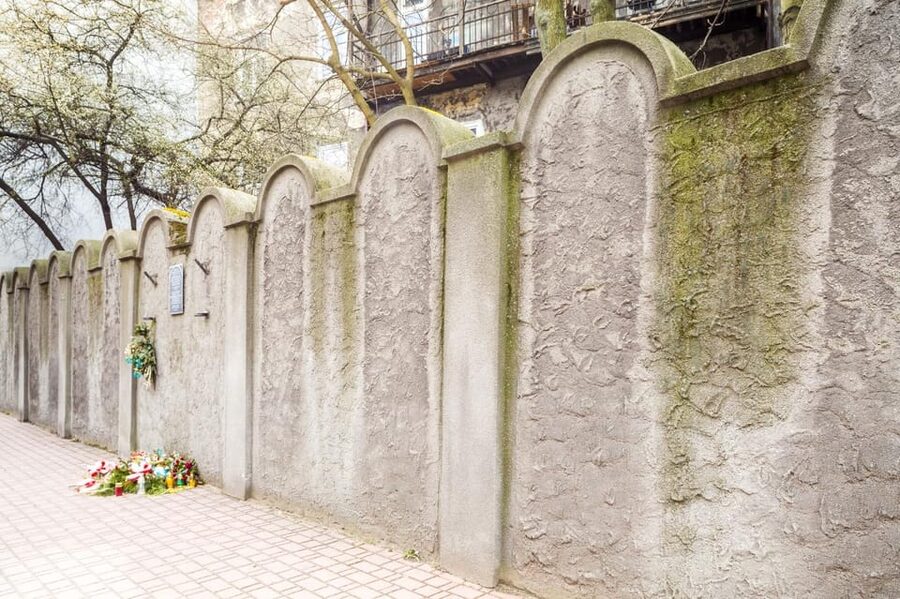
The tour includes a fragment of the original wall that surrounded the Jewish Ghetto. This is one of the clearest physical reminders of the system of confinement.
A wall can seem like a simple object until you learn what it controlled. Here, the surviving section represents the boundaries imposed on Jewish residents and the loss of freedom that those boundaries created. It gives you a direct visual link to the ghetto’s structure.
The wall is also regarded as a monument and a pilgrimage place for many Jewish visitors from around the world. That detail adds another layer to the stop. It is not only a surviving piece of wartime construction. It has become a place of remembrance.
Do not expect a large preserved fortification or a long architectural visit. The attraction is the meaning of the fragment, together with the guide’s explanation. If the commentary is brief, you may find the stop less satisfying. If the guide takes time to explain the wall’s role, it can become one of the most memorable points of the walk.
Buildings where thousands were forced to live
The route passes buildings where thousands of displaced Jews endured cramped living conditions. This part of the experience is important because it moves the story beyond public monuments.
A square and a wall tell you about power and control. The buildings show what those policies meant in daily life. Families were not only confined behind a boundary. They were forced into crowded housing, with the ordinary spaces of home turned into places of fear and uncertainty.
You may find these buildings visually unremarkable, which is precisely why the guide’s words matter. The point is not grand architecture. The point is the contrast between the familiar shape of residential buildings and the terrible conditions imposed inside them.
Pay attention to how the guide connects the buildings to the people who lived there. A good explanation can help you picture the district as a lived-in neighborhood rather than a collection of historic façades. This is where the tour’s value depends most on the guide.
The available guide languages are English, German, French, Spanish, and Italian. An Italian-language review specifically praised the guide’s fluency and teaching, so Italian speakers have a clear reason to consider this option. Still, the experience can vary if the commentary is minimal, and the one-hour schedule leaves little spare time.
A few more Krakow trips worth comparing
- From Krakow: Auschwitz-Birkenau Guided Tour & Hotel Pickup
★ 4.5 · 33,358 reviews - From Krakow: Auschwitz-Birkenau Guided Tour & Hotel Pickup
★ 4.5 · 29,340 reviews - Krakow: Auschwitz Guided Tour with Optional Hotel Pickup
★ 4.5 · 15,280 reviews - Krakow: Auschwitz-Birkenau Guided Tour with Pickup & Lunch
★ 4.5 · 9,800 reviews
Under the Eagle pharmacy and a human story
The tour concludes at the historic Under the Eagle pharmacy, one of the most meaningful stops on the route. It is presented as a symbol of resilience and survival during the turmoil of the war.
Ending here gives the walk a human focus. After hearing about boundaries, deportations, and overcrowding, you finish with a place connected to help and endurance. The pharmacy allows the guide to discuss what survival could look like amid a system designed to strip people of safety and control.
The stop is especially useful for anyone who wants more than a military or political timeline. It brings attention to individual choices and acts of courage. You are still learning about a terrible period, but the story is not reduced only to numbers and dates.
The tour ends at the pharmacy, so check your plans before booking. If you want to visit the Schindler Factory Museum as well, the meeting point is at its entrance, making it practical to arrange the two experiences close together. The information provided does not state that museum admission is included, so you should treat the guided walk and museum visit as separate plans.
What one hour gives you, and what it cannot
The one-hour format is the strongest practical feature and the main limitation. At $15 per person, the price is modest for a guided introduction in a central historic district. You are paying for a professional guide who organizes the route and explains the key locations, not for food, transport, or museum admission.
I see good value here if you want orientation before exploring more of Krakow’s wartime sites. The walk covers the major points in a short period, which suits a busy itinerary. It can also work well on your first day in the city, when a guide helps you understand where the former ghetto was and why the area matters.
But do not book it expecting an exhaustive study. One hour is not enough for a long discussion at every stop, extended historical context, or a leisurely visit inside each location. One French-language review made this exact point in a positive way: the tour offered a useful first look, but the guide’s material could have filled much more time.
The mixed experience reported in the supplied feedback is worth taking seriously. Several ratings were highly positive, with praise for the guide’s compassion, information, and language ability. One Italian-language experience was rated very poorly because the guide reportedly gave only a few words at each building and offered little additional explanation. That gap is significant on a history tour. The route itself is meaningful, but the spoken interpretation is what turns it into a worthwhile lesson.
Meeting at the Schindler Factory Museum
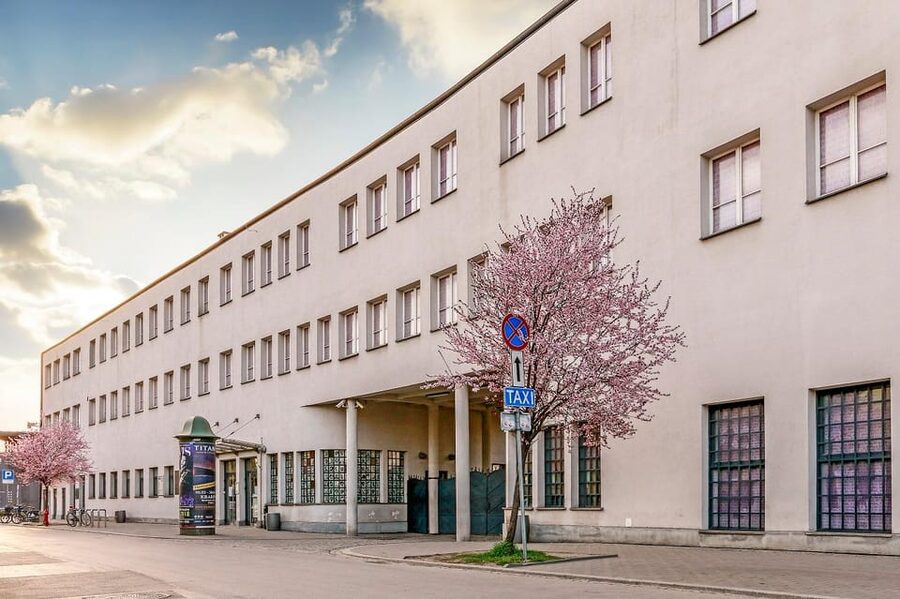
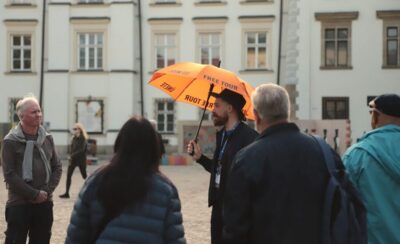
You meet at the entrance to the Schindler Factory Museum. Look for a guide holding an excursions.city sign.
This is a useful meeting point because it is clearly connected to Krakow’s World War II history. It also gives you a firm place to begin, rather than asking you to find a vague corner of the district. Arrive with enough time to identify the guide and settle in before the walk starts.
The information provided does not give a group size, so you should not assume a private tour or a small group. It is best to think of this as a scheduled guided walk with a professional guide. The starting time varies, so you need to check availability for the date you want.
The route is on foot through Podgórze. Wear shoes suitable for walking and be ready to spend the full hour outdoors, since the experience is built around streets, a square, a wall fragment, and the pharmacy stop.
Guide languages and the importance of good commentary
You can choose from English, German, French, Spanish, and Italian guide languages. That range makes the tour useful for many visitors, especially when discussing a subject where small differences in wording and context matter.
I would choose the language in which you can comfortably follow a serious historical explanation. This is not a tour where you only need to understand a meeting time and a few labels. The value comes from hearing how the guide connects the places to the people and events.
The feedback points in two directions. The strongest praise focuses on extensive knowledge, compassion, and clear Italian. Those qualities suit this subject well. The negative experience shows the risk when a guide gives only short comments at each stop.
If you book, set reasonable expectations but stay engaged. Listen carefully, ask questions when there is an opening, and use the hour well. You are more likely to gain a useful introduction if you treat it as a guided history walk rather than a quick photo circuit.
Who should book this Krakow Jewish Ghetto walk
This tour suits you if you want a short, focused introduction to Krakow’s wartime Jewish history. It is a good fit for first-time visitors who want context before visiting other sites, and for anyone with limited time who still wants to walk through the former ghetto district.
It also suits people who prefer places and stories over a long museum visit. You see where the ghetto existed, encounter part of its wall, walk past former residential buildings, and finish at Under the Eagle pharmacy.
Families with older children may find the route useful if the children can handle the subject respectfully. The material concerns forced displacement, deportation, concentration camps, and cramped living conditions, so it is not a casual family outing for very young children.
You might choose something longer if you want detailed historical analysis or more time at every stop. The one-hour format is an introduction, not a complete account of Jewish Krakow or World War II in Poland.
Price, cancellation, and practical value
At $15 per person, this is an affordable way to add a guided historical walk to your Krakow plans. I consider the price fair when the guide provides clear, compassionate context at each location. Since the route includes several meaningful sites, you are getting more than a simple walk from one square to another.
Food and drinks are not included, but that is not a major concern for a one-hour activity. You can plan refreshments before or after the walk rather than expecting a meal stop.
The tour offers free cancellation up to 24 hours before the start time for a full refund. You can also reserve now and pay later, which helps if your Krakow schedule is still changing. These terms are practical, but the more important booking decision is whether you want a short introduction or a longer, more detailed historical experience.
Should you book it?
Book this tour if you want to understand Podgórze through its wartime sites, have about an hour available, and value a guide who can explain the human meaning behind the places. The wall fragment, Ghetto Heroes’ Square, former ghetto housing, and Under the Eagle pharmacy create a strong route for a short visit.
I would be cautious if you expect a full lecture or a long stop at each site. The experience depends heavily on the guide’s depth and speaking style, and the supplied ratings show a real difference between an informative, compassionate tour and a sparse one.
For $15, it is a reasonable choice for a concise orientation. Go with modest expectations about length, pay close attention to the guide’s explanation, and leave time afterward if you want to reflect or continue exploring Krakow’s wartime history on your own.
FAQ
Where does the Jewish Ghetto tour meet?
The meeting point is at the entrance to the Schindler Factory Museum. Look for a guide holding an excursions.city sign.
How long does the tour last?
The guided walk lasts one hour.
What places are included on the route?
The route includes Podgórze, Ghetto Heroes’ Square, a remaining fragment of the original ghetto wall, buildings where displaced Jews lived, and Under the Eagle pharmacy.
What languages are available?
The live tour guide is available in English, German, French, Spanish, and Italian.
Is a professional guide included?
Yes. A professional guide is included in the activity.
Is food or drink included?
No. Food and drink are not included.
How much does the tour cost?
The listed price is $15 per person.
Can I cancel for a full refund?
Yes. You can cancel up to 24 hours in advance for a full refund.
Just added around Krakow
- Private Guided Tour: Oskar Schindler’s Factory★ 5.0 · 3 reviews
- E-Scooter Krakow sightseeing tour★ 5.0 · 3 reviews
- From Krakow: Zakopane and Thermal Pools Guided Trip★ 5.0 · 3 reviews
- Schindler’s Factory, Ghetto and Plaszow Camp Guided Tour★ 4.7 · 3 reviews
- Kraków: Private Hot Air Balloon Flight with Champagne★ 3.7 · 3 reviews
- Krakow: River Cruise & Guided Visit to Former Plaszow Camp★ 3.6 · 3 reviews
- From Krakow: Private Wieliczka Salt Mine Tour★ 4.0 · 3 reviews
- Krakow: Old Town short walk with St. Mary’s Basilica visit★ 5.0 · 3 reviews
Jewish Ghetto Tours, compared.

Bike Tour of Old Town, Jewish Quarter and the Ghetto
Read our review →
Kazimierz, Schindler’s Factory & Ghetto Guided Tour
Read our review →
Full Bike Tour – the Old Town, Jewish Qtr & the Ghetto NEW BIKES
Read our review →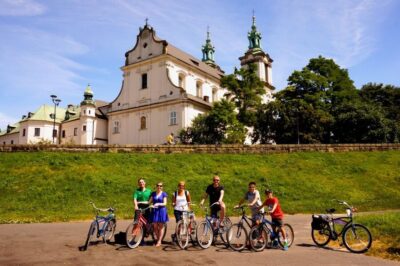
Bike Tour of the Old Town, Kazimierz, and the Ghetto
Read our review →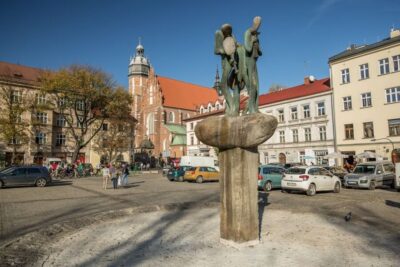
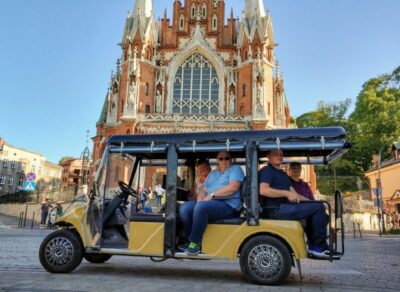
Jewish Quarter and Ghetto Electric Golf Cart Tour
Read our review →Browse the lists this tour appears in