
Reviewed · AUSCHWITZ-BIRKENAU TOURS
From Krakow: Auschwitz-Birkenau & Schindler’s Factory Tour
Auschwitz-Birkenau is the heart of this day, and it is not a casual sightseeing stop. You walk through preserved camp buildings, barracks, fences, and open ground where approximately 1 to 1.5 million people were killed. I like the official guided route and the documentary shown during the drive, which help you understand the site before you arrive. I also like having transport arranged from Krakow, since reaching both camps independently takes more planning.
The main drawback is the schedule. With two 75-minute transfers, a 3.5-hour camp tour, a short break, and a 1.5-hour museum visit, this is a long and emotionally heavy day. Schindler’s Factory is about Krakow under Nazi occupation, not mainly about Oskar Schindler himself, and crowded groups can make its displays hard to read.
In This Review
- Key points before you book
- Why this is a serious day out from Krakow
- Pickup in Krakow and the 75-minute ride
- Auschwitz I: preserved buildings and a guided route
- Birkenau: open ground, distance, and weather
- The short Podgórze break
- Schindler’s Factory and the story of wartime Krakow
- Timing, groups, and the real value of $58
- What to bring and what to leave behind
- Who should choose this combined tour?
- Should you book this Auschwitz and Schindler’s Factory day trip?
- FAQ
- How long does the tour last?
- Where is the meeting point in Krakow?
- Is hotel pickup available?
- What language is the tour conducted in?
- Are Auschwitz and Birkenau included in the guided visit?
- Is Schindler’s Factory included?
- Is food included?
- What identification do I need?
- Where does the tour finish?
Key points before you book
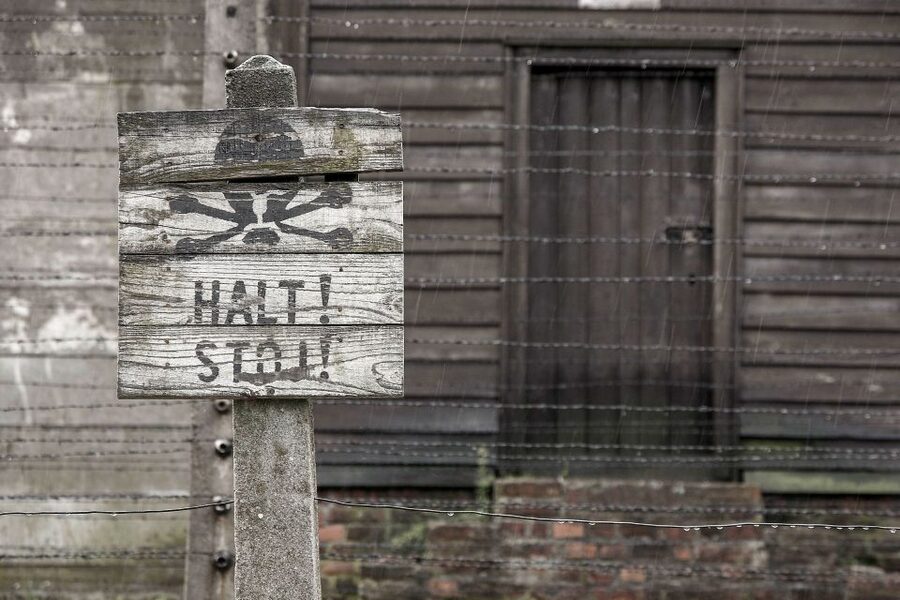
- Auschwitz I and Birkenau take 3.5 hours: The guided visit covers both parts of the memorial, with headsets so you can follow the guide.
- The day can begin very early: Some pickups have been arranged around 5:30 a.m. because the camp entry time is fixed.
- The documentary adds useful context: It is shown during the drive to Auschwitz-Birkenau, although it may not appear on every vehicle.
- Schindler’s Factory tells a broader Krakow story: Expect an interactive exhibition about wartime Krakow, with less focus on Schindler than the name may suggest.
- The final drop-off is at the factory: You can order a taxi from there back to your hotel for a few euros.
- The $58 price is strong for a full day: Transport, two guided admissions, headsets, a host, and insurance are included, but food is not.
Why this is a serious day out from Krakow
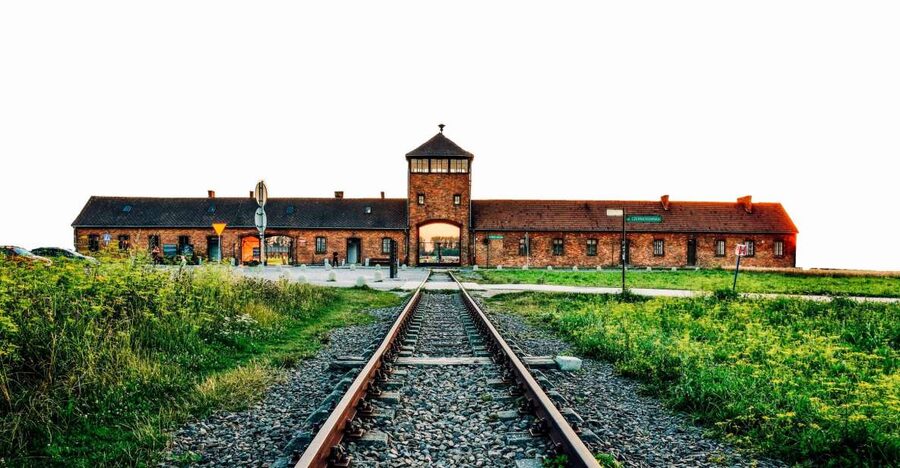
This tour links two places that are often paired but offer very different experiences. Auschwitz-Birkenau is a memorial to the victims of the Holocaust and Nazi persecution. Oskar Schindler’s former enamel factory, now a museum, looks at Krakow during the Second World War and the occupation of the city.
I would not treat the day as a simple checklist. Auschwitz requires attention, quiet, and time to process what you see. The preserved camp grounds are plain in a way that makes them more difficult, not less. There are no grand monuments designed to soften the place. You see fences, barracks, railway tracks, personal belongings, and the remains of a system built for imprisonment and mass murder.
The tour’s 4.7 rating from 195 reviews reflects its strongest feature: organization. Drivers and camp guides receive repeated praise, with names including Jaro, Jacob, Michael, Krzysztof, Piotr, Marta, and Alexander appearing in individual experiences. The tone and quality can vary by guide, but the broad pattern is clear: transport is handled well, and the Auschwitz visit is the part most likely to meet or exceed expectations.
More Auschwitz-Birkenau memorial visits:
- From Krakow: Auschwitz-Birkenau Guided Tour & Hotel Pickup
★ 4.5 · 33,358 reviews - From Krakow: Auschwitz-Birkenau Guided Tour & Hotel Pickup
★ 4.5 · 29,340 reviews - Krakow: Auschwitz Guided Tour with Optional Hotel Pickup
★ 4.5 · 15,280 reviews
Pickup in Krakow and the 75-minute ride
You can choose hotel pickup or meet at the tourist bus stop outside the Radisson Blu Hotel Krakow. If you choose hotel pickup, wait at the entrance or reception 15 minutes before your confirmed time. The provider may adjust the pickup by up to an hour, so check your email or WhatsApp before bed.
The advertised starting time can be misleading if you assume it means your pickup time. A camp entry around 8:00 a.m. may require a pickup around 5:30 a.m., depending on your address and the day’s transport plan. I would book this only after checking the exact pickup details and setting an alarm for a very early start.
The vehicle may be a van, minibus, or coach. Some people report comfortable, smooth transport and friendly drivers who explain the day. Others found a minibus cramped, even without being especially tall. If comfort matters to you, a small-group option may be worth checking when you book, though the exact vehicle depends on the chosen option and group size.
The 75-minute trip gives you time to rest. A documentary is scheduled for the journey to Auschwitz-Birkenau and can make the drive useful rather than dead time. Do not count on Wi-Fi, since it has not always worked, and the documentary may not play on every bus. A book or downloaded audio is sensible.
Your driver is not the main historian for the tour, but several drivers have offered helpful background and practical guidance. Jacob, who is from Krakow, was praised for local knowledge and for helping with onward plans. That kind of small assistance matters on a long day.
Auschwitz I: preserved buildings and a guided route
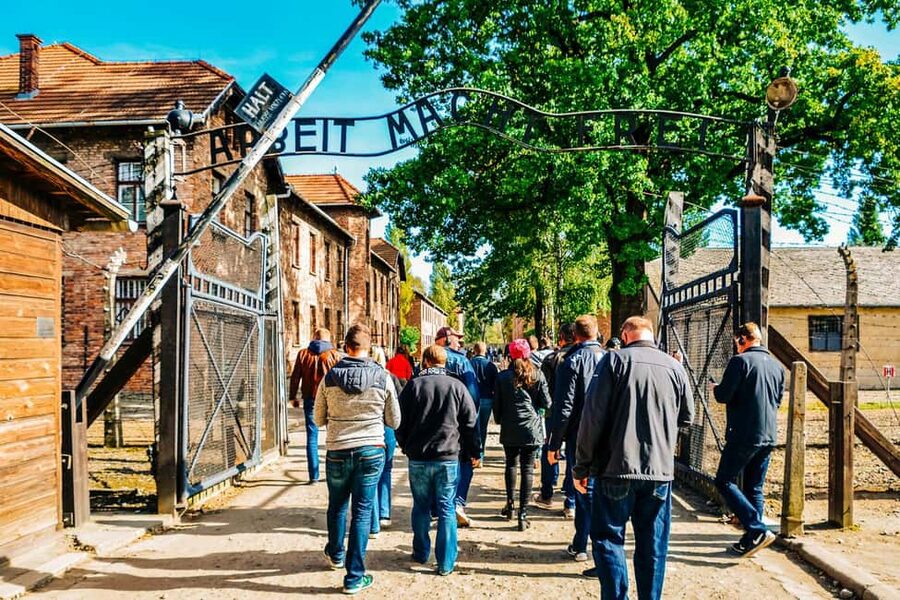
Auschwitz I is the older camp and the part with the brick buildings and museum displays. The route is controlled by the museum’s visitor rules, so you cannot simply wander wherever you like. That may sound restrictive, but it keeps the movement of groups manageable and protects the site.
The 3.5-hour guided visit includes Auschwitz I and Birkenau. At Auschwitz, you receive a headset so you can hear the guide clearly while moving through the grounds. This is important because groups can be large, and stopping to crowd around one guide would make the experience harder to follow.
The quality of this part depends heavily on the individual guide. Marta was described as passionate and clear, while Alexander was praised for making the camp’s complicated layout easier to understand. Other experiences noted difficulty with a strong accent or poor headset sound. I would not let that possibility stop you booking, but do tell the guide if you cannot hear. This is a place where missing a few sentences can mean missing essential context.
Expect the guide to set the pace. You may have limited time to stand alone in front of a display or return to something that caught your eye. Several people wanted more quiet time at both Auschwitz and Birkenau. That is the trade-off for a structured visit: you cover the major areas efficiently, but you do not control every minute.
You should bring your passport or ID card. Auschwitz Museum requires the full name and contact details of every participant, and the name on your booking must match the identification document used at entry. This is not the place to enter a nickname or a shortened version of your name.
Birkenau: open ground, distance, and weather
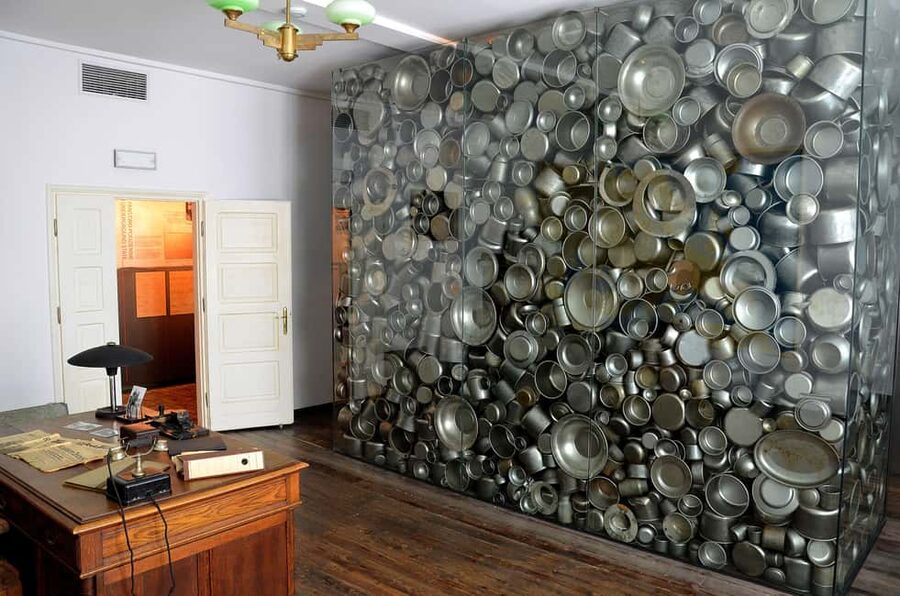
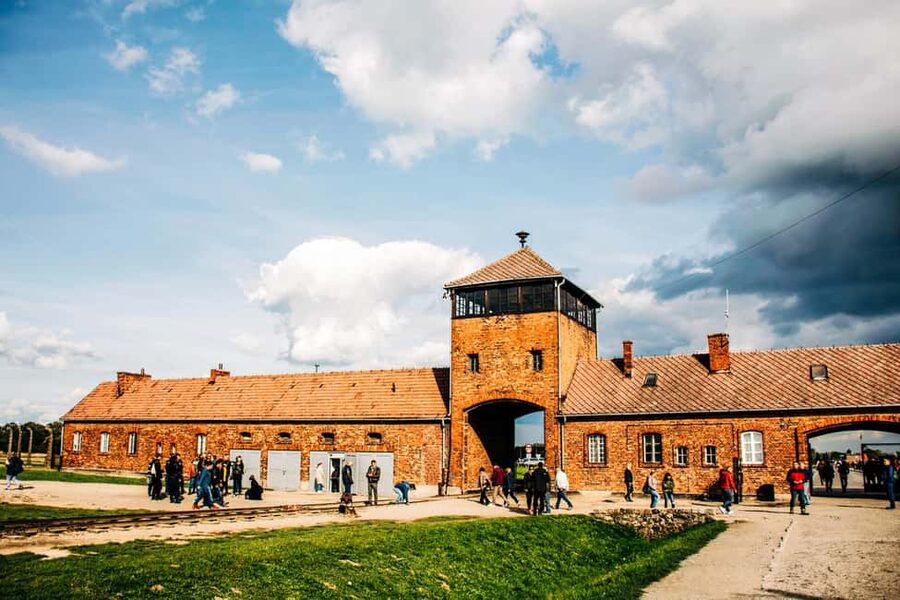
Birkenau is much larger and more exposed than Auschwitz I. The open grounds, long rows of barracks, railway approach, and watchtowers give you a different sense of the scale of the camp. The setting can feel stark in winter, windy in colder months, and very hot in summer.
The camp was built by prisoners of Auschwitz and, by October 1941, served as an extermination camp for about 125,000 prisoners of war. Its prisoner population continued to grow until early 1945. Before liberation, the Nazis tried to destroy the camp and its records, but only partly succeeded. The Polish government later restored the remains as a memorial.
A guide is especially useful here because the size of Birkenau can make it difficult to understand what you are looking at. The official route gives the buildings and ruins a clear place in the wider story. You may not enter every structure, however. Some wooden bunkers and the main tower have not been included in every tour route, and past visitors have wished for access to more of Birkenau.
Wear shoes with good support. The ground may be uneven, and you spend much of the visit outdoors. Bring layers, even in warmer weather, and protect yourself from wind, rain, or strong sun. A camera is allowed, but this is a place to use it with restraint and respect.
More Schindler's Factory visits:
- Krakow: Oskar Schindler’s Factory Entry Ticket & Guided Tour
★ 4.2 · 3,793 reviews - Krakow: Schindler’s Factory Tour with Entrance Ticket
★ 4.5 · 3,182 reviews - Krakow: Schindler’s Factory Skip-the-Line Ticket
★ 4.4 · 3,105 reviews - Krakow: Schindler’s Factory Tour with Entrance Ticket
★ 4.6 · 1,737 reviews
The short Podgórze break
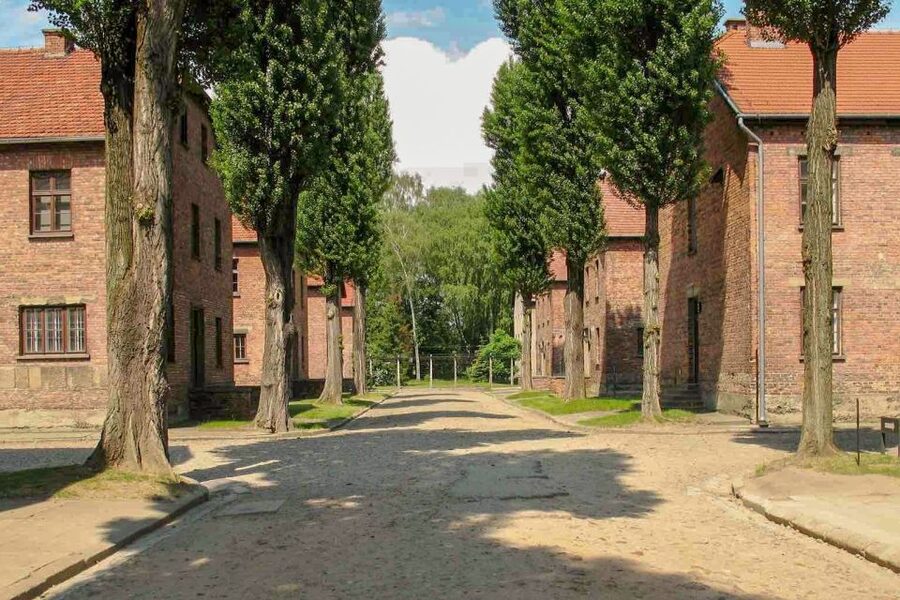
After Auschwitz-Birkenau, the vehicle returns toward Krakow for a break of about 50 minutes in Podgórze. This is the practical pause between two intense visits, not a leisurely lunch stop.
Food and drinks are not included. Because traffic and the exact length of the first tour can affect the schedule, the break may be shorter or longer than expected. Several people found there was only enough time for a quick bite. I would carry water and a snack, even though you should not bring large luggage or bags into the tour.
The break is also useful emotionally. Auschwitz can leave you quiet and drained, and a coffee or short walk gives you a chance to reset before entering another museum. Do not expect a long sit-down meal or time to explore Podgórze in depth.
Schindler’s Factory and the story of wartime Krakow
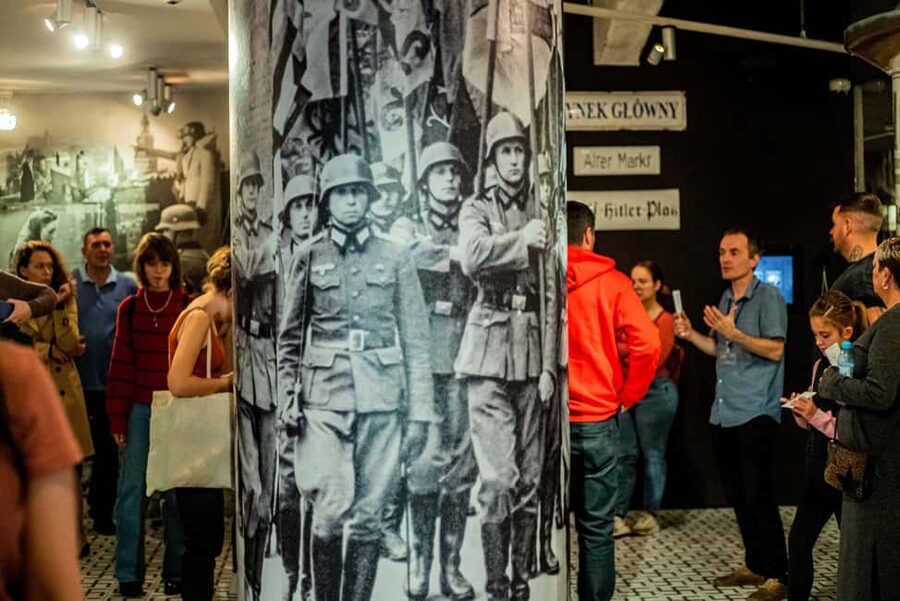
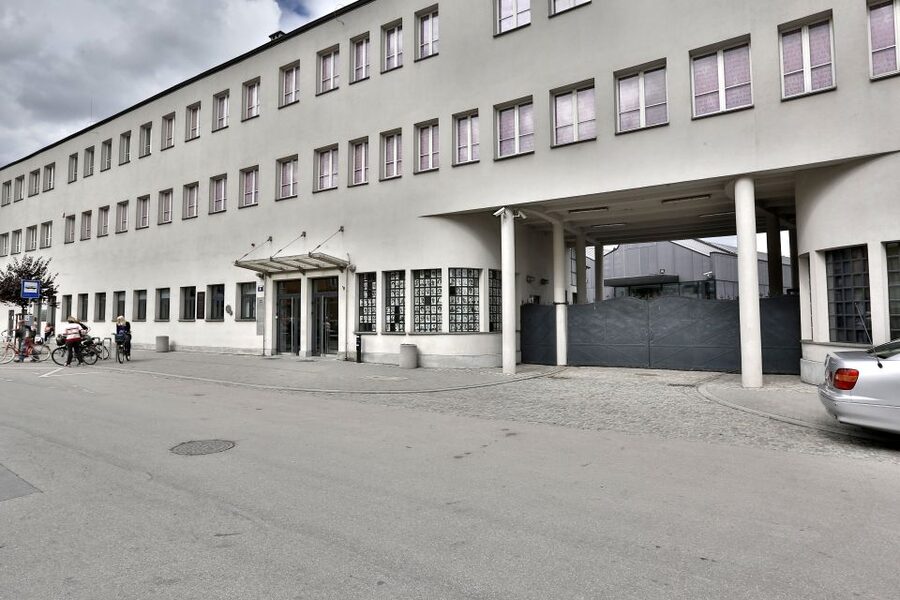
The former enamel factory now houses Oskar Schindler’s Factory Museum. Schindler became known for saving more than 1,000 Jewish people during the Holocaust, and Steven Spielberg’s 1993 film brought his story to a worldwide audience.
The museum itself is broader than that film connection. The interactive exhibition focuses largely on Krakow during the Second World War, the Nazi occupation, and daily life in the city. That makes it valuable, but it can surprise you if you expect room after room about Schindler, his factory, and his employees.
I like the pairing because it gives you two scales of the war. Auschwitz-Birkenau shows a mass system of persecution and murder. The factory museum brings the story back to a city, its residents, and the choices made by individuals during occupation. But I would book the factory portion with the right expectation: it is a Krakow wartime museum housed in Schindler’s factory, not a dedicated biography museum.
The guided visit lasts about 1.5 hours. A guide can help you connect the displays and move through the museum’s story in order. One guide was praised for excellent English and strong content, while another arrived late and flustered before settling into the tour. The group size is the larger concern. Groups of more than 20 can crowd the rooms, making it hard to stop and read the interpretation panels while the guide speaks.
If you care most about the museum’s objects and written displays, visiting independently on another day may suit you better. On this combined tour, the guide gives you a framework, but you may not have enough space or time to examine everything closely.
Timing, groups, and the real value of $58
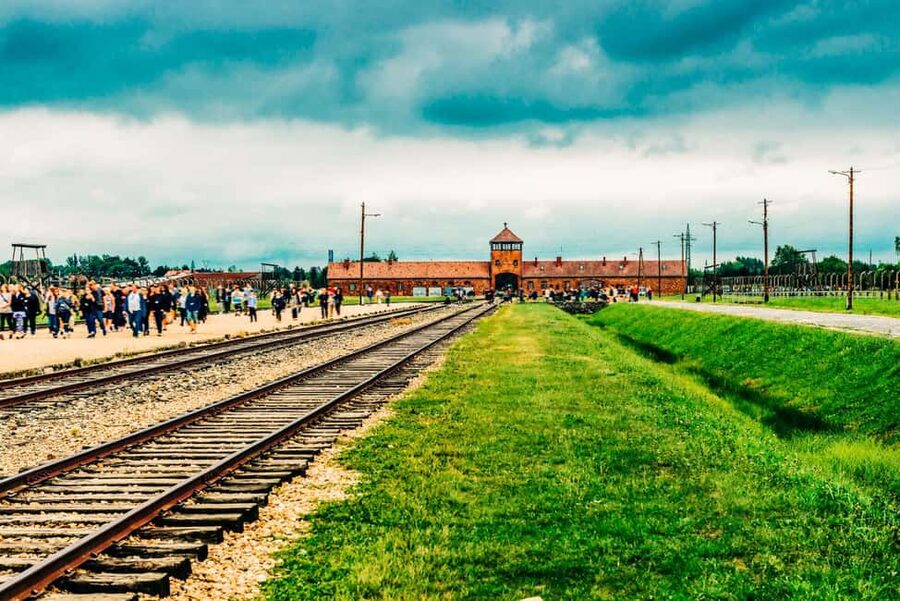
At $58 per person, this is good value if you want both sites in one day. The price includes round-trip transport from Krakow, skip-the-line tickets, a 3.5-hour guided visit at Auschwitz-Birkenau, a 1.5-hour guided visit at Schindler’s Factory, an English-speaking host, headsets at the camps, the interactive exhibition, and insurance.
Buying separate tickets and arranging transport may give you more freedom, but it also creates more work. Auschwitz entry is regulated, and the two camp sites are outside Krakow. The tour removes much of that planning.
The cost is less attractive if you mainly want to study Schindler’s Factory at your own pace. The factory portion can feel crowded and rushed, and the final drop-off there means you need to arrange your own return to the hotel. A taxi should cost only a few euros according to the activity information, but that still adds a small task at the end of a tiring day.
Group size matters. Small groups are available, but not every booking will be small. A larger coach can be efficient and social, yet it may mean longer boarding, a less personal guide experience, and tighter seating. At the factory, crowding affects your ability to read and pause more than it does at Auschwitz, where the official route already controls movement.
The tour offers free cancellation up to 24 hours before departure and reserve-now, pay-later booking. Those terms help if your Krakow plans are still shifting, but the early pickup and strict identity rules deserve more attention than the flexible payment.
What to bring and what to leave behind
Bring:
- Passport or ID card matching your booking name
- Comfortable shoes
- A camera
- Water and a snack
- Layers suitable for changing weather
Large bags and luggage are not allowed. Alcohol and drugs are prohibited. The information does not promise storage space, so travel light from the start.
You should also bring patience. The day may run longer or shorter than the stated 510 minutes because the museum controls the tour pace, road traffic changes the break, and pickup times can shift. It is best not to schedule a tight dinner reservation or train immediately after the factory visit.
The tour is listed as wheelchair accessible, but the exact experience may still depend on the vehicle and the route on the day. If you use a wheelchair, confirm the selected transport option with the provider before booking.
Who should choose this combined tour?
I would choose this for a first visit to Krakow if I wanted Auschwitz-Birkenau and Schindler’s Factory on the same day, with transport and admissions handled for me. It suits you if you value a clear route, an English-speaking host, and guides who can explain difficult material without leaving you to piece it together alone.
It is also a good fit if your Krakow stay is short. You cover both places in one demanding outing, then spend your other days on the Old Town, Wawel, Kazimierz, or other parts of the city.
I would hesitate if you want long periods of quiet reflection at Auschwitz, dislike early starts, or prefer to read every museum panel. I would also separate the two visits if Schindler’s Factory is a major priority. That gives you more control over the factory museum and avoids trying to absorb two very different subjects after a long morning at the camps.
Should you book this Auschwitz and Schindler’s Factory day trip?
Book it if you want the most practical way to see Auschwitz-Birkenau from Krakow and you also want an introduction to wartime Krakow. The camp guides and drivers are the strongest part, and the included transport and tickets make $58 a fair price for a full day.
Go in prepared for a 5:30 a.m. pickup, limited food time, possible crowding, and an emotional visit. Treat Schindler’s Factory as a broader occupation museum rather than a film-themed attraction. With those expectations, this is a well-organized, serious, and worthwhile addition to a Krakow visit.
FAQ
How long does the tour last?
The activity lasts 510 minutes, or about 8.5 hours. The schedule includes two 75-minute transfers, a 3.5-hour guided tour at Auschwitz-Birkenau, a break of about 50 minutes, and a 1.5-hour guided tour at Schindler’s Factory.
Where is the meeting point in Krakow?
The meeting point is at the entrance of the Radisson Blu Hotel Krakow, at the tourist bus stop. You should wait for the KrakowDirect van, minibus, or coach.
Is hotel pickup available?
Yes. Hotel or apartment pickup is available with selected options. Wait at the entrance or reception 15 minutes before your confirmed pickup time. The exact time depends on your address and may change by up to one hour.
What language is the tour conducted in?
The live tour guide and tour host speak English. The offer is written in English, and the provider does not accept responsibility for translation inaccuracies into other languages.
Are Auschwitz and Birkenau included in the guided visit?
Yes. The guided tour covers both Auschwitz and Birkenau and lasts about 3.5 hours. Headsets are provided so you can hear the guide.
Is Schindler’s Factory included?
Yes. The tour includes a 1.5-hour guided visit to Oskar Schindler’s Factory Museum and access to its interactive exhibition.
Is food included?
No. Food and drinks are not included. A break of about 50 minutes is usually arranged in Podgórze, but traffic and the first tour’s timing can affect its length.
What identification do I need?
Bring a passport or ID card. Your full name and contact details must be supplied when booking, and the name on the booking must match the identification document used at Auschwitz Museum.
Where does the tour finish?
The final drop-off is at Oskar Schindler’s Factory. From there, you can order a taxi back to your Krakow hotel for a few euros.
Just added around Krakow
- Private Guided Tour: Oskar Schindler’s Factory★ 5.0 · 3 reviews
- E-Scooter Krakow sightseeing tour★ 5.0 · 3 reviews
- From Krakow: Zakopane and Thermal Pools Guided Trip★ 5.0 · 3 reviews
- Schindler’s Factory, Ghetto and Plaszow Camp Guided Tour★ 4.7 · 3 reviews
- Kraków: Private Hot Air Balloon Flight with Champagne★ 3.7 · 3 reviews
- Krakow: River Cruise & Guided Visit to Former Plaszow Camp★ 3.6 · 3 reviews
- From Krakow: Private Wieliczka Salt Mine Tour★ 4.0 · 3 reviews
- Krakow: Old Town short walk with St. Mary’s Basilica visit★ 5.0 · 3 reviews
Auschwitz-Birkenau Tours, compared.

Auschwitz-Birkenau Guided Tour & Hotel Pickup
Read our review →Auschwitz-Birkenau Guided Tour & Hotel Pickup
Read our review →
Auschwitz Guided Tour with Optional Hotel Pickup
Read our review →
Auschwitz-Birkenau Guided Tour with Pickup & Lunch
Read our review →
Auschwitz-Birkenau Guided Tour Pickup/Lunch Options
Read our review →

Krakow to Auschwitz Birkenau Guided Tour with Transfer and Ticket
Read our review →
Browse the lists this tour appears in