
Reviewed · JEWISH GHETTO TOURS
Guided Tour in Kraków-Płaszów Former Concentration Camp
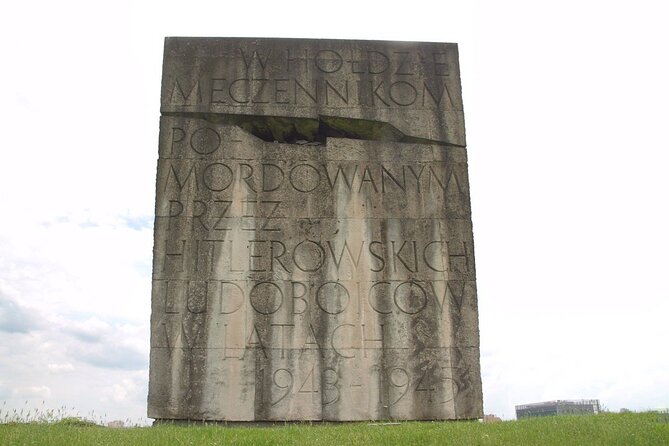
Kraków’s former Płaszów concentration camp sits surprisingly close to the city’s everyday life. Shopping centers, busy roads, and residential areas surround a rough, open stretch of ground where a guide helps you understand what happened there during the Holocaust. That contrast is the heart of this tour.
I like the route for two clear reasons: it links Ghetto Heroes Square with Płaszów, and it ends with one of Kraków’s most direct surviving reminders of the ghetto, an original wall fragment. I also like that the tour costs about $30.01 and lasts around two hours, enough time for useful context without taking up a whole day.
The main consideration is the setting. Płaszów is not a polished museum complex with indoor displays and a fixed path. It is uneven, largely undeveloped ground, so you should expect a serious outdoor walk rather than a conventional sightseeing attraction.
In This Review
- Key points to know before booking
- Why Płaszów changes the usual Kraków itinerary
- Starting at Ghetto Heroes Square
- Walking through the former Płaszów camp
- The surviving ghetto wall fragment
- What the $30.01 price includes in practical terms
- Who will get the most from this walk
- Timing, meeting point, and the end of the route
- My take on the guide-led format
- Should you book the Płaszów tour?
- FAQ
- How long does the guided Płaszów tour last?
- What language is the tour offered in?
- Where does the tour begin?
- Where does the tour finish?
- Does the tour visit Ghetto Heroes Square?
- Will I see part of the original Kraków Ghetto wall?
- How much does the tour cost?
- How many people can join the tour?
- Can I cancel for a full refund?
Key points to know before booking
- Płaszów is in Kraków itself: You do not need to travel to Auschwitz to learn about the city’s own wartime camp site.
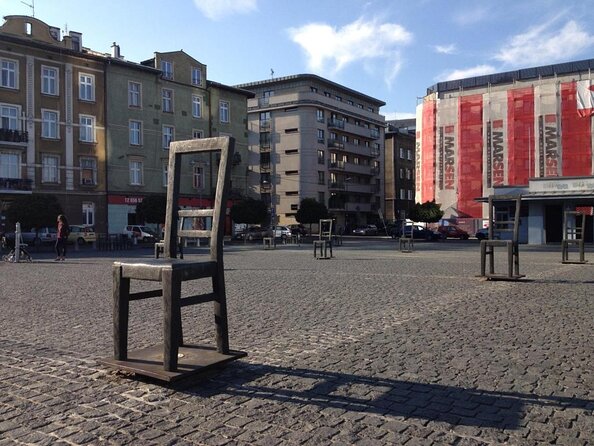
- The tour begins at Ghetto Heroes Square: The 70 metal chairs create a stark memorial to departure and absence.
- An English-speaking guide provides the context: The walk is designed to explain the difficult history rather than leave you to interpret an empty site alone.
- You see a surviving ghetto wall fragment: The 12-meter section carries a commemorative plaque in Hebrew and Polish.
- The walk lasts about two hours: It is a focused introduction, not a full-day Holocaust history program.
- The group can reach 25 people: A smaller group may feel more personal, but the maximum is worth noting if you prefer quiet, intimate tours.
Why Płaszów changes the usual Kraków itinerary
Many people use Kraków as a base for Auschwitz. That is an important visit, but it can make the city’s own wartime story easy to overlook. Płaszów brings the subject closer to central Kraków and shows you that the Holocaust was not only something that happened far outside the city.
The former camp occupies an open, uneven area in the Podgórze district. It is close to Wielicka Street, opposite the Bonarka shopping center, and not far from Krakus Mound. That location matters. You are not being taken to an isolated historic park. You are looking at a site surrounded by normal city activity.
I find that contrast useful because it prevents the past from feeling sealed away. The surrounding roads and buildings make the history harder to place in a distant, abstract category. Your guide’s job is especially important here, since the site itself offers little visual structure compared with a museum.
Płaszów was once the German Nazi concentration camp known as Konzentrationslager Plaszow bei Krakau. Today, the area does not immediately announce what happened there. Without guidance, you might see only rough ground and open space. With an informed explanation, the place becomes part of Kraków’s wartime story.
That is also the tour’s limit. You should not book this expecting a large exhibition, reconstructed buildings, or a long list of preserved objects. The value comes from the guide’s spoken explanation and the act of standing in the actual setting.
More Jewish heritage walks in Krakow:
- Krakow: Schindler’s Factory & Ghetto Guided Tour
★ 4.7 · 1,694 reviews - Krakow: Jewish Quarter and Former Ghetto Tour
★ 4.9 · 1,441 reviews - Krakow: Bike Tour of Old Town, Jewish Quarter and the Ghetto
★ 4.9 · 1,155 reviews
Starting at Ghetto Heroes Square
The meeting point is Apteka pod Orłem at Plac Bohaterów Getta 18. The tour begins by walking around Ghetto Heroes Square, also known by its former name, Plac Zgody. The square sits across the river in the Podgórze suburb and provides an important opening to the tour.
The memorial here is unusual and difficult to forget. Seventy large metal chairs are spaced across the square. They represent departure and the absence left behind, turning an otherwise open public space into a quiet memorial to the victims of the Kraków Ghetto.
The design was controversial when the square was renovated in 2005. That detail adds useful context because the site is not simply an old monument that has always been treated with care. After the war, the square was neglected and used as a public toilet and parking lot before its later restoration.
I like beginning here because the memorial uses space rather than a long inscription. The chairs do not tell the entire story by themselves, but they give your guide a strong starting point for discussing Kraków during the Holocaust. You can look at the square, listen, and then follow the route toward Płaszów with a clearer sense of what the city’s Jewish district endured.
The stop is also practical. Because the square is the starting point, you should arrive at the named meeting address rather than go directly to Płaszów. The tour is designed as a connected walk through several places, not a single-site visit.
Walking through the former Płaszów camp
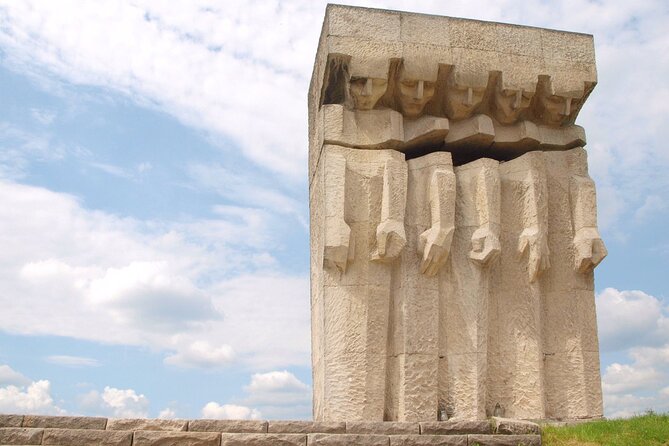
The main visit lasts about one hour. Your guide leads you across the former camp area and explains the events connected with Płaszów and Kraków. This is where the tour earns its price, since the setting alone does not provide enough information for a meaningful visit.
The ground is described as wild and uneven, and much of the area remains undeveloped. You may find the experience more reflective than visual. There are no supplied details about a reconstructed camp interior or a formal museum route, so the focus is on the site, the explanation, and the historical setting.
That format suits you if you want a guide to connect facts and places as you walk. It may not suit you if you need a highly structured attraction with frequent displays, clear indoor rest stops, or a large collection of artifacts. The tour description is honest about the outdoor character of the visit, and you should plan for it accordingly.
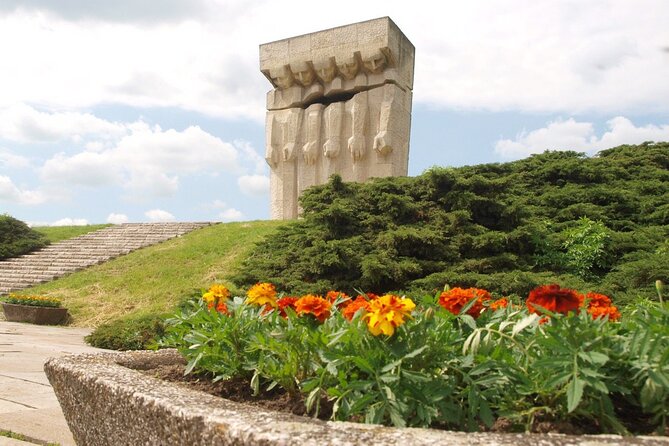
The camp’s location gives the stop added force. It lies in one of Kraków’s commercially active and residential districts, close to a major communication route and the Bonarka shopping center. You can be thinking about modern Kraków one moment and then listening to an account of the city’s Holocaust years in the next.
The guide’s role is central. The experience promises explanations and context for tragic historic events, and one named guide is Olga. Her work included helping with tram tickets, which suggests a useful practical side to the guiding, though you should not assume she will lead every departure.
A small group can make this type of stop feel more focused. The official maximum is 25 people, so the atmosphere may vary. If the group is full, you will still have an English-speaking guide, but standing close enough to hear every explanation may matter more in an open area than it would inside a museum.
The surviving ghetto wall fragment
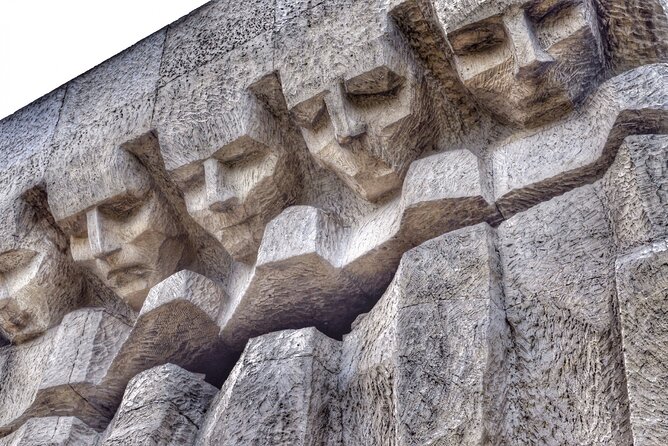
After the camp visit, the route passes by a 12-meter section of the original Kraków Ghetto wall. It is one of the clearest physical pieces of the ghetto still identified in the tour, and the stop helps bring the earlier discussion back to a specific object.
A plaque added in 1983 appears in Hebrew and Polish. Its message recalls the people who lived, suffered, and died at the hands of German torturers, and it marks the place from which they began their final journey to the death camps.
You are not simply looking at an old wall. The plaque gives the fragment a direct human meaning, while the guide can connect it with the square and the camp. That sequence is one of the tour’s strongest features: a memorial space, the former camp grounds, and a physical remnant of the ghetto.
The provided route information lists the wall fragment after the Płaszów visit. It does not give a separate admission fee, and the Płaszów stop itself is listed as free admission. The value here is not in ticketed access. It is in having a guide explain why these modest-looking places matter.
A few more Krakow trips worth comparing
- From Krakow: Auschwitz-Birkenau Guided Tour & Hotel Pickup
★ 4.5 · 33,358 reviews - From Krakow: Auschwitz-Birkenau Guided Tour & Hotel Pickup
★ 4.5 · 29,340 reviews - Krakow: Auschwitz Guided Tour with Optional Hotel Pickup
★ 4.5 · 15,280 reviews - Krakow: Auschwitz-Birkenau Guided Tour with Pickup & Lunch
★ 4.5 · 9,800 reviews
What the $30.01 price includes in practical terms
At about $30.01 per person, this is a fairly focused paid walk. You are paying for roughly two hours of an English-speaking guide’s time, historical explanation, and a route that joins three important places in Podgórze.
I think the price makes the most sense if you would otherwise visit the sites without enough background. Płaszów in particular can be hard to read on your own because the area is largely open and undeveloped. A guide turns an uncertain walk into a structured history visit.
The price is less compelling if you already have a strong understanding of Kraków’s Holocaust history and prefer to explore memorial sites independently. The tour does not promise extensive museum access, transport, meals, or a full-day program. It is a compact guided introduction.
The average booking lead time is 29 days. That does not guarantee that every date sells out, but it tells you that people often reserve this well before their visit. If the timing fits your Kraków plans, booking ahead is sensible.
You receive a mobile ticket, and confirmation is provided at booking. The tour is offered in English. Public transportation is nearby, and the end point is listed at the bus stop at 57 Kamienskiego Street, rather than back at the starting square.
One useful personal detail comes from the guiding experience: Olga helped with tram tickets. You should not count on that as a formal included service, but it shows why a guide can help beyond historical commentary when the route begins or ends in a part of the city you do not know well.
Who will get the most from this walk
I would recommend this tour to anyone who wants to understand Kraków’s Holocaust history in the city itself. It is especially useful if you are already visiting Ghetto Heroes Square or planning to see Auschwitz and want to add a local site that many people miss.
It also suits you if you prefer a short, guided introduction rather than a full day of museums. Two hours is long enough to set the historical frame, visit the main sites, and leave room for other Kraków plans.
The tour may be a good fit for most people physically able to take part, since the participation information says most people can join. Still, the former camp area is uneven, and the visit takes place outdoors. If you need a completely smooth, indoor route, check carefully before booking.
Families and school-age visitors may appreciate the clear route, but the subject is severe. You should decide based on the age and temperament of the people in your group. Nothing in the supplied information suggests that the experience is softened for children.
A group of up to 25 is manageable, though not especially intimate. If you value personal questions and a quieter pace, a departure with only a few people would be preferable. One described experience involved just three participants, which allowed for a more personal visit, but that small size is not guaranteed.
Timing, meeting point, and the end of the route
The full experience lasts approximately two hours. The Płaszów portion is listed as one hour, with the square and wall fragment making up the rest of the route.
Begin at Apteka pod Orłem, Plac Bohaterów Getta 18, 33-332 Kraków. The endpoint is given as Henryka Kamieńskiego 57, 30-644 Kraków, specifically the bus stop at 57 Kamienskiego Street. That means you should not plan on finishing where you started.
The tour is near public transportation, which helps with both ends of the route. Since assistance with tram tickets has been part of one guide’s service, you can ask for help if you are unsure how to continue, though the available information does not specify a dedicated transfer or transport ticket included in the price.
Free cancellation is available if you cancel at least 24 hours before the start time. Cancellations made less than 24 hours in advance are not refunded, and changes inside that period are not accepted. The cut-off follows Kraków local time.
My take on the guide-led format
The strongest reason to book is not the number of stops. It is the interpretation. Ghetto Heroes Square and the wall fragment can be visited independently, but Płaszów is much harder to understand without someone explaining its place in the city’s story.
The English-language format keeps the tour accessible to international visitors. The stated five-star rating from 19 submitted ratings and full recommendation rate point to consistently strong satisfaction, with particular praise for Olga’s preparation, kindness, and practical help. Those qualities matter on a subject that calls for care and clear speech.
At the same time, you should keep your expectations grounded. This is not a replacement for every Kraków Holocaust museum or for Auschwitz. It is a short outdoor walk that gives you a local point of reference and connects several memorial places.
Should you book the Płaszów tour?
Book it if you want a guided, two-hour look at Kraków’s own Holocaust history, especially if you would not know how to interpret the former camp area by yourself. The combination of Ghetto Heroes Square, Płaszów, and the surviving wall fragment gives the walk a clear shape, and the $30.01 price is reasonable for a focused English-language guide.
Skip it if you are looking for a large museum, extensive preserved buildings, or a full-day program. You should also think twice if uneven outdoor ground is a serious problem for you.
For most people interested in Kraków’s wartime past, I would add this before or after an Auschwitz visit. It does not try to be the same experience. Its value is showing you that this difficult history is part of Kraków itself, not only a destination outside the city.
FAQ
How long does the guided Płaszów tour last?
The experience lasts approximately two hours. The visit to the former Płaszów camp is listed as one hour, with the other stops making up the remaining time.
What language is the tour offered in?
The tour is offered in English.
Where does the tour begin?
The meeting point is Apteka pod Orłem at Plac Bohaterów Getta 18, 33-332 Kraków, Poland.
Where does the tour finish?
The listed end point is Henryka Kamieńskiego 57, 30-644 Kraków, at the bus stop at 57 Kamienskiego Street.
Does the tour visit Ghetto Heroes Square?
Yes. The route begins by walking around Ghetto Heroes Square, formerly called Plac Zgody, in Kraków’s Podgórze suburb.
Will I see part of the original Kraków Ghetto wall?
Yes. The route passes a 12-meter fragment of the original ghetto wall, with a commemorative plaque in Hebrew and Polish.
How much does the tour cost?
The listed price is $30.01 per person.
How many people can join the tour?
The maximum group size is 25 people.
Can I cancel for a full refund?
Yes, if you cancel at least 24 hours before the experience start time. Cancellations or changes made less than 24 hours before the start are not accepted for a refund.
Just added around Krakow
- Private Guided Tour: Oskar Schindler’s Factory★ 5.0 · 3 reviews
- E-Scooter Krakow sightseeing tour★ 5.0 · 3 reviews
- Schindler’s Factory, Ghetto and Plaszow Camp Guided Tour★ 4.7 · 3 reviews
- From Krakow: Zakopane and Thermal Pools Guided Trip★ 5.0 · 3 reviews
- Kraków: Private Hot Air Balloon Flight with Champagne★ 3.7 · 3 reviews
- Krakow: River Cruise & Guided Visit to Former Plaszow Camp★ 3.6 · 3 reviews
- From Krakow: Private Wieliczka Salt Mine Tour★ 4.0 · 3 reviews
- Krakow: Old Town short walk with St. Mary’s Basilica visit★ 5.0 · 3 reviews
Jewish Ghetto Tours, compared.

Bike Tour of Old Town, Jewish Quarter and the Ghetto
Read our review →
Kazimierz, Schindler’s Factory & Ghetto Guided Tour
Read our review →
Full Bike Tour – the Old Town, Jewish Qtr & the Ghetto NEW BIKES
Read our review →
Bike Tour of the Old Town, Kazimierz, and the Ghetto
Read our review →
Jewish Quarter and Ghetto Electric Golf Cart Tour
Read our review →Browse the lists this tour appears in