
Reviewed · JEWISH GHETTO TOURS
Krakow: 2h World War II, visiting the Ghetto walking tour
The most affecting part of this Krakow walk is its focus on Podgórze, where streets, walls, a pharmacy, and a square preserve the story of the city’s former Jewish Ghetto. This is not a broad survey of World War II. It is a concentrated look at one district and the people forced to live there.
I like the way the tour joins major sites with smaller physical traces, especially the Under the Eagle Pharmacy and the remaining sections of the Ghetto walls. I also like that the guides, including Irene and Vlad, leave room for questions rather than treating a painful subject as a quick speech. The main consideration is that two hours is short for such a large subject, and the walk is emotionally serious rather than light sightseeing.
In This Review
- Key points at a glance
- Why Podgórze is the right place for this tour
- Ghetto Heroes Square and the meaning of empty chairs
- Under the Eagle Pharmacy and a personal wartime story
- The Ghetto walls and the physical shape of confinement
- Schindler’s Factory and the people behind the name
- Podgórze’s main square and the district before the war
- The Bridge of Love and an unexpected change of mood
- What $36 buys you in two hours
- Who will get the most from this walk
- How to prepare for a serious but rewarding visit
- Should you book the Krakow Ghetto walking tour?
- FAQ
- How long does the Krakow Ghetto walking tour last?
- How much does the tour cost?
- Which languages are available?
- Does the tour include a guide?
- Are food and drinks included?
- Can I cancel the tour for a refund?
Key points at a glance
- Ghetto Heroes Square: Learn why this open space became one of the key memorial places in Podgórze.
- Under the Eagle Pharmacy: Hear how the Ghetto’s only pharmacy became part of its wartime story.
- Schindler’s Factory: Connect the district to Oskar Schindler and the workers whose lives were saved.
- Ghetto wall remains: See the surviving fragments that show how confinement was imposed on residents.
- Podgórze’s older identity: Discover that the district was once a separate city with its own main square.
- Flexible booking: The tour costs $36 per person, lasts two hours, and permits cancellation up to 24 hours before departure.
Why Podgórze is the right place for this tour
Krakow’s Old Town gets much of the attention, but Podgórze tells a different story. Across the river, this district contains the former Jewish Ghetto and several sites connected with the German occupation and the Holocaust.
That setting matters. You are not simply looking at objects in a museum. You are moving through ordinary streets where wartime orders changed daily life, separated families, and forced Jewish residents into a confined area.
The tour also gives Podgórze some context beyond World War II. You see the main square of the district and learn about its earlier role as a city in its own right. That wider view helps explain why this is a real neighborhood with layers of history, not merely a memorial zone.
I would choose this experience if you want a focused introduction to Krakow’s wartime past. It works especially well early in your stay, before visiting other World War II sites, because it gives you names, places, and questions to carry with you.
More Jewish heritage walks in Krakow:
- Krakow: Schindler’s Factory & Ghetto Guided Tour
★ 4.7 · 1,694 reviews - Krakow: Jewish Quarter and Former Ghetto Tour
★ 4.9 · 1,441 reviews - Krakow: Bike Tour of Old Town, Jewish Quarter and the Ghetto
★ 4.9 · 1,155 reviews
Ghetto Heroes Square and the meaning of empty chairs
Ghetto Heroes Square is one of the tour’s central stops. The square’s memorial chairs create a stark image of absence, and the guide uses the place to explain what happened to the Jewish population of Krakow during the occupation.
The power of this stop comes from its simplicity. You are standing in a public space, yet the subject is forced removal, loss, and the breakup of a community. The chairs are not a substitute for the stories, but they give the guide a clear point from which to explain the human cost of the Ghetto.
Give yourself time to look around here. A hurried visit can turn an important memorial into a photo stop, while a good explanation helps you understand why this square matters.
The guides are a major part of the experience. Irene has been praised for making room for questions and conversation while handling the subject with care. Vlad is also described as patient and clear, useful qualities when the group wants to pause over difficult details.
This is not the kind of tour where you should expect jokes or fast entertainment. The value is in the guide’s ability to make events understandable without turning suffering into spectacle.
Under the Eagle Pharmacy and a personal wartime story
The Under the Eagle Pharmacy is one of the most distinctive stops. It was the only pharmacy in the Ghetto, and its story adds a personal scale to the larger account of persecution.
A pharmacy may sound like a small detail beside a factory or a memorial square. In practice, it helps you picture how people tried to keep working, caring for one another, and holding on to normal routines under extreme conditions.
The guide explains the pharmacy’s role and why it became important to the people living inside the Ghetto. This is one reason I prefer a walking tour with a live guide over simply passing the building on your own. The exterior alone cannot tell you why the site carries such weight.
You should expect this stop to be more about explanation than a long museum visit. The supplied details identify the pharmacy as part of the walking route, but they do not promise a separate extended interior visit or a set of exhibits. If you want a full museum experience, treat this tour as an introduction rather than a replacement for dedicated museum time.
The Ghetto walls and the physical shape of confinement
The remaining sections of the Ghetto walls offer some of the clearest physical evidence on the route. A guide can explain the surrounding tragedy, but the wall itself makes the idea of forced confinement much easier to grasp.
Only fragments remain, so you are not seeing the entire boundary. That is both a strength and a limitation. The surviving pieces are direct and memorable, but you need the guide’s explanation to understand the full scale and purpose of the original barrier.
This stop is especially useful if you learn best through places rather than dates. The wall shows how a political order became a daily physical fact. It separated residents from the rest of the city and turned movement into something controlled and dangerous.
You may also see buildings that survived wartime shootings. The tour does not present Podgórze as a perfectly preserved historical set. Instead, it points out the marks and structures that remain among later layers of urban life.
That mixture can feel less tidy than a museum display, but it is also more honest. You are seeing a living district with wartime evidence still woven into its streets.
More walking tours in Krakow:
- Old Town Krakow & Wawel Castle Walking Tour
★ 5.0 · 1,508 reviews - Creepy Krakow: 2-Hour City Walking Tour
★ 4.7 · 1,131 reviews - Krakow: The Old Town Walking Tour
★ 4.8 · 794 reviews - Krakow: Kazimierz Jewish Quarter Walking Tour
★ 4.8 · 571 reviews
Schindler’s Factory and the people behind the name
The story of Schindler’s Factory is another main part of the walk. Oskar Schindler is widely known because of the film Schindler’s List, but the tour connects his name to the workers who survived the war through his actions.
You will see photographs of workers who survived thanks to Schindler, according to the tour details. This shifts the focus away from a single famous figure and toward the people whose lives were affected by the factory and the decisions made there.
That is an important distinction. Schindler’s name can easily take over the story, especially for visitors arriving with the film in mind. A good guide brings the focus back to the Jewish workers, the conditions they faced, and the wider system of occupation and forced labor.
The tour presents the factory as part of Podgórze’s wartime network, not as an isolated attraction. You learn how the factory fits into the district’s story and how the surrounding sites help explain what life looked like during the occupation.
One practical point: the experience includes the story of Schindler’s Factory, but the supplied information does not say that admission to the factory museum is included. The listed inclusion is a tour guide, while food and drinks are not included. If you want to tour the museum interior, check separately rather than assuming this walking route covers the museum visit.
Podgórze’s main square and the district before the war
The tour does not limit itself to wartime suffering. You also visit the main square of Podgórze and learn about the district as a city.
This part may seem less dramatic, but I think it improves the walk. Without it, Podgórze risks becoming only a place defined by tragedy. Its earlier civic life gives you a fuller sense of what was disrupted and what later continued.
The square also helps you get your bearings. Instead of seeing disconnected locations, you begin to understand the district as a place with its own center, streets, and identity.
Because the tour lasts two hours, the explanation here is likely selective. You will not receive every chapter of Podgórze’s past. You will get enough context to see how the district changed from an independent city area into the setting of the Ghetto and then into modern Krakow.
That balance suits a first visit. You leave with a workable mental map and a reason to return for more detail.
The Bridge of Love and an unexpected change of mood
The experience also includes passing through Krakow’s Bridge of Love and seeing sculptures of athletes swinging in the wind.
This is a surprising addition to a World War II walk. The bridge and sculptures are not part of the Ghetto story, so they create a change of mood after the heavier sites in Podgórze.
I would not book the tour mainly for this feature. It is a small extra, not the reason to choose the experience. Still, it gives the route a modern counterpoint and reminds you that Krakow contains memorial spaces, daily life, public art, and leisure areas side by side.
The wording of the experience describes this section as driving through the bridge area, while the main activity is presented as a walking tour. I would check the exact meeting and movement arrangements when booking if this detail matters to you. The confirmed core of the experience is the two-hour guided visit through Podgórze and the former Ghetto sites.
What $36 buys you in two hours
At $36 per person, this is not the cheapest way to spend two hours in Krakow. Its value depends on how much you want a guide to connect several sites into one clear story.
You are paying for a live guide in English, Polish, or Russian, rather than for food, drinks, or a major museum admission. The price makes more sense if you would otherwise walk between the Ghetto walls, Heroes Square, the pharmacy, and Schindler’s Factory without knowing how they relate.
The strongest part of the value is the chance to ask questions. Irene’s approach is described as welcoming and open to conversation, while Vlad is noted for patiently answering many questions. That matters here because the subject raises points that a sign or audio guide may not address in the moment.
The tour also receives a current rating of 4.2 from seven reviews, with four supplied ratings giving it five stars. The praise centers on clear explanations, friendly guides, personal attention, and the amount learned in a short time. Those are the qualities I would care about most for this particular route.
Still, keep your expectations in proportion. Two hours cannot cover every aspect of Krakow’s Jewish history, the occupation, the Holocaust, or Schindler’s life. If you want an intensive academic treatment, you need additional museum visits and reading. If you want a well-shaped first look at the former Ghetto, the format is more suitable.
Who will get the most from this walk
I would recommend this tour to you if you want history explained on location and prefer a short, focused outing. It is a good choice for first-time visitors who have limited time but do not want to skip Krakow’s World War II story.
It should also suit anyone interested in the Jewish history of Krakow. The route does not treat the Ghetto as a single abstract event. The square, pharmacy, wall fragments, factory story, and surviving buildings give the subject several concrete points.
Families with older children may find the two-hour length manageable, but the topic is grave. Adults should decide whether the material is suitable for younger members of the group. The supplied information does not give a recommended minimum age, so you should use your own judgment.
I would be less likely to choose it if you want a relaxed sightseeing walk with lots of entertainment, food stops, or interiors. Food and drinks are not included, and the focus remains on war, persecution, survival, and memory.
Wear comfortable shoes and expect to spend the time moving through an urban district rather than sitting in one place. The listing does not provide a detailed accessibility description, so contact the provider if mobility needs are important to your plans.
How to prepare for a serious but rewarding visit
Before you go, it helps to know that this is a story about people and places, not just military events. The emphasis falls on Krakow’s Jewish population, the former Ghetto, the occupation, and the lives changed by those events.
I would avoid packing another demanding activity immediately afterward. The tour is only two hours, but the subject can stay with you longer. Leave room for a quiet meal or a slower walk once it ends.
You can also make the most of the guide by preparing a few questions. Ask about the pharmacy, the wall remains, the workers linked to Schindler’s Factory, or how Podgórze changed over time. The guides are specifically praised for encouraging questions, so this is not a route where you need to remain silent and simply follow.
Tips are accepted and appreciated. They are not listed as part of the price, so consider a tip if the guide gives you a thoughtful, well-organized explanation.
Booking is flexible. You can cancel up to 24 hours before the tour for a full refund, and the reserve-now, pay-later option lets you hold a place without paying at once. Starting times depend on availability, so check the schedule that fits your day.
Should you book the Krakow Ghetto walking tour?
Book it if you want a compact, human-scale introduction to Podgórze and Krakow’s former Jewish Ghetto. The best reasons are the combination of Ghetto Heroes Square, the Under the Eagle Pharmacy, the remaining wall fragments, and the Schindler’s Factory story, all explained by a live guide.
I would especially choose it with Irene or Vlad if their language and schedule match your plans. Their style, based on the information available, suits people who want patient answers and clear explanations rather than a rushed list of dates.
Skip it if you are looking mainly for museum admission, food, or a light city stroll. This is a serious history walk, and two hours gives you an introduction rather than the final word.
For most visitors with a genuine interest in Krakow’s wartime past, $36 is a fair price for the guide’s context and the chance to see these places as parts of one connected story.
FAQ
How long does the Krakow Ghetto walking tour last?
The tour lasts two hours.
How much does the tour cost?
The listed price is $36 per person.
Which languages are available?
The live guide can conduct the tour in English, Polish, or Russian.
Does the tour include a guide?
Yes. A tour guide is included.
Are food and drinks included?
No. Food and drinks are not included.
Can I cancel the tour for a refund?
Yes. You can cancel up to 24 hours in advance for a full refund.
More 2-Hour Experiences in Krakow
- Krakow: Old Town Segway Tour 2 hours
★ 4.8 · 83 reviews - Krakow: 2h Kazimierz (Jewish Quarter) Walking Tour
★ 4.5 · 75 reviews - Krakow: 2h Kazimierz (Jewish Quarter) Segway Tour
★ 4.8 · 35 reviews - Great fun in GOjump MEGAPARK Kraków-Sikorki – 2 hours ticket
★ 5.0 · 32 reviews
Just added around Krakow
- Private Guided Tour: Oskar Schindler’s Factory★ 5.0 · 3 reviews
- E-Scooter Krakow sightseeing tour★ 5.0 · 3 reviews
- From Krakow: Zakopane and Thermal Pools Guided Trip★ 5.0 · 3 reviews
- Schindler’s Factory, Ghetto and Plaszow Camp Guided Tour★ 4.7 · 3 reviews
- Kraków: Private Hot Air Balloon Flight with Champagne★ 3.7 · 3 reviews
- Krakow: River Cruise & Guided Visit to Former Plaszow Camp★ 3.6 · 3 reviews
- From Krakow: Private Wieliczka Salt Mine Tour★ 4.0 · 3 reviews
- Krakow: Old Town short walk with St. Mary’s Basilica visit★ 5.0 · 3 reviews
Jewish Ghetto Tours, compared.

Bike Tour of Old Town, Jewish Quarter and the Ghetto
Read our review →
Kazimierz, Schindler’s Factory & Ghetto Guided Tour
Read our review →
Full Bike Tour – the Old Town, Jewish Qtr & the Ghetto NEW BIKES
Read our review →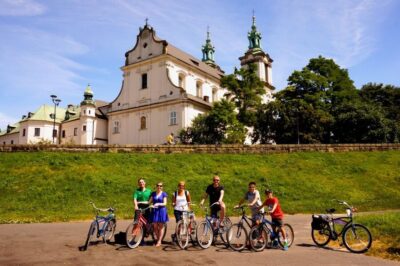
Bike Tour of the Old Town, Kazimierz, and the Ghetto
Read our review →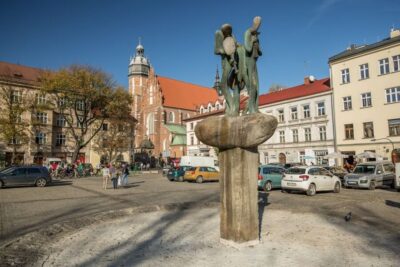
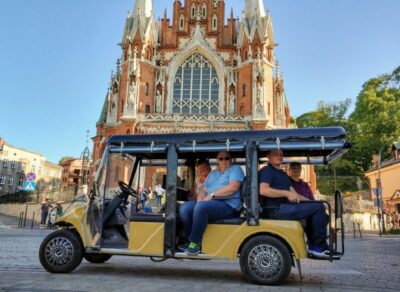
Jewish Quarter and Ghetto Electric Golf Cart Tour
Read our review →Browse the lists this tour appears in