
Reviewed · JEWISH GHETTO TOURS
Krakow: Jewish Ghetto Guided Walking Tour
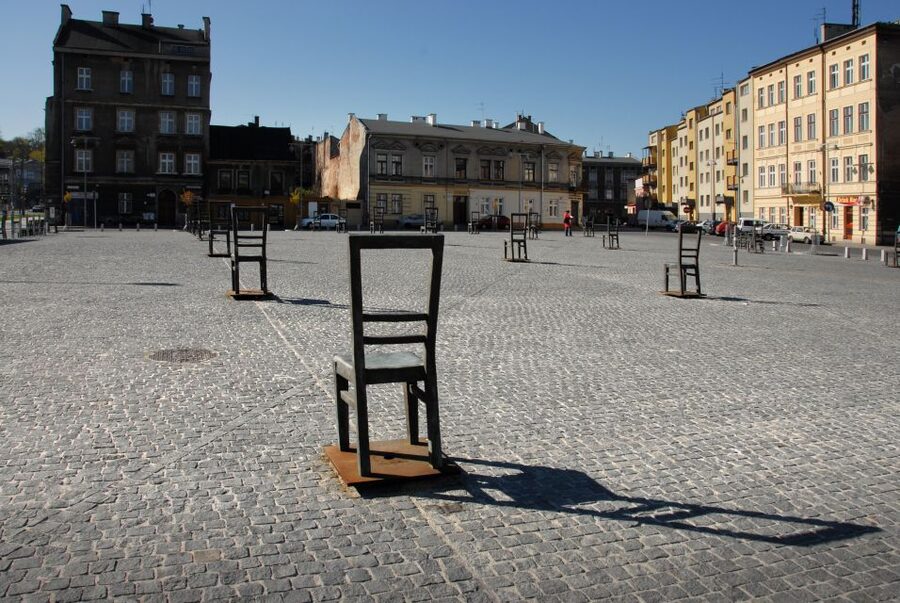
The most powerful part of this Krakow walk is how ordinary streets become historical evidence. A surviving section of the Ghetto Wall and the empty chairs at Ghetto Heroes Square make the past physical, not just something read from a museum label.
I like the clear route and the personal stories connected with Under the Eagle Pharmacy. I also like the modest $15 price, which gives you a focused introduction without committing half a day. The tradeoff is the short one-hour format: you will see key places, but the tour cannot explore every detail or include entrance fees.
In This Review
- Key points to know before booking
- Why this one-hour walk matters in Krakow
- Starting beside Schindler’s Factory
- Following the surviving Ghetto Wall
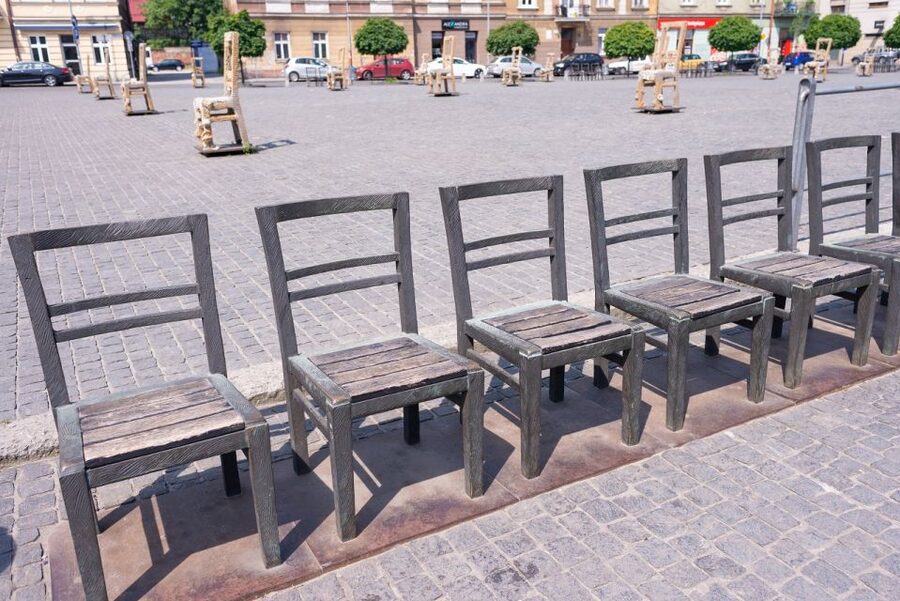
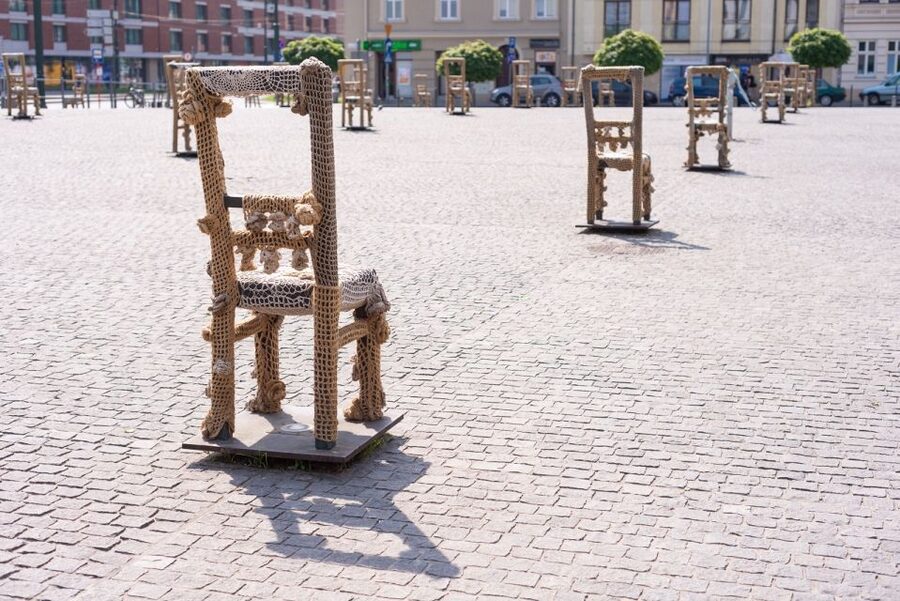
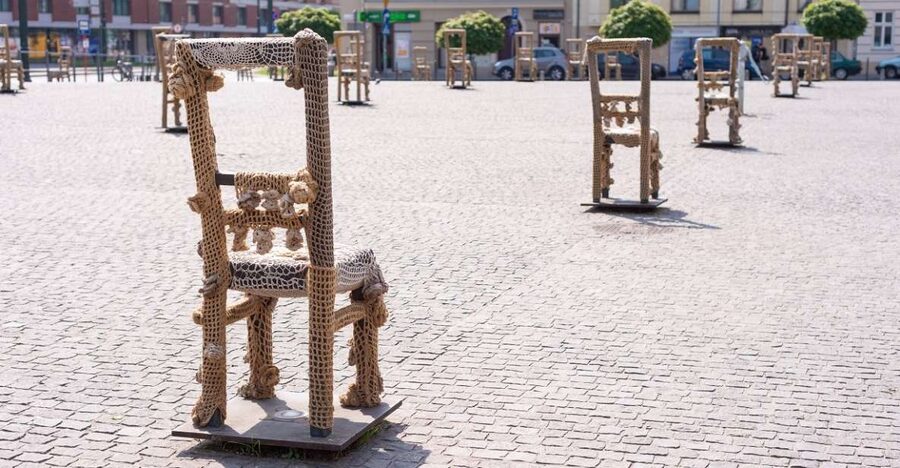
- Ghetto Heroes Square and the empty metal chairs
- Under the Eagle Pharmacy and everyday courage
- What the guide’s style adds
- Is $15 good value?
- Timing, weather, and what to wear
- Who will get the most from this tour?
- How to make the most of the hour
- Should you book the Krakow Ghetto walk?
- FAQ
- How long does the Jewish Ghetto walking tour last?
- Where does the tour meet?
- Which places are included on the walking route?
- Is entry to Schindler’s Factory or the pharmacy included?
- What languages are available?
- What happens if I arrive late?
Key points to know before booking
- See the remaining Ghetto Wall: A small surviving fragment gives you a direct sense of the forced boundaries imposed on Jewish residents.
- Pause at the empty chairs: Ghetto Heroes Square’s memorial recalls deportation and loss through a simple, haunting design.
- Hear about Tadeusz Pankiewicz: The Under the Eagle Pharmacy connects the route with practical acts of aid and courage.
- Start near Schindler’s Factory: The opening location helps explain how occupation, industry, and forced labor shaped Podgórze.
- Keep the hour in mind: This is a concise orientation walk, not a full museum visit or an extended historical seminar.
- Arrive early: Reach the meeting point 10 minutes before departure, since late arrivals cannot join once the group has left.
Why this one-hour walk matters in Krakow
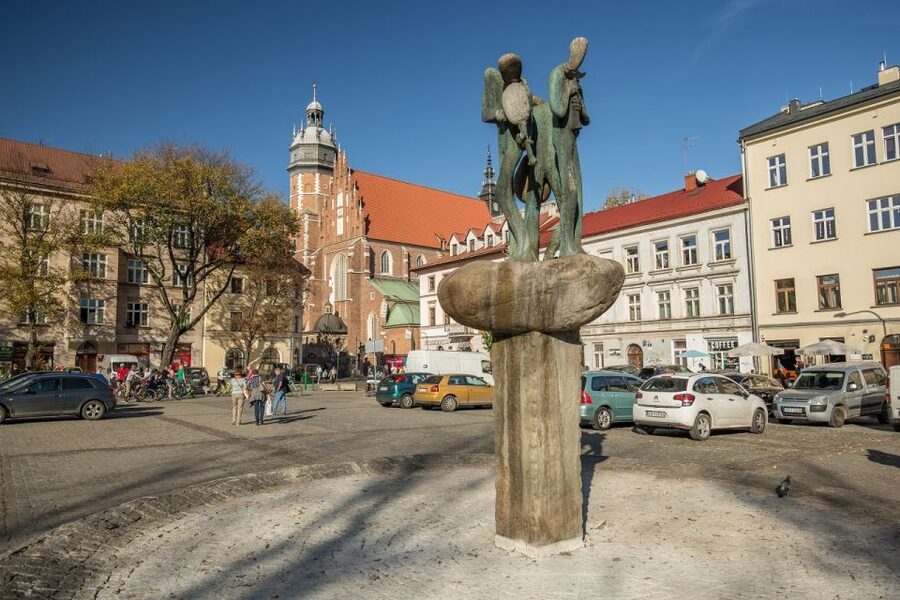
Krakow’s former Jewish Ghetto is now part of a working city district. Cars pass, people shop, and apartment buildings look much like those found elsewhere in Podgórze. Without context, you could easily walk through the area and see only another Krakow neighborhood.
That is why a guide adds real value here. The route helps you connect present-day streets with the forced separation, fear, and daily struggle imposed during the Nazi occupation. You are not simply checking off monuments. You are learning how a familiar urban setting was changed into a place of confinement.
The tour lasts one hour, so it works best as a focused first encounter with Podgórze’s wartime story. I would not treat it as a substitute for every museum or memorial in Krakow. Instead, think of it as a compact walking lesson that gives you the background needed to understand the area before exploring further on your own.
The guide’s role matters more than the number of stops. The route includes only a few main places, but each one has a clear purpose. One recent assessment described the sites as few but well explained, which is a fair way to understand the format. The tour favors explanation over distance.
More Jewish heritage walks in Krakow:
- Krakow: Schindler’s Factory & Ghetto Guided Tour
★ 4.7 · 1,694 reviews - Krakow: Jewish Quarter and Former Ghetto Tour
★ 4.9 · 1,441 reviews - Krakow: Bike Tour of Old Town, Jewish Quarter and the Ghetto
★ 4.9 · 1,155 reviews
Starting beside Schindler’s Factory
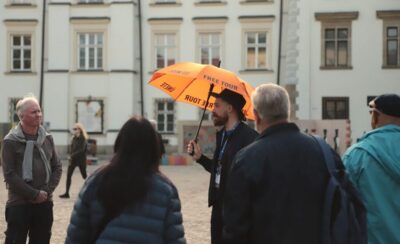
The meeting point is in front of the main entrance to the Schindler’s Factory Museum, on the right-hand side. Look for a guide holding an excursions.city sign, and arrive 10 minutes early.
Beginning here is sensible. The factory helps set the wider scene of Krakow under German occupation, when work, industry, forced labor, and civilian life became tied together. Even if you are not entering the museum, the location gives your guide a useful starting point for explaining how Podgórze changed during the war.
This is also a practical meeting place because it is easy to identify. Still, do not confuse the walking tour with a visit inside Schindler’s Factory. Entrance fees are not included, and the walk itself focuses on the former ghetto area outdoors.
Your guide will introduce the historical setting before the group moves into the streets. The quality of this opening depends on how clearly the guide explains events and answers questions. The available feedback points to this being a strong part of the experience. Elena has been praised for her friendly manner, while Renata has been praised for clear explanations and willingness to help. Guide assignments can change, but the important point is that the tour depends on a human storyteller rather than an audio track.
Following the surviving Ghetto Wall
The remains of the former Ghetto Wall are among the most important stops because they make the policy of confinement visible. A written description can explain that Jewish residents were enclosed and separated from the rest of the city. A surviving wall fragment gives you something solid to look at while that fact sinks in.
Your guide will explain what the wall meant in daily life. It was not simply a boundary on a map. It represented restricted movement, surveillance, uncertainty, and the loss of normal contact with the rest of Krakow.
The stop is likely to be brief, partly because the tour has several locations to cover. That is not necessarily a weakness. The wall fragment does not need a long visit to make its point, and a good explanation can turn a small piece of masonry into a meaningful part of the route.
You should also expect an outdoor setting rather than a polished exhibit. Weather can affect your comfort, and the tour runs in all conditions. Wear shoes suitable for walking and check the forecast before leaving. In rain or cold, the time spent listening outside may feel longer than it does on a mild day.
Ghetto Heroes Square and the empty metal chairs
The route continues to Ghetto Heroes Square, the former center of the Krakow Ghetto. This is the emotional center of the walk and the place where the route most clearly connects public space with deportation and loss.
The memorial’s empty metal chairs are difficult to miss. Their design suggests absence in a direct, restrained way. Instead of filling the square with a large heroic statue, the memorial uses ordinary objects to suggest the lives and belongings left behind.
Your guide will explain why the square mattered during the occupation and how it relates to deportations. This context is important because the memorial alone can leave you with a strong feeling but limited understanding. The narration gives the objects a place in the larger story.
I like this stop because it gives you time to reflect without requiring a long museum visit. At the same time, the square is not an isolated memorial garden. It is part of the city, with modern life continuing around it. That contrast can feel uncomfortable, but it also shows how history remains embedded in places that are still used every day.
Do not expect a large indoor display here. The value is in the location, the memorial, and the guide’s explanation. If you want extensive documentation, photographs, or personal artifacts, you will need to add a museum visit separately.
More walking tours in Krakow:
- Old Town Krakow & Wawel Castle Walking Tour
★ 5.0 · 1,508 reviews - Creepy Krakow: 2-Hour City Walking Tour
★ 4.7 · 1,131 reviews - Krakow: The Old Town Walking Tour
★ 4.8 · 794 reviews - Krakow: Kazimierz Jewish Quarter Walking Tour
★ 4.8 · 571 reviews
Under the Eagle Pharmacy and everyday courage
Across from the square is the historic Under the Eagle Pharmacy. This stop brings the story down to the level of individual choices.
The pharmacy was connected with Tadeusz Pankiewicz and his staff, who provided vital assistance to people living in the ghetto. Your guide will explain the pharmacy’s role and the risks involved in helping others during a period when ordinary acts could carry serious consequences.
This is one of the most human parts of the walk. The Ghetto Wall shows the machinery of separation. Ghetto Heroes Square recalls mass deportation and loss. The pharmacy introduces people making decisions inside that system, including choices involving compassion, fear, and courage.
The tour does not include entrance fees to attractions, so do not assume that the walk includes an interior visit to the pharmacy. The experience uses the location as part of the outdoor route and relies on the guide’s narration. If entering the pharmacy is a priority, check the separate admission details before booking.
I find this approach useful for a short tour. You get a clear connection between the building and the people associated with it, without spending the whole hour inside one attraction. The limitation is equally clear: the visit cannot provide the same depth as a dedicated museum tour.
What the guide’s style adds
The strongest part of this experience is likely to be the guide’s ability to explain difficult material at a human pace. One guide, Elena, has been noted for speaking clearly and at a speed that was easy to follow. Questions were welcomed, which matters on a subject with many unfamiliar names, dates, and terms.
That detail is worth considering if you are choosing between a guide-led walk and exploring alone. The former ghetto is not arranged like a single museum gallery. Historical meaning is spread across streets and public spaces. A guide can point out why a location matters at the moment you see it.
The tour is offered in English, German, Italian, French, and Spanish. The guide you receive will depend on the time and language you book. If you need a particular language, select it carefully when checking availability.
The style will not be identical from one guide to another. Some people prefer a brisk overview, while others want long answers to every question. The one-hour limit encourages a concise presentation. Recent praise has focused on clarity, friendliness, and helpfulness, which are exactly the traits that make a short historical walk work.
Is $15 good value?
At $15 per person, this is an inexpensive way to understand one of Krakow’s most important wartime districts. The value comes from the guide and the route, not from included admissions. You are paying for interpretation at several authentic locations rather than for access to a large indoor attraction.
For a first visit to Krakow, I think the price is easy to justify. The walk gives you a framework for later visits to Schindler’s Factory or other sites connected with the city’s Jewish and wartime history. It can also help you decide which places deserve more of your time.
The short length keeps the cost and time commitment low. You can fit it around other plans, and you will not spend an entire morning on one subject. That suits anyone with limited time or an interest in several parts of Krakow.
The drawback is that a low-cost, one-hour walk cannot cover everything. You will not get a full account of the city’s wartime history, and entrance fees are extra. If you already know Podgórze well or want detailed archival discussion, the tour may feel basic.
For most first-time visitors, though, the balance is good. A few well-explained places are more useful than a long march through streets with little explanation.
Timing, weather, and what to wear
This is an outdoor walk, so clothing matters. The tour operates in all weather conditions, and rain, wind, or cold can change how comfortable you feel while listening. Check the forecast and choose suitable footwear.
Arrive 10 minutes before the scheduled start. The meeting point is specific, and the group will not wait for latecomers once it has departed. If you miss the start, the ticket cannot be refunded, so leave enough time to find the main entrance to Schindler’s Factory.
The one-hour duration is helpful for planning, but it also means the walk moves at a steady pace. You will want to pay attention rather than stop for long personal photographs at every location. Keep your phone or camera ready, but give the guide room to speak.
Because the route is outdoors, the experience may be less comfortable for anyone who dislikes walking in poor weather. That is not a special flaw of this tour, but it is important to understand before booking.
Who will get the most from this tour?
I would recommend this walk to anyone visiting Krakow for the first time who wants a clear introduction to the former ghetto. It is especially useful if you plan to visit Schindler’s Factory, since the opening explanation connects the museum area with the surrounding district.
It also suits people who prefer human stories to long lists of dates. The pharmacy, the wall, and the square each present a different part of wartime life: confinement, deportation, and aid. The guide brings those pieces together.
Families with older children may find the one-hour length manageable, though the subject is serious and the guide’s content concerns persecution, deportation, and death. The route is not designed as light sightseeing.
I would choose something longer if you want detailed military history, extensive discussion of Krakow’s prewar Jewish community, or a full indoor museum experience. This walk is best understood as a focused orientation.
How to make the most of the hour
Read a little about Krakow’s wartime districts before you arrive, even if it is only a short overview. You will recognize the difference between the ghetto and the surrounding city more quickly, and the guide’s explanations will have more meaning.
Bring questions. The guide can explain details that a map or plaque cannot, and clear answers are one of the experience’s strengths. Ask about the purpose of each location, not just the date it was built or used.
After the walk, you may want to return to one of the stops at your own pace. Ghetto Heroes Square rewards a second look after you have heard its context. The same is true of the wall fragment, which may appear even more striking once you understand what it represented.
Keep your expectations realistic. You are not signing up for a full-day historical program. You are getting a short, guided route through authentic places, with enough explanation to make the district readable.
Should you book the Krakow Ghetto walk?
Book it if you want an affordable, serious introduction to Podgórze and prefer a guide to wandering without context. The $15 price, one-hour length, multilingual choices, and clear route make it a practical addition to a Krakow visit.
I especially recommend it before or alongside a visit to Schindler’s Factory. The wall remains, empty chairs at Ghetto Heroes Square, and Under the Eagle Pharmacy each add a different human dimension to the story.
Skip it only if you need extensive museum time or already know the former ghetto well. For everyone else, this is a compact way to see why these ordinary streets deserve careful attention.
FAQ
How long does the Jewish Ghetto walking tour last?
The tour lasts one hour.
Where does the tour meet?
Meet the guide in front of the main entrance to the Schindler’s Factory Museum, on the right-hand side. The guide will hold an excursions.city sign.
Which places are included on the walking route?
The route includes the area near Schindler’s Factory, surviving sections of the former Ghetto Wall, Ghetto Heroes Square and its empty-chair memorial, and the historic Under the Eagle Pharmacy.
Is entry to Schindler’s Factory or the pharmacy included?
No. Entrance fees to attractions are not included in the walking tour price.
What languages are available?
The tour is offered in English, German, Italian, French, and Spanish.
What happens if I arrive late?
You should arrive 10 minutes before the start. Once the group has left, latecomers cannot join and the ticket cannot be refunded.
Just added around Krakow
- Private Guided Tour: Oskar Schindler’s Factory★ 5.0 · 3 reviews
- E-Scooter Krakow sightseeing tour★ 5.0 · 3 reviews
- From Krakow: Zakopane and Thermal Pools Guided Trip★ 5.0 · 3 reviews
- Schindler’s Factory, Ghetto and Plaszow Camp Guided Tour★ 4.7 · 3 reviews
- Kraków: Private Hot Air Balloon Flight with Champagne★ 3.7 · 3 reviews
- Krakow: River Cruise & Guided Visit to Former Plaszow Camp★ 3.6 · 3 reviews
- From Krakow: Private Wieliczka Salt Mine Tour★ 4.0 · 3 reviews
- Wawel Castle Treasury & Armoury Skip the Line Private Tour★ 4.7 · 3 reviews
Jewish Ghetto Tours, compared.

Bike Tour of Old Town, Jewish Quarter and the Ghetto
Read our review →
Kazimierz, Schindler’s Factory & Ghetto Guided Tour
Read our review →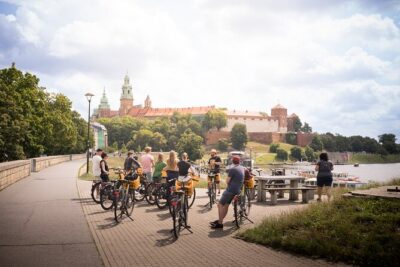
Full Bike Tour – the Old Town, Jewish Qtr & the Ghetto NEW BIKES
Read our review →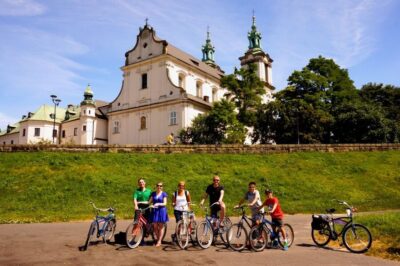
Bike Tour of the Old Town, Kazimierz, and the Ghetto
Read our review →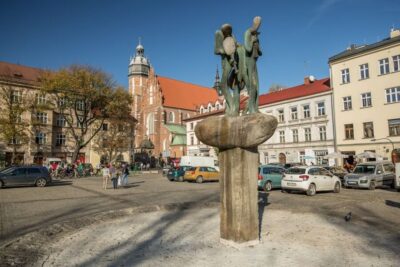
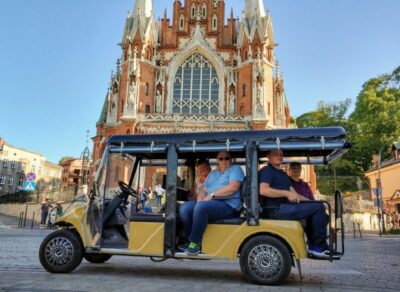
Jewish Quarter and Ghetto Electric Golf Cart Tour
Read our review →Browse the lists this tour appears in