
Reviewed · JEWISH GHETTO TOURS
Krakow: Jewish Ghetto Walking Tour
The most moving part of this walk is how ordinary streets carry the marks of the Krakow Jewish Ghetto. At Ghetto Heroes’ Square, you learn where Jewish residents were identified and sent away, then see the surviving wall that now serves as a memorial. I like the direct route and the fact that the guide points out buildings you could easily pass without noticing.
I also like the one-hour length and the modest $15 price, which make this an easy addition to a Krakow day. The main thing to keep in mind is that the walk is brief and serious, and entry to Under the Eagle pharmacy is not included. You get a focused introduction, not a full museum visit or an extended study of Krakow’s Jewish past.
In This Review
- Key points at a glance
- A short walk through Krakow’s hardest history
- Starting at Ghetto Heroes’ Square
- Seeing the surviving ghetto wall
- Walking past the former homes
- Finishing at Under the Eagle pharmacy
- What the guide adds in one hour
- Why the $15 price makes sense
- Who will get the most from this walk
- Practical advice before you go
- Should you book the Jewish Ghetto Walking Tour?
- FAQ
- Where does the Jewish Ghetto walking tour meet?
- How long does the walking tour last?
- What languages are available?
- Is admission to Under the Eagle pharmacy included?
- What is included in the tour price?
- Can I cancel the booking?
Key points at a glance
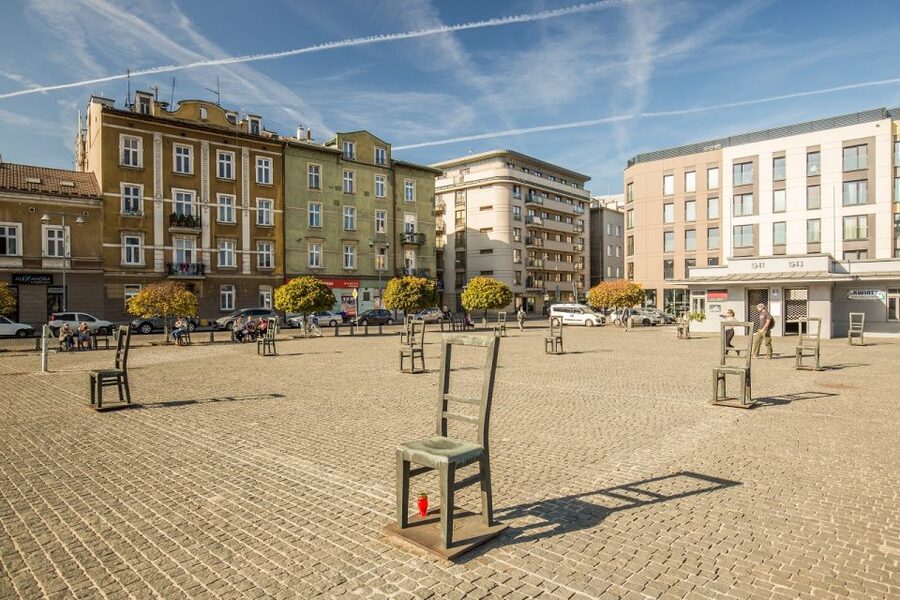
- Ghetto Heroes’ Square: Visit the place where Krakow’s Jewish residents were identified and sent to concentration camps.
- Original ghetto wall: See surviving sections of the wall, now a memorial and place of pilgrimage.
- Former Jewish homes: Walk past buildings where thousands of displaced people lived in cramped conditions.
- Under the Eagle pharmacy: End at Krakow’s famous wartime pharmacy, with admission available at an extra cost.
- One-hour format: Fit this serious historical walk into a busy Krakow sightseeing day.
- Five guide languages: Choose from English, Italian, Spanish, German, or French.
A short walk through Krakow’s hardest history
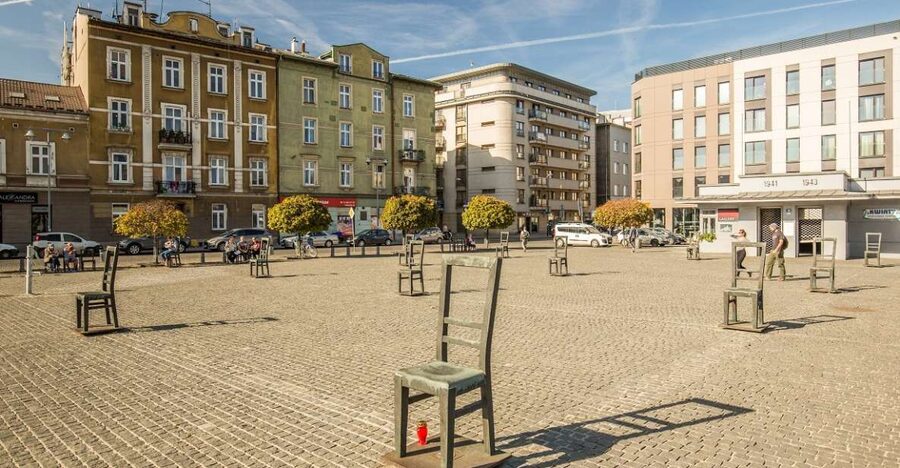
This tour takes place in Podgórze, the district that held Krakow’s Jewish Ghetto during World War II. The streets still contain physical reminders of what happened there, but the experience is not built around grand monuments alone. Much of the lesson comes from looking closely at everyday buildings, squares, and fragments of wall.
That is why a guide matters here. Without context, you might see an old building and keep walking. With a guide, that same building becomes part of the story of forced displacement, overcrowding, separation, and deportation. One German-speaking participant specifically noted that the buildings would have been easy to miss without a guided walk.
The subject is painful, and the tour treats it as a place of remembrance rather than a casual photo stop. I would set aside time afterward to process what you have heard. This is not the best choice if you want light sightseeing between lunch and shopping, but it is a useful way to understand one of Krakow’s most important wartime districts.
More Jewish heritage walks in Krakow:
- Krakow: Schindler’s Factory & Ghetto Guided Tour
★ 4.7 · 1,694 reviews - Krakow: Jewish Quarter and Former Ghetto Tour
★ 4.9 · 1,441 reviews - Krakow: Bike Tour of Old Town, Jewish Quarter and the Ghetto
★ 4.9 · 1,155 reviews
Starting at Ghetto Heroes’ Square
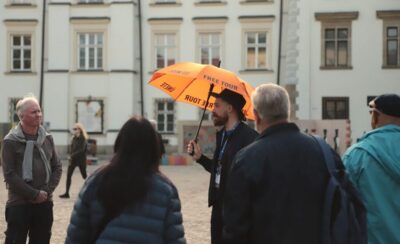
The meeting point is at the entrance to the Schindler Factory Museum. Look for a guide holding an excursions.city sign. That detail matters because the museum entrance can be a busy place, and you do not want to spend the first minutes of a one-hour tour searching for the group.
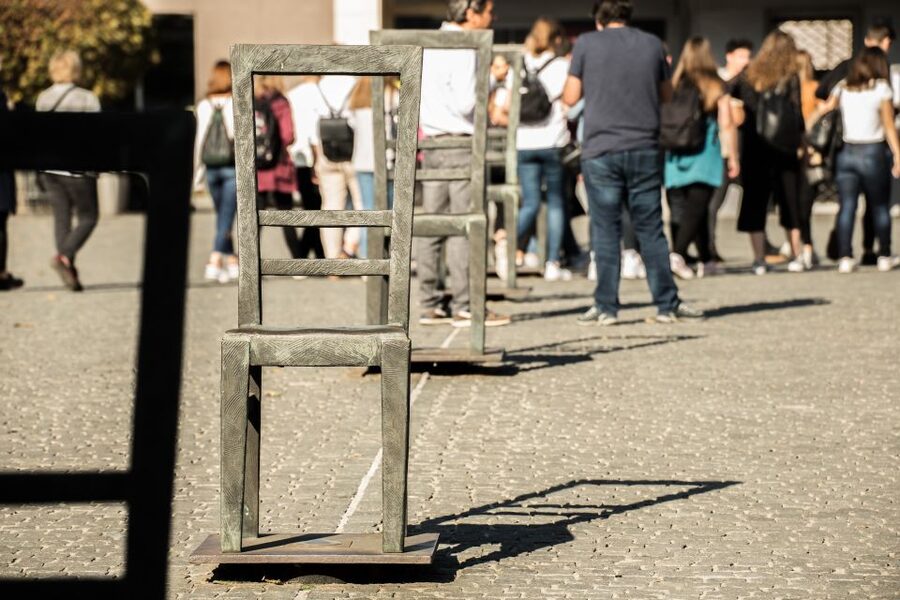
From there, the walk reaches Plac Bohaterów Getta, known in English as Ghetto Heroes’ Square. This is the emotional center of the route. Jewish inhabitants of Krakow were identified here before being sent to concentration camps.
The square’s meaning comes from the events that took place there, not simply from its appearance today. Your guide provides the setting and explains how the space functioned during the occupation. I appreciate that the tour begins with this broad human story before moving into smaller physical details.
Give yourself a few minutes to arrive early and get settled. The total tour lasts only one hour, so a late start can mean missing part of the explanation. The walk is also more useful if you listen closely rather than treating the square as a quick stop on the way to something else.
Seeing the surviving ghetto wall
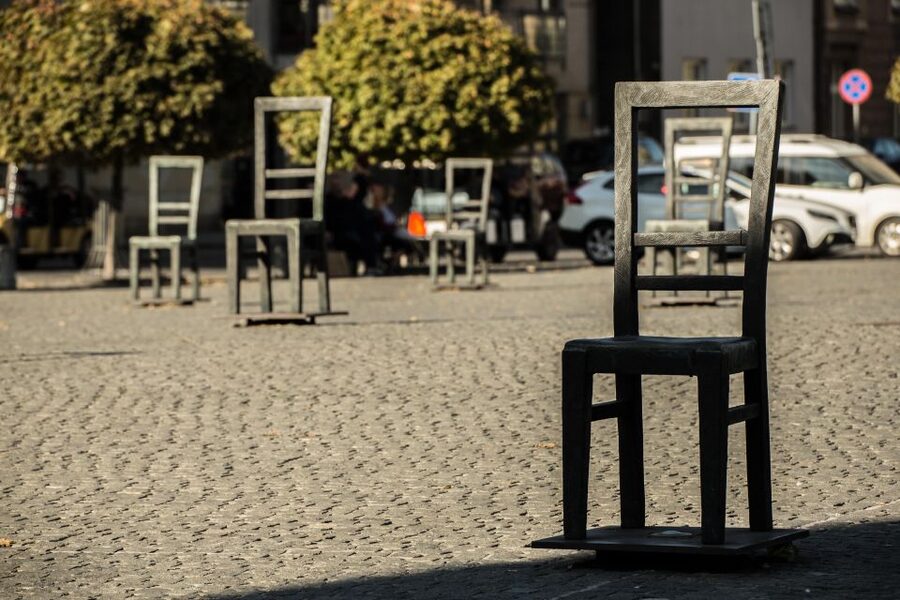
One of the clearest physical reminders is a surviving fragment of the original wall that surrounded the Jewish Ghetto. The remaining section now serves as a monument and a place of pilgrimage for Jewish people visiting from abroad.
This stop helps you understand that the ghetto was not just an administrative label. It was a confined area with a visible boundary. A piece of the wall makes that separation easier to picture than dates and names alone can do.
The wall is also a reminder of the limits of what survives. You are not seeing the entire wartime district preserved exactly as it was. You are seeing a remaining fragment, placed within a modern city that has changed around it. That contrast can make the stop more affecting, but it also means you should not expect a recreated historical site.
The guide’s explanation is important here. A short wall fragment cannot tell its own story. The value comes from learning why it remains, what it represented, and why it still matters to people who come to Krakow to remember family and community members.
Walking past the former homes
The route continues to buildings where thousands of displaced Jews once lived in cramped conditions. This is a quieter part of the tour, yet it may be the part you remember most clearly.
The buildings help move the story from public places into daily life. You begin to think about the number of people forced into limited space, rather than only focusing on deportation sites and memorials. The tour does not simply point out famous landmarks. It asks you to notice the ordinary structures that held an extraordinary amount of suffering.
This is also where a local guide can add real value. The guide identifies places that are not marked in a way that makes their wartime role obvious. Aga, one of the guides praised for this route, was described as sharing personal knowledge and experience while explaining the city. That kind of local connection can make the walk feel more grounded, as long as you are comfortable with a personal element in a serious historical setting.
You should expect walking outdoors through an urban district, with the focus on observation and explanation rather than elaborate displays. Wear sensible shoes and dress for the weather. The supplied details do not give a route length, so I would avoid planning this as a demanding hike, but comfortable footwear is still the practical choice.
More walking tours in Krakow:
- Old Town Krakow & Wawel Castle Walking Tour
★ 5.0 · 1,508 reviews - Creepy Krakow: 2-Hour City Walking Tour
★ 4.7 · 1,131 reviews - Krakow: The Old Town Walking Tour
★ 4.8 · 794 reviews - Krakow: Kazimierz Jewish Quarter Walking Tour
★ 4.8 · 571 reviews
Finishing at Under the Eagle pharmacy
The final stop is the famous Under the Eagle pharmacy. It is a fitting end because the pharmacy was part of the ghetto’s wartime story and gives the tour a more specific point of focus after the broader walk through the district.
Admission to the pharmacy is not included in the $15 tour price. Check the current entry cost before booking if you want to go inside. The walk takes you to the pharmacy, but the information provided does not promise that admission is part of the guided visit.
That distinction is easy to miss when comparing short tours. At $15, the experience remains reasonably priced as a guided introduction, but you should budget separately for the pharmacy if you want the complete stop. Food and drinks are also not included, though this is a one-hour experience and does not require a meal break.
I like ending here because the pharmacy gives the route a clear finish. The tradeoff is that anyone hoping for a long museum visit will find the tour too short. Think of the walk as a guided introduction to the district, with the option of adding the pharmacy itself to your plans.
What the guide adds in one hour
The strongest part of this experience is the guide’s role. The tour is not simply a list of locations. It is a short explanation of how the district’s spaces connect: the square where people were identified, the wall that enclosed the ghetto, the buildings where people were forced to live, and the pharmacy that remains closely linked to this history.
The available languages are English, Italian, Spanish, German, and French. That gives you a fair chance of hearing the subject in a language you understand well, which matters when the walk covers names, events, and difficult historical details in a limited time.
The comments from guests who took the walk point to the same practical strength: the guides explain a lot without making the outing too long. One participant said the timing worked well after a full day of walking around Krakow. I agree that one hour is a sensible length for a compact historical walk, especially if you plan to visit the Schindler Factory Museum nearby or continue exploring Podgórze afterward.
The shorter format does limit depth. You should not expect every aspect of Krakow’s Jewish history, the full wartime timeline, or an extended discussion of postwar life in the city. The guide can give you a framework, but you may want a museum visit or a longer historical tour if this subject is central to your trip.
Why the $15 price makes sense
At $15 per person, the cost is low for a live guided experience in Krakow. You are paying mainly for interpretation and orientation. The guide helps you notice places that could otherwise look like unremarkable city buildings.
The value is strongest if you are visiting Podgórze for the first time and want a clear introduction without committing half a day. The one-hour format leaves room for other plans, and the reserve-now, pay-later option keeps your schedule flexible. You can cancel up to 24 hours in advance for a full refund, which is useful when your Krakow plans are still moving around.
The value is weaker if you already know the district well or plan to visit only the pharmacy without needing a guide. The pharmacy admission is extra, and the tour does not include food, drinks, or a longer museum program. Compare the total cost with your own plan, not just the headline price.
For most people, the $15 fee is easiest to justify as a low-risk way to get historical context. You are not buying a large attraction package. You are buying one focused hour with a guide who helps you read the streets.
Who will get the most from this walk
I would recommend this tour to first-time visitors who want to understand Krakow beyond the Old Town. It suits anyone interested in World War II, Jewish heritage, memorials, and the way history remains visible in ordinary neighborhoods.
It is also a good match for people with limited time. If you have only a few hours in Podgórze, one hour gives you a structured route and leaves time for another nearby activity. The meeting point at the Schindler Factory Museum entrance may also make the walk convenient to combine with a visit there, although admission to that museum is not listed as part of this experience.
Families with older children and teenagers may find the route useful because the guide connects visible places to historical events. The subject is serious, so parents should decide if the material suits their children. The walk is also a sensible choice for solo visitors who want company and context without signing up for a long group program.
I would be less likely to recommend it to someone seeking entertainment, shopping, or a relaxed scenic stroll. The district’s importance comes from its painful past, and the tone reflects that. You should arrive ready to listen.
Practical advice before you go
Meet at the entrance to the Schindler Factory Museum and look for the excursions.city sign. Arriving a little early is wise because the guide needs to gather the group, and the tour has no spare time built into its one-hour schedule.
Choose your language carefully when booking. English, Italian, Spanish, German, and French are available. A clear understanding of the guide’s language will make a major difference on a history walk.
Wear comfortable shoes and check the weather. The experience is a walking tour through the district, not an indoor presentation. If you want to enter Under the Eagle pharmacy, allow for the separate admission cost.
You might also plan a quiet activity afterward. The tour deals with displacement, deportation, overcrowding, and the destruction caused by war. I would not place it immediately before a rushed dinner reservation across town. Give yourself enough time to continue at your own pace.
Should you book the Jewish Ghetto Walking Tour?
Book it if you want a brief, affordable, guide-led introduction to Krakow’s former Jewish Ghetto. The surviving wall, Ghetto Heroes’ Square, the former homes, and Under the Eagle pharmacy create a meaningful route, while the one-hour length fits neatly into a busy day.
The strongest reason to choose it is the guide. A good guide makes the district readable, and Aga in particular brought personal knowledge and clear explanation to the walk. Just remember that the pharmacy ticket costs extra and that this is an introduction, not a full museum program.
At $15, I think it is a sensible choice for first-time visitors, history-minded families, and anyone who wants to see the places behind Krakow’s wartime story. Skip it only if you already know Podgórze well or want a longer, more detailed historical experience.
FAQ
Where does the Jewish Ghetto walking tour meet?
The meeting point is at the entrance to the Schindler Factory Museum. Look for a guide holding an excursions.city sign.
How long does the walking tour last?
The tour lasts one hour. Starting times depend on availability.
What languages are available?
The live guide can conduct the tour in English, Italian, Spanish, German, or French.
Is admission to Under the Eagle pharmacy included?
No. Entry to the pharmacy is not included in the tour price and requires a separate ticket.
What is included in the tour price?
A live guide is included. Food and drinks are not included.
Can I cancel the booking?
Yes. You can cancel up to 24 hours in advance for a full refund. You can also reserve now and pay later.
Just added around Krakow
- Private Guided Tour: Oskar Schindler’s Factory★ 5.0 · 3 reviews
- E-Scooter Krakow sightseeing tour★ 5.0 · 3 reviews
- From Krakow: Zakopane and Thermal Pools Guided Trip★ 5.0 · 3 reviews
- Schindler’s Factory, Ghetto and Plaszow Camp Guided Tour★ 4.7 · 3 reviews
- Kraków: Private Hot Air Balloon Flight with Champagne★ 3.7 · 3 reviews
- Krakow: River Cruise & Guided Visit to Former Plaszow Camp★ 3.6 · 3 reviews
- From Krakow: Private Wieliczka Salt Mine Tour★ 4.0 · 3 reviews
- Krakow: Old Town short walk with St. Mary’s Basilica visit★ 5.0 · 3 reviews
Jewish Ghetto Tours, compared.

Bike Tour of Old Town, Jewish Quarter and the Ghetto
Read our review →
Kazimierz, Schindler’s Factory & Ghetto Guided Tour
Read our review →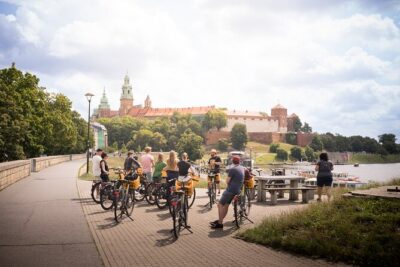
Full Bike Tour – the Old Town, Jewish Qtr & the Ghetto NEW BIKES
Read our review →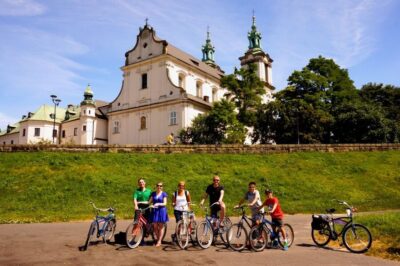
Bike Tour of the Old Town, Kazimierz, and the Ghetto
Read our review →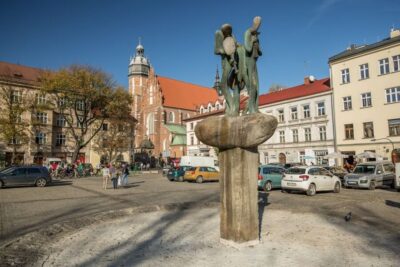
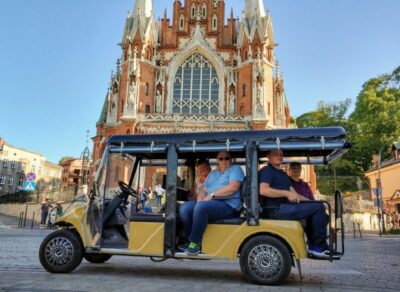
Jewish Quarter and Ghetto Electric Golf Cart Tour
Read our review →Browse the lists this tour appears in