
Reviewed · JEWISH GHETTO TOURS
Krakow: Plaszow Concentration Camp Walking Tour
Plaszow is not a polished museum visit. It is a quiet, open-air walk across the former camp, where much of the story must be pieced together from the ground, memorials, and a good guide. That makes the guide essential, especially since little remains of the original site.
I like the direct connection to Krakow’s wartime story and the chance to see the quarry and factories where prisoners were forced to work. I also like that the tour makes time for remembrance at several memorials, rather than treating the place as only a film location. The main drawback is simple: this is an outdoor site, and the weather can shape the experience.
In This Review
- Key points to know before you go
- Why Plaszow feels different from a museum visit
- The opening walk and the camp’s changing purpose
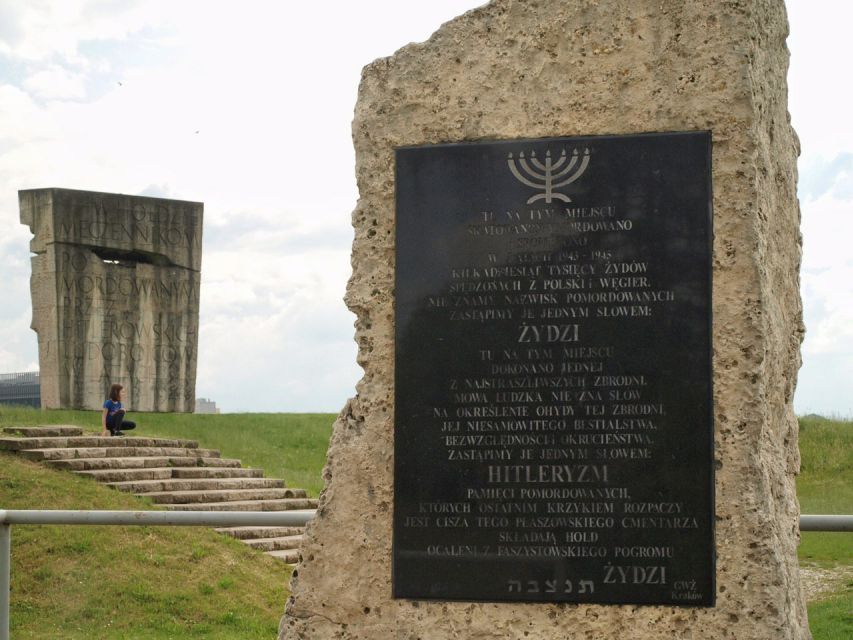
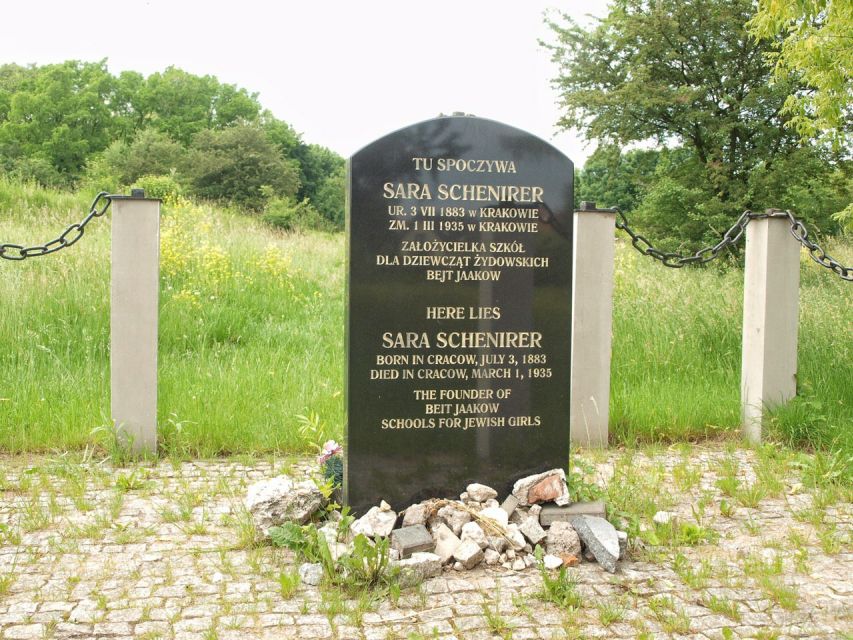
- Memorials that give the walk its proper focus
- The quarry and the forced labor story
- Camp life beyond the movie
- Oskar Schindler and the filming location
- What makes the guide worth the $23 price
- Practical details that affect your visit
- Who should book this Plaszow walk
- Should you book it?
- FAQ
- How long does the Plaszow concentration camp tour last?
- What is included in the price?
- Is a tram ticket included?
- Where does the tour start?
- Where does the tour end?
- Which languages are available?
- Is the tour wheelchair accessible?
- Can I cancel the booking?
Key points to know before you go
- Plaszow began as a forced-labor camp in 1940 before becoming a concentration camp in 1941.
- The walk connects the camp to Krakow’s Jewish ghetto, including deportations that began in 1942.
- Oskar Schindler’s story is part of the tour, but the focus remains on the camp and its victims.
- The nearby Liban Quarry contains a replica camp set built under Steven Spielberg’s direction for Schindler’s List.
- The original site has few obvious remains, so a guide helps you understand what you are seeing.
- The two-hour tour costs $23 per person, with a tram ticket required separately.
Why Plaszow feels different from a museum visit
At Auschwitz, buildings, displays, and preserved objects give you a strong visual record of the camp system. Plaszow asks more from you. The former camp is an open area, and parts of the site can be difficult to read without someone explaining where the camp once stood and how its sections worked.
That is why I would not treat this as a casual walk through a historic park. The ground itself matters, but the story comes through the guide’s explanations. You will learn how the camp changed from a forced-labor camp into a concentration camp, how Nazi rule affected Krakow, and how Jews from the Krakow ghetto were deported there from 1942 onward.
The setting also gives the tour a quieter, more reflective tone. You are not moving from room to room or reading a long series of display panels. Instead, you stop at memorials, hear about camp life, and try to understand how labor, punishment, deportation, and murder were organized in this part of Krakow.
More Jewish heritage walks in Krakow:
- Krakow: Schindler’s Factory & Ghetto Guided Tour
★ 4.7 · 1,694 reviews - Krakow: Jewish Quarter and Former Ghetto Tour
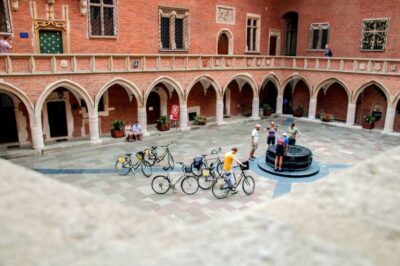
★ 4.9 · 1,441 reviews - Krakow: Bike Tour of Old Town, Jewish Quarter and the Ghetto
★ 4.9 · 1,155 reviews
The opening walk and the camp’s changing purpose
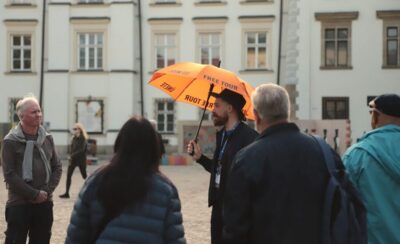
The tour begins at the stated meeting point, where you look for the guide carrying an excursions.city sign. From there, the walk introduces Plaszow as a place that changed function under Nazi occupation.
The camp opened in 1940 as a forced-labor camp. In 1941, it was converted into a concentration camp. That change is important because it shows how Nazi persecution developed over time. The camp was not an isolated site with a single purpose. It became part of a wider system that used prisoners for labor while subjecting them to brutal living conditions and violence.
Your guide explains the effect of the camp on the Jewish population of Krakow. Deportations from the Krakow ghetto began in 1942, and the tour places those events in the geography of the city. This local focus is one of the strongest reasons to choose Plaszow. You are not only learning about a distant camp system. You are seeing where Krakow’s Jewish community was forced into this history.
Because the original site has changed, the opening explanation is especially useful. You might see open ground and have trouble knowing what you are looking at. A guide can point out the different parts of the former camp and connect them to the people who were imprisoned there.
Memorials that give the walk its proper focus
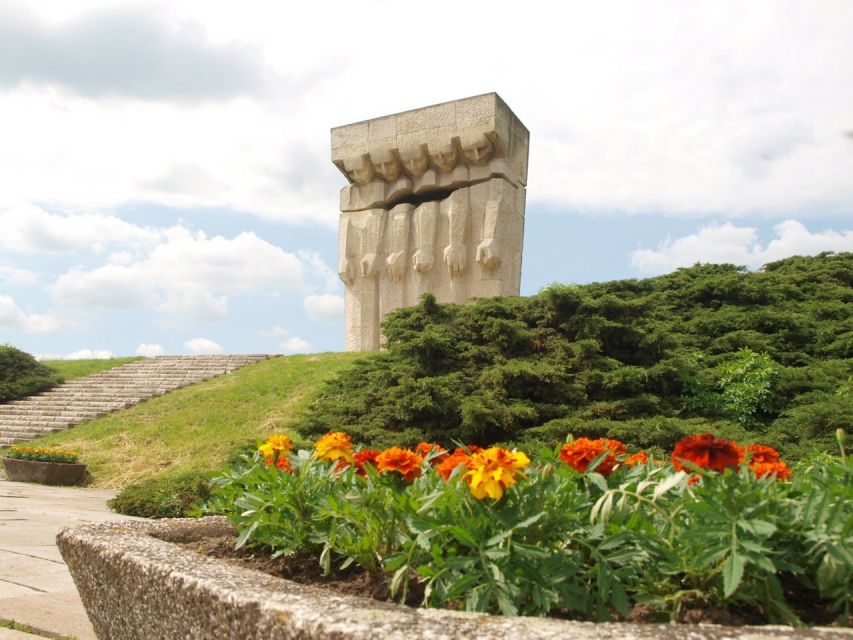
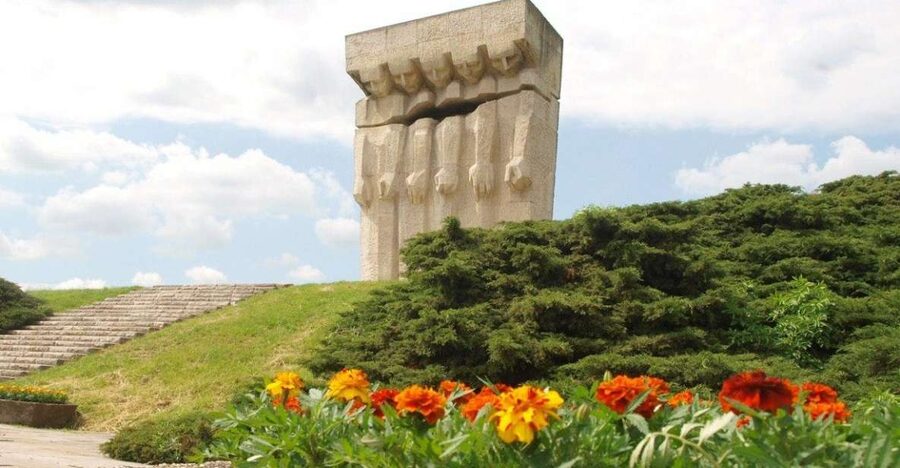
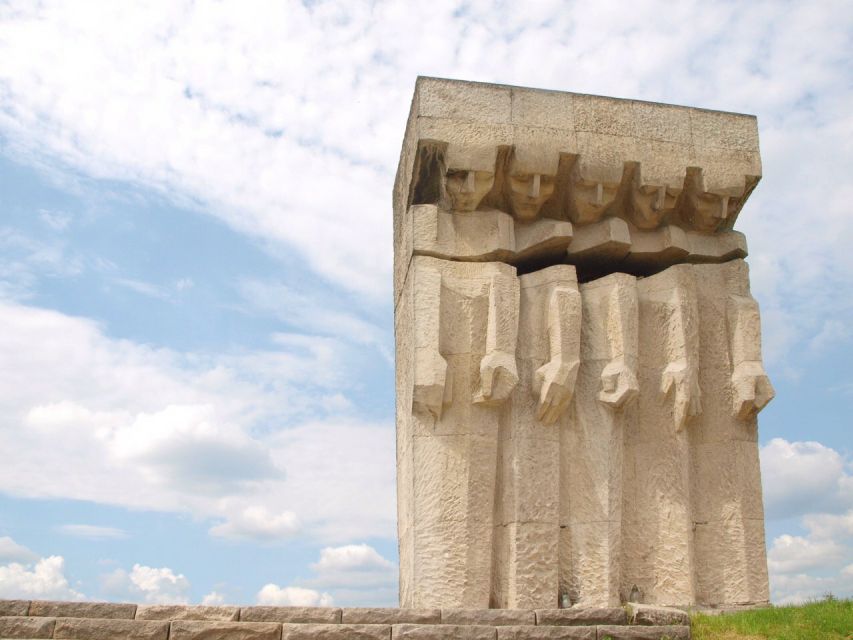
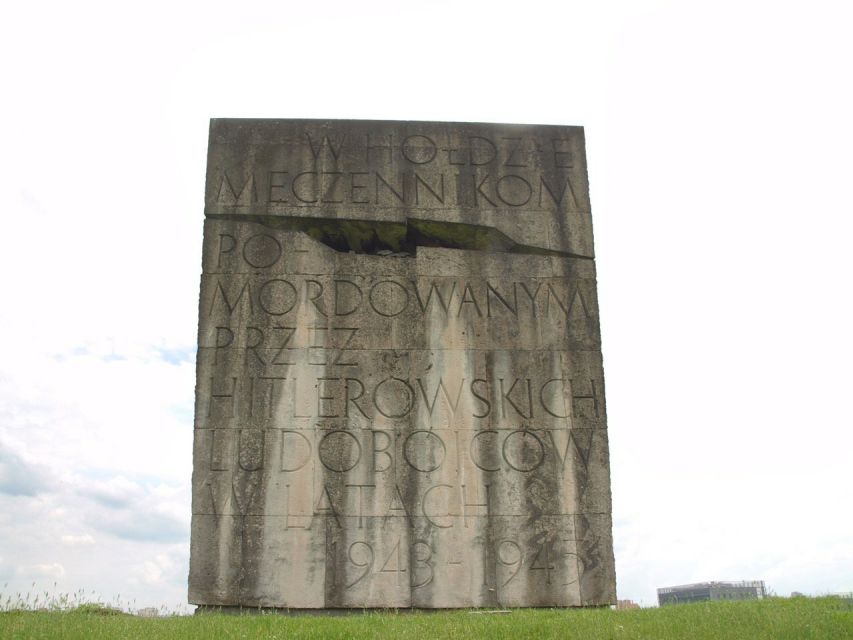
Several memorials mark the site and give you places to pause. These are not quick photo stops. They are the points where the tour shifts from camp layout and wartime administration to the human cost of the site.
I appreciate this part of the experience because it keeps the visit from becoming too centered on Oskar Schindler or the film. Schindler’s story is important, but Plaszow was first and foremost a place where people were imprisoned, exploited, and killed. The memorials help keep that fact at the center.
Your guide also gives you time to pay respects. That matters at a place where physical evidence can feel limited. When buildings and objects are gone, memorials carry much of the emotional weight. You may find the pauses more powerful than the longer explanations, particularly if you prefer a thoughtful visit rather than a rushed checklist of locations.
The tone is serious throughout. This is not an attraction designed for entertainment, and the guide’s role is to explain the past with care. Guides named Krysztof, Phil, Anna, and Barbara have each been praised for clear explanations, kindness, and the ability to relate wider events to the camp. Guide quality can shape the visit, so this is a strong reason to book a guided walk instead of exploring alone.
The quarry and the forced labor story
A major part of the tour focuses on the quarry and the labor carried out there. Prisoners were forced to work in harsh conditions, and the quarry helps you understand that Plaszow was also a place of organized industrial exploitation.
The guide explains how labor operated at the quarry and in military factories. This adds an important layer to the visit. The camp was not only a detention site. Prisoners were made to support the Nazi war effort through dangerous and exhausting work.
The quarry also helps you picture why the camp was located where it was. The terrain is tied to the work system, not just a backdrop for the story. As you walk, you will hear about different camp areas and how they related to labor, imprisonment, and daily survival.
There is a practical point here: the tour is outside. One guide’s feedback specifically noted that there is not much left of the former site and that the grounds need to be pointed out. I would take that as useful advice, not a criticism. Bring patience and let the guide build the picture. If you expect preserved barracks at every stop, you may be disappointed. If you are willing to use explanation and imagination, the walk has real value.
More walking tours in Krakow:
- Old Town Krakow & Wawel Castle Walking Tour
★ 5.0 · 1,508 reviews - Creepy Krakow: 2-Hour City Walking Tour
★ 4.7 · 1,131 reviews - Krakow: The Old Town Walking Tour
★ 4.8 · 794 reviews - Krakow: Kazimierz Jewish Quarter Walking Tour
★ 4.8 · 571 reviews
Camp life beyond the movie
The tour goes beyond the best-known film scenes and discusses what life in the camp was like. That includes the daily reality of forced labor, the camp’s internal sections, and the wider impact of Nazi rule in the area.
This is the part I would pay close attention to. A film can give you a strong emotional entry point, but it cannot cover every aspect of the camp. The guide helps fill in the space between the famous story and the larger group of prisoners whose lives were shaped by Plaszow.
You will also hear about the deportation of Jews from the Krakow ghetto. That connection gives the tour a clear sequence: the destruction of Jewish life in Krakow, the removal of people from the ghetto, the camp’s changing role, and the forced labor system that followed.
The two-hour length is a good fit for this subject. It gives enough time to cover the main areas without turning the visit into an exhausting half-day walk. At the same time, you should not expect every detail of Plaszow’s history to fit into two hours. This is an introduction with serious depth, not a complete study of the entire camp system.
Oskar Schindler and the filming location
Oskar Schindler is a major part of the tour. You learn about his life and his connection to the camp, along with the way Plaszow was portrayed in Steven Spielberg’s 1993 film, Schindler’s List.
For many people, the movie is the reason Plaszow first appears on their Krakow plans. The tour makes good use of that interest, but it does not reduce the site to a film pilgrimage. The film connection works best as a bridge. It helps you place names, scenes, and locations, then leads you back to the real people and events behind the story.
The tour also visits the Liban Quarry, about one hundred meters from the former camp site. This is where a replica of the camp was built under Spielberg’s direction for the film. Seeing the replica helps you separate cinematic construction from the actual historic location.
That distinction is important. The replica is not an original camp structure, and the tour makes the nearby location valuable because it explains how the film recreated Plaszow. You get to compare the real site with the place used to represent it on screen. If you have seen Schindler’s List, this will add context. If you have not, the quarry still has value as part of the story of how the camp was remembered and portrayed.
What makes the guide worth the $23 price
At $23 per person, this is reasonably priced for a two-hour guided visit, especially because the camp site is difficult to interpret without help. You are paying less for a collection of preserved objects and more for the guide’s ability to connect scattered places, memorials, and events.
That distinction matters. If you only want a quick look at the grounds, you could find the site less satisfying. If you want to understand what happened there, the guide makes the cost worthwhile. The tour turns an open-air area with limited remains into a structured account of the camp.
The strongest value comes from the explanations. Guides such as Phil have been praised for being friendly and clear, while Anna has been noted for relating other events to the camp. Barbara has led private visits that allowed time for reflection and respectful attention to the site. The exact guide depends on your departure, but these details show what to look for: clear storytelling, good historical context, and a calm tone.
A tram ticket is not included, so add that cost when planning your budget. The meeting point is also where the activity ends, which keeps the plan simple after the walk.
Practical details that affect your visit
The activity lasts two hours, and you need to check availability for the starting time. It is offered with a live guide in English, German, French, Russian, Italian, or Spanish. If you need a particular language, check the selected departure carefully before booking.
The walk is wheelchair accessible according to the activity details. Still, the experience takes place outdoors across a former camp site, so you may want to confirm that the specific route and conditions suit your needs before setting out.
Weather deserves attention. The full experience is outside, and one guide’s advice was to have a little luck with the weather. Wear clothing suited to the forecast and allow enough comfort for two hours outdoors. There is no indoor museum structure built into this activity.
The meeting point is easy to identify: look for the guide with the excursions.city sign. Since the tour ends back there, you do not need to arrange a separate pickup or work out a new location afterward.
The booking terms are flexible. You can cancel up to 24 hours before the activity for a full refund, and you can reserve now while paying later. That is useful if your Krakow schedule is still shifting.
Who should book this Plaszow walk
I would choose this tour if you want local wartime history in Krakow and prefer learning on the actual ground where events happened. It suits you especially well if you have already visited, or plan to visit, Auschwitz and want a second site with a direct connection to Krakow.
It also works well for anyone interested in Schindler’s List, provided you understand that the film is only one part of the visit. The real strength is the combination of camp history, forced labor, the Krakow ghetto, memorials, and the nearby filming replica.
You may want to skip it if you are looking for preserved buildings, indoor displays, or a museum-style experience. The former camp site has few obvious remains, and the meaning of each area depends heavily on the guide’s explanation.
The tour can also suit families and mixed-age groups if everyone is ready for a serious subject. There is no lighthearted sightseeing angle here. You should prepare children and younger visitors for the nature of the history before booking.
Should you book it?
Book this Plaszow tour if you want a focused, two-hour walk that explains one of Krakow’s most important wartime sites. At $23, the guide adds real value because the former camp is not easy to understand by simply walking around it.
Choose it as an addition to Auschwitz, not as a replacement. Plaszow offers a different experience: fewer preserved structures, more open-air interpretation, strong links to Krakow’s Jewish ghetto, and a clear connection to Schindler’s List. If you can accept the outdoor conditions and the limited remains, it is a respectful and worthwhile part of a Krakow history itinerary.
FAQ
How long does the Plaszow concentration camp tour last?
The tour lasts two hours. Starting times vary, so check availability when choosing your date.
What is included in the price?
A licensed guide is included. The tour costs $23 per person.
Is a tram ticket included?
No. The tram ticket is not included in the activity price.
Where does the tour start?
Meet at the stated meeting point and look for the guide holding an excursions.city sign.
Where does the tour end?
The activity ends back at the meeting point.
Which languages are available?
Live guides are available in English, German, French, Russian, Italian, and Spanish.
Is the tour wheelchair accessible?
Yes, the activity is listed as wheelchair accessible.
Can I cancel the booking?
You can cancel up to 24 hours in advance for a full refund. The reserve-now, pay-later option is also available.
Just added around Krakow
- Private Guided Tour: Oskar Schindler’s Factory★ 5.0 · 3 reviews
- E-Scooter Krakow sightseeing tour★ 5.0 · 3 reviews
- Schindler’s Factory, Ghetto and Plaszow Camp Guided Tour★ 4.7 · 3 reviews
- From Krakow: Zakopane and Thermal Pools Guided Trip★ 5.0 · 3 reviews
- Kraków: Private Hot Air Balloon Flight with Champagne★ 3.7 · 3 reviews
- Krakow: River Cruise & Guided Visit to Former Plaszow Camp★ 3.6 · 3 reviews
- From Krakow: Private Wieliczka Salt Mine Tour★ 4.0 · 3 reviews
- Krakow: Old Town short walk with St. Mary’s Basilica visit★ 5.0 · 3 reviews
Jewish Ghetto Tours, compared.

Bike Tour of Old Town, Jewish Quarter and the Ghetto
Read our review →
Kazimierz, Schindler’s Factory & Ghetto Guided Tour
Read our review →
Full Bike Tour – the Old Town, Jewish Qtr & the Ghetto NEW BIKES
Read our review →
Bike Tour of the Old Town, Kazimierz, and the Ghetto
Read our review →
Jewish Quarter and Ghetto Electric Golf Cart Tour
Read our review →Browse the lists this tour appears in