
Reviewed · NOWA HUTA TOURS
Nowa Huta – a guided tour of a utopian socialist city
Nowa Huta was built to create a communist city beside traditional, Catholic Kraków. The result is one of Poland’s most striking urban stories, where grand Stalinist avenues, workers’ housing, religious resistance, and Solidarity history meet in a single district. The clash between ideology and daily life is what makes this walk worth your time.
I like the clear route from Central Square to the first church in the so-called godless city, and I like that the tour links buildings to political events rather than treating architecture as decoration. The main drawback is simple: two hours gives you a strong introduction, but not enough time to explore Nowa Huta at a slow pace or see every corner of this large district.
In This Review
- Key points
- Why Nowa Huta feels so different from Kraków
- Starting beside the Solidarity monument
- Central Square, 40 minutes of socialist planning
- Avenue of Roses and the public face of Nowa Huta
- The IS-2 tank and the industrial identity
- The battle for the cross and Our Lady Queen of Poland Church
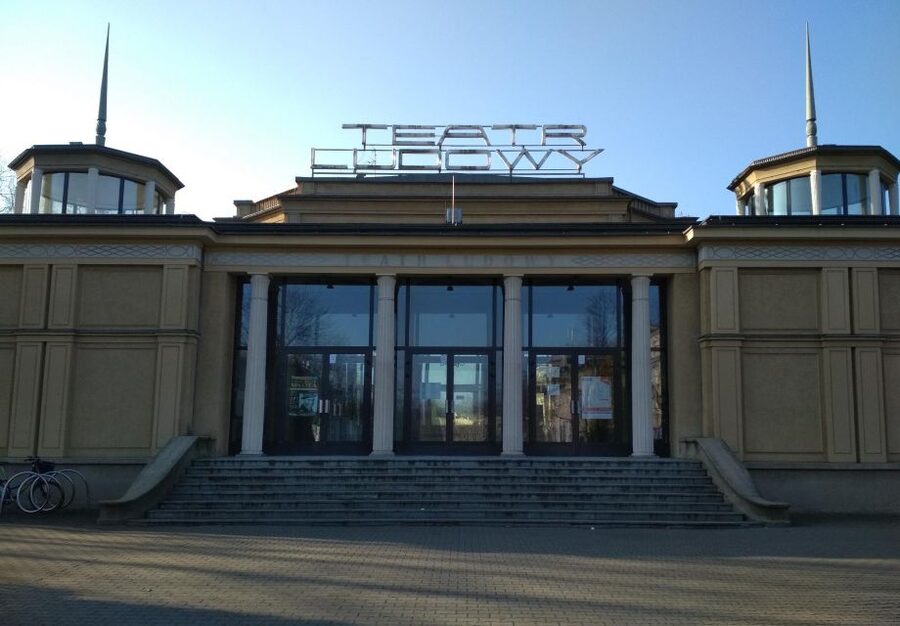
- The Ludowy Theatre and culture under communism
- Why the Solidarity connection matters
- What the $69 price buys you
- Who will enjoy this walk most
- Practical advice before you go
- Should you book the Nowa Huta walk?
- FAQ
- Where does the Nowa Huta tour begin?
- Where does the tour end?
- How long does the tour last?
- What language is the tour offered in?
- Is transportation from Kraków city center included?
- What places are visited during the walk?
- How much does the tour cost?
- Can I cancel the booking?
Key points
- Central Square and Avenue of Roses reveal the grand scale of Nowa Huta’s socialist plan.
- The IS-2 tank monument adds a direct reminder of the district’s industrial and military setting.
- The church of Our Lady Queen of Poland tells the story of the battle for a cross and religious freedom.
- Solidarity sites connect local strikes and opposition to Poland’s wider political change.
- The Ludowy Theatre shows how culture fit into the city’s original communist design.
- The $69 price is easiest to justify if you value a private guide and historical explanation over a quick photo stop.
Why Nowa Huta feels so different from Kraków
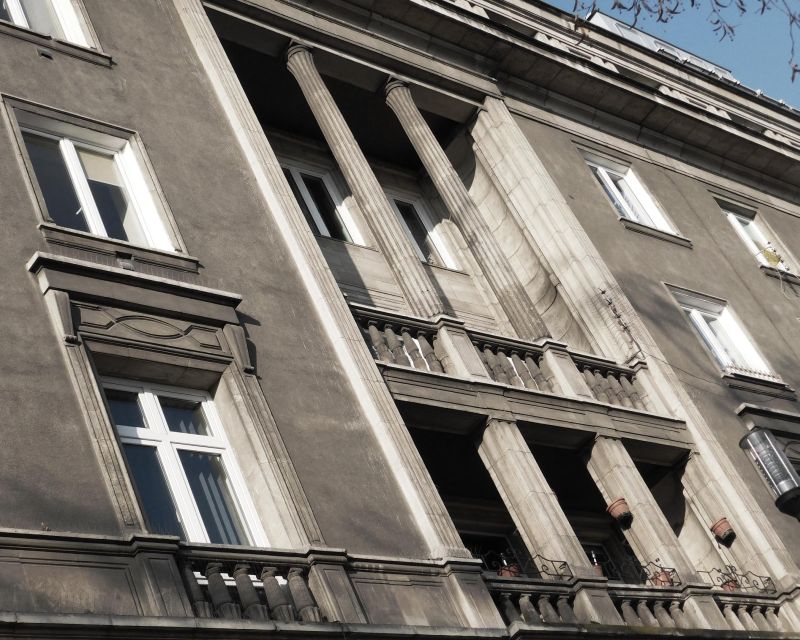
Kraków is often presented through its medieval center, royal associations, churches, and old streets. Nowa Huta offers almost the opposite experience. Its name means new steel mill, and the district grew after the Second World War around a giant manufacturing plant and housing for its workers.
The communist government wanted more than an industrial zone. It wanted a model city for a new kind of citizen, one shaped by socialist ideals rather than religion, inherited traditions, or royal Poland. The plan deliberately contrasted with old Kraków, which was seen by the authorities as too religious and too tied to the past.
I find this political purpose more interesting than the concrete itself. The broad avenues and formal buildings were designed to express order, confidence, and state power. At the same time, the people living there did not simply become the obedient citizens the planners imagined. Religious life, local identity, and political opposition took root in the very city meant to replace them.
That tension gives the walk its purpose. You are not just looking at apartment blocks. You are reading a city as an argument.
More Nowa Huta trips:
- Krakow: Nowa Huta Guided Tour in Vintage Car
★ 4.9 · 277 reviews - Legendary Private Nowa Huta Communism Tour with Crazy Guides
★ 5.0 · 262 reviews - Nowa Huta: Steelworks Administration Buildings/Shelters Tour
★ 4.9 · 160 reviews
Starting beside the Solidarity monument
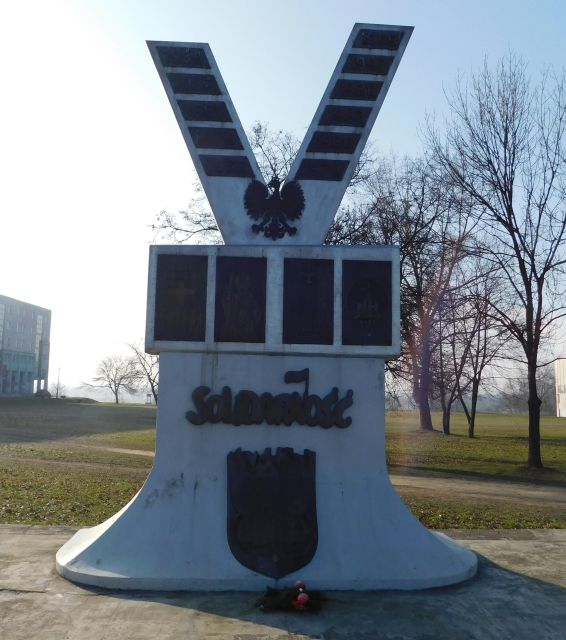
The meeting point is by the Solidarity monument, Bądź wierny, idź. You should look for the English-speaking licensed private guide waiting beside it. Since transport from Kraków city center is not included, allow extra time to reach Nowa Huta before the two-hour walk begins.
Starting here is a smart choice. Solidarity gives you an immediate reminder that Nowa Huta was not only a planned communist success story. It was also a place where workers challenged the system that claimed to represent them.
The tour returns to this same monument at the end. That creates a useful frame: you begin with organized opposition and then walk backward into the city’s original plan, its ideology, its religious struggles, and its public culture.
Central Square, 40 minutes of socialist planning
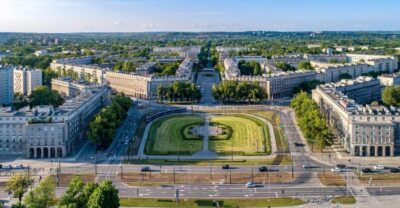
Central Square receives the longest stop, and that makes sense. This is the best place to understand the scale and ambition of Nowa Huta.
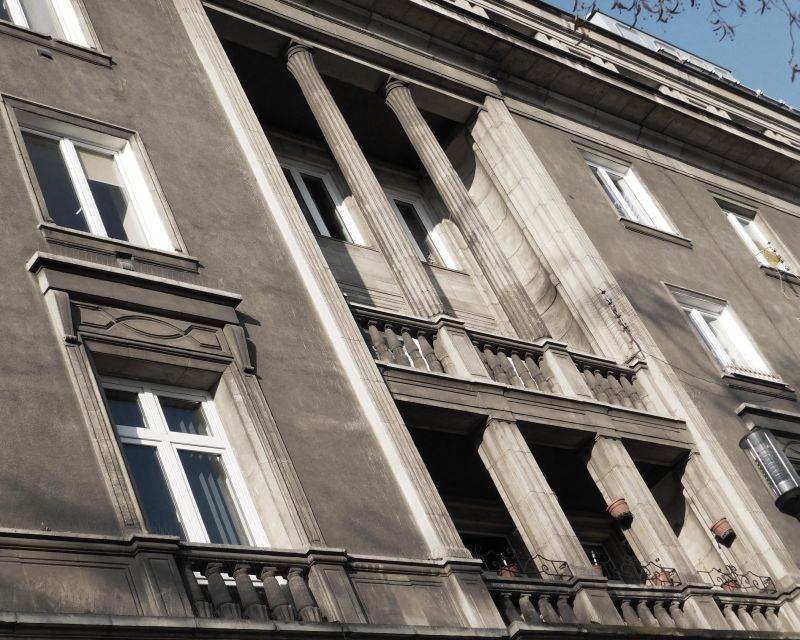
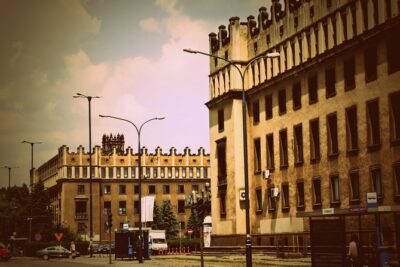
The square once carried Lenin’s name, a direct sign of the district’s political purpose. Its broad layout and monumental neo-classical architecture reflect the Stalinist era. The design was meant to project strength and collective order, not the irregular charm of old Kraków.
I would pay close attention to the proportions here. A square this large does not feel accidental. It was created for a planned city and for public life organized on a mass scale. The surrounding architecture was intended to make the state feel permanent and powerful.
Your guide’s explanation matters most at this point. Without context, you may see imposing buildings and wide spaces but miss the ideas behind them. With the story in place, the square becomes a lesson in how governments use architecture to shape behavior and identity.
The 40-minute stop also gives the guide room to explain construction history and the utopian thinking behind the district. This is where the tour earns much of its value. You get more than dates and labels. You get a way to understand why Nowa Huta was built in such deliberate contrast to Kraków.
Avenue of Roses and the public face of Nowa Huta
From Central Square, the route continues along Avenue of Roses, described as Nowa Huta’s representative street. The name sounds gentle, but the setting belongs to the same carefully ordered civic world.
This avenue helps you see how the district presented itself to residents and visitors. It was not only a place to sleep after work at the steel mill. It was meant to look like a complete socialist city, with an official center, representative routes, cultural buildings, and housing for industrial workers.
The 15-minute stop is brief, so expect a focused explanation rather than a long architectural study. I like this part because it shifts the tour from the symbolic center into the everyday city. You begin to see how the grand public plan connected to ordinary movement through the district.
If your interest is mainly architecture, you may wish the walk spent longer here. Still, the short stop keeps the pace moving and leaves room for the more dramatic political and religious sites ahead.
A few more Krakow trips worth comparing
- From Krakow: Auschwitz-Birkenau Guided Tour & Hotel Pickup
★ 4.5 · 33,358 reviews - From Krakow: Auschwitz-Birkenau Guided Tour & Hotel Pickup
★ 4.5 · 29,340 reviews - Krakow: Auschwitz Guided Tour with Optional Hotel Pickup
★ 4.5 · 15,280 reviews - Krakow: Auschwitz-Birkenau Guided Tour with Pickup & Lunch
★ 4.5 · 9,800 reviews
The IS-2 tank and the industrial identity
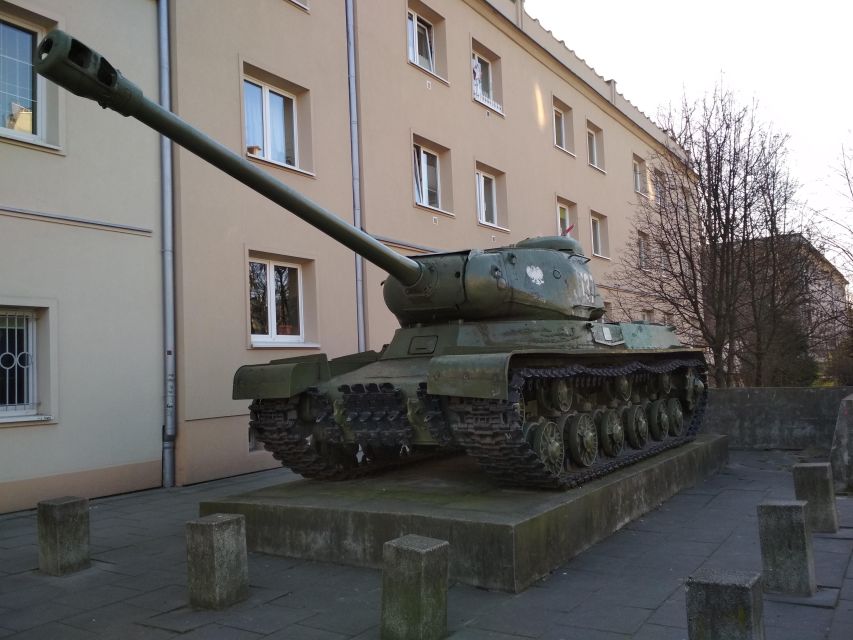
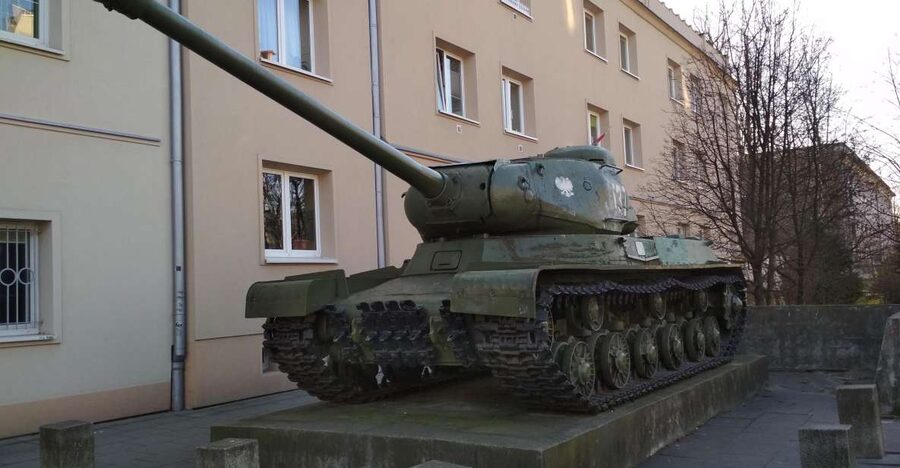
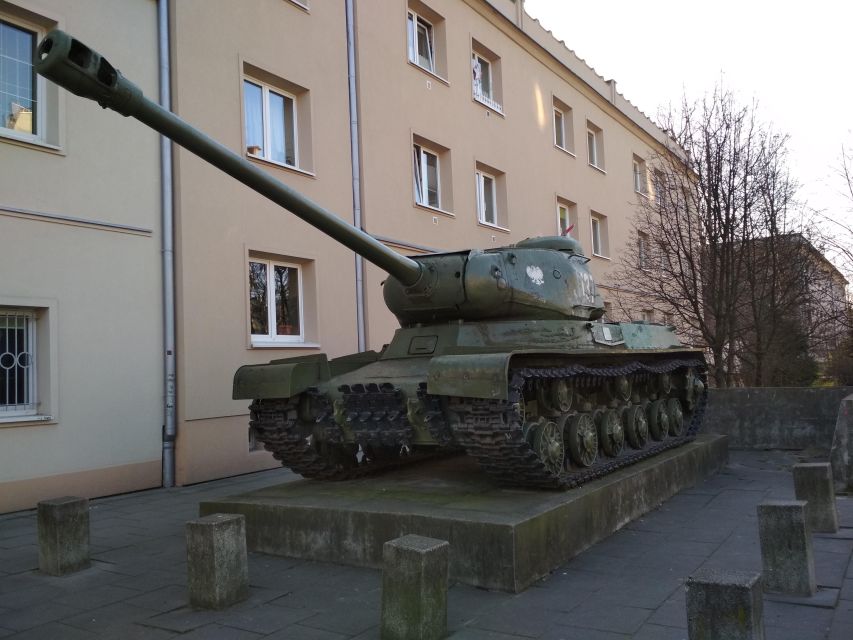
The monument of the IS-2 tank is a quick 10-minute stop. It may seem like an odd break in an architectural walk, but it fits Nowa Huta’s identity as an industrial and communist-era district.
The tank is a blunt object. Unlike the formal lines of Central Square, it makes the political and military world of the period more concrete. It also gives the tour a different visual note before you continue to the church and its story of resistance.
Do not expect a long museum visit here. The value lies in the guide’s connection between the object and the wider setting. This is a short stop that works best as part of the larger narrative, not as a destination by itself.
The battle for the cross and Our Lady Queen of Poland Church
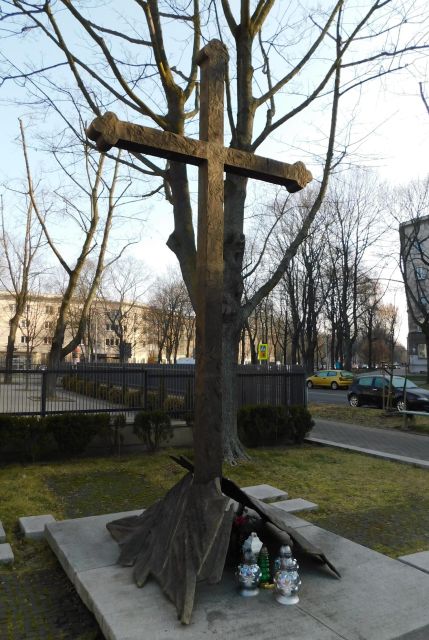
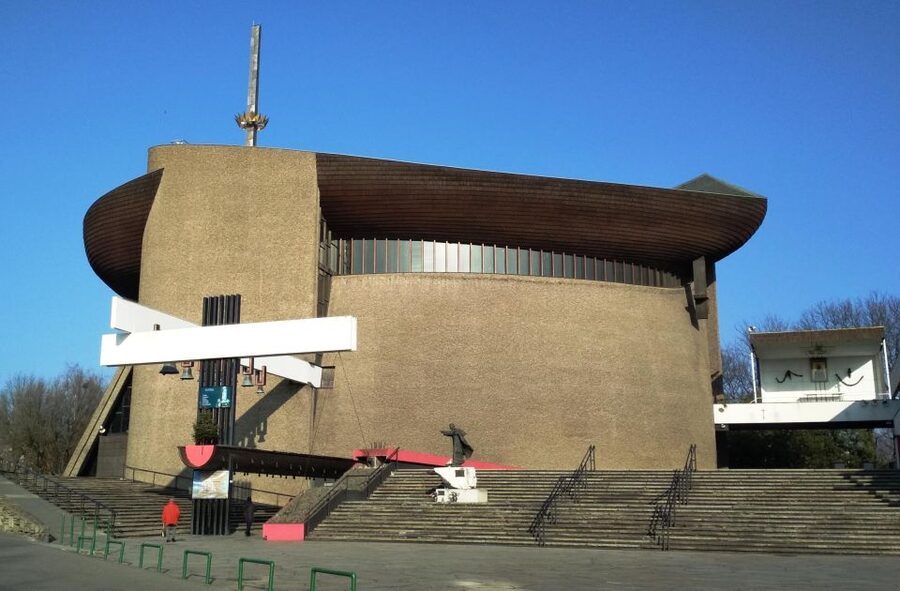
The church of Our Lady Queen of Poland is likely the emotional center of the walk. It represents the clash between the city’s official purpose and the faith of the people who lived there.
Nowa Huta was designed as a city without God, yet residents fought for a church. The site is connected with the battle for the cross, a struggle that exposed the limits of the government’s plan to create a purely secular socialist community.
The 20-minute visit gives the guide enough time to explain why this church mattered. It was not simply another place of worship added to a growing neighborhood. Its presence challenged the idea that the state could decide what kind of citizen people would become.
I especially like this stop because it prevents the tour from becoming a parade of communist architecture. You see how residents pushed back against the official plan, and how religion remained part of public life even in a district built to suppress it.
The church also adds a human scale to the story. Central Square expresses government power from above. The church reflects collective action from below. Put together, the two sites show why Nowa Huta cannot be understood through buildings alone.
The Ludowy Theatre and culture under communism
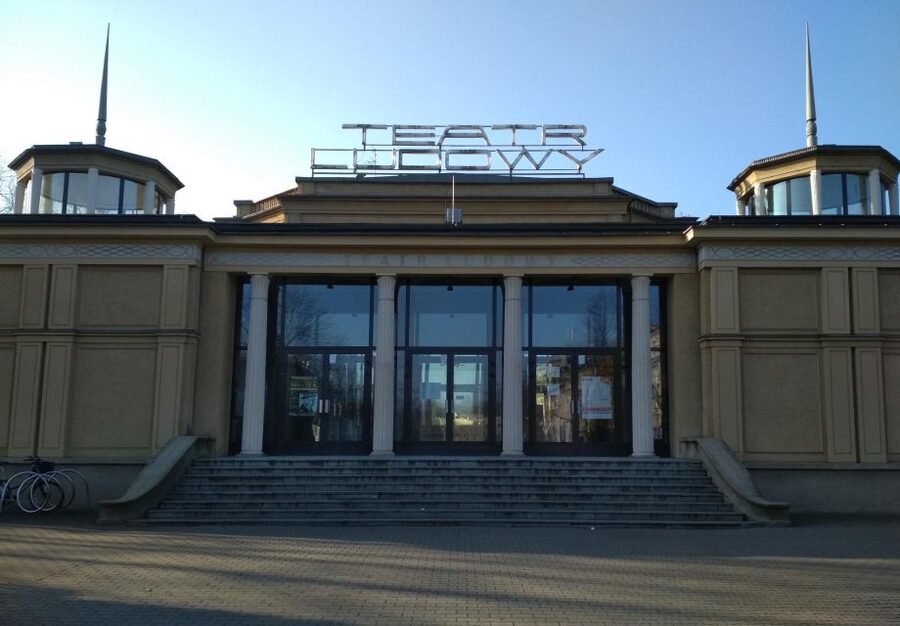
The final major stop is the Ludowy Theatre, with about 35 minutes devoted to it. This is a substantial portion of the tour, and it rounds out the story by showing how culture fit into the socialist city.
A planned district needed more than factories and housing. It also needed institutions that could shape public life and present the values of the new system. A theatre was part of that civic framework, offering a formal cultural space within the workers’ city.
The guide can place the building within Nowa Huta’s original purpose and its later political story. This stop also helps you avoid a common mistake: assuming communist planning was only about industry. The state wanted to organize work, housing, education, leisure, and culture as one complete social model.
Because the Ludowy Theatre receives 35 minutes, you should expect a careful explanation of its role rather than a quick exterior photograph. If theatre and cultural policy interest you, this may be one of the more rewarding stops. If you mainly want religious and Solidarity history, it may feel longer than necessary, but it is important to the tour’s full argument.
Why the Solidarity connection matters
Nowa Huta was built for steel workers, and that working-class identity later became important to opposition movements. The route includes locations connected with the legacy and strikes of Solidarność, Poland’s major democratic labor movement.
This connection gives the district a surprising arc. The government created Nowa Huta to produce loyal industrial workers and a model socialist community. Yet workers became part of the pressure that weakened and eventually challenged the communist system.
I appreciate that the tour links the monument at the start with these later events. You get to see Nowa Huta not as a frozen communist relic, but as a place that changed under pressure from the people who lived and worked there.
The available description does not specify each Solidarity location by name, so you should expect the guide to explain the relevant sites as you walk rather than visit a single dedicated museum. That is useful for a short tour, but it also means the experience depends on the guide’s storytelling and the time available.
What the $69 price buys you
At $69 per person, this is not the cheapest way to see Nowa Huta. The price makes more sense if you want a private tour with a licensed English-speaking guide who can explain the district’s political and social meaning.
You are paying for interpretation, not admission tickets or transport. There are no listed entrance fees included, and the walk does not provide transportation from Kraków city center. Gratuities are also not included.
For a two-hour private experience, the value depends on your interests. I would consider it worthwhile if you are curious about communist Europe, urban planning, religious resistance, or Solidarity. If you only want to take photographs of unusual buildings, you can see some of the same streets independently for less, but you will miss much of the reason they look the way they do.
The strongest praise available for this experience is direct and simple: David from the United Kingdom gave it five stars in June 2025 and singled out the guide and the fascinating character of the area. That matches the tour’s main strength. The district is compelling, but a good explanation turns an unfamiliar suburb into a readable historical story.
Who will enjoy this walk most
I would recommend this experience to you if you have already seen central Kraków and want a different side of the city. It suits people interested in:
- Communist-era architecture and city planning
- Poland’s religious and political conflicts
- Solidarity and workers’ strikes
- Postwar European history
- Guided walks with a clear historical focus
The tour may be less suitable if you want a relaxed café walk, a long interior visit, or a broad sightseeing tour of Kraków. Two hours is enough for a strong introduction, but Nowa Huta is a large district and this route stays focused on its major symbols.
You should also be comfortable walking outdoors for the full experience. The supplied details describe a walking tour, with no separate transport during the route.
Practical advice before you go
Wear comfortable shoes and arrive at the Solidarity monument with enough time to find the guide. Since the meeting point is in Nowa Huta rather than central Kraków, transport planning is your responsibility.
I would choose this tour early in your Kraków stay if you want its themes to add context to the rest of your visit. The contrast between Nowa Huta and old Kraków becomes more useful once you have seen both sides of the city.
The tour is offered in English and lasts two hours. Starting times vary, so you need to check availability for your date. You can reserve now and pay later, and cancellation is free up to 24 hours in advance for a full refund. Those terms are helpful if your Kraków schedule is still shifting.
Should you book the Nowa Huta walk?
Book it if you want to understand why this district was built, why it looked so grand, and why its residents resisted the life planned for them. The route covers Central Square, Avenue of Roses, the IS-2 tank, the church linked to the battle for a cross, the Ludowy Theatre, and Solidarity history in a compact two hours.
Skip it if your time in Kraków is very short and you have not yet seen the old town’s essential sights. But if you have room for one less obvious historical experience, this tour offers a sharp look at the city’s socialist past and the people who refused to fit neatly into it.
FAQ
Where does the Nowa Huta tour begin?
The tour begins beside the Solidarity monument, Bądź wierny, idź. Look for the guide waiting by the monument.
Where does the tour end?
The walk returns to the Solidarity monument where it began.
How long does the tour last?
The guided walk lasts two hours.
What language is the tour offered in?
The tour is offered in English with a live licensed guide.
Is transportation from Kraków city center included?
No. Transportation from Kraków city center to Nowa Huta is not included.
What places are visited during the walk?
The route includes Central Square, Avenue of Roses, the IS-2 tank monument, Our Lady Queen of Poland Church, and the Ludowy Theatre. It also covers sites connected with Solidarity.
How much does the tour cost?
The listed price is $69 per person.
Can I cancel the booking?
Yes. You can cancel up to 24 hours in advance for a full refund. You can also reserve now and pay later.
Just added around Krakow
- Private Guided Tour: Oskar Schindler’s Factory★ 5.0 · 3 reviews
- E-Scooter Krakow sightseeing tour★ 5.0 · 3 reviews
- From Krakow: Zakopane and Thermal Pools Guided Trip★ 5.0 · 3 reviews
- Schindler’s Factory, Ghetto and Plaszow Camp Guided Tour★ 4.7 · 3 reviews
- Kraków: Private Hot Air Balloon Flight with Champagne★ 3.7 · 3 reviews
- Krakow: River Cruise & Guided Visit to Former Plaszow Camp★ 3.6 · 3 reviews
- From Krakow: Private Wieliczka Salt Mine Tour★ 4.0 · 3 reviews
- Krakow: Old Town short walk with St. Mary’s Basilica visit★ 5.0 · 3 reviews
Nowa Huta Tours, compared.

Legendary Private Nowa Huta Communism Tour with Crazy Guides
Read our review →
Nowa Huta: Steelworks Administration Buildings/Shelters Tour
Read our review →
Private Nowa Huta Adventure Tour in Communist Cars
Read our review →
Communist Krakow – Nowa Huta Walking Tour in English
Read our review →
Nowa Huta Steel Mill Administration Buildings and Shelters with local NGO
Read our review →
1.5h Crazy Guides’ Communism Tour of Nowa Huta in Classic Car
Read our review →Browse the lists this tour appears in