
Reviewed · SCHINDLER'S FACTORY TOURS
Schindler’s Factory Guided Tour in Krakow & skip the line ticket
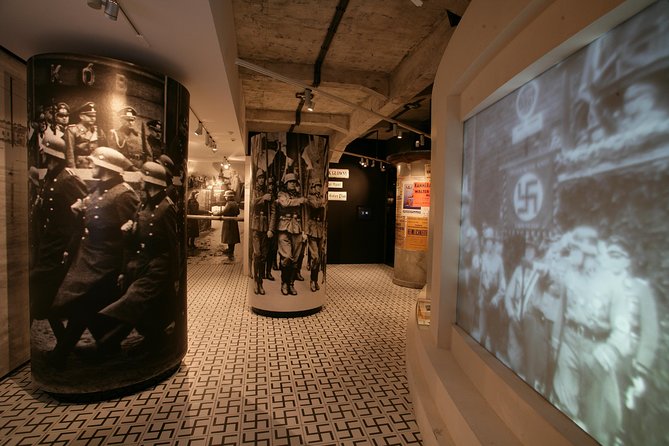
Schindler’s Factory Museum is less a shrine to one movie hero than a carefully arranged account of Krakow under Nazi occupation from 1939 to 1945. You’ll see how the war changed daily life for Polish and Jewish residents, then follow the story through the Krakow Ghetto, Płaszów concentration camp, and the arrival of the Soviet Army.
I like two things here. First, the exhibition gives you a wider view than Steven Spielberg’s Schindler’s List, with personal stories and photographs that put the city’s wartime experience into human terms. Second, skip-the-line entry is useful at a popular museum where time matters. The main concern is the large guided group, since several visitors found it hard to hear the guide or pause at exhibits.
In This Review
- Key points to know before booking
- What the museum really covers
- Entering Oskar Schindler’s former factory
- Following Krakow from 1939 to 1945
- The Krakow Ghetto and Płaszów
- Oskar Schindler’s role and the Spielberg connection
- Why the skip-the-line ticket matters
- The group size problem
- What makes a good guide here
- How long to allow and how to prepare
- Who should book this tour
- Should you book Schindler’s Factory Guided Tour?
- FAQ
- Where does the tour take place?
- How long does the guided tour last?
- Is the tour offered in English?
- Does the ticket include admission to the museum?
- Does the ticket let me skip the line?
- Does the tour focus only on Oskar Schindler?
- Are food, transportation, and hotel transfers included?
Key points to know before booking
- The museum is broader than Schindler: Expect a full account of Krakow during the war, not a recreation of the factory floor or a film-focused attraction.
- The guided visit lasts about 90 minutes: The full booking is listed at roughly 1 hour 40 minutes, allowing a little time around the main tour.
- Skip-the-line entry is included: You avoid the long ticket queue, but you still enter a busy museum shared with other groups.
- English guides vary by date: Guides named Ava, Eva, Alicia, and Joanna have been singled out for clear, thoughtful presentations, though guide quality and speaking speed can vary.
- Headsets may not be provided: In crowded rooms, people at the back may struggle to hear unless they move close to the guide.
- The subject is difficult: The museum deals directly with Nazi persecution, the ghetto, deportations, and the Płaszów camp.
What the museum really covers
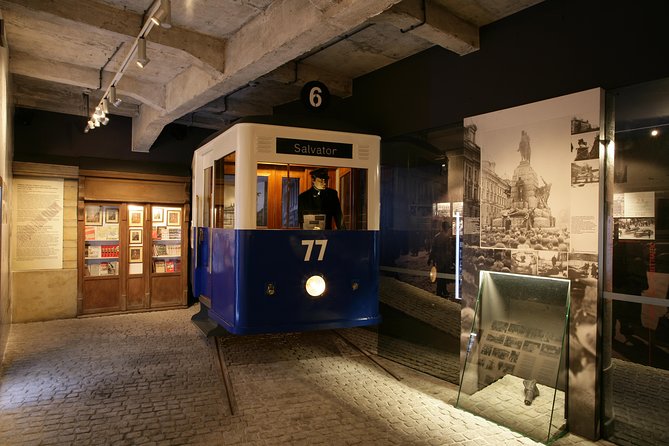
The name Schindler’s Factory can set up the wrong expectation. You may picture machinery, production rooms, and a detailed account of Oskar Schindler’s business. The permanent exhibition does include Schindler’s story, but its larger purpose is to explain what happened to Krakow and its people during the German occupation.
That broader approach is one of the museum’s strengths. You begin with events shortly before the war, then move through the German invasion, the early occupation, the destruction of Jewish life, and the final months before Soviet forces arrived in 1945.
The story includes both Polish and Jewish residents. You’ll encounter photographs, documents, statements, and displays about ordinary life under a brutal system. The museum also explains how restrictions hardened into forced removal, how the Krakow Ghetto operated, and how Płaszów became part of the machinery of persecution.
If your main goal is to see the actual place where enamel goods were made, adjust your expectations. The exhibition is built around historical interpretation rather than a preserved factory shop floor. That can feel disappointing if you arrive expecting a physical tour of Schindler’s production spaces.
More Schindler's Factory visits:
- Krakow: Oskar Schindler’s Factory Entry Ticket & Guided Tour
★ 4.2 · 3,793 reviews - Krakow: Schindler’s Factory Tour with Entrance Ticket
★ 4.5 · 3,182 reviews - Krakow: Schindler’s Factory Skip-the-Line Ticket
★ 4.4 · 3,105 reviews
Entering Oskar Schindler’s former factory
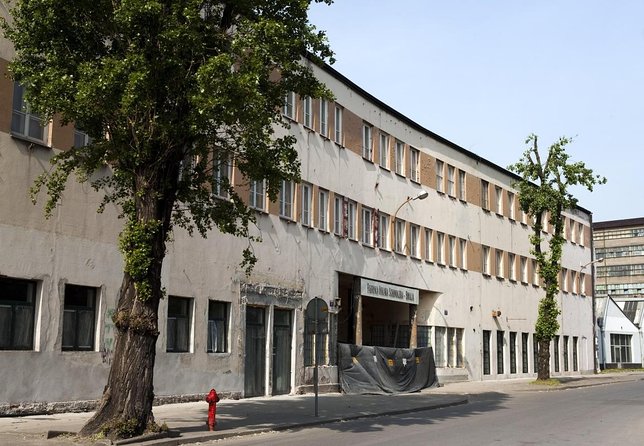
The museum is located in the original Oskar Schindler Enameled Goods Factory. That setting gives the visit an important connection to the subject, even though much of what you see is a modern permanent exhibition rather than untouched factory equipment.
The museum opened to the public in June 2010 after years of preparation. Its rooms are arranged as a chronological walk through wartime Krakow. The design uses photographs, text, personal accounts, and recreated details to help you understand how quickly normal city life was dismantled.
A guide can help connect those rooms. Instead of reading every panel in isolation, you get an explanation of how the events fit together. The strongest guides, including Ava, Eva, Alicia, and Joanna on different departures, have been praised for presenting the subject with care and feeling.
Still, the building has a practical weakness. Many rooms are small, and guided groups can number around 20 or more. When several groups are moving through at once, the space becomes tight. If you are at the back, you may hear only fragments unless you move forward.
Following Krakow from 1939 to 1945
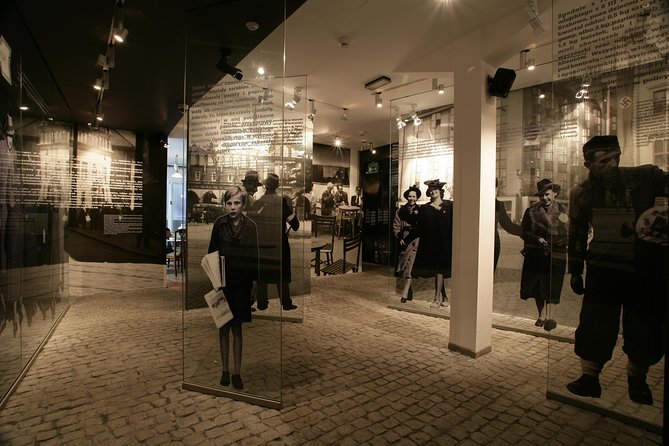
The tour’s first major task is to explain Krakow before and during the German occupation. You’ll learn about the invasion and the first months of Nazi rule, then see how laws and orders reshaped the lives of the city’s residents.
This part is valuable because it avoids presenting the war as a series of isolated dates. The displays show how discrimination, fear, displacement, and violence affected people in daily ways. You’re not simply told that a community was persecuted. You’re shown how homes, work, movement, identity, and family life were controlled.
The guide’s personal stories help make that history easier to grasp. A strong presentation links official events with individual choices and losses. Alicia, Ava, Eva, and Joanna have each been praised for bringing this material to life, asking questions, and explaining details without treating the subject casually.
The quality of the visit depends heavily on communication. Some guides speak quickly, and one presentation was difficult to follow because the English was not clear enough. In a museum filled with small rooms and competing voices, even a good explanation can disappear if you cannot stand close enough.
The Krakow Ghetto and Płaszów
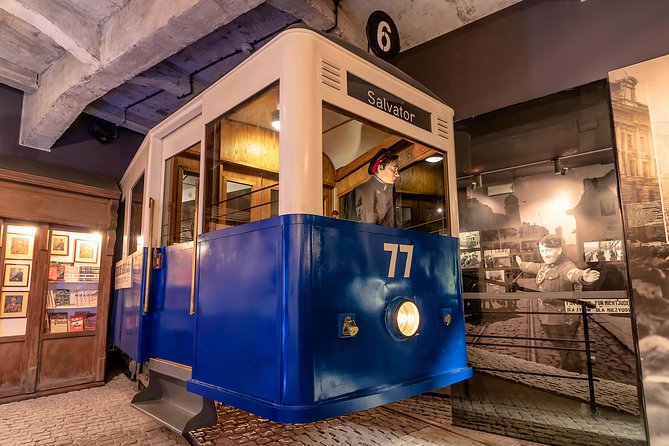
The section on the Krakow Ghetto is among the most important parts of the visit. You’ll learn how Jewish residents were forced into a confined area and how the ghetto became part of the German system of control, exploitation, and murder.
The museum then carries the story toward Płaszów concentration camp. These displays are disturbing, as they should be. This is not light sightseeing, and you should allow yourself time afterward to process what you have seen.
A guide can provide the context that a quick visit might miss. The exhibition contains a lot of written information, photographs, and survivor material. A fast group route may point out the main details but leave little time for close reading.
That is the central tradeoff of this booking. You get a planned route and a person who can explain the major events, but you may not have enough time to study every photograph, plaque, video, or personal statement. If you like to read carefully, the guided format may feel restrictive.
A few more Krakow trips worth comparing
- From Krakow: Wieliczka Salt Mine Tour & Skip the Line Ticket
★ 4.4 · 3,925 reviews - Auschwitz-Birkenau Skip-the-Line Guided Tour
★ 4.3 · 3,617 reviews - Auschwitz-Birkenau: Skip-the-Line Entry Ticket & Guided Tour
★ 4.4 · 3,052 reviews - Schindler’s Factory in Krakow: Guided Tour & Skip the Line Ticket
★ 4.5 · 1,714 reviews
Oskar Schindler’s role and the Spielberg connection
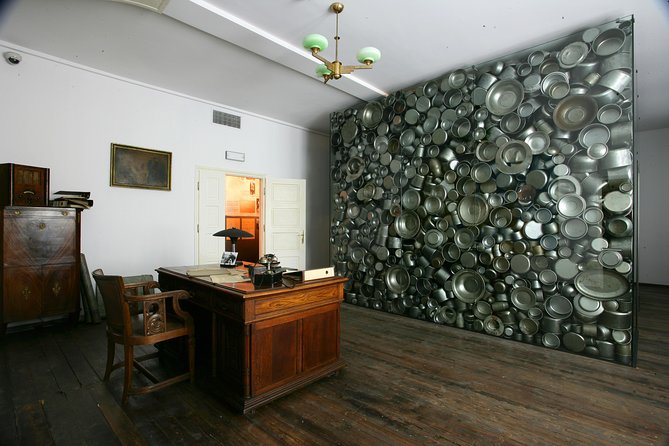
The real Oskar Schindler saved the lives of more than 1,000 Jewish workers. His story became internationally known through Schindler’s List, but the museum does not function as a film set tour or a Hollywood tribute.
You should expect some attention to Schindler and the people he helped, but the visit places his actions within the larger history of occupied Krakow. That is historically useful. It also means you may leave knowing more about the city’s occupation than about Schindler’s private life or the making of the film.
This distinction matters when you decide how to spend your time. If you want film locations, movie trivia, or a room-by-room account of Schindler’s rescue work, this is not the right match. If you want to understand how his factory and rescue effort fit into the wider war, the museum makes more sense.
I also appreciate that the museum does not ask you to treat Schindler as the only subject. His story is powerful, but the people of Krakow remain at the center. The exhibition gives attention to Polish and Jewish residents, their homes, work, fear, and survival.
Why the skip-the-line ticket matters
At $42.95 per person, this is not the cheapest way to enter the museum. Direct admission may cost less, so the extra money pays for the guided service and the convenience of guaranteed skip-the-line access.
That convenience has real value if your Krakow schedule is tight. You do not need to spend part of your day waiting at the museum entrance. You also receive a structured explanation instead of trying to assemble the story from displays on your own.
But skip-the-line entry does not mean a private or quiet visit. You still share the museum with other visitors and tour groups. Once inside, crowding can affect the experience just as much as the ticket queue does.
For me, the price makes the most sense if you want a guide and have limited time. It is harder to justify if you prefer reading at your own pace, since the self-guided option may give you more time with the exhibits for less money.
The group size problem
The museum’s narrow rooms are not well suited to oversized groups. When 20 or more people gather around one guide, you may find yourself standing in a doorway, squeezed against another group, or unable to see the display being discussed.
Several practical complaints come from the same issue: people could not hear, the guide moved on before they had finished reading, and other groups walked through the presentation. This does not mean every departure is poorly managed, but it does mean you should be prepared for an active, crowded route.
Headsets are another weak point. The museum does not currently provide them for this tour, and the operator has said it has repeatedly asked the venue to offer them. Without audio equipment, your position in the group matters a great deal.
Try to stay close to the guide from the beginning. If you are traveling with someone who has hearing difficulty, or you strongly prefer a quiet, detailed visit, self-guided entry may be the safer choice.
What makes a good guide here
A strong guide changes the experience. The best presentations explain the setting, point out small details, and give you time to think rather than simply listing dates. One highly praised guide asked questions that encouraged the group to consider what life looked and felt like during the occupation.
A guide named Joanna has been praised for making sure the group had time to stop and look around. Ava and Eva have also been praised for clear explanations and sensitivity, while Alicia was noted for adding detail and encouraging reflection.
Those names are not a guarantee, since the guide depends on the date and the assigned provider. The broader point is that a capable English-speaking guide can make a complex museum easier to follow.
The opposite is also true. A guide who speaks too quickly, too quietly, or with unclear English can leave you frustrated. Since the museum itself contains plenty to read, the guided option is only worthwhile if you can hear and follow the presentation.
How long to allow and how to prepare
The advertised tour runs about 1 hour 30 minutes, with the total experience listed at approximately 1 hour 40 minutes. That is enough for an introduction and a guided route, but not enough for a slow, complete reading of every display.
I would not plan another major activity immediately afterward. The subject is heavy, and you may want time to think, especially after the sections on the ghetto and Płaszów.
There is no food, drink, hotel pickup, or drop-off included. You make your own way to the museum, and the site is near public transportation. Children must be accompanied by an adult, service animals are allowed, and most people can take part.
Because the experience cannot be changed or refunded after booking, check your schedule carefully before paying. The provider requires a minimum number of participants, but if that minimum is not reached, you are offered another date or experience, or a full refund.
Who should book this tour
I would recommend this tour to you if you want a guided introduction to Krakow’s wartime story, value queue-free entry, and can accept a brisk pace. It is especially useful if you have not studied the occupation before and want someone to explain the links between the invasion, the ghetto, Płaszów, and Schindler’s work.
It also suits visitors who prefer a clear route through a large amount of material. The museum can feel confusing if you try to absorb everything without context, and a good guide gives you the main structure.
I would hesitate if you want to focus almost entirely on Oskar Schindler, the factory itself, or the film. You may also prefer a self-guided visit if you read slowly, want to examine survivor accounts, or dislike being moved along with a group.
At this price, the decision is simple: pay for time saved and historical explanation, not for an exclusive look at the factory. That is a fair exchange for some people, but not for everyone.
Should you book Schindler’s Factory Guided Tour?
Book it if skip-the-line access and an English explanation are important to you, and if you want the wider story of occupied Krakow rather than a film-themed attraction. The strongest guides can make the museum moving, clear, and memorable.
Skip the guided option if you want to linger over artifacts, read every panel, or explore without crowd pressure. The museum itself is worth serious attention, but the guided format can be rushed, noisy, and hard to hear. For independent visitors, direct self-guided entry may offer better value and more control.
FAQ
Where does the tour take place?
The tour takes place at Fabryka Emalia Oskara Schindlera, the original Oskar Schindler Enameled Goods Factory in Krakow.
How long does the guided tour last?
The guided portion lasts about 90 minutes. The total experience is listed at approximately 1 hour 40 minutes.
Is the tour offered in English?
Yes. This experience is offered in English with a professional museum guide when the guided option is selected.
Does the ticket include admission to the museum?
Yes. Admission to Schindler’s Factory Museum is included.
Does the ticket let me skip the line?
Yes. Guaranteed skip-the-line access is included, allowing faster entry than waiting in the regular queue.
Does the tour focus only on Oskar Schindler?
No. It explains Schindler’s role but mainly covers Krakow under Nazi occupation from before the war through the arrival of the Soviet Army in 1945. It includes Polish and Jewish life, the Krakow Ghetto, and Płaszów concentration camp.
Are food, transportation, and hotel transfers included?
No. Food and drinks, transportation to and from the museum, and hotel pickup and drop-off are not included.
Just added around Krakow
- Private Guided Tour: Oskar Schindler’s Factory★ 5.0 · 3 reviews
- E-Scooter Krakow sightseeing tour★ 5.0 · 3 reviews
- From Krakow: Zakopane and Thermal Pools Guided Trip★ 5.0 · 3 reviews
- Schindler’s Factory, Ghetto and Plaszow Camp Guided Tour★ 4.7 · 3 reviews
- Kraków: Private Hot Air Balloon Flight with Champagne★ 3.7 · 3 reviews
- Krakow: River Cruise & Guided Visit to Former Plaszow Camp★ 3.6 · 3 reviews
- From Krakow: Private Wieliczka Salt Mine Tour★ 4.0 · 3 reviews
- Krakow: Old Town short walk with St. Mary’s Basilica visit★ 5.0 · 3 reviews
Schindler's Factory Tours, compared.

Oskar Schindler’s Factory Entry Ticket & Guided Tour
Read our review →
Schindler’s Factory Tour with Entrance Ticket
Read our review →
Schindler’s Factory Tour with Entrance Ticket
Read our review →
Schindler’s Factory in Krakow: Guided Tour & Skip the Line Ticket
Read our review →

Schindler’s Factory Ticket with Guided Tour Option
Read our review →
Krakow Schindler’s Factory Guided Tour with Admission Ticket
Read our review →Browse the lists this tour appears in