
Reviewed · SCHINDLER'S FACTORY TOURS
Schindler’s Factory Museum Guided Tour – Krakow
Schindler’s Factory Museum is not simply a shrine to one famous man. It is a carefully staged walk through Krakow from 1939 to 1945, using ordinary objects, photographs, papers, film, and preserved rooms to show how war changed daily life. I like the way the tour places Oskar Schindler inside that larger story, rather than making the whole museum a biographical tribute.
I especially like the live guide commentary, which adds context that a fast museum visit can miss, and the route’s unusual set pieces: a tram ride through wartime Krakow, a cramped ghetto apartment, and Schindler’s preserved office. The main drawback is time. Ninety minutes gives you a clear guided path, but not enough time to study every display in this large, information-heavy museum.
In This Review
- Key points to know before you go
- Entering the former enamel factory
- Krakow between 1939 and 1945
- A museum route built like a city
- The tram ride through occupied Krakow
- Through the ghetto and into a Jewish apartment
- Płaszów and the widening human cost
- Oskar Schindler’s office and the ark of survivors
- What the guide adds in 90 minutes
- Is $50 a fair price?
- Practical details for your visit
- Who should book this museum tour?
- Should you book Schindler’s Factory Museum Guided Tour?
- FAQ
- Where does the Schindler’s Factory Museum tour meet?
- How long does the guided tour last?
- What does the $50 price include?
- Is this a private tour?
- Which languages are available?
- Can I cancel the booking?
- Do I have to pay when I reserve?
- Do I need identification to enter the museum?
Key points to know before you go
- Krakow’s wartime story comes first: The exhibition follows the city’s occupation, ghetto, and camp years through individual lives and official records.
- Schindler is part of the story, not the whole story: His office and the ark of survivors are important, but the museum’s focus is wider.
- The tram and ghetto apartment make history tangible: Film, rooms, objects, and sound help turn dates into lived experience.
- A guide adds essential context: The tour is available in English, French, German, Italian, and Spanish.
- Ninety minutes is efficient but quick: You gain a clear overview, though you may want extra time afterward if you read every panel.
- The $50 price includes admission: That makes the tour worth considering if you want structure, commentary, and a skip-the-ticket-line arrangement.
Entering the former enamel factory
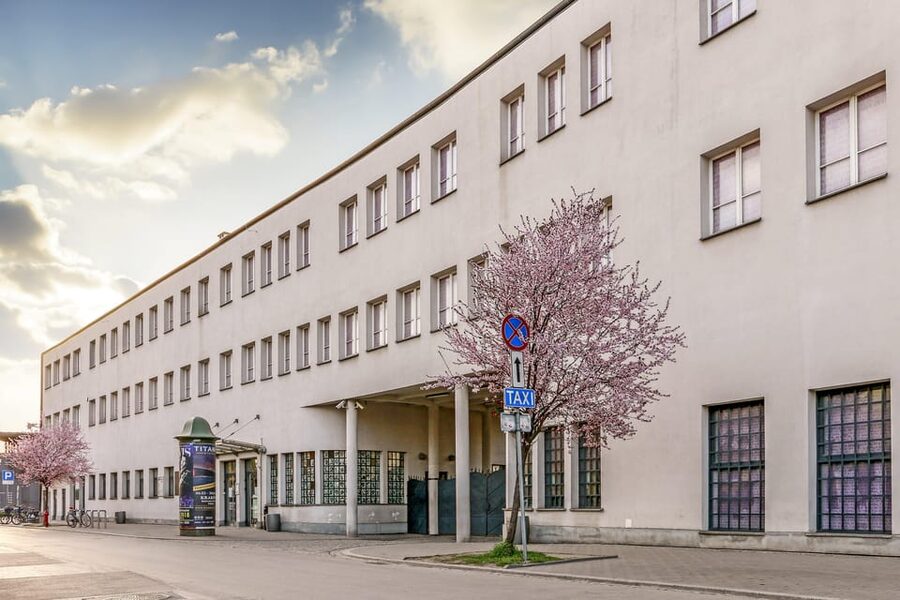
The museum occupies the former administrative building of Oskar Schindler’s Enamel Factory. That setting gives the visit an immediate sense of place. You are not entering a distant memorial built with no connection to events. You are walking into a building tied to the wartime factory owner whose actions helped save more than a thousand Krakow Jews.
Still, this is not a museum devoted only to Schindler. That distinction matters. If you arrive expecting a room-by-room recreation of the film, you may find the exhibition broader and more serious than expected. The film brought worldwide attention to the factory, but the museum’s main subject is the wartime fate of Krakow’s people.
Your guide helps set that frame from the start. The live commentary connects displays that could otherwise feel separate, explaining how occupation affected the city, its Jewish population, Polish residents, workers, and officials. A good guide also keeps the story from turning into a simple tale of one hero and one villain.
The meeting point is in front of the museum entrance. Look for the person holding an excursions.city sign. Since this is a group tour, arrive with enough time to find the correct person and join the group before entry.
More Schindler's Factory visits:
- Krakow: Oskar Schindler’s Factory Entry Ticket & Guided Tour
★ 4.2 · 3,793 reviews - Krakow: Schindler’s Factory Tour with Entrance Ticket
★ 4.5 · 3,182 reviews - Krakow: Schindler’s Factory Skip-the-Line Ticket
★ 4.4 · 3,105 reviews
Krakow between 1939 and 1945
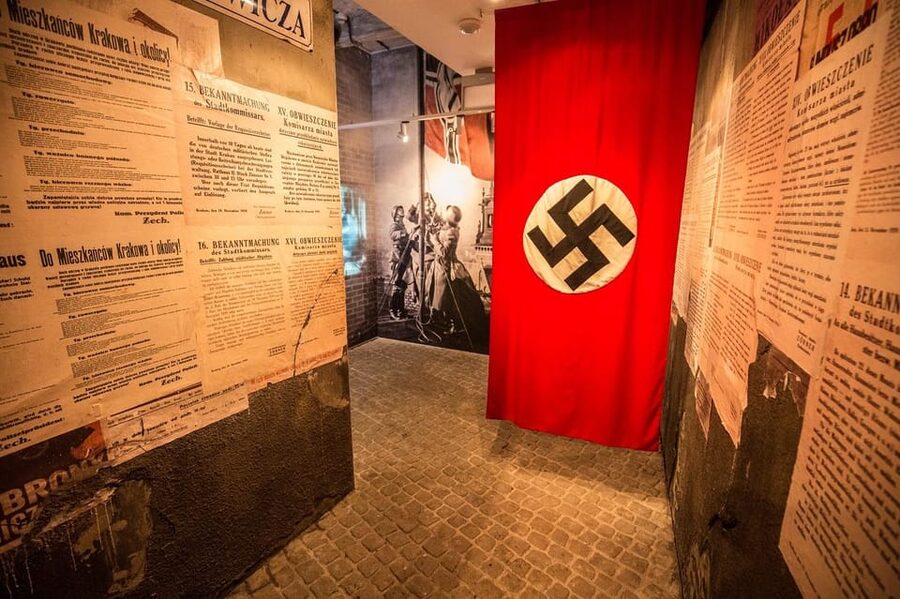
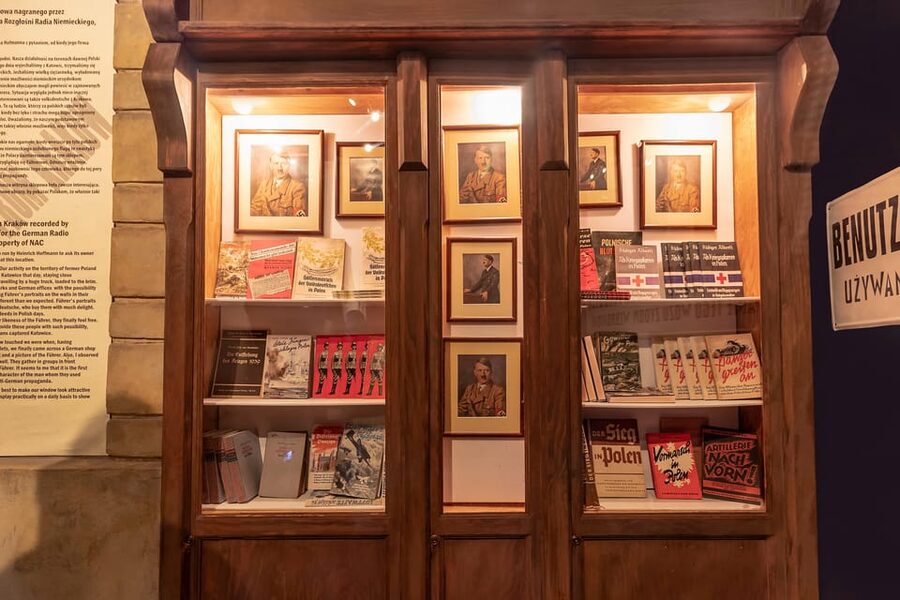
The permanent exhibition presents World War II in two ways. One is collective: occupation, forced changes, the ghetto, the camp at Płaszów, and the machinery of Nazi rule. The other is personal: clothing, household goods, photographs, newspapers, letters, official papers, and other objects connected to ordinary lives.
That balance is one of the museum’s greatest strengths. Dates and political decisions matter, but they can feel distant. A personal document or familiar household object brings the pressure of war down to the level of one family, one worker, or one resident trying to manage daily life.
The exhibition also looks at occupied Krakow rather than treating the city as a backdrop. Your guide explains how the city functioned under German rule and how people adapted, suffered, resisted, or were forced into impossible choices. The focus is not just on battles or military leaders. It is on what occupation meant when you had to work, find food, obey new rules, protect family members, or simply get through another day.
This is why a guided visit is useful here. Museum displays can provide facts, but the meaning of those facts is not always clear on a first pass. The guide helps link a newspaper, a photograph, and a room so you understand how they belong to the same story.
A museum route built like a city
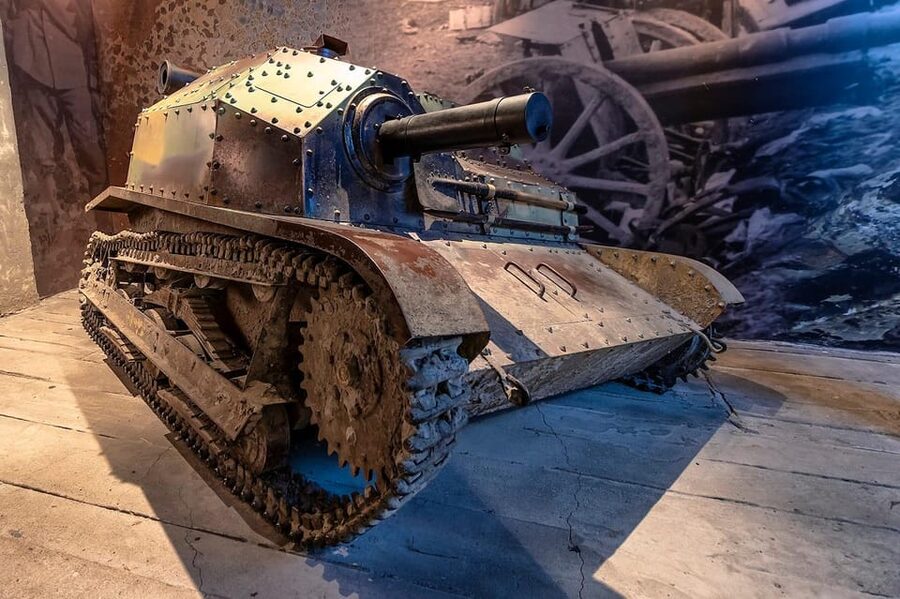
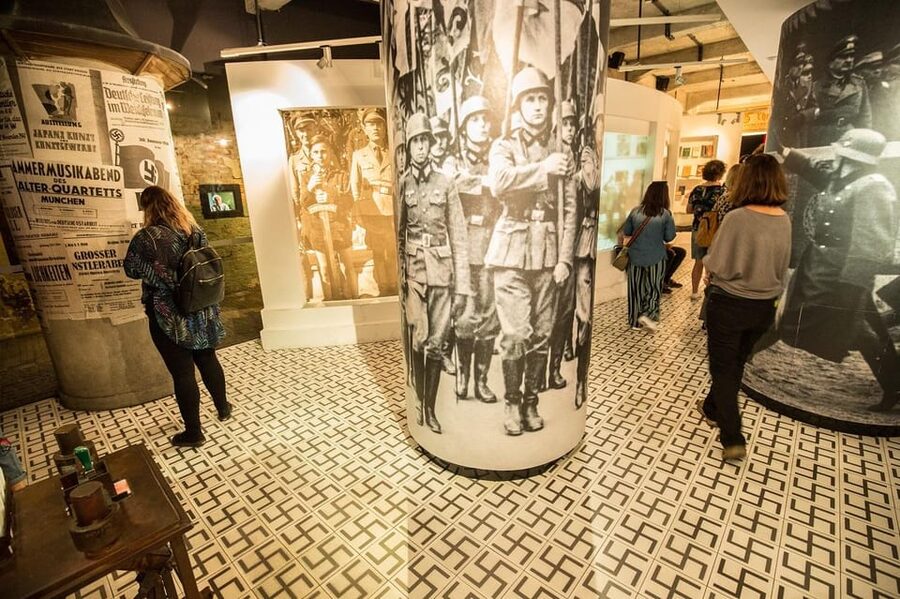
Rather than moving through plain chronological rooms, the exhibition uses reconstructed settings and multimedia elements to place you inside different parts of wartime Krakow. You might pass a photographer’s workplace or a tailor’s shop, then encounter an authentic photo studio. These scenes point to the trades and routines that continued, changed, or disappeared during the occupation.
The approach can feel theatrical, but it serves a purpose. It shows that war did not happen only in government offices or on battlefields. It entered shops, apartments, workplaces, streets, and family records. A tailor’s tools or a photographer’s equipment can say something about a person’s place in the city before the war and the limits imposed afterward.
I find these settings more useful than a long line of isolated objects. They give you a sense of how the city was organized and how quickly familiar life could be controlled. The tradeoff is that the presentation may feel busy if you prefer a quiet, object-by-object museum. There is a lot to take in, and the guide has to keep the group moving.
The tram ride through occupied Krakow
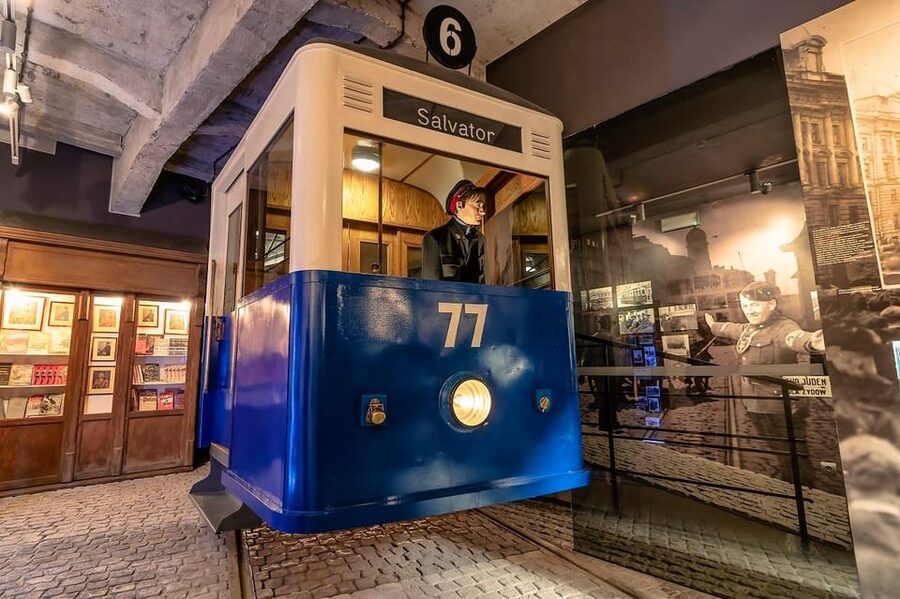
One of the most memorable parts of the route is a tram installation. From the tram windows, film shows scenes of city life. It is an effective way to suggest movement through Krakow, letting you see the city as residents might have experienced it rather than as a fixed collection of museum cases.
The tram also gives the exhibition a change of pace. After reading documents and examining objects, you are placed in a public vehicle and shown the city through moving images. That shift can help younger visitors and anyone who finds conventional museums tiring.
Do not expect a full tram journey around modern Krakow. This is an exhibition element inside the museum, designed to support the story. Its value comes from the contrast between an everyday form of transport and the altered city shown through the windows.
Your guide’s narration matters here. Film can create an emotional response, but commentary explains what you are seeing and where it fits in the wider wartime timeline. If you visit without a guide, you may still appreciate the installation, but you lose some of the links between the scenes and the surrounding displays.
More museums in Krakow:
- Auschwitz-Birkenau Museum and Memorial Guided Tour from Krakow
★ 4.5 · 1,510 reviews - Krakow: Rynek Underground Museum Guided Tour
★ 4.6 · 1,122 reviews - Krakow Schindler’s Factory Museum Guided Tour in English
★ 4.5 · 650 reviews - Krakow: Auschwitz Birkenau Museum Guided Tour with Pickup
★ 3.6 · 544 reviews
Through the ghetto and into a Jewish apartment
The route then takes you into the story of the Krakow ghetto. The exhibition uses a tight labyrinth and a Jewish apartment to convey the loss of space, privacy, and control. This is not a comfortable section, and it should not be. The narrow design makes the physical pressure of the ghetto harder to treat as an abstract fact.
The apartment is especially important because it brings the story back to domestic life. You are shown a home rather than only a map or a political order. Personal belongings and the arrangement of a living space suggest what people tried to preserve while their rights, movements, and safety were being stripped away.
This part of the museum needs attention. A group can move through it quickly, and the combination of objects, displays, and spoken explanation can feel dense. Listen to the guide first, then return to details that catch your eye if you have time after the formal tour.
The exhibition does not present the ghetto as a separate episode with no connection to what came before or after. The route leads you onward with its residents, toward the camp at Płaszów. That movement is grim but historically important. It shows how persecution developed through stages rather than appearing all at once.
Płaszów and the widening human cost
The section on Płaszów extends the story beyond the ghetto. It places you with the people who were sent into the camp system and shows how the city’s wartime experience became more violent and controlled.
The power of this part comes from the route itself. You have already seen ordinary workplaces, public transport, and a home. Now the exhibition carries those same people into a camp. The effect is to connect personal lives with the larger system that destroyed them.
The museum’s treatment is primarily about Krakow and its inhabitants, so do not expect a full history of every aspect of World War II. In ninety minutes, the guide has to select the most important points. That focus is helpful if you want to understand Krakow, but limiting if you are seeking a broad military history of the entire war.
I would pay close attention to transitions here. The exhibition asks you to consider not only what happened, but how a city moved from normal routines to exclusion, confinement, forced labor, and murder. That gradual sequence is one of the strongest educational reasons to visit.
Oskar Schindler’s office and the ark of survivors
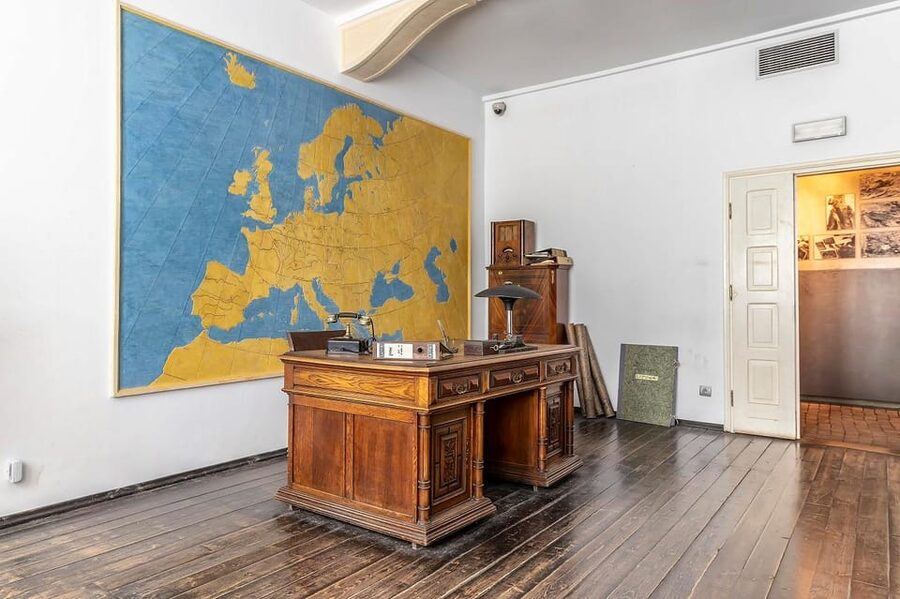
Schindler’s office is the museum’s most direct link to the man known around the world through the 1993 film. The room was preserved in the factory’s administrative building, giving the space a genuine connection to his wartime work.
The office does not erase the complexity of Schindler’s role. Instead, it places his efforts within the city’s wider wartime record. He was a factory owner operating under occupation, and his decision to protect workers became a remarkable act with life-saving consequences.
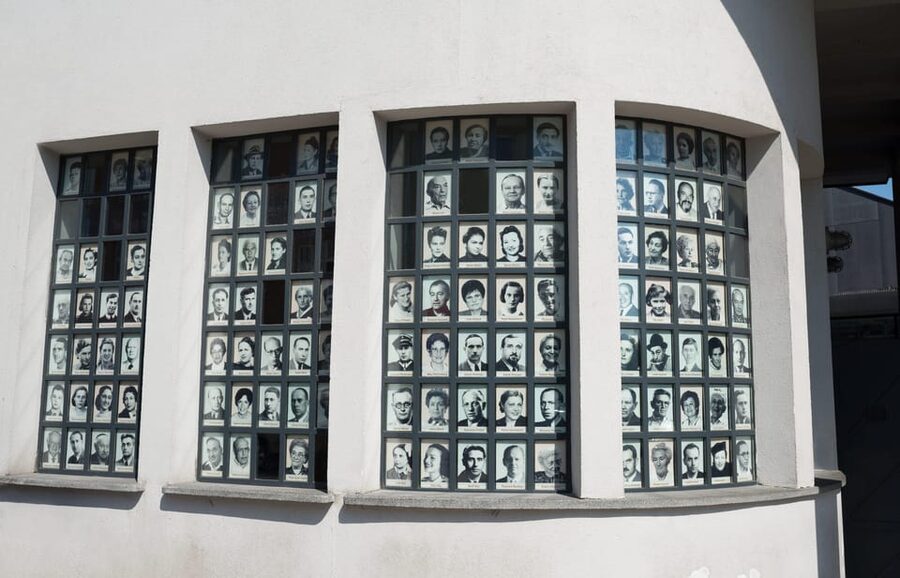
The exhibition also includes a symbolic ark of survivors made from thousands of pots. The pots recall the enamel goods produced by the factory’s employees during the war. It is a striking image: industrial production, human survival, and memory brought together in one object.
This is likely the moment many film fans are waiting for, but I would not rush through the earlier rooms to reach it. The office carries more meaning when you understand the city, the factory, and the persecution that shaped the lives of the workers. Schindler’s story is powerful precisely because it is set against that wider, painful context.
What the guide adds in 90 minutes
The strongest reason to choose this version of the museum visit is the guide. One well-paced explanation can save you from reading every panel while still giving you the essential story. The guide also helps you notice links between the photographs, documents, reconstructed spaces, and multimedia displays.
The available tour languages are English, French, German, Italian, and Spanish. The specific guide is not named in the booking information, so you should choose the language you can follow most comfortably rather than expect a particular individual.
A group format has both benefits and limits. You get a shared route and a steady pace, but you cannot stop at every object for as long as you wish. One group tour reached the full museum content too quickly for one participant, a fair criticism given the amount on display. That is not a flaw unique to this museum. It is the basic compromise of a ninety-minute guided visit.
I suggest treating the tour as your organized introduction. Let the guide explain the main arc, mark the rooms or displays you want to revisit, and use any remaining time to look more closely. If your ideal museum visit means reading every label, this format may feel rushed.
Is $50 a fair price?
The cost is $50 per person, including the professional guide and museum admission. You are paying more than you would for a basic entry ticket, but the comparison should include what you gain: a planned route, commentary in your chosen language, and a skip-the-ticket-line arrangement.
For a first visit to Schindler’s Factory, I think the price can be fair, especially if you have limited time in Krakow or want help understanding the exhibition’s presentation. The museum’s use of film, reconstructed spaces, documents, and objects creates a lot of connections. A guide can make those connections faster.
The value is weaker for visitors who already know Krakow’s wartime story well or who prefer to examine museums alone. You may want to spend longer with a photograph, newspaper, or personal document than the group schedule allows.
The reserve-now-and-pay-later option also helps if your Krakow plans are still changing. You can cancel up to 24 hours before the tour for a full refund. From January 1, 2026, museum scheduling may make the selected start time approximate, so do not build a tight connection around the stated hour.
Practical details for your visit
The tour lasts 90 minutes. It begins in front of Oskar Schindler’s Enamel Factory, where you should look for the excursions.city sign. The entrance ticket is included, and the activity is listed as wheelchair accessible.
From January 1, 2026, you must provide the full names of everyone in your booking. Bring a passport or identity card for entry, since the museum uses personalized tickets and entry can be refused without the required identification.
The exact start time may change because of the museum’s schedule. Check availability when booking and keep your plans flexible. This is especially important if you have a train, another timed museum entry, or a meal reservation immediately afterward.
Who should book this museum tour?
I would choose this tour if you want the main story of wartime Krakow explained clearly and you prefer seeing a museum with a guide. It is also a good fit if the film led you to Schindler’s Factory but you want a fuller account of the people and city behind the famous story.
Families and mixed-interest groups may benefit from the staged route, tram, film, and reconstructed rooms. The exhibition gives you more than rows of text, though its subject matter is serious and emotionally difficult.
History-focused visitors should book it if they value context over total freedom. Independent museum regulars may prefer a self-guided visit, especially if they want to spend several hours with the displays.
Should you book Schindler’s Factory Museum Guided Tour?
Book it if you want a focused, 90-minute introduction to Krakow under Nazi occupation, with a guide explaining the ghetto, Płaszów, daily life, and Schindler’s role. The preserved office, symbolic ark of survivors, tram film, and Jewish apartment give the visit memorable physical anchors.
Skip the guided format if you dislike group pacing or want to study every object at length. For most first-time visitors, though, the live commentary adds real value. Just treat the tour as a structured overview, not the final word on the museum. If time allows, stay longer afterward and revisit the displays that spoke to you most.
FAQ
Where does the Schindler’s Factory Museum tour meet?
The meeting point is in front of the entrance to Oskar Schindler’s Enamel Factory. Look for the person holding an excursions.city sign.
How long does the guided tour last?
The tour lasts 90 minutes.
What does the $50 price include?
The price includes a professional guide and the entrance ticket to Schindler’s Factory Museum.
Is this a private tour?
No. This is a group tour.
Which languages are available?
The live tour guide is available in English, French, German, Italian, and Spanish.
Can I cancel the booking?
Yes. You can cancel up to 24 hours in advance for a full refund.
Do I have to pay when I reserve?
No. The reserve-now-and-pay-later option lets you book without paying immediately.
Do I need identification to enter the museum?
From January 1, 2026, you must provide the full names of all participants when booking and bring a passport or identity card. Without these documents, entry may be denied.
Just added around Krakow
- Private Guided Tour: Oskar Schindler’s Factory★ 5.0 · 3 reviews
- E-Scooter Krakow sightseeing tour★ 5.0 · 3 reviews
- From Krakow: Zakopane and Thermal Pools Guided Trip★ 5.0 · 3 reviews
- Schindler’s Factory, Ghetto and Plaszow Camp Guided Tour★ 4.7 · 3 reviews
- Kraków: Private Hot Air Balloon Flight with Champagne★ 3.7 · 3 reviews
- Krakow: River Cruise & Guided Visit to Former Plaszow Camp★ 3.6 · 3 reviews
- From Krakow: Private Wieliczka Salt Mine Tour★ 4.0 · 3 reviews
- Krakow: Old Town short walk with St. Mary’s Basilica visit★ 5.0 · 3 reviews
Schindler's Factory Tours, compared.

Oskar Schindler’s Factory Entry Ticket & Guided Tour
Read our review →
Schindler’s Factory Tour with Entrance Ticket
Read our review →
Schindler’s Factory Tour with Entrance Ticket
Read our review →
Schindler’s Factory in Krakow: Guided Tour & Skip the Line Ticket
Read our review →

Schindler’s Factory Ticket with Guided Tour Option
Read our review →
Krakow Schindler’s Factory Guided Tour with Admission Ticket
Read our review →Browse the lists this tour appears in