
Reviewed · SCHINDLER'S FACTORY TOURS
Jewish Quarter, Oskar Schindler’s sites and Kraków under Nazi occupation
Kraków’s wartime story comes into focus as you move from Kazimierz, the old Jewish quarter, to Podgórze’s former ghetto and then to Schindler’s Factory. The final stop, the former Płaszów camp area, gives the day a quiet, sobering finish.
I like the private guide, since you can ask questions instead of following a fixed script. I also like the comfortable private van, which saves time between Kazimierz, Podgórze, Schindler’s museum, and Płaszów.
The main consideration is the pace. Four and a half hours covers a lot, and the two-hour museum visit takes up nearly half the tour. The subject is also painful, so this is not a light sightseeing outing.
In This Review
- Key points to know before booking
- Why this four-and-a-half-hour route matters
- Starting in Kazimierz at Plac Wolnica
- Szeroka Street and Kraków’s synagogue quarter
- Remuh Synagogue and the limits of included admission
- Crossing to Podgórze and the ghetto memorial
- The remaining ghetto wall on Lwowska Street
- Two hours inside Oskar Schindler’s Factory
- Płaszów, the tour’s quietest stop
- What the private format changes
- Is $65 a fair price?
- Who should book this experience?
- Practical advice for making the most of it
- Should you book this Kraków occupation tour?
- FAQ
- How long does the tour last?
- Is this a private tour?
- Is transportation included?
- Is admission to Schindler’s Factory included?
- Is admission to Remuh Synagogue included?
- What physical fitness level is required?
- Are food and drinks included?
Key points to know before booking
- Kazimierz begins with the old town layout: Plac Wolnica, the former market square, and Szeroka Street help explain how the Jewish quarter was organized.
- The tour visits the only active synagogue in Kraków: Entry to Remuh Synagogue is not included, so allow for that extra cost if you want to go inside.
- Podgórze adds physical traces of the ghetto: You’ll see the chair memorial at Plac Bohaterów Getta and a remaining section of ghetto wall on Lwowska Street.
- Schindler’s Factory gets two full hours: Admission is included, and the museum focuses on Kraków under Nazi occupation.
- Płaszów is a quiet, open-air stop: You’ll see the former camp area, remnants of two Jewish cemeteries, and remaining camp structures.
- Private transport makes the route practical: A guide and vehicle help connect sites spread across two parts of Kraków.
Why this four-and-a-half-hour route matters
This experience is not simply a walk through attractive old streets. It links places that show how Kraków’s Jewish community lived, how the Nazi occupation altered the city, and how deportation, forced labor, and murder reshaped the area.
You begin in Kazimierz, cross to Podgórze, enter the museum housed in Oskar Schindler’s former factory, and finish near Płaszów. That order gives you a useful framework. First, you see the prewar neighborhood. Then you follow the geography of the ghetto and occupation. Finally, you reach the former camp area.
I find that structure more useful than seeing isolated monuments with no connection between them. The guide can explain what each place meant at the time, while the private format lets you pause when a question comes up.
The tour lasts about 4 hours and 30 minutes. That is long enough for a serious introduction, but not enough for every synagogue, cemetery, museum room, and wartime site in Kraków. You should treat it as a focused overview, not a complete study of the city’s wartime past.
More Schindler's Factory visits:
- Krakow: Oskar Schindler’s Factory Entry Ticket & Guided Tour
★ 4.2 · 3,793 reviews - Krakow: Schindler’s Factory Tour with Entrance Ticket
★ 4.5 · 3,182 reviews - Krakow: Schindler’s Factory Skip-the-Line Ticket
★ 4.4 · 3,105 reviews
Starting in Kazimierz at Plac Wolnica
Plac Wolnica was the main square of Kazimierz, which was once a separate town rather than simply a Kraków neighborhood. The opening stop lasts about 10 minutes and costs nothing to enter.
This is a smart place to begin because it gives you a sense of Kazimierz as a planned town. From here, your guide can set out the relationship between the Christian and Jewish parts of the area and explain how the neighborhood changed over time.
The short stop will not provide much time for independent exploration. That is fine if you want orientation, but you should not expect a long visit around the square. The value is in the explanation and in preparing you for the streets that follow.
You then continue to the former Jewish market square, also listed as a 10-minute stop. The market setting helps you picture Kazimierz as a working neighborhood, not just a collection of religious buildings preserved for sightseeing.
Szeroka Street and Kraków’s synagogue quarter
Szeroka Street is described as the heart of the Jewish Quarter, and the tour gives it about 20 minutes. This is one of the more important stops for understanding how Jewish life was centered in Kazimierz before the war.
You’ll see the street’s synagogues and hear about the community that once used them. The itinerary points to Kraków’s largest synagogue and also includes the city’s oldest synagogue as part of the route. The exact order of those synagogue visits is not specified, so ask your guide at the start how much time will be spent at each one.
This portion should appeal to you if you want more than a quick photo stop. Szeroka Street connects architecture with community life. It helps explain why Kazimierz is essential to any tour of Kraków’s wartime past, even though the Nazi occupation itself is more directly visible in Podgórze.
You should also keep your expectations measured. The tour does not promise entry to every synagogue. Several stops are viewed from outside, and the schedule is tight.
Remuh Synagogue and the limits of included admission
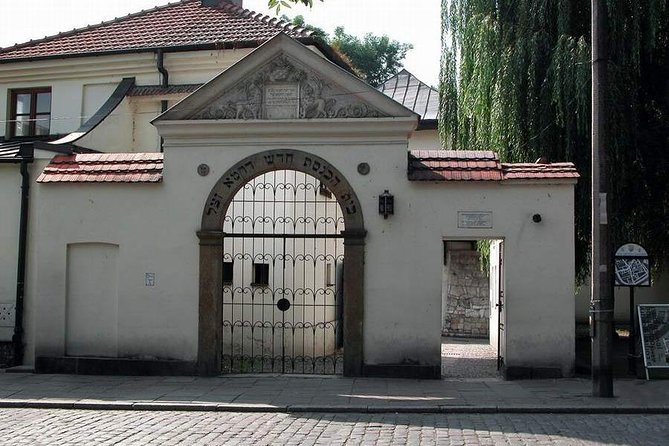
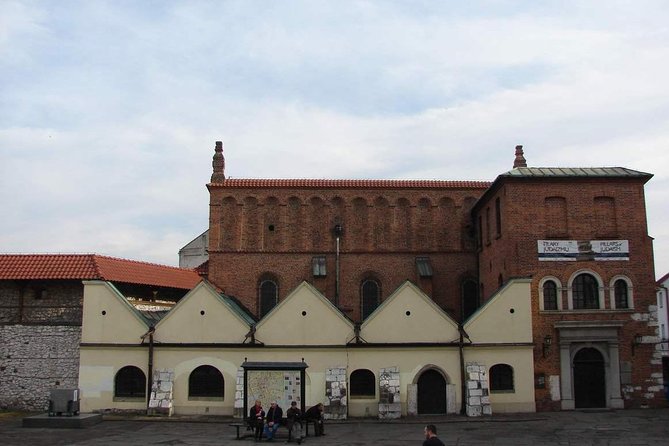
Remuh Synagogue receives about 20 minutes. It is identified as the only active synagogue in Kraków, making it an especially meaningful stop in a neighborhood where many Jewish buildings now serve different roles.
Admission is not included here. The tour includes all fees and taxes for the experience, but Remuh’s entry fee is specifically excluded. If you want to go inside, bring money for that separate admission.
That detail matters because some visitors assume a synagogue stop automatically includes entry. It does not. Ask the guide what is possible on the day, since opening arrangements and timing can affect the visit.
For me, Remuh is valuable because it connects the historic quarter with Jewish life in Kraków today. Still, the tour’s main focus is the wartime period, not a full religious or cultural tour of Kazimierz. If you want detailed synagogue interiors and cemetery history, you may need extra time elsewhere.
More Kazimierz walks:
- Krakow: Jewish Quarter and Former Ghetto Tour
★ 4.9 · 1,441 reviews - Krakow: Bike Tour of Old Town, Jewish Quarter and the Ghetto
★ 4.9 · 1,155 reviews - Krakow: Kazimierz Jewish Quarter Walking Tour
★ 4.8 · 571 reviews - Krakow: Kazimierz, Schindler’s Factory & Ghetto Guided Tour
★ 4.8 · 460 reviews
Crossing to Podgórze and the ghetto memorial
The route then moves to Podgórze, where the former Kraków ghetto was located. Private transportation earns its keep here. Instead of working out the connection between Kazimierz and the sites across the river, you can travel with the guide and keep the history moving.
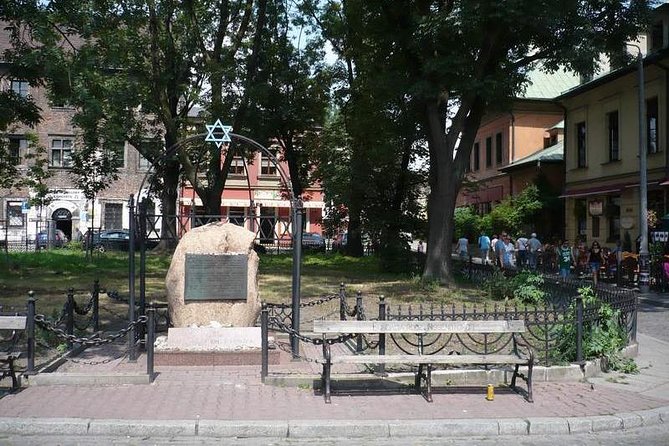
At Plac Bohaterów Getta, you’ll see the famous chair memorial, with about 10 minutes scheduled for the stop. The chairs represent the belongings and lives left behind when Jewish residents were forced from their homes. It is a simple memorial, but its empty forms make the space feel stark and unsettled.
The short visit means you will likely hear the main explanation and have a moment to look around. If you want quiet time for reflection or photographs, you may need to tell your guide. The private format gives you more control than a large group tour, but the total timetable still matters.
The tour also points out where Tadeusz Pankiewicz worked. Pankiewicz operated a pharmacy in the ghetto, and this location adds a personal scale to the story. Instead of hearing only about official orders and dates, you get a place connected with daily life under occupation.
The remaining ghetto wall on Lwowska Street
A section of the former ghetto wall remains on Lwowska Street. It is a brief stop, but I consider it one of the most useful physical reminders on the route.
Museums can explain forced confinement with photographs, documents, and captions. A surviving wall shows the mechanism in the actual city. You can see how an ordinary street was turned into a boundary, separating people from the rest of Kraków.
There is not much detail about the exact time allocated to this stop, so it may be combined with the Podgórze section. You should expect a quick visit rather than an extended walk along the wall.
That is not a flaw so much as a scheduling issue. The tour has to reach Schindler’s Factory with enough time for the museum, which is the longest and most detailed part of the day.
Two hours inside Oskar Schindler’s Factory
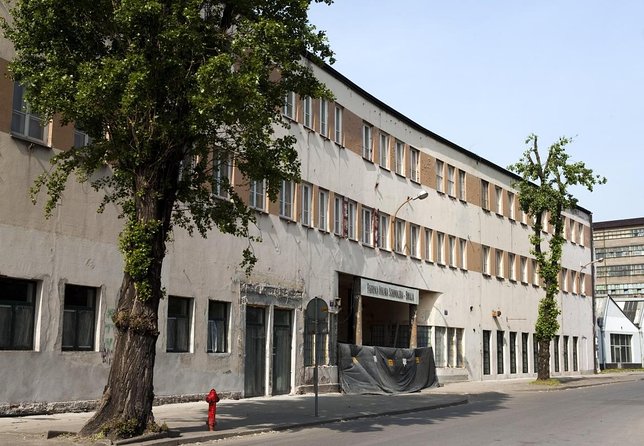
The museum in the former Emalia factory of Oskar Schindler is the centerpiece. You spend about two hours inside, and admission is included.
The exhibition is titled Kraków under Nazi occupation. Its purpose is broader than the story of Schindler alone. You can expect the museum to place his factory and wartime actions within the larger experience of Kraków during the occupation, including the changes forced on the city’s Jewish population.
Two hours is a sensible amount of time. It gives you room to read displays and follow the exhibition without racing through every room. At the same time, you should be ready for a serious museum visit. If you read every panel closely, the time may pass quickly.
I like that the factory is not treated as a stand-alone celebrity stop. The building gives the story a strong setting, but the exhibition’s stated subject is Kraków under Nazi rule. That makes the visit more useful for understanding the city rather than only one famous industrialist.
The museum is also the clearest reason to book this tour instead of arranging a quick drive past the main sites. You get a substantial indoor portion with context, visual material, and exhibits, not just exterior viewpoints.
One caution: the itinerary includes the museum, but it does not promise a specific amount of free time beyond the two-hour visit. If you want to explore at your own pace, tell the guide early. A private tour may make that easier, but the next stop still has to fit into the day.
Płaszów, the tour’s quietest stop
The final major stop is the area of the former Kraków-Płaszów concentration camp. About 20 minutes is scheduled here, with no admission fee.
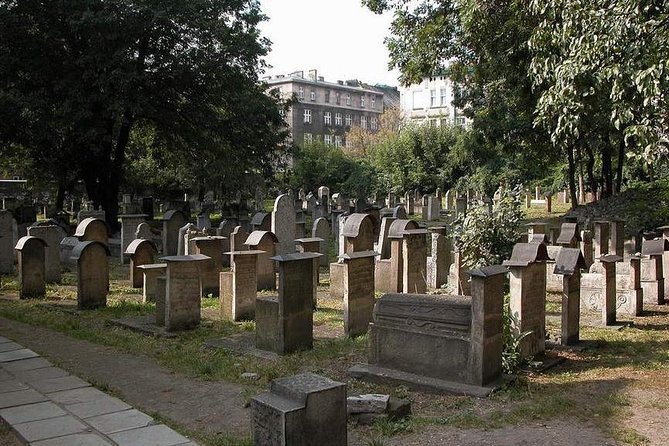
You’ll see the area of the former labor and concentration camp, along with remnants of two Jewish cemeteries and surviving camp buildings. Compared with the museum, this is a more open and subdued experience. There is no exhibition route guiding your attention from room to room. The guide’s explanation becomes especially important.
Twenty minutes is enough for an introduction, but not for a long walk across the entire former camp area. You should wear sensible shoes and be ready for some walking. The tour asks for a moderate level of physical fitness, and that is worth taking seriously because the day combines city walking, museum time, and outdoor stops.
Płaszów can be difficult to interpret without help. Much of what happened there is not immediately visible, and the remaining traces may look modest beside the scale of the events. A private guide can explain what you are seeing and what has disappeared.
I would not book this tour expecting a dramatic final attraction. Płaszów is valuable precisely because it is quieter and less packaged. It asks you to pay attention to absence, place, and memory.
What the private format changes
The tour is private, so only your group participates. That is a real advantage for a subject that can raise difficult questions.
You can ask the guide to explain a name, date, building, or term without worrying about holding up a large group. You can also ask for clarification if the museum displays move too quickly or if the remains at Płaszów are hard to identify.
Private transport is another practical plus. The route covers Kazimierz, Podgórze, Schindler’s Factory, and Płaszów. Those locations are not one compact sightseeing block, so a vehicle reduces the time and effort needed to connect them.
The tradeoff is that a private tour is only as good as the guide assigned to your group. The guide’s name is not provided in the available information, so you cannot choose a particular person in advance. The feedback available for this experience praises the guide’s command of Kraków and the sights, as well as the comfortable van. That is encouraging, but you should still ask questions and tell the guide what interests you most.
Is $65 a fair price?
At $65, this tour offers a private guide, private transportation, included fees and taxes, and admission to Schindler’s Factory. For a solo visitor or couple, the private format may feel expensive compared with a standard group walk.
For a small group sharing the cost, the value improves. You get a vehicle, a guide’s full attention, and a route that covers several areas in one half-day. Buying separate transport and arranging the museum on your own could be cheaper, but it would require more planning and would not automatically provide the same connected explanation.
The two-hour museum entry is important to the price. Without it, the tour would be mainly a guided look at streets, memorials, and outdoor sites. With it, you receive a substantial museum visit at the center of the experience.
Food and bottled water are not included. Bring your own water and a small snack if needed, since the schedule is full and no refreshment stop is promised.
Who should book this experience?
I would recommend this tour to you if you want a focused introduction to Kraków during World War II and prefer a guide to connect the sites. It suits couples, families with older children, and small groups who value flexibility and private transport.
It is especially useful if you have only a short stay in Kraków. In four and a half hours, you can see the key Kazimierz locations, the ghetto memorial area, Schindler’s Factory, and Płaszów without spending time arranging each connection.
You should think twice if you want a slow, leisurely exploration of Kazimierz. The synagogue quarter receives a series of short stops, while the museum receives the largest share of the schedule.
You should also consider the emotional weight. This is a serious history tour about persecution, forced confinement, deportation, and the former camp at Płaszów. It is not designed as a casual city outing.
Practical advice for making the most of it
Bring water because bottled water is not included. Wear comfortable shoes and allow for moderate walking, especially around the outdoor sites and Płaszów.
At the beginning, tell your guide how much time you want for questions, synagogue interiors, and the museum. The private format gives you room to shape the experience, but the schedule is still fixed by the number of stops.
Keep your mobile ticket ready. Confirmation is sent within 48 hours of booking, subject to availability. The experience is non-refundable and cannot be changed after booking, so check your dates carefully before paying.
The tour is near public transportation, but private transport is included. You therefore do not need to plan the route between the districts yourself.
Should you book this Kraków occupation tour?
Book it if you want the main wartime sites explained in one private half-day, with Schindler’s Factory as the central visit. The strongest features are the guide’s undivided attention, the comfortable van, and the unusually broad route from Kazimierz to Płaszów.
Skip it if you want a slow museum day, a detailed tour of every synagogue, or a lighter introduction to Kraków. The schedule is brisk, the subject is heavy, and entry to Remuh Synagogue is extra.
For someone trying to understand how Nazi occupation changed Kraków, this is a well-planned route with real substance. The $65 price makes the most sense when two or more people share the private experience and want transport, a guide, and museum admission handled together.
FAQ
How long does the tour last?
The tour lasts approximately 4 hours and 30 minutes.
Is this a private tour?
Yes. Only your group participates, and a private guide provides the tour.
Is transportation included?
Yes. Private transportation is included.
Is admission to Schindler’s Factory included?
Yes. Admission to the exhibition at Fabryka Emalia Oskara Schindlera is included.
Is admission to Remuh Synagogue included?
No. Admission to Remuh Synagogue is not included.
What physical fitness level is required?
A moderate level of physical fitness is recommended.
Are food and drinks included?
No. Snacks and bottled water are not included.
Just added around Krakow
- Private Guided Tour: Oskar Schindler’s Factory★ 5.0 · 3 reviews
- E-Scooter Krakow sightseeing tour★ 5.0 · 3 reviews
- From Krakow: Zakopane and Thermal Pools Guided Trip★ 5.0 · 3 reviews
- Schindler’s Factory, Ghetto and Plaszow Camp Guided Tour★ 4.7 · 3 reviews
- Kraków: Private Hot Air Balloon Flight with Champagne★ 3.7 · 3 reviews
- Krakow: River Cruise & Guided Visit to Former Plaszow Camp★ 3.6 · 3 reviews
- From Krakow: Private Wieliczka Salt Mine Tour★ 4.0 · 3 reviews
- Wawel Castle Treasury & Armoury Skip the Line Private Tour★ 4.7 · 3 reviews
Schindler's Factory Tours, compared.

Oskar Schindler’s Factory Entry Ticket & Guided Tour
Read our review →
Schindler’s Factory Tour with Entrance Ticket
Read our review →
Schindler’s Factory Tour with Entrance Ticket
Read our review →
Schindler’s Factory in Krakow: Guided Tour & Skip the Line Ticket
Read our review →

Schindler’s Factory Ticket with Guided Tour Option
Read our review →
Krakow Schindler’s Factory Guided Tour with Admission Ticket
Read our review →Browse the lists this tour appears in