
Reviewed · SCHINDLER'S FACTORY TOURS
Krakow: Kazimierz by Golf Cart and Schindler’s Factory Tour
Krakow’s Kazimierz and Podgórze districts tell two very different parts of the city’s story. This three-hour tour links them by heated golf cart, then brings you inside Schindler’s Factory for a closer look at life under Nazi occupation. It is an efficient way to cover ground without turning the day into a long walking march.
I like the easy ride through streets that can feel scattered on a first visit, and I like the contrast between the golf cart’s broad neighborhood tour and the museum’s personal wartime stories. Cart guide Andrzej has earned special praise for his local knowledge and humor. The main drawback is pace: inside the museum, you may not have enough time to read every wall plaque before the group moves on.
In This Review
- Key points at a glance
- Why this route works for Krakow’s wartime story
- Riding through Kazimierz in a heated golf cart
- Crossing the Vistula into Podgórze
- Inside Schindler’s Factory Museum
- What makes the museum visit worthwhile
- The value of $80 for three hours
- Who should book this experience
- Timing, language, and booking details that matter
- Should you book the Kazimierz and Schindler’s Factory tour?
- FAQ
- How long does the tour last?
- Where is the meeting point?
- Is the golf cart heated?
- Is there a live guide at Schindler’s Factory?
- Does the museum still contain Schindler’s original factory equipment?
- Is the tour suitable for wheelchair users?
Key points at a glance
- Kazimierz by heated golf cart: See the old Jewish Quarter, historic synagogues, cafés, galleries, and traces of daily life without a long walk.
- Podgórze wartime sites: Cross the Vistula to the former ghetto and visit the remaining wall fragment, Ghetto Heroes Square, and Under the Eagle Pharmacy.
- Schindler’s Factory with a live guide: Explore the exhibition Krakow under Nazi Occupation 1939 to 1945 with a licensed English-speaking guide.
- A story wider than Oskar Schindler: Learn how Jewish and non-Jewish residents faced fear, displacement, forced labor, and deportation.
- Useful three-hour format: The tour joins outdoor orientation with a focused museum visit, making it a good choice for a first look at Krakow’s wartime history.
- Important practical limit: The route is not suitable for wheelchair users, and personalized museum tickets require the full names of everyone booking.
Why this route works for Krakow’s wartime story
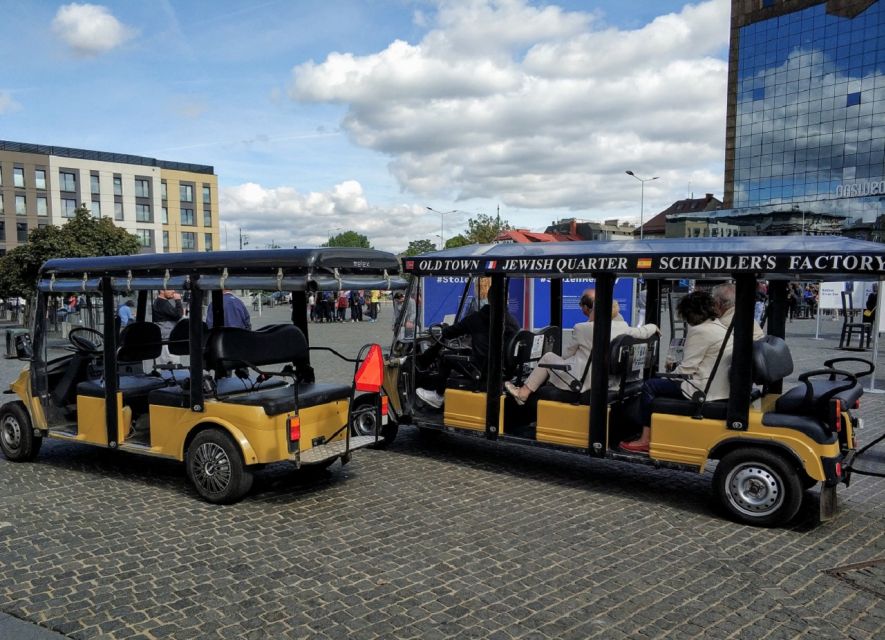
Schindler’s name draws many people to Krakow, but his factory makes more sense after you see the districts around it. Kazimierz was once a separate town and a major center of Jewish life. Podgórze, across the Vistula, became the site of the Jewish ghetto during World War II.
The golf cart connects these places in a clear sequence. You begin with the older life of the city, pass through streets where Jewish and Christian communities lived side by side, and then enter the wartime setting where that life was torn apart. The museum visit follows naturally.
I find this order helpful because the factory is not treated as an isolated attraction. You first see the urban setting, then the exhibition gives names, objects, photographs, and personal stories to the places outside.
The tone is serious, as it should be, but the cart ride keeps the first part relaxed. You are not standing at one memorial for three hours. Instead, you receive a broad introduction before spending focused time inside the museum.
More Schindler's Factory visits:
- Krakow: Oskar Schindler’s Factory Entry Ticket & Guided Tour
★ 4.2 · 3,793 reviews - Krakow: Schindler’s Factory Tour with Entrance Ticket
★ 4.5 · 3,182 reviews - Krakow: Schindler’s Factory Skip-the-Line Ticket
★ 4.4 · 3,105 reviews
Riding through Kazimierz in a heated golf cart
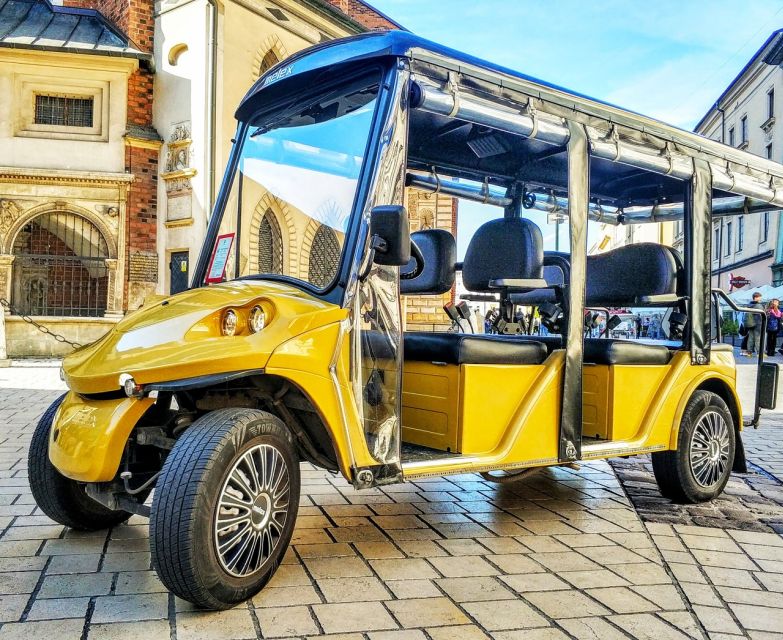
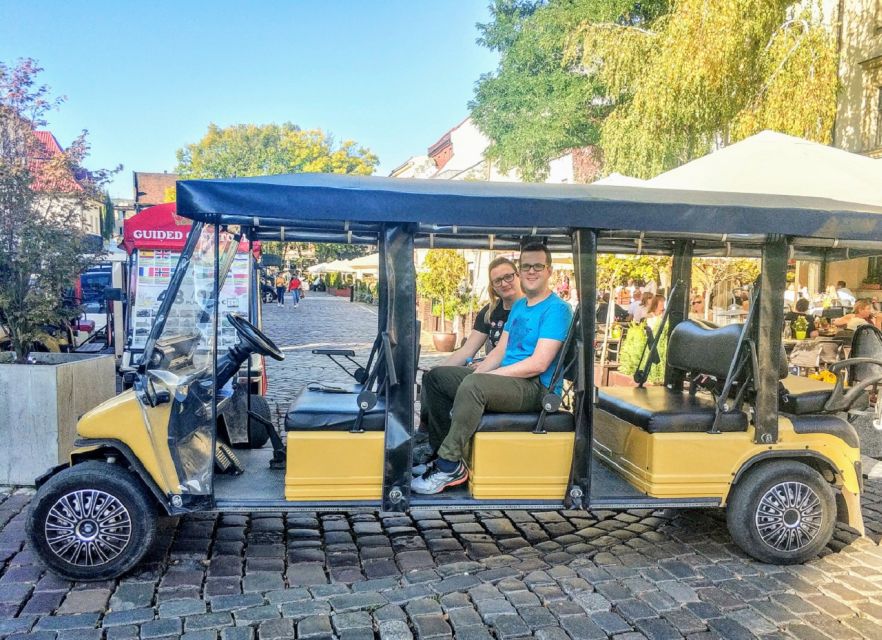
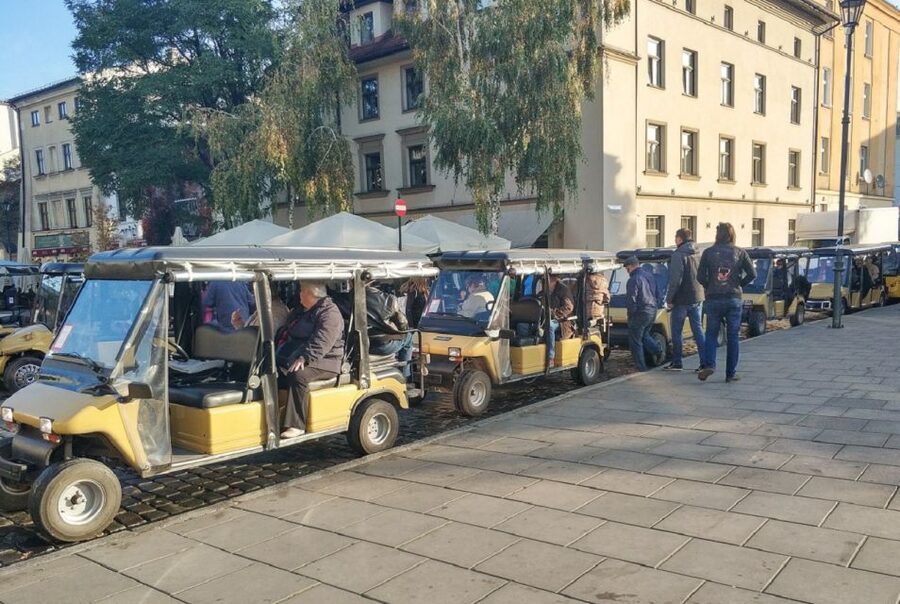
The tour begins at the Parking Kiss&Ride area in front of the Żabka store. You board a comfortable, heated golf cart fitted with an English audio guide. Arrive at least 10 minutes early. Once the group has entered, late arrivals cannot be accommodated, and the tickets are non-refundable.
The cart is a practical choice in Krakow. Kazimierz is easy to explore on foot, but its important places are spread among narrow streets, squares, cafés, and residential corners. The ride lets you cover more ground while keeping your attention on the commentary.
You pass historic synagogues and streets that reflect the old Jewish Quarter. Kazimierz functioned for centuries as a separate town, and the route helps you picture it as more than just a fashionable place for coffee and evening meals. Its buildings and street pattern still point to a long period of Jewish culture and religious life.
The audio commentary matters here. From a cart, you will not stop at every building for a full explanation, so the spoken information supplies context as you move. You can look outward, take photographs, and get a sense of how the district fits together.
The ride also goes through the Christian part of Kazimierz. This section adds an important layer to the story. Krakow’s communities did not live in completely separate worlds, and the route presents Kazimierz as a place shaped by long contact between Jewish and Christian residents.
The modern atmosphere can feel lively, with cafés and galleries along the streets. That present-day energy sits beside reminders of a much older past. The tour does not ask you to choose between the two. It shows how the district has changed while retaining visible traces of its earlier identity.
Crossing the Vistula into Podgórze
The golf cart then crosses the Vistula River into Podgórze. This is the former site of Krakow’s Jewish ghetto during the Nazi occupation, and the mood changes sharply.
One important stop is a surviving fragment of the ghetto wall. It is a modest physical remnant, but that is part of its force. You are looking at an actual piece of the barrier that confined people, not a reconstructed display created for a museum.
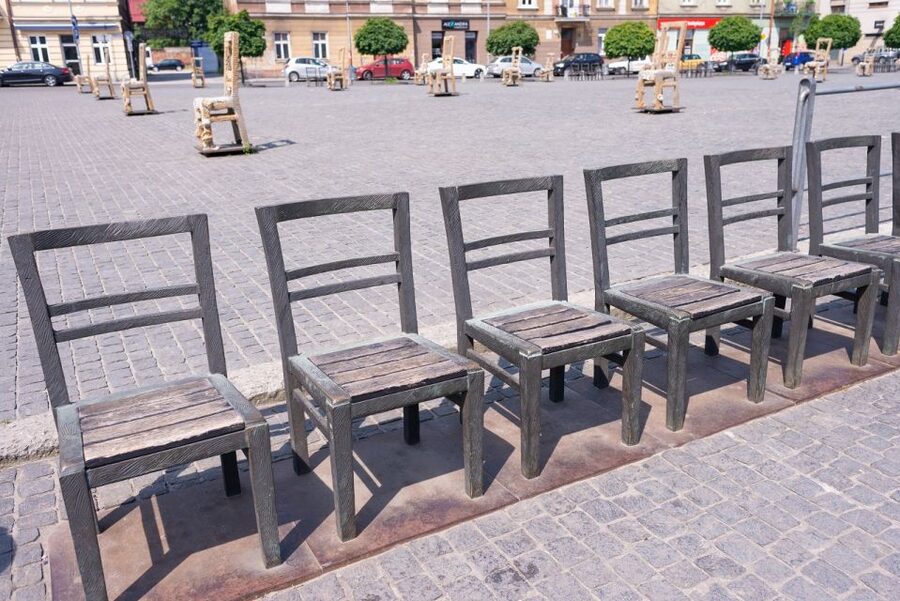
The route also reaches Ghetto Heroes Square, known for its distinctive chair memorial. The empty chairs refer to the people forced from their homes and the belongings left behind. The design is simple and memorable, giving you a quiet place to think about the scale of the displacement.
You also see the historic Under the Eagle Pharmacy. During the occupation, the pharmacy was connected with the ghetto and its residents. On this tour, it helps place individual acts and local memory within the wider story of persecution.
This part of the ride is brief compared with a dedicated walking tour of Podgórze. That is both its strength and its limit. You get a useful orientation and see the key locations, but you should not expect a long stop at every site or time to study every memorial in detail.
For a first visit, the overview is valuable. It gives you a map in your head. If Podgórze becomes a particular interest, you may want to return later and explore it at a slower pace.
Inside Schindler’s Factory Museum
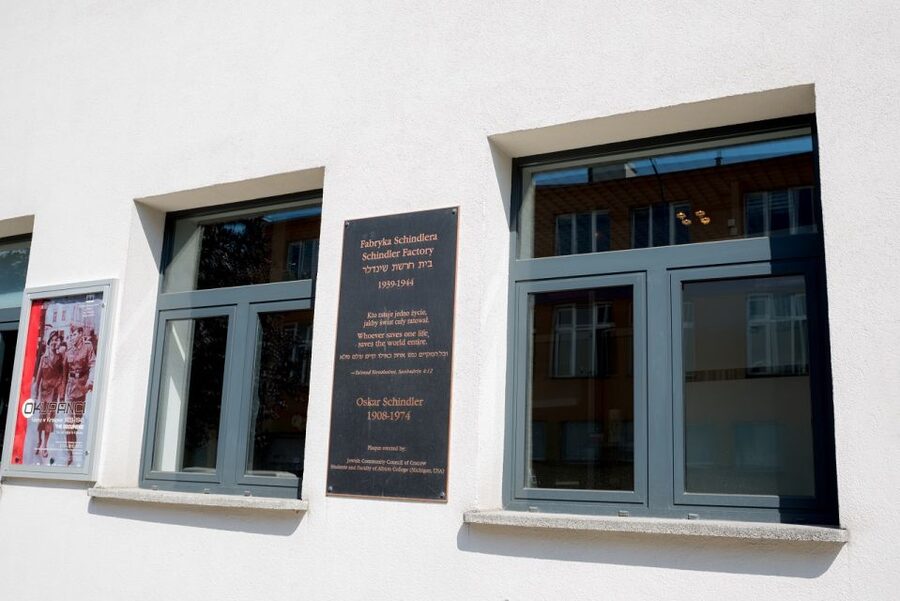
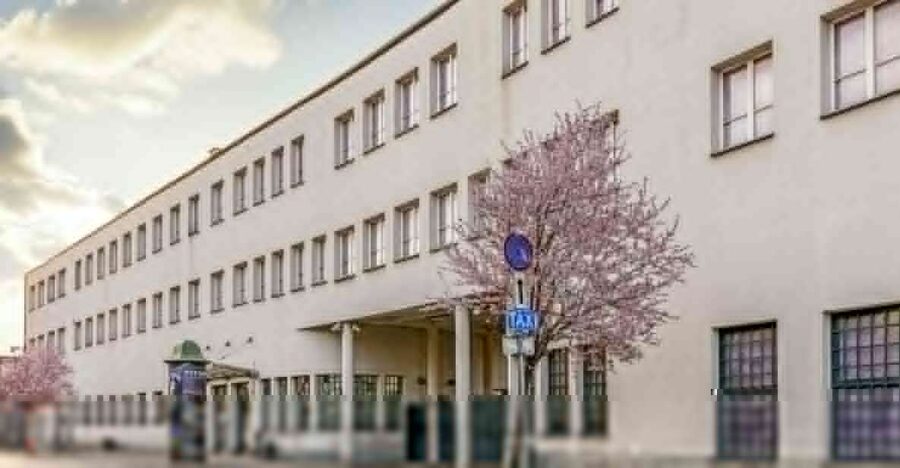
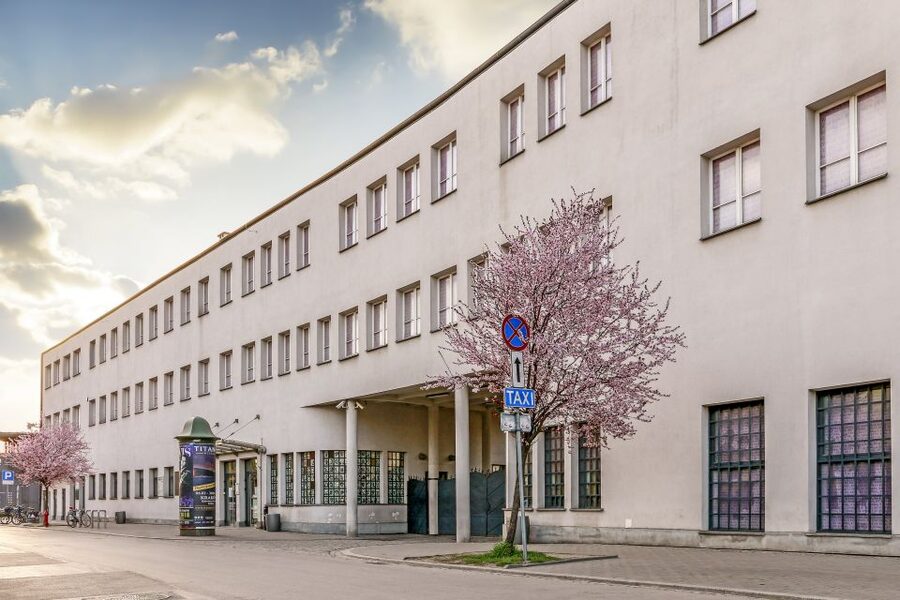
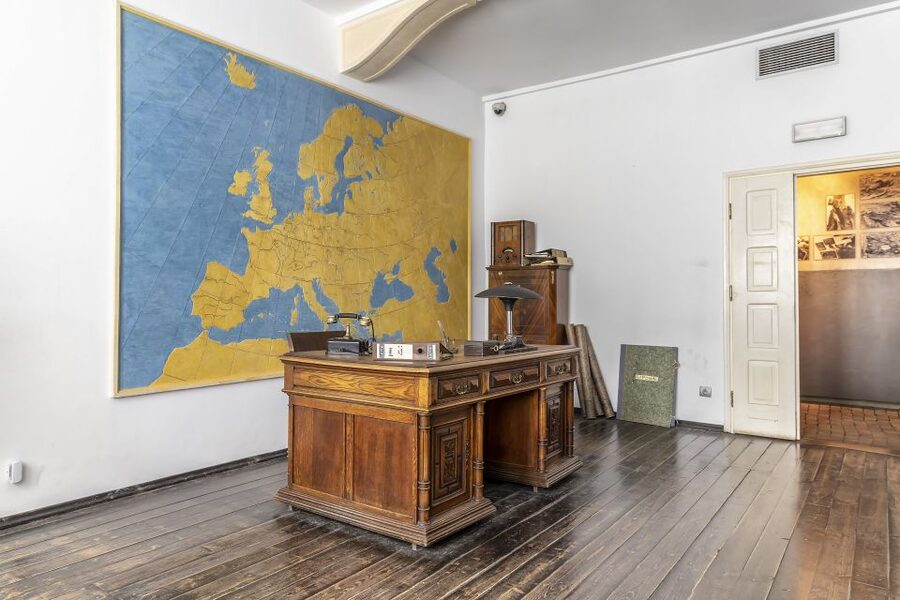
The museum is the main event, and fast-track admission saves time at a popular Krakow attraction. The building originally served as Oskar Schindler’s enamel factory, but it no longer contains the original production equipment. Today it operates as a museum.
That distinction is worth keeping in mind. You are not visiting a preserved factory floor in the usual sense. You are entering a carefully arranged historical exhibition about Krakow under Nazi occupation from 1939 to 1945.
A licensed professional guide leads the museum portion in English. The guide explains the exhibition through Schindler’s life, but the focus extends well beyond the industrialist made famous by film and later historical accounts.
Schindler employed Jewish workers and used his position, influence, and resources to protect them from deportation. More than 1,000 men and women survived through his efforts. The exhibition presents the people he helped, often referred to as Schindler’s Jews, along with the wider conditions that made his actions so important.
That wider frame is essential. If you know only the popular story, you might expect a museum focused mainly on one heroic figure. Instead, the exhibition also examines the city’s residents, the occupation, the machinery of repression, and the daily choices people faced.
You will see photographs, personal objects, and reconstructions of streets and interiors from the 1940s. These displays help turn a large historical event into something more immediate. You can follow how public spaces, workplaces, homes, and institutions changed under occupation.
The museum also deals with fear and uncertainty. People had to make decisions with incomplete information, often under threat. Jewish residents faced segregation, forced labor, deportation, and murder. Non-Jewish residents also lived under occupation, with restrictions, danger, and moral choices of their own.
The guide’s role is important because the exhibition contains a lot to absorb. A good explanation helps you distinguish between a personal object, a reconstructed setting, and a broader historical point. The guide also helps connect the museum to the streets you have just passed.
One practical warning: the museum portion may feel rushed if you want to read every plaque. One visitor specifically found there was not much time to study all the wall text, even while finding the factory guide personable and well informed. I suggest listening closely to the guide first, then reading only the displays that most interest you.
More Kazimierz walks:
- Krakow: Jewish Quarter and Former Ghetto Tour
★ 4.9 · 1,441 reviews - Krakow: Bike Tour of Old Town, Jewish Quarter and the Ghetto
★ 4.9 · 1,155 reviews - Krakow: Kazimierz Jewish Quarter Walking Tour
★ 4.8 · 571 reviews - Krakow: Kazimierz, Schindler’s Factory & Ghetto Guided Tour
★ 4.8 · 460 reviews
What makes the museum visit worthwhile
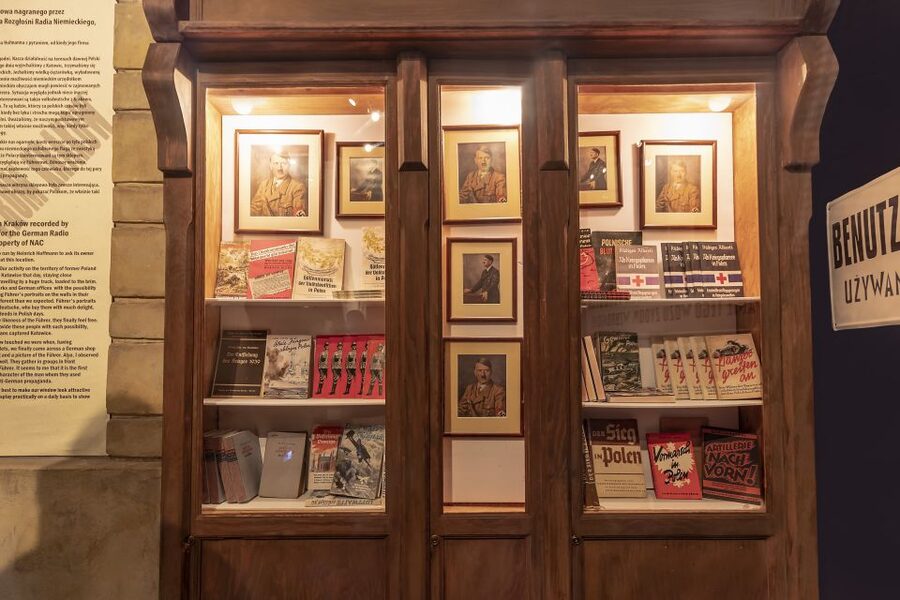
The strongest part of the museum is its attention to ordinary life. The story is not only about dates, military events, or famous names. It shows how occupation affected homes, jobs, movement, identity, and survival.
The original artifacts give the exhibition weight. Reconstructed streets and scenes help you picture a city that is no longer visible in the same form. Together, they create a setting where the history feels tied to Krakow rather than presented as a distant European story.
Schindler’s role adds a thread of courage and hope, but the museum does not need to turn him into a flawless legend. His actions matter because they took place within a system designed to strip people of rights and safety. Understanding that setting makes the scale of his choices clearer.
You also gain a better sense of the people he saved. They are not simply a number attached to Schindler’s name. Their survival, testimony, and personal belongings help shift attention back to the men and women at the center of the story.
I would allow yourself a little quiet time after the museum visit. This is not a light sightseeing stop, and the combination of memorial sites and personal accounts can be emotionally heavy. The tour gives you information quickly, but you may need extra time afterward to process it.
The value of $80 for three hours
At $80 per person, this is not the cheapest way to see Kazimierz. You are paying for more than transportation, though. The price includes the heated golf cart, English audio commentary, a licensed live guide inside Schindler’s Factory, and fast-track museum admission.
The value depends on how you like to travel. If you are comfortable exploring Kazimierz and Podgórze independently, you can visit many of the outdoor sites without booking a tour. You would then save money, but you would need to plan the route, understand the historical links, and arrange museum admission yourself.
This tour makes more sense if you want one organized experience that joins the neighborhoods with the museum. The cart covers a wider area than a short museum visit, and the guide gives you a framework for what you see.
It is also useful on a tight schedule. Three hours is long enough to cover the main route without taking an entire day. You will still have time for other Krakow sights, meals, or a return visit to whichever district interests you most.
The price does not include hotel pickup, drop-off, food, or drinks. The meeting point is central enough to reach as part of your Krakow sightseeing, but you need to make your own way there.
Who should book this experience
I would recommend this tour to a first-time visitor who wants a clear introduction to Krakow’s Jewish Quarter and wartime sites. It suits you especially well if you prefer not to spend several hours walking between districts.
It is also a good choice if Schindler’s Factory is high on your list but you want more context than a simple museum ticket provides. The outdoor route explains where the Jewish community lived and where the ghetto operated before you enter the exhibition.
Families with older children may appreciate the golf cart format, since it breaks up a serious history lesson with movement through the city. The subject matter remains difficult, so parents should decide how much wartime detail is appropriate.
History-minded visitors may want a longer, slower museum visit than this format allows. If you read every panel, take extensive notes, or prefer long conversations at each site, the three-hour schedule may feel tight.
The tour is not suitable for wheelchair users. Comfortable shoes and clothes are still sensible, even though the cart reduces the amount of walking. Bring a camera if you wish to photograph the outdoor route, along with food and drinks for before or after the experience.
Timing, language, and booking details that matter
The listed language is English, with English audio commentary in the golf cart and an English-speaking live guide at the museum. Group tours are conducted in one language, so choose the correct language option when booking.
Museum start times can shift because of site scheduling. You may request a preferred time, but the final time is not guaranteed. Keep a little flexibility in your Krakow plans rather than booking another important activity immediately afterward.
Personalized museum tickets require the full names of all participants at booking. Leave out a name and entry may be refused. This is an easy detail to miss, so check the spelling before completing the reservation.
You can cancel up to 24 hours before the tour for a full refund, and the reserve-now, pay-later option lets you hold a place without paying immediately. Those policies are useful if your Krakow schedule is still changing, but they do not remove the need to arrive early.
The overall rating is 4.8 from three reviews, with especially warm praise for cart guide Andrzej. His humor and local knowledge helped make the outdoor portion more engaging. The museum guide also received praise for being personable and well informed, while the limited reading time remains the clearest caution.
Should you book the Kazimierz and Schindler’s Factory tour?
Book it if you want efficient coverage, clear historical connections, and guided museum access in one three-hour experience. The heated golf cart is comfortable, Andrzej may add a welcome personal touch, and the route takes you from pre-war Jewish life to the former ghetto and then into Schindler’s Factory.
Skip it if you prefer to move slowly, read every museum panel, or explore each memorial at length. You can see much of Kazimierz and Podgórze independently, and a separate museum visit may suit a slower pace.
For most first-time visitors, the $80 price is reasonable when you value time, transport, and expert interpretation. Just arrive early, provide every participant’s full name, and treat the museum as the serious historical visit it is rather than a quick stop built around a famous film.
FAQ
How long does the tour last?
The experience lasts three hours, including the golf cart route through Kazimierz and the former ghetto area, followed by the visit to Schindler’s Factory Museum.
Where is the meeting point?
Meet at the Parking Kiss&Ride area in front of the Żabka store. You should arrive at least 10 minutes before the scheduled start.
Is the golf cart heated?
Yes. The vehicles are heated and equipped with an English audio guide.
Is there a live guide at Schindler’s Factory?
Yes. The museum portion is led by a professional, licensed English-speaking guide. The golf cart portion uses audio commentary.
Does the museum still contain Schindler’s original factory equipment?
No. The building originally functioned as Schindler’s factory, but it now operates as a museum and does not contain the original production equipment.
Is the tour suitable for wheelchair users?
No. The activity is listed as unsuitable for wheelchair users.
More Golf Cart Tours of Krakow
- Krakow: City Sightseeing Tour by Electric Golf Cart
★ 4.5 · 3,264 reviews - Krakow: City Sightseeing Tour Eco Electric Buggy Golf Cart
★ 4.7 · 3,143 reviews - Krakow: Extended City Sightseeing Tour – Eco Buggy Golf Cart
★ 4.7 · 794 reviews - Krakow: Electric Car Sightseeing Tour
★ 4.4 · 450 reviews
Just added around Krakow
- Private Guided Tour: Oskar Schindler’s Factory★ 5.0 · 3 reviews
- E-Scooter Krakow sightseeing tour★ 5.0 · 3 reviews
- From Krakow: Zakopane and Thermal Pools Guided Trip★ 5.0 · 3 reviews
- Schindler’s Factory, Ghetto and Plaszow Camp Guided Tour★ 4.7 · 3 reviews
- Kraków: Private Hot Air Balloon Flight with Champagne★ 3.7 · 3 reviews
- Krakow: River Cruise & Guided Visit to Former Plaszow Camp★ 3.6 · 3 reviews
- From Krakow: Private Wieliczka Salt Mine Tour★ 4.0 · 3 reviews
- Krakow: Old Town short walk with St. Mary’s Basilica visit★ 5.0 · 3 reviews
Schindler's Factory Tours, compared.

Oskar Schindler’s Factory Entry Ticket & Guided Tour
Read our review →
Schindler’s Factory Tour with Entrance Ticket
Read our review →
Schindler’s Factory Tour with Entrance Ticket
Read our review →
Schindler’s Factory in Krakow: Guided Tour & Skip the Line Ticket
Read our review →

Schindler’s Factory Ticket with Guided Tour Option
Read our review →
Krakow Schindler’s Factory Guided Tour with Admission Ticket
Read our review →Browse the lists this tour appears in