
Reviewed · SCHINDLER'S FACTORY TOURS
Krakow Schindler’s Factory & Ghetto & Plaszow Camp Guided Tour
Krakow’s wartime story comes into sharp focus on this five-hour route from Schindler’s Enamel Factory to the former Plaszow Camp. You move from museum rooms and photographs to the actual streets and sites connected with the Krakow ghetto, so the past is not kept behind glass.
I like the way the tour links three very different places, and I like having a guide explain the history as you go. The factory ticket is included, and the small-group format, advertised at up to 25 people, should make it easier to hear the commentary.
The main drawback is the pace and amount of walking. One hour and 30 minutes at the factory, short stops at the wall and square, then another 90 minutes at Plaszow make this a serious history outing, not a light sightseeing trip.
In This Review
- Key points to know before booking
- Why this Krakow history tour matters
- Inside Schindler’s Enamel Factory
- The 12-metre ghetto wall fragment
- Ghetto Heroes Square and its empty chairs
- What to expect at Plaszow Camp
- The guide makes the difference
- Timing, transport, and the walking load
- Is $76.35 a fair price?
- Who should book this experience?
- Cancellation and booking details
- Should you book the Schindler’s Factory and Plaszow tour?
- FAQ
- How long does the tour last?
- Where does the tour begin?
- Where does the tour end?
- Is admission to Schindler’s Factory included?
- Is the tram ticket included?
- How many people can join the tour?
- How much time is spent inside Schindler’s Factory?
- Are the ghetto wall and Ghetto Heroes Square included?
- Can I cancel for a full refund?
Key points to know before booking
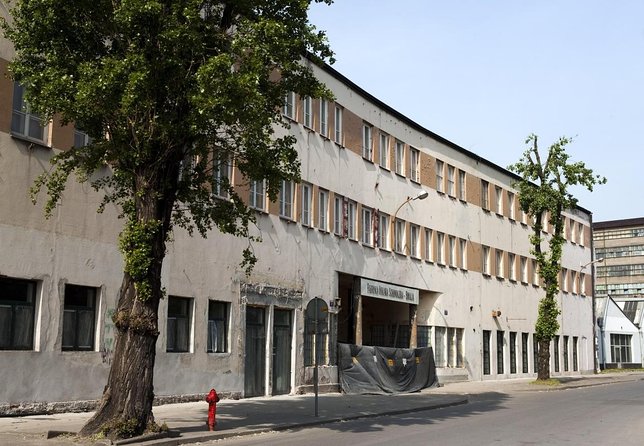
- Schindler’s Factory is about occupied Krakow, not only Oskar Schindler: The main exhibition covers daily life under Nazi rule from 1939 to 1945.
- The original ghetto wall is only a 12-metre fragment: It is a brief stop, but the plaque gives the site a strong emotional weight.
- Ghetto Heroes Square uses empty chairs as a memorial: The chairs represent the belongings left behind after the ghetto was cleared.
- Plaszow is an outdoor historical site: Allow 90 minutes for the former camp area and expect walking rather than a conventional museum visit.
- The tour includes one important admission: Entry to Schindler’s Factory is covered, but the 4 PLN tram ticket is not.
- Plan your day carefully: The experience takes about five hours, and one booking includes a start time of 12, which can leave too little time for anything scheduled afterward.
Why this Krakow history tour matters
This is not a single-museum visit with a quick photo stop attached. It follows the movement of people through occupied Krakow, beginning with the city under German rule, then visiting the former Jewish ghetto, and ending at Plaszow, a camp built by the Nazis in the southern suburbs.
That order gives you a useful sense of connection. The factory explains the wider setting. The ghetto sites place that history on ordinary city streets. Plaszow shows what came next for many people who were forced from their homes and sent into camps or forced labor.
I find that structure more useful than seeing the sites in isolation. The guide can point out how the places relate to one another and explain what the memorials cannot explain on their own.
This is also a tour that asks for attention. The subject is painful, and some of the material at the museum concerns persecution, forced labor, deportation, and death. You should choose it because you want a serious look at Poland under Nazi occupation, not because you are looking for a relaxed afternoon activity.
More Schindler's Factory visits:
- Krakow: Oskar Schindler’s Factory Entry Ticket & Guided Tour
★ 4.2 · 3,793 reviews - Krakow: Schindler’s Factory Tour with Entrance Ticket
★ 4.5 · 3,182 reviews - Krakow: Schindler’s Factory Skip-the-Line Ticket
★ 4.4 · 3,105 reviews
Inside Schindler’s Enamel Factory
The tour begins at Lipowa 4, the address of Oskar Schindler’s former enamel factory. The building now houses part of the Historical Museum of Krakow, with the main exhibition titled Krakow under Nazi Occupation 1939 to 1945.
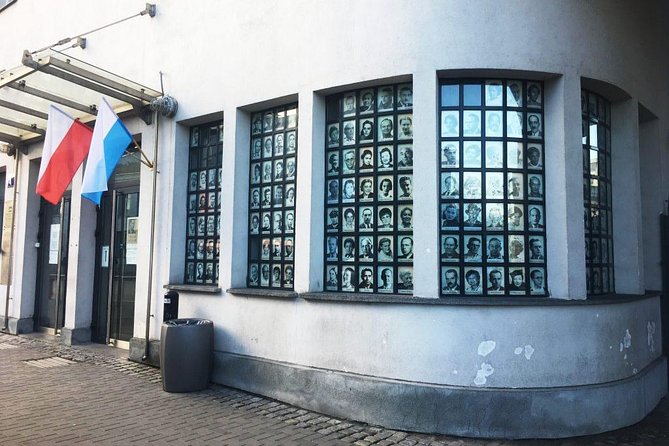
One detail is especially important: this is not a biographical museum devoted only to Schindler. His story forms part of the setting, but the exhibition is mainly about the city and its people during the occupation.
That distinction will help you set your expectations. If you arrive expecting a long account of Schindler’s personal life or a display focused mainly on the film, you may find the museum broader than expected. Instead, you get a look at how Nazi rule affected Krakow, including the conditions faced by Jewish residents and the wider population.
The 90-minute visit is long enough to take the exhibition seriously without making the entire day museum-based. Your guide provides context as you move through it, which matters because displays about wartime Krakow can be dense and emotionally difficult to process without a clear timeline.
The included entrance ticket is a practical benefit. Schindler’s Factory is one of Krakow’s most popular museums, so joining a tour that handles the admission can save you the trouble of arranging that part separately. The tour description also says guided entry helps avoid waiting in ticket lines, though you should still arrive at the stated meeting point on time.
I would give the factory your full attention. It is the most structured part of the outing, with rooms and exhibits designed to show the occupation as a citywide experience. The later stops are more open-ended, so this first section gives you the framework you need.
The 12-metre ghetto wall fragment
After the factory, the route moves to a remaining section of the former Krakow ghetto wall. The fragment is about 12 metres long, so do not picture a large preserved fortification or a full museum complex.
The stop lasts around 15 minutes. That is enough time to see the wall and take in the commemorative plaque, but not enough for a long independent visit. The plaque is written in Hebrew and Polish and recalls the people who lived, suffered, and died under German persecution before being sent toward the death camps.
This is a good example of why a guide is useful. A short wall fragment can be easy to pass without context. With an explanation of what the ghetto was and how it functioned, the piece of wall becomes part of a much larger story.
The stop is outdoors, so dress for Krakow’s weather and wear shoes that can handle a day with several walking sections. The wall itself has no admission charge listed, and there is no separate ticket included or required for this brief visit.
Ghetto Heroes Square and its empty chairs
The next stop is Plac Bohaterow Getta, known in English as Ghetto Heroes Square. During the years 1941 to 1943, this square lay inside the ghetto and was used as a place where Jewish residents were gathered before transport to camps.
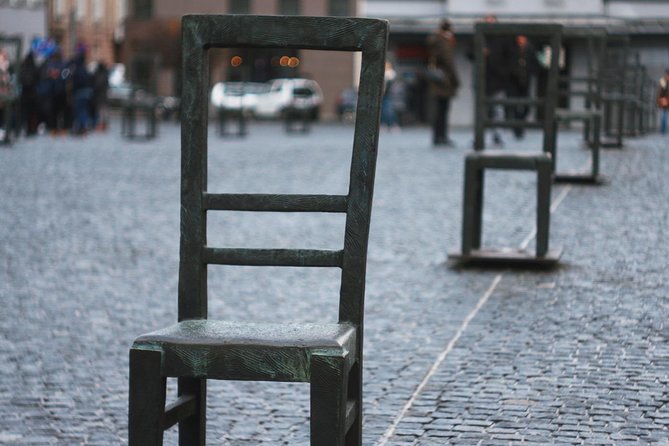
Today, the square is marked by rows of cast-iron chairs placed separately around the open space. The chairs represent the furniture, luggage, and personal belongings left scattered in the streets after the ghetto was liquidated.
The memorial is simple, but its meaning is direct. You do not need a large monument or a long museum label to understand the idea. The empty chairs make you think about homes being emptied and ordinary possessions being abandoned.
Again, the scheduled stop is about 15 minutes. That keeps the tour moving, but it also means you will not have much time to linger quietly or study the square at your own pace. If you want more time at this memorial, ask your guide how the schedule works before the tour begins.
The square is in Krakow’s Podgorze district, and this stop helps turn the occupation from an abstract chapter in a book into a story rooted in a real neighborhood. It is one of the most memorable short stops on the route because the design is easy to understand without reducing the subject to a slogan.
More Jewish heritage walks in Krakow:
- Krakow: Schindler’s Factory & Ghetto Guided Tour
★ 4.7 · 1,694 reviews - Krakow: Jewish Quarter and Former Ghetto Tour
★ 4.9 · 1,441 reviews - Krakow: Bike Tour of Old Town, Jewish Quarter and the Ghetto
★ 4.9 · 1,155 reviews - Krakow: Kazimierz, Schindler’s Factory & Ghetto Guided Tour
★ 4.8 · 460 reviews
What to expect at Plaszow Camp
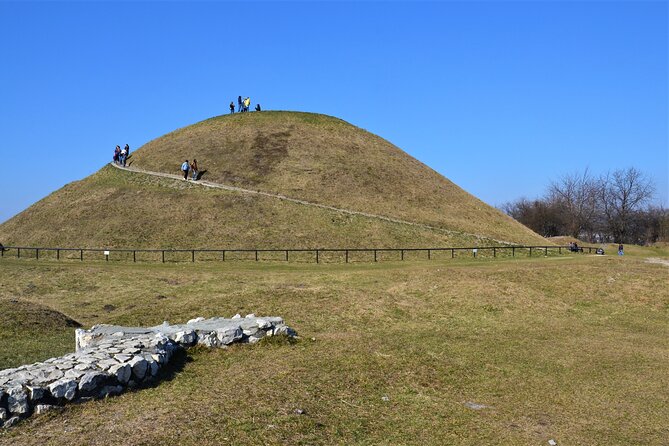
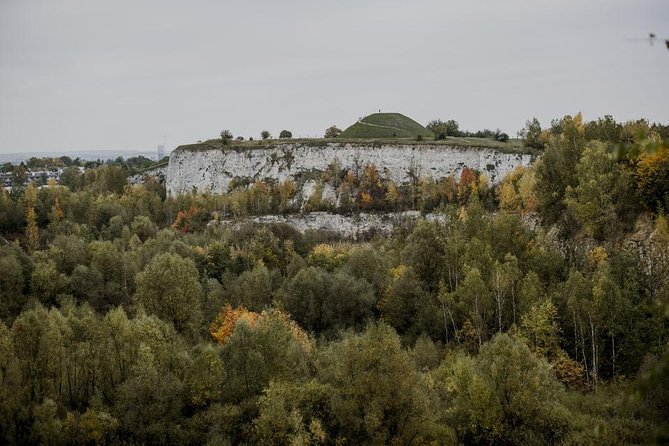
The final major stop is Plaszow, a former Nazi camp in Krakow’s southern suburbs. The site began as a forced labor camp and was later expanded and converted into a concentration camp. From October 28, 1942, deportations of Jewish residents from the Krakow ghetto began to Plaszow.
The camp supplied labor for military factories and a quarry. That fact helps explain why the site is different from the factory museum. At the museum, you follow a planned exhibition. At Plaszow, you are confronted with a former camp area whose meaning depends heavily on explanation and on your ability to picture what once took place there.
The scheduled visit lasts 90 minutes, matching the time at Schindler’s Factory. This is the part of the day where comfortable shoes matter most. The experience is described as a guided visit to the site, and the admission is free, but you should expect an outdoor stop rather than a standard indoor attraction.
Plaszow can be the most demanding part of the tour. The site is tied to forced labor, deportation, and mass suffering, and there may be fewer obvious displays than you expect from a museum. That is precisely why the guide’s commentary is important. You need historical explanation to understand how the camp operated and how it fitted into the destruction of Krakow’s Jewish community.
One useful point from the schedule is that Plaszow is the last stop, with the tour ending on Henryka Kamieńskiego Street. That means you should not assume you will return to the factory or Krakow’s Old Town. Check your onward route before booking dinner, a museum, or a train.
The guide makes the difference
This tour is built around explanation rather than simply transportation between locations. A professional guide accompanies the group and provides background on Poland during World War II and the years of Nazi occupation.
The guide is particularly important at Plaszow and the ghetto sites. The wall fragment and the chairs in the square are powerful memorials, but they cannot provide a full timeline by themselves. A good guide can connect the sites, explain the sequence of events, and help you understand why each location matters.
The tour is promoted as a small-group experience, with one part of the information describing a limit of 15 people and the additional details stating a maximum of 25. Because those figures do not match, I would treat it as a relatively small group, but confirm the expected size when booking if that matters to you.
Small groups have a real benefit here. You are more likely to hear explanations clearly, ask a question, and stay together during transfers. The supplied feedback also points to the value of guides checking people in and explaining the day, especially when the experience is part of a longer series of related tours.
No guide names are provided, so I cannot tell you who will lead your departure. The quality of the day will depend in part on how clearly that person handles a painful and complicated subject.
Timing, transport, and the walking load
The full experience lasts about five hours. The stated museum and site times add up to three hours and 30 minutes, leaving the rest for movement between stops, group organization, and explanations.
That makes this a half-day commitment, but a fairly full one. One person who booked a series of three related tours beginning at 12 found that five hours was too long to complete everything planned afterward. My advice is simple: do not schedule a tight afternoon appointment immediately after this tour.
A 4 PLN tram ticket is not included. Set aside a little local currency or another accepted payment method for that fare. The meeting point is at Lipowa 4, 32-051 Krakow, beside Schindler’s Factory, and the listed end point is Henryka Kamieńskiego 57, 30-644 Krakow.
The start and finish are different, so plan for that. The experience is near public transportation, but the tour does not include your wider Krakow transport costs. You will get more from the day if you arrive with enough time to find the starting point and do not need to rush away from Plaszow.
Most people can take part, according to the supplied practical information. Still, the combination of outdoor stops, transfers, and several hours on foot means you should judge the outing by your own stamina. The subject also requires emotional energy, not just physical energy.
Is $76.35 a fair price?
At $76.35 per person, the tour is not the cheapest way to see these locations. The value comes from the combination of a professional guide, admission to Schindler’s Factory, group organization, and commentary at places that can be difficult to understand on your own.
The included museum ticket is the clearest financial benefit. You are also paying for the time saved at a busy attraction and for the connection between the factory, the ghetto wall, Ghetto Heroes Square, and Plaszow.
If you only want to see the factory, the price may feel high. You could also prefer exploring the ghetto district independently if you want to set your own pace. But if you want all four stops explained in one planned outing, the cost is easier to justify.
I would judge the value by the guide rather than by the number of attractions. This is not a tour that piles up sights for quick photographs. Its purpose is to help you understand a sequence of events. For that kind of visit, clear commentary is worth more than a long list of stops.
The tour has received five-star feedback, with praise focused on the guides, the information provided, and the pacing. One person found it physically tiring but still considered the day worthwhile. That is a fair warning: the tour can be rewarding and exhausting at the same time.
Who should book this experience?
I would recommend it to you if you want a guided introduction to Krakow’s wartime history and prefer not to arrange museum admission, public transport, and several locations on your own.
It also suits anyone who has visited Auschwitz and wants to understand how events in Krakow connect with the wider story of Nazi persecution. The supplied feedback specifically notes that the tour helped link some events shown in the film about Schindler with actual places and history.
You may want another option if you dislike fixed schedules, need long quiet periods at memorials, or have limited walking time. The two 15-minute stops are brief, and the day does not leave much room for wandering.
I would also think carefully about pairing this with other Holocaust-related sites on the same day. The tour itself is already serious and lengthy. Give yourself time afterward rather than rushing straight into another major attraction.
Cancellation and booking details
You can cancel for a full refund up to 24 hours before the experience begins. Cancellations made less than 24 hours before the start time are not refunded, and changes within that period are not accepted.
The tour requires a minimum number of participants. If that minimum is not reached and the operator cancels, you will be offered another date or experience, or a full refund. Confirmation is provided when you book.
Should you book the Schindler’s Factory and Plaszow tour?
Book it if you want a focused, guided history day that links a museum with the actual sites of Krakow’s former ghetto and Plaszow Camp. The strongest reasons are the included factory admission, the guide’s role, and the way the four stops form one clear story.
Skip it if you want a casual city walk or need a flexible schedule. The five hours are full, the theme is heavy, the walking can leave you tired, and the 4 PLN tram ticket is extra.
For most people who want serious context rather than a quick look, I think the tour offers good value. Start with a clear calendar, comfortable shoes, and enough quiet time afterward to process what you have seen.
FAQ
How long does the tour last?
The tour lasts approximately five hours.
Where does the tour begin?
It begins at Lipowa 4, 32-051 Krakow, Poland, at Schindler’s Enamel Factory.
Where does the tour end?
The listed ending point is Henryka Kamieńskiego 57, 30-644 Krakow, Poland.
Is admission to Schindler’s Factory included?
Yes. The entrance ticket to Schindler’s Factory Museum is included.
Is the tram ticket included?
No. The tram ticket costs 4 PLN and is not included.
How many people can join the tour?
The information describes it as a small-group experience. One section gives a limit of 15 people, while the additional details list a maximum of 25 people.
How much time is spent inside Schindler’s Factory?
The scheduled visit to Schindler’s Factory lasts about one hour and 30 minutes.
Are the ghetto wall and Ghetto Heroes Square included?
Both locations are part of the tour. No separate admission ticket is listed for either stop.
Can I cancel for a full refund?
Yes. You can cancel at least 24 hours before the start time for a full refund. Less than 24 hours before the start time, the payment is not refunded.
Just added around Krakow
- Private Guided Tour: Oskar Schindler’s Factory★ 5.0 · 3 reviews
- E-Scooter Krakow sightseeing tour★ 5.0 · 3 reviews
- From Krakow: Zakopane and Thermal Pools Guided Trip★ 5.0 · 3 reviews
- Schindler’s Factory, Ghetto and Plaszow Camp Guided Tour★ 4.7 · 3 reviews
- Kraków: Private Hot Air Balloon Flight with Champagne★ 3.7 · 3 reviews
- Krakow: River Cruise & Guided Visit to Former Plaszow Camp★ 3.6 · 3 reviews
- From Krakow: Private Wieliczka Salt Mine Tour★ 4.0 · 3 reviews
- Krakow: Old Town short walk with St. Mary’s Basilica visit★ 5.0 · 3 reviews
Schindler's Factory Tours, compared.

Oskar Schindler’s Factory Entry Ticket & Guided Tour
Read our review →
Schindler’s Factory Tour with Entrance Ticket
Read our review →
Schindler’s Factory Tour with Entrance Ticket
Read our review →
Schindler’s Factory in Krakow: Guided Tour & Skip the Line Ticket
Read our review →

Schindler’s Factory Ticket with Guided Tour Option
Read our review →
Krakow Schindler’s Factory Guided Tour with Admission Ticket
Read our review →Browse the lists this tour appears in