
Reviewed · SCHINDLER'S FACTORY TOURS
Krakow: Schindler’s Factory & Ghetto & Plaszow Camp Guided Tour
Krakow’s wartime story feels most real beyond the museum walls. This five-hour tour links Schindler’s Factory, the former ghetto, and the remains of Plaszow Camp, showing how Nazi rule shaped ordinary streets, homes, factories, and open ground.
I like the route for two clear reasons: you get a local guide’s context at places that can be hard to understand on your own, and you visit both the polished museum and the rough, quiet remains of Plaszow. The main drawback is the walking. Plaszow is hilly and muddy in places, and the guide’s quality can vary.
In This Review
- Key points to know before booking
- Why this tour adds more than a museum visit
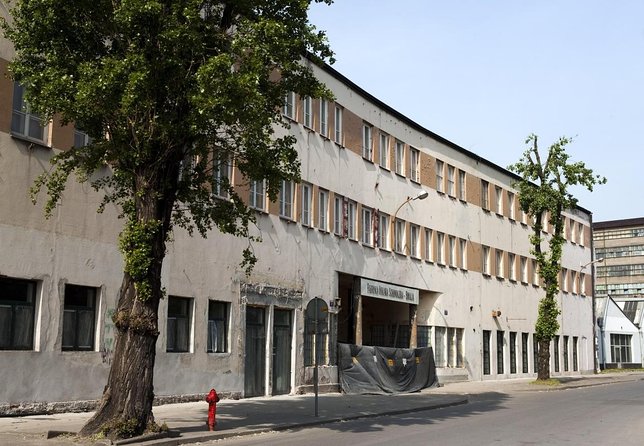
- Inside Schindler’s Factory on Lipowa Street
- The original ghetto wall and its final message
- Ghetto Heroes Square and the 70 empty chairs
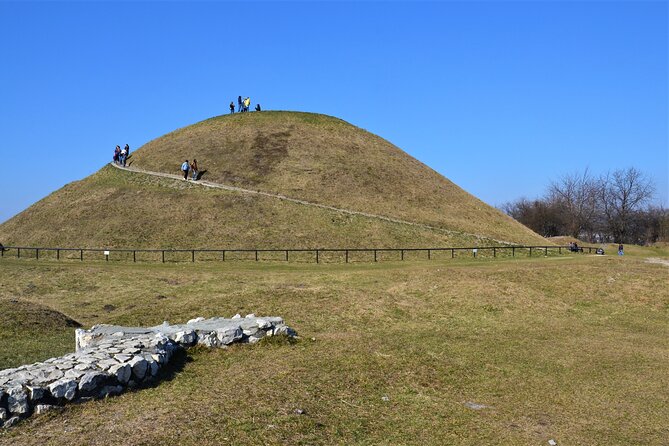
- Plaszow Camp, Liban Quarry, and Krakus Mound
- How the guiding affects the day
- Is $76.33 a fair price?
- Who should book this five-hour walk?
- Should you book the Schindler’s Factory and Plaszow tour?
- FAQ
- How long does the tour last?
- Where does the tour begin?
- Where does the tour end?
- Is admission to Schindler’s Factory included?
- Is public transportation included?
- How much does the tour cost?
- What is the maximum group size?
- Is the tour mainly about Oskar Schindler?
- How much time is spent at Schindler’s Factory?
- What should I wear for Plaszow Camp?
- Can I cancel for a full refund?
Key points to know before booking
- Schindler’s Factory covers occupied Krakow, not just Oskar Schindler’s personal story.
- Ghetto Heroes Square has 70 large metal chairs, a stark memorial to belongings left behind after the ghetto was cleared.
- Plaszow feels raw and undeveloped, with little left of the original camp and uneven ground underfoot.
- Guides Dominika and Matthew receive especially warm praise for clear explanations and local insight.
- The group can include up to 25 people, so this is guided sightseeing rather than a private walk.
- The $76.33 price includes the museum ticket and guide, but not the tram ticket between locations.
Why this tour adds more than a museum visit
Many Krakow visitors know Schindler’s name from the famous film. This tour helps you move past the film and see the wider machinery of occupation. You follow a chain of places: a factory connected with Schindler, the Jewish ghetto, the square where people were gathered for deportation, and the camp that replaced much of that system of forced labor and murder.
That sequence matters. A museum can explain events with photographs, maps, and objects. Streets and empty ground show you where those events happened. The contrast between the two is one of the strongest parts of the day.
The tour lasts about five hours. It begins at Lipowa 4, the address of Schindler’s former enamel factory, and finishes near Henryka Kamieńskiego 57. A tram ticket is not included, so keep a little time and money aside for public transport.
The maximum group size is 25. That is small enough for a guide to speak to the group clearly, but it is not a private experience. If you want long personal conversations at every stop, a smaller tour may suit you better. If you want a structured route with a guide handling the geography and background, this format makes sense.
More Schindler's Factory visits:
- Krakow: Oskar Schindler’s Factory Entry Ticket & Guided Tour
★ 4.2 · 3,793 reviews - Krakow: Schindler’s Factory Tour with Entrance Ticket
★ 4.5 · 3,182 reviews - Krakow: Schindler’s Factory Skip-the-Line Ticket
★ 4.4 · 3,105 reviews
Inside Schindler’s Factory on Lipowa Street
The first stop takes about 90 minutes and includes admission to the museum. The building at 4 Lipowa Street is Oskar Schindler’s former enamel factory, now part of the Historical Museum of Krakow.
One important point is easy to miss: this is not mainly a biographical museum about Schindler. The central exhibition, Krakow under Nazi Occupation 1939 to 1945, explains what happened to the city and its people under German rule.
That makes the museum broader than many people expect. Schindler is part of the story, but the displays focus on occupied Krakow, the treatment of Jewish residents, daily life under Nazi control, and the wider effects of war. You should arrive ready for a serious historical exhibition rather than a simple film-themed attraction.
The guide brings you to the museum, then you have time to see it at your own pace. This is a useful arrangement. A guide can explain the route and set the scene, but you are not forced to move through every display as a group. You can pause at sections that matter most to you.
Some people may find the museum less satisfying if they expect a close, personal account of Schindler’s life. One review specifically found the museum disappointing for that reason. I would treat it as a museum about Krakow under occupation, with Schindler as one part of the story. Seen that way, it has a clearer purpose.
The original ghetto wall and its final message
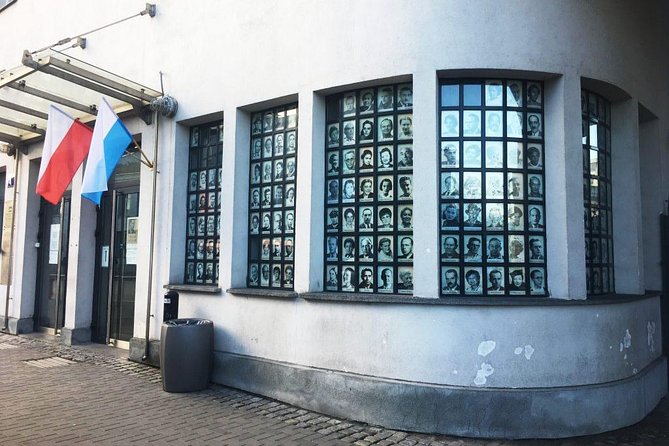
The next stop is a short visit to a 12-metre fragment of the original Krakow ghetto wall. Only about 15 minutes are allotted here, but the place carries a heavy meaning.
A commemorative plaque in Hebrew and Polish says that people lived, suffered, and died there under German persecution, and that from this place they began their final journey to the death camps. The wall gives physical shape to the boundaries of the ghetto, which can otherwise seem abstract when you read about them in a book.
Do not expect a large museum or a long stop. This is a brief outdoor point of reflection. The guide’s explanation is especially useful because the surviving wall fragment alone does not tell you how the ghetto operated or how the surrounding streets fit into the story.
One weakness is that a short stop leaves little time for questions. If this is the part of Krakow’s wartime story you most want to study, note the location and consider returning independently.
Ghetto Heroes Square and the 70 empty chairs
The tour then reaches Plac Bohaterów Getta, or Ghetto Heroes Square, in the Podgórze district. During the years 1941 to 1943, this was inside the ghetto and served as a gathering point before people were sent to camps.
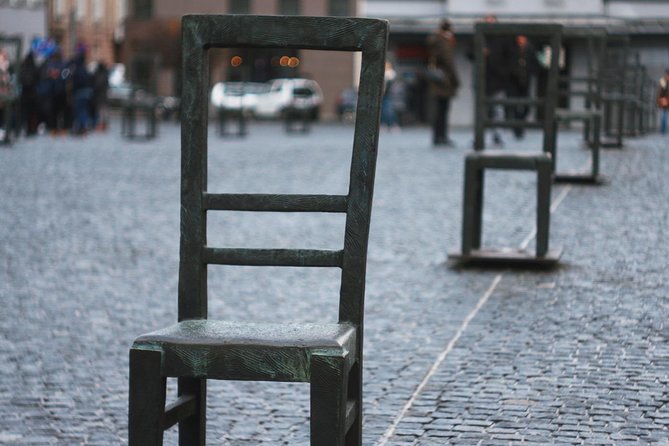
The memorial here is made of 70 large cast-iron chairs, spaced across the square. They represent the furniture and belongings left scattered in the streets after the ghetto was liquidated. It is a simple idea, but the open spaces between the chairs make the absence hard to ignore.
You spend about 15 minutes here. That may sound brief, yet the square works best as a quiet pause between the museum and Plaszow. The chairs are not just a monument to those who died. They also point to the forced removal of an entire community and the destruction of normal home life.
The stop is outdoors, so weather matters. Bring suitable clothing, especially if rain is forecast. One guide, Dominika, was praised for keeping the explanation clear and meaningful even in poor weather. That kind of steady presentation matters on a tour dealing with painful material.
More Jewish heritage walks in Krakow:
- Krakow: Schindler’s Factory & Ghetto Guided Tour
★ 4.7 · 1,694 reviews - Krakow: Jewish Quarter and Former Ghetto Tour
★ 4.9 · 1,441 reviews - Krakow: Bike Tour of Old Town, Jewish Quarter and the Ghetto
★ 4.9 · 1,155 reviews - Krakow: Kazimierz, Schindler’s Factory & Ghetto Guided Tour
★ 4.8 · 460 reviews
Plaszow Camp, Liban Quarry, and Krakus Mound
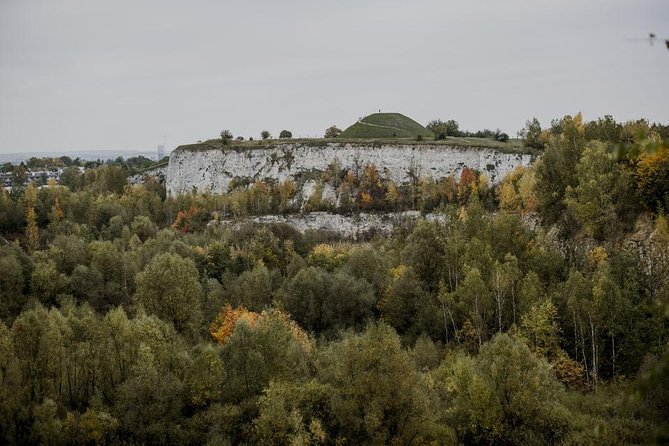
The final major section lasts about 90 minutes and takes you to the former Plaszow concentration camp area. This is the part that makes the tour different from a standard Schindler’s Factory visit.
The Nazis established Plaszow after invading Poland. It began as a forced labor camp in 1940, expanded in 1941, and became a concentration camp. From October 28, 1942, Jews deported from the Krakow ghetto were sent there. The camp supplied forced labor to military factories and a quarry.
Today, the site does not look like a preserved camp museum. Much of the original place was destroyed, and little remains for the eye to identify. That can be disappointing if you expect buildings, gates, barracks, or a carefully marked museum route. It can also make the guide more important, since the story comes through explanation rather than a large collection of surviving structures.
The walk includes the Liban Quarry and a climb toward Krakus Mound. The route is not flat. You may encounter muddy ground and uneven paths, so wear sturdy, comfortable shoes. This is not the place for delicate footwear or a rushed schedule.
The climb adds a physical element to the visit. You are not simply moving from one display case to the next. The hills and open ground help you understand the size and separation of the former camp area, even though they cannot recreate what stood there.
The site is also less developed for tourism than Auschwitz. That means fewer formal visitor facilities and less visual information on the ground. It also means the experience can feel quieter and less managed. You need to decide which setting helps you most: a preserved memorial complex with extensive exhibits, or an open former camp area where a guide’s words do much of the work.
Guides Dominika and Matthew are singled out for clear, detailed explanations of the ghetto and camp. The strongest guides connect the wartime story with the present-day city rather than treating the area as a collection of isolated facts. That local connection is a major reason to choose this tour over trying to find the sites alone.
How the guiding affects the day
The tour’s rating is 4.6 from 28 reviews, with 93 percent recommending it. The most common strength is the guide. Dominika is praised for warmth, clear English, and strong command of the subject. Matthew is described as a Krakow native who connects the wartime sites with present-day city life.
That praise comes with one important caution. One poor experience reported a guide who seemed rushed and gave a general account of the ghetto without enough local detail. You cannot guarantee a particular guide, although Dominika was specifically recommended if available.
This is worth considering because Plaszow needs explanation. At Schindler’s Factory, the museum supplies much of the information. At Ghetto Heroes Square and the former camp, the guide has a larger role. A good guide can help you understand what happened where, why the sites connect, and what has disappeared. A hurried guide leaves you looking at empty ground without enough context.
The group size of up to 25 also affects the feel. You should expect a shared walking tour, not a private conversation. Ask questions when there is a natural pause, but do not expect the group to stop for long at every point.
Is $76.33 a fair price?
At $76.33 per person, this is not the cheapest way to see Krakow’s wartime sights. The price includes a professional guide and admission to Schindler’s Factory Museum, but public transport is extra.
The value comes from combining four difficult-to-link places in one half-day: the museum, the ghetto wall, Ghetto Heroes Square, and Plaszow. You are paying for the route, the explanations, and the time saved working out how the sites relate to one another.
The value is weaker if you only want to see Schindler’s Factory. You could focus on the museum alone and spend less time walking. It is also less useful if you want a preserved concentration camp with extensive surviving structures, since Plaszow is largely an open site.
I think the price makes the most sense for a first visit to Krakow when you want historical context and do not want to organize several separate stops. The tour is booked an average of 55 days ahead, so it is wise to reserve early if your dates are fixed.
Who should book this five-hour walk?
I would choose this tour if you want to understand how the ghetto and Plaszow fit into Krakow’s wartime story. It suits adults and older children who can manage serious subject matter, outdoor walking, and a hilly route.
It is a good choice for you if:
- You have already seen Krakow’s main old-town sights and want a more serious half-day.
- You prefer local explanation over reading signs on your own.
- You want Schindler’s Factory paired with the places connected to the ghetto and camp.
- You are comfortable with a moving, sometimes difficult subject.
- You can walk for much of the day and handle mud or uneven ground.
I would hesitate if you have limited mobility, dislike outdoor walks, or want a purely biographical Schindler tour. The museum does not focus only on Schindler, and Plaszow does not offer a polished, preserved camp visit.
Free cancellation is available up to 24 hours before the start time. If the minimum group size is not met, the operator offers another date or experience, or a full refund.
Should you book the Schindler’s Factory and Plaszow tour?
Book it if you want the full connection between occupied Krakow, the ghetto, and Plaszow rather than a stand-alone museum visit. The most valuable part is the combination of places, especially the former camp area that is difficult to interpret without guidance.
Go prepared for a sober day, plenty of walking, and a site where little remains. Wear comfortable shoes, allow for public transport costs, and understand that guide quality matters. If those conditions suit you, this is a thoughtful way to see a less obvious side of Krakow.
FAQ
How long does the tour last?
The experience lasts approximately five hours.
Where does the tour begin?
It begins at Schindler’s Enamel Factory, Lipowa 4, 32-051 Kraków, Poland.
Where does the tour end?
It ends near Henryka Kamieńskiego 57, 30-644 Kraków, Poland.
Is admission to Schindler’s Factory included?
Yes. The entrance ticket to Schindler’s Factory Museum is included.
Is public transportation included?
No. The tram ticket is not included in the tour price.
How much does the tour cost?
The listed price is $76.33 per person.
What is the maximum group size?
The tour can have a maximum of 25 participants.
Is the tour mainly about Oskar Schindler?
No. Schindler’s Factory presents Krakow under Nazi Occupation from 1939 to 1945. It is not a biographical museum focused only on Schindler.
How much time is spent at Schindler’s Factory?
The museum visit takes about one hour and 30 minutes, and you can explore the exhibition at your own pace.
What should I wear for Plaszow Camp?
Wear comfortable shoes suitable for hills and possible mud. The Plaszow route is hilly in places and can have uneven ground.
Can I cancel for a full refund?
Yes. You can cancel at least 24 hours before the experience start time for a full refund. Cancellations or changes made less than 24 hours before the start are not refunded or accepted.
Just added around Krakow
- Private Guided Tour: Oskar Schindler’s Factory★ 5.0 · 3 reviews
- E-Scooter Krakow sightseeing tour★ 5.0 · 3 reviews
- From Krakow: Zakopane and Thermal Pools Guided Trip★ 5.0 · 3 reviews
- Schindler’s Factory, Ghetto and Plaszow Camp Guided Tour★ 4.7 · 3 reviews
- Kraków: Private Hot Air Balloon Flight with Champagne★ 3.7 · 3 reviews
- Krakow: River Cruise & Guided Visit to Former Plaszow Camp★ 3.6 · 3 reviews
- From Krakow: Private Wieliczka Salt Mine Tour★ 4.0 · 3 reviews
- Krakow: Old Town short walk with St. Mary’s Basilica visit★ 5.0 · 3 reviews
Schindler's Factory Tours, compared.

Oskar Schindler’s Factory Entry Ticket & Guided Tour
Read our review →
Schindler’s Factory Tour with Entrance Ticket
Read our review →
Schindler’s Factory Tour with Entrance Ticket
Read our review →
Schindler’s Factory in Krakow: Guided Tour & Skip the Line Ticket
Read our review →

Schindler’s Factory Ticket with Guided Tour Option
Read our review →
Krakow Schindler’s Factory Guided Tour with Admission Ticket
Read our review →Browse the lists this tour appears in