
Reviewed · SCHINDLER'S FACTORY TOURS
Schindler’s Factory and Jewish Ghetto Guided Tour
Oskar Schindler’s story is only the beginning here. This three-hour tour links his former enamel factory with the streets of the Kraków Ghetto, helping you understand how Jewish and non-Jewish residents faced Nazi rule, deportation, fear, and daily shortages. I especially like the factory-to-ghetto order, which gives the walking portion useful context, and the stop at the preserved ghetto walls, a stark reminder that this was a place of forced confinement.
The main drawback is pace. Schindler’s Factory is crowded, and a guide-led group can move quickly through its narrow rooms. If you want to read every caption or study every photograph, you may feel hurried. The outdoor section also depends on the weather, so bring warm clothing in winter and shoes suited to city walking.
In This Review
- Key points to know before booking
- Why Schindler’s Factory is more than a film location
- Moving through an exhibition built for atmosphere
- Schindler’s story and the people he protected
- Walking from the factory into the former ghetto
- Ghetto Heroes Square and the meaning of the chairs
- Under the Eagle Pharmacy and Tadeusz Pankiewicz
- What the three-hour format gives you
- Price, languages, and practical value
- Who should book this experience
- Should you book Schindler’s Factory and the Ghetto walk?
- FAQ
- How long is the Schindler’s Factory and Jewish Ghetto tour?
- What does the tour include?
- Is entry to Under the Eagle Pharmacy included?
- Does the factory still contain original production equipment?
- What languages are available?
- How large can the group be?
- Where do I meet the guide?
- What happens if I arrive late?
Key points to know before booking
- The museum is about Kraków under occupation, not only Schindler: Expect a wider account of city life from 1939 to 1945.
- The factory contains an immersive museum exhibition: It no longer operates as a factory and does not contain original production equipment.
- The ghetto walk adds physical context: You visit preserved wall fragments, Józefińska 41, and Ghetto Heroes Square.
- Under the Eagle Pharmacy is an exterior stop: The tour explains its wartime role, but entry is not included.
- The guide makes a major difference: Guides such as Joanna, Alicja, Bartholomew, Magda, and Phil have received especially warm praise for clear explanations and strong storytelling.
- Groups can reach 25 people: That keeps the cost reasonable, but larger groups may make the museum feel crowded.
Why Schindler’s Factory is more than a film location
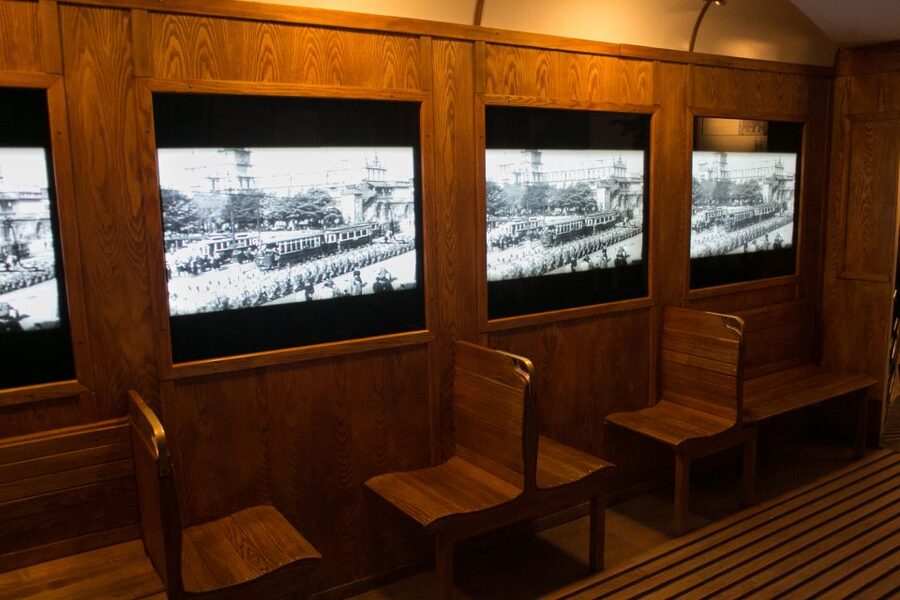
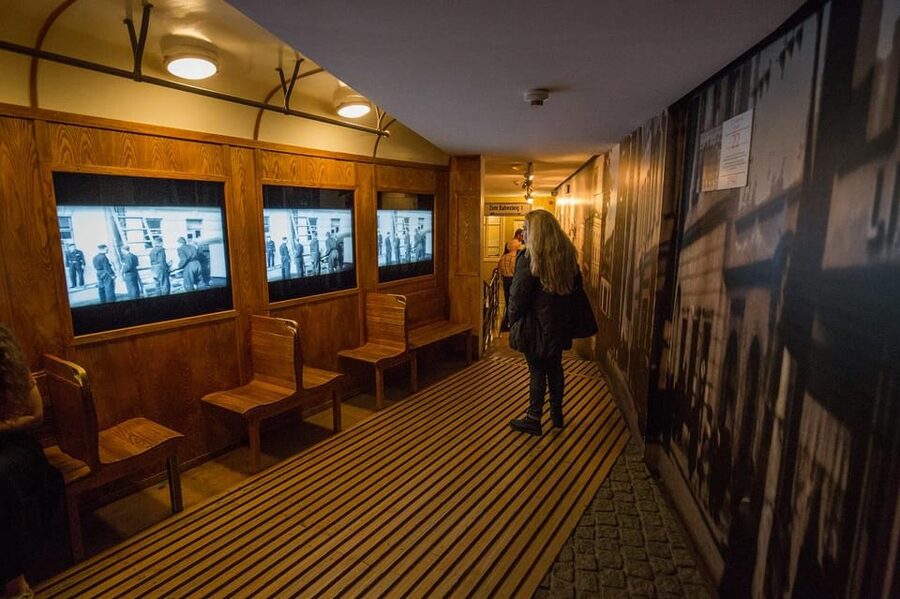
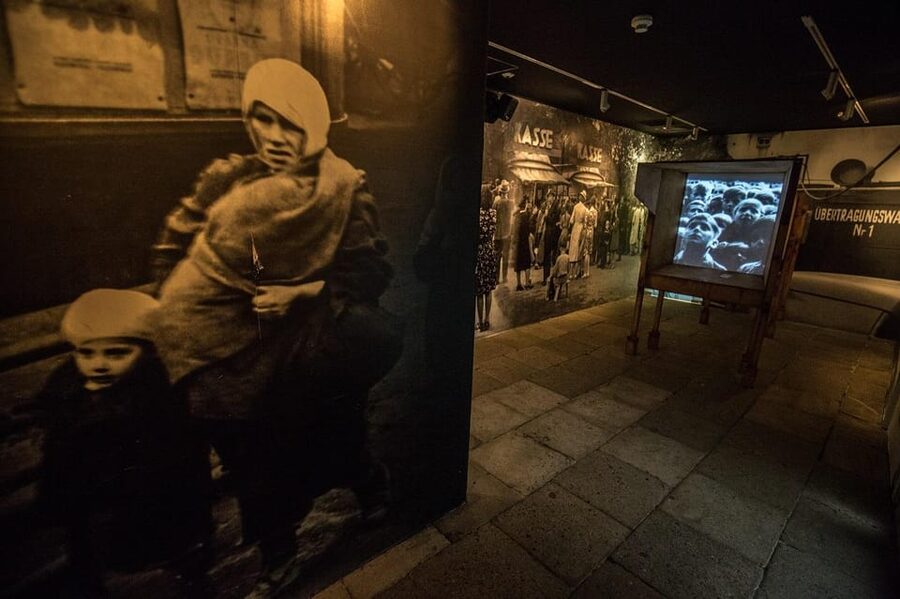
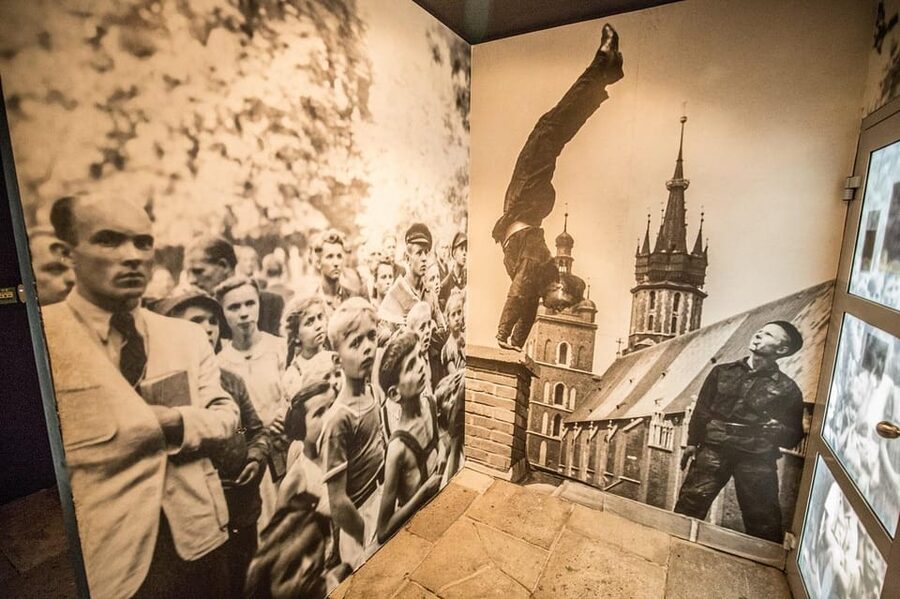
Schindler’s Factory is one of Kraków’s most visited museums, but it is not a preserved factory floor in the usual sense. The original building now houses the exhibition Kraków under Nazi Occupation 1939 to 1945. You will not see Schindler’s production line or a room left exactly as it was in wartime. Instead, you move through a carefully arranged museum that uses photographs, personal objects, documents, reconstructed streets, and period settings.
That distinction matters. If you arrive expecting a silent industrial building filled with original machinery, you may be disappointed. If you want a guided account of what occupation did to a city and its people, the museum offers much more.
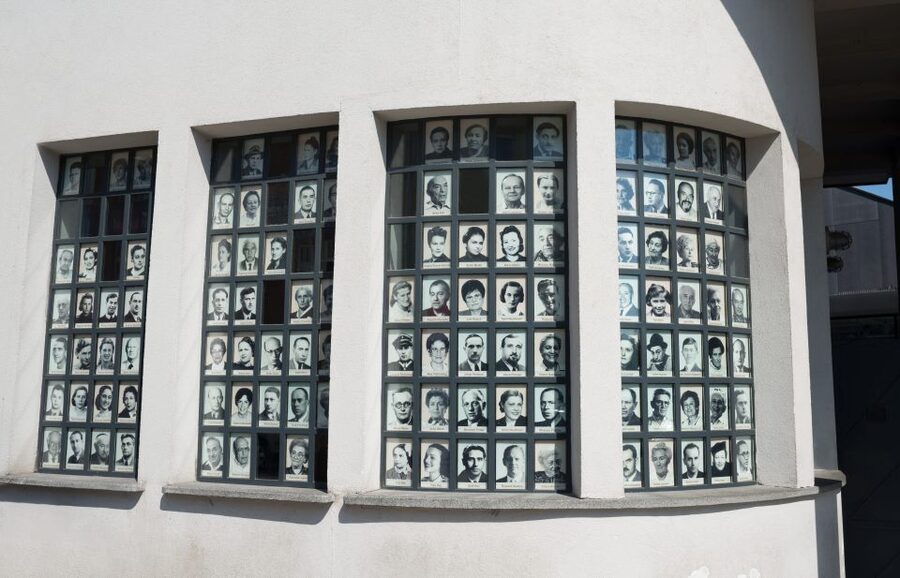
Schindler’s personal story provides the thread. He employed Jewish workers at his enamel factory and used his contacts, money, and position to protect more than 1,000 people from deportation. His actions were courageous, but the exhibition places them within the larger crisis rather than treating him as the only subject.
I like this approach. It helps you see Schindler’s choices in relation to the people around him, including the Jewish workers often called Schindlerjuden. Their survival was not an abstract statistic. The photographs, objects, and personal accounts give the story a human scale.
The museum also covers Kraków before, during, and shortly after the Nazi occupation. That wider frame is useful because it shows how quickly ordinary city life was replaced by restrictions, intimidation, forced labor, and mass removal. You get a sense of the city as a lived place, not merely as a backdrop to one famous individual.
More Schindler's Factory visits:
- Krakow: Oskar Schindler’s Factory Entry Ticket & Guided Tour
★ 4.2 · 3,793 reviews - Krakow: Schindler’s Factory Tour with Entrance Ticket
★ 4.5 · 3,182 reviews - Krakow: Schindler’s Factory Skip-the-Line Ticket
★ 4.4 · 3,105 reviews
Moving through an exhibition built for atmosphere
The museum uses narrow passageways and an immersive layout designed to suggest the atmosphere of Kraków during World War II. This can make the visit powerful, but it also affects how comfortably and quickly you move.
A guide is helpful because the exhibition contains a great deal of material. A strong guide can explain which details matter, connect one room to the next, and prevent the visit from becoming a blur of dates and photographs. Bartholomew has been praised for clear English and detailed explanations. Joanna has also received strong marks for giving the museum a logical connection to the later ghetto walk.
Alicja is noted for bringing Polish and Jewish experiences into the same account, while Magda has been praised for being both helpful and attentive to the group. Phil, remembered for his excellent English and ability to answer questions, is another guide who has made a lasting impression on visitors. Your guide will depend on the date and language you book, so do not assume one particular person is guaranteed.
The downside is the group format. The museum can be very busy, and groups may need to keep moving so that they do not block other people. A group of up to 25 is not enormous, but it is large enough to make a narrow display area feel tight. You may hear the explanation clearly and still have too little time to inspect every caption.
If you are a serious museum reader, consider this carefully. A guided visit gives you structure and historical explanation, but an independent visit may let you linger longer. The tour is best for building an understanding of the exhibition, not for examining every object at your own pace.
Schindler’s story and the people he protected
The exhibition’s strongest emotional force comes from the contrast between the machinery of persecution and the individual choices made within it. Schindler’s ability to employ Jewish workers gave him a way to offer protection, but the museum does not turn the story into a simple tale of one hero rescuing everyone.
You will learn how his influence and resources helped save more than a thousand men and women from deportation. The wider setting shows why that protection mattered. For people trapped under Nazi rule, a job could mean food, shelter, or a temporary shield from removal. A change in a work list or a personal intervention could have life-or-death consequences.
I find this part especially valuable for anyone who knows the story mainly through the film Schindler’s List. The museum moves beyond the movie and presents the social world around the factory. You see how occupation affected families, workplaces, public spaces, and the basic choices people had to make each day.
The experience is serious and sometimes difficult. It deals with the destruction of Kraków’s Jewish population and the treatment of civilians under Nazi rule. It is not a light sightseeing stop, and you should allow yourself time afterward before moving on to another busy attraction.
Walking from the factory into the former ghetto
After the museum, the tour continues on foot through the Jewish wartime district. This shift from indoor displays to city streets is one of the best reasons to choose the combined experience.
The exhibition gives you images and objects. The walk shows you the locations where some of those events unfolded. You are not simply reading about confinement in a display case. You are standing in the area where people were separated from the rest of Kraków and forced to live under harsh restrictions.
One early stop is Józefińska 41. The building once housed an orphanage, welfare offices, and a hospital, all vital services inside the ghetto. The address helps you understand that the ghetto was not only a place of imprisonment. It also contained fragile systems of care, where staff tried to support children, sick people, and families despite extreme pressure.
The preserved fragments of the ghetto walls are the clearest physical reminder of the enclosure. They are not a complete reconstruction of the wartime boundary, and you should not expect a large intact fortification. Their value lies in their directness. A remaining section of wall makes the policy of separation tangible in a way that a museum label cannot quite match.
The walk gives you time to ask questions, though the amount of time spent at each point can vary. If you want long, detailed discussion at every address, a private tour may suit you better. In a shared group, the guide has to balance explanation, walking time, and the needs of people moving through the city.
More Jewish heritage walks in Krakow:
- Krakow: Schindler’s Factory & Ghetto Guided Tour
★ 4.7 · 1,694 reviews - Krakow: Jewish Quarter and Former Ghetto Tour
★ 4.9 · 1,441 reviews - Krakow: Bike Tour of Old Town, Jewish Quarter and the Ghetto
★ 4.9 · 1,155 reviews - Krakow: Kazimierz, Schindler’s Factory & Ghetto Guided Tour
★ 4.8 · 460 reviews
Ghetto Heroes Square and the meaning of the chairs
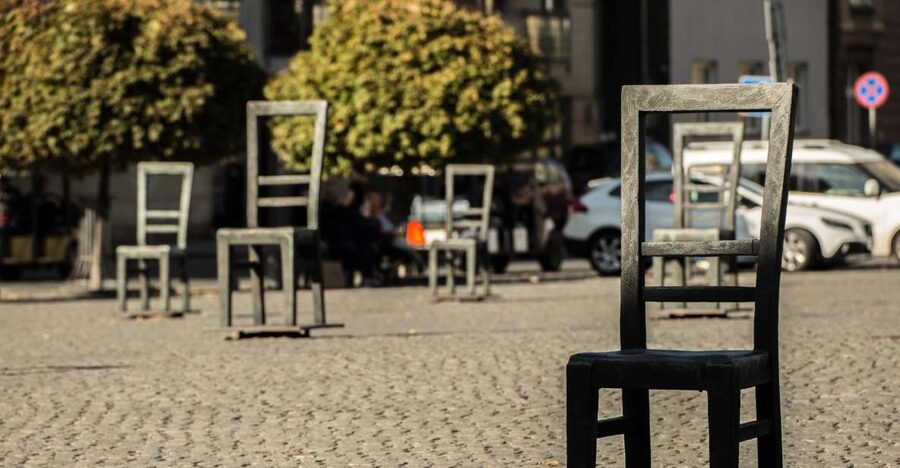
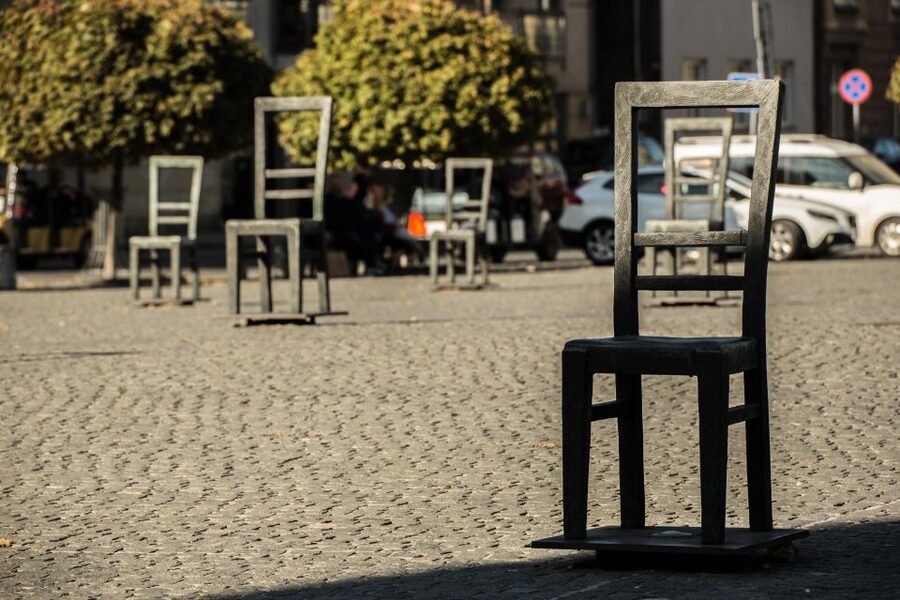
Ghetto Heroes Square is one of the most important stops. Today, the square is marked by the Chair Memorial, a group of empty chairs that recalls the belongings and furniture left behind when Jewish residents were forced from their homes.
During the occupation, the square became a place of round-ups and deportations to concentration camps. That history changes the way you see the open space. It was not simply a neighborhood square. It was used as a holding and collection point during one of the most brutal phases of the ghetto’s existence.
The memorial works because it is simple. You do not need a long explanation to understand what an empty chair suggests. Still, the guide’s account adds essential facts about the square and its role in the deportations.
This is also a place where group size matters. Twenty-five people can gather around the square without much difficulty, but you will get more from the stop if you remain close to the guide and listen carefully. The outdoor setting has no museum-style audio control, so traffic, weather, and other groups may affect how easily you hear.
Under the Eagle Pharmacy and Tadeusz Pankiewicz
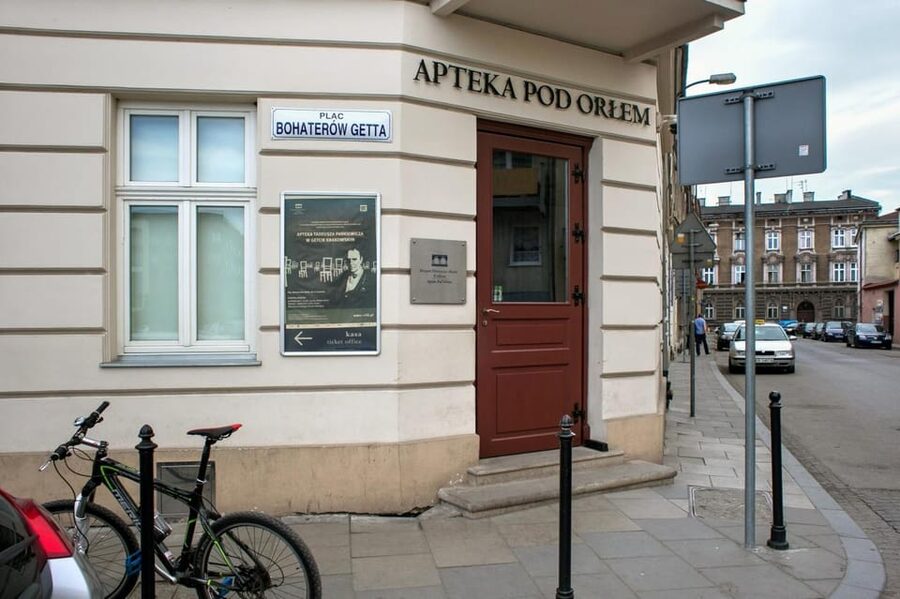
Across from the square is Under the Eagle Pharmacy, associated with Tadeusz Pankiewicz and his staff. Pankiewicz was a Polish pharmacist who remained in the ghetto and helped Jewish residents by providing medicine, shelter, information, and a measure of human support.
The tour stops outside the pharmacy, so admission is not included. This is an important point when comparing options. You receive the story and see the location, but you do not tour the interior as part of this three-hour activity.
Even without entry, the stop adds a different kind of story to the tour. Schindler’s actions took place through employment and factory connections. Pankiewicz’s work centered on a pharmacy and the daily needs of people trapped in the ghetto. Medicine, advice, and a safe place to speak could carry enormous weight in such conditions.
I would have liked more time here if you want detailed family stories or a longer account of the pharmacy’s work. The stop is brief compared with the factory exhibition, and the guide may need to keep the group on schedule. Still, it is a meaningful part of the route and prevents the tour from focusing only on Schindler.
What the three-hour format gives you
Three hours is enough to connect the museum and the ghetto, but it is not enough to cover every detail at a leisurely pace. The museum takes up the more structured portion, followed by the walking route through the former ghetto.
The order works well. You first receive the larger story of occupied Kraków and Schindler’s role. Then you go into the district where the ghetto’s restrictions, deportations, and acts of aid become easier to picture.
Several guides have been praised for clear speech, personal warmth, and the ability to answer questions. That matters in a museum with a dense subject. A guide who explains carefully can help you distinguish between what happened to Jewish residents, what happened to non-Jewish residents, and how the occupation affected Kraków as a whole.
The experience can feel repetitive in places. Some information from the factory may be repeated during the ghetto walk so that everyone understands the basic setting. This is useful for people joining only part of the experience, but it can feel slow if you remember every detail from the museum.
You should arrive at least 10 minutes early. The group enters together, and late arrivals may not be admitted once the visit has begun. Museum tickets are personalized, so you must provide the full names of everyone in your booking.
Price, languages, and practical value
At $57 per person, this is not the cheapest way to see Schindler’s Factory, but the price includes fast-track admission, a licensed guide, and the walking tour of the Jewish wartime district. You are paying for the connection between sites as much as for entry to the museum.
The value is strongest if you want a clear introduction and do not want to organize the historical route yourself. The guide handles the museum context, leads you to the relevant ghetto locations, and explains why each place matters. For a first visit to Kraków, that structure can save time and prevent the area from becoming a list of disconnected addresses.
The value is weaker if you prefer to read every museum panel alone or already know the history well. The group may move faster than you like, and the pharmacy is viewed from outside. You might prefer independent museum admission followed by a separate, slower walk.
Tours are offered in French, English, Spanish, German, and Italian. Each group uses one language, so select carefully when booking. Group size is limited to 25, though a smaller group would make it easier to move through the museum and ask questions.
Cancellation is free up to 24 hours before the start time, and you can reserve now and pay later. Those terms help if your Kraków schedule is still changing, but they do not solve the late-arrival rule. Plan to be at the meeting point early.
Meet your guide in front of the main entrance to Schindler’s Factory Museum, on the right-hand side. Look for the Schindler’s Factory Guided Tour sign. The tour provider is INTERCRAC Ltd.
Who should book this experience
I recommend this tour most strongly to first-time visitors who want the essential wartime story in one organized visit. It also suits you if you have seen Schindler’s List and want to understand the real Kraków setting beyond the film.
It is a good choice for adults and older teenagers who can manage a serious subject and several hours of focused history. The walking section is not described as difficult, but weather can affect comfort, so dress for the season.
You may want another plan if your priority is quiet museum study. An independent visit could give you more time with the photographs, objects, and written material. You should also think twice if you dislike fixed group pacing or if a long outdoor stop in cold weather would be uncomfortable.
Should you book Schindler’s Factory and the Ghetto walk?
Book it if you want the factory museum and the former ghetto to make sense as one story. The combination is more useful than seeing Schindler’s Factory in isolation, and the preserved wall fragments, Ghetto Heroes Square, and Under the Eagle Pharmacy add real places to the museum’s account.
Go in expecting a modern museum exhibition, not an untouched factory. Arrive early, choose your language with care, and accept that the guide may move you along before you have read everything. At $57, the tour offers solid value for an organized introduction, especially when the guide is as clear and engaging as Bartholomew, Joanna, Alicja, Magda, or Phil.
FAQ
How long is the Schindler’s Factory and Jewish Ghetto tour?
The tour lasts three hours. Times are approximate and can change because of museum or site scheduling.
What does the tour include?
It includes a professional licensed guide, fast-track admission to Schindler’s Factory Museum, and a walking tour of the Jewish wartime district.
Is entry to Under the Eagle Pharmacy included?
No. The tour stops at the pharmacy and explains its wartime story, but entry is not included.
Does the factory still contain original production equipment?
No. The building now operates as a museum, and the exhibition does not contain the original factory production equipment.
What languages are available?
Tours are offered in French, English, Spanish, German, and Italian. Each group is conducted in one selected language.
How large can the group be?
Museum group tours are limited to 25 participants. A smaller group may make it easier to move through the narrow exhibition areas.
Where do I meet the guide?
Meet in front of the main entrance to Schindler’s Factory Museum, on the right-hand side. The guide will hold a Schindler’s Factory Guided Tour sign.
What happens if I arrive late?
You should arrive at least 10 minutes before the scheduled start. Once the group has entered, late arrivals cannot be accommodated and tickets are non-refundable.
Just added around Krakow
- Private Guided Tour: Oskar Schindler’s Factory★ 5.0 · 3 reviews
- E-Scooter Krakow sightseeing tour★ 5.0 · 3 reviews
- From Krakow: Zakopane and Thermal Pools Guided Trip★ 5.0 · 3 reviews
- Schindler’s Factory, Ghetto and Plaszow Camp Guided Tour★ 4.7 · 3 reviews
- Kraków: Private Hot Air Balloon Flight with Champagne★ 3.7 · 3 reviews
- Krakow: River Cruise & Guided Visit to Former Plaszow Camp★ 3.6 · 3 reviews
- From Krakow: Private Wieliczka Salt Mine Tour★ 4.0 · 3 reviews
- Krakow: Old Town short walk with St. Mary’s Basilica visit★ 5.0 · 3 reviews
Schindler's Factory Tours, compared.

Oskar Schindler’s Factory Entry Ticket & Guided Tour
Read our review →
Schindler’s Factory Tour with Entrance Ticket
Read our review →
Schindler’s Factory Tour with Entrance Ticket
Read our review →
Schindler’s Factory in Krakow: Guided Tour & Skip the Line Ticket
Read our review →

Schindler’s Factory Ticket with Guided Tour Option
Read our review →
Krakow Schindler’s Factory Guided Tour with Admission Ticket
Read our review →Browse the lists this tour appears in